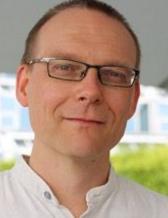
Tobias Pettersson is a Senior Lecturer at the Department of Pedagogy: Music, Dance and Drama , University of Gothenburg . His roles include Undergraduate Teaching Coordinator and Education Coordinator for both first/second cycle education and teacher training programs. He works at the intersection of musicology , gender studies , and pedagogical traditions . Current position since 2015 Active in teacher education since the 1990s Doctoral degree in musicology (2004) Research Focus: Analyzes the origins and persistence of musical traditions , gender equality in music life , and education for sustainable development . Led projects at the Centre for Environment and Sustainability (2012-2014) and developed web-based educational toolboxes. Key Contributions: Publications on Beethoven's canonization in Swedish education (2004), gender dynamics in performing arts (2006), and critical analyses of musicological epistemology (2005). His work bridges historical musicology , pedagogical theory , and sustainability education . Contact: Email: tobias.pettersson@gu.se Office: Eklandagatan 86, 41259 Göteborg
Dimitrios Iordanoglou is a contemporary academic affiliated with Uppsala University , where he serves as Head of Education and Head of Department at the Department of Linguistics and Philology . His career spans classical philology, rhetoric, and gender studies, with a focus on ancient Greek texts and their philosophical implications. University: Uppsala University Department: Department of Linguistics and Philology Academic Rank: Associate Professor Email: dimitrios.iordanoglou@lingfil.uu.se Research interests include classical philology, ancient rhetoric, political and moral philosophy in Greek tragedy, and gender studies. His work often intersects textual analysis with broader cultural and philosophical themes from antiquity. Classical Philology and Textual Analysis Ancient Rhetoric and Argumentation Political Philosophy in Greek Tragedy Gender Norms in Antiquity Publication trends indicate a focus on Sophistic thought, Homeric texts, and philosophical dialogues in classical literature. His recent works examine the Derveni Papyrus, gender dynamics in ancient epics, and the evolution of rhetoric. Academic leadership involves overseeing educational programs and departmental operations. While no specific scientific awards are listed, his editorial contributions include co-editing Eranos: The Origins of Political Thinking in Ancient Greece (2018).
Simo Vehmas is Professor of Special Education at Stockholm University's Department of Special Education. He is currently on research leave for the academic year 2024-2025 at the Paris Institute for Advanced Study, with plans to resume departmental activities from July 2025. His academic work spans theoretical and empirical approaches to disability studies, with particular focus on profound intellectual and multiple disabilities. Professor Vehmas's research interests center on theoretical and ethical issues related to disability, examining the ontological formation as well as the moral and political significance of disability. His work bridges philosophical inquiry with practical educational concerns, particularly regarding persons with profound intellectual and multiple disabilities. Recent publications demonstrate his commitment to exploring the intersection of language, identity, and rights within disability contexts. His scholarship engages deeply with questions of personhood, moral status, and the social construction of disability, while also addressing practical implications for education and policy. Analysis of Vehmas's recent publications reveals a consistent thematic trajectory exploring the philosophical foundations of disability while increasingly incorporating empirical research methods. His work spans multiple disciplines including philosophy, ethics, linguistics, education, and social policy, with particular attention to Swedish disability contexts. The publications demonstrate growing engagement with interdisciplinary approaches to disability studies, moving from purely theoretical frameworks toward more applied research on music therapy, educational interventions, and everyday experiences of people with profound intellectual disabilities. Vehmas has made significant contributions through book publications including 'Narrowed Lives: Meaning, Moral Value, and Profound Intellectual Disability' (2021), 'Vaikeasti kehitysvammaisten arki ja ihmisyys' (2022), and co-editing the 'Routledge Handbook of Disability Studies: Second Edition' (2020). His scholarly output reflects deep engagement with both international disability scholarship and specifically Nordic approaches to disability. While specific grant information is not provided in the available materials, Professor Vehmas's research leave at the Paris Institute for Advanced Study indicates active engagement with international research networks. His collaborative work with researchers like Riitta Mietola suggests participation in research teams focused on profound intellectual disabilities. His publications suggest ongoing work in developing pedagogical interventions and theoretical frameworks for understanding disability experiences.
Betty Tärning is a researcher at the Department of Philosophy, Lund University , specializing in Cognitive Science and Educational Technology . She is affiliated with the eSSENCE: The e-Science Collaboration and contributes to the LU Profile Area: Natural and Artificial Cognition . Her work focuses on digital learning environments, pedagogical agents, and feedback systems. Email: betty.tarning@lucs.lu.se Office: LUX:B467, Helgonavägen 3, Lund Research Interests: Tärning investigates how virtual reality and educational games can enhance learning outcomes, particularly in middle school and early childhood education . Her recent work explores robotic emotional expression and feedback neglect in digital contexts. Article Trends: Recent publications emphasize human-robot interaction , virtual learning environments , and feedback mechanisms in educational games. She integrates cognitive modeling with pedagogical design to address challenges in digital literacy and student engagement . Projects & Collaborations: Active in initiatives like DeSIDE: Designing Sustainable Digital Work and Virtuellt klassrum som forskningsplattform , she collaborates across disciplines, including with Pufendorf IAS and Humanities Lab . Her network includes researchers from Sweden , Europe , and North America .
Agneta Gulz is a Professor at the Department of Computer and Information Science (IDA) at Linköping University, Sweden. She is affiliated with the Human-Centered Systems (HCS) division, where her research focuses on human-centered computing, cognitive science, and educational technologies. Her work emphasizes the intersection of virtual reality (VR) systems, collaborative learning environments, and educational interventions. Gulz leads studies on user engagement in immersive technologies, scaffolding cognitive skills in children, and analyzing feedback mechanisms in digital learning platforms. Her research has been published in journals like Teleoperators and Virtual Environments and Learning and Individual Differences , as well as presented at major conferences such as the International Conference on Computers in Education. She collaborates with researchers like Magnus Haake and Betty Tarning on projects addressing information literacy through drama-based interventions and preschool attention development. Gulz’s contributions span cross-cultural studies in automated feedback systems and the design of educational tools that bridge theoretical and practical learning challenges. She is an active member of the HCS division, contributing to the department’s mission in advancing human-centered computing and AI applications in education.
Cecilia Wallerstedt is a Professor at the University of Gothenburg, affiliated with both the Artistic Faculty at the Academy of Music and Drama and the Department of Education, Communication and Learning. As Pro-Dean of the Artistic Faculty, she bridges artistic and educational research, while leading the FILUR project focused on imagination development in early childhood education. Her research explores teaching and learning in music and other aesthetic subjects across educational levels, emphasizing teacher-child interactions and sociocultural theory. Current projects address play-responsive teaching, intergenerational play dynamics, and digital media integration in preschool settings. She supervises PhD students in the PReCEC graduate school and collaborates with Nordic institutions through networks like the Studies of Artistic Vision and the Network for Internship Development. Recent publications highlight play-responsive didaktik, metacognitive strategies, and cultural historical theory applied to music, narrative play, and multilingual engagement. While no scientific awards are mentioned, her work includes EU-funded research and systematic reviews of music education practices.
Sandra Pauletto is a Professor in Media Technology specializing in Media Production and a Docent in Sound and Music Computing at the Division of Media Technology and Interaction Design (MID), School of Electrical Engineering and Computer Science (EECS) at KTH Royal Institute of Technology. She joined KTH in 2019 after positions at the University of York and University of Huddersfield in the UK. Her work bridges the gap between artistic sound practices and technological innovation in the field of sonic interaction design. Pauletto holds a Physics degree (MPhys(Hons)) from Manchester and a Music degree in Classical Guitar from Conservatorio "G.Tartini" in Trieste, Italy. She completed her MSc and PhD in Music Technology at the University of York, UK, where her doctoral thesis focused on "Interactive non-speech auditory display of multivariate data." Her interdisciplinary background informs her approach to sound and media research. Her primary research interests focus on sound and music computing, media production, sound design, sonic interaction design, and sonification . She investigates how sound communicates both functional information (e.g., a car door shutting) and aesthetic qualities (e.g., the type of car) in interactive contexts. Her current projects apply these principles to sustainability challenges like energy consumption monitoring and environmental awareness, as well as health communication applications. She has developed methods that combine historical sound design practices with contemporary computing techniques to create more effective sonic interfaces. Analysis of her recent publications reveals a strong trend toward applying sound design to address societal challenges, particularly through projects like SonicFunc (developing sound design methods for everyday life) and SoniHED (Sonification of Health and Environmental Data). Her work increasingly incorporates interdisciplinary approaches, collaborating with experts in astronomy, environmental science, and public health to develop effective sonic interfaces for complex data. She has received funding for significant research projects including: The SonicFunc project (Principal Investigator), developing new sound design methods for the digital society The SCORe Project (Principal Investigator), using sonification to communicate public health risk data SoniHED: Conference on Sonification of Health and Environmental Data (funded by Wellcome Trust) Chronic health issues of adolescents project (funded by Centre for Chronic Diseases and Disorders) As an educator and mentor, Pauletto has served as Principal Supervisor for 5 completed PhD students and is currently Associate Supervisor for 1 PhD student. She has extensive teaching experience across all academic levels and has held management roles including Deputy Head of the MID Division at KTH and Programme Director for the MA/MSc in Postproduction with specialisation in Sound Design. She has also been a member of the Peer Review College for the UK Arts and Humanities Research Council and an expert reviewer for EU FP7 and H2020 programmes. She leads the SonicFunc research group which investigates sound function, aesthetics, and interaction in media production to create effective sonic interaction design for everyday life. Her team includes postdoctoral researchers like Rod Selfridge and PhD students working on projects related to sustainability, health communication, and innovative sound design methodologies. She has also organized multiple conferences including the SoniHED conference series and guest edited special journal issues on data sonification and sound design.
Eva Österlind is a Professor at Stockholm University's Department of Teaching and Learning, leading the Drama for Learning research group - Sweden's premier drama research environment. Her work focuses on integrating drama/theatre pedagogy with sustainability education and social change initiatives across Nordic educational systems. Stockholm University, Department of Teaching and Learning Research Group: Drama for Learning Academic Focus: Drama Pedagogy, Sustainability Education Global collaborations: Athens, Helsinki, Stockholm drama workshops Her research explores drama's unique capacity to bridge emotional and cognitive learning barriers, particularly in sustainability education. Recent publications analyze drama workshops' effectiveness in fostering interconnectedness and perspective expansion through embodied, collective practices. Comparative studies across Nordic countries reveal institutional challenges in establishing drama as an autonomous research discipline. Eva's 15+ recent publications examine drama's role in civic education, health promotion, and curriculum reform. Key themes include Theatre of the Oppressed's potential for social transformation, arts-based sustainable development strategies, and the interplay between educational context and learning outcomes in drama interventions. While specific scientific awards aren't documented in the provided texts, her work has been featured in international conferences and publications including Research in Drama Education and Education Sciences . She emphasizes collaborative teaching approaches between subject specialists and drama pedagogues for maximizing educational impact.
Vicky Angelaki is a Professor at Mid Sweden University’s Department of Humanities and Social Sciences since January 2020. With 15 years of full-time academic experience in the UK (University of Reading, University of Birmingham, Birmingham City University), she specializes in interdisciplinary literary and theatre studies, focusing on societal/political intersections, environmental humanities, cultural sociology, and contemporary British drama. BA (Hons) English, Aristotle University of Thessaloniki (2003) MA Drama & Theatre, Royal Holloway (2005) PhD Drama & Theatre, Royal Holloway (2009) Her research explores theatre’s role in addressing climate crisis , digital environments, and sociopolitical issues. Recent projects include Performing Interspaces: Social Fluidities in Contemporary Theatre (RJ-funded monograph, 2022) and co-editing the Palgrave Macmillan series Adaptation in Theatre and Performance . She leads the Political Literatures research network at Mid Sweden University. Recent publications and presentations analyze environmental dystopias , gendered geopolitics in classical adaptations, and pandemic-era theatre pedagogy. Her work synthesizes ecocritical frameworks with performance studies, emphasizing interdisciplinary methodologies and international collaboration . RJ Sabbatical Grant (2022) Fellow of the Higher Education Academy (2018) She teaches courses on Literature and Crisis , Contemporary Anglophone Theatre , and Political Literatures , supervising PhD candidates in collaboration with the University of Reading. Professional affiliations include the European Theatre Research Network, International Federation for Theatre Research, and assessment roles for Uppsala University’s KoF24 research evaluation.
Viktor Olofsson is a Lecturer in the Department of Music, Dance and Drama Pedagogy at the University of Gothenburg . His research focuses on educational methodologies within music, dance, and drama disciplines. Contact details include the email address viktor.olofsson@gu.se . His visiting address is Eklandagatan 86, 41259 Göteborg, with a postal address of Box 210, Göteborg.
Jenny Wilder is Professor and Head of the Department of Special Education at Stockholm University, with additional research affiliations as Research Associate at the Centre for Augmentative & Alternative Communication, University of Pretoria, and at the Department of Women's and Children's Health, Uppsala University. Her academic leadership includes serving as Director of Research Studies (2018-2022) and Research Coordinator for the Doctoral Programme in Special Education (2018-2020), demonstrating significant institutional impact in Swedish special education. Wilder's research expertise centers on intellectual disability, with particular focus on communication and interaction, participation, support provision, collaboration, and educational transitions. Her work bridges theoretical frameworks with practical applications, examining how children with intellectual disabilities navigate educational transitions and how educators can facilitate meaningful learning experiences. She has developed conceptual frameworks like the 'learning journey' model to analyze children's educational transitions, emphasizing individualized approaches and collaborative processes. Her publication record reveals a strong emphasis on practical interventions for students with severe and profound intellectual disabilities, including innovative approaches like MultiSensory Music Drama. Wilder's research consistently addresses how to enhance participation and influence for individuals with intellectual disabilities across educational and community settings, with recent work examining pandemic impacts on family-school collaboration and developing co-created transition guides for students with special educational needs. As an active mentor, Wilder has supervised multiple PhD students and currently serves as main supervisor for Linn Johnels and Sofia Wallin. She has led research projects funded by the Swedish Research Council, focusing on practical applications that improve educational experiences for children with disabilities. Her work extends beyond academia through collaborations with educational institutions and practitioners to implement evidence-based practices. Wilder maintains active involvement in research networks including the Centre for Augmentative & Alternative Communication and the Research School in Special Education. Her work demonstrates commitment to translating research into practice, developing tools and frameworks that educators can use to support students with intellectual disabilities through critical educational transitions and daily learning experiences.
Karin Bengmark is a Senior Lecturer at the University of Gothenburg, specializing in pedagogy related to music, dance, and drama. She serves as Programme Supervisor for music-related programs and is based at Eklandagatan 86, Gothenburg. University: University of Gothenburg Email: karin.bengmark@hsm.gu.se Her research interests include intercultural communication in music, environmental soundscapes, and pedagogical approaches to music composition. She has created multiple musical works and notations focused on nature themes, religious content, and educational resources. Her notable works include Varde ljus! Var det ljus! (2019) on water-inspired music, Ps Psaltarsånger (2021) in sacred music, and Interkulturella möten i musik (2018) on intercultural communication in musical contexts.
Helén Persson is an Associate Senior Lecturer and supervisor at Lund University's Department of Educational Sciences, and a teaching staff member in the Department of History under the College of Humanities and Theology. Her work bridges historical education and pedagogical theory. Role : Senior Lecturer (Educational Sciences) Teaching : History Didactics and Educational Science Research : Historical Consciousness, Swedish Textbook Analysis, Curriculum Development Research Interests focus on: History Education : Progression in historical learning, connections between secondary school and university curricula. Curriculum Theory : Evolution of educational standards and governing documents. Historical Consciousness : Temporal perspectives in Swedish history education. Migration Studies : Swedish emigration to America during the 19th century. Publication Trends emphasize: Historical education frameworks (2018–2024) Temporal analysis in Swedish history teaching (2023) Integration of local history into drama and cultural narratives (2023) Practical challenges in pedagogy (2020–2022) Scientific Awards & Grants : One-month grant from Lund University for research preparation (2020) Vice Chairman, Sveriges universitetslärare och forskare (SULF) (2013–Present) Recensionsredaktör (Book Review Editor), Historielärarnas förenings årsskrift (HLFÅ) (2022–Present) Advising and Teaching includes: Supervision of doctoral and postgraduate research Teaching courses: ÄKPN12 (The Subject Teacher as a Reflective Practitioner), ÄUVN28 (Research Approaches in Educational Sciences)
Thérèse Eng serves as a Lecturer in Translation Science with a specialized focus on translation at the Department of Swedish Language and Multilingualism, Stockholm University since January 2021. Her academic foundation was established at the University of Växjö (now Linnaeus University), where she defended her 2007 dissertation titled "Traduire l´oral en une ou deux lignes : Étude traductologique du sous-titrage français de films suédois contemporains" (Translating the oral in one or two lines: A translation study of French subtitling of contemporary Swedish films). This research examined linguistic strategies used in film subtitling to simulate the "illusion" of spontaneous spoken language in film dialogues. Dr. Eng's teaching career spans multiple Swedish institutions: she served as a French lecturer at the University of Växjö (2004-2009), taught at Jönköping's college for communication and learning (2011-2013), and worked with Erasmus students at the University of Gothenburg (2015-2017). Her professional activities extend beyond academia to include freelance translation from French to Swedish, with emphasis on fiction, drama, and news articles. Based in Gothenburg for thirty years, she also oversees the French section for deeper studies at Schillerska gymnasium, demonstrating her commitment to language education at multiple levels. Her research bridges theoretical translation studies with practical applications in audiovisual translation.
Patrik Mehrens serves as an Associate Professor at Uppsala University's Department of Literature and Rhetoric and as an Educational Developer within the University Administration's Division for Quality Enhancement. His dual roles bridge academic scholarship and pedagogical innovation, focusing on rhetoric, literary studies, and higher education development. His research spans Rhetoric , Literary Studies , and Film Studies , with particular emphasis on narrative theory, discourse analysis, and pandemic-era communication. Recent work explores ritual elements in social drama ( Borgfreden , 2023), Heideggerian philosophy ( Heidegger's "Fork" , 2022), and the rhetorization of food in political discourse (2011). His scholarship consistently examines how language shapes cultural and institutional practices. Analysis of his publications reveals a trajectory from classical rhetoric (2003-2006) toward contemporary discourse analysis (2020-2024), with growing attention to crisis communication during the pandemic. His work integrates Scandinavian literary traditions with international theoretical frameworks, demonstrating strong interdisciplinary engagement across humanities and social sciences. Mehrens actively contributes to pedagogical development through projects on liberal arts education and quality enhancement in Swedish higher education. His 2006 report Learning from Liberal Arts Education and 2010 presentation Excellence in Teaching highlight his commitment to curriculum innovation.