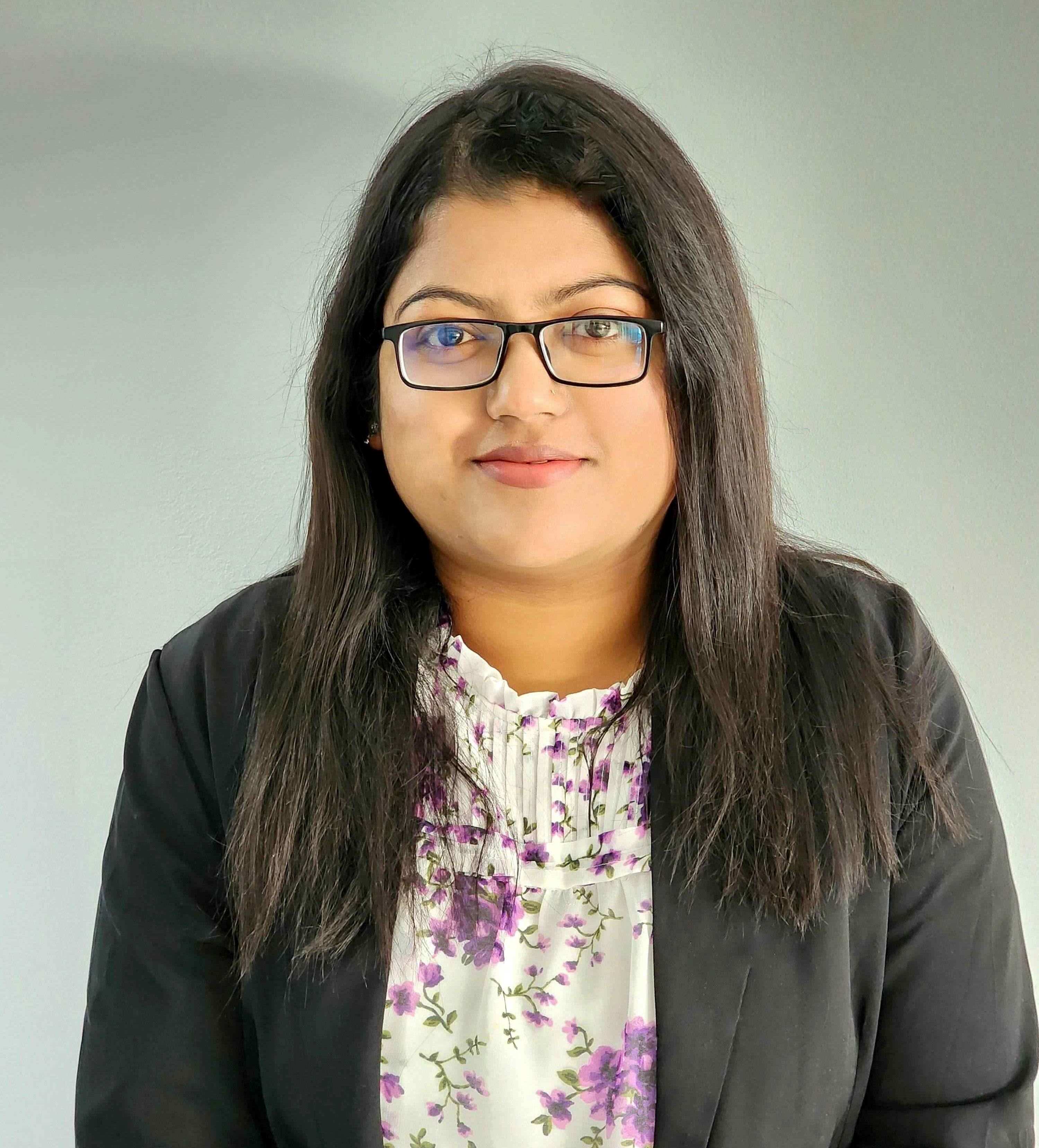
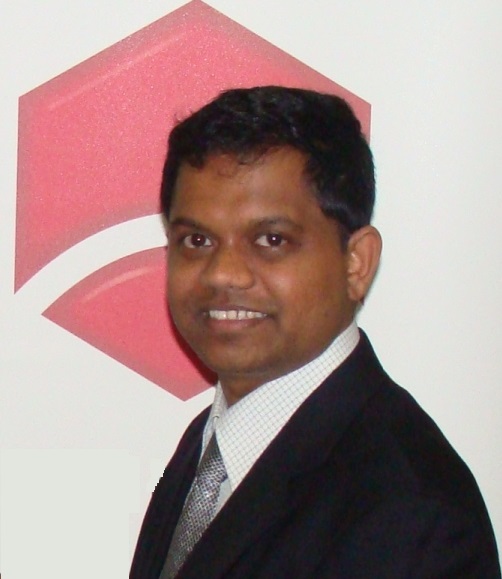
Dr. Sheeraz Alvi is a Research Fellow at the ANU School of Engineering developing wireless solutions for IoT networks under Associate Professor Nan Yang. His current projects include federated learning for wireless systems and satellite communication modeling for ANU-Optus Bushfire Research Centre. Alvi's research spans adaptive resource allocation, terahertz spectrum management, and privacy-preserving machine learning in distributed networks. Recent publications address UAV-assisted monitoring, wildfire detection systems, and fairness optimization in heterogeneous networks. As co-investigator for bushfire detection projects, Alvi designs ground-based IoT sensor networks for early fire detection. His work bridges theoretical communication models with environmental monitoring applications.
Dr. Charles Alexis Asselineau is a Research Fellow at the Australian National University (ANU) within the College of Systems & Society, specializing in solar thermal energy conversion and concentrating solar power (CSP) systems. His research focuses on optimizing the performance and cost-effectiveness of CSP components, particularly receivers and heliostat fields. Key projects include the USASEC Project (radiative heat-transfer simulations), ASTRI’s Flux Optimised Sodium Receiver (FONaR), and the SMILE cogeneration system in Brazil. He holds a PhD in Thermal Engineering from ANU and has extensive industry experience with companies like Areva Renewable and Vast Solar. Education highlights include a PhD (2017, ANU), a French-Chinese double degree in energy project management (2010), and advanced engineering degrees from Tsinghua University and École des Mines d’Albi-Carmaux. His work integrates Monte-Carlo ray tracing, stochastic optimization, and machine learning to enhance CSP efficiency and thermal storage solutions. Dr. Asselineau has pioneered advancements in sodium-based receivers, spillage skirt designs, and bifacial PV modeling. His contributions to solar fuels via supercritical water gasification and coral-inspired coatings for sunlight harvesting highlight interdisciplinary innovation. Awards include the MSCA IF Fellowship for the HEASeRS project on angular-selective radiant surfaces.
Nick Barnes is an Interim Director of the School of Engineering and Professor at the Australian National University (ANU), affiliated with the ANU College of Systems & Society. He advises the Bandalang Studio and leads research in computer vision, prosthetic vision, and biomedical engineering. His work focuses on 3D vision, probabilistic methods, and saliency detection, with clinical applications in retinal prosthesis development and bushfire detection systems. Research interests include biological vision replication, prosthetic vision systems (e.g., Bionic Vision Technologies), and computer vision algorithms for medical devices. Collaborative projects involve partners like Optus Bushfire Research Centre, Bionic Vision Technologies, and CSIRO Health. His team’s recent work includes advancements in retinal prosthesis functionality (face/chair detection, obstacle avoidance), clinical trials, and AI-driven medical imaging (polyp segmentation, colonoscopy automation). Notable student achievements include Sahir Shrestha’s DICTA 2021 Best Paper Award and Cedric Scheerlinck’s JG Crawford Prize for PhD Thesis. Advising spans over 20 students across PhD and Master’s programs, with active collaborations on weakly supervised learning, point cloud analysis, and generative models. Key projects include ANU-Optus Bushfire Research and clinical trials for suprachoroidal retinal prostheses. Research outputs emphasize multimodal systems, uncertainty-aware algorithms, and biomedical applications, bridging computer vision theory with clinical and real-world deployment.
Dr. Damith Mohotti is a Senior Lecturer and Engineering Consultant at the School of Civil Engineering and IT, UNSW Canberra. He also serves as a Visiting Associate Professor at the University of Wollongong. His expertise spans protective structure design, numerical modeling, finite element analysis, and computational fluid dynamics. He holds a PhD in Structural Engineering from the University of Melbourne, alongside professional qualifications including Chartered Engineer (CPEng) and Fellowships in multiple engineering societies. His research focuses on blast/impact mitigation, smart materials, advanced numerical methods, and CFD applications. Notable contributions include developing safety guidelines for hydrogen explosions and vulnerability models for critical infrastructure. He has secured over $1.4M in grants, including ARC Discovery Projects and DSTG funding. Awarded the Australian Museum Eureka Prize (2013) and Engineering Excellence Award (2017), Mohotti leads initiatives like the International Association of Protective Structures (IAPS) Australian Chapter. He supervises PhD candidates exploring AI in wind/blast prediction and novel materials. Teaching includes civil engineering materials, structural design, and construction management courses. His work bridges academia and industry through projects with DMTC, Karagozian & Case, and international collaborations. Media engagements include The Conversation and SBS Sinhala articles highlighting his contributions to disaster resilience and defense technologies.
Rachelle Balez is an Associate Fellow at the School of Chemistry and Molecular Bioscience within the Faculty of Science, Medicine and Health at the University of Wollongong, where she has been conducting research since 2022. Her work bridges molecular biology, neuroscience, and regenerative medicine to investigate the underlying mechanisms of neurodegenerative diseases, with a particular focus on Alzheimer's disease. Her educational background includes: PhD in Biological Sciences from the University of Wollongong (2015-2022) Bachelor's degree in Biological Sciences from the University of Wollongong (2005-2013) Bachelor's degree in Creative Arts from the University of Wollongong (2005-2010) Dr. Balez's research program centers on understanding the molecular and cellular mechanisms of neurodegenerative diseases using human induced pluripotent stem cell (iPSC) models. She has developed expertise in generating various neural cell types including cortical neurons, astrocytes, and basal forebrain cholinergic neurons to study disease processes. Her work spans epigenetic regulation, calcium signaling, lipid metabolism, and cell death pathways in neurodegeneration. She has pioneered techniques for single-cell metabolomic imaging by mass spectrometry and has made significant contributions to understanding REST/CoREST protein function, nitrosative stress, and presenilin mutations in Alzheimer's disease. Her publication record shows a consistent focus on Alzheimer's disease mechanisms with increasing technical sophistication, from molecular analysis through cellular physiology to advanced single-cell resolution techniques. Recent work demonstrates growing integration of computational approaches with experimental neuroscience for longitudinal data analysis. Dr. Balez has received recognition as an alumna of Homeward Bound, a global women in science leadership initiative, reflecting her commitment to promoting diversity in STEMM fields. She has also exhibited her science-art collaborations in the CoLABs Sci-Art Festival (2017) and co-organized Magnified (2018), a science-art exhibition. She has secured research funding including an Early Mid Career Researcher Enabling Grant (2023) and is currently leading the project 'Sparking and fading: Spatially linking the complex metabolic activities of neurotransmitters and lipids during cell death' (2023-2024), which combines single-cell metabolomic imaging with human iPSC-derived brain cell subtypes to visualize metabolic signatures of cell death.
Dr. Sajib Mistry is a Senior Lecturer and Director of Research at Curtin University’s School of Electrical Engineering, Computing, and Mathematical Sciences (EECMS), part of the Faculty of Science and Engineering. He holds positions as Associate Director at Curtin’s High-Performance Intelligent Systems (HPIS) lab and Vice Chair of the IEEE WA Section. His research focuses on secure machine learning, edge/cloud computing, IoT, and distributed systems, with specialties in economic models for Infrastructure-as-a-Service (IaaS) composition and autonomous systems. Education: PhD in Computer Science (RMIT University), Postdoctoral Research Fellowship (University of Sydney). Research Interests : Service computing, cloud/edge computing, IoT, AR/VR, machine learning, distributed systems, software engineering, and big data analysis. His work emphasizes practical applications in defense, healthcare, and smart infrastructure. Grants (selected): Over $1.3M in funding from the Department of Defence, Australian Academy of Science, and WA government programs. Projects include combat system architectures, microservices management for legacy systems, and geo-spatial transfer learning for misinformation detection. 2023-2025: Combat System Architecture (RECSA), $1.5M 2022-2024: Micro-Services Management Platform, $418K Awards : Best Paper Award (ICSOC 2016), Distinguished Early Career Researcher nominee (2022). Labs/Teams : Leads research at Curtin HPIS, collaborating on edge analytics, WebAR platforms, and autonomous vehicle coordination. Active in IEEE and ACM committees, including roles as Publication Chair (ICSOC 2020) and Program Committee member for multiple conferences.
Dr. Mahbuba Afrin is a Lecturer at Curtin University's School of Elec Eng, Comp and Math Sci (EECMS), with affiliations to the Faculty of Science and Engineering. She holds a Ph.D. from Swinburne University of Technology, an M.S. and B.S. in Computer Science and Engineering from University of Dhaka. Her research specializes in Internet of Things-enabled Cyber-Physical Systems, Networked Robotics, and development of efficient learning models for intelligent systems. Research focuses include resource allocation optimization, autonomous network management, and edge intelligence applications in agricultural technology, fraud detection, and livestock management. Current projects explore UAV-based solutions for bushfire detection and real-time robotic task allocation using deep reinforcement learning. Afrin has secured multiple grants including the Strong and Resilient Communities Grant (AUD $360,000), Innovation Challenge for Generative AI (AUD $50,000), and three Pawsey Supercomputing grants. Her 15 most recent publications (2018-2025) demonstrate consistent focus on machine learning applications in networked systems, spanning UAV coordination, blockchain security, cloud robotics, and agricultural technology. Awards include the 2024 WiTWA Tech Rising Star Award in STEM Academia, People's Choice Award at Pawsey Supercomputing Project Showcase (2022-23), and Vice-Chancellor's Postdoctoral Fellowship (2021). She teaches courses including Data Structures and Algorithms, Fundamentals of Programming, and Computer Science projects.
Dr. Ranjan Sarukkalige is Associate Professor and Director of Graduate Research in Curtin University's School of Civil and Mechanical Engineering. His research specializes in hydrological modeling, climate change impacts on water resources, and sustainable stormwater management. With over 100 publications, he leads the Urban Hydrology Research Group and has supervised numerous PhD students to completion. Research focuses: Climate change impacts on catchment hydrology Advanced stormwater treatment technologies Integration of nature-based solutions in urban water systems Hydrological forecasting using machine learning Eco-hydrological systems Publications show 45% focus on climate-water interactions, 30% on stormwater management, and 25% on water treatment technologies. Professional honors include FIEAust fellowship and APEC Engineer certification.
Dr. Vidy Potdar is an Associate Professor at Curtin University's School of Management and Marketing, part of the Faculty of Business and Law. He leads the Blockchain Research and Development Laboratory (BRDL), focusing on blockchain, AI, and IoT solutions for industry and government. Since 2019, his team has delivered eight blockchain projects across agriculture, sustainability, mining, healthcare, and supply chain sectors. He has secured over $12.6M in research funding, including an ARC Industrial Transformation Training Centre grant (2024). With 160+ publications and 20 PhD completions, Dr. Potdar is an active media contributor and YouTube personality. Education: PhD in Information Systems, Curtin University (2006) M.Tech in Information Technology, University of Newcastle (2002) B.Sc., Gujarat University (2001) Research Interests: Blockchain, Energy Informatics, IoT, Cybersecurity, and AI-driven solutions for supply chains, smart cities, and sustainability. His work emphasizes commercialization, with projects in mining, healthcare, and environmental sectors. Key Achievements: 8+ awards for research excellence and commercialization Guest Editor for IEEE Transactions on Industrial Informatics (IF 12.3) Collaborations with Natsoft Corporation, West Australian Police, and Digital Finance CRC Grants & Funding: ARC NOBEL Training Centre ($5M + $2.6M industry) Curtin Ignition Scholarship (2021) Curtinnovation Award (2021) Labs/Teams: Director of the Blockchain Research and Development Laboratory (BRDL), fostering industry partnerships to solve real-world challenges via blockchain and AI.
Jiangtao Xi is Professor and Head of School of Electrical, Computer and Telecommunications Engineering at University of Wollongong, where he also serves as Associate Dean (Global Engagement). He holds BE, ME, and PhD degrees in electrical engineering. His research develops signal processing techniques for instrumentation, measurement, and telecommunications. Applications include medical imaging systems, wireless sensor networks, and communication protocols. Professor Xi has led international research collaborations including the 'AI/IoT-powered Airborne System for Monitoring Water Level and Tidal Floods' project in Indonesia and currently supervises PhD students working on MIMO communications and microwave photonics.
Professor Susanna Guatelli is a leading academic in radiation physics and medical applications at the University of Wollongong (UOW), affiliated with the School of Physics within the Faculty of Engineering and Information Sciences. She is currently the Interim Head of the School of Physics and Theme Leader for 'Monte Carlo simulations' in the Centre for Medical Radiation Physics at UOW. Her research focuses on Monte Carlo simulation techniques for radiation protection, medical physics, and space exploration, with significant contributions to Geant4 software development and benchmarking. Guatelli obtained her Master's and PhD in Physics from the University of Genova (Italy) and INFN Genova, with early career work at CERN on radiation effects in space missions. She has held key roles in international collaborations, including the Geant4 International Collaboration Steering Board and leadership of medical physics benchmarking groups. Her research interests span radiation protection for astronauts, medical radiation therapy optimization, and advanced imaging techniques. Notable recognitions include the Australian Institute of Physics' Women in Physics Award (2021) and inclusion in the UOW Women of Impact (2016). She actively participates in public outreach to inspire youth in physics and serves as an Associate Editor for journals like Physica Medica . Guatelli has secured over 30 grants since 2012, focusing on medical radiation research, space radiation monitoring, and machine learning in therapy planning. Her current projects include DoseGAN for microbeam radiation therapy and Space RAdiation Monitoring System (SRAMS) for lunar missions.
Assoc. Professor Richard Dwight is an Honorary Fellow at the University of Wollongong's School of Mechanical, Materials, Mechatronic and Biomedical Engineering since 2022. He holds a B.E. and Ph.D. in Engineering from Australian institutions. His research focuses on asset management systems, railway infrastructure, structural integrity, and big data applications. Dwight has supervised numerous PhD/Master’s projects in areas like pipeline integrity, maintenance resource optimization, and wheel-rail noise modeling. He has secured external grants including the Energy Pipelines CRC and internal funding for engineering education initiatives. His work bridges academia and industry, addressing challenges in railway asset management, predictive analytics, and lifecycle costing. Notable projects include collaboration with the CRC for Rail Innovation and contributions to noise separation techniques in rail systems. Dwight teaches mechanical design and strategic asset management, emphasizing practical industry applications. His research outputs span 82 publications, covering topics like maintenance modeling, vibration analysis, and failure data analysis, with a focus on advancing engineering solutions for complex infrastructure systems. Recent projects include predictive analytics for pipeline degradation and the development of an Overall Equipment Efficiency model. His interdisciplinary approach integrates systems intelligence and social complexity into asset management frameworks, reflecting his 19-year industrial background in steel industry investigations and engineering management.
Dr. Phil Yeoh is a Senior Lecturer in Electrical and Electronic Engineering at the University of the Sunshine Coast's School of Science, Technology and Engineering. His research focuses on developing secure wireless communication systems for low-latency applications in transport, mining, agriculture, and healthcare. He holds a PhD and BEng from the University of Sydney and has previously worked at the University of Melbourne and University of Erlangen-Nuremberg. His research interests span: Physical-layer security in wireless networks UAV/drone communication optimization Federated learning for IoT security Quantum key distribution systems Recent publications demonstrate strong focus on machine learning applications in wireless security, with trends showing innovative approaches to edge computing authentication and energy-efficient distributed systems. Award highlights include IEEE best paper awards and prestigious fellowships supporting his work in communication protocols. Dr. Yeoh leads projects on secure resource allocation for UAV networks and advises students in wireless communication applications. His work has been supported by ARC Discovery grants and Humboldt Foundation funding.
Suresh Thennadil is a Professor and Pro Vice-Chancellor at Charles Darwin University , leading the Faculty of Science and Technology's Engineering division. His work spans waste-to-energy conversion, renewable energy systems, and AI applications. Current projects include hydrogen generator deployment, microgrid optimization, and carbon capture viability in the Northern Territory Research Interests Thennadil's research unites three major areas: Waste Valorization: Anaerobic digestion and pyrolysis of bio/plastic wastes for hydrogen and value-added products Renewable Energy Systems: Grid stability solutions with distributed resources and microgrid hubs AI/Data Analytics: Federated learning, explainable AI, and Kalman filtering for energy and security applications Scientific Contributions Recent publications focus on: Solar power prediction with First Nations seasonal knowledge Iot security frameworks using software-defined networking Vortex fluidic device applications in food processing Smart grid load forecasting with attention-based models Collaborations Active in multidisciplinary partnerships across: University of Strathclyde (2014) and regional Australian industries Projects with Pacific Energy, Hitachi ABB, and Australian Research Council
Thuseethan Selvarajah is a Lecturer in Information Technology at Charles Darwin University's Faculty of Science and Technology. His research focuses on machine learning, deep learning, and computer vision with applications in emotion recognition, medical imaging, and precision agriculture. He contributes to UN Sustainable Development Goals through these technologies. Key projects include the Biosecurity Risk Area Tool for Northern Australia as a Chief Investigator. His work spans interdisciplinary collaborations in agriculture, healthcare, and transportation systems. Research interests include developing deep learning frameworks for plant disease detection, emotion analysis from facial and contextual data, and optimizing emergency vehicle networks. He has authored over 28 peer-reviewed publications and achieved an h-index of 11 with 293 citations (as of 2025). He supervises postgraduate research students in these domains. His technical expertise includes neural network architectures, transfer learning, and hybrid AI systems applied to real-world challenges like forest ecosystem monitoring and automated unit test generation.