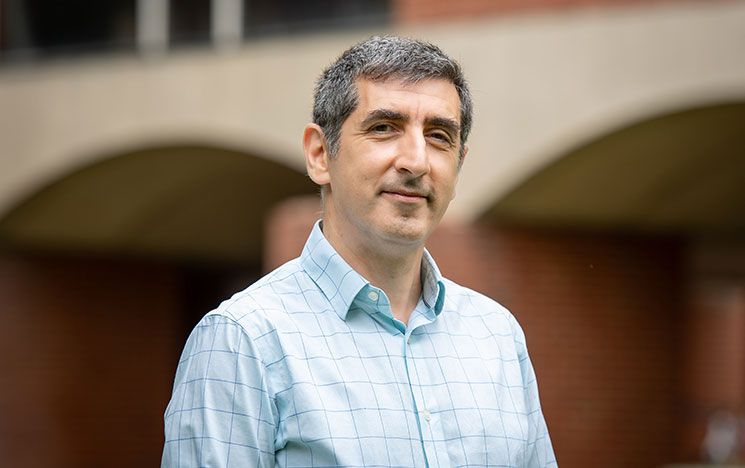
Dr. Pranav Minasandra is a postdoctoral researcher at the Max Planck Institute of Animal Behavior (Konstanz, Germany), affiliated with the Department of Collective Behavior . His work combines quantitative ecology , animal movement modeling , and machine learning to uncover universal patterns in behavioral sequences across species. PhD in Animal Behavior from Max Planck Institute MSc and BS from Indian Institute of Science (Bangalore) Research Focus: Analyzes behavioral predictivity decay and statistical similarities in animal sequences using accelerometry and theoretical frameworks. Recent work explores interspecies infant abduction and social coordination in meerkats/hyenas . Publications span PNAS , Proceedings B , and Current Biology , with 2025 papers revealing truncated power-law patterns in behavior and collective movement dynamics . His Best Paper Award (University of Konstanz) highlights groundbreaking contributions to behavioral sequence analysis. Collaborates with networks including Meg Crofoot , Ari Strandburg-Peshkin , and Vlad Demartsev . Tools developed include VocalPy integrations and predictivity decay metrics for behavioral forecasting.
Francesca Fallucchi is an Associate Professor at Guglielmo Marconi University in Rome since 2008 and an information scientist at Georg-Eckert-Institut (GEI) since July 2017, working in the Human-Centered Technologies for Educational Media department. Her research focuses on the intersection of computer science and humanities, with particular emphasis on knowledge organization , information retrieval , semantic technologies , and big data management applied to educational media and cultural heritage. Her work bridges theoretical computer science with practical applications in digital humanities. Analysis of her recent publications (2021-2024) reveals a research trajectory spanning multiple domains: from foundational work in semantic web and NLP to emerging applications in metaverse technologies, blockchain for energy monitoring, and explainable AI for healthcare. Her work consistently demonstrates interdisciplinary approaches combining computer science with domain-specific challenges. Dr. Fallucchi has been actively involved in academic service, including organizing the 17th International Conference on Metadata and Semantics Research (MTSR 2023) and serving as editor for Computers trade magazine since 2021. Her professional activities include significant project leadership as Deputy Project Manager for Edumeres Toolbox and contributions to numerous research projects including GLOTREC, GEI-Digital, PalTex, DemoS, PVE-E, and WorldViews.
Jason Chen is an Associate Professor in Tourism and Events Management at the University of Surrey, serving as Director of Postgraduate Research in the School of Hospitality and Tourism Management. He holds a PhD in Tourism Management from The Hong Kong Polytechnic University, alongside earlier degrees in Economics (BA, 2004) and Economics and Statistics (MSc, 2007). His research focuses on tourism economics, tourist behavior, demand forecasting, and quantitative methods. Notable projects include 'Understanding the Landscape of Inbound Tourism Measurement' and collaborations with organizations on tourism impact assessments. He has secured grants, including an ESRC grant for the School, and advises on postgraduate research programs. Teaching responsibilities include modules in International Tourism Management, Consumer Behavior, and Researcher Development. His recent publications emphasize spatiotemporal models, crisis management in tourism, and pro-environmental behavior interventions. He has contributed to policy-relevant studies on tourism's economic role and sustainability challenges. Key research themes include destination resilience, electric vehicle adoption, and behavioral nudging for sustainability. His work bridges academic theory with practical applications, supporting industry and policy stakeholders.
Professor Tania Avgustinova is a Professor of Slavic and Computational Linguistics in the Department of Language Science and Technology at Saarland University. She serves as Principle Investigator for SFB 1102 - Project C4 (INCOMSLAV) and is Head of the Slavic Lab. Her academic career spans several decades with significant contributions to Slavic linguistics, computational approaches to language, and cross-linguistic studies. Her academic qualifications include: Habilitation venia legendi in General Linguistics (2003) PhD in Slavic and Computational Linguistics (1997) Diploma in Slavistics (1987) Professor Avgustinova's research focuses on the intersection of Slavic linguistics and computational methods. She specializes in microsyntax, intercomprehension among Slavic languages, language contact phenomena, and the processing of non-compositional expressions. Her work examines how speakers of one Slavic language can understand related languages without formal instruction, with particular attention to cognitive and linguistic factors. She has developed computational models to analyze linguistic distances and asymmetries between Slavic languages, contributing significantly to understanding receptive multilingualism. Her recent publications reveal a strong focus on experimental approaches to studying cross-linguistic comprehension using web-based platforms, eye-tracking, and speech processing techniques. There's a clear trend toward investigating microsyntactic units and non-compositional expressions across Slavic languages, with applications in language technology and education. Her work bridges theoretical linguistics with practical applications in natural language processing and language learning. Principle Investigator of SFB 1102 Project C4 (INCOMSLAV) Head of Slavic Lab at Saarland University Contributor to Russian National Corpus project Developer of INCOMSLAV platform for measuring linguistic distances As Principle Investigator of SFB 1102 Project C4 (INCOMSLAV), Professor Avgustinova leads research on mutual intelligibility and surprisal in Slavic intercomprehension. She has been instrumental in developing the INCOMSLAV platform for measuring linguistic distances and asymmetries in receptive multilingualism. Her leadership extends to international collaborations, including contributions to the Russian National Corpus project where she provides expertise on grammatical phenomena at the borderline between lexicon and syntax. Professor Avgustinova heads the Slavic Lab at Saarland University, which focuses on applied, experimental, and computational linguistics. The lab conducts research on Russian corpus grammar, word embedding models, sense frequencies, and microsyntax. Her work has established important connections between theoretical linguistics and practical language technology applications, particularly in the Slavic language context.
Professor Michael Winikoff is a prominent academic at Victoria University of Wellington's School of Information Management, where he joined in June 2019 and served as Head of School from early 2021 to early 2025. Previously, he was Head of Department at University of Otago's Department of Information Science (February 2011 to December 2016) and Associate Professor at RMIT University's School of Computer Science and IT. His career spans over two decades of research in autonomous systems and agent-oriented software engineering. His educational background includes a PhD from the University of Melbourne (1994-1997). His research focuses on improving software creation methodologies, particularly for intelligent agents that exhibit robust and flexible behavior. He is best known for developing the Prometheus methodology for agent-based systems design. More recently, his work has expanded to address societal consequences of autonomous systems and trust issues, with significant contributions to explainable AI (XAI). His publication record demonstrates consistent contributions to autonomous systems research, with recent work focusing on explainability frameworks, trust calibration, and certification of reliable autonomous systems. His 15 most recent publications (2018-2025) show a clear evolution from technical agent design toward broader societal implications, particularly the intersection of technical design and human trust in autonomous systems. The publications span journals like Artificial Intelligence and IEEE Internet Computing, as well as major conferences including AAMAS. Past President of International Foundation for Autonomous Agents and Multiagent Systems (IFAAMAS) Co-Editor-in-Chief of Journal of Autonomous Agents and Multi-Agent Systems (JAAMAS) Chair of ICORE rankings management committee Editor-in-Chief for International Journal of Agent-Oriented Software Engineering (IJAOSE) Vice President of Computing Research and Education Association of Australasia (CORE) Professor Winikoff has led significant research projects funded by the Australian Research Council, including work on adaptive personae for interactive toys, service-oriented negotiation in multi-agent systems, and advanced software engineering for intelligent agent systems. His current research continues this trajectory, focusing on making autonomous systems more explainable and trustworthy through engineering approaches that consider both technical and human factors. He maintains active collaborations across institutions, with recent work involving researchers from RMIT University and other international partners.
Naja Blytmann Trondhjem serves as Associate Professor in the Department of Cross-Cultural and Regional Studies at the University of Copenhagen's Faculty of Humanities, concurrently leading the Language Research Center at the University of Greenland. Her research bridges linguistic theory with practical applications in Greenlandic language preservation and education through collaborations with Ilisimatusarfik, National Museum of Greenland, and Danish healthcare institutions. Her academic credentials include: Ph.D. in West Greenlandic Language (2008) Master in West Greenlandic Language with Linguistics (2000) Physiotherapy qualification (1984) Trondhjem's research centers on Greenlandic syntax, morphology, and morphophonology, examining syntactic constructions, suffix usage in word formation, and phonological changes during morpheme attachment. Her comparative studies span Greenlandic dialects and other Inuit languages, addressing language evolution and structural variations with emphasis on derivational/inflectional affixes and sentence construction differences. Analysis of her publications reveals sustained focus on aspectual phenomena in West Greenlandic—including verbal aspect, distributive/collective markers, and habitual constructions—alongside investigations into emotion expression, valency systems, and language education challenges. This work demonstrates interdisciplinary integration of linguistic theory with cognitive science and healthcare applications. Dr. Trondhjem leads three major collaborative initiatives: 'Last call - Greenlandic dialects as linguistic heritage' documenting dialectal diversity; 'Teaching in Greenlandic at primary schools' addressing educational barriers; and 'Grammar and agrammatism in Greenlandic' studying aphasia patterns in collaboration with Danish and Greenlandic hospitals. She actively participates in expert committees regarding Greenlandic affairs in Denmark, organizes Greenlandic grammar workshops, and contributes to media discussions on language policy, dialect preservation, and educational challenges facing Greenlandic speakers.
Håkan Fischer is a Professor of Human Biological Psychology at Stockholm University, where he has served as Head of the Department of Psychobiology and Epidemiology since 2011. He also holds an associate professor position at Karolinska Institutet, is affiliated with the Aging Research Center and Stockholm University Brain Imaging Centre, and is a faculty member at Digital Futures at the Royal Institute of Technology. Since September 2025, he has additionally served as a visiting professor at Linköping University. Fischer has established himself as a leading researcher in emotional and cognitive processing, with particular expertise in socio-emotional aspects across the lifespan. Fischer earned his PhD in psychology from Uppsala University in 1998, followed by postdoctoral research at Harvard Medical School (1999-2001). He then worked at the Aging Research Center at Karolinska Institutet before joining Stockholm University in 2011. His academic journey includes a sabbatical year (2021-2022) at the University of Florida's Department of Psychology. Fischer is actively involved in university governance as a member of the Swedish Research Council's Subject Council for Humanities and Social Sciences (2023-present) and represents Stockholm University in multiple international collaborations. Håkan Fischer's research primarily focuses on investigating intra- and interindividual differences in affective, cognitive, social and perceptual processing, with special emphasis on age-related differences in adults. His laboratory employs advanced neuroimaging techniques including fMRI, PET, and fNIRS to examine brain function, while also utilizing structural imaging methods like T1-weighted imaging, DTI, and perfusion imaging to study brain structure. Fischer advocates for single-subject small-N designs to better understand emotional and cognitive mechanisms. His current research lines include socio-emotional perception and recognition, oxytocin effects on socio-emotional processing across the lifespan, and AI development for interpersonal communication analysis. Analysis of Fischer's recent publications reveals a strong focus on emotion recognition across populations, neurobiological mechanisms of socio-emotional processing, and methodological innovations. His work consistently integrates behavioral testing, neuroimaging, and genetic analysis to provide comprehensive insights. The increasing incorporation of AI approaches demonstrates his adaptation to emerging technological advances in psychological research. Fischer has published 136 peer-reviewed articles with over 12,200 citations and a Google Scholar h-index of 53. Fischer has received consistent funding since 2002 from prestigious sources including the Swedish Research Council, Wallenberg Foundation, STINT, Riksbankens Jubileumsfond, and Konung Gustav V och Drottning Victorias stiftelse. He currently leads nine funded research projects (two as principal investigator totaling 6.9 million SEK, seven as co-applicant totaling 24.8 million SEK) spanning multiple international collaborations in Sweden, Germany, and the USA. As an educator, Fischer leads the basic course in Cognitive Neuroscience and the master's course in Emotion Psychology and Affective Neuroscience. He regularly teaches at both undergraduate and advanced levels, primarily in biological psychology, cognitive neuroscience, and emotion psychology. Fischer currently supervises six doctoral students (one as main supervisor, four as assistant supervisor) and has mentored graduate students since 2002. Håkan Fischer leads a dynamic research laboratory that investigates emotional, social, perceptual, and cognitive processing. The lab examines how intraindividual variations across stimuli and time, as well as interindividual differences in age, gender, genetics, personality, and sleep deprivation affect these processes. His lab maintains active national and international collaborations with researchers at Stockholm University, Uppsala University, Karolinska Institutet, University of Florida, and University of Gothenburg, creating a robust interdisciplinary research environment focused on translating basic neuroscience into practical applications.
Dr. Vladimir Vlassov is a full Professor in Computer Systems at the Division of Software and Computer Systems (SCS) , Department of Computer Science (CS) , School of Electrical Engineering and Computer Science (EECS) , KTH Royal Institute of Technology , Stockholm, Sweden. He leads the AVA project in ALEC2, an AI-powered system for mental health care. He is a member of the Distributed Computing research group (DC@KTH) . Education & Roles: Holds a PhD and is a member of ACM and IEEE. Previously visited MIT (1998) and UMass Amherst (2004). Teaches courses on Data Mining , Distributed Systems , and Concurrent Programming . Research Interests: Focus on scalable AI, Cloud computing, distributed systems, and NLP for mental health. Projects include ExtremeEarth (Copernicus data analytics) and EMJD-DC (distributed computing PhD program). Grants & Projects: Principal Investigator in ALEC2 (adaptive mental health care) and ExtremeEarth (EU H2020). Led EU projects like ENCORE (manycore systems) and PaPP (embedded systems). Labs & Teams: Directs the Distributed Computing group, contributing to Hopsworks (machine learning feature store) and Maggy (hyperparameter optimization).
Pieter Simoens is an Assistant Professor at Ghent University and affiliated with the imec research institute. He works at the intersection of distributed artificial intelligence, edge computing, and collective intelligence, with a focus on AI applications for resource-constrained environments and robotic systems. His research explores innovative approaches to machine learning deployment in heterogeneous infrastructures, task planning for IoT-integrated robotics, and modeling collective decision-making processes. He has contributed to frameworks like DIANNE for distributed deep learning and developed methods for cognitive modeling in reinforcement learning scenarios. With over 100 publications, his recent work spans adaptive neural networks, privacy-preserving surveillance, UAV hyperspectral data analysis, and computational fairness in AI systems. He leads research initiatives within the Internet Technology and Data Science Lab (IDLab) and contributes to educational programs in software engineering and applied machine learning. Responsible for courses on software engineering, mobile development, system design, and applied machine learning Active in edge computing and neuromorphic algorithms research Develops AI solutions for robotics, surveillance, and industrial IoT applications
Peter Haan is a Professor of Public Economics at Freie Universität Berlin and Head of the Public Economics Department at DIW Berlin. He holds a Ph.D. in Economics from Albert-Ludwigs-University Freiburg, with supervisors Prof. Viktor Steiner and Prof. Richard Blundell. His research focuses on public finances, pension systems, labor market dynamics, and social policy, with an emphasis on the impacts of demographic change and policy reforms. He has conducted visiting research at institutions like LSE, the Paris School of Economics, and UCL London. His work explores topics such as income inequality, climate policy, and long-term care economics. Notable projects include analyzing the distributional effects of pension reforms, the labor market implications of disability benefits, and the effectiveness of climate policies like carbon pricing. He has published in top journals like the American Economic Journal: Macroeconomics and Journal of Public Economics . Prof. Haan leads research initiatives such as the DFG-funded 'Labour Market Transformation' project and contributes to policy discussions on aging populations, social security, and climate policy. His recent publications address issues like biased expectations in labor supply, the gender pension gap, and the macroeconomic impacts of long-term care pricing. Education: Ph.D. Economics (Freiburg), Diplom Volkswirt (Freiburg, Humboldt Berlin, Toronto) Affiliations: DIW Berlin, Freie Universität Berlin Key Projects: CRC-190 (Rationality and Competition), Climate Dividends, Long-Term Care Migration
Professor Michael Luck is the Deputy Vice-Chancellor and Provost at the University of Sussex, appointed in September 2023. Previously, he served as Founding Director of King's College London’s Institute for Artificial Intelligence and Director of the UKRI Centre for Doctoral Training in Safe and Trusted AI. He has held academic roles including Executive Dean of Natural and Mathematical Sciences at King’s, Head of Informatics at King’s, and Professorships at the University of Southampton and University of Warwick. His expertise spans over 30 years in Artificial Intelligence, with over 300 publications and 12 books. Research interests include multi-agent systems, AI ethics, social dilemmas, and normative systems. He advises AI companies, contributes to government committees (e.g., DCMS, EPSRC), and holds fellowships with the European Association for AI, British Computer Society, and King’s College London. His leadership roles include membership in Sussex’s Executive Team, Council, and Senate. Education and Career: Professor Luck’s academic career includes leadership roles across multiple UK institutions. His research has impacted areas such as adaptive service composition, context-aware systems, and argumentation frameworks. He has pioneered initiatives like the UKRI CDT in AI safety and collaborated on normative systems and AI fairness. Research Contributions: Key areas include multi-agent cooperation, AI explainability, and ethical AI frameworks. His work bridges technical and societal challenges, addressing fairness, transparency, and social dynamics in AI systems. Recent publications focus on resolving social dilemmas, imitation learning datasets, and visual analytics for text classification. Awards and Recognition: His fellowships and advisory roles reflect his influence in AI. He has contributed to policy-making and academic leadership, maintaining a balance between research innovation and institutional governance.
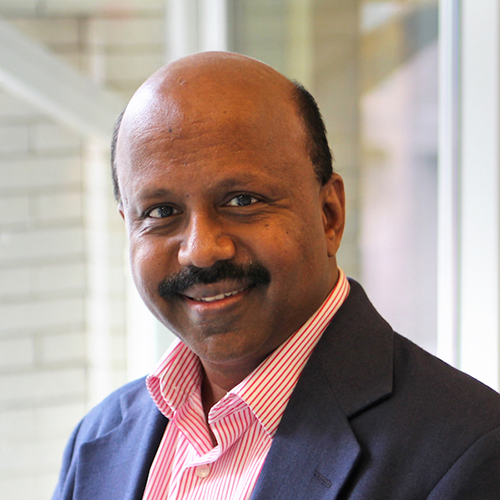
Dr. Raja Sooriamurthi is a Teaching Professor and Program Director of the Decision Analytics and Systems minor at the Information Systems Program of Carnegie Mellon University's Heinz College. His teaching and research focus on artificial intelligence, cognitive science, and educational pedagogy. Teaching Interests: Data science, database systems, big data, puzzle-based learning, system development lifecycle Research Interests: Case-based reasoning, knowledge management, distributed reasoning, machine learning, software development pedagogy Dr. Sooriamurthi leads curriculum innovation in information systems education, particularly through the IS2020 competency model . His work bridges AI applications with educational technologies, emphasizing authentic learning and generative AI tools for skill development. Key publication themes include: SQL instruction using AI-driven assessment Information systems curriculum design Puzzle-based learning for critical thinking Service-learning in leadership development Integration of NoSQL databases in education
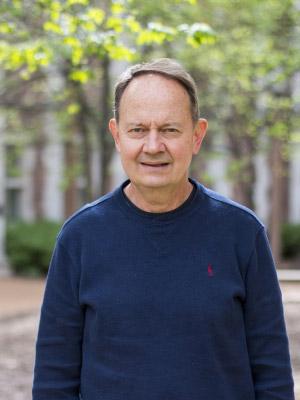
David Balota serves as an Adjunct Professor in the Department of Psychological and Brain Sciences at Washington University in St. Louis. With a career spanning multiple decades, his research has significantly contributed to our understanding of cognitive processes in aging and Alzheimer's disease. His work bridges theoretical cognitive psychology with clinical applications, particularly in developing sensitive cognitive markers for early detection of neurodegenerative conditions. Dr. Balota's primary research interests focus on the interplay between attention, memory, and language processing, with specific emphasis on how these cognitive domains change in healthy aging and in the presence of dementing illnesses like Alzheimer's disease. His research program has extensively examined automatic and controlled processes in cognitive tasks, lexical decision performance across the lifespan, and the development of sensitive cognitive markers for preclinical Alzheimer's disease. A significant portion of his recent work has focused on mind-wandering, reaction time variability, and their relationship to Alzheimer's disease biomarkers. His extensive publication record demonstrates consistent contributions to the field, with recent work increasingly incorporating digital assessment methods and biomarker research. Dr. Balota has made notable contributions to understanding how subtle cognitive changes can predict progression to cognitive impairment, particularly through examining attentional control processes and their relationship to tau pathology and neurodegeneration. Dr. Balota has been instrumental in developing large-scale lexical decision and naming corpora that have become standard resources in psycholinguistics research. His work on the English Lexicon Project has provided valuable data for understanding word recognition processes across different age groups and clinical populations.
Georg Gottlob is a Professor at the University of Oxford's Department of Computer Science, with additional affiliation at TU Vienna's Faculty of Informatics. He has maintained an exceptionally productive research career spanning over four decades, with 494 publications documented in the DBLP database from 1983 to the present. His research interests focus on Database Theory , Logic Programming , and Knowledge Graphs , with particular expertise in hypertree decompositions, Datalog systems, and existential rules. His work bridges theoretical foundations with practical applications, as evidenced by his development of the Vadalog system for knowledge graph reasoning. Gottlob's recent publications (2023-2025) demonstrate continued innovation in query optimization, rule-based reasoning, and the integration of large language models with database systems. His work shows a consistent trend toward making theoretical advances in database theory practically applicable, particularly in the context of knowledge graphs and semantic web technologies. Scientific Awards: 2020 ACM PODS Alberto O. Mendelzon Test-of-Time Award for influential contributions to database theory Gottlob maintains extensive research collaborations with scholars including Reinhard Pichler, Andreas Pieris, and Matthias Lanzinger. His work has significant practical impact through systems like Vadalog, which combines machine learning with logical reasoning for knowledge graph applications. He has supervised numerous PhD students (though specific names aren't listed in the DBLP record) and has been instrumental in advancing the field of database theory from theoretical foundations to real-world applications. His research group focuses on the intersection of database theory, knowledge representation, and artificial intelligence, with particular emphasis on developing efficient algorithms for complex query processing and reasoning tasks over large knowledge graphs.
William Foster is the College Professor of History at Homerton College, University of Cambridge, and Director of Studies for History and History/Modern Languages. He has been a Fellow since 2007 and served as Vice-Principal (deputy Head of House) from 2013 to 2019. His research explores how individual lived experiences intersect with large-scale historical processes such as imperialism, superpower rivalry, and military conscription in Modern Europe. Research Focus: Imperial history, armed neutrality in Europe, and US-Russia imperial perceptions. Current Projects: 'Russians and Americans: Connected Histories of Empire,' 'The Ordeal of Neutral Europe,' and 'The Conscription Map of Europe.' Teaching: Courses on 'Europe's Modern Age of Violence' and 'Connected Histories of the US and USSR/Russia.' Publications: Over 40 articles in entomology, biodiversity, and tropical ecology, with a focus on oil palm plantations and rainforest ecosystems. His work bridges historical analysis with ecological studies, though no scientific awards are documented in the provided materials.