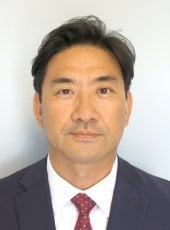
Christian Timmerer is a Professor at the Institute of Information Technology, Alpen-Adria-Universität Klagenfurt. His research focuses on adaptive video streaming , energy efficiency , MPEG standardization , and quality of experience (QoE) , with significant contributions to HTTP Adaptive Streaming (HAS), multi-codec optimization, and immersive media systems. Email: christian.timmerer@aau.at Office Hours: Monday 3:00-4:00 PM (by appointment) Projects: CD-Labor ATHENA, GAIA, SPIRIT His research integrates machine learning and generative AI to enhance video encoding, super-resolution, and voice dubbing, while prioritizing sustainability through energy-aware algorithms and open-source tools like GREEM and VEED. Current work emphasizes latency reduction and dynamic bitrate adaptation in live streaming environments. Recent publications address VVC optimization , multi-resolution encoding , and perceptual quality modeling , reflecting interdisciplinary efforts in networking , computer vision , and human-computer interaction . Awards include leading funded projects on adaptive streaming and green video systems.
Ming Li is a Professor of Electrical and Computer Engineering at Duke Kunshan University's Division of Natural and Applied Science, and a Principal Research Scientist at the Digital Innovation Research Center. He holds an adjunct position as a Professor at Wuhan University's School of Computer Science. His research focuses on audio/speech processing, multimodal behavior signal analysis, and applications in autism spectrum disorder diagnosis. Li has over 200 publications and serves on editorial boards of journals like IEEE Transactions on Audio, Speech and Language Processing. Education: Ph.D. in Electrical Engineering from the University of Southern California (2013). Awards include the IBM Faculty Award (2016), ISCA 5-Year Best Paper Award (2018), and Youth Achievement Award (2020). He leads initiatives in anti-spoofing countermeasures, voice conversion, and speech synthesis. Recent Courses: Random Signals and Noise Speech Recognition Data Science Key Research Contributions: Development of datasets like KunquDB, TMCSpeech, and systems for speaker verification, deepfake detection, and autism diagnosis tools. His work bridges signal processing with clinical applications, leveraging AI for social interaction improvement in neurodiverse populations.
Aaqib Saeed is an Assistant Professor in the Department of Industrial Design at Eindhoven University of Technology. His research focuses on Human-Centric AI, Federated Learning, Self-Supervised Learning, and Audio Understanding, with applications in Personal Health. He holds a PhD (cum laude) from TU/e and an MSc (cum laude) from the University of Twente. Education: PhD in Computer Science (cum laude), TU/e (2021) MSc in Computer Science (cum laude), University of Twente (2018) Research Interests: Development of robust federated learning frameworks for decentralized data Self-supervised learning for audio and physiological signal analysis AI-driven solutions for healthcare monitoring Key Contributions: DeltaMask: Reducing communication overhead in federated fine-tuning FedNS: Mitigating noisy decentralized data in federated learning Labeling Chaos to Learning Harmony: Handling label noise in FL Professional Experience: Visiting Industrial Fellow, University of Cambridge (2023) Research Scientist, Philips Research (2019–2023) Research Internships: Google Research, TNO/EIT Digital Awards: UT Scholarship (MSc) Cum Laude awards for both PhD and MSc Labs/Teams: EAISI Health, EAISI Foundational, Computational Design Systems.
Anton Berg is a Postdoctoral Researcher at the University of Helsinki, affiliated with the Department of Digital Humanities within the Faculty of Arts and the Helsinki Institute for Social Sciences and Humanities (HSSH). He is also a member of the methodological unit at HSSH, focusing on interdisciplinary research at the intersection of cognitive science, religious studies, and artificial intelligence. His educational background spans computer science, cognitive science, and religious studies, enabling him to bridge technical and humanistic approaches to AI. His research primarily investigates how commercial image recognition systems interpret and categorize religious content, exploring issues of bias, representation, and the datafication of religion. Berg's research interests include computer vision systems, automatic image recognition, machine and deep learning, large language models, and the relationship between religions, worldviews, and values related to AI technologies. He particularly focuses on inequality issues, the datafication of religion, the datafication of societies, the social scientific study of religion, and the cognitive science of religion. His work combines technical analysis of AI systems with social scientific perspectives on religion and technology. His recent publications demonstrate a strong focus on examining biases in commercial image recognition services, particularly regarding religious content, with significant contributions to understanding representational silence and racial biases in these systems. He has also conducted important work on pandemic psychology, contributing to large-scale international studies on COVID-19 responses across 69 countries. Berg has been actively involved in numerous academic activities, including presentations at international conferences on topics such as computer vision in religious studies, mediatized religious populism, and biases in image recognition services. His research has been presented at venues including the International Association for the Cognitive Science of Religion. His teaching areas include religious studies, cognitive science, data science, and religion and technologies, reflecting his interdisciplinary approach to understanding the relationship between digital technologies and religious phenomena.
Dr. Milan Simic is a Senior Lecturer in the School of Engineering at RMIT University, serving as Program Manager for the Master of Engineering (Management) degree. He holds editorial roles for the Knowledge Engineering Systems and Intelligent Decision Technologies journals and is Associate Director of the Australia–India Research Centre for Automation Software Engineering. With a PhD in Electronic Engineering from the University of Niš and a Graduate Diploma in Education from RMIT, Dr. Simic has extensive industry and academic experience in Australia and internationally. His research focuses on mechatronics, autonomous systems, biomedical engineering, robotics, intelligent transportation systems, and green energy. Notable projects include AI-driven railway system strategies, gait analysis for biomedical applications, and smart traffic control systems. He actively supervises PhD and master’s students in areas like autonomous vehicles and energy recovery systems. Dr. Simic’s work bridges engineering innovation with societal impact, emphasizing sustainable transportation solutions and smart city technologies. His contributions span journal editing, international collaborations, and curriculum development in engineering management.
Associate Professor Zihuai Lin leads the IoT in Healthcare and Radar Imaging group at the University of Sydney's School of Electrical and Computer Engineering. He holds a PhD from Chalmers University of Technology and has prior experience at Ericsson Research and Aalborg University. His research focuses on IoT, 5G/6G systems, healthcare AI, TeraHertz communications, radar imaging, and wireless signal processing. Education: PhD in Electrical Engineering, Chalmers University of Technology, Sweden (2006) Postdoctoral work at Ericsson Research, Sweden Associate Professor, Aalborg University, Denmark (pre-Sydney role) Research Interests: IoT wireless sensing and healthcare applications 6G/THz communications and radar imaging Artificial Intelligence in signal analysis and network optimization MIMO/OFDMA systems and resource allocation Current Projects: 6G/THz communications and holographic MIMO Edge AI for healthcare IoT (eGate system) Ultra-low latency techniques for short-packet 5G Millimeter-wave power transfer and safety protocols Awards: 2021 IoT Awards Health Category Finalist (eGate system) Nominated for 2022 iTnews Best Health Project Advising & Labs: Supervising 8 PhD students in AI-driven healthcare, federated learning, and quantum imaging Led 10+ completed PhD projects in 5G/6G and wireless systems Affiliated with the Center of IoT and Telecommunication (CIoTT) and Sydney Nano Institute
Muhammad Waqas is a researcher affiliated with COMSATS University Islamabad , where he holds a position in the Department of Meteorology under the School of Applied Sciences and Humanities . His academic collaborations span institutions like Bahria University, National University of Technology, and University of Bahrain, indicating a multidisciplinary approach. Research interests include Mechanisms for integrating fuzzy logic and machine learning in health monitoring Application of deep learning to medical imaging and clinical diagnostics Development of smart sensors for wearable technology in biomechanics Analysis of social media data for public health surveillance and sentiment analysis Investigation of digital citizenship and ICT leadership in educational contexts Trends in his 15 most recent publications (2025-2024) reveal a focus on medical diagnostics (e.g., monkeypox, breast cancer), smart infrastructure (e.g., sensor placement, structural health monitoring), and social media analytics for health and behavioral insights. These works leverage machine learning , fuzzy systems , and multi-objective optimization .
Bernhard Thomaszewski is a Lecturer at the Department of Computer Science at ETH Zürich. His research focuses on computational mechanics, robotics, and computer graphics, with an emphasis on simulation-based design and material modeling. He explores topics such as deformable contact, flexible materials, and robotic mechanisms. His work bridges theoretical foundations and practical applications, including medical imaging, garment simulation, and biomechanical systems. Notable research interests include the development of novel algorithms for real-time simulation, optimization-driven design of mechanical systems, and integration of machine learning with physical models. He has contributed to advancements in finite element modeling, differentiable simulation, and topology optimization for robotic and biomedical applications. His recent projects highlight interdisciplinary collaboration, addressing challenges in areas like orthodontic treatment prediction, automated pipeline design, and neural network-driven material characterization. While no specific grants or awards are explicitly listed, his prolific publication record underscores his impactful contributions to computational engineering and computer science.
Dr. Joris Demmers is an Associate Professor and Head of the Marketing Department at the Faculty of Economics and Business , University of Amsterdam. His research focuses on consumer behavior, privacy in digital environments, environmental sustainability in marketing strategies, and the intersection of technology with consumer engagement. He leads academic initiatives in marketing while exploring interdisciplinary topics like corporate greenwashing detection and data governance. Key Research Themes: Consumer preferences for eco-labels and corporate social responsibility Privacy risks vs. behavioral incentives in financial and social media contexts Visual content analysis and machine learning applications in marketing Data-sharing dynamics and ethical marketing practices Recent Trends in Publications: Recent work emphasizes greenwashing detection (e.g., GreenScreen dataset), psychological drivers of financial self-disclosure, and the role of digital tools in customer journeys. Earlier studies delve into consumer data-sharing motivations and ethical privacy frameworks. Awards and Activities: No awards explicitly mentioned. Active in teaching and ancillary academic activities related to marketing strategy and digital media. Lab/Team Affiliations: No specific labs or teams listed, but collaborates across disciplines, including molecular biology studies on aging mechanisms (possibly through interdisciplinary projects).
Nigel Bosch is an Assistant Professor in the School of Information Sciences (iSchool) at the University of Illinois Urbana-Champaign, with a joint appointment in the Department of Educational Psychology. He is also a faculty affiliate at the National Center for Supercomputing Applications (NCSA) and Illinois Informatics. His primary research focuses on machine learning and human-computer interaction applications in education, with particular emphasis on affective computing, metacognition, and online learning environments. Bosch holds a PhD in Computer Science from the University of Notre Dame, followed by a postdoctoral research position at the National Center for Supercomputing Applications. His research explores machine learning applications in education, including automatic emotion measurement in programming education, metacognition analysis through natural language processing, and ethical implications of AI in learning. He also investigates wearable technologies for health monitoring and algorithmic bias mitigation in educational data. Bosch’s work is supported by grants from the National Science Foundation (NSF), the Institute of Education Sciences (IES), and the University of Illinois. He leads the (Human + Machine) Learning lab, which develops innovative technologies for educational analytics, AI ethics, and human-centered computing.
Dr. Yun Zhang is a Professor and Canada Research Chair in the Department of Geodesy and Geomatics Engineering at the University of New Brunswick. He holds a PhD from the Free University of Berlin and has pioneered research in remote sensing, image processing, and computer vision since 2000. His patented technologies are licensed to global companies including PCI Geomatics and DigitalGlobe. Research Focus: Optical/radar image processing, digital photogrammetry, AI applications in geomatics, and sensor fusion for UAV systems. His work enables advanced geospatial analysis across environmental, urban, and defense sectors. Distinctions: First Giuseppe Inghilleri Award (ISPRS 2012) NSERC Synergy Innovation Award from Governor General of Canada (2011) ASPRS Talbert Abrams Grand Award (2005) Featured in CFI 20th Anniversary Book for breakthrough innovations Technology Impact: Solutions deployed by NASA, USGS, Google Earth, and DND Canada across five continents. Recognized among top 9 Canadian research achievements in AUTM's global case studies alongside MIT and Stanford innovations.
Ramon Arrowsmith is a Professor at Arizona State University's School of Earth and Space Exploration (SESE). His research focuses on earthquake geology, tectonic geomorphology, and active faulting, with a particular emphasis on leveraging high-resolution topography through initiatives like OpenTopography. He has over 35 years of experience in paleoseismology, geomorphic mapping, and fault zone analysis. Arrowsmith has held administrative roles such as Deputy Director of SESE and associate directorships in graduate studies and geological sciences departments. His work integrates remote sensing, lidar technology, and robotics to address geological hazards and landscape evolution. Key projects include the QUAKES mission for topographic data collection and the development of low-cost seismic tools like ShakeBot. His research spans global regions, including the San Andreas Fault, Pamir-Tien Shan collision zone, and volcanic fields in Arizona and Mexico. Arrowsmith's recent publications highlight advancements in fault slip modeling, seismic hazard assessment, and open-access geospatial data platforms. His contributions to education include courses on field geology and computational methods in earth sciences. Collaborations with international teams and interdisciplinary projects underscore his commitment to advancing geoscience through innovation and accessibility.
Prof. Dr. Aljosa Smolic is a Professor and Co-Head of the Immersive Realities Research Lab at Lucerne School of Computer Science and Information Technology, Lucerne University of Applied Sciences and Arts. He joined HSLU in 2022 and became Co-Head in 2023. Previously, he served as SFI Research Professor at Trinity College Dublin (2016-2021) where he led the V-SENSE group in visual computing, combining computer vision, graphics, and media technology. His career includes positions as Senior Research Scientist at Disney Research Zurich (2009-2016) and Scientific Project Manager at Fraunhofer HHI (2001-2009). He holds a PhD from RWTH Aachen University. Research focuses on immersive technologies including AR/VR, volumetric video, light-fields, and deep learning applications in visual computing. His work has resulted in over 50 Disney R&D projects, publications, patents, and technology transfers. Publications emphasize VR evaluation, volumetric video applications, 3D reconstruction, and XR in education, frequently employing deep learning and computer vision techniques. Awards and Recognition: IEEE ICME Star Innovator Award 2020 TCD Campus Company Founders Award 2020 Multiple best paper awards Co-founded Volograms (volumetric video startup) and holds editorial roles including Associate Editor for IEEE Transactions on Image Processing.
Dr. Uwe Grünefeld is a Visiting Professor at the Faculty of Computer Science , Institute for Computer Science and Business Information Systems (ICB) of the University of Duisburg-Essen. He has been actively contributing to Human-Computer Interaction research through multiple publications in 2025-2022 focusing on Virtual Reality , Augmented Reality , and Robotics . Research Interests span across immersive technology applications for health behavior change (situated artifacts, weight visualization mirrors), haptic feedback systems (EMS for weight perception, vibrotactile directional cues), and behavioral biometrics (hand tracking identification, gaze-based user recognition). His work addresses cross-reality system design , collaborative robotics , and human-in-the-loop simulation methodologies . Key Publications demonstrate significant contributions to VR/AR user engagement, with particular focus on Physical activity promotion through situated artifacts Advanced haptic feedback techniques for immersive environments Behavioral biometric identification systems Robot motion intent communication Cross-reality transition visualization His research often employs mixed-method approaches combining technical implementations with user studies involving quantitative and qualitative data collection.
Dr. Jae Sung Kim is an Assistant Professor in the Department of Civil, Environmental, and Geospatial Engineering at Michigan Technological University (MTU). He holds a PhD in Geomatics from Purdue University and teaches courses in photogrammetry, UAV mapping, and geospatial technology. His research focuses on geospatial technologies, including remote sensing, GIS, and their applications in agriculture, environmental science, and planetary studies. PhD: Geomatics, Purdue University MSCE: Civil Engineering, Purdue University ME: Civil Engineering, Korea University BE: Civil Engineering, Korea University Dr. Kim’s research interests span photogrammetry, remote sensing, geodesy, and geospatial cyberinfrastructure. He develops tools for agricultural water management (FARMs system) and landslide analysis. His work often utilizes open-source geospatial technologies and integrates historical aerial photography with modern GIS systems. His recent publications include studies on volcanic lava flow modeling (2025), winter vegetation detection via remote sensing (2024), and automated orthorectification of archival aerial photos (2022). These reflect his expertise in combining traditional geospatial methods with cutting-edge technologies. Dr. Kim serves as an Associate Editor for the Journal of Applied Remote Sensing and Assistant Director of the Photogrammetric Applications Division at ASPRS. He has also contributed to watershed delineation tools and web-based water monitoring systems using open-source frameworks.