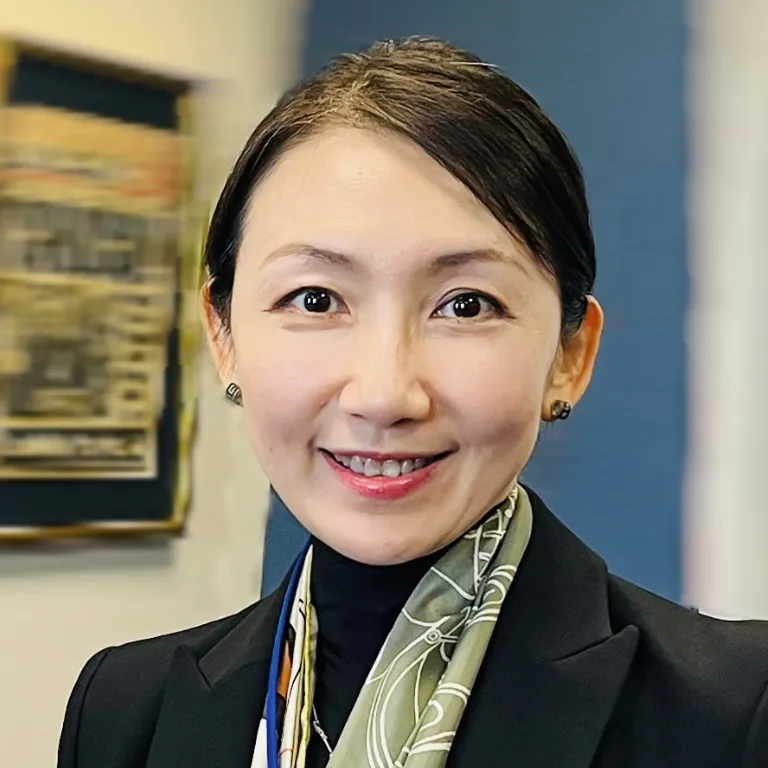
Prof. Dr.-Ing. Katharina Schmitz serves as Institute Director and Vice Dean at the Institute for Fluid Power Drives and Systems, RWTH Aachen University. Her leadership within the Production Technology Cluster and extensive contributions to fluid power engineering establish her as a leading authority in mechanical engineering research and education. Her research spans fluid power systems, hydraulic component design, tribology, and physics-informed machine learning applications. She pioneers sustainable propulsion solutions through bio-hybrid fuels research while addressing fundamental challenges in polymer material behavior under hydraulic stresses. Current work focuses on carbon-neutral heavy-duty transportation, physics-based neural networks for lubrication modeling, and advanced control systems for electro-hydraulic actuators. Analysis of her 15 most recent publications reveals a dominant trend toward integrating physics-based modeling with deep learning to solve complex engineering problems. Her team consistently develops novel frameworks for cavitation prediction, flow rate determination, and material compatibility assessment - significantly advancing fluid power system reliability, efficiency, and digitalization. Scientific recognition includes: GfT Förderpreis 2023 for experimental and simulative investigation of partially hydrostatic relieved contacts in variable speed axial piston machines As head of the Institute for Fluid Power Drives and Systems, she leads cutting-edge research in sustainable fluid power technologies. The institute maintains strong industry partnerships while driving innovation in hydraulic component design, digital twins for condition monitoring, and next-generation propulsion systems through its position within RWTH Aachen's Production Technology Cluster.
Mathias FINK is a Professor at ESPCI Paris on the Georges Charpak chair. His research focuses on fundamental wave physics in complex media with major applications in medical imaging, telecommunications, and geophysics. He pioneered time-reversal mirrors for wave focusing and co-founded 6 technology companies. Key Institutions: ESPCI Paris, Collège de France Research Themes: Wave physics, time-reversal techniques, matrix imaging, metasurface design His work spans multi-echo wave systems , ultrasonic therapeutic devices , and adaptive electromagnetic communication systems . Recent publications emphasize 3D matrix imaging in biological tissues and space-time interface dynamics . Scientific recognition includes: First academic elected at Collège de France (2008) Over 400 peer-reviewed publications 70+ patents and 6 start-ups Collaborations extend to Institut des Hautes Études Scientifiques , Langevin Institute , and Hong Kong University of Science and Technology . His team's volcanic imaging work with seismic noise has revolutionized subterranean mapping.
Jia Di serves as Professor and Department Head of the Department of Electrical Engineering and Computer Science at the University of Arkansas, holding the Rodger S. Kline Endowed Leadership Chair. He has been with the institution since 2004, progressing from Assistant Professor to his current leadership position within the College of Engineering. Education: B.S. in Automatic Control, Tsinghua University (1997) M.S. in Automatic Control, Tsinghua University (2000) Ph.D. in Electrical and Computer Engineering, University of Central Florida (2004) Research Focus: Dr. Di's work centers on asynchronous integrated circuit design and hardware security , with emphasis on Multi-threshold Null Convention Logic (MTNCL) for ultra-low-power secure systems. His research spans hardware Trojan detection, polymorphic logic gates, extreme environment electronics, and security solutions for IoT infrastructure. His Trustable Logic Circuit Design Lab has pioneered techniques for side-channel attack mitigation and cold boot attack prevention through self-destructive memory mechanisms. Publication Trends: Recent publications reveal a strategic shift toward hardware security applications for renewable energy systems and IoT edge devices, while maintaining core expertise in asynchronous circuit design. His work increasingly integrates machine learning (e.g., graph neural networks for hardware Trojan detection) and cross-platform verification frameworks, demonstrating evolution from pure circuit design to holistic cybersecurity solutions for critical infrastructure. Scientific Recognition: Senior Member of IEEE Eminent Member of Tau Beta Pi Elected Member of the National Academy of Inventors Research Leadership: Dr. Di has secured over $23 million in research funding for his Trustable Logic Circuit Design Lab, supporting development of 6 U.S. patents and two authoritative books. His lab collaborates with federal agencies and industry partners on hardware security challenges, with recent grants focusing on photovoltaic system protection and extreme-environment electronics. While specific student names aren't documented here, his extensive publication record indicates significant graduate mentorship in hardware security and asynchronous design. Lab Infrastructure: The Trustable Logic Circuit Design Lab maintains specialized capabilities for testing circuits in extreme environments (high temperature/radiation) and developing polymorphic security mechanisms. Current projects include RF aperture security, hardware-based IoT verification systems, and digital twin implementations for power electronics with integrated trust verification.
Arthur B Prindle is an Associate Professor in Biochemistry and Molecular Genetics and Microbiology-Immunology at Northwestern University's Feinberg School of Medicine, with a secondary appointment in McCormick School of Engineering. His research integrates synthetic biology and quantitative approaches to study collective behaviors in microbial communities. Education: PhD: University of California, San Diego (2014) Postdoctoral Fellow: University of California, San Diego, Molecular Biology (2016) Prindle's lab investigates molecular mechanisms of cell communication in biofilms using synthetic biology, microfluidics, and quantitative microscopy. Research focuses on engineering microbial communities for biomedical applications including inflammatory bowel disease detection, respiratory health improvement, and cancer biomarker discovery. The group develops "smart" biofilms capable of environmental detoxification and disease sensing through electrochemical signaling pathways. Recent publications (2021-2025) demonstrate interdisciplinary work spanning microbiome engineering, bacterial pathogenesis, and diagnostic tool development. Key themes include microbiome manipulation for therapeutic applications, multi-omics approaches to disease biomarkers, and fundamental studies of bacterial communication systems. Scientific Awards: NSF CAREER Award U.S. Army Research Office Early Career Award Pew Biomedical Scholar (2019) Packard Fellowship (2018, $875,000) Prindle leads an active research group supported by NSF, Army Research Office, and Packard Foundation grants. His lab recruits postdoctoral scholars, graduate students, and undergraduates for projects combining computational modeling with experimental synthetic biology. Current initiatives include developing engineered probiotics for human disease surveillance and exploring bacterial electrochemical signaling networks. The Prindle Lab operates within Northwestern's Simpson Querrey Institute for Epigenetics and collaborates with the Chemistry of Life Processes Institute and Robert H. Lurie Comprehensive Cancer Center. Located in the Simpson Querrey Research Building, the team utilizes custom microfluidic devices and advanced imaging to characterize metabolic and electrochemical dynamics in microbial communities.
Associate Professor Zhidong Li is a prominent researcher at the Data Science Institute within the Faculty of Engineering and Information Technology at University of Technology Sydney (UTS), Australia. With over a decade of experience in data science and machine learning, he leads impactful research bridging theoretical advancements with practical applications across multiple critical infrastructure domains. Dr. Li earned his PhD from the University of New South Wales, Sydney, Australia, and previously served as a senior engineer at Data61, CSIRO (Commonwealth Scientific and Industrial Research Organisation), Australia's federal government agency for scientific research. His research spans machine learning, data mining, pattern recognition, image processing, and human-computer interaction with applications in water, gas, traffic, urbanization, visitor economy, agriculture, environment, finance, property market, railway, law, electric and health sectors. His work particularly focuses on developing interpretable AI models, temporal point processes, and practical applications for smart infrastructure management. His extensive publication record reveals strong thematic consistency in applying advanced machine learning techniques to infrastructure management problems, with particular emphasis on water systems. His research demonstrates progression from fundamental algorithm development toward increasingly sophisticated applications with real-world impact, especially in temporal modeling, graph neural networks, and fairness in AI systems. Scientific Awards 2022 R&D Excellence Award NSW Water Award 2021 UTS Medal for Research Impact for the Vice-Chancellor's Awards for Research Excellence 2018 Australian Museum Eureka Prize for Excellence in Data Science 2019 Victorian iAwards - Industrial & Primary Industries Merit for 'Predictive Analytics for Water Pipe Maintenance' Multiple AWA research innovation awards (NSW, National, QLD) Dr. Li actively supervises Masters and PhD students and leads numerous funded research projects across diverse sectors. His collaborative approach is evident through partnerships with water utilities, transport agencies, and various CRC projects focusing on Food Agility, Digital Finance, and Smartcrete. His work on the world's first independently-audited ethical talent AI in partnership with Reejig demonstrates his commitment to translating research into real-world solutions that address societal challenges while maintaining ethical standards.
Dr. Albert J. Sinusas is a Professor of Medicine (Cardiology) , Radiology & Biomedical Imaging , and Biomedical Engineering at Yale University . He serves as Director of the Yale Translational Research Imaging Center (Y-TRIC) and Advanced Cardiovascular Imaging at Yale New Haven Hospital. Education: BS from Rensselaer Polytechnic Institute (1979), MD from University of Vermont (1983), Internal Medicine training at University of Oklahoma (1986), Cardiology/Nuclear Cardiology at University of Virginia (1989) Dr. Sinusas specializes in non-invasive cardiovascular imaging with expertise in PET/CT, SPECT/CT, echocardiography, and MR imaging . His research focuses on molecular imaging of myocardial injury , angiogenesis , post-infarction remodeling , and deep learning applications in cardiac diagnostics. He has pioneered multimodality imaging approaches for cardiovascular pathophysiology assessment. Recent publications highlight his work in AI-driven cardiac imaging , novel PET tracers , and medical robotics . His team's 15 most recent articles (2024-2025) span topics from ARDS diagnostics to cardiovascular risk stratification using CT and PET technologies. Scientific Awards: SNMMI Hermann Blumgart Award (2008) Best Doctor in America (2001-2002, 2005-2015) M.A. Privatim from Yale (2006) Robert Wilkinson Lectureship (2014) Interurban Clinical Club membership (2017) As Principal Investigator on multiple NIH grants, Dr. Sinusas directs the NHLBI-funded T32 training program in multimodality cardiovascular imaging. His lab (Y-TRIC) houses state-of-the-art imaging resources including hybrid SPECT/CT , microCT , and 3D ultrasound systems for translational research from animal models to clinical applications.
Fredrik Sandin is a Professor in the Department of Computer Science, Electrical and Space Engineering at Luleå University of Technology, where he leads the Machine Learning research group with approximately thirty members. His work focuses on neuromorphic technologies and the intersection of machine learning with computational physics to solve challenging real-world interaction problems. He coordinates the 'Teknisk fysik och elektroteknik' program at LTU and has been instrumental in establishing neuromorphic research activities at the university. Luleå University of Technology, Department of Computer Science, Electrical and Space Engineering Member of WASP (Wallenberg AI, Autonomous Systems and Software Program) and ELLIS (European Laboratory for Learning and Intelligent Systems) Coordinator of Neuromorphic Innovation Platform Sweden with KTH, Lund University, Uppsala University, FOI, ABB, Ericsson, and SAAB Fredrik earned his PhD in Physics from Luleå University of Technology in 2007, with thesis work focusing on dense states of matter in neutron stars. His academic journey began with an MSc diploma work in ATLAS at CERN in 2001, followed by postdoctoral research in computational physics at IFPA in Belgium (2008-2009) and brain-like computing at EISLAB with Prof. Jerker Delsing (2010-2011). Professor Sandin's research interests center around neuromorphic technologies, particularly neuromorphic computing and spiking neural networks. He investigates sensor/detector and intelligent systems co-design where constraints like energy, power, latency, and dynamic range challenge conventional digital approaches. His work spans mixed-signal neuromorphic circuits, algorithms, and systems, as well as machine learning projects involving industrial data and collaboration. He has been a key figure in establishing neuromorphic research at LTU, supported by The Kempe Foundations, particularly through the 2014 Gunnar Öquist Fellowship. His recent publications demonstrate a strong interdisciplinary focus spanning quantum phase transitions, particle physics detector optimization, renewable energy materials, and the integration of large language models into control systems. This diverse portfolio reflects his approach connecting machine learning with fundamental physics and practical engineering applications, particularly in neuromorphic computing and intelligent systems design, with emphasis on solving real-world problems through co-design of hardware and algorithms. Gunnar Öquist Fellowship Award and 3 MSEK grant from The Kempe Foundations ISSP award for an Original Work in Theoretical Physics (signed by Prof. 't Hooft and Prof. Zichichi) New-Talents award for original work in theoretical physics at the International School of Subnuclear Physics in Erice Professor Sandin has supervised numerous PhD students working on topics ranging from neuromorphic TinyML to materials for neuromorphic computing, privacy-preserving machine learning at the edge, and intelligent fault diagnosis. He has secured substantial research funding from various sources including Vinnova, ÅForsk, Kempe Foundations, WASP-WISE, and EU programs like ECSEL JU Arrowhead Tools and ITEA3 AutoDC. His current major projects include the Neuromorphic Innovation Platform Sweden and several initiatives focused on neuromorphic condition monitoring and computing, with total funding exceeding 30 MSEK in the past five years. He leads the Machine Learning group at LTU, which collaborates extensively with industry partners including ABB, Ericsson, SAAB, SKF, and RISE. The group is active in developing neuromorphic technologies for wireless sensor networks, condition monitoring systems, and next-generation intelligent systems that address energy, power, and latency constraints that challenge conventional digital approaches.
Ping Ji is a Full Professor and Chair of the Department of Computer Science within the School of Arts and Sciences at the City University of New York (CUNY), with dual appointments at Hunter College and John Jay College of Criminal Justice. She serves as Executive Officer of the Computer Science PhD Program and former Director of the Master's Program in Data Science at the CUNY Graduate Center (2018-2025). Educational background: PhD in Computer Science, University of Massachusetts Amherst (Advised by Jim Kurose and Don Towsley) MS in Computer Science, University of Massachusetts Amherst BA in Computer Science and Technology, Tsinghua University Her research spans network measurement and data analysis , security monitoring for computer and wireless networks , and Internet of Things (IoT) , with significant contributions to mobile network security and underwater acoustic communications. She founded John Jay College's Master's Program in Digital Forensics and Cybersecurity and the Graduate Center's Master's Program in Data Science. Analysis of her publication trends reveals a strategic evolution from foundational network security work toward AI-integrated systems for censorship detection, ethical security frameworks for small businesses, and transformative educational ecosystems. Her recent work increasingly incorporates large language models and multi-modal sensor analysis while maintaining core expertise in network measurement. Scientific recognition: Google Award ($3M) for CyberNYC Institutional Research Multiple NSF grants totaling over $2.1M including CCRI, I-Corps, and SFS programs Leadership in national cybersecurity workforce development initiatives Dr. Ji has secured over $3 million in research funding while advising numerous PhD students through the NeMo (Networks & Mobile Systems) Lab. Her grant portfolio demonstrates sustained success in translating theoretical research into practical applications for security monitoring, digital forensics, and educational technology. Current projects include AI-enabled censorship detection systems and ethical security frameworks tailored for resource-constrained small businesses. The NeMo Lab under her direction conducts cutting-edge research in wireless network measurement, mobile security, and IoT applications, with recent expansions into underwater acoustic communications and AI-driven educational transformation through the AeDA (AI-Enabled Attainable Education for All) initiative.
Dr. Faisal Mohd-Yasin is a Senior Lecturer in the School of Engineering and Built Environment at Griffith University, specializing in Electrical and Electronic Engineering. He has been with Griffith University since 2010, initially as a Lecturer (2010-2016) and promoted to Senior Lecturer in 2017. He is also a member of the Queensland Quantum and Advanced Technologies Research Institute (QUATRI) since 2025. His research spans microelectronics, MEMS technology, compound semiconductors, and electronic sensors/instrumentation, with particular expertise in silicon carbide-based devices for harsh environments. Dr. Mohd-Yasin holds dual PhD qualifications: a Doctor of Philosophy (Engineering) from Multimedia University, Cyberjaya, Malaysia (2014) and a PhD in Engineering from Ibaraki University, Hitachi, Japan (2009). His educational background provides a strong foundation for his interdisciplinary research that bridges semiconductor physics, sensor technology, and electronic circuit design. His research interests focus on Microelectromechanical systems (MEMS), compound semiconductors (particularly $$ ext{SiC}$$), electronic sensors, and electronic instrumentation. He has made significant contributions to the development of silicon carbide MEMS devices for harsh environments, piezoelectric energy harvesters, and noise analysis in microelectronic systems. His work has important applications in sustainable cities (SDG 11), health and well-being (SDG 3), and clean energy (SDG 7). Analysis of his recent publications reveals a strong trend toward MEMS sensor technology, particularly silicon carbide-based devices for harsh environments, and noise analysis in piezoelectric sensors. His research also demonstrates a growing interest in engineering education, with several publications on practical electronics teaching methods. The publications span electrical engineering, sensor technology, energy harvesting, and engineering education, reflecting his interdisciplinary approach to research and teaching. Dr. Mohd-Yasin has successfully supervised multiple doctoral and masters students through completion, including Utkarsh Jadli (PhD on Parasitic Capacitances of Power Transistors), Siti Aisyah Zawawi (PhD on MEMS capacitive microphone), Mei Kum Khaw (PhD on magnetically actuated droplets), Abid Iqbal (PhD on AlN thin films), Noraini Marsi (PhD on MEMS pressure sensors), and Kai Meng Mui (Masters on Power management IC). He has also secured numerous research grants totaling over $1.5 million from various sources including Griffith University, Innovative Manufacturing CRC, IRU, and Malaysian research councils. He is actively involved in professional service as a peer reviewer for the IEEE Sensors Conference series (2015-2025), Micro and Nano Engineering Conference series (2009-2018), and the International Conference on Solid-State Sensors, Actuators and Microsystems (2018-2019). He is also a member of IEEE (Institute of Electrical and Electronics Engineers) since 1997. Dr. Mohd-Yasin's research is primarily conducted through the Queensland Quantum and Advanced Technologies Research Institute (QUATRI), where he collaborates with researchers working on advanced semiconductor technologies and quantum applications. His laboratory work focuses on MEMS fabrication, sensor characterization, and circuit design for harsh environment applications.
George Shaker is an Adjunct Associate Professor in the Department of Electrical and Computer Engineering at the University of Waterloo, Canada, and Lab Director of the Wireless Sensors and Devices Laboratory at the Schlegel-UW Research Institute for Aging. He is also Chief Scientist at Spark Technology Labs. His research focuses on wireless sensor technologies for healthcare, autonomous systems, and IoT. He earned his bachelor's from Cairo University and master's/PhD from the University of Waterloo. Education: Bachelor’s degree, Cairo University, Egypt Master’s degree, University of Waterloo, Canada PhD, University of Waterloo, Canada Research Interests: Dr. Shaker’s work spans advanced wireless sensor systems for healthcare monitoring, UAVs, and automotive applications. His lab developed the MIRADA initiative for aging populations and pioneered radar-based non-invasive glucose monitoring. Key areas include mm-wave radar, antenna design, bioelectromagnetics, and machine learning integration. He has co-authored over 200 publications and holds 35+ patents, collaborating with companies like Google, Apple, and Toyota. Recent Article Trends: His 2025 work emphasizes AI-driven radar systems for activity recognition, bio-sensing metasurfaces, and UAV classification using digital twins. Projects include 4D radar imaging, low-cost milk quality monitoring, and smart furniture for cardiac health. Awards: IEEE AP-S Best Paper Award IEEE MTT-S Graduate Fellowship arXiv Top Downloaded Medical Article URSI Young Scientist Award Multiple student awards (see full list above) Advising & Grants: He advises graduate students in ECE and has led projects funded by NSERC and industry partners. His students have won Velocity Fund, NASA Tech Briefs, and Canadian Space Agency awards. Collaborates with over 40 companies including Amazon, Microsoft, and Medella Health. Labs & Initiatives: Leads the Wireless Sensors & Devices Lab and co-founded MIRADA, a smart apartment for aging healthcare. Active in Spark Labs for wireless innovation.
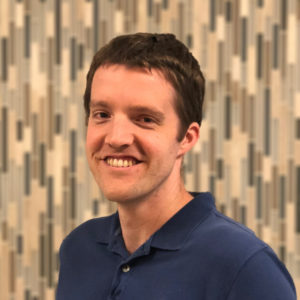
Yu Cao is an Adjunct Professor in the School of Electrical, Computer and Energy Engineering at Arizona State University (ASU). He holds a Ph.D. in Electrical Engineering from the University of California, Berkeley (2002), an M.A. in Biophysics (1999), and a B.S. in Physics from Peking University (1996). His research focuses on nanoscale technology modeling, variability and reliability in electronics, and hardware design for on-chip learning. Key interests include predictive technology modeling, post-silicon integration, and energy-efficient semiconductor devices. Dr. Cao has led multiple grants funded by NSF, Samsung, Semiconductor Research Corporation, and academic institutions. His work emphasizes bridging technology and design automation gaps in nanometer-scale integration. Courses taught include VLSI design, digital systems, and graduate research supervision. He has authored two books and numerous articles on nano-CMOS modeling and physical design. His recent research advances include stable, efficient organic light-emitting diodes (OLEDs) and electrochromic devices leveraging phosphorescent molecular aggregates. These innovations address challenges in color stability, energy efficiency, and device lifetime. Notable grants include NSF-funded projects on hardware and algorithms for on-chip learning (2015–2016) and low-power bio-signal processing (2015–2016). His contributions span semiconductor reliability, nanoelectronic device applications, and predictive circuit simulation techniques.
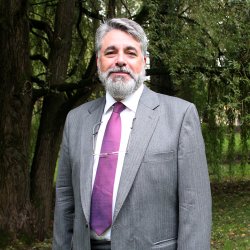
Professor Alan Woodward is a renowned computer security expert at the University of Surrey, affiliated with the Surrey Centre for Cyber Security and Computer Science Research Centre. His career spans academia, government service, and private sector leadership, including pivotal roles in IT businesses like Charteris plc. He holds fellowships and chartered status across multiple prestigious institutions and actively advises governmental bodies such as Europol. Education: Undergraduate studies in Physics & Astronomy Postgraduate research in adaptive filtering and signal recovery at the University of Southampton's Institute of Sound and Vibration Research Research Focus: Woodward's interdisciplinary work bridges cybersecurity, digital forensics, and signal processing. His expertise includes cryptographic methods, steganography for covert communications, digital watermarking for data protection, and novel approaches to forensic computing. Current projects explore quantum computing threats and real-world cybercrime mitigation. Publication Trends: His recent articles demonstrate a strong focus on emerging cyber threats across societal and technical domains. Key themes include quantum cryptography vulnerabilities, organized cybercrime patterns, critical infrastructure risks, mobile/cloud security challenges, and public cybersecurity education with practical guidance for digital safety. Honors & Credentials: Fellow: Institute of Physics, British Computer Society, Royal Statistical Society Chartered Status: Engineer (CEng), IT Practitioner (CITP), Physicist (CPhys) Eur Ing (European Engineer) Leadership & Outreach: Beyond academic research, Woodward directs technology enterprises and leads public STEM engagement. He frequently contributes to international media (BBC, The Times, The Telegraph) as a cybersecurity commentator. His Surrey research teams collaborate with law enforcement and industry partners on threat intelligence initiatives.
Prof. Naresh R. Shanbhag holds the Jack S. Kilby Professorship in Electrical and Computer Engineering at the University of Illinois Urbana-Champaign. He is affiliated with the Coordinated Science Lab and the Information Trust Institute, both part of the College of Engineering. His research focuses on energy-efficient computing architectures, in-memory computing, nanoelectronics, and secure machine learning systems. Prof. Shanbhag has pioneered work on statistical error compensation techniques and resistive crossbar-based architectures, addressing critical challenges in low-power, high-performance computing. Education and career details are not explicitly provided in the text, but his extensive publications (313+) and honors indicate deep academic involvement. His research interests emphasize the intersection of hardware architecture and machine learning, with a focus on emerging technologies like MRAM and SRAM-based in-memory computing. Key awards include the IEEE Fellow designation (2006) and the prestigious Semiconductor Industry Association (SIA) University Research Award (2018). His recent work explores security vulnerabilities in in-memory architectures, energy-accuracy trade-offs in resistive systems, and adversarial robustness of neural networks. Prof. Shanbhag’s contributions span over 20 years, bridging theoretical computer science with practical hardware implementations. His lab (Coordinated Science Lab) and collaborations drive innovations in nanoscale information processing and trustworthy computing systems.
Mark Plumbley is a Professor of Signal Processing at the Centre for Vision, Speech and Signal Processing (CVSSP) within the School of Computer Science and Electronic Engineering at the University of Surrey. He holds an EPSRC Fellowship in 'AI for Sound' and has led major research initiatives, including the DCASE challenges. His work focuses on AI-driven analysis of acoustic scenes and events, with contributions to machine learning, audio source separation, and sparse representations. Previously, he was Director of the Centre for Digital Music at Queen Mary University of London and Head of the School of Computer Science at Surrey. Education: PhD in Neural Networks (1991). Academic roles include Professorships at King’s College London (1991–2002) and Queen Mary University of London (2002–2014). Research spans audio event detection, sound scene classification, and generative AI for audio synthesis. He leads projects like the EPSRC-funded 'Making Sense of Sounds' and 'Musical Audio Repurposing using Source Separation', and co-edited the Springer book on Computational Analysis of Sound Scenes and Events. Research Interests: AI for Sound: Machine learning applied to real-world audio analysis. Acoustic Scene and Event Recognition: Developing models for sound classification and localization. Generative Audio Models: Text-to-audio systems and diffusion models for sound synthesis. Healthcare Applications: Audio-based diagnostics and bioacoustic signal processing. Grants and Awards: EPSRC Fellowships, EU-funded networks (SpaRTaN, MacSeNet), and Fellowships from IET and IEEE. Notable awards include the IEEE Young Author Best Paper Award (co-authored with students) and leadership in the DCASE community. Labs and Collaborations: CVSSP at Surrey, collaborations with BBC R&D, and interdisciplinary projects on urban soundscapes and noise pollution (UK Acoustics Network Plus).
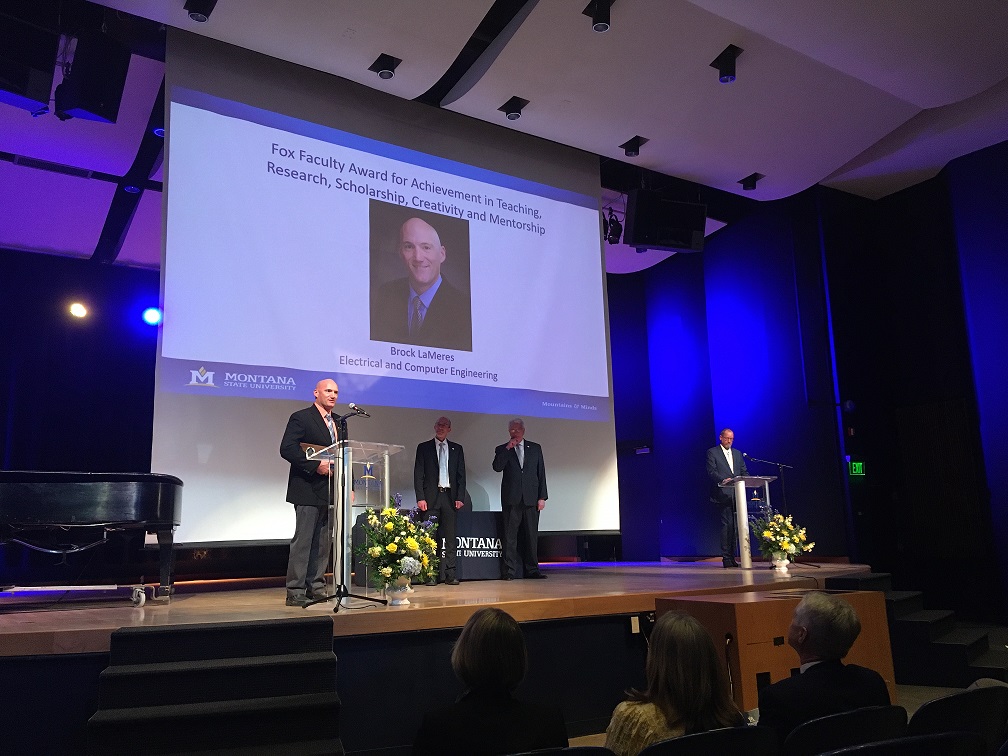
Brock J. LaMeres is a Professor and Director of the Montana Engineering Education Research Center (MEERC) at Montana State University. With joint appointments in Electrical & Computer Engineering and engineering education leadership, he has pioneered radiation-tolerant computer systems and reconfigurable computing technologies for space applications while reforming engineering pedagogy through innovative teaching methods. Ph.D., Electrical Engineering, University of Colorado-Boulder (2005) M.S., Electrical Engineering, University of Colorado-Colorado Springs (2001) B.S., Electrical Engineering, Montana State University (1998) His research interests span radiation-hardened computer architectures, space radiation effects on electronics, and engineering education reform. Notably, he developed the RadPC technology for NASA lunar missions and created the MEERC to align engineering graduates with workforce needs. His work integrates unconventional teaching tools like Minecraft for spatial skill development and created the STEM Storytellers program to enhance graduate students' communication skills. Key article trends demonstrate dual focus areas: (1) radiation-tolerant computing for space missions with subfields like FPGA-based design, memory protection algorithms, and AI processing in radiation environments, and (2) engineering education innovations including e-learning platforms, spatial reasoning training, and oral communication development. 2023: MSU VPR Meritorious Technology/Science Award 2022: NACOE Excellence in Outreach Award 2020: Fox Faculty Award for multidisciplinary excellence 2018: ASEE Distinguished Educator Award As director of MEERC, he has secured $20M+ in grants from NASA, NSF, and national labs. His lab has deployed multiple CubeSats to the International Space Station and developed 15+ U.S. patents in digital signal propagation and radiation-hardened computing. He mentors graduate students in both technical and educational research areas.