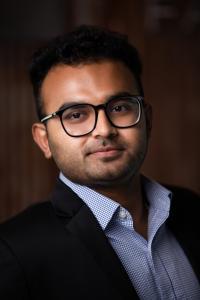
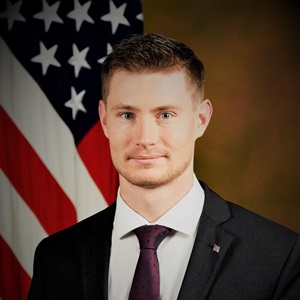
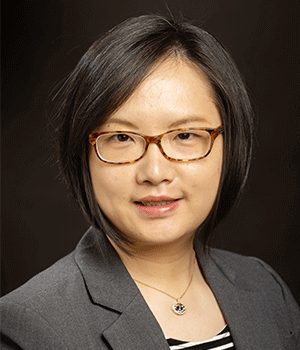
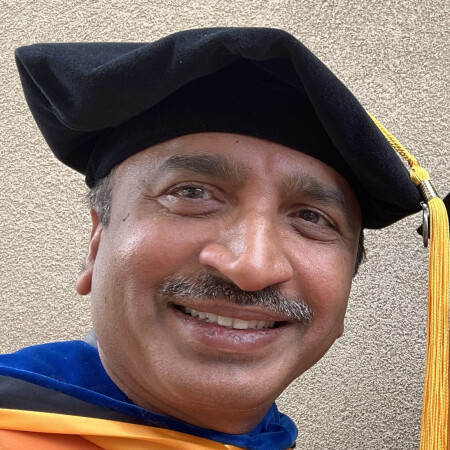
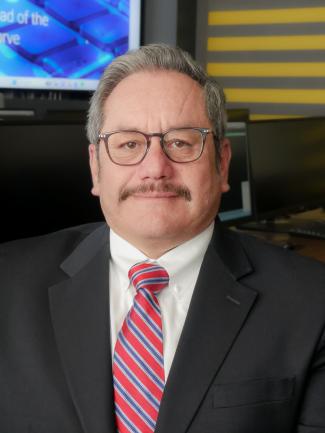
Dr. Rishabh Das is an Assistant Professor at Ohio University's McClure School of Emerging Communication Technologies, specializing in critical infrastructure cybersecurity. With industry experience in oil/gas control systems, his research develops defensive frameworks for industrial controllers using machine learning and virtualization. Research Focus: Designs intrusion prevention systems for SCADA networks, digital twin implementations for threat modeling, and cloud IAM solutions. Current projects include neural network-based anomaly detectors and causal analysis for process-aware ICS security. Awards: Deloitte Cyber IoT Practitioner of the Month (2022) Best presenter award at ICCE (2017) First place in NYU CSAW Embedded Security Challenge (2017)
Dakota Roberson is Associate Professor of Electrical and Computer Engineering at University of Idaho and Associate at the Center for Advanced Energy Studies. He holds joint appointments with Idaho National Laboratory's National and Homeland Security directorate and as nuclear engineering affiliate faculty. His research addresses: Grid resilience against cyber-physical threats Distributed energy resource control Modern power system stability Recent publications demonstrate innovations in grid security architectures, control system synthesis, and critical infrastructure protection. His work has been recognized through national innovation awards and fellowships. Professor Roberson advises the U.S. Air Force Chief Scientist and served as White House Fellow at the Department of Defense. He holds a Ph.D. (2017) and B.S. (2013) in Electrical Engineering from University of Wyoming.
Christopher Petras serves as Adjunct Professor in the LL.M. Program in Air and Space Law at the University of Mississippi School of Law while working full-time as a Legal Officer at the International Civil Aviation Organization (ICAO). At ICAO, he advises on constitutional, administrative, and international law matters, drawing on over 20 years of experience as a U.S. Air Force officer specializing in air and space operations law. His publications focus on military space operations, aviation security frameworks, liability regimes for aircraft damage, and emergency air traffic control protocols. Professor Petras' honors include the Thomas P. Keenan Award from the U.S. Air Force and the Dean's Honour List Award from McGill University's Institute of Air and Space Law.
Zhen Zeng is an Assistant Professor in the Computer Science department at the University of Wisconsin-Milwaukee's College of Engineering & Applied Science. She leads the Secure and Intelligent Distributed Computing Lab (SIDC Lab) and focuses on developing secure, reliable compound AI systems for cloud-native applications across cloud, edge, and on-premises environments. Her research integrates cybersecurity with artificial intelligence, specializing in threat intelligence, vulnerability prioritization, and AI system security. Current projects include AI-powered threat modeling, large-scale cloud emulation, and industrial control system security. She also develops innovative approaches to cybersecurity education through virtual labs and knowledge graph technologies. As a dedicated educator, she received the Teacher Excellence Award at UWM in 2024 and contributes to AI and cybersecurity workforce training. Professional service includes organizing roles at IEEE INFOCOM and IC2E conferences, NSF review panels, and editorial work for IEEE Transactions journals.
Ben Brewster is a Researcher with the Centre of Excellence in Terrorism, Resilience, Intelligence and Organised Crime Research (CENTRIC) under the College of Business, Technology and Engineering. He is pursuing a PhD focused on developing a target operating model for knowledge and intelligence management to combat Human Trafficking through police intelligence-led initiatives. His research bridges information systems, knowledge management, and criminology, with a focus on security applications. Key projects include the EU-funded ePOOLICE (text analytics for organized crime detection), COURAGE (cybercrime research agenda), and UINFC2 (child exploitation prevention). His work emphasizes interdisciplinary collaboration between law enforcement, industry, and academia. Research interests span cybercrime, cyberterrorism, intelligence-led policing, and open-source data strategies. He has contributed to frameworks for community policing, trust-building in crises, and combating online radicalization. Publications address knowledge management in law enforcement and human trafficking detection via open-source tools. Notable contributions include editing the book Combatting Cybercrime and Cyberterrorism and co-authoring works on cybercrime taxonomy, child protection toolkits, and big data applications in national security. Brewster’s work integrates technology and policy to enhance public safety and law enforcement effectiveness, with a focus on translating research into actionable practices for combating modern security threats.
Tina Eliassi-Rad is the Joseph E. Aoun Professor at Northeastern University's Khoury College of Computer Sciences. She serves as core faculty at the Network Science Institute and external faculty at the Santa Fe Institute and Vermont Complex Systems Institute. Her research bridges data mining, machine learning, and network science with emphasis on trustworthy AI systems and societal impacts. Her current research programs focus on: Trustworthy Network Science: Enhancing explainability, robustness, and fairness in graph-based machine learning Just Machine Learning: Analyzing AI within broader sociotechnical systems to mitigate systemic risks Dr. Eliassi-Rad teaches graduate courses in Machine Learning with Graphs and has organized numerous workshops including the 2024 ICML Workshop on Humans, Algorithmic Decision-Making and Society. Her interdisciplinary work connects computer science with social science, biology, and policy studies.
Dr. Mohammadamin ALANDIHALLAJ is a Postdoctoral Researcher at the University of Luxembourg's Interdisciplinary Centre for Security, Reliability and Trust (SnT), within the SPASYS department. His work focuses on advanced space systems engineering, control systems, and aerospace technologies. Key research areas include satellite mission design (e.g., the POQUITO PocketQube mission), autonomous orbital correction using machine learning, and fractionated spacecraft architectures for enhanced connectivity. His research integrates cutting-edge techniques like Model Predictive Control (MPC), reinforcement learning (e.g., PPO algorithms), and LSTM networks to address challenges in spacecraft navigation, fault tolerance, and on-orbit operations. Notable contributions include developing control strategies for satellite docking, fuel-efficient orbit correction, and mitigating disturbances in on-orbit refueling. Dr. ALANDIHALLAJ also leads the Zero-G Lab, a multi-purpose facility for simulating space operations, enabling experimental validation of technologies such as floating platform stabilization and fuel sloshing mitigation. His work bridges theoretical advancements with practical applications, including wildfire monitoring via fractionated spacecraft and deep-space exploration systems for Europa missions. He has authored over 30 peer-reviewed publications, with recent emphasis on AI-driven space systems, fractionated architectures, and zero-gravity environment emulation. Current research trends highlight the convergence of machine learning, systems engineering, and experimental validation for next-generation space technologies. Awards and recognitions are not explicitly mentioned in the provided texts. His research is supported by collaborations within SnT and interdisciplinary projects at the University of Luxembourg.
Dr. Jeyakesavan Veerasamy is a Professor of Instruction in Computer Science and Director of the Center for CS Education & Outreach at the Erik Jonsson School of Engineering and Computer Science, University of Texas at Dallas. His roles include teaching computer science courses, directing outreach programs for K-12 students, and organizing summer research experiences and coding camps. He oversees initiatives such as cyber defense workshops, robotics, game design, and app development programs aimed at fostering computer science literacy in the Dallas area. Education: PhD in Computer Science, University of Texas at Dallas (1999) MS in Computer Science, University of Texas at Dallas (1993) B.E. in Electronics and Communication Engineering, Anna University (1990) Research focuses on wireless networking optimization, approximation algorithms, and computer science education. His work includes patents on wireless network efficiency and contributions to theoretical computer science, such as approximation algorithms for postman problems. He received the Best PhD Dissertation Award in Computer Science (1998-99) for his work on approximation algorithms. Outreach efforts include teacher training programs, professional development workshops, and partnerships with schools to deliver coding classes taught by UTD graduate students. His programs emphasize practical applications of computing through robotics, cybersecurity, and app development.
David Fahrenkrug is an Adjunct Professor at Georgetown University, teaching graduate-level courses on strategy, net assessment, and cyber warfare. He concurrently serves as Director of Strategic Planning at Northrop Grumman’s Analysis Center, providing analytic support to senior executives on military, customer, and market issues. His work focuses on long-term national security analysis and creating advocacy materials for defense programs. Education: B.S. in Aeronautical Engineering (USAF Academy), M.S. in Aeronautics (George Washington University), PhD in Political Science (University of Chicago) Military Background: Command pilot with 2,000 flight hours in T-38, F-15C, and C-21 aircraft; retired as Senior Military Advisor to the Director of the Office of Net Assessment (OSD) Research interests emphasize cyber defense strategies, national security policy, and strategic military planning. He coordinates cross-agency studies on warfare in long-term competitions between the U.S. and adversaries, including wargame development and policy analysis. Professional Experience: 26 years active duty in the U.S. Air Force, transitioning to academia (Georgetown since 2011) and industry (Northrop Grumman since 2014). No awards explicitly listed, though his contributions to defense analysis are notable.
Colonel Candice E. Frost is an Adjunct Assistant Professor at Georgetown University's Center for Security Studies (CSS) and currently serves as Commander of the Joint Intelligence Operations Center at U.S. Cyber Command. She leads intelligence operations to support cyber defense, strategic threat mitigation, and joint force objectives. Her military career spans tactical, operational, and strategic roles in Military Intelligence, including deployments to Afghanistan and Bosnia, and a War College Fellowship at the CIA. Education: Bachelor’s in Science, United States Military Academy Master’s in Public Administration, Central Michigan University Master’s in Military Arts and Science, School of Advanced Military Studies Her expertise focuses on cyber strategy, intelligence analysis, and military applications of emerging technologies. She has received numerous awards, including the Legion of Merit and Bronze Star Medal. Beyond academia, Colonel Frost consults in Washington, D.C., and maintains a personal platform, 'Colonel Candid.'
Dr. Clay Shields is a Professor in the Department of Computer Science at Georgetown University. His research focuses on computer and network security, including forensics, anonymous protocols, network attack tracing, and secure wireless systems. He teaches courses in security, networking, operating systems, and programming. His publications address practical security challenges, such as DDoS mitigation, covert channels, and wiretapping accountability. Recent articles explore voice command vulnerabilities and peer-to-peer forensic investigations. Dr. Shields emphasizes academic honesty and proactive student support in his teaching philosophy. He directs the Scholarship for Service Program, providing cybersecurity scholarships for government careers.
Lei Yu is a Tenure-Track Assistant Professor in the Department of Computer Science at Rensselaer Polytechnic Institute (RPI). Previously, he was a Research Staff Member at IBM Research's Thomas J. Watson Research Center. He holds a Ph.D. in Computer Science from Georgia Institute of Technology and earlier studied at Harbin Institute of Technology. His research focuses on data privacy, AI security, machine learning systems, and cloud/mobile computing, with notable contributions to federated learning, adversarial attacks, and blockchain security. Yu has been awarded multiple IBM accolades, including the 2022 IBM Research Outstanding Accomplishment and the IBM Outstanding Innovation Award. He has authored numerous patents and serves on technical program committees for top conferences like ACM ASIACCS and IEEE ICDCS. Education: Ph.D. in Computer Science (Georgia Tech), M.S. and B.S. from Harbin Institute of Technology (China). His work spans theoretical and applied research, including privacy-preserving techniques, secure AI systems, and distributed computing. He leads the RPI lab focused on trustworthy AI and has advised over 15 students across Ph.D., Master’s, and undergraduate programs. Research interests emphasize threats in data lifecycle, machine learning robustness, and system security. His lab’s projects include membership inference attacks, model deduplication, and blockchain-based solutions for data integrity. He has secured grants such as the RPI-IBM AIRC research award and maintains active collaborations with industry and academia. Awards: IBM Research Awards (2020–2022), NSF Travel Grants, Best Paper Awards. Professional Activities: Guest Editor for Wireless Communications and Mobile Computing , TPC roles in ICDCS, AsiaCCS, and ICDE. Teaching: Courses on database systems, network programming, and machine learning security at RPI.
Alfred Ortiz is a Clinical Professor in the Department of Information Systems at the CU Denver Business School. He holds a doctoral candidacy in Information Systems from IE University (Madrid, Spain), an MBA from the University of the Incarnate Word, and a bachelor’s degree from Cal Poly Pomona. His professional background includes 15+ years in cybersecurity leadership roles at Hewlett-Packard, Infor Global Solutions, and DriveLock, culminating in founding CSD Cyber. He also served in sales, marketing, and management across diverse geographic regions, including Antarctica. His academic contributions span cybersecurity, digital innovation, organizational strategy, and ethics. Recent research focuses on IoT security frameworks, organizational privacy safeguards, and open-source governance. He has taught at the University of the Incarnate Word, Regis University, and the University of Colorado at Colorado Springs. Ortiz’s work bridges academic theory and industry practice, with publications emphasizing strategic alignment, innovation ecosystems, and ethical technology integration. Current research trends highlight IoT security design, contingency-based IT security controls, and global organizational frameworks for technology adoption. Education History: Doctoral Candidate in Information Systems, IE University, Madrid MBA, University of the Incarnate Word Bachelor’s Degree, Cal Poly Pomona Executive Education, MIT His professional career includes executive roles in cybersecurity, regional sales leadership, and pre-sales strategy. Community engagement and family values remain central to his personal and professional ethos.
Dr. Curtis Carver is a Professor of Computer Science at the University of Alabama at Birmingham (UAB) and serves as Vice President and Chief Information Officer (CIO) at UAB. He maintains dual faculty roles in the Department of Computer Science (College of Arts and Sciences) and the School of Public Health. His expertise spans technology strategy, IT leadership, and cybersecurity education. He teaches undergraduate and graduate courses in security, privacy, risk management, leadership, and project management across traditional, online, and executive MBA formats. Dr. Carver’s work emphasizes bridging academic and administrative roles, advocating for administrators to remain active in teaching while leveraging technology to enhance institutional operations. His professional experience includes leadership in multinational IT organizations and collaboration with state agencies to solve complex technological challenges. He has led initiatives in adaptive hypermedia systems, cybersecurity curricula, and technology adoption strategies. Research Interests : Computer Science fundamentals, cybersecurity, adaptive hypermedia systems, and the integration of technology into educational environments. His teaching focuses on practical applications of security, leadership, and project management principles. Grants & Partnerships : While specific grants are not detailed here, Dr. Carver’s leadership roles imply involvement in institutional and collaborative projects. He actively partners with state agencies and academic units to advance IT services and educational technologies. Labs/Teams : Not explicitly mentioned, but his role as CIO suggests leadership in institutional IT infrastructure and strategic initiatives.
Dr. Yunpeng (Jack) Zhang is an Associate Professor in Information Science Technology at the University of Houston's Cullen College of Engineering. He directs the Network, Software and System Laboratory and serves as Center Director for the USDOT Tier-1 Transportation Cybersecurity Center (CYBER-CARE). His research focuses on cybersecurity foundations for critical infrastructure with emphasis on blockchain, IoT security, and vehicular systems. Zhang has developed novel cryptographic protocols, intrusion detection frameworks, and access control models for transportation networks. Honors: 50-in-5 Major Grant Recipient (2024) IEEE Senior Member Best Paper Finalist (IDSTA2022) New Faculty Award (2015) Education Leadership: Designed courses in Data Science for Cybersecurity, Cryptography, and Intrusion Detection. Supervised 75+ graduate students.