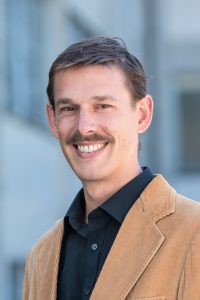
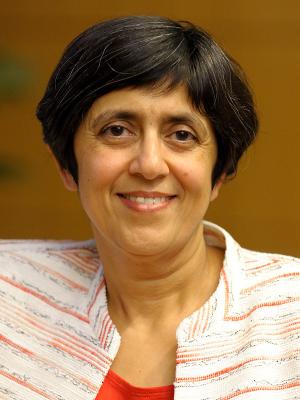
Peter Bühlmann is a Professor at ETH Zürich within the Seminar für Statistik , focusing on high-dimensional statistics, causal inference, and machine learning. His work bridges theoretical advancements with practical software implementations in R packages like pcalg , mboost , and glmmlasso , impacting fields such as genomics, proteomics, and intensive care analytics. Key Contributions : Causal structure learning, stability selection, anchor regression, and deconfounding. Software : Developed widely used R packages for statistical modeling and causal inference. Teaching : Courses on high-dimensional statistics at ETH Zürich and international institutions. Research Trends : Recent articles emphasize causal robustness, domain adaptation, and applications in medicine. His work addresses challenges in heterogeneous data, missing values, and covariate shifts using methods like spectral deconfounding and residual prediction tests. Scientific Recognition : Co-author of a paper designated as a New Hot Paper (Meinshausen and Bühlmann, 2006) by Essential Science Indicators, indicating significant impact in high-dimensional multiple testing.
Oscar Westlund serves as Professor at the Department of Journalism and Media Studies within the Faculty of Social Sciences at Oslo Metropolitan University (OsloMet), where he co-leads the OsloMet Digital Journalism Research Group. He maintains a secondary appointment at the University of Gothenburg and acts as Editor-in-Chief of Digital Journalism . His research spans digital journalism, fact-checking, platform dynamics, media management, news consumption, and mobile media. Westlund's scholarly focus centers on journalism safety in digital environments, sociotechnical dimensions of misinformation combat, and platform-induced challenges for news organizations. His work examines professional fragilities of journalists, epistemological foundations of data journalism, and legitimacy paradoxes in public service media-platform relationships. Current projects address disinformation countermeasures through the SCAM initiative (Source Criticism And Mediated Disinformation). Analysis of his 2022-2024 publications reveals dominant themes: journalism safety frameworks (33%), platform-journalism tensions (27%), and fact-checking as sociotechnical practice (23%). Key methodological approaches include cross-national comparative studies, epistemological analysis, and practice theory applied to digital news production. Westlund actively contributes to academic discourse through editorial leadership at Digital Journalism and special issue guest editing. His research group coordinates interdisciplinary collaboration on digital journalism studies, while the SCAM project develops practical methodologies for disinformation detection in democratic contexts. Recent work demonstrates increasing emphasis on mobile news ecosystems and journalist safety cultures. He co-leads the OsloMet Digital Journalism Research Group, which investigates platform impacts on news production, mobile journalism evolution, and epistemological shifts in data-driven reporting. The group maintains strong international partnerships, particularly with Swedish institutions through his University of Gothenburg affiliation.
Haijun Xia is an Assistant Professor at the University of California, San Diego (UCSD), where he directs the Foundation Interface Lab and contributes to the Cognitive Science and Design Lab. His work focuses on Human-Computer Interaction (HCI) and Human-AI Collaboration , emphasizing the development of dynamic, malleable interfaces that integrate human cognition with intelligent systems to enhance thinking and working paradigms. Education: Bachelor's, Tsinghua University Master's and PhD, University of Toronto His research spans generative AI , interface design , and creative collaboration , with applications in data visualization, programming, and scholarly work. He advocates for treating information as a malleable material that can be flexibly manipulated by users and AI agents. Recent publications highlight advancements in: 2025 CHI Conference - Generative user interfaces, malleable overview-detail designs, and compositional structures for human-AI co-creation 2024 CHI Conference - Structured design space exploration with LLMs, ASCII diagram analysis, and adaptive presentation systems 2023 CHI/UIST Conferences - Data particle visualization, contextual logging tools, and metaphor generation for science communication Scientific recognitions include: Multiple Best Paper Awards and Honorable Mentions at CHI and UIST Hellman Fellowship and grants from NSF , Microsoft , Google , Meta , Apple , and Adobe He actively recruits undergraduate and graduate interns and has an upcoming postdoc position in early 2025 for researchers interested in foundational interface development.
Anamaria Crisan is an Assistant Professor at the University of Waterloo, affiliated with the Insight Lab. Her research focuses on interdisciplinary work at the intersection of Human-Computer Interaction (HCI), Data Visualization, and Applied AI/ML. She explores human-centered approaches to AI/ML systems, visualization design for decision-making, and healthcare data science applications. Dr. Crisan holds a PhD in Computer Science from the University of British Columbia (2019), an MSc in Bioinformatics (2010), and a BComp in Biomedical Computing from Queen’s University (2008). Her educational background bridges computer science, biology, and healthcare informatics. Her research interests include responsible AI/ML systems, interactive visualization for data-driven decisions, and leveraging visualization in healthcare to improve outcomes. She emphasizes transparency, trustworthiness, and human alignment in AI technologies. Her work spans diverse applications such as genomic epidemiology, dashboard design, and ethical AI evaluation. Notable contributions include studies on human-AI collaboration, visualization linters, and scalable dashboard census methodologies. She has published widely in top-tier venues like IEEE VIS and ACM CHI. Dr. Crisan’s lab (UW Insight Lab) focuses on human-centered approaches to automating data science and improving visualization practices in critical domains like healthcare and public health.
Ariel Pakes is the Thomas Professor of Economics at Harvard University, part of the Faculty of Arts and Sciences and the Department of Economics. He previously held the Charles and Dorothea Dilley Professorship at Yale University and tenured roles at institutions including the University of Wisconsin and the Hebrew University of Jerusalem. His research focuses on industrial organization (I.O.), the economics of technological change, and econometric theory. Pakes has advised notable students who now lead economics departments globally and has received prestigious awards including the Frisch Medal (1986) and election to the American Academy of Arts and Sciences (2002). Education: Pakes earned his Ph.D. in Economics from Harvard University in 1980. His academic journey includes roles as a lecturer at Harvard and positions at the University of Jerusalem. Research Interests: Pakes has pioneered methodologies for analyzing I.O. models, including demand and cost system estimation. Recent work examines AI’s impact on pricing strategies, antitrust policy implications of market dynamics, and healthcare cost structures. His theoretical contributions include simulation estimators and frameworks for dynamic oligopolies. Awards: Frisch Medal (Econometric Society, 1986) Fellow of the Econometric Society (1988) Fellow of the American Academy of Arts and Sciences (2002) Best Graduate Student Advisor Award (Yale University, 1996) Advisory and Grants: Pakes has served on NSF panels, including the Economics Advisory Panel and Presidential Fellow Advisory Board. His consulting work spans government agencies and large firms. He edited the RAND Journal of Economics and co-chaired the AEA Census Advisory Panel. Labs/Teams: Collaborates with NBER as a Research Associate and contributes to interdisciplinary projects like the PNAS issue on 'Science, Technology and the Economy.'
Dr. Jimeng Sun is a Health Innovation Professor at the Siebel School of Computing and Data Science and Carle Illinois College of Medicine at the University of Illinois Urbana-Champaign. Co-founder of Keiji AI , he leads groundbreaking research at the intersection of artificial intelligence and healthcare, actively deploying clinical AI systems and developing frameworks like PyHealth and Therapeutics Data Commons . His research spans four major areas: Clinical AI Systems : Developing interpretable models (e.g., RETAIN) for patient similarity, temporal event prediction, medication recommendation, and clinical outcome forecasting Drug Discovery : Creating molecular optimization frameworks, drug-target interaction models, and AI-driven platforms Clinical Trials : Pioneering patient-trial matching, outcome prediction, and optimization frameworks using deep learning and graph neural networks Biosignal Analysis : Advancing sleep staging, seizure classification, and automated EEG/Cardiac monitoring systems With over 500 top-tier publications (including in Nature , NEJM AI , and leading AI conferences) and an h-index of 99, his work has been recognized with the Top 100 AI Leaders in Drug Discovery and Advanced Healthcare award. He maintains active collaborations with institutions like Massachusetts General Hospital , Medidata Solutions , and OSF Healthcare . His recent publications reveal a strong focus on: Reinforcement learning applications in medical data analysis Large language model adaptation for clinical tasks Knowledge graph integration with AI systems Synthetic data generation for healthcare Multi-modal learning in clinical contexts Explainable AI for medical applications Dr. Sun's lab ( Sunlab ) emphasizes practical impact over theoretical work, actively collaborating with hospitals and healthtech companies. He welcomes contributions from clinicians, researchers, and industry partners through initiatives like his AI for Health webinar series .
Dr. Alex Bigazzi is an Associate Professor and Associate Head (Undergraduate Program) in the Department of Civil Engineering at the University of British Columbia (UBC), with a joint appointment in the School of Community and Regional Planning. He leads the REACT Lab, focusing on active transportation, micromobility, and sustainable infrastructure design. His research emphasizes the intersection of physics, physiology, and behavior in active travel, particularly for pedestrians and cyclists, and addresses emissions reduction and equitable urban mobility. Bigazzi holds a B.M. in Jazz Saxophone from the University of Miami and a Ph.D. in Civil Engineering from Portland State University. His career includes academic and practical contributions, such as founding the REACT Lab and leading projects on e-bike incentives, air pollution exposure, and infrastructure design. His work has earned awards like the 2024 Wall Legacy Award for inclusive transport design and the 2023 Climate Action Award. He teaches courses on pedestrian/bicycle facility design and capstone projects, mentoring students through UBC’s Civil Engineering programs.
Professor Chris Holmes is a Professor of Biostatistics at the University of Oxford, where he moved from Imperial College London in February 2004. He is a Fellow at St Anne's College and works in the Department of Statistics. His research focuses on applications and statistical methods development in genomic sciences and genetic epidemiology, holding a prestigious Programme Leaders Grant in Statistical Genomics from the Medical Research Council. Prior to his position at Oxford, Professor Holmes completed his doctorate in Bayesian statistics at Imperial College London, investigating novel nonlinear pattern recognition methods. This was followed by a post-doctoral position and then a lectureship at Imperial. Before his academic career, he worked in industry for several years in scientific computing, developing techniques for real-time pattern recognition models in defense and SCADA systems. Professor Holmes has a broad interest in the theory, methods and applications of statistics and statistical modeling, with a particular foundation in Bayesian statistics which he views as providing a unified framework for stochastic modeling and information processing. His specific research interests include: Bayesian statistics and stochastic simulation Markov chain Monte Carlo methods Pattern recognition and nonlinear, nonparametric methods Spatial statistics Statistical genetics and genomics Genetic epidemiology His recent publications (2023-2025) demonstrate a strong focus on the intersection of biostatistics, artificial intelligence, and healthcare applications. His work spans multiple domains including AI-driven disease classification in neurology, genomic data analysis for health equity, machine learning tools for healthcare prediction, and addressing bias in medical AI systems. A notable trend across his research is the application of advanced statistical methods to solve pressing problems in genomics, epidemiology, and medical diagnostics, with an increasing emphasis on health equity and the ethical implications of AI in healthcare. Professor Holmes currently supervises PhD students Oscar Clivio, Sahra Ghalebikesabi, and Natalia Garcia Martin. His research is supported by multiple grants, including the MRC Programme Leaders Grant in Statistical Genomics which funds his work in statistical genomics. He is actively involved in three research groups at Oxford that reflect the breadth of his scholarly interests: Computational Statistics and Machine Learning Statistical Genetics and Epidemiology Statistical Theory and Methodology
Evrim Acar Ataman is a Research Professor and Chief Research Scientist at Simula Metropolitan, where she serves as Head of the Department of Data Science and Knowledge Discovery. Her research focuses on advanced data mining techniques for complex, multi-modal datasets across biomedical and network domains. Her primary research interests include Data Mining , Matrix and Tensor Factorizations , and Data Fusion for multi-modal data analysis. She develops constrained and coupled factorization methods to extract interpretable patterns in applications spanning neuroimaging, metabolomics, and mobile network analysis, with emphasis on dynamic and longitudinal data structures. Her work integrates mechanistic models with data-driven approaches to enhance biological and system understanding. Analysis of her recent publications (2024-2025) reveals a dominant trend applying tensor and coupled matrix-tensor factorizations to biomedical data for biomarker discovery, particularly in metabolomics and neuroimaging. Key innovations include tracking evolving patterns in temporal data (tPARAFAC2), constrained fusion methods (dCMF), and integration of mechanistic models with tensor decompositions for longitudinal analysis. As Head of the Department of Data Science and Knowledge Discovery, she leads research in developing novel data mining methodologies and their real-world applications at Simula Metropolitan, with significant contributions to interpretable AI for complex systems.
Brendan Russo serves as an Associate Professor in the Department of Civil Engineering, Construction Management, and Environmental Engineering at Northern Arizona University, where he conducts influential research in transportation safety and traffic engineering. His work focuses on improving safety outcomes for vulnerable road users through rigorous analysis of crash data, traffic operations, and emerging mobility technologies, with significant contributions to Arizona-specific transportation challenges and national safety practices. Russo's research program centers on bicycle and pedestrian safety, crash severity analysis, and the integration of autonomous systems into transportation networks. He employs advanced methodologies including spatial analysis, statistical modeling (e.g., random parameters bivariate probit models), and observational studies to investigate traffic stress levels, intersection safety, and the impacts of infrastructure treatments. His work consistently bridges theoretical transportation engineering with practical applications for safer community design. Analysis of Russo's recent publications reveals a strong emphasis on emerging transportation technologies and their safety implications, particularly regarding autonomous delivery robots and vehicle-pedestrian interactions, while maintaining core focus on traditional safety concerns like bicycle crash frequency and severity. His research demonstrates increasing integration of spatiotemporal analysis and scenario-based testing methodologies, with a clear geographic concentration on Arizona metropolitan regions that provides valuable localized insights applicable to broader transportation contexts. No scientific awards were mentioned in the provided text. No specific information about advising responsibilities or grant funding was provided in the text, though his extensive publication record and dataset contributions indicate active research leadership. Russo collaborates within a robust research network centered on transportation safety, frequently partnering with colleagues including Gehrke, Smaglik, and Holliday on projects involving field data collection, bicycle infrastructure evaluation, and safety performance metrics. His work leverages both observational studies and simulation approaches to develop data-driven guidance for transportation practitioners, with particular attention to Arizona's unique transportation environment and metropolitan planning challenges.
Sarita V Adve is the Richard T. Cheng Professor of Computer Science at the University of Illinois at Urbana-Champaign, where she conducts research spanning hardware, programming languages, operating systems, and applications with a focus on domain-specific systems. Her work bridges theoretical foundations and practical implementations, particularly in extended reality and heterogeneous computing. Her educational background includes a Ph.D. and M.S. in Computer Science from the University of Wisconsin-Madison (1993, 1989) and a B.Tech in Electrical Engineering from the Indian Institute of Technology Bombay (1987). Prior to joining Illinois, she served on the faculty at Rice University from 1993 to 1999. Adve's research centers on generalizable and scalable specialization for domain-specific systems, with current emphasis on extended reality (XR) systems including virtual, augmented, and mixed reality. She chairs the ILLIXR consortium to democratize XR research and developed the first fully open-source XR system (ILLIXR). Her foundational contributions include memory consistency models for C++ and Java programming languages, the Spandex coherence framework for heterogeneous systems, and software-driven approaches for hardware reliability. Her work spans hardware reliability (SWAT and RAMP projects), power management (GRACE system), and instruction-level parallelism. Recent publications reveal a strong focus on energy-efficient XR systems, hardware-software co-design for AI workloads, and resilience analysis. Her team explores rendering offload, visual-inertial odometry optimization, and compositional error injection frameworks, often targeting tradeoffs between energy, latency, and accuracy in mobile and edge environments. Fellow of the American Academy of Arts and Sciences Fellow of the ACM and IEEE ACM/IEEE-CS Ken Kennedy Award Anita Borg Institute Woman of Vision in Innovation Award ACM SIGARCH Maurice Wilkes Award Alfred P. Sloan Research Fellowship UIUC University Scholar University of Illinois Campus Award for Excellence in Graduate Student Mentoring Adve actively mentors students and has received multiple teaching awards. She co-founded the CARES movement to address discrimination in CS research events and chairs CS@Illinois CARES. Her service includes leadership roles in ACM SIGARCH (2015-2019), DARPA/ISAT study group, ACM Council, and Computing Research Association. She has secured significant funding including DARPA initiatives and Google Faculty Research Awards. She leads the ILLIXR consortium and has established collaborative research programs such as the $8.3M DARPA Joint University Microelectronics Program. Her lab focuses on open-source XR development, heterogeneous system architectures, and reliability-aware designs, with strong industry and government partnerships.
Prof. Dr. Frank Ulbrich is a Lecturer and Programme Director for the BSc Business Administration at the Lucerne School of Business (HSLU). He holds a PhD in Business Administration from the Stockholm School of Economics. His academic career spans roles at universities in Sweden, the UK, Canada, and Switzerland, alongside IT & Management consulting experience. Research focuses on management education, project management, information management, and organizational change. He has published extensively in areas like shared services, digital transformation, and curriculum development. Notable awards include multiple Emerald Literati Awards and a Fellowship from the Higher Education Academy. Education: PhD in Business Administration (Stockholm School of Economics) Affiliations: Institute of Business and Regional Economics at HSLU Teaching Subjects: Academic Methods, Higher Education Management, Project Management, Digital Transformation Recent presentations include discussions on bridging academia-industry gaps, curriculum integration of SDGs, and data-driven learning strategies. His work emphasizes aligning education with labor market needs and advancing evidence-based teaching practices.
Peter Henderson is an Assistant Professor at Princeton University with joint appointments in the Department of Computer Science and the School of Public and International Affairs. He is affiliated with the Center for Information Technology Policy (CITP), Princeton Language and Intelligence Initiative (PLI), Center for Statistics and Machine Learning (CSML), and Program in Law & Public Policy (PLAW). J.D./Ph.D., Stanford University, 2023 M.Sc., McGill University and Montréal Institute for Learning Algorithms Henderson's research focuses on the critical intersection of artificial intelligence and law, with particular emphasis on AI safety, methods to improve reasoning in foundation models, interdisciplinary approaches to law and AI, and AI governance. His work spans language-grounded reinforcement learning, alignment techniques, strategic decision-making in legal contexts, and public interest artificial intelligence. He investigates how legal frameworks can guide the development of AI systems that benefit society while addressing potential harms. Henderson's recent publications reveal a strong trajectory toward addressing the safety, governance, and legal implications of foundation models. His work combines rigorous technical AI research with deep legal analysis, particularly examining how intellectual property law interacts with AI development, regulatory pathways that balance innovation with harm prevention, and the role of law in shaping responsible AI deployment. A significant thread throughout his research is the development of better evaluation methodologies for AI systems, especially in critical domains like law. SEAS Excellence in Teaching Award (2025) Henderson leads the Princeton Law+Language, AI, & Society (POLARIS) Lab, where he advises students and researchers working at the intersection of AI and legal studies. His research has been supported through collaborations with government agencies, including work with the IRS on audit selection algorithms. His findings have informed practical applications in government efficiency and equity, as well as legal system improvements. Henderson runs the POLARIS Lab at Princeton, which focuses on developing AI systems that work for the public interest, particularly in legal contexts. His team develops sequential decision-making systems for government efficiency, foundation models capable of reasoning about law, and improved safety evaluation frameworks for AI systems. The lab maintains strong connections with legal practitioners and policymakers to ensure research has real-world impact.
Tapio Schneider is the Theodore Y. Wu Professor of Environmental Science and Engineering at the California Institute of Technology. His research focuses on atmospheric dynamics across Earth and other planets, climate modeling innovations, and geophysical turbulence analysis. He contributes to the Climate Modeling Alliance (CliMA) and develops advanced computational tools for climate prediction. Albert-Ludwigs-Universität Freiburg (Vordiplom, 1993) Princeton University (M.Sc. 1997, Ph.D. 2001) University of Washington, Seattle (Visiting Graduate Student, 1994-1995) His research spans climate dynamics , atmospheric turbulence , and AI-enhanced climate modeling , addressing challenges in cloud dynamics, extreme weather patterns, and planetary climate systems. Current work emphasizes hybrid machine learning-physical models and computational acceleration for high-resolution simulations. Recent publications highlight trends in AI integration for climate science, with applications in hydrology , cloud microphysics , ocean circulation , snowpack modeling , and climate tipping points . His team develops open-source tools like ClimateMachine for GPU-accelerated simulations. Scientific Recognition: Fellow, American Geophysical Union (2022) Rosenstiel Award (2019) World Economic Forum Young Scientist (2012) David and Lucile Packard Fellow (2005-2010) Alfred P. Sloan Research Fellow (2004-2006) Tapio leads climate dynamics research at Caltech, directs the Linde Center for Global Environmental Science (2011-2012), and serves as Editor for the Journal of Advances in Modeling Earth Systems . His group collaborates with NASA Jet Propulsion Laboratory (2016-2024) and Google Research (2022-present).
Felipe Csaszar is a Professor of Strategy and Chair of the Strategy Department at the University of Michigan's Ross School of Business. His research focuses on decision structures' impact on innovation, financial performance, and social outcomes, with particular attention to cognitive frameworks, organizational processes, and AI's role in decision-making. He holds a PhD and MA from the Wharton School, University of Pennsylvania. Education: PhD in Strategy, University of Pennsylvania (2009) MA in Strategy, University of Pennsylvania (2007) Research Interests: Strategic decision-making under AI integration Cognitive and structural drivers of innovation Organizational decision processes and design Formal modeling and empirical strategy research Editorial Roles: Senior Editor, Strategy Science and Management Science Former Editor, Organization Science Co-editor, Handbook of AI and Strategy Professional Experience: Prior role: Assistant Professor at INSEAD Previous career: CEO of an internet startup and Head of Research at an asset management firm Labs/Teams: Leading the Strategy Science division at INFORMS Co-chair of the SMS Behavioral Strategy division