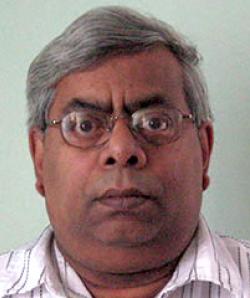
Kenny LynchView profile
Lecturer
Kenny Lynch is a Lecturer in International Relations and Human Geography at the University of Gloucestershire's School of Natural and Social Sciences. He holds a PhD in Geography from the University of Glasgow (1992) and specializes in the relationship between cities and countryside in developing countries, particularly sub-Saharan Africa. His work examines how rapidly growing cities interrupt and mix identities, livelihoods, practices and attitudes. His research interests include: Rural-urban interactions in developing countries Urban and peri-urban agriculture Zoonotic disease transmission in rapidly growing cities Sanitation systems Post-colonial studies Lynch's recent publications demonstrate a strong focus on data skills for development professionals, peacebuilding in post-conflict societies, and conservation capacity building. His work shows a consistent interdisciplinary approach, collaborating with sociologists, criminologists, agricultural economists, and clinicians. His research often connects theoretical frameworks with practical applications in developing world contexts. His scientific awards include: Higher Education Academy National Teaching Fellowship (2004) University of Gloucestershire Staff Excellence Award co-winner (2012) Australasian Society for Computers in Learning in Tertiary Education (ASCILITE) 2006 Outstanding Poster Award Journal of Geography in Higher Education Award for Promotion of Excellence co-winner (2001) Lynch serves as an external examiner for multiple universities including University of Sussex, Kingston University, University of Melbourne, Deakin University, and the University of New South Wales. He was previously Editor of Geography, the international scholarly journal of the Geographical Association (2001-2007) and currently serves on the editorial board for GEOVerse, an undergraduate Geography journal. His teaching responsibilities include courses on Living in a globalised world, Threats to civilisation, Conflict and development, Global futures, and The postcolonial world.