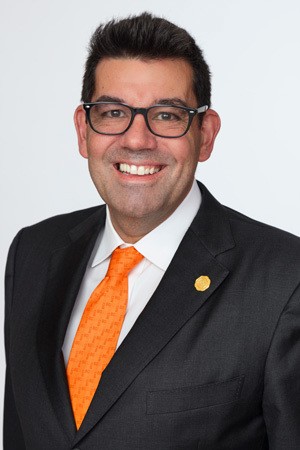
Ruth S. DayView profile
Associate Professor
Ruth S. Day is an Associate Professor of Psychology and Neuroscience at Duke University, with a joint appointment in the Linguistics Program since 2014. She is affiliated with Trinity College of Arts & Sciences, conducting research at the intersection of cognitive psychology, neuroscience, and linguistic theory. Her office is located at 822 Erwin Square in Durham, North Carolina. Dr. Day received her Ph.D. from Stanford University in 1968, establishing a long and distinguished career in cognitive science. Her academic journey at Duke University spans multiple decades, having served as Associate Professor with Tenure since 1978, with various appointments evolving to her current dual roles in Psychology & Neuroscience and Linguistics. Her research focuses on basic cognitive processes and their applications to everyday life, with particular emphasis on: Alternative mental representations (text, lists, outlines, matrices, trees, diagrams) and their cognitive effects Linguistic codability (how ease of naming things affects cognition and action) Medical cognition, including comprehension of prescription drug information Memory for movement, particularly in dance contexts Courtroom cognition and how people process legal information Dr. Day's publication record spans over 40 years, demonstrating remarkable continuity in cognitive research while adapting to emerging applications. Her recent work shows a strong focus on health-related cognition, particularly how patients understand medication information and side effects. She has pioneered research on alternative representations of medical information, examining how linguistic, numeric, and visual formats affect comprehension and decision-making. Her work bridges fundamental cognitive principles with practical applications in healthcare, demonstrating how basic research on representation and memory can improve patient safety and medical communication. Dr. Day has secured significant research funding for projects including: Promoting Safe and Effective Use of OTC Medications in Older Adults (2014) Usability Testing of Model Medical Device Patient Labeling (1999-2001) Memory for Dance: Implications for Instruction (1991-1992) Her professional service demonstrates substantial impact beyond academia. She has served on multiple FDA advisory committees, provided expert testimony to Congress on direct-to-consumer drug advertising, and consulted with organizations including the Brookings Institution and the Institute of Medicine. Her work has directly influenced policy and practice in medical communication and patient safety. Dr. Day's research program integrates laboratory studies with real-world applications, maintaining connections between basic cognitive mechanisms and practical problems in healthcare, legal settings, and the arts. Her audience perception and memory work with the American Dance Festival represents a unique application of cognitive principles to artistic performance and reception.