Max Planck Institute for Human Cognitive and Brain SciencesGermany
Prof. Dr. Tania Singer is the Scientific Head of the Social Neuroscience Lab at the Max Planck Society in Berlin. She holds a PhD in Psychology and has held professorial roles, including the inaugural Chair in Neuroeconomics at the University of Zurich. Her work bridges social neuroscience with economics, arts, and contemplative practices. Key projects include the ReSource Project (studying mental training effects) and Caring Economics (exploring economic models informed by psychology and neuroscience). She has authored over 150 peer-reviewed publications and collaborates with institutions like the Mind and Life Institute. Recent initiatives include the Edu:Social School Project, applying socio-emotional training in education. Education: PhD in Psychology (Max Planck Institute for Human Development), Postdoc at UCL London Research Focus: Empathy, compassion, brain plasticity, and societal impacts of mental training Grants: European Research Council, Institute of New Economic Thinking Her research emphasizes translating findings into societal applications through programs like ReConnect! Masterclasses. She has organized high-profile conferences with the Dalai Lama and co-authored books such as Caring Economics and Power and Care . Art collaborations with Olafur Eliasson blend science with public outreach.
Anne Harrington is the Franklin L. Ford Professor of the History of Science at Harvard University, holding appointments in the Department of the History of Science within the College of Arts and Sciences. She currently serves as Acting Director of Graduate Studies and has previously held roles including Department Chair (2007-2010, 2012-13), Director of Undergraduate Studies (2010-22), and Faculty Dean of Pforzheimer House (2013-23). She earned her Ph.D. in the History of Science from Oxford University, followed by postdoctoral fellowships at the Wellcome Institute and University of Freiburg. Her research focuses on the history of psychiatry, neuroscience, and interdisciplinary science-humanities collaborations. Notable works include Mind Fixers (2019), The Cure Within (2008), and Reenchanted Science (1997). She co-directed Harvard’s Mind, Brain, and Behavior Initiative and advised initiatives like the MacArthur Foundation’s Mind-Body Network. Recent projects explore consciousness science, including a forthcoming book on the search for consciousness in disciplines like neuroscience and philosophy. Her academic leadership extends to roles such as Acting Dean of Undergraduate Education (2022-23), where she developed programs like the Civic Engagement Certificate, and Special Advisor for a new interdisciplinary environment-focused concentration. She also chairs Harvard’s Climate and Diversity Committee and teaches courses on the history of psychiatry and medical ethics.
Max Planck Institute for the History of ScienceGermany
David C. Albertson serves as Associate Professor of Religion at the University of Southern California (USC), where he has been a faculty member since 2007. His academic work bridges historical theology, philosophy, and the history of science with a specialized focus on medieval intellectual traditions. Education: Stanford University (undergraduate degree) University of Chicago (graduate degree) Thomas-Institut für mittelalterliche Philosophie at Universität zu Köln (postgraduate research) Albertson's research centers on mathematical theology in medieval contexts , particularly examining Nicholas of Cusa's legacy and Neopythagorean influences on Christian thought. His work explores how geometric and arithmetic models shaped theological concepts of the Trinity, divine contemplation, and cosmology from the 12th through 16th centuries. Current projects include studies on geometrical icons in Renaissance Christian humanism (1300–1600) and the role of geometry in ancient Christian contemplation. Key scholarly contributions: Analysis of Thierry of Chartres' arithmetic commentaries as sources for Cusanus Recovery of eclipsed arithmetic models in Victorine mysticism Synthesis of Pythagorean number theory in Latin Christian theology Awards and Recognition: Manfred Lautenschlaeger Award (Universität Heidelberg) Alexander von Humboldt Foundation Fellowship National Endowment for the Humanities Fellowship American Council of Learned Societies Fellowship Huntington Library Fellowship Albertson maintains active leadership in scholarly communities as past president of the American Cusanus Society and current member of the Wissenschaftliche Beirat for the Cusanus-Gesellschaft. His research has been supported by major funding bodies including the NEH, ACLS, and Huntington Library, reflecting the significance of his contributions to medieval studies. He is preparing two forthcoming publications: an edited volume on Nicholas of Cusa's modern reception and a monograph on geometry in ancient Christian contemplation.
Dr. Simon Guendelmann is a Researcher at the Department of Psychology, Humboldt-Universität zu Berlin, affiliated with the Faculty of Life Sciences. He holds a Medical Doctorate (University of Chile, 2008) and a Bachelor in Social Sciences and Humanities (2001). His research focuses on contemplative neuroscience, clinical social-affective neuroscience, and mindfulness interventions. Key interests include emotion regulation, empathy, mentalizing, and their disruptions in psychopathology. Explores neurobiological mechanisms of mindfulness meditation, particularly its effects on social brain functions. His recent work examines how mindfulness modulates empathy and mentalization capacities using fMRI. The research bridges mind/body issues in clinical psychiatry and advances understanding of neuroplasticity in social-affective processes. Contributions span philosophy of psychotherapy, developmental trauma, and intersubjective theory. He collaborates with the Dziobek-lab (www.dziobek-lab.org), focusing on relational psychotherapy and epistemological frameworks in contemporary psychoanalysis. No awards explicitly listed, but his work engages with interdisciplinary research at the intersection of clinical practice and neuroscience.
Dr. Steffen Zierholz is an Assistant Professor in the Department of Early Modern Art History at the University of Tübingen's Faculty of Humanities. Previously, he held positions as Assistant Professor at the University of Bern (2016-2018) and Visiting Professor at Ruhr University Bochum (2021). His academic journey includes prestigious fellowships at the Bibliotheca Hertziana in Rome, the Kunsthistorisches Institut in Florence, and a Getty Foundation/American Council of Learned Societies Postdoctoral Fellowship. Ph.D. in History of Art, University of Bern (2016) M.A. in History of Art, University of Tübingen (2010) M.A. in Educational Studies, University of Tübingen (2009) Zierholz's research centers on Jesuit Art, Aesthetics of Existence in Early Modernity, and the material properties of stone surfaces. His work explores how early modern religious practices intersected with artistic production, particularly within Jesuit contexts. He investigates the relationship between spiritual exercises and visual/material culture, examining how surfaces, stones, and architectural spaces functioned as technologies of the self. His monograph 'Räume der Reform. Kunst und Lebenskunst der Jesuiten in Rom, 1580–1700' (2019) established him as a leading scholar in Jesuit art history. His recent publications reveal a consistent focus on Jesuit visual culture, with particular attention to Ignatian spirituality, celestial imagery, and material transformations. Zierholz demonstrates how stone surfaces functioned as alternative aesthetic systems, how copper's material properties shaped religious imagery, and how early modern artists conceptualized heavenly contemplation. His work bridges art history, religious studies, and material culture studies, revealing the complex interplay between visual forms and spiritual practices. Getty Foundation/American Council of Learned Societies Postdoctoral Fellowship in the History of Art ($65,000) Postdoctoral Fellowship at Kunsthistorisches Institut in Florenz, Max Planck Institute Postdoctoral Fellowship at Bibliotheca Hertziana, Max Planck Institute for Art History, Rome UniBE Initiator Grant Zierholz has received significant recognition for his scholarship, including multiple reviews of his monograph in prominent journals such as Renaissance Quarterly and Journal of Jesuit Studies. His research has been supported by major funding bodies including the Swiss National Science Foundation. While specific grant details aren't provided in the text, his fellowship history demonstrates sustained external research support. His academic trajectory shows progression from research assistant to independent fellow to faculty positions at prestigious institutions, reflecting strong scholarly impact in the field of early modern art history.
Prof. Dr. Tania Singer is Scientific Head of the Social Neuroscience Lab at the Max Planck Society in Berlin. As founder of the ReSource Project—a large-scale longitudinal study on mental training effects—she investigates neuroplasticity, mental health, and prosocial behavior. Her pioneering work in Caring Economics bridges neuroscience and economic models. Research focuses on empathy, compassion, stress resilience, and social cohesion. Current projects include CovSocial (studying pandemic stress in Berlin) and Edu:Social (implementing socio-emotional training in schools). Her publications demonstrate consistent focus on neuroplasticity mechanisms, contemplative practices, and societal applications of social neuroscience. Recent articles explore mental training effects on brain structure, stress biomarkers, and social behavior.
Martin Harant is a Senior Lecturer at the Institute for Educational Science / Department of School Pedagogy at Eberhard-Karls-Universität Tübingen. He has served since 2016, coordinating supplementary studies in educational sciences and teacher education programs. His research focuses on the philosophy of education, school theory, mindfulness in education, and teacher professionalization. Education: 2008: Dr.theol. (Theology) from Philipps-Universität Marburg 2012: Dr.phil. (Philosophy) from Eberhard-Karls-Universität Tübingen Research Interests: Dr. Harant explores the intersections of educational theory, mindfulness practices in pedagogy, and the philosophical foundations of schooling. He emphasizes critical reflection in teacher education and the ethical dimensions of educational practice. His work bridges historical analyses of educational thought (e.g., German Idealism) with contemporary challenges like inclusion and epistemological awareness. Key Contributions: His recent publications address mindfulness in classroom settings, meta-reflexivity in teacher professionalism, and the theoretical frameworks shaping modern pedagogy. He has authored/co-authored books on religious/spiritual dimensions in education, inclusion policies, and educational ethics. Labs/Teams: He collaborates within the School Education unit and contributes to research groups focused on contemplative pedagogy and teacher education reform.
Oliver Gather is a full-time lecturer in the Department of Culture, Aesthetics, Media at Hochschule Düsseldorf's Faculty of Social Sciences and Cultural Studies. Born in 1963, Gather is an active artist-educator whose work bridges academic teaching and artistic practice, with recent projects extending through 2024. His institutional affiliation centers on exploring aesthetic practices within social and spatial contexts. Gather's research interests focus on examining social contexts through visual arts media. His practice spans drawing, concrete and plaster work, experimental film, public interventions, performance, installation, photography, and sound art. Central to his approach is challenging aesthetic perception of the world, with particular attention to how sense organs allow us to grasp physicality and spatiality. Rather than using art to decorate or embellish, Gather employs it to enable awareness of our own situation from perspectives complementary to scientific thinking. His recent artistic output reveals a sustained engagement with landscape, urban space, and human relationships to environments. Projects like 'Schmuckeremit*in im Edelsteingarten' demonstrate his interest in historical references within contemporary contexts, while 'Sounds for a wounded landscape' and 'Hochsitzen' explore human-animal and human-environment relationships through ethnographic observation frameworks. Gather frequently utilizes digital tools like Google Street View as artistic media, as seen in 'Home Search,' creating what he terms 'Road Movie 2.0' approaches to spatial representation. Scientific Awards: Award at Oberhausen Short Film Festival 2021 for 'Hochsitzen' DA Scholarship in Gravenhorst (2014) Gather's teaching practice emphasizes collaborative and site-specific approaches, as evidenced by courses like 'Ästhetische Praxen im Landschaftsraum' (Aesthetic Practices in Landscape Space) and 'Performance im öffentlichen Raum - Interventionen.' His artistic research projects often involve partnerships with performers, sound artists, and local communities, such as the 'Schmuckeremit*in' project which included a public casting process with neighborhood residents serving on the selection jury. While specific grant information isn't detailed in the provided texts, his DA Scholarship indicates recognition from arts funding bodies. Through projects like 'Gasthof Worringer Platz' (2013-2020) and ongoing work at Worringer Platz in Düsseldorf, Gather has established long-term engagement with specific urban sites, creating what functions as de facto research laboratories for examining social dynamics in public space. His website platforms (www.olivergather.de, www.gatherseminare.de, www.gasthofworringerplatz.de) serve as digital extensions of these physical research spaces, documenting interventions and facilitating ongoing dialogue about urban environments.
Donata Schoeller is an Associate Professor at the University of Koblenz's Institute of Philosophy, holding this position since her 2017 Habilitation on "Close Talking: Speaking of Backgrounds. Hermeneutic, Pragmaoistic, and Phenomenological Approaches to Situational Meaning". She concurrently serves as Coordinator and Program Director of "Science and Wisdom" at the University of Zurich's Center for Continuous Education since 2001, demonstrating dual institutional engagement in philosophical research and practical wisdom integration. Her academic foundation includes: 2017: Habilitation, University of Koblenz 1997: PhD in Philosophy (summa cum laude), University of Zurich (dissertation: "Humility") 1985-1990: Bachelor and Master in Philosophy and Comparative Religion, Universities of Vienna, Oxford, and Zurich Dr. Schoeller's research pioneers embodied meaning through Phenomenology, Hermeneutics, and Pragmatism, developing methodologies like Microphenomenology and Thinking-at-the-Edge to access tacit knowledge dimensions. Her work bridges continental philosophy with cognitive science, emphasizing how situational backgrounds shape understanding and critical thinking practices across disciplines. Her scientific recognition includes: Nietzsche Kolleg Weimar Fellowship (2010) As project manager for "Embodied Critical Thinking" (University of Iceland, 2017) and long-term coordinator of "Science and Wisdom", she directs interdisciplinary research initiatives. Though she globally teaches experiential methods workshops, formal student advisees are undocumented in the source material. She actively collaborates with the Microphenomenology Laboratory (Arhus University) and co-founded the "Lehrhaus für das Denken der Religionen Heidelberg", advancing research on contemplative experience and religious thought through collectives like the "Microphenomenology and Contemplative Experience" think tank.
Prof. Dr. Tanja Gojny serves as Professor of Religious Education and Didactics of Protestant Religious Studies at the University of Wuppertal's Faculty of Humanities and Cultural Studies, Department of Protestant Theology, holding the chair position since winter semester 2022. Her academic journey includes studies in German and Protestant Theology at Friedrich-Alexander University Erlangen-Nuremberg (FAU), where she completed her award-winning dissertation and habilitation. Her educational background features: Studies in German and Protestant Theology at FAU Erlangen-Nuremberg Dissertation: "Biblical Traces in the Poetry of Erich Fried" (awarded Staedtler Prize) Habilitation: "School services in plurality" (awarded FAU Habilitation Prize) Legal traineeship in Erlangen and Neustadt near Coburg High school teaching experience in Ottobrunn and Spardorf Prof. Gojny's research centers on religious education in pluralistic contexts, with special emphasis on mediatization and digitalization's impact on religious pedagogy. Her work explores teaching materials as sources for religious education, content development for religious instruction, and Bible reception in non-theological contexts like literature. She investigates how phenomena such as digital self-representation (selfies), climate movements (Fridays for Future), and silent spaces shape contemporary religious learning experiences. Analysis of her 2023-2025 publications reveals strong trends toward integrating digital culture with religious education, examining emotional dimensions of religious learning (particularly fear), and addressing content selection challenges in an era of declining Christian plausibility. Her work consistently bridges theological foundations with practical classroom applications across diverse educational settings. Her scientific recognition includes: Staedtler Prize for outstanding dissertation FAU Habilitation Prize for exceptional habilitation thesis Prof. Gojny actively contributes to academic discourse through editorial leadership, including co-editing the open-access series "Religion und Bildung diskursiv" and serving as section editor for the "Wissenschaftlich-religionspädagogische Lexikon". Her practical impact extends to developing the "Ortswechsel" series of evangelical religious education textbooks for German gymnasiums and creating teaching materials like the film-based resource "Kerzen und Gebete". She currently leads the "Schulsachen" project (appearing 2025), which examines religious hermeneutic and pedagogical perspectives on everyday school objects, demonstrating her commitment to connecting theoretical research with tangible classroom applications.
Claudia Wiener is Professor of Latin Philology at the Ludwig Maximilian University of Munich, where she has been teaching since 2003. She is affiliated with the Department of Greek and Latin Philology within the Faculty of Languages and Literatures. Her work focuses on classical philology with special emphasis on Latin literature, textual criticism, and the reception of classical works in later periods. Professor Wiener's educational background includes studies at the Universities of Würzburg and Siena from 1983-1990. Her academic journey progressed as follows: Born August 19, 1964 in Schweinfurt Doctorate in 1994 Assistant at the University of Würzburg (1994-2000) Habilitation in 2002 Professor of Classical Philology at the University of Munich since 2003 Professor Wiener's research interests span Latin literature of the imperial period, textual tradition, early modern poetry, and the intersection of classical and Renaissance studies. She has made significant contributions to the study of Seneca, Persius, Conrad Celtis, and Friedrich Rückert. Her work often examines how classical texts were transmitted, interpreted, and adapted in later periods, particularly during the Renaissance and early modern era. She has also engaged extensively with Neo-Latin poetry and the works of Jesuit scholars like Jacob Balde. Her scholarship demonstrates a remarkable ability to bridge philological precision with broader cultural and intellectual history. Her recent publications reveal a sustained engagement with Stoic philosophy in Roman literature, particularly in the works of Seneca, as well as continued scholarship on Neo-Latin poetry of the Baroque period. She has also maintained a strong interest in textual criticism and the editorial practices of humanists. Her work demonstrates interdisciplinary reach, connecting philology with intellectual history, religious studies, and the history of science. The consistent publication record through 2025 indicates an active and productive research career with ongoing scholarly contributions. Professor Wiener has served as editor for several important publication series including "Rückert Studies" and "Classica Monacensia." She has collaborated on major editorial projects such as the historical-critical edition of Friedrich Rückert's works and has contributed to interdisciplinary research on Jesuit literature and culture. Her academic service extends to conference organization and editorial board memberships that support scholarship in classical reception studies. Her academic leadership includes directing research projects such as the "Glossenedition/Editing glosses" project with Dr. Martin Hellmann at the Munich Center for Editorial Studies (MüZE). This project focuses on digital editions of Persius commentaries, demonstrating her commitment to applying digital methods to classical philological research while maintaining rigorous scholarly standards.
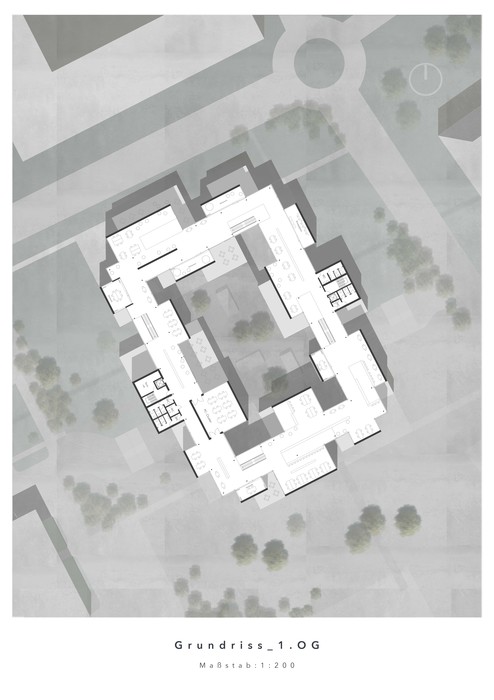
Prof. Gernot Schulz serves as Professor of Design and Building Construction and Dean of the Faculty of Architecture at Bochum University of Applied Sciences since 2004 and 2015 respectively. His work centers on creating enduring architectural spaces through precise integration of light, material, and construction, emphasizing spaces that engage users sensorially and stand outside transient architectural trends. His educational background includes architecture studies at the University of Dortmund and ETH Zurich. Prior professional experience encompasses freelance work in Seville (1992), collaborations in Cologne with Th. van den Valentyn (1993-1998) and Annette Hillebrandt (1993-2001), and architectural practice under 'gernot schulz: architektur' since 2002. Prof. Schulz's research advocates for 'Raumereignisse' (spatial events) as the essence of meaningful architecture, where daylight functions as a non-additive material shaped through architectural form. He rejects fragmented design approaches, insisting on holistic integration of interior/exterior architecture, construction/finishing, and function/aesthetics. His philosophy positions architects as 'Vordenker' (forward-thinkers) who must balance courageous spatial statements with deep material knowledge to create timeless spaces that evoke wonder and contemplation. He supervises bachelor theses including 'Kulturforum Bochum' projects and organizes international field trips such as the Seville-Extremadura excursion in collaboration with the University of Seville. Teaching responsibilities include Structural Engineering 2 (Building Construction 2), with course materials hosted on Moodle.
Simon Guendelman serves as a Researcher in the Department of Psychology at Humboldt University of Berlin's Faculty of Life Sciences, affiliated with the Clinical Psychology of Social Interaction group and the Dziobek Lab ( dziobek-lab.org ). His work integrates clinical psychiatry, neuroscience, and contemplative practices to investigate emotion regulation mechanisms in psychopathology. His educational background includes: Bachelor in Social Sciences and Humanities (2000-2001), University of Chile Medical Doctor (2002-2008), University of Chile Adult Psychiatry specialization (2009-2012), University of Chile Psychoanalytic Psychotherapy training (2012-2014), University of Chile Guendelman's research examines interpersonal emotion regulation and its impact on attention, empathy, mentalizing, and self-referential processing. He investigates how disruptions in these systems contribute to psychiatric disorders and how mindfulness interventions can modify neural correlates of empathy through affect-cognitive processes . His approach uniquely bridges Buddhist philosophy, relational psychoanalysis, and social neuroscience, focusing on mindfulness as a tool to enhance clinical outcomes via neuroplasticity in the 'social brain'. His 2014-2016 publications reveal a cohesive trajectory exploring intersubjective neuroscience through three converging lenses: (1) Varela's bio-philosophy applied to psychoanalytic epistemology, (2) neurobiological mechanisms of meditation affecting self-other processing, and (3) clinical applications for trauma and personality disorders. This work establishes mindfulness as a modulator of empathy-mentalization networks beyond attentional mechanisms. Guendelman currently leads the fMRI study "Does mindfulness modulates empathy and mentalization?" , which investigates neural correlates of cognitive/affective empathy and theory of mind before/after mindfulness interventions. This project aims to clarify distinct effects on social cognition subsystems and expand mindfulness mechanisms to include 'social brain' plasticity. As a core member of the Dziobek Lab, he contributes to research on neurobiological foundations of social interaction, particularly how contemplative practices reshape interpersonal neurodynamics in clinical populations.
Dr. Saskia Abrahms-Kavunenko is an Associate Professor at the Hakubi Center for Advanced Research at Kyoto University and held an External Senior Fellow position at the University of Copenhagen (2024). Her research focuses on the intersections of environmental changes, cultural practices, and religious traditions in Mongolia, Australia, India, and beyond. She explores topics such as plastics, global warming, pollution, Buddhism, shamanism, and postsocialism, emphasizing the materiality of these phenomena and their societal impacts. Current positions: Kyoto University (Associate Professor), Hakubi Center for Advanced Research. Former affiliations: Max Planck Institute, NYU Shanghai, University of Edinburgh, and others. Her work bridges anthropology with environmental studies, examining how material objects like plastics influence human-environment interactions. Recent projects include studies on plastics' societal roles and Mongolian Buddhist rituals in polluted urban contexts. Abrahms-Kavunenko co-founded Cenote, a multidisciplinary residency program fostering dialogue between human cultures and ecological systems. Her publications span journals like Journal of Global Buddhism and Journal of Material Culture , addressing themes of ecological health, ritual practices, and material culture.
Hans W. Koch (*1962) is a composer, sound artist, and Professor of Sound at the Academy of Media Arts Cologne. He studied music, history, and physics at Weingarten University of Education (1984-1988) and composition at Cologne University of Music with Johannes Fritsch (1988-1995). His career includes a visiting professorship at California Institute of the Arts (2007) and lecturing at Robert Schumann University of Music and Media Düsseldorf (2012-present). Academy of Media Arts Cologne Robert Schumann University of Music and Media Düsseldorf California Institute of the Arts Koch's research focuses on sound as a conceptual process, hidden aspects of everyday objects, and computers as literal musical instruments. His work bridges new music, media art, and experimental composition, emphasizing minimal material and maximal thought. He has curated Cologne-based sound events like BrückenMusik (1999-2012) and Reihe M (2009-present), while serving on the board of ON - neue musik köln since 2010. His publications and compositions explore avant-garde composers (John Cage, Giacinto Scelsi, Nicolai Obouchow), algorithmic sound generation, and non-traditional listening. His works have been presented internationally at festivals and broadcasted widely.