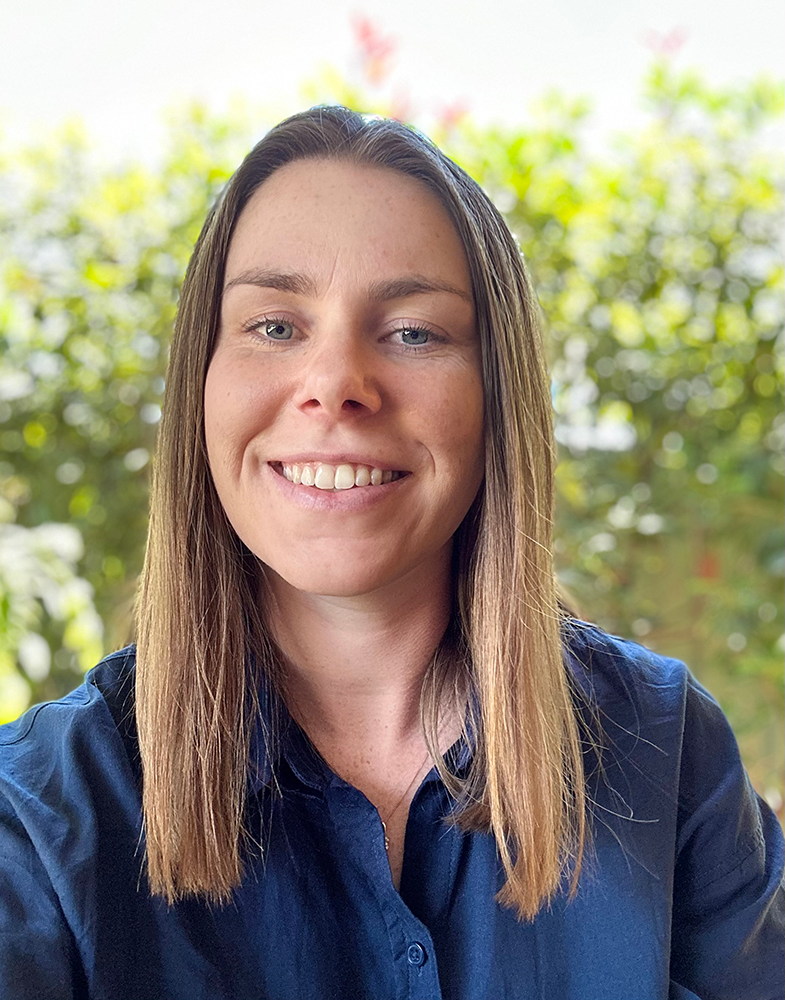
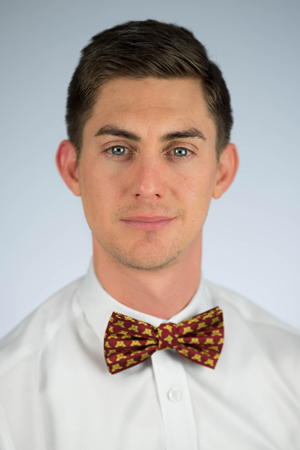
Dr. Emma Lynch is a Lecturer in Ruminant Production at the School of Environmental and Rural Science , University of New England. Her research focuses on evaluating novel feedstuffs and their impacts on ruminant production, meat quality, and sensory attributes. Education PhD in Ruminant Nutrition, Charles Sturt University Bachelor of Animal Science (Hons), Charles Sturt University Research Interests encompass meat science , ruminant nutrition , protein supplementation , and alternative feed sources . Her work investigates how feed composition affects animal performance, nutrient digestibility, and meat quality, with a notable emphasis on canola meal and hemp biomass in ruminant diets. Recent publications highlight trends in feedstuff evaluation , rumen physiology , and meat quality assessment . She employs comparative methodologies (in vivo, in sacco, in vitro) to study digestibility and uses sensory panels to evaluate consumer preferences. Scientific Memberships NSW Branch Secretary, Australian Association of Animal Sciences (AAAS) Australian Intercollegiate Meat Judging Association Contact : elynch20@une.edu.au
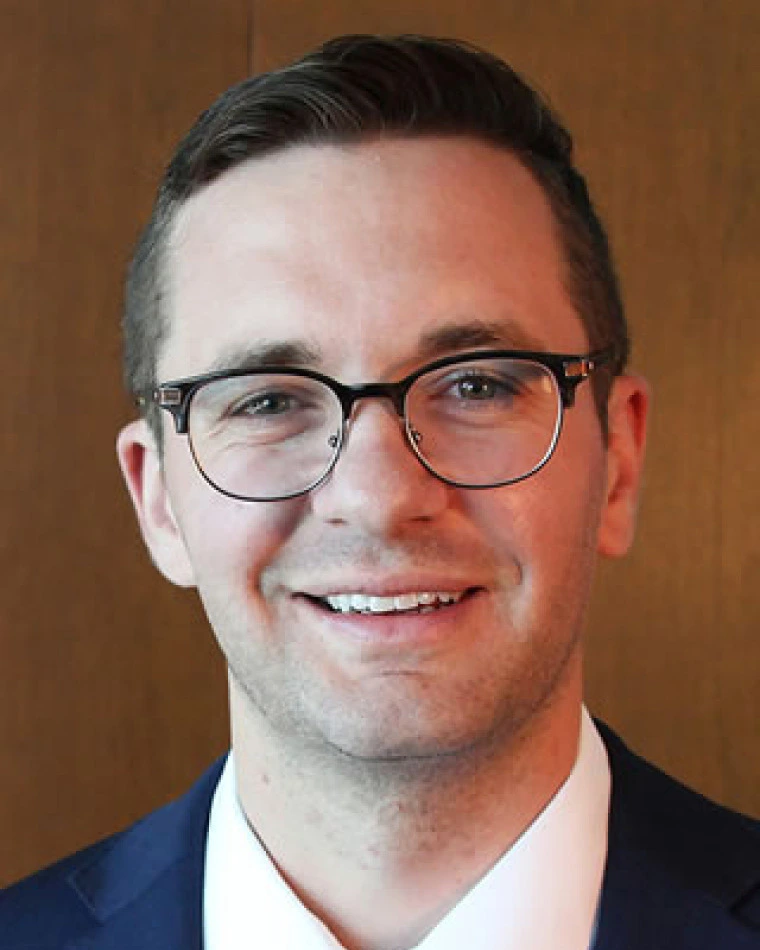
Lin Dong is an Assistant Professor in the Department of Mechanical and Industrial Engineering at New Jersey Institute of Technology (NJIT). His research focuses on advanced energy harvesting technologies, particularly in piezoelectric materials, flexible electronics, and their biomedical applications. He leads a federally funded project (NSF grant) titled Membranous Energy Harvester with Tuning Capability for Flexible Electronics , which explores energy harvesting systems for wearable and implantable devices. His research interests include the design of self-powered sensors, piezoelectric hydrogels, and nature-inspired nanofibers for health monitoring. Notable contributions include amphibious energy generators, helical piezoelectric hydrogels for human-machine interfaces, and flexible sensors for cardiac monitoring. His work bridges materials science, biomedical engineering, and mechanical systems, with applications in smart health and wearable technology. Dr. Dong’s publications (29+ articles) emphasize energy harvesting innovations, with 16+ citations. His articles highlight trends in flexible, bio-integrated energy systems and multimodal sensing. He collaborates on projects involving body sensor networks and tunable energy harvesters for flexible electronics. He has secured a 2021 NSF grant (PI) and generated media attention for advancements in flexible energy harvesting and nanofiber research. His lab develops cutting-edge materials and devices for sustainable energy solutions and healthcare applications.
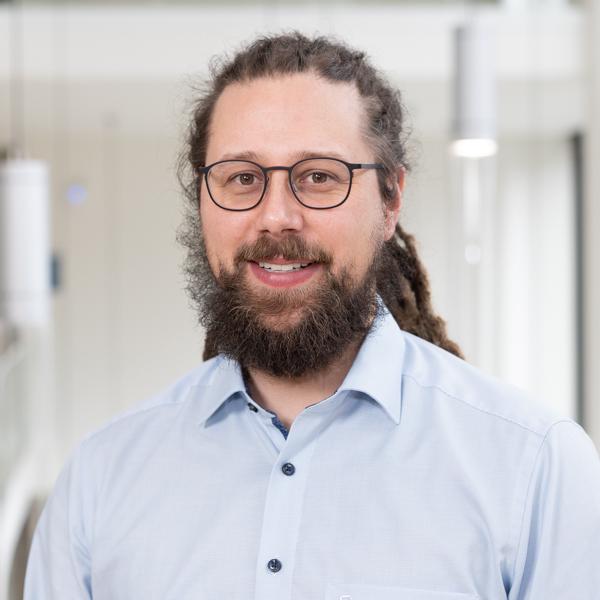
Dr. Shahram Shirani is a Professor and holds the L.R. Wilson/Bell Canada Chair in Data Communications in the Department of Electrical & Computer Engineering at McMaster University. He also serves as Acting Chair of the department. His research focuses on multimedia communications, image/video processing, medical imaging, and hardware architectures. He teaches courses like Image Processing (COMPENG 4TN4) and 3D Image Processing and Computer Vision (ECE 736). Shirani earned his B.Sc. from Isfahan University of Technology (1989), M.Sc. from Amirkabir University of Technology (1994), and Ph.D. from the University of British Columbia (2000). His achievements include the Faculty of Engineering Leadership Fellowship (2014–15) and leadership roles in editorial boards for IEEE Transactions on Multimedia and Circuits and Systems for Video Technology. Research interests include video quality assessment, biomedical signal processing, and edge computing for traffic monitoring. His lab develops algorithms for multimedia representation, compression, and hardware implementation. Recent work includes AI-driven medical sound datasets, real-time noise removal in MRI, and efficient CNN pruning techniques. He advises over 15 graduate students and collaborates on projects like the HLS-CMDS dataset and cardiac segmentation reviews. His lab’s contributions span biomedical engineering, autonomous systems, and smart sensor technologies.
Dr. Yuning Li is a Professor of Chemical Engineering at the University of Waterloo and a researcher at the Waterloo Institute for Nanotechnology. His research focuses on optoelectronic materials, particularly printable electronics for flexible displays, sensors, and energy devices. Notable achievements include co-winning the 2007 NASA Nano 50™ Award for printed organic electronics and over 200 peer-reviewed publications. He teaches courses in polymer science and chemical engineering thermodynamics. Education: Ph.D. in Polymer Materials (Japan Advanced Institute of Science and Technology, 1999), M.S. and B.S. in Polymer Materials from Dalian University of Technology (China, 1988 and 1985). Research interests span organic photovoltaics, polymer semiconductors, nanomaterials, and battery technologies. His group develops materials for IoT, energy storage, and printed electronics, emphasizing scalable production methods. Recent work highlights advancements in lithium-sulfur batteries, printable conductive inks, and organic sensors. Over 120 patents (75 granted) reflect his innovation in material design and applications. Awards: NASA Nanotech Briefs Nano 50™ Award (2007). Teaching focuses on materials science and polymer engineering. He actively supervises graduate students in his lab, emphasizing interdisciplinary approaches to sustainable energy solutions.
Maneesh Agrawala is the Forest Baskett Professor of Computer Science and Director of the Brown Institute for Media Innovation at Stanford University. He is also a consulting AI Scientist at Roblox. His research lies at the intersection of computer graphics, human-computer interaction (HCI), and visualization, with a focus on cognitive design principles for improving audio/visual media. He leads a vibrant research group and has advised numerous PhD students and postdocs. His research interests include: Computer Graphics Human-Computer Interaction Visualization and Visual Communication Cognitive Design Principles Generative AI and Diffusion Models Interactive Video and Sketch-based Interfaces Data and Information Visualization His recent publications (2023–2025) reflect a strong trend toward leveraging generative models—particularly diffusion models—for video and image synthesis, editing, and personalization. Key themes include controllable generation (e.g., SparseCtrl, ControlNet), sketch-to-image translation, relightable texturing, and tools that enhance visual storytelling and data communication. His work integrates cognitive science with computational tools to build systems that support human creativity and understanding. His scientific honors include: MacArthur Foundation Fellowship (2009) Alfred P. Sloan Foundation Fellowship (2007) NSF CAREER Award (2007) SIGGRAPH Significant New Researcher Award (2008) Allen Distinguished Investigator Award (2014) Induction into the SIGCHI Academy (2021) ACM Fellow (2022) Okawa Foundation Research Grant (2006) A dedicated mentor, Agrawala has advised a large cohort of students and postdocs, many of whom have gone on to influential positions in academia and industry. His lab develops tools for video editing (e.g., AnimateDiff, ControlNet), sketch-based design, and visualization (e.g., EmphasisChecker), often bridging theory with practical applications in media and education. He continues to be a leading figure in visual computing and interactive systems.
Colm O'Donnell is a Full Professor at the School of Biosystems and Food Engineering, University College Dublin (UCD). He leads the Food Quality and Processing Pillar at UCD's Institute of Food & Health and has held roles including Head of the School and Vice-Principal for Teaching & Learning in the College of Engineering & Architecture. His research focuses on Process Analytical Technology (PAT), bioprocessing, and dairy technology, with emphasis on spectroscopy, bioactive compound extraction, and food safety. He coordinates EU-funded projects like DiTECT and FreshProof, and leads the UCD team in the Dairy Processing Technology Centre (DPTC). O'Donnell is a Fellow of the Irish Academy of Engineering and has been recognized as a Thomson Reuters Highly Cited Researcher. Education: BE and PhD from University College Dublin, Chartered Engineer (CEng). Research Interests: PAT for food/bioproducts, dairy processing innovations, and bioactive extraction from seaweeds. His group develops non-destructive technologies like NIR-HSI and acoustic sensors for real-time quality monitoring in food production. Grants: Over 40 grants including EU Horizon 2020, Marie Sklodowska-Curie, and industry partnerships. Recent projects include acoustic sensor development for milk protein concentrate (2020-2022) and seaweed biorefinery processes (2018-2023). Awards: Irish Academy of Engineering Fellowship (2022), EU Comett Fellowship, and editorial roles at International Journal of Food Properties and Food Engineering Reviews . Labs/Teams: Leads the PAT-focused research group at UCD's Institute of Food & Health, collaborating with industry partners like DPTC and global academic networks.
Dr. Jessica Sunshine is a Professor in the Department of Geology at the University of Maryland. Her research focuses on planetary materials and processes, particularly using spectroscopy and morphological analysis to study comets, asteroids, meteorites, and lunar geology. She is a principal investigator on NASA missions such as the Double Asteroid Redirection Test (DART) and the Lucy Mission, contributing to breakthroughs in planetary defense and asteroid composition analysis. Dr. Sunshine holds a Ph.D. from Brown University (1994). Her work integrates field-based and remote sensing techniques, including thermal infrared spectroscopy, to explore topics like the origins of spinel-rich deposits on the Moon, the composition of Trojan asteroids, and the dynamics of impact ejecta. She leads the Lunar Vulkan Imaging and Spectroscopy Explorer (Lunar-VISE) mission to study non-mare volcanic regions on the Moon. Her recent studies include analyzing the DART mission's impact on Dimorphos, revealing insights into asteroid deflection mechanics and surface material responses. She has also contributed to understanding the geological history of Ceres and the compositional diversity of Jupiter Trojans through the Lucy mission's data.
Professor L.J. Sluys is a Full Professor and Chair of Computational Mechanics at the Faculty of Civil Engineering and Geosciences, Delft University of Technology (TU Delft). He has been a leading figure in computational mechanics since 1999, heading the Computational Mechanics group and serving as head of the Department of Materials, Mechanics, Management and Design (3MD) from 2018 to 2024. His research is centered on the computational modeling of material behavior, particularly focusing on failure processes and high-performance materials. His research interests include computational mechanics of materials, modeling of failure and fracture processes, multi-scale methods, and the computational modeling of high-performance materials such as composites and concrete. He employs advanced numerical techniques including the finite element method, extended finite element method (XFEM), level-set methods, and cohesive zone modeling to simulate complex mechanical behaviors under static and dynamic loading conditions. His work spans civil, mechanical, and materials engineering domains, with applications in infrastructure, energy, and sustainable materials. The recent publications highlight a strong trend in modeling fracture, fatigue, and degradation in heterogeneous materials such as composites, concrete, and geological formations. His work integrates multi-physics and multi-scale approaches, often coupling mechanical, thermal, and chemical effects. There is a consistent focus on numerical robustness, model validation, and the development of adaptive computational frameworks for simulating progressive damage and failure. Research Fellow of the Netherlands Academy of Arts and Sciences (KNAW) Professor Sluys has taught core courses such as Introduction to the Finite Element Method and Computational Methods in Non-linear Solid Mechanics for over a decade, indicating a strong commitment to academic education. He has supervised numerous students, though specific names are not listed in the provided texts. He leads an active research group in computational mechanics, contributing to both fundamental and applied research in solid mechanics. His work involves collaboration with international institutions and industry partners, particularly in the areas of infrastructure durability and advanced materials.
Dr. Jonathan B. Clayton is an Assistant Professor in the Department of Biology at the University of Nebraska Omaha and holds cross-appointments at the University of Nebraska-Lincoln (Department of Food Science and Technology) and the University of Nebraska Medical Center (Department of Pathology and Microbiology). He holds a D.V.M. and Ph.D. in Comparative and Molecular Biosciences from the University of Minnesota. His work focuses on host-microbiome interactions in humans and nonhuman primates, particularly exploring how dietary fiber, lifestyle, and environmental factors influence gut microbiome composition and metabolic health. He founded the Primate Microbiome Project (PMP) to map microbiome variation across all primates, linking it to health, evolution, and conservation. Research Interests include microbiome modulations of metabolic diseases (diabetes, obesity) and neurological disorders (stress), using in vitro/in vivo models like germ-free mice and marmosets. His methodologies involve next-generation sequencing, anaerobic culture, and marmoset models. Clayton is affiliated with the Callitrichid Research Center and GreenViet Biodiversity Conservation Center, emphasizing translational research and conservation applications. Teaching focuses on Microbiology and Microbial Ecology. His lab (Clayton Lab) investigates causal mechanisms of microbiome-related diseases and has published extensively on gut microbiome dynamics in captive and wild primates. Recent work highlights antibiotic impacts on gut-brain axis interactions and conservation implications of microbiome diversity.
Kyle Hanquist is an Assistant Professor in the Department of Aerospace and Mechanical Engineering at the University of Arizona, where he is also a member of the Graduate Faculty. He directs the Computational Hypersonics and Nonequilibrium Laboratory (CHANL), focusing on advanced simulation techniques for high-speed flows. His academic journey includes a PhD and MSE in Aerospace Engineering from the University of Michigan and a BSE in Mechanical Engineering from the University of Nebraska. PhD, Aerospace Engineering, University of Michigan, Ann Arbor MSE, Aerospace Engineering, University of Michigan, Ann Arbor BSE, Mechanical Engineering, University of Nebraska, Lincoln Dr. Hanquist's research centers on hypersonics, aerothermodynamics, and nonequilibrium flows , with strong emphasis on computational fluid dynamics , low-temperature plasmas , and thermal management systems . His work involves modeling complex physical phenomena such as electron transpiration cooling, plasma-assisted flow control, and high-temperature gas effects in reentry environments. He also investigates molecular gas dynamics and finite-rate chemistry in extreme conditions. His recent publications reveal a strong trend in computational modeling of hypersonic boundary layers , plasma sheaths , and shock-tube validation of thermochemical models . The interdisciplinary nature of his work spans aerospace engineering, plasma physics, and materials response under extreme thermal loads. Much of his research integrates multi-physics simulations to address fluid-thermal-structural interactions critical for next-generation hypersonic vehicles. Dr. Hanquist has received several scientific honors, including: 2020 AIAA Plasmadynamics and Lasers Best Paper Award Editor's Choice, AIP Publishing - Physics of Fluids (Summer I 2020) Featured Article, AIP Publishing - Physics of Fluids (Summer I 2021) Frontiers in Physics – Plasma Physics (Spring 2020) As an advisor and lab director, he mentors graduate students in computational hypersonics and collaborates with institutions like NASA and the University of Michigan. His research is supported by grants from aerospace and defense agencies, though specific funding sources are not listed. He teaches courses in fluid mechanics, numerical methods, and nonequilibrium flows, contributing to both undergraduate and graduate education. He leads the Computational Hypersonics and Nonequilibrium Laboratory (CHANL) , which develops and applies high-fidelity simulation tools for hypersonic applications. The lab focuses on kinetic modeling, plasma interactions, and optimization of thermal protection systems, often using massively parallel CFD codes and multi-fidelity surrogate models.
Dr Michael Boemo is an Assistant Professor at the University of Cambridge, holding dual appointments in the Department of Pathology and Department of Genetics. He leads research at the intersection of computational biology, DNA replication, and cancer genomics, developing machine learning tools to analyze replication stress and genomic instability. Academic Background: BA in Mathematics (Rutgers University), PhD in Physics (University of Oxford) Research Focus: Genomic instability in cancer, DNA replication/repair defects, computational modeling using machine learning and high-performance simulations Teaching: Lectures in Natural Sciences Tripos (mathematical biology, genetics, systems biology), module organizer for cancer biology and biological modeling His research group leverages nanopore sequencing and AI to map replication fork dynamics, revealing how stalled forks generate mutations in cancer cells and pathogens. Recent work examines extrachromosomal DNA replication vulnerabilities and transcription-replication conflicts. Dr Boemo collaborates across computational biology and cancer research domains, with publications spanning journals like Nature Methods, Cell, and PLoS Computational Biology. His lab develops tools such as DNAscent for replication fork analysis and explores therapeutic targeting of replication stress.
Sebastian Stich is a tenured faculty member at the CISPA Helmholtz Center for Information Security , where he leads research in Trustworthy Information Processing . He has been a tenure-track faculty since 2021 and was promoted to tenured professor in 2025. He is also a member of the European Lab for Learning and Intelligent Systems (ELLIS) . Education: PhD in Computer Science, ETH Zurich (2010–2014) MSc and BSc in Mathematics, ETH Zurich (2005–2010) Research Scientist, EPFL (2016–2021) Research at CORE/ICTEAM, UCLouvain (2014–2016) His research centers on optimization for machine learning , with a focus on federated, decentralized, and distributed learning . He investigates methods for communication efficiency , adaptive stochastic optimization , privacy-preserving training , and generalization theory . His work bridges theoretical guarantees with practical scalability. His recent publications (2023–2025) consistently address gradient compression , error feedback , local updates , and decentralized consensus , demonstrating a strong trend toward making distributed learning more efficient, robust, and scalable—especially under heterogeneous data and limited bandwidth. Scientific Awards: ERC Consolidator Grant 2024 (CollectiveMinds) Google Research Scholar Award (2023) Meta Privacy-Enhancing Technologies Research Award (2022) Sebastian Stich actively advises PhD students and postdocs, including Anton Rodomanov , Xiaowen Jiang , and Yuan Gao . He has secured competitive grants such as the ERC CollectiveMinds project, supporting collaborative research on scalable federated learning. He teaches advanced courses at Saarland University and serves as an area chair for NeurIPS, ICML, and ICLR. He leads a research group at CISPA focused on trustworthy and efficient machine learning systems , contributing to both foundational theory and real-world applications in privacy and security.
Clarity Ropafadzo Mapengo is a Lecturer in Food Science & Technology at Teesside University's School of Health and Life Sciences. She holds a PhD in Food Science from the University of Pretoria (2020) and joined Teesside in 2022 after serving as a Postdoctoral Researcher there. Education: PhD in Food Science (University of Pretoria, 2018–2020) Her research focuses on climate-resilient food systems, natural polymer applications, and innovative processing technologies like high-pressure processing (HPP) and infrared drying. She integrates green chemistry principles into functional food development, particularly low-glycemic-index products and nano-therapies. Recent work explores HPP's impact on meat quality, solar/infrared drying of crops, and xylan-based prebiotics. Collaborations include FAO initiatives and University of Cairo projects on sustainable agrifood systems. Salzburg Global Fellow (2024-2025) Innovation Ambassador, Global Biotech Revolution (2024) World Food Forum Young Scientist Group Representative (2022) She leads the Food Chain & Composition module and contributes to Biologics & Health Product Development. Her enterprise interests emphasize food waste reduction and value-added agrifood solutions.
Dr. Samet Sahin is a Lecturer in Chemical Engineering at Lancaster University's School of Engineering. He holds a PhD and professional designations including FHAE (Fellow of Advance HE), AMIChemE (Associate Member of the Institution of Chemical Engineers), and MRSC (Member of the Royal Society of Chemistry). His academic journey includes positions at Bilecik Şeyh Edebali University and postdoctoral work with distinguished advisors including Prof. John A. Rogers. Dr. Sahin's research focuses on developing healthcare solutions through biochemical systems and material science, particularly in bioelectrode development, device design, and alternative materials. His work aims to translate basic research into practical healthcare products and devices, especially wearable and implantable biosensors. His publications show a strong emphasis on electrochemical biosensors for glucose detection, biofuel cells, and aptamer-based detection systems for various analytes including mycotoxins, bisphenol-A, and medical biomarkers. His research group has received funding from multiple international sources including TÜBİTAK (Scientific and Technological Research Council of Türkiye), TÜSEB (Health Institutes of Türkiye), and non-profits like Breakthrough T1D (USA) and the Fulbright Commission. The group maintains an interconnected structure that allows researchers from different backgrounds to collaborate on various topics. Dr. Sahin has received several professional awards including Research Excellence Awards from Bilecik SE University (2022, 2023) and a Fulbright Post Doctoral Fellowship (2020). His work has been recognized with the Engineering YES Elevator Pitch Prize (2013). As an educator, he serves as Module Convenor for ENGR265 Chemical Engineering Laboratory Projects and teaches multiple engineering modules including Fundamentals of Engineering Science and Chemical Process Design Project. He has supervised PhD student Jack Morley and numerous undergraduate students. Notably, Dr. Sahin has an impressive background in Taekwondo, having been a member of the Turkish National Team, winning a silver medal at the European Taekwondo Championship, and co-founding the NeoDo Taekwondo Academy in 2025.
Zachary Aman is a Professor in the School of Engineering , Chemical Engineering department at the University of Western Australia . His research focuses on gas hydrates , flow assurance , and subsea pipeline management , with applications in petroleum engineering and hydrocarbon processing . Research Output: 127 publications Grants: 53 funded projects H-index: 39 Research interests include: Hydrate formation kinetics and rheology Subsea flowline stability and inhibition Hydrocarbon separation under high-pressure Novel composite materials and ionic liquids for hydrate management Article Trends highlight his work on hydrate probability models , flowloop experiments , and environmental applications like oil spill modeling and CO 2 capture. His recent work explores nanostructured additives and transient simulation tools for energy and environmental systems. Grants and Supervision reflect 53 funded projects and 19 supervised works, indicating active mentorship and industry collaboration.