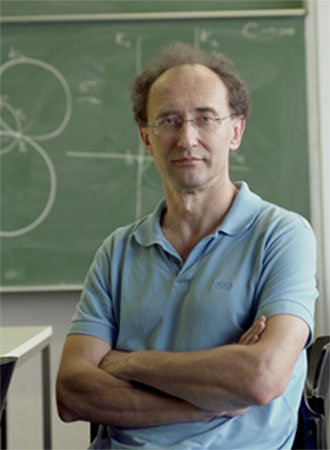
Professor Alexander I. Bobenko is a faculty member at the Institute of Mathematics, Technische Universität Berlin, holding the position of Professor in the Department of Geometry and Mathematical Physics. His research focuses on Discrete Differential Geometry, Integrable Systems, and Mathematical Physics, with notable contributions to the theory of discrete surfaces, circle patterns, and geometric structures. He leads the research group AG Geometrie und mathematische Physik and is involved in the DFG Collaborative Research Center (SFB/TRR 109) 'Discretization in Geometry and Dynamics.' PhD advisor for over 20 students, including Carl O. Lutz and Alexander Fairley. Recipient of extensive funding for projects on discrete geometry and integrable systems. His research interests span geometry visualization, Riemann surfaces, and applications of discrete methods in mathematical physics. Bobenko has published prolifically on topics like discrete conformal maps, minimal surfaces, and integrable systems, with over 130 peer-reviewed articles. His work bridges classical and discrete geometry, emphasizing computational and algorithmic approaches.
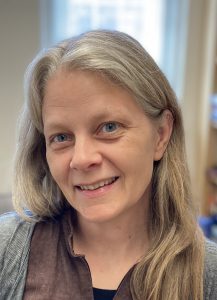
Janet Downie is an Associate Professor in the Department of Classics at the University of North Carolina at Chapel Hill. Her research focuses on Greek literature and literary history from the Roman Imperial period, with particular emphasis on spatial theory, chorography, and postcolonial perspectives. She holds a PhD from the University of Chicago (2008) and previously taught at Princeton University. Current projects include a book on the spatiality of Greek literature in Roman Asia Minor and a Carolina Seminar on cartography and literary landscapes. Downie teaches ancient Greek language and literature at all levels, including graduate seminars on Imperial Greek literature. Education: BA in English Literature and Greek and Roman Studies, University of Victoria (1998) MA in Late Antique and Byzantine Studies, King’s College London (2000) PhD in Classics, University of Chicago (2008) Research Interests: Downie examines how spatial and material contexts shaped ancient literature. Her work explores Greco-Roman rhetorical practices, authorial self-representation, and the intersection of religion, body discourses, and geography. Recent projects investigate the role of spatial narratives in defining Hellenism within the Roman Empire and the dynamics of ancient literary canons. Publications: Her book At the Limits of Art (2013) analyzes Aelius Aristides’ Hieroi Logoi . Recent articles address topics like Philostratus’ Life of Apollonius , Dionysius’ geographical poetry, and the experience of pain in ancient medical texts. Labs/Teams: She co-convenes a multidisciplinary Carolina Seminar on cartography and literary landscapes, collaborating with faculty in Geography and Romance Studies.
Markus Becker is a Professor at the University of Southern Denmark (SDU), affiliated with the Strategic Organization Design Unit (SOD) and the Danish Institute for Advanced Study (DIAS). His research focuses on organizational adaptation and learning, particularly through the lens of organizational routines. He investigates how organizations maintain stability while adapting to dynamic environments, with notable work on digital transformation, outsourcing challenges, and innovation processes. Markus serves on the Editorial Review Board of Organization Science and has contributed to prominent journals like the Strategic Management Journal . His recent research explores digital twins of organizations and their implications for socio-technical design. Markus holds a central role in SDU’s Faculty of Business and Social Sciences, driving interdisciplinary research at SOD. His academic contributions span organizational routines, entrepreneurship, and institutional theory, with case studies involving global firms like Airbus and Fiat-Chrysler. He actively participates in research seminars, such as the 2022 online series at SDU, emphasizing collaborative and distributed innovation frameworks. Key research themes include: Organizational Routines & Adaptation Innovation Process Design Digital Transformation in Organizations Outsourcing & Supply Chain Dynamics Schumpeterian Economic Theory His work bridges theoretical insights with practical applications, addressing challenges in complex product development and knowledge governance. Markus’ publications often highlight the interplay between organizational structure, technology, and strategic decision-making.
Andreas Klappenecker is a Professor in the Department of Computer Science & Engineering at Texas A&M University. His research focuses on quantum computing, image processing, and cryptography, with contributions to quantum error correction, algorithms, and distributed systems. He holds a Ph.D. and Diplom from the University of Karlsruhe (now Karlsruhe Institute of Technology). Klappenecker has received notable awards including the NSF CAREER Award (2004) and the Halliburton Faculty Fellowship (2007). Education: Ph.D., Computer Science, University of Karlsruhe, 1998 Diplom (Master's equivalent), Computer Science, University of Karlsruhe Research Interests: Quantum algorithms and error correction Design of efficient quantum circuits (e.g., Toffoli gates) Subsystem codes and stabilizer codes Distributed systems and sensor networks Applications of algebraic structures (e.g., finite fields, nearrings) Awards: Best Paper Award, ICQNM 2009 National Science Foundation CAREER Award (2004) TEES Select Young Faculty Award (2004) Fellow-at-Large, Santa Fe Institute (2000) Grants & Projects: NSF Nano: Resilient Quantum Error Correction (CCF 0622201) CAREER: Design of Efficient Quantum Algorithms (CCF 0347310) Quantum Computing research funded by Texas Institute for Technology Futures (TITF) Labs & Collaborations: Active in interdisciplinary quantum computing initiatives involving computer science, mathematics, and physics departments at Texas A&M. Organized workshops on quantum computation and information.
Karim Al-Zand is a Professor of Composition and Theory at Rice University's Shepherd School of Music. Born in Tunis, Tunisia, and raised in Ottawa, Canada, he holds a B.Mus. from McGill University and a Ph.D. from Harvard University. His music spans orchestral, chamber, vocal, and interdisciplinary works, drawing inspiration from graphic art, folk traditions, jazz, and Middle Eastern heritage. Notable awards include the 2024 Barlow Prize, Sackler Composition Prize, and Arts and Letters Award. He co-founded Musiqa, Houston's contemporary music ensemble. Research Interests: Al-Zand explores connections between music and other arts, with a focus on interdisciplinary projects. His works often reflect on cultural heritage, political themes, and historical narratives. Recent compositions like Al Jazari’s Ingenious Clocks (2025) and Strange Machines (2022) exemplify his innovative approach to blending mechanical imagery with musical structure. Grants & Collaborations: Al-Zand’s work has been supported by organizations such as the Chamber Music America Commissioning Grant. He collaborates with ensembles like the Houston Symphony and the Balourdet Quartet. Upcoming events include a residency at the Banff Center (July 2025) and performances in Fiskars, Finland (August 2025). Labs/Teams: As a founder of Musiqa, he curates programs integrating modern music with visual and digital arts. His teaching emphasizes hands-on learning in composition, theory, and ear training.
Tyler V Franconi is an Assistant Professor of Archaeology and the Ancient World and Classics at Brown University, affiliated with the Joukowsky Institute for Archaeology and the Ancient World. He holds a DPhil from the University of Oxford and has held academic positions at Oxford, Edinburgh, and Alberta. His research focuses on Roman economic and environmental history, particularly in frontier regions like Britain, Germany, and Italy. He co-directs the Upper Sabina Tiberina Project, investigating rural settlement in Italy's Sabine region. Education: 2014 PhD in Classical Archaeology, University of Oxford 2010 MA, University of Oxford 2009 MA, Bryn Mawr College 2007 BA, Hobart & William Smith Colleges Research Interests: His work explores the interplay between environmental dynamics and Roman economic strategies, with a focus on riverine landscapes, frontier zones, and long-term settlement patterns. He employs interdisciplinary methods, including paleoparasitology, computational modeling, and digital archaeology. Publications: Recent work includes studies on Roman riverine trade, environmental imperialism, and paleoparasitological analysis of ancient infections. His research often integrates archaeological data with environmental and historical records to reconstruct complex socio-ecological systems. Teaching: Teaches courses on Roman frontiers, environmental archaeology, and ancient disease. Courses include 'Hadrian's Wall' and 'Pathogens, Pandemics, and Plagues in the Greek and Roman Worlds.' Collaborations: Active collaborator with scholars like Candace Rice (Brown) and Chris Green (Oxford), focusing on digital archaeology and interdisciplinary landscape studies.
Katinka Sewing is an Assistant Professor at the Institute of Classical and Byzantine Archaeology, Department of Byzantine Archaeology and Art History at Heidelberg University. She serves as academic advisor, oversees grade/exam administration, and manages organizational affairs. Her doctoral research focused on the late antique pilgrimage church at Ephesus' harbor canal, integrating archaeological and architectural methodologies. She leads excavations in Turkey, notably the Terrace Church in Doliche, and will hold a visiting professorship at the University of Warsaw in 2024. Education includes a PhD from Heidelberg (2020), M.A. in Historical Architectural Research (2014), and earlier degrees in Early Christian Archaeology. She has participated in excavations across Turkey, including Ephesus, Limyra, and Doliche, and contributed to digital archiving projects in Münster. Research interests span Eastern Mediterranean material culture, late antique art/architecture, and women’s roles in late antique-Byzantine societies. Her work emphasizes architectural analysis and the reception of ancient sites in modern archaeology.
Charles S. Peskin is a Professor of Mathematics at the Courant Institute of Mathematical Sciences, New York University. He specializes in mathematical modeling and simulation of biological systems, particularly cardiovascular physiology and neurophysiology. His work focuses on the Immersed Boundary Method, a computational framework for fluid-structure interaction problems. Peskin has authored influential textbooks such as Modeling and Simulation in Medicine and the Life Sciences (2nd ed., 2002) and developed simulation tools used in biomechanics research. His research spans mathematical biology, computational fluid dynamics, and stochastic processes in biological systems. He advises PhD students on interdisciplinary projects at the interface of mathematics and life sciences. Key contributions include modeling heart valve dynamics, neural signaling mechanisms, and biomolecular motor systems. Affiliations: Courant Institute, NYU Research: Immersed Boundary Method, Cardiac Mechanics, Neurophysiology Modeling Publications: 100+ articles, 2 books Teaching: Courses on PDEs in Biology, Biomolecular Motors, and Simulation Techniques Software: MATLAB programs for cardiovascular system simulations His work bridges applied mathematics with biomedical engineering, emphasizing computational methods for complex biological systems. Recent work includes studies on entropy principles in biology and rotary molecular motor mechanisms.
Oren M. Abeles is an Associate Professor of Rhetoric and Composition at Michigan Technological University's College of Sciences and Arts. His work bridges rhetoric with scientific and technological discourse, focusing on how figures of speech shape scientific narratives. He holds a Ph.D. and M.A. in English from UNC Chapel Hill, an M.S. in Education from Northwestern University, and a B.A. in Sociology from Bowdoin College. Research interests include the rhetoric of science/technology, posthumanist theory, and classical rhetorical principles applied to modern scientific discourse. His current book project examines how tropes like metaphor and metonymy influenced evolutionary theory's linear causality narratives, contrasting them with holistic biological complexity theories. Teaching focuses on introductory rhetoric and advanced courses on science rhetoric and historical composition studies. Recent publications analyze evolutionary logic rhetoric, incentive discourse economization, and irony in Frances Burney's Cecilia . No grants or awards are listed, though his cross-disciplinary work bridges humanities and sciences. No lab affiliations are explicitly mentioned in the text.
David Howie is a Lecturer in Collaborative Piano at the Sydney Conservatorium of Music, University of Sydney, where he has been affiliated since 1992. He holds a BMus and GradDipMus(Acc) in accompaniment. Prior to returning to Australia, he was Head of Keyboard Studies at King's College in Somerset, England. His career spans over three decades of teaching and performing internationally. Education: Studied piano under Sonya Hanke and Gordon Watson, later specializing in accompaniment with David Miller and Paul Hamburger. Affiliations: Sydney Conservatorium Ensemble Unit member since 1992. Research interests focus on collaborative piano techniques, chamber music performance practices, and promoting Australian contemporary repertoire through his HD Duo partnership with saxophonist Michael Duke. They released Australian Portrait (2012) and The Fairer Sax , exploring Australian composers and female composers' works. Performance highlights include collaborations with artists like Stanley Drucker, Kamahl, and Dominica Matthews across Europe, America, Asia, and Australia. Recent recordings include Bird Spirit Dreaming (2024) and Music of the Commonwealth (2021), showcasing cross-cultural musical fusions. Grants: 2017 Australian Elizabethan Theatre Trust grant for commissioning new works with HDDuo. Labs/Teams: Co-founder of HD Duo, pioneers of Australian music for saxophone and piano.
Ninfea Cruttwell-Reade is a British composer and cellist holding a Leverhulme Early Career Fellowship at Durham University's Department of Music. Her work bridges Western classical traditions and North Indian classical music through innovative chamber compositions, including three raag-focused works mixing Western and North Indian instruments. She serves as the Presteigne Festival’s 'Evolve' composer (2020–2025) and is a Royal Philharmonic Society Featured Composer. Her educational background spans degrees from the University of Oxford and the Royal Academy of Music, culminating in a PhD in Music Composition from Princeton University. This foundation informs her scholarly approach to composition and cross-cultural dialogue. Cruttwell-Reade's research centers on contemporary composition with emphases on cross-cultural fusion (particularly raag-based Indian traditions), unconventional instrumentation (e.g., flower pots in piano works), and literary adaptations of texts by Aubrey Beardsley, Saki, and Don Paterson. Her practice integrates performance, instrument study (including ongoing sitar training), and media production, as evidenced by filmed commissions for BBC Radio 3. She actively explores intersections between acoustic experimentation, narrative structures, and interdisciplinary collaboration. Her compositional trajectory reveals increasing complexity in cross-cultural dialogues, evolving from percussion-focused works like 'Hatters' (2015) to sitar-integrated chamber music ('Patdeep Studies', 2021) and experimental piano techniques ('Three études', 2019). Recent projects extend into choral settings, radio play adaptations, and large-scale orchestral works, demonstrating versatility across vocal, chamber, and orchestral domains while maintaining thematic continuity in literary and cultural synthesis. Key accolades include the Leverhulme Early Career Fellowship supporting her Durham University research, the PRS Foundation’s Composers’ Fund enabling sitar acquisition and training, the Tanglewood Music Center composition fellowship (2017), and the Royal Philharmonic Society Composition Prize. Her status as a Royal Philharmonic Society Featured Composer underscores ongoing recognition. Cruttwell-Reade has secured major commissions from the Psappha Ensemble, Dunedin Consort, Edinburgh Youth Orchestra, and Gesualdo Six, with performances by the London Symphony Orchestra, Royal Scottish National Orchestra, Sō Percussion, and JACK Quartet. Her five-year Glyndebourne residency (2019–2022) and current Presteigne Festival role highlight institutional trust in her artistic vision. Current projects include a Wigmore Hall-commissioned piano quintet, a co-commissioned adaptation of Dylan Thomas’s 'Under Milk Wood', and a BBC Radio 3/Royal Philharmonic Society piano concerto for Clare Hammond and the BBC National Orchestra of Wales.
Angela Anna ALBANESE is a Full Professor in the Department of Mathematics and Physics "Ennio De Giorgi" at the University of Salento, Italy, a position she has held since October 1, 2021. She previously served as an Associate Professor in the same department from 1998 to 2021. She earned her degree in Mathematics from the University of Lecce in 1991 and began her academic career there as a researcher from 1993 to 1998. She has held visiting positions at the Polytechnic University of Valencia (Spain) and the University of Tübingen (Germany), and was a CNR-Italy fellow at the Polytechnic University of Valencia. Her research is centered on Functional Analysis , particularly in Operator Theory , Ultradifferentiable Classes , Sequence Spaces , and Spectral Theory . Her work investigates the properties of Cesàro and related operators in various function and sequence spaces, including Fréchet and Banach spaces, with a strong emphasis on regularity, spectral behavior, and dynamical properties. Her expertise also extends to partial differential equations and harmonic analysis. The recent publications highlight a sustained focus on operator theory in function spaces , with a particular concentration on the Cesàro operator and its generalizations across different topological vector spaces. A significant trend is the analysis of spectral properties and dynamics of composition, multiplication, and convolution operators. Her work increasingly bridges classical functional analysis with applications in harmonic analysis and PDEs, as seen in her research on time-frequency representations and hypoellipticity. National Scientific Qualification (ASN) as Full Professor of Analysis (2013) National Scientific Qualification (ASN) as Full Professor of Analysis (2019, 1st quarter) Prof. ALBANESE plays a significant role in academic leadership and service. She is the Coordinator of the PhD School in "Mathematics and Computer Science" at the University of Salento (since 2019) and a member of the Doctoral School Board (since 2024). She has been a member of the Teaching Committee for the PhD School in Mathematics since 2007. She has served as an Assistant Editor for the journal Note di Matematica (2009–2019) and is currently a member of the Editorial Board of the Banach Journal of Mathematical Analysis (since 2023). She is a prolific reviewer for numerous journals and funding bodies, including Zentralblatt MATH, the Austrian Science Fund (FWF), and the VQR. Her research has been supported by several national and international projects. She was the main researcher for a project on "Functional Analysis and Applications-Young Researchers" at the University of Lecce and has participated in multiple projects funded by the National Institute of Higher Mathematics (INdAM) and the Italian Ministry of University and Scientific Research. She was also a researcher on a Spanish Ministry of Science and Innovation project titled "Metodos de analisis funcional para el analisis matematico".
Moritz Haakh serves as an academic assistant for costume design within the Art Department at the State Academy of Fine Arts Stuttgart since 2024, collaborating with Prof. Bettina Walter in the stage and costume design program. His institutional affiliation spans teaching, design implementation, and academic mentorship in theatrical costume arts. His educational foundation includes a Diploma (FH) in costume design from the Dresden Academy of Fine Arts complemented by formal training as a men's tailor in Frankfurt am Main. This dual expertise bridges academic theory and artisanal craftsmanship. Haakh's creative focus centers on historical costuming for opera and theatre, with specialization in Baroque and classical repertoire requiring precise period accuracy alongside contemporary reinterpretation. His work demonstrates mastery in integrating costume with directorial vision across diverse genres including opera, chamber theatre, and variety spectacles. Key strengths include choral ensemble coordination, cross-cultural narrative adaptation, and solving complex staging challenges through innovative costume solutions. Analysis of his 15 most recent productions reveals consistent engagement with European opera houses and music academies, particularly Giessen City Theatre and University of Music Würzburg. His output shows evolving sophistication in merging historical research with modern directorial concepts, especially evident in Baroque opera revivals where he balances authenticity with contemporary relevance. Prix Juste-au-Corps (Young Talent Award for Costume Design) for “La Bohème” (2015) Haakh maintains significant professional collaborations beyond academia, serving as recurring costume master for the Bayreuth Festival and Bad Vilbel Castle Festival while mentoring through assistantships with established designers including Gabriele Jaenecke, Anja Rabes, Nini von Selzam, Julia Müer, and Jürgen Rose. His freelance practice since 2016 encompasses full costume design cycles from concept to implementation across opera, theatre, and variety productions. His creative laboratory operates at the intersection of institutional training grounds like Dresden Laboratory Theatre and professional venues including Senftöpfchen Theater Cologne, facilitating knowledge transfer between academic and professional spheres through hands-on design implementation.
William L. Barnes is a Professor active in the field of Nanophotonics and Optics . His research focuses on light manipulation in complex photonic systems, including studies of photonic band gap materials, backward-propagating waves, and surface defects. Key Research Areas: Nanophotonics, Quantum Optics, Photonic Band Gap Materials Recent Collaborations: Involved in multi-author projects with institutions like IEEE and University of Twente His publications emphasize optical state density , antenna physics , and energy transfer mechanisms in nanophotonic media. Notable works include studies on 3D photonic band gap crystals (2025) and optical state analysis (2020-2021).
Andrew Drucker is an Assistant Professor in the Department of Computer Science at the University of Chicago. He focuses on theoretical computer science, particularly computational complexity, to understand the inherent limits of efficient computation. PhD in EECS from MIT (2012), advised by Scott Aaronson Postdoctoral work at the Institute for Advanced Study (IAS) and University of Edinburgh His research explores algorithmic paradigms for solving NP-hard problems, such as kernelization (preprocessing reductions) and intelligent random guessing , where clever trial-and-error strategies outperform naive approaches. He also investigates non-classical proof systems involving interaction, probabilistic verification, and quantum mechanics, as well as the efficiency gains from joint computation across multiple tasks. Additional interests include prediction , polynomial approximation , and algorithmic insights into human memory . He participates in academic service as a program committee member for conferences like ITCS, FOCS, and CCC. Contact: andy.drucker@gmail.com