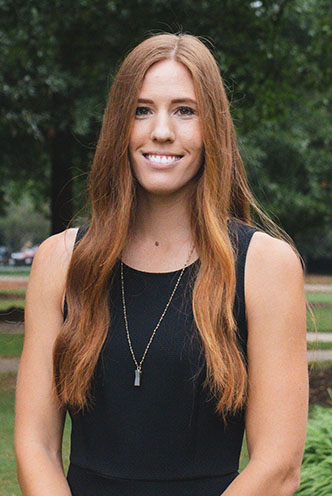
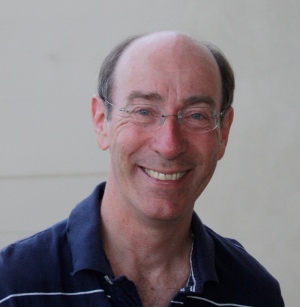
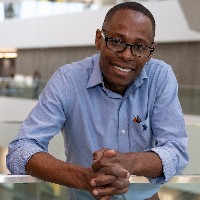
Giacomo Vitali is a Ph.D. candidate in Computer and Systems Engineering at the Politecnico di Torino , Department of Control and Computer Science (DAUIN), while also serving as a Lecturer at the same institution. His research focuses on Quantum Computing , Machine Learning , and Parallel and Distributed Systems . Education: M.Sc. in Physics of Fundamental Interactions (2018) from the University of Pisa Research: Pioneering hybrid quantum-classical algorithms for industrial applications, including BBQ-mIS and DEN models for graph problems and quantum hardware optimization Teaching: Contributing to courses on Quantum Hardware Design and Quantum Computing at the M.Sc. level, as well as undergraduate courses in Computer Science
Greg D. Field is an Adjunct Associate Professor of Neurobiology at Duke University and a Faculty Network Member of the Duke Institute for Brain Sciences. His laboratory investigates retinal processing of visual scenes, focusing on functional connectivity, light adaptation, circadian rhythms, and retinal degenerative conditions. Using multi-electrode arrays, transgenic mouse models, and chemogenetics, he examines how retinal circuits encode visual information and how degeneration impacts signaling. Recent work addresses neural adaptation mechanisms, retinal mosaics, and potential therapies for retinal diseases. Research Themes : Retinal circuit organization, neural adaptation, visual signal processing, retinal degeneration, and optogenetics Technologies : Multi-electrode recordings, light-sheet microscopy, computational modeling, and transgenic approaches The 15 most recent publications (2010-2025) demonstrate his work on retinal ganglion cell function, visual hierarchy encoding, and therapies for photoreceptor degeneration. Grants from the National Institutes of Health (2015-2025) support studies on neural population mapping, comparative biology, and retinal circuit restoration. His work bridges theoretical neuroscience with clinical applications, particularly in developing interventions for blindness.
Prof. Dr.-Ing. Gerd-Jürgen Giefing serves as Professor of Information and Communication Technology at Georg Agricola University of Applied Sciences since 2003, concurrently leading the Electrical and Information Engineering Master's Program, Digital Signal Processing Laboratory, and serving as Deputy Head of the Software Engineering Laboratory. His academic foundation includes: Electrical engineering studies with data processing focus at University of Karlsruhe and Technical University of Munich (1983-1988) Doctorate in neuroinformatics and technical vision from Ruhr University Bochum (1988-1993) Research spans cognitive robotics with emphasis on behavior-oriented scene analysis and distributed communication frameworks, augmented reality systems, and traffic telematics applications including driver face recognition. His foundational work in biologically inspired computer vision established video-based facial capture systems using multiprocessor architectures, later evolving into cognitive robotics frameworks. Current investigations focus on brain-computer interfaces and nomadic point cloud calibration for mobile robotics. Publication trends reveal a progression from neurobiological vision models (1990s) to cognitive robotics infrastructure (2010s), consistently addressing real-world applications in automation and human-machine interaction through IEEE conference proceedings. Key recognitions: Innovation Award '94 from Bochum Technology Transfer Association European Information Technology Award 1996 from European Council for Applied Sciences and Engineering As IEEE Systems Man and Cybernetics Society member, he maintains active research leadership without documented grant specifics. His laboratory direction fosters applied research in signal processing and software engineering for cognitive systems development.
Holly Kinder is a Lecturer in the Department of Animal and Dairy Science at the University of Georgia's College of Agricultural & Environmental Sciences. She holds a PhD in Neuroscience (2017) and a BS in Animal Science (2012), both from UGA. Her academic career spans teaching and research in regenerative bioscience, focusing on neural stem cell therapies for traumatic brain injury (TBI) and stroke. Education: PhD in Neuroscience (UGA, 2017), BS in Animal Science (UGA, 2012) Dr. Kinder's research explores regenerative bioscience through stem cell therapies for neural injuries, aiming to understand TBI/stroke pathophysiology and develop treatments. Her work spans neuroregeneration , neuroinflammation , gut-brain axis , and biomedical imaging , with publications on combination therapies using nanoparticles and stem cells, gut microbiome dynamics post-stroke, and novel assessment tools for neurological recovery. Scientific awards include multiple teaching recognitions (Relentless Welcome Challenge, Active Learning Summer Institute) and research distinctions (Student Career Success Influencer Award). Her 15 most recent articles (2025-2019) demonstrate expertise in porcine stroke/TBI models , neuroimaging , functional recovery metrics , and multimodal therapeutic approaches . NIH R21 Grant: Neural Stem Cell Transplant Conditions that Enhance Long Term Engraftment in TBI Tissue (2020-2022) Dr. Kinder mentors graduate students (e.g., Helen Mennard) and collaborates with the Regenerative Bioscience Center. She teaches courses on animal cognition, regenerative bioscience, and research methods while developing interactive learning strategies to enhance student engagement and analytical skills.
Nicholas D Schiff is a Professor of Medical Ethics in Medicine, Professor of Neuroscience at the Brain and Mind Research Institute, and Professor of Neurology at Weill Cornell Medical College, holding the Jerold B. Katz Professorship in Neurology and Neuroscience. His academic appointments span multiple departments reflecting his interdisciplinary work at the intersection of neurology, neuroscience, and medical ethics. Dr. Schiff completed his M.D. at Cornell University Medical College in 1992 and earned his B.A. from Stanford University in 1987. His educational background established the foundation for his career bridging clinical neurology with neuroscience research. His research focuses on disorders of consciousness, traumatic brain injury mechanisms and treatments, deep brain stimulation techniques, thalamocortical function, and neuroethical considerations in severe brain injury. Schiff pioneered work on cognitive motor dissociation and developed the anterior forebrain mesocircuit model to explain disorders of consciousness. His laboratory investigates neural mechanisms of recovery using multimodal approaches including EEG, fMRI, and direct neural recordings. Analysis of his recent publications reveals a strong emphasis on developing objective biomarkers for consciousness assessment, refining deep brain stimulation protocols for traumatic brain injury, and translating basic neuroscience discoveries into clinical applications. His work increasingly incorporates multimodal assessment techniques and focuses on both mechanistic understanding and practical clinical interventions. Principal Investigator for JSMF Covid-19 Consortium for Recovery of Consciousness (2020-2025) Principal Investigator Subaward for Thalamic stimulation to prevent impaired consciousness in epilepsy (2019-2025) Co-Investigator for Central thalamic deep brain stimulation to regulate arousal and cognition (2020-2025) Key Personnel for NIH 7T MRI System grant (2021-2025) Dr. Schiff maintains active collaborations through the Central Thalamic Deep Brain Stimulation Trial and serves on scientific advisory boards including QuantalX Neuroscience Ltd. His laboratory at the Brain and Mind Research Institute integrates basic neuroscience with clinical applications, focusing particularly on thalamic function and consciousness regulation.
Robert F. Hess, Ph.D., D.Sc. is a Professor and Director of Research in the Department of Ophthalmology at McGill University. He also serves as the Director of the McGill Vision Research Unit, a leading center for vision science research. His work focuses on understanding visual perception mechanisms, particularly in conditions like amblyopia. Dr. Hess's research interests span multiple areas of vision science including: Adult Neuroplasticity Amblyopia (both clinical and laboratory aspects) Visual contour processing Brain imaging related to vision Motion perception Shape perception Spatial vision Stereo vision Transcranial Magnetic Stimulation (TMS) His recent publications reveal a strong focus on amblyopia research, particularly examining binocular vision deficits, spatial scrambling effects on visual perception, and novel treatment approaches. Dr. Hess has been investigating how dichoptic training methods can improve visual function in amblyopia, moving beyond traditional patching approaches. His work often combines psychophysical testing with computational modeling to understand the neural mechanisms underlying visual perception deficits. As Director of the McGill Vision Research Unit, Dr. Hess leads a collaborative research environment that brings together multiple investigators studying various aspects of vision. The unit appears to be well-integrated with both basic science and clinical ophthalmology at McGill University.
Dr. Samuel M Mugo is a Professor and Associate Dean of Development in the Faculty of Arts and Science at MacEwan University (Edmonton, Alberta), affiliated with the Department of Physical Sciences. He holds a PhD in Analytical Chemistry from Memorial University of Newfoundland (2006) and completed an NSERC postdoctoral fellowship at Queen's University (2007-2008). Since joining MacEwan in 2008, he teaches analytical chemistry, industrial chemistry, and mentors undergraduate researchers. Research Focus: Dr. Mugo develops smart polymer nanomaterials for mobile point-of-need spectro-electrochemical sensors. His work spans: Wearable diagnostics for mental health monitoring Precision agriculture and environmental quality sensors Frugal electrochemical platforms integrating data analytics Technology translation from lab to industry/community Key expertise includes nanotechnology, molecular imprinting, nanozymes, and citizen science applications. Publication Trends: Recent articles (2022-2025) demonstrate strong focus on: Wearable/implantable electrochemical sensors Microneedle-based metabolite detection Multiplexed biomarker analysis in biological fluids Smart hydrogels for neural interfaces Sustainable sensor materials from biowaste Awards & Honors: Alberta Newcomers Recognition Award (2022) MacEwan Distinguished Research Award (2021) MacEwan Distinguished Teaching Award (2020) Research Leadership: Dr. Mugo leads an interdisciplinary research group ( mugoresearchlab.com ) focused on sensor development. He has secured multiple grants including NSERC Discovery grants and Alberta Innovates funding. As Vice Chair of the Canadian Society of Chemistry Analytical Division, he promotes inclusive research communities.
Dr. Andrzej Tadeusz Kawiak is a Lecturer in the Department of Neuroinformatics and Biomedical Engineering at the Institute of Computer Science and Mathematics, Faculty of Mathematics, Physics and Computer Science, Maria Curie-Skłodowska University (UMCS) in Lublin, Poland. His academic work focuses on the intersection of neuroscience, computer science, and biomedical engineering, particularly in EEG signal processing and brain activity analysis. Dr. Kawiak's primary research interests include: Neuroinformatics and Biomedical Engineering EEG Signal Processing and Quantitative EEG Analysis Brain Activity Modeling during cognitive tasks Source credibility evaluation and trust assessment Mental workload detection using neural networks Applications of machine learning in neuroscience His recent publications demonstrate a strong focus on applying advanced computational methods to understand brain activity in various contexts, including mental workload, relaxation states, trust evaluation, and post-COVID-19 cognitive symptoms. Dr. Kawiak has published 15 research papers with significant impact, as evidenced by his h-index values across multiple platforms (Google Scholar: 7, Scopus: 5, Web of Science: 6). Dr. Kawiak has received recognition through various bibliometric measures: Total Impact Factor: 15.546 Total SNIP: 10.843 Total CiteScore: 45.3 Total ministerial score: 1,370 He maintains active consultation hours (Thursdays 7-8 AM and 12:45-13:45, Fridays 7-8 AM) and supervises research in neuroinformatics and biomedical engineering. His laboratory work involves advanced signal processing techniques, machine learning algorithms, and cognitive neuroscience methodologies to investigate brain function in both healthy and clinical populations.
Professor Huiru (Jane) Zheng is a Professor of Computer Science at the School of Computing, Ulster University. She serves as Theme Leader of Data Analytics and Systems in the AI Research Centre and is a full member of the Computer Science Research Institute. As a Fellow of the UK Higher Education Academy and Senior Member of IEEE, she has established herself as a leading researcher with significant contributions to bioinformatics and healthcare informatics. Her educational background includes: PhD in Bioinformatics (2003) from Ulster University Postgraduate Certificate in Teaching in Higher Education (2005) from Ulster University Professor Zheng's research spans multiple domains of data science with applications in healthcare, agriculture, and environmental monitoring. Her primary interests include integrative data analytics in systems biology, machine learning for healthcare decision support, and assistive technology development. She has particular expertise in applying advanced data mining techniques to complex biological datasets, with a focus on improving healthcare outcomes and supporting independent living through technology. Her extensive publication record demonstrates a clear trend toward interdisciplinary research that bridges computer science with practical applications. Recent work shows increasing focus on real-world implementations of AI in digital health, precision agriculture, and environmental monitoring systems. The breadth of her research interests is evident in publications ranging from gait analysis using smart insoles to methane prediction in dairy farming and wildfire monitoring using UAVs. Professor Zheng has received notable recognition for her contributions: Fellow of the UK Higher Education Academy Senior Member of IEEE As a principal investigator, Professor Zheng has successfully secured substantial research funding from diverse sources including EPSRC, TSB, DEL, NHS, Invest NI, Innovation UK, and the European Commission. Her leadership extends to editorial roles for international journals and organizing major conferences such as the UK Workshop on Computational Intelligence. She has supervised numerous research students through her various projects. Professor Zheng leads several active research initiatives including the AI Research Centre's Data Analytics and Systems theme. Her current projects involve developing digital twin technology for personalized healthcare, AI-assisted systems for post-stroke rehabilitation, methane prediction models for sustainable dairy farming, and age-friendly built environment assessment systems. These projects often involve multidisciplinary collaboration across computer science, healthcare, agriculture, and environmental science domains.
Rui Loureiro is a full Professor of Surgical and Rehabilitation Engineering at University College London (UCL), where he leads the Department of Orthopaedics and Musculoskeletal Science and the Aspire Centre for Rehabilitation and Assistive Technology . Since 2017, he has served as Head of the Institute of Orthopaedics and Musculoskeletal Sciences and was appointed Research Director and Chair of the Research & Innovation Board at the NHS-led National Rehabilitation Centre in 2024. His work bridges advanced engineering with clinical applications, focusing on stroke rehabilitation, spinal/brain injuries, bionics, and assistive technologies. Research Interests : Loureiro specializes in Biomedical Engineering Medical Robotics Artificial Intelligence for Rehabilitation Virtual and Mixed Reality in Healthcare Wearable Technologies for Pain Management His publications highlight trends in functional near-infrared spectroscopy (fNIRS), edge computing for neurofeedback, and frugal medical device design. He advocates for interdisciplinary collaboration between engineers and clinicians to address global healthcare challenges. Scientific Recognition : Loureiro has received prestigious awards including SET for Britain Young Engineer Award (2004) IET Emerging Technology Award (2023) He founded the International Consortium on Rehabilitation Robotics (ICORR) and regularly serves as a keynote speaker at global conferences. Teaching Contributions : At UCL, he co-directs MSc programs in Rehabilitation Engineering and Assistive Technologies Minimally-invasive and Virtual Reality Surgery and teaches modules on virtual reality in healthcare and musculoskeletal biomechanics.
Febo Cincotti è Professore Ordinario di Bioingegneria (ING-INF/06) presso il Dipartimento di Ingegneria Informatica, Automatica e Gestionale "Antonio Ruberti" della Sapienza Università di Roma. Svolge attività di ricerca metodologica e applicata sul processamento di segnali neurofisiologici e sullo sviluppo di interfacce cervello-computer (BCI) per riabilitazione motoria e assistenza a pazienti con disabilità severe. Laurea in Ingegneria Elettronica (1998), Sapienza Università di Roma Dottorato in Biofisica (2003), Fondazione Santa Lucia La sua ricerca si concentra su: Metodi avanzati per il processamento di segnali EEG, EMG e HD-EEG Interfacce cervello-computer per recupero motorio post-ictus Analisi di coerenza cortico-muscolare e intermuscolare Applicazioni di teoria dei grafi per reti cerebrali Gli articoli recenti mostrano un focus su: Reabilitazione dell'arto superiore post-stroke Metodi per ridurre jitter nella classificazione P300 Caratterizzazione di oscillazioni cerebrali a bassa frequenza Applicazioni BCI per pazienti con disordini della coscienza Analisi di connettività cerebrale mediante teoria dei grafi Integrazione di feedback visivo e bioingegneristico nella riabilitazione robotica Attività di insegnamento: Metodi Avanzati di Analisi di Dati Biomedici (12 CFU) Elaborazione Dati e Segnali Biomedici II (3 CFU) Neuroengineering (3 CFU) Membro del Collegio dei Docenti per il Dottorato in Automatica, Bioingegneria e Ricerca Operativa E' coautore di 124 articoli su rivista internazionale (H-index 50 Scopus) e ha coordinato 5 progetti EU e 1 progetto nazionale. E' stato Associate Editor delle IEEE Transactions on Biomedical Engineering e relatore invitato in conferenze internazionali.
Kai Alter is a Senior Lecturer in Auditory Cognitive Neuroscience at Newcastle University's Faculty of Medical Sciences, affiliated with the Biosciences Institute. They also serve as an Affiliated Lecturer at the University of Cambridge's Faculty of Modern and Medieval Languages and Linguistics and maintain collaborations with institutions including the University of Lisbon and Tuebingen University. Their educational background includes: Habilitation from University of Leipzig (2002) PhD in Linguistics from University of Leipzig (1994) Post-grade in Linguistics from University of Geneva (1993) Post-grade in Phonetics from University of Lausanne (1993) Master in Linguistics from University of Leipzig (1990) Master in Russian Language from University of Belgorod (1988) Dr. Alter's research focuses on auditory neuroscience, particularly speech and language processing using behavioral and neuro-imaging methods (EEG, MEG, fMRI) in both healthy volunteers and patients. Their work spans cognitive neuroscience, examining the comparison between language and music processing, neurocognition of prosody and intonation in children, turn taking in communication, tinnitus research, dyslexia and working memory, and laughter and brain interactions. They also investigate developmental aspects of speech & language processing, speech segmentation on phrase and discourse level, and processing of durational, tonal, and spectral properties related to voice. Dr. Alter's publications reveal a strong focus on tinnitus research, emotional processing in laughter, and speech processing in neurological conditions. Their work combines multiple neuroimaging techniques to understand auditory processing mechanisms, with recent publications showing increasing interest in tinnitus as a neurological condition and its relationship to brain responses, as well as the neural basis of emotional vocalizations like laughter. Notable scientific achievements include: Oxford Visiting Senior Research Fellowship (2015-2017) Honorary appointment as Research Associate in Neurology by the NHS Trust Associate Member of Laboratorio de Fonetica & Lisbon Baby Lab Research Associate at the Tuebingen University Hospital for Psychiatry Dr. Alter has co-supervised 22 PhD students and 8 PDRAs, and currently co-supervises 5 PhD students and 1 PDRA. They have secured international and national grants totaling £1.8 million over the past 12 years. As a reviewer, they have evaluated proposals for numerous national and international Research Foundations including Human Frontier Science Program, ERC, German Research Foundation, Netherlands Organisation of Scientific Research, Austrian Research Foundation, French Research Foundation, MRC, ASRC, ESRC, and Wellcome Trust. Dr. Alter co-convenes the cross-Faculty Research Group on Phonetics and Phonology at Newcastle University and maintains an active research program investigating the neural basis of speech and emotional vocalizations. Their work bridges cognitive neuroscience, linguistics, and clinical applications, particularly in understanding speech processing disorders and tinnitus.
Hari Arthanari is an Associate Professor in the Department of Biological Chemistry and Molecular Pharmacology at Harvard Medical School . His research focuses on protein-protein interactions and transcriptional Regulation in disease contexts, utilizing NMR spectroscopy , biophysical assays , and cell-based models . He operates the Arthanari Laboratory at Dana-Farber Cancer Institute, with a lab size of 5-10 members. Develops novel NMR methods for fragment screening and metabolite analysis Investigates transcriptional condensates and translation machinery dysregulation in cancer Applies integrative structural biology to therapeutic target discovery Research trends in his publications highlight therapeutic targeting of protein interactions across diverse diseases including cancer and viral infections . His work spans method development for NMR experiments, metabolomics marker identification , and structural characterization of both viral and human proteins. Articles frequently employ techniques like fluorine NMR , 15N TROSY experiments , and computational screening for drug candidate discovery. Scientific awards or formal recognition were not explicitly mentioned in the provided texts. His lab's publications emphasize collaborative multi-institute research and open-source drug discovery platforms , though no specific student advising or grant details were extracted. The Arthanari Lab (website: artlab.dana-farber.org) maintains focus on structural and functional characterization of proteins involved in disease mechanisms, particularly through NMR-derived metabolomics data and protein-ligand interaction identification .
Funda Yildirim is an Assistant Professor at the Digital Society Institute and the Cognition, Data and Education department, focusing on interdisciplinary research at the intersection of technology, cognition, and societal impact. With an ORCID ID of 0000-0003-4310-809X and an h-index of 41, her work spans virtual reality, cognitive neuroscience, and machine learning. She actively contributes to global initiatives like the UN Sustainable Development Goals (SDGs) through expertise in environmental resilience and human-AI interaction. Co-founder of the Open Behavioral Architecture network Chair in the European Innovation Council (2022) Chair in European Cooperation in Science and Technology (COST) (2021–2025) Her research explores how virtual reality and AI can address misinformation, sensory perception anomalies, and neurological diagnostics. Recent publications highlight her work on: VR-based climate change education Emotion-specific attention patterns Sensory integration in auditory perception AI-driven epilepsy diagnosis Human-robot interaction dynamics
Michelle Hampson is a Professor of Radiology & Biomedical Imaging at Yale School of Medicine. She holds secondary appointments as an Associate Professor in the Child Study Center and Psychiatry departments, and directs real-time fMRI research at Yale's Bioimaging Sciences Division. Undergraduate: Computing Science, University of Alberta (1993) PhD: Cognitive & Neural Systems, Boston University (1999) Her research focuses on real-time fMRI neurofeedback for clinical populations, particularly targeting disorders like tic disorders, OCD, PTSD, borderline personality disorder, and autism. Key technical interests include resting-state functional connectivity analysis and neuroimaging data harmonization across scanners. Recent publications highlight clinical trials for Tourette Syndrome neurofeedback (2023), OCD treatment (2023), and Parkinson's disease interventions (2022), alongside foundational work on ethical frameworks for neurofeedback (2021) and technical tools like HALO for MR scanner alignment (2022). Her studies frequently appear in Translational Psychiatry , NeuroImage , and Biological Psychiatry . Collaborators include Dustin Scheinost (Yale MR Core), Denis Sukhodolsky (Child Study Center), John Krystal (Psychiatry), and Michael Bloch (Yale Pediatrics). She leads the Hampson Lab, which develops novel brain imaging paradigms combining resting-state analysis with neurofeedback interventions.