

About
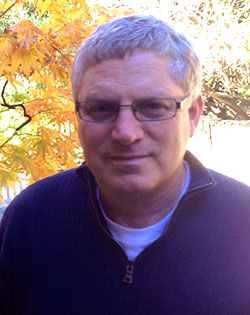
Greg D. Field is an Adjunct Associate Professor of Neurobiology at Duke University and a Faculty Network Member of the Duke Institute for Brain Sciences. His laboratory investigates retinal processing of visual scenes, focusing on functional connectivity, light adaptation, circadian rhythms, and retinal degenerative conditions. Using multi-electrode arrays, transgenic mouse models, and chemogenetics, he examines how retinal circuits encode visual information and how degeneration impacts signaling. Recent work addresses neural adaptation mechanisms, retinal mosaics, and potential therapies for retinal diseases.
- Research Themes: Retinal circuit organization, neural adaptation, visual signal processing, retinal degeneration, and optogenetics
- Technologies: Multi-electrode recordings, light-sheet microscopy, computational modeling, and transgenic approaches
The 15 most recent publications (2010-2025) demonstrate his work on retinal ganglion cell function, visual hierarchy encoding, and therapies for photoreceptor degeneration. Grants from the National Institutes of Health (2015-2025) support studies on neural population mapping, comparative biology, and retinal circuit restoration. His work bridges theoretical neuroscience with clinical applications, particularly in developing interventions for blindness.
Find Greg D. Field elsewhere
Related Searches
You Might Also Like
 Greg FieldUniversity of California, Los Angeles · Associate Professor
 Teresa PuthusseryUniversity of California, Berkeley · Associate Professor
 William H. MeriganUniversity of Rochester · Professor
 Sheila NirenbergCornell University · Professor
 Michael DoBoston Children's Hospital · Assistant Professor
 Richard H. KramerUniversity of California, Berkeley · Professor