Julia WurrView profile
Assistant Professor
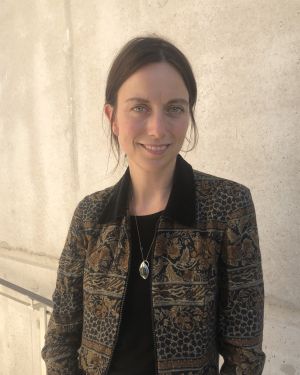
Julia Wurr is an Assistant Professor of Postcolonial Studies at Carl von Ossietzky University of Oldenburg, affiliated with the School of Linguistics and Cultural Studies and the Institute for English and American Studies. She holds a doctoral degree from the International Research Training Group 'Diversity' at the University of Trier and has held postdoctoral and visiting researcher positions at institutions including the University of Trier, University of Liège, and Jesus College, Oxford. Her research focuses on postcolonial medical humanities, biocapitalism, surrogacy, neo-orientalism, and Arab Anglophone writing. She currently serves as Associate Editor of the Journal of Postcolonial Writing and Vice-President of the GAPS Association. Her academic trajectory includes studies in English, French, and International Relations at the University of Trier (2007–2015), followed by advanced research roles. Her work interrogates intersections of colonial legacies, gender, and biopolitical systems, with recent publications in journals such as Journal of Postcolonial Writing and Asian Journal of Medical Humanities , exploring topics like transnational surrogacy and neo-orientalist literary poetics. Her research trends emphasize critical engagements with reproductive justice, postcolonial health narratives, and the entanglements of biocapitalism with global inequities. She actively participates in interdisciplinary networks such as the DFG-Netzwerk 'Bioethik und strukturelle Ungerechtigkeit' and collaborates with institutions like the Vellore Institute of Technology and IISER Bhopal. Prof. Wurr’s scholarly contributions have been recognized through a positive mid-term evaluation of her junior professorship (2024). Her academic leadership includes organizing workshops on postcolonial literature and delivering invited lectures on topics such as gender medicine, postcolonial infrastructure, and the ethics of surrogate fictions. She is also engaged in editorial work and academic advocacy through organizations like the Anglistikverband and the Centre for Interdisciplinary Women’s and Gender Studies.