Wolfgang ZachariaeView profile
Professor
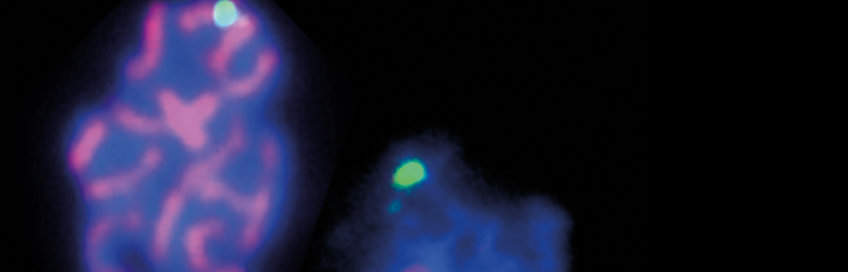
Dr. Wolfgang Zachariae is a Group Leader at the Max Planck Institute of Biochemistry in Martinsried, Germany, where he heads the "Chromosome Biology" research group. His laboratory focuses on understanding the molecular mechanisms of meiosis, particularly chromosome segregation and the role of cohesin in this process. Dr. Zachariae's educational background includes: PhD (summa cum laude) from Heinrich-Heine University, Düsseldorf, Germany (1990-1994), with Prof. Karin Breunig on "Regulation of the transcriptional activator Lac9" Diploma Thesis with Prof. Karin Breunig on "Enrichment of the transcription factor Lac9 from the yeast Kluyveromyces lactis" (1988-1990) Studies in Biology at Heinrich-Heine University, Düsseldorf, Germany (1984-1988) Postdoctoral Fellowship at the Institute of Molecular Pathology (IMP), Vienna, Austria (1994-1999), in the Laboratory of Prof. Kim Nasmyth, focusing on "cell cycle control by the anaphase-promoting complex in budding yeast" Dr. Zachariae's research focuses on the molecular biology of chromosome segregation during meiosis. His group uses baker's yeast as a model organism to study how chromosomes are correctly separated during the two meiotic divisions. A key focus is on cohesin, a molecular "glue" that holds chromosome pairs together, and how its regulated destruction ensures proper chromosome separation. His research employs diverse methodologies including genetics, biochemistry, video microscopy, and computational simulations of biochemical reactions. This work has significant medical relevance as errors in meiotic chromosome segregation are leading causes of infertility, miscarriage, and chromosome abnormalities like Down syndrome. Analysis of Dr. Zachariae's recent publications reveals a consistent focus on the molecular mechanisms of meiosis, particularly the regulation of cohesin and the anaphase-promoting complex (APC/C). His work spans from fundamental molecular mechanisms (such as phosphorylation of Rec8 by casein kinase) to the broader implications for gamete formation and chromosome segregation. The research demonstrates an interdisciplinary approach combining yeast genetics with advanced biochemical and imaging techniques. Dr. Zachariae has made significant contributions to the field of chromosome biology through his publications in top-tier journals including Cell, EMBO Journal, Developmental Cell, and Current Biology. His work on the regulation of meiotic chromosome segregation has provided fundamental insights into cell division processes that are conserved across eukaryotes. Dr. Zachariae leads an active research group consisting of PhD students (Nikoleta Milanovic, Addison E. Noronha, Vinal Massaad, Magdalena Matijevic), postdoctoral researchers (Olha Biriuk, Oleksii Lyzak, Marc Llavanera, Tugce Öz-Yoldas), and technical staff. His laboratory investigates the molecular mechanisms of chromosome segregation during meiosis using baker's yeast as a model system. The group has developed sophisticated approaches combining genetics, biochemistry, live-cell imaging, and computational modeling to understand how cohesin is regulated during the two meiotic divisions.