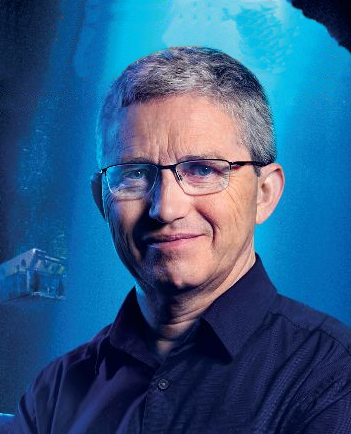
Dr. Cameron Gray is a Senior Lecturer in Cyber Security at the School of Computing and Engineering, Bangor University. He holds a PhD in Learning Analytics (2019) and a Postgraduate Certificate in Higher Education (2016), both from Bangor University. His research focuses on Learning Analytics, Curriculum Analytics, Applied Visualisation, and Cybersecurity, with notable projects examining student pressure dynamics and curriculum design methodologies. He leads modules in Cyber Security, Software Development, and Work-Based Projects. Gray's work integrates behavioral modeling to assess student workloads and applies software engineering principles to educational design. He has published extensively on topics including student outcomes prediction, organic photovoltaics stability, and visualization tools for educational data. His activities include presenting at academic conferences and peer-reviewing for journals like the Journal of Applied Research in Higher Education.
Sallyanne Palethorpe is an Honorary Senior Research Fellow in the Department of Linguistics at Macquarie University, affiliated with the Centre for Language Sciences (CLaS). Her research focuses on speech acoustics, speech physiology, and sociophonetic changes in Australian English. She has contributed to studies on accent variation, vowel shifts, and acoustic changes in communicative challenges. Her work spans historical and contemporary analyses of Australian English, with notable projects including investigations into monophthong dynamics and glottalization patterns. Key projects include the Visualising Voice and Speech (VisVoiS) initiative (2022–present) and collaborations on articulograph systems for speech research. She has produced over 50 peer-reviewed outputs since 1985, with recent publications emphasizing diachronic shifts in vowel systems and phonological processes. Awards and recognitions are not explicitly listed, but her extensive citation record (h-index 719) reflects her impactful contributions. She collaborates internationally, contributing to experimental and clinical speech research advancements.
Dr. Lin Yue is a Lecturer and Course Director of the Master of Business Analytics program at Macquarie Business School, Macquarie University. She holds a PhD in Information Systems from UNSW, a Master's in Computer Science from Trinity College Dublin, and a Bachelor's in Computer Science (First Class Honours). Her research focuses on digital enablement, business analytics applications, strategic information systems, and people analytics. She is an accredited Fellow of the Higher Education Academy (FHEA) and editor of ABDC A* journals. Education Background: PhD in Information Systems, UNSW Master of Computer Science, Trinity College Dublin Bachelor of Computer Science (Honours), First Class Research Interests: Intelligent networks and digital innovation Digital divide mitigation in rural areas Applications of business analytics in strategic decision-making People analytics and organizational modelling Educational technology and online learning effectiveness Her recent publications explore cryptocurrency adoption mechanisms, digital twin applications in manufacturing, and social robots' role in rural development. Collaborations span global institutions with a focus on boundary resource theories and corporate social responsibility. Teaching Responsibilities: BUSA1000: Introduction to Data, Analytics and People BUSA8090: Data and Visualisation for Business Professional Contributions: Academic Director roles at top universities Leadership in accreditation projects and course development Financial trading background in commodities and forex markets Research Impact: Her work contributes to UN Sustainable Development Goals on poverty reduction and economic growth through digital inclusion strategies. The 2024 paper on rural China's digital divide has been downloaded 107 times and cited 6 times.
Prof. Casper Albers is a Full Professor of Applied Statistics and Data Visualisation at the University of Groningen's Faculty of Behavioural and Social Sciences and currently serves as the Dean of this faculty since August 2024. He holds a PhD in mathematical statistics (2003) and has held academic positions including Research Fellow at The Open University (2005-2009), Postdoc at Groningen Biomolecular Sciences Institute (2003-2005), and roles at the Heymans Institute for Psychological Research. His research focuses on statistical modeling in psychology, particularly dynamic processes in human behavior, and science communication. He has supervised 8 PhD students to completion and is an elected Fellow of the International Statistical Institute. Albers has over 100 publications, including work in high-impact journals like the Journal of the American Statistical Association and Nature Human Behaviour. His media contributions span columns in Dutch newspapers and radio appearances, emphasizing statistical literacy. He leads initiatives like the Open Science Program and chairs the Rudolf Agricola School steering group. Awards include his role as President of the Netherlands Society for Statistics and OR. His research interests span applied statistics, data visualization, and psychological dynamics, with applications in clinical and environmental contexts. He advocates for transparent statistical practices and has secured nearly €2 million in research funding. Albers’ work bridges academia and public engagement, addressing societal issues through statistical expertise.
Associate Professor Andrew Woods is a prominent academic and researcher in stereoscopic 3D imaging, underwater technology, and maritime archaeology at Curtin University. He holds roles as Manager of the Curtin HIVE (Hub for Immersive Visualisation and eResearch) and Research Fellow at the Centre for Marine Science & Technology (CMST). Previously, he served as Director of CMST (2002–2004) and co-chairs the annual Stereoscopic Displays and Applications (SD&A) conference. Woods earned a PhD in stereoscopic display technology, alongside MEng and BEng (Hons) degrees in Electronic Engineering. His research focuses on advancing 3D imaging systems, ROV technology, and applying these innovations to marine archaeology and oil/gas sectors. Notable projects include the Mini-3D underwater camera and photogrammetric surveys of shipwrecks like HMAS Sydney II. His work has been recognized with awards such as the 2023 Tall Poppy Award, Fellow of SPIE, and 2017 'Australia’s Most Innovative Engineers' designation. Over 30+ students have been supervised in areas ranging from VR simulation to underwater robotics. Key contributions include publications on crosstalk reduction in 3D displays, VR applications in heritage preservation, and 3D reconstruction of historical sites. Woods actively engages with industry through technical products like stereoscopic cameras and standards development, while media highlights include features in Create Magazine and ABC News. His labs (Curtin HIVE and CMST) drive interdisciplinary projects blending engineering, archaeology, and computer science.
David Powell is a Professor at the Monash e-Research Centre, Monash University. His research focuses on genomic analysis, immunology, and data-driven approaches in health and disease. He actively collaborates internationally and leads multiple projects addressing cancer, infectious diseases, and environmental health. Powell manages key research infrastructure including High-Performance Computing and the HELIX data platform. Research Interests : His work spans genomic studies of pathogens (e.g., Clostridioides difficile), T-cell biology, and computational methods in healthcare. Recent studies explore immunotherapy resistance mechanisms in cancers and cerebellar atrophy patterns in epilepsy. Projects : Current initiatives include The One Water Consortium (sustainable water systems), pediatric cancer therapeutic targets, and immune checkpoint research. He has secured funding for over 20 projects since 2015. Equipment : Oversees facilities like Immersive Visualisation Capability and Research Cloud, supporting large-scale data analysis in life sciences.
Jan Willem Hoftijzer is a researcher and educator at the Faculty of Industrial Design Engineering, Delft University of Technology. He is affiliated with the Department of Human-Centered Design and specializes in design communication, sketching, visualization, and DIY design practices. He teaches courses such as Advanced Visualisation, Sketching and Visualization, and Design Communication, contributing significantly to design education at TU Delft. His research focuses on the role of sketching in design processes, frameworks for enhancing designer agency, and democratizing design through DIY methodologies. He explores how design can foster awareness and responsible consumption, particularly in fashion and product design. His recent publications highlight innovations in transforming sketching videos into interactive tutorials and developing frameworks for design agency. The most recent publications demonstrate a strong trend in leveraging sketching and visualization techniques for educational and sustainable design purposes. His work bridges design theory and practice, emphasizing user empowerment, creative expression, and responsible innovation. Scientific Awards: IDE Lustrum Design Award 1994 Jan Willem Hoftijzer advises on design education and practice, integrating industry experience into academic teaching. He is currently engaged in ancillary activities as a Designer/Product Developer (2025–2027), indicating active collaboration with industry. There is no mention of specific grants, but his applied research suggests potential industry-funded or educational innovation projects. He is associated with the Human-Centered Design and Human Factors research groups at TU Delft, contributing to the faculty’s mission of creating meaningful, user-focused design solutions through both teaching and research.
Joost Kuiper is affiliated with the Faculty of Industrial Design Engineering at Delft University of Technology, specifically within the Department of Human-Centered Design and the Perceptual Intelligence research group. He contributes to teaching and research in design engineering with a focus on visual communication and human perception. University: Delft University of Technology School: Faculty of Industrial Design Engineering Department: Human-Centered Design Research Group: Perceptual Intelligence His research interests span human-centered design, perceptual intelligence, videography, product communication, and design visualisation. His work also extends into aerospace design, as evidenced by his publication on Cube-Sat constellations for Earth observation systems. The recent publications reflect a diverse research profile, combining technical engineering topics like satellite systems with historical economic studies. The 2014 article on Cube-Sat constellations indicates engagement with advanced aerospace design, while the 2000 publication explores market regulation in the Dutch Golden Age, showing interdisciplinary breadth. No scientific awards were mentioned in the provided text. Joost Kuiper teaches courses such as Videography and has previously taught Product Communication and Design Visualisation. He advises students through graduation projects, though specific advisees are not listed. There is no mention of research grants in the provided material. He is associated with the Perceptual Intelligence research group at TU Delft, which investigates human perception and sensory fluency in design contexts.
Amadea Kovič is a researcher at the Research Centre for Communication and Culture (CECC) at Universidade Católica Portuguesa, with a focus on visual storytelling and integral human development. She earned her PhD in Culture Studies at the Faculty of Human Sciences, Universidade Católica Portuguesa, and completed her Master’s and Bachelor’s degrees in History of Art and Slovene Studies at the University of Ljubljana, Faculty of Arts. Postdoctoral Fellow, DHI - Post-Doctoral Program in Integral Human Development PhD in Culture Studies (2021) MSc in History of Art and Slovene Studies (2019, University of Ljubljana) BSc in History of Art and Slovene Studies (2016, University of Ljubljana) Her research explores intersections of feminist visual art , digitalization’s impact on nostalgia , and gender visualization in Portugal and Slovenia. She analyzes climate change communication through speculative design and artistic interventions in public spaces. Her work contributes to the UN Sustainable Development Goals, particularly in education and art-science collaboration. Recent publications address topics like Sharks in Seine: excess, pollution, and climate change (2025), Embodied nostalgia in the age of digitalization (2024), and Visualising gender through contemporary art (2024), reflecting her engagement with environmental storytelling, affect theory, and gender representation. Activities include chairing Conjunctures of Hospitality (2024) and participating in Culture and Artificial Intelligence events. She is affiliated with CECC and contributes to academic supervision in integral human development projects.
Dr. Ali Ahmed is a biostatistician and environmental epidemiologist with nearly 20 years of professional experience. Currently, he works as a Research Fellow at Charles Sturt University's Rural Health Research Institute, focusing on assessing disease burdens in rural and remote Australia, particularly among child and youth populations, while developing models to understand environmental health impacts like extreme weather and climate variability. PhD in Environmental Health from Western Sydney University (2021-2024) Master of Public Health (MPH) from BRAC University (2013-2014) MSc and BSc (Honours) in Statistics from University of Chittagong (1996-2001) His research spans environmental epidemiology, climate change impact, non-communicable diseases, and mortality analysis. He integrates large-scale demographic and climatic databases to study health disparities and predictive accuracy of climate models. His work contributes to UN Sustainable Development Goals (SDGs), particularly those related to health and environmental sustainability. Recent publications show a focus on regional flood frequency analysis (2024), epilepsy burden (2025), and water conservation strategies (2024). His methodological expertise includes longitudinal data management , data integration , and visualisation . His professional journey includes roles at icddr,b (2001-2021) and visiting fellowships at University of Southampton and Western Sydney University. Collaborations span institutions in the UK, India, and the USA.
Christian Hanewinkel is a Researcher and knowledge transfer appointee at the Leibniz Institute for Regional Geography (IfL) in Leipzig, Germany, where he has been employed since 1995 within the Department of Cartography and Visual Communication. He earned his degree in geography, cartography, and business economics from the University of Trier (1987–1994), establishing expertise in spatial analysis and visualization methodologies. His research spans Geovisualisation, Cartography, and Geographic Information Systems, with emphasis on transport geography, economic geography, mobilities/migration patterns, and regional development dynamics in Germany. He integrates electronic media for innovative geographic representation and spatial data communication. Dr. Hanewinkel contributes to critical projects including: NFDI4Biodiversity – Geo-Visualization tool for biodiversity data Digital Map Workshop "Altes Reich" (DigiKAR) Visualising urban dynamics Tambora HISCLIDCore Visualisierungen zur räumlichen Mobilität der Bevölkerung New basic geodata for thematic maps (completed) No scientific awards or honors are documented in the available records. His work supports the IfL's mission through knowledge transfer initiatives and collaborative research within the Cartography and Visual Communication department, focusing on practical applications of geospatial technologies for regional analysis.
Michael Antolovich is a Senior Lecturer and Course Director in Computer Science at Charles Sturt University (CSU), affiliated with the School of Computing and Mathematics and the Machine Vision and Digital Health (MaViDH) Research Group. He has held roles such as Associate Head of School and Acting Head of the Environment Studies Unit (ESU) at CSU. Doctor of Philosophy, University of New South Wales (1988) Bachelor of Science, University of New South Wales (1983) His research focuses on drones, 3D printing, AI, robotic systems, sensor networks, and data analysis. Recent work explores parametric classification of Bingham distributions, low-rank matrix approximation algorithms, and sports highlight generation using audio-visual features. Key trends in his publications include advancements in image processing , machine learning , and data visualization applied to video analysis, sensor networks, and business communication. Antolovich has served as a registered supervisor at CSU and coordinated the Apple University Consortium Development Fund (AUCDF). He is a Member of the Australian Computer Society (MACS) and a Practicing Computer Professional (PCP).
Dr. Taoxin Peng is a Lecturer at the School of Computing Engineering and the Built Environment, Edinburgh Napier University. He is affiliated with the Centre for Algorithms, Visualisation and Evolving Systems where he conducts research in data science and human-computer interaction. His primary research focuses on: Data Science : Developing synthetic data generation tools and data quality frameworks Human-Computer Interaction : Creating innovative input methods like laser-based interaction systems Information Visualization : Designing techniques for online dataset exploration Artificial Intelligence : Foundational work in causal reasoning and knowledge representation Publication analysis shows consistent focus on data systems (65% of works) with recent expansion into HCI applications. Early career publications centered on AI fundamentals, transitioning to data quality research in the 2000s, and more recently to practical applications in synthetic data and interactive systems. Dr. Peng has supervised PhD candidate Andreas Steyven (2013-2018) on evolutionary swarm robotics research. He collaborates with researchers including Prof. Emma Hart and Prof. Ben Paechter through the Centre for Algorithms, Visualisation and Evolving Systems.
Stephanie Braconnier is a designer and instructor specializing in Landscape Architecture, Urban Design, and Architecture. She currently serves as Module Leader for the Arkitekt MA program at the Royal Danish Academy of Fine Arts. Her professional practice, FUTURE LANDSCAPES Design and Visualisation (founded in 2016), focuses on enhancing biodiversity, natural infrastructure, and human connection in public spaces through innovative visualization techniques. She holds an Arkitekt MA from the Royal Danish Academy and a BEDs from Dalhousie University, Canada. Educations: Arkitekt MA (Master of Architecture), Royal Danish Academy of Fine Arts, Copenhagen BEDs (Bachelor of Environmental Design Studies), Dalhousie University, Halifax, Canada Research Interests: Stephanie prioritizes context-specific, locally derived, and naturally resilient design solutions. Her work leverages digital and manual tools to create emotive visualizations that bridge abstract environmental challenges with tangible design outcomes. She emphasizes visualization as a critical tool for mobilizing stakeholders and communities around complex environmental issues. Professional Practice: Through FUTURE LANDSCAPES, she collaborates with firms like SvN Architects, Sinai Gesellschaft, and INFORM Studio on high-impact projects such as the Nda-Nwendaaganag Living Bridge and the Rio Blanco Factory Redevelopment. Her portfolio includes both competition entries and built projects across Canada, Mexico, Germany, and beyond. Labs/Teams: She actively engages with academic institutions (e.g., University of British Columbia) and design collectives like SpruceLab and EXP to advance collaborative, forward-thinking design practices.
Associate Professor Claudia Hillenbrand (PhD, MBA) serves as the inaugural Director of Research Imaging NSW (RINSW), the UNSW Human Imaging Research Facility at the Prince of Wales Hospital. She is an experienced Magnetic Resonance Imaging (MRI) physicist with expertise spanning quantitative and functional MRI methods development, imaging innovation, and translation of imaging technologies into clinical applications. Her leadership has driven significant growth at RINSW, including the establishment of the RINSW human imaging research analysis support team and the installation of cutting-edge technology like the world-first 4DMedical human lung ventilation scanner. MS (Physics), PhD (Physics), MBA Hillenbrand is internationally recognized for her work in quantitative MRI-based liver iron assessment and serves as a founding member of the Liver Iron Disease Focused Panel for the Society of Abdominal Radiology. Her research interests span biomedical imaging, neurosciences, image processing, radiology, medical physics, biomedical instrumentation, deep learning, and artificial intelligence. She has co-investigated over 40 human imaging research studies and clinical trials covering diverse areas including brain development and aging, sickle cell disease, epilepsy, cancer survivorship, and elite athlete studies. Analysis of her recent publications reveals a strong focus on liver iron quantification techniques, particularly using UTE imaging and advanced modeling approaches. Her work consistently bridges physics, engineering, and clinical medicine, with increasing integration of deep learning methods for image analysis. The publications demonstrate expertise across multiple imaging modalities with particular emphasis on quantitative MRI techniques for clinical applications. She actively supervises PhD students and research projects in neuroscience and biomedical imaging, with current supervisees including Dr Jiyang Jiang, Dr. Hannes Almgren, and Honours students Alisia Armstrong and Malvika Naupene. Her teaching portfolio includes BIOM9027 (Medical Imaging) and PATH3210 (Visualising Disease). Under her leadership, RINSW has gained national recognition as a technically and operationally outstanding multi-center human imaging research study site. The facility has expanded to include advanced analytical capabilities and cutting-edge imaging technology that support translational research from basic science to clinical applications.