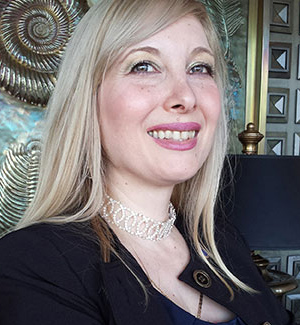
Dr. Tracey Riley serves as the Associate Dean for Faculty Affairs and holds a Professor rank in the Department of Accounting & Business Law at Suffolk University's Sawyer Business School (SBS). She holds a PhD from the University of Massachusetts Amherst, an MBA and BA from Assumption College, and is a Certified Public Accountant (CPA). Her research focuses on judgment and decision making in financial accounting , particularly investigating cultural priming effects on taxpayer compliance , auditor identities and audit quality , and CSR disclosure practices . She has published in top journals like Contemporary Accounting Research and Behavioral Research in Accounting . Teaching is a core passion, evident in her development of Suffolk’s winter internship program for accounting students , which emphasizes inclusivity and professional readiness. She has received over a dozen awards, including the Suffolk University Faculty Award for Outstanding Service (2020) and multiple SBS Research Grants. Professional Activities : Member of MassCPA’s Accounting Pipeline Committee, Northbridge Fire Department Auxiliary, and former Board Treasurer for Valley View School. Editorial Roles : Editorial board member of Issues in Accounting Education and ad-hoc reviewer for numerous journals. Her articles span topics like auditor identity dynamics, cross-cultural tax behavior, and strategic communication in financial narratives, reflecting her interdisciplinary approach to advancing accounting practice and education.
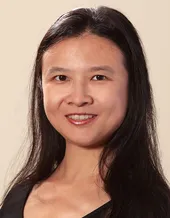
Kyungran Lee is an Assistant Professor of Accounting, Control, and Legal Affairs at NEOMA Business School. She holds a PhD in Business and Management (Accounting) from the University of Maryland, with prior studies at Duke University and Seoul National University. Before joining NEOMA, she worked at Hong Kong University. Her research focuses on financial accounting, innovation, SEC regulation, and ESG investment, employing textual analysis and machine learning. She teaches financial and management accounting courses. Education: PhD in Accounting (University of Maryland), Duke University, Seoul National University Her research explores how disclosure policies impact peer innovation, especially in clinical trials, and examines debt contracts, accounting standards, and capital markets. Recent work analyzes mandatory reporting effects using clinical trial data. No scientific awards or grants are explicitly listed. No advisees or lab affiliations are mentioned.
Maria Burns is an Assistant Professor in the Department of Construction Management/Political Science at the University of Houston’s College of Technology. Her research focuses on the intersection of data science, security, and logistics, with applications in energy, maritime, and homeland security sectors. She specializes in network analysis, AI-driven risk assessment, and policy analysis for critical infrastructure protection. Her work integrates multidisciplinary approaches including machine learning, time-series forecasting, and data visualization to address complex challenges such as human trafficking, cargo security, and port resilience. Key areas include supply chain vulnerability analysis, maritime security protocols, and the economic/environmental impacts of port activities. Burns has contributed to numerous DoS- and DHS-funded training manuals and courses, including 'Global Supply Chain Security' and 'UN Security Resolutions and WMD.' Her research also explores energy security paradoxes, intermodal transport risks, and crisis management strategies. Recent publications highlight innovative applications of AI in security technology and policy-driven solutions for modern security challenges. Her funded projects emphasize practical outcomes, such as optimizing port operations through 5G connectivity and enhancing border management through strategic convergence of trade and immigration policies. Burns’ work bridges academia and industry, offering actionable insights for public and private sector stakeholders.
Curdin Derungs is a Lecturer in Data Science at the Lucerne School of Computer Science (HSLU), Switzerland. He specializes in applying statistical and machine learning techniques to energy systems, spatial analysis, and natural language processing. His professional competencies include data-driven automation, deep learning, time series analysis, and energy systems optimization. Derungs holds a PhD in Natural Sciences (University of Zurich, 2013) with a focus on NLP and spatial analysis, and a DAS in Applied Statistics (ETH Zurich, 2019). Earlier degrees include a Master's in Geography (2008) and Atmospheric Physics (ETH Zurich, 2008). His research explores intersections between data science and environmental sustainability, including energy efficiency optimization, spatial language dynamics, and landscape modeling. Recent work focuses on occupant behavior in energy systems, geotagged text analysis, and soil formation modeling. Key projects include SCCER FEEB&D Work Package 2 on renewable energy systems, the Romande Energy Demonstrator, and urban greening studies. He actively contributes to interdisciplinary initiatives like the IGE Innovationswettbewerb 2019 and Innovationspark Zentralschweiz.
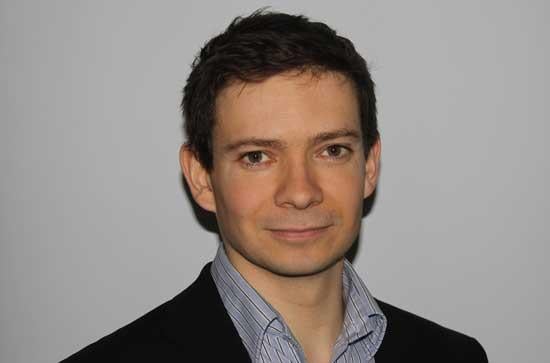
Phil Maguire is an Associate Professor in the Department of Computer Science at Maynooth University, part of the Faculty of Science & Engineering. He joined the university in 2006 and currently directs the BSc in Computational Thinking program. His educational background includes a BAI in Engineering from Trinity College Dublin (TCD), followed by an MSc and PhD in Cognitive Science from University College Dublin (UCD). He also holds a DipPysch in Psychology from the Open University (OU) and a PGDHE from Maynooth University. Maguire's research focuses on cognitive science and theoretical computer science, with particular emphasis on representation, uncertainty, measurement standards, and mathematical foundations applied to fintech. His work bridges computational models of human cognition with practical applications in decision-making, education, and financial systems. His publications span cognitive modeling, educational technology, and financial engineering. Recent trends include computational models of surprise, automated assessment in programming education, and robust financial indices using sparse data. His work often integrates interdisciplinary approaches, combining cognitive science principles with real-world applications in economics and education. Maguire has contributed to conferences such as the IEEE Conference on Computational Intelligence for Financial Engineering and the Cognitive Science Society meetings. He has explored portfolio optimization, risk-adjusted algorithms, and authorship attribution through grammatical models. His educational research includes studies on collaborative learning techniques like pair programming and the use of technology-enhanced tools in higher education. No scientific awards are explicitly listed in the provided information. His advising and grant activities are not detailed here. Maguire’s involvement with interdisciplinary labs or teams is not specified in the text.
Ruba Abu-Salma is a Lecturer in Computer Science at King’s College London, affiliated with the Cybersecurity Group and Human Centred Computing Group within the Department of Informatics. Her research focuses on interdisciplinary cybersecurity, privacy, human-computer interaction (HCI), and public policy, with an emphasis on vulnerable populations. She holds a PhD from University College London (UCL) and previously held postdoctoral roles at UC Berkeley and Inria Sophia Antipolis. Education: PhD in Computer Science, UCL (2019) Postdoctoral Researcher at ICSI (UC Berkeley) and Inria (2019–2021) Research Interests: Designing equitable privacy-enhancing technologies; smart home privacy; digital security for marginalized groups; privacy law and policy. Affiliations: King’s Cybersecurity Centre, EPSRC-NCSC Academic Centre of Excellence, Centre for Technology and the Body. Her work bridges computational and social science methods, addressing privacy and security challenges faced by vulnerable populations such as migrant domestic workers and older adults. Recent studies include smart home privacy dynamics, mHealth app vulnerabilities, and longitudinal migration security practices. Key achievements include publications at venues like ACM CHI, USENIX Security, and IEEE S&P, alongside media coverage in The New York Times and CNET. She leads projects funded by Google and the UK’s Technology Strategy Board, focusing on gaze-enhanced authentication and female health app privacy. Grants & Projects: “Usable Privacy in Female Health Apps” (Google, 2023–2025) EyeLock: Gaze-Enhanced Authentication (TSB, 2024–2025) Dr. Abu-Salma advises PhD students on topics intersecting cybersecurity, privacy, and marginalized communities. She actively participates in academic service roles, including organizing workshops on privacy and serving on program committees for top-tier conferences.
Angel Chang is a Hans Fischer Fellow at the Technical University of Munich (TUM), hosted by Prof. Matthias Nießner in the Visual Computing Focus Group. She holds affiliations with Simon Fraser University and Eloquent Labs. Her research bridges natural language processing with 3D scene understanding, focusing on grounding textual descriptions to 3D data through innovations like ScanNet and ShapeNet. Key contributions include dense captioning, object localization in RGB-D scans, and unified vision-language models. Her work addresses challenges in 3D scene reconstruction, CAD model alignment, and interactive environments. Notable projects include SAPIEN for simulated part-based interactions and PartNet, a benchmark for hierarchical 3D object understanding. Chang's research aims to advance AI systems that interpret and generate complex 3D environments using multimodal data. Publications span top venues like CVPR and ACM Transactions on Graphics, demonstrating impact in computer vision, robotics, and machine learning. She collaborates across institutions to develop datasets and frameworks that drive progress in digital scene modeling and human-AI collaboration.
Reda BELLAFQIRA is an Enseignant Chercheur (Researcher) at IMT Atlantique's Data Science Department, based in Brest. His work focuses on securing sensitive data processing in distributed systems, combining cryptography with machine learning techniques. Key areas include federated learning, homomorphic encryption, and watermarking for intellectual property protection. He has contributed to privacy-preserving frameworks in healthcare and IoT applications, emphasizing secure collaborative data analysis without compromising confidentiality. Research Interests: Secure federated learning architectures and robustness against adversarial attacks Cryptography applications in AI, including homomorphic encryption for encrypted data processing Watermarking techniques for model integrity and ownership in distributed environments Privacy-preserving methods for healthcare data (e.g., EHRs, genomics) IoT cybersecurity and embedded system security for medical devices Key Contributions: His 2025 work on blockchain-enhanced watermarking for federated learning and 2023 research on automated EHR de-identification exemplify his focus on practical security solutions. Recent trends show increasing emphasis on interdisciplinary approaches merging cryptography with healthcare informatics and IoT systems. Labs/Teams: Active in IMT Atlantique's Data Science Department research groups, collaborating on EU-funded projects related to federated learning in healthcare and secure IoT ecosystems.
MUSTAFA TÜRK is a Doctor Lecturer in the Department of Ancient History at Bandırma Onyedi Eylül University, where he has served since 2019. He currently holds the position of Head of the Department. His research focuses on ancient Greek and Roman history, Anatolian and Near Eastern historical geography, and the historical development of settlements in Western Anatolia. His work often integrates archaeological data with textual sources to reconstruct ancient administrative systems, urban landscapes, and cultural interactions. Key areas of investigation include the history of Mysia region, the analysis of Roman imperial policies in Anatolia, and the study of late antique episcopal networks through Hierokles' lists. Recent projects emphasize the identification and interpretation of sites like Hadrianoutherai, blending numismatic, epigraphic, and topographical evidence. Academic contributions include 10 articles (out of 198 total in the department), 15 conference papers, and 4 authored books/chapters. His articles frequently address themes of regional historiography, military campaigns, and urban rebellions such as the Aristonicus Revolt. Teaching responsibilities include student meetings on Mondays and Wednesdays.
Antoon Bronselaer is an Assistant Professor at Ghent University's Department of Telecommunications and Information Processing within the Faculty of Engineering and Architecture. He is an active member of the Database, Document and Content Management (DDCM) research group, focusing on advancing database theory and applications. His research centers on data quality (particularly measurement models and improvement techniques), temporal databases , data fusion , and uncertainty management in databases . Key contributions include measure-theoretic foundations for data quality assessment, dynamical order construction in data fusion, and predicate enrichment techniques for wrapper induction. Analysis of his recent publications reveals consistent innovation in data cleaning algorithms (e.g., Swipe framework), temporal data modeling, and orthographic similarity measures for graph-based text representations. His work increasingly bridges database theory with healthcare applications (e.g., statin-gait relationship studies) and digital humanities (Byzantine epigrams project). No scientific awards are mentioned in the source materials. Dr. Bronselaer's academic guidance includes formal advisees at Ghent University, though specific student names aren't documented in the provided texts. His research is supported through university positions and likely Belgian/Flemish research grants given his publication venues. Current projects involve automated news update analysis, persistent identifier validation, and syntactic interoperability frameworks. He leads research within the DDCM group, specializing in data quality measurement systems and temporal data management solutions. Recent work demonstrates expansion into healthcare data analytics and cultural heritage informatics while maintaining core expertise in database theory.
Marisa Parham is Professor of English and Digital Studies at the University of Maryland, where she directs the African American Digital Humanities initiative (AADHum) and serves as associate director for the Maryland Institute for Technology in the Humanities (MITH). She co-directs the Immersive Realities Lab for the Humanities and chairs the ACLS Commission on Fostering and Sustaining Diverse Digital Scholarship. Her PhD in English and Comparative Literature is from Columbia University. Her research examines how texts and technologies complicate understandings of time, space, and materiality, particularly in African American cultural production. Current projects include Black Haints in the Anthropocene (a digital-interactive narrative) and ConvocationAR (an XR-driven humanities project). Parham's scholarship bridges literary studies, digital humanities, and technology studies, with publications exploring digital archives, electronic literature, and the intersection of race with digital culture. Her work frequently engages with African American literary traditions, feminist theory, and postcolonial studies.
Dr. Michael Kohs is a Researcher at the University of Hamburg’s Centre for the Study of Manuscript Cultures (CSMC) since 2015, currently affiliated with the Cluster of Excellence ‘Understanding Written Artefacts’ (UWA) until 2025. His work bridges manuscript studies, Jewish magical traditions, and material analysis, with a focus on the interplay of text and imagery in written artefacts. Projects: Research Associate on UWA’s FNT03 (2020–2023), SFB 950’s B08 (2015–2020). Research Interests: Manuscript cultures, Jewish magical texts, material choices in written artefacts, paracontent, and visual programming for manuscript analysis. Collaborations: Co-authored studies with Giovanni Ciotti, E. M. Wilden, and G. Veltri on palm-leaf manuscripts, lactase persistence, and digital palaeography. Recent Publications (15 most recent) span 2017–2025, emphasizing Jewish magical manuscripts, material profiling, and methodological innovations in manuscript analysis. He contributes to the manuscript cultures journal and co-organizes workshops like ‘DNA in Biological Materials’ (2022). Labs & Initiatives: Affiliated with CSMC’s Visual Manuscript Analysis Lab and Data Linking Lab. Involved in the Palm-Leaf Manuscript Profiling Initiative (2022–ongoing) and paleogenomic studies of written artefacts.
Professor Dr. Ira Rabin is a leading researcher at the University of Hamburg's Centre for the Study of Manuscript Cultures and the Bundesanstalt für Materialforschung und -prüfung. Her work focuses on material analysis of written artefacts using advanced scientific methods. She leads projects including 'History of Writing: Black Inks and Writing Surfaces' and 'Recovery of Damaged Writing', which reconstruct historical writing technologies and develop conservation strategies. Her research investigates: Historical ink composition and degradation processes Non-invasive analysis techniques for fragile manuscripts Material properties of writing surfaces from papyrus to parchment Authentication methods for cultural heritage objects Environmental impact on manuscript preservation Recent publications demonstrate a strong focus on analytical techniques applied to diverse historical materials, from Carolingian manuscripts to Coptic documents. Her work consistently integrates material science with humanities research to understand scribal practices and historical contexts. Dr. Rabin directs laboratory facilities including specialized equipment for spectroscopic analysis and collaborates internationally on manuscript conservation projects. Her research group develops protocols for handling culturally significant artefacts while advancing scientific understanding of historical materials.
Lily Popova Zhuhadar is a Professor of Analytics & Information Systems at Western Kentucky University's Gordon Ford College of Business, where she also serves as Director of the WKU Center for Applied Data Analytics and Coordinator of the Undergraduate Business Data Analytics Program. Her academic journey began with a Master of Sciences in Computer Science from Western Kentucky University in 2004, followed by a Doctor of Philosophy in Computer Engineering and Computer Science from the University of Louisville in 2009. Dr. Zhuhadar's educational background includes: Doctor of Philosophy, Computer Engineering and Computer Science, University of Louisville (2009) Master of Sciences, Computer Science, Western Kentucky University (2004) Her research interests span Machine Learning, Artificial Intelligence, Data Mining, Pattern Recognition, Data Science, Analytics, Semantic Web, Smart Cities, and Computers in Human Behavior. Dr. Zhuhadar's work bridges theoretical computer science with practical applications in healthcare, business analytics, and educational technology. She has made significant contributions to semantically enriched e-learning resources, intelligent tutoring systems, and data analytics for crisis management, with particular expertise in applying analytical techniques to solve complex real-world problems across multiple domains. Dr. Zhuhadar's publication record demonstrates a consistent focus on applying advanced data analytics techniques to solve real-world problems. Her recent work has increasingly focused on healthcare applications, including stroke prediction, diabetes diagnosis, and ecosystem management. She has also maintained a strong interest in educational data mining, particularly in understanding student success pathways in STEM disciplines. Her research methodology often combines semantic web technologies with traditional data mining approaches to create innovative solutions. Her scientific achievements have been recognized through numerous awards: College Faculty Award for Research & Creativity (2023-2024) College Faculty Award for Service (2023-2024) College Faculty Award for Research & Creativity (2022-2023) College Faculty Award for Teaching (2021-2022) University Award for the Most Prolific Grant Proposer (2014-2015) Dr. Zhuhadar has secured over $600,000 in external research funding and more than $100,000 in internal grants. She has served as Principal Investigator on diverse projects ranging from AI applications in healthcare to financial fraud detection. Her mentorship of undergraduate students through the WKU Faculty-Undergraduate Student Engagement program has resulted in numerous collaborative research projects and conference presentations, with over 15 students co-authoring publications and presentations with her in the past two years alone. As Director of the WKU Center for Applied Data Analytics, Dr. Zhuhadar has built a thriving research infrastructure that supports faculty and student research across multiple disciplines. Under her leadership, the Center secured over $101,000 in research grants in 2022-2023, with 33% of funds allocated to support student educational pursuits. She has organized multiple webinar series and research enrichment programs to build data analytics capacity across the university community.
Anders Skare Malvik is a Professor in the Department of Language and Literature at the Norwegian University of Science and Technology (NTNU). His research focuses on the intersections between literature, media technology, and cultural history, particularly exploring how literary expression engages with media transformations from 19th-century innovations like the telegraph to contemporary digital culture. He leads the ImagiNation project mapping Norwegian literary geographies (1814-1905) and co-edits academic volumes on media aesthetics and 19th-century literature. Malvik's teaching spans undergraduate and graduate courses on media studies, literary history, and research methods. He has developed interdisciplinary approaches to digital humanities, authoring reports on establishing DH labs at NTNU. His work bridges literary analysis with media philosophy, examining topics like infrastructural influences on Bjørnson's realism and ekphrastic modes in digital contexts. Key research contributions include studies on media archaeology, Ibsen's noo-politics, and the role of newspapers/telegraphs in shaping literary subjectivity. His publications span academic journals like Scandinavian Studies and Ibsen Studies , as well as edited volumes exploring media's impact on modernist aesthetics and contemporary art. Malvik's projects often involve collaborative digital humanities initiatives, such as corpus analysis of Norwegian literature and visualizing spatial data through projects like ImagiNation . He frequently presents at international conferences and engages in public lectures about media's role in cultural production and literary interpretation.