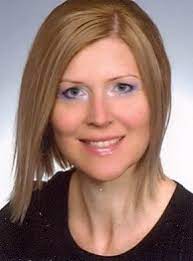
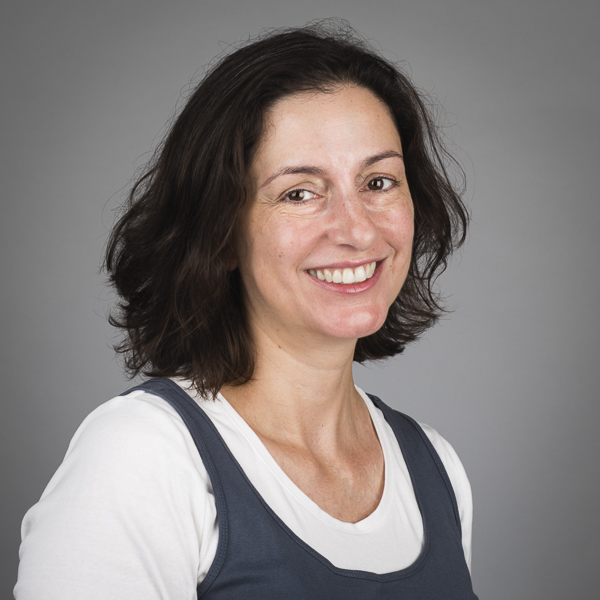
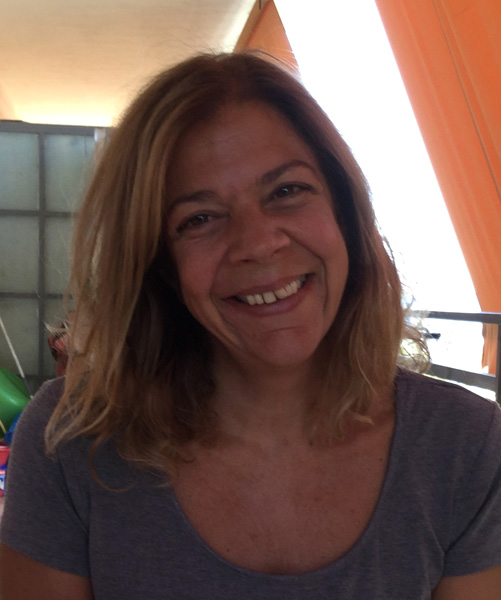
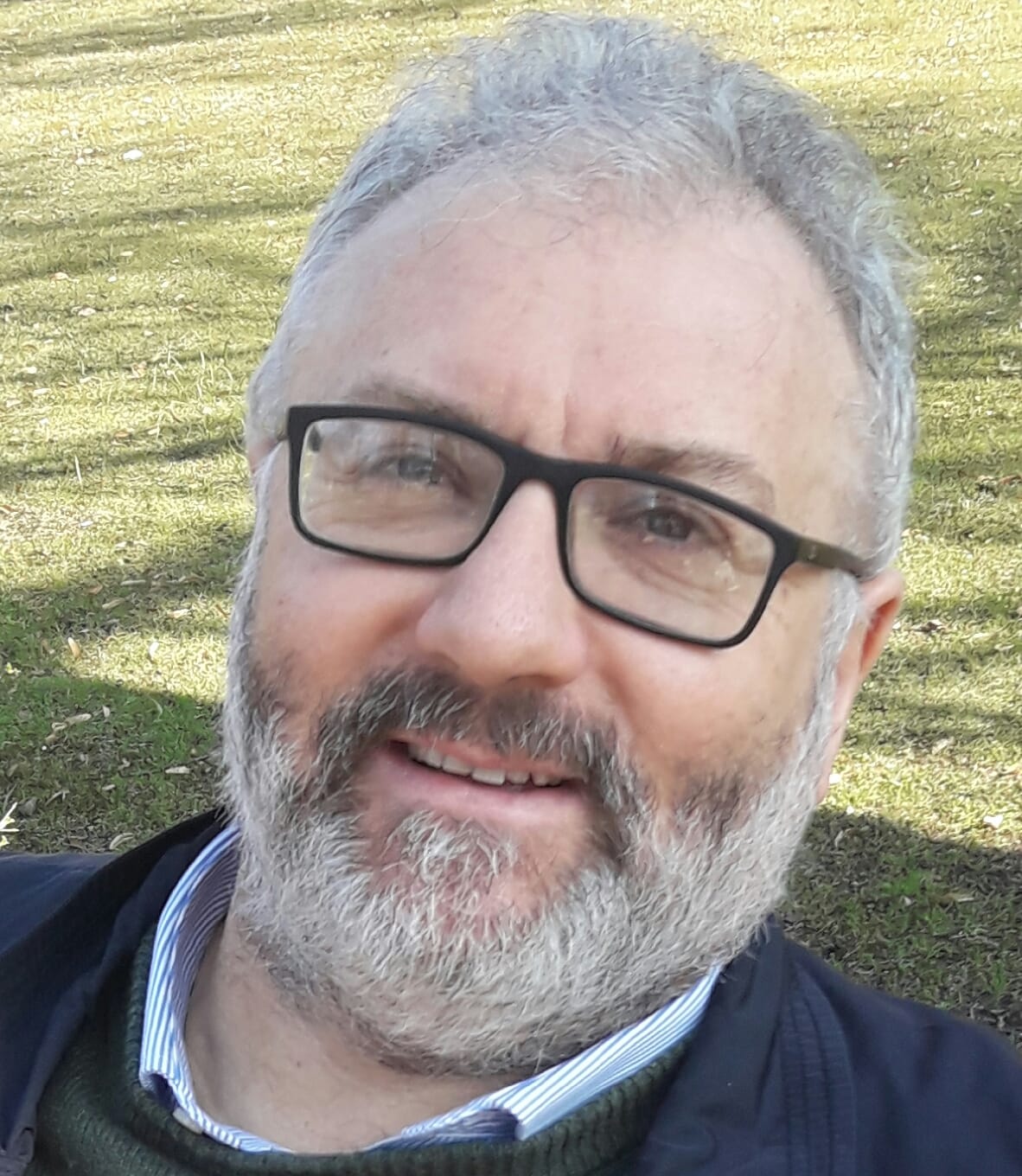
Haruka Fukazawa is a Professor at Keio University's Faculty of Business and Commerce (Hiyoshi Campus). Her research focuses on theoretical linguistics within the framework of Optimality Theory, examining phonological systems and language acquisition mechanisms from a cognitive science perspective. She holds a Ph.D. in Linguistics from the University of Maryland at College Park (1999) and has taught extensively in Japan and the U.S., including roles at Georgetown University and the University of Maryland. Education: Aoyama Gakuin University (BA, 1987), West Virginia University (MA in Linguistics, 1993), and University of Maryland (Ph.D., 1999). Her research emphasizes articulatory and auditory constraints in phonological theory, with notable work on Japanese adjective acquisition and paradigm uniformity in Optimality Theory. Research Themes include investigating how both auditory and articulatory factors shape phonological systems, and the role of indirect negative evidence in language learning. She has published widely in peer-reviewed journals and conference proceedings, including contributions to Japanese Linguistics and MIT Phonology Circle presentations. Her teaching includes courses like Comprehensive English Seminar and English Listening Seminar.
Laura McPherson is an Associate Professor of Linguistics at Dartmouth College, specializing in phonology, morphology, and fieldwork with a focus on African languages and the language-music connection. She holds a B.A. from Scripps College and M.A./Ph.D. degrees from the University of California, Los Angeles. Education: B.A., Scripps College M.A., University of California, Los Angeles Ph.D., University of California, Los Angeles Research Interests: Her work explores tone systems, morphological structures, and documentation of endangered languages. She investigates how musical practices inform phonological analysis, particularly in African linguistic contexts. Current projects include studies on Seenku grammar and Dogon folk songs. Courses Taught: Ling 11: Language in Africa Ling 35: Field Methods Ling 26: Morphology Ling 21: Phonology
Chengnian Sun is an Associate Professor at the University of Waterloo's David R. Cheriton School of Computer Science. He holds a Ph.D. from the National University of Singapore (2013). His research focuses on software engineering, emphasizing software reliability, security, and developer productivity. His work spans compiler testing, program analysis, cybersecurity, and programming language tools. Key research trends include leveraging large language models (LLMs) for compiler testing and program reduction, probabilistic debugging techniques, and enhancing software security against ransomware and fuzzing attacks. His contributions address challenges in program simplification, fault localization, and vulnerability detection. Notable projects include frameworks like Perses (syntax-guided program reduction), T-Rec (language-agnostic program reduction), and tools like AddressWatcher for memory leak detection. His work bridges theoretical advancements with practical software engineering solutions. Chengnian advises on compiler reliability, cybersecurity, and developer productivity. His research has led to collaborations with industry on testing tools and security frameworks. He maintains an active lab focused on advancing software systems through rigorous analysis and innovation.
Doc. PhDr. Martina Kášová, PhD. is an Assistant Professor at the Department of German Studies within the Faculty of Arts at the University of Prešov. Her research focuses on locutionary acts, German subjunctive and Slovak conditional structures, advertising communication, and corpus linguistics. She holds degrees from the University of Pavol Jozef Šafárik in Prešov and conducted studies abroad at Friedrich Schiller University in Jena and the University of Bayreuth. Key publications include monographs on political advertising linguistics (2011) and comparative German/Slovak grammatical analysis (2007), as well as a German grammar textbook (2011). Her work bridges theoretical linguistics with applied communication studies, emphasizing cross-linguistic comparisons and sociocultural dimensions of language use.
Clay Beckner is an Associate Professor in Applied Linguistics at the University of Warwick. His research focuses on experimental psycholinguistics, morphosyntax, mechanisms of language change, iterated learning, and complex systems from a usage-based perspective. He holds a Ph.D. from the University of New Mexico (2013), where his thesis explored dynamic mental lexicon through experiments on multi-word 'prefabs'. From 2013-2018, he worked at the New Zealand Institute of Language, Brain & Behaviour, studying interspeaker alignment, iterated learning, and human-machine interaction. Recent work examines non-Māori speakers' implicit knowledge of Māori sound patterns through experimental studies in New Zealand. His research interests include the interplay between language usage and structure across lifespans, diachronic processes, and social influences on linguistic systems. Key contributions address lexical representation, morphological variation, and the role of ambient exposure in language knowledge. He has collaborated extensively on projects involving iterated learning tasks, human-robot interaction, and cross-linguistic attractor dynamics. Award details: No specific awards mentioned in the text. Grants and advising: No explicit grant details provided. No listed advisees/students. His work often involves interdisciplinary teams, including studies with robots and cross-cultural language experiments. Labs/Teams: Affiliated with the University of Warwick's Applied Linguistics program and previously the New Zealand Institute of Language, Brain & Behaviour.
Maria Teresa Guasti is a Professor of Linguistics and Psycholinguistics at the University of Milano-Bicocca. She has held academic positions since 1988, including Assistant Professor (2000-2005) and Researcher roles at institutions like the University of Siena and San Raffaele Hospital. Her research bridges theoretical linguistics, child language acquisition, and cognitive disorders like dyslexia and developmental language impairment (DLD). PhD in Linguistics, University of Geneva Guasti’s work focuses on syntax, semantics, and pragmatics in typical and atypical language development, with a special emphasis on bilingual acquisition, DLD, and dyslexia. She has contributed to understanding timing anticipation deficits in dyslexia and has expanded her research into musical cognition and motor control (handwriting). Recently, she collaborated with human-computer interaction scientists to develop language-based interactive technologies. Her publications span 160 works, including 80 peer-reviewed articles and 6 books, with over 7,000 citations and an H-index of 42. Key grants include the ERC Synergy (2019) and Multimind (2017-2022, €516,122). 2019 ERC Synergy Grant for Leibniz’s Dream (€10.2M) 2012-2018 Associate Investigator at ARC Centre of Excellence in Cognition and its Disorders 2005-2009 Italian Representative in European COST A33 Action Guasti has trained 14 PhD students, supervised 12 postdocs, and mentored 100+ master’s students. She has served as Associate Editor for Language Acquisition and Frontiers in Psychology , and on editorial boards including Journal of Child Language . She has delivered keynotes at international conferences and taught at summer schools.
Prof. Artemis Alexiadou is a leading linguist serving as Director of the Leibniz Zentrum Allgemeine Sprachwissenschaft (ZAS) in Berlin and holds a Professorship in General Linguistics at Humboldt University of Berlin. Previously, she was Vice-Director of ZAS and Professor of English Linguistics at the University of Stuttgart. Her academic roles include Managing Directorships of key linguistic institutes and extensive administrative leadership across German universities. Education: 1999 Habilitation (General Linguistics), University of Potsdam 1994 PhD in Linguistics, University of Potsdam 1991 MA, University of Reading, UK 1990 Diploma in Philology (Linguistics), University of Athens Research focuses on syntax-morphology interfaces, diachronic syntax, and heritage languages. She pioneered studies on clitic phenomena and syntactic variation in Greek dialects. Awards include the prestigious Leibniz Prize (2014) and ERC Synergy Grant (2019). Institutional leadership includes current roles as Managing Director of the Institute of English and American Studies at HU Berlin, DFG Board member for Linguistics, and member of the Berlin Elsa-Neumann Scholarship Committee. She has held over 20 academic governance roles since 1992, including ethics committee memberships and international grant panel participation. Active in scholarly societies: served as GLOW Board Chair (2005-2009), German Linguistic Society Treasurer (2003-2004), and on advisory boards for Nordic research centers. Her work bridges theoretical linguistics with language acquisition studies in multilingual contexts.
Elena Anagnostopoulou is a Professor of Theoretical Linguistics at the University of Crete since 2009, with prior roles as Associate Professor (2005-2009) and Assistant Professor (1998-2005). She has held visiting positions at MIT and a fellowship at the University of Stuttgart. Education : PhD in Linguistics, University of Salzburg (1994). Research Interests : Theoretical and comparative syntax, formal typology, argument structure, case/agreement theory, clitics, control/anaphora, and historical linguistics. Her work bridges syntax, morphology, and lexicology. Scientific Impact : Over 7,500 citations (Google Scholar), h-index 37. Recipient of the 2013 Humboldt Foundation's Friedrich Wilhelm Bessel Award for sustained research excellence. Grants & Projects : Co-Investigator in the AHRC-funded project on diachronic case variation (2017-2019), Principal Investigator for the UCrete project applying evolutionary biology to language relationships (2019-2021). Collaborated with German institutions via Humboldt funding.
Pierluigi Cuzzolin is a Full Professor of General and Historical Linguistics at the University of Bergamo since 2005. He has held academic positions including Visiting Professor at Penn State University (2009), Associate Professor at the University of Bergamo (1999-2005), and Assistant Professor at the University of Pavia (1992-1999). Full Professor, University of Bergamo (2005-present) Visiting Professor, Penn State University (2009) His research spans multiple subfields of linguistics: Historical syntax in Latin Linguistic typology Evaluation of sociolinguistic models Translation studies Etymology and morphological analysis Scientific recognition includes: Membership in the prestigious Istituto Lombardo di Scienze, Lettere e Arti (2014) He has served on advisory boards for journals such as Rhesis and Kervan, and organized major international projects like the 'New Perspectives on Historical Latin Syntax' series.
Professor Laura Dominguez holds a Professorship in Linguistics at the University of Southampton's Department of Modern Languages and Linguistics. She serves as Head of Department (2021-2025), REF Champion for Impact, and has held roles including Deputy Head of Department and Head of Research. Her research focuses on formal second language acquisition, bilingualism, native language attrition, and syntactic theory within a generative framework. Key projects include the ESRC-funded SPLLOC corpus initiative and an AHRC project on grammatical attrition. Her research investigates prosodic/syntactic constraints in Spanish word order, L2 acquisition of tense-aspect morphology, and L1 attrition mechanisms in bilinguals. She leads editorial boards for journals like Second Language Research and Spanish Heritage Journal , and holds roles in professional bodies including the ESRC Peer Review College and EuroSLA Executive Committee. Current research emphasizes syntax-theory integration with acquisition studies, leveraging experimental and corpus-based methods. She supervises multiple PhD students in Applied Linguistics and Modern Languages, and accepts new PhD applications. Her work bridges theoretical linguistics with empirical studies of multilingual development.
Chengzhi Chu is an Associate Professor of Chinese and Senior Program Advisor (Chinese) at the University of California, Davis. He is affiliated with the Graduate Group in Linguistics and holds a Ph.D. from the University of Hawaii. His research focuses on Chinese linguistics, cognitive semantics, second language acquisition, and the application of technology in language instruction. He has authored/co-authored multiple textbooks, including the Chinese Breeze graded reader series, and developed the ChineseTA software for language teaching materials. His work integrates theoretical linguistics with practical pedagogy, emphasizing cognitive approaches to language structure and learning. Dr. Chu's research explores topics such as motion event semantics, figure-ground relationships in Chinese, and the design of effective language-teaching resources. He has published extensively on prepositions, reflexives, and mood particles in Mandarin, as well as the historical interplay between Chinese script and language. Notably, he co-developed the Corpus of Chinese Interlanguage (CCI 1.0), a foundational resource for studying learner language. His teaching spans advanced Chinese language courses, classical Chinese, and research methodologies. He has contributed to edited volumes on Chinese pedagogy and instructional materials. While no formal awards are listed, his impactful contributions to applied linguistics and language education are evident through his scholarly output and educational tools. As an advisor to graduate students, Dr. Chu supports research in linguistics and language education. His work bridges computational linguistics with traditional language studies, exemplified by software like ChineseTA and his corpus-based research. He is actively involved in the North American Conference on Chinese Linguistics and other academic networks.
Gregory Scontras is Associate Professor and Undergraduate Director in the Department of Language Science at UC Irvine's School of Social Sciences. His research examines mental representations of language through formal semantics, experimental psychology, and computational cognitive science approaches. Research focuses on quantification, measurement semantics, context in ambiguity resolution, and heritage language acquisition. Recent work (2023-2025) investigates adjective ordering preferences across languages, multi-generational heritage language complexity, and computational models of social inference. Collaborations include researchers at Stanford, MIT, and Osnabrück. Current projects explore subjectivity in pragmatic inference, cross-linguistic scope ambiguity, and Rational Speech Act frameworks.
Eva Liina Asu-Garcia is an Associate Professor of Phonetics at the University of Tartu's Faculty of Arts and Humanities, Institute of Estonian and General Linguistics (0.80 position), and an Associate Professor of Swedish Language at the Institute of Foreign Languages and Cultures (0.20 position). She has been affiliated with the University of Tartu since 1995, holding various academic positions including Lecturer, Research Fellow, Senior Research Fellow, and now Associate Professor. She also served as Head of Department at the Institute of Foreign Languages and Cultures from 2021 to 2024. Dr. Asu-Garcia earned her Doctoral degree in Linguistics from the University of Cambridge in 2004, with her dissertation titled 'The Phonetics and Phonology of Estonian Intonation,' supervised by Prof. Francis Nolan. Prior to this, she completed an M. Phil in English and Applied Linguistics (1996-1997) and a B.A. in English Language and Literature (1989-1995) from Tartu University. Her research primarily focuses on phonetics, with special emphasis on Estonian intonation, prosody, and speech production. She investigates the acoustic and articulatory properties of Estonian quantity distinctions, intonation patterns in various discourse contexts, and cross-linguistic aspects of phonetics, particularly in relation to Swedish and Spanish language learners. Her work often combines experimental methods with theoretical linguistics to understand how prosody functions in communication. She has published extensively in international journals and conference proceedings, with recent work examining multimodal aspects of speech, cross-cultural perception of vocalizations, and the documentation of endangered language varieties. Dr. Asu-Garcia has received numerous awards and scholarships throughout her career, including the Kordelin Foundation Scholarship (2016, 2006), Valter Niilus award (2010), and several Cambridge Overseas Trust scholarships. She is an active member of multiple professional organizations including the International Speech Communication Association (ISCA), International Phonetics Association (IPA), and the British Association of Academic Phoneticians (BAAP). She currently supervises PhD student Katrin Leppik (researching Estonian vowel categories and quantity degrees in Spanish L1 speakers) and Master's student Vootele Valter (studying Ruhnu Swedish language clusivity). She has successfully supervised several other students to completion of their degrees. Dr. Asu-Garcia also leads research projects funded by the Ministry of Education and Research and the Nordic Council of Ministers, focusing on multimodal analysis of spoken Estonian and documentation of Ruhnu Swedish dialect.
Sirje Kupp-Sazonov is a faculty member at the University of Tartu, currently serving as Head of the Department of Translation and Interpretation Studies and Programme Director within the Faculty of Arts and Humanities. She holds a Doctorate in Philology from the University of Tartu (2015) and a Master's in Russian and Slavic Philology (2007). Her primary affiliation is the Institute of Foreign Languages and Cultures, where she focuses on translation studies, Russian-Estonian linguistic comparisons, and historical text analysis. Education includes a PhD specialization in Russian language (2009–2015), MA in Russian and Slavic Philology (2005–2007), and a BA from the University of Tartu (2002–2005). She completed secondary studies at Lycée Descartes de Tartu. Research interests center on the role of grammar in translation, particularly between Russian and Estonian, with emphasis on temporal forms and comparative linguistics. She has led projects including the Estonian-Russian-Estonian Legal Terminology Base and contributed to initiatives like the Annotated Bibliography of Estonian Translation Studies. Key awards include two Silver Awards of Akadeemia (2020, 2018) for articles analyzing Ivan the Terrible’s diplomatic letters. Her administrative roles include leadership in terminology projects and membership in the European Society for Translation Studies and the Estonian Association of Applied Linguistics. Recent work examines historical narratives in Kremlin propaganda and the socio-political nuances of Russian influence activities. She actively participates in international conferences, delivering talks on topics ranging from Bulgakov’s literary symbolism to Putin’s rhetorical strategies.
Malathi Thothathiri is an Associate Professor in the Speech and Hearing Science Department at George Washington University. She holds a Ph.D. in Psychology from Harvard University (2008). Her research focuses on the neural basis of language, cognitive processes, and aphasia, employing neuroimaging and behavioral methods. She is a Fellow of the Psychonomic Society and serves as an Associate Editor for Frontiers in Language Sciences. Her expertise includes the neural underpinnings of language, syntax, and cognitive control. She teaches courses such as Brain and Language and Language Acquisition and Development . Recent work explores sentence processing in aphasia, cognitive control mechanisms, and developmental language acquisition. Key findings include the role of executive function in language processing and the impact of experience on neural activity during sentence production. Education: Ph.D. in Psychology, Harvard University (2008) Labs: Neuroscience of Language Lab Professional Roles: Associate Editor, Frontiers in Language Sciences; Member, Cognitive Neuroscience Society Her articles span topics like aphasia, cognitive control, and syntax, with a focus on neuroimaging techniques. Awards include the Psychonomic Society Fellowship.