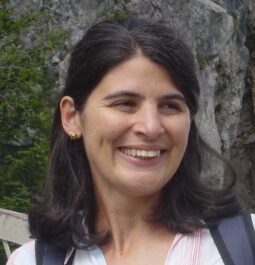
Mariana Gonzalez Boluda is a Lecturer in Spanish Language at the Department of Languages and Cultures, School of Literature and Languages, University of Reading, UK. She brings over two decades of international teaching experience from France, Jamaica, the USA, and the UK, and is actively engaged in pedagogical innovation and research in applied linguistics. Educational Background: PhD in Applied Linguistics, University of Las Palmas de Gran Canaria, Spain MEd in Open and Distance Education Learning, UNED, Spain DEA in Development of Multimedia and New Methodologies in Foreign Language Teaching, UNED, Spain BA in Hispanic Philology, University of Murcia, Spain Her research centers on enhancing language education through critical and multimodal approaches. She investigates how digital tools, film, and hybrid learning environments can develop intercultural competence, writing skills, and student autonomy. Her work emphasizes sustainability, inclusivity, and social justice in Spanish language teaching, particularly through decolonizing curricula and integrating gender-inclusive language. She actively promotes learner engagement via collaborative and project-based methods. Her recent publications and conference presentations reveal a strong thematic trend toward digital innovation, critical pedagogy, and social inclusion in language education. She frequently explores the use of blogs, wikis, social media, and virtual platforms to support language acquisition and autonomy, especially in multilingual and international contexts. Her scholarship bridges theory and practice, aiming to transform traditional language classrooms into dynamic, equitable, and socially aware learning spaces. Professional Affiliations and Networks: Member, ELE UK Member, ASELE Member, FILTA Special Interest Group (SIG) Member: SIG ELE UK on 'Decolonisation of Spanish Language Teaching' SIG AULC on 'Pedagogical Approaches to Language Variation' ReN Learner Autonomy, AILA DIM-EDU Pedagogies, Innovation y Multimedia Mariana Gonzalez Boluda is a Fellow of the Higher Education Academy, affirming her commitment to excellence in teaching. She teaches advanced Spanish language modules (SP2L3/4, SP3L3/4) and integrates her research directly into her pedagogy. She has no listed grants or advisees in the provided text, but her leadership in educational research networks and conference contributions highlights her active role in shaping contemporary language teaching practices. Labs and Teams: She contributes to collaborative academic initiatives through her involvement in international research networks and special interest groups focused on learner autonomy, multimedia pedagogy, and inclusive language teaching. These networks function as distributed research teams advancing innovation in language education across borders.