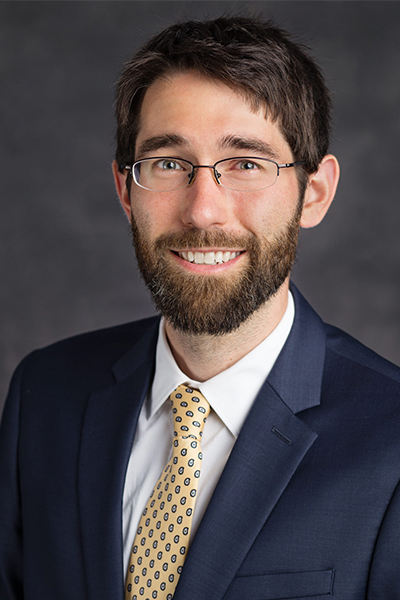
Prof. Liqiu Meng serves as Chair of Cartography and Visual Analytics at the Technical University of Munich (TUM). He specializes in advanced geospatial research, digital cartography, and human-technology collaboration frameworks. Current Faculty at TUM Chair of Cartography and Visual Analytics Research Focus: His work bridges cartographic theory with cutting-edge technology, covering topics like 3D urban modeling, AI ethics visualization, geovisual analytics, and spatiotemporal data interpretation. Urban Morphology Analysis AI Ethics Cartography Geovisual Analytics 3D City Data Integration Location-Based Service Design Publications: Recent works (2025-2024) demonstrate expertise in explainable AI for urban analysis, multi-agent systems for geospatial interaction, and advanced spatial modeling techniques. Contact: liqiu.meng@tum.de | contact.lfk@ed.tum.de
Paul H. White is an Associate Professor of Social Psychology in the Department of Psychology at the University of Utah, where his research centers on the three 'P's': persuasion, prejudice, and performance, investigating motivational drivers of human behavior. His educational background: B.A., Berea College (1989) Ph.D., Northeastern University (1993) Post-doctoral training, Ohio State University (1993-1995) Dr. White's persuasion research examines how source/target characteristics (race, gender, sexual orientation) impact message processing and attitude change, including 'stealing thunder' dynamics. His prejudice work investigates subtle bias through intergroup models incorporating stigmatized groups' perspectives, while his performance studies explore evaluation effects, social underachievement ('letting up'), and stereotype threat mitigation. Analysis of his publications reveals sustained focus on stereotype threat, intergroup relations, and environmental behavior across cross-cultural contexts, with consistent application of social psychological theory to real-world problems in education and sustainability. Dr. White currently mentors three graduate students: Logan Call (admitted 2020) Emma Franklin (2022) Brittany Clark (2022) He directs the Persuasion, Prejudice, and Performance (PPP) Lab, which serves as the primary research environment for experimental and applied investigations into his three core research areas.
Xiaolei Guo is a Professor of Management Science at the Odette School of Business, University of Windsor. His expertise spans transportation systems, supply chain optimization, and infrastructure pricing strategies. He holds a Ph.D. in Transportation from the Hong Kong University of Science and Technology (2008) and a B.A. in Hydraulic Engineering from Tsinghua University (2004). His research focuses on congestion pricing mechanisms, transportation network modeling, and toll road economics. Notable areas include optimizing toll designs under uncertainty, analyzing autonomous vehicle impacts on ridesharing, and evaluating strategic distribution channel decisions under environmental regulations. Dr. Guo has contributed to over 30 peer-reviewed articles since 2005, exploring topics such as Braess paradox under bounded rationality, Pareto-improving congestion schemes, and profit maximization for private toll roads. His work bridges theoretical optimization with practical policy applications. He is an active member of the Canadian Transportation Research Forum (CTRF) since 2011 and the Institute for Operations Research and the Management Sciences (INFORMS) since 2009.
Jean-Sébastien Fallu is an Associate Professor at the School of Psychoeducation, part of the Faculty of Arts and Science at the Université de Montréal. He holds a PhD in Psychology from the same institution and completed a postdoctoral fellowship at the Centre for Addiction and Mental Health (CAMH) in Toronto. His research focuses on the etiology and prevention of problematic substance use, public health policies, and cannabis-related issues. Dr. Fallu is a regular contributor to media discussions on drug policy and addiction science, with over 800 media interviews. He is affiliated with the Institut universitaire sur les dépendances (IUD), the Centre de recherche en santé publique (CReSP), and the Groupe de Recherche et intervention sur les substances psychoactives du Québec (RISQ). He currently serves as the director of the journal Drogues, santé et société (DSS) and is involved in several research projects funded by the Fonds de recherche du Québec (FRQ) and the Canadian Institutes of Health Research (CIHR). Education: PhD in Psychology (Université de Montréal), Postdoctoral Fellowship (CAMH, Toronto) Research Interests: Adolescent substance use, cannabis policy, harm reduction, prevention strategies, public health policies Awards: Forces Avenir 2002 Award for Société, communication et éducation Affiliations: CIUSSS du Centre-Sud-de-l’Île-de-Montréal, IUD, CReSP, RISQ His research has led to over 30 publications and 60 scientific presentations. He supervises graduate students in Master's and PhD programs, focusing on topics such as cannabis use among youth, alcohol consumption during the pandemic, and the impact of policy interventions. He has led projects on substance use prevention, evaluating the efficacy of school transition programs and harm reduction strategies. Dr. Fallu’s current grants include initiatives on opioid interventions, psilocybin therapy in palliative care, and the role of cannabis use onset in substance use disorders. His work bridges academic research with community outreach, emphasizing evidence-based policy and reducing stigma around substance use.
Hao Yang is an Assistant Professor in the Department of Civil and Systems Engineering at Johns Hopkins University, with dual affiliations at the Johns Hopkins Data Science and AI Institute and the Johns Hopkins Institute for Assured Autonomy. His research develops Trustworthy Machine Learning methods to enhance urban mobility systems, focusing on traffic safety, equity, and sustainability through ethical AI and human-machine cooperative systems. Yang earned dual bachelor's degrees in Electrical and Computer Engineering from Beijing University of Posts and Telecommunications and the University of London, followed by a Ph.D. in Civil Engineering (Transportation) from the University of Washington. His educational background bridges telecommunications, electrical engineering, and transportation systems. His research integrates spatio-temporal modeling, assured autonomous systems, and multimodal representation learning to address transportation equity and safety. Key projects include edge-AI-powered traffic surveillance, real-time crash identification, and cooperative signal assistance for vulnerable road users. His work emphasizes ethical AI deployment in cyber-physical infrastructure to create sustainable urban mobility solutions. Recent publications reveal a strategic shift toward large language models and multimodal AI for transportation challenges, with strong emphasis on explainability, reliability, and equity in traffic crash prediction, flow forecasting, and autonomous driving systems. This evolution demonstrates his commitment to adapting cutting-edge AI for real-world transportation problems. Yang's scientific contributions have earned significant recognition: Michael Kyte Outstanding Student of the Year Award (2022) High-Value Research Award from AASHTO (2022) Best Paper Award from TRB Information Systems Committee (2023) Best and Outstanding Dissertation Awards (2024) IEEE DTPI Outstanding Paper Award (2022) TRANSFOR22 Data Competition 2nd place (2022) ASCE Bridges Photo Contest First Place (2021) He actively mentors graduate researchers and seeks 2-3 PhD students for Fall 2025 to advance trustworthy AI in transportation. His research is supported by NSF, USDOT, and AASHTO grants including the Real-Time Truck Parking Information System project that received the High-Value Research Award. Current work focuses on edge-AI for traffic safety and multimodal data integration. Yang leads research within Johns Hopkins' Data Science and AI Institute and Institute for Assured Autonomy, collaborating with Transportation Research Board committees. His lab develops real-time perception systems using edge computing and representation learning, with active projects on non-motorized user safety and equitable traffic management for people with disabilities.
Asha Weinstein Agrawal is a Professor at the School of Planning, Policy, and Environmental Studies within San Jose State University's College of Social Sciences. Her work centers on transportation planning and policy with a focus on sustainability and equity, actively engaging policymakers and communities to address contemporary mobility challenges through evidence-based solutions. Professor Agrawal's research spans transportation revenue systems, equity implications in mobility access, sustainable transportation frameworks, travel behavior analysis, survey methodology innovation, and historical transportation policy evolution. She investigates how planning tools can promote environmentally friendly travel and improve accessibility for disadvantaged populations, with current projects examining electric vehicle impacts on transportation funding, transit safety for vulnerable users, and community engagement in open streets initiatives. Analysis of her recent publications reveals dominant themes in transportation funding alternatives—particularly mileage-based user fees and zero-emission vehicle revenue impacts—and equity-focused studies on transit safety, workforce diversity, and accessibility for older adults and low-income communities. Her work consistently bridges academic research with real-world policy applications through rigorous survey methodologies and multi-stakeholder engagement. Scientific Awards: No specific awards are documented in the provided materials. Advising and Professional Engagement: Professor Agrawal regularly presents findings to federal and state decision-makers including U.S. Senate committees, the California Transportation Commission, and local transportation authorities. She serves on key advisory bodies such as the Metropolitan Transportation Commission's Regional Means-Based Transit Fare Pricing Study committee, Santa Clara County Traffic Safe Communities Network, and Valley Transportation Authority's Pedestrian Access Task Force. Her research has been supported through multiple policy-relevant projects with transportation agencies across California and nationally.
Professor Tim Jones is a Professor of Sustainable Urban Mobility at the School of the Built Environment, Oxford Brookes University. His research focuses on how urban environments can be configured to support sustainable and healthy mobility, particularly walking, cycling, and electrically assisted mobility. His work aligns with UN Sustainable Development Goals 3 (Good health and wellbeing), 10 (Reduced inequalities), and 11 (Sustainable cities and communities). Dr. Jones' research interests center on sustainable urban mobility, with particular emphasis on walking, cycling, and electric micromobility. He investigates how urban environments can be designed to promote healthy, sustainable travel that minimizes environmental impact while improving health and wellbeing and providing equal access to opportunities. His work employs novel mixed-method approaches to understand the physical, social, and cultural factors that influence everyday travel decisions. His research spans contexts from the UK to Brazil, examining issues like mobility justice, 15-minute cities, and low traffic neighborhoods. His recent publications reveal a strong focus on the health impacts of active travel, particularly examining how walking and cycling affect mental health, wellbeing, and quality of life. His work increasingly addresses electric micromobility, including e-bikes and e-scooters, with several 2024-2025 publications on the HELMET project. He frequently collaborates with international researchers, particularly in Brazil, on comparative urban mobility studies. Royal Town Planning Institute (RTPI) Award for Research Excellence 2017 (Academic Award) for the project cycle BOOM Professor Jones has supervised numerous PhD students including Catherine Ross (current), Oscar Natividad Puig (current), Aline Moreira Fernandes Barata (completed 2023), and Daniela Wollrab (completed 2023), among others. He has secured significant research funding including the NIHR-funded HELMET project (2025-2026), the EU-funded ENACT 15mC project (2023-2026), and the Rees Jeffreys Road Fund's UMALTraN project (2023-2024). His current research portfolio demonstrates strong engagement with contemporary urban mobility challenges, particularly post-pandemic transport issues and the integration of new mobility technologies. Professor Jones is actively involved in multiple research networks including the Planning Policy and Government Group, the Sustainable and Resilient Futures Network, the Healthy Ageing and Care Network, and the Children and Young People Network at Oxford Brookes University. He serves as a Research Ethics Officer and contributes to professional organizations including the European Partnerships Driving Urban Transitions Programme.
University of California, Los AngelesUnited States
Michael Manville is a Professor and Chair of Urban Planning at the UCLA Luskin School of Public Affairs. His research focuses on transportation policy, land use regulation, and housing affordability, with a particular emphasis on the interplay between these fields. He holds an MA and PhD in Urban Planning from UCLA Luskin, and previously served as Assistant Professor at Cornell University's City and Regional Planning department. Dr. Manville's work examines topics such as road/parking pricing, determinants of transit use, and the impact of land use policies on housing markets. He has received funding from the John Randolph Haynes Foundation, TransitCenter, and University Transportation Centers. His research has been published in top journals across planning, economics, and urban studies. His recent articles highlight trends in transportation equity, housing policy contradictions, and the consequences of parking requirements. Key publications include analyses of post-pandemic transit ridership decline, equity implications of road-user charges, and the regulatory barriers to housing development. Awards: ACSP Distinguished Educator (2017) Consulting: Advised developers, environmental groups, local governments, and the United Nations Grants: Over $2.5M in research funding from multiple foundations and agencies He leads UCLA's urban policy research initiatives and collaborates with municipal governments to translate academic findings into actionable policies. His lab focuses on innovative solutions to urban challenges like housing shortages and sustainable mobility.
Hans Jonas Fossum Moen is an Associate Professor with a 20% appointment at the Department of Technology Systems, University of Oslo (UiO), and holds a 100% position as a researcher at the Norwegian Defence Research Establishment (FFI). His primary affiliation is with the Section for Autonomous Systems and Sensor Technologies. He is based at the Kjeller campus, with a visiting address at Gunnar Randers Road 19 and a postal address at Postboks 70. His research focuses on advancing autonomous systems and sensor technologies, particularly in the domains of swarm robotics, multi-agent coordination, and optimization algorithms. Key areas include UAV navigation, distributed localization in IoT networks, radar detection enhancement, and adaptive control systems for multi-functional swarms. He emphasizes the integration of biological principles into robotic systems, as evidenced by his participation in the ICRA 2018 Workshop on Swarms. His publications consistently highlight contributions to swarm intelligence, with a focus on improving data quality and efficiency in robotics applications. He has collaborated extensively with colleagues such as Kyrre Glette, Oleg Yakimenko, and Jan Dyre Bjerknes, exploring topics ranging from task allocation in multi-agent systems to evolutionary algorithms for filter optimization. His work bridges theoretical computer science with practical engineering challenges in autonomous systems. No scientific awards have been explicitly mentioned in the provided texts. Moen’s advising and grants narrative indicates no listed advisees or active grant projects, though his 20% UiO position suggests potential involvement in academic supervision. His primary research activities are embedded within FFI and the Autonomous Systems section at UiO, contributing to interdisciplinary efforts in sensor technologies and robotic systems.
Patrick Singleton is an Associate Professor in the Department of Civil and Environmental Engineering at Utah State University, specializing in transportation research. His work bridges travel behavior, safety analysis, and health impacts of transportation systems, with a focus on active transportation and data science applications. Academic Background: PhD in Civil and Environmental Engineering (Portland State University, 2017) Research Areas: Travel behavior, transportation-electrification, pedestrian safety, health-wellbeing in transport Recent research trends emphasize data-driven approaches to pedestrian and bicycle safety, transportation electrification, and the impact of environmental factors like air quality on travel patterns. His lab develops tools for pedestrian data analysis and systemic safety improvements. Scientific recognition includes multiple UDOT awards and a 2017 Best Paper award. He mentors graduate students in transportation modeling and safety analysis.
Arlie Adkins serves as Associate Professor with dual appointments in the School of Landscape Architecture and Planning at the University of Arizona's College of Architecture, Planning and Landscape Architecture (CAPLA) and the Health Promotion Sciences Department within the Mel and Enid Zuckerman College of Public Health. He holds the position of Program Chair for the Master of Science in Urban Planning program and teaches transportation planning, planning theory, and capstone studios. Dr. Adkins earned his PhD in Urban Planning from Portland State University and Master's in City Planning from UC Berkeley. Prior to academia, he worked as a planner at TriMet (Portland's transit agency) and for carsharing pioneer Flexcar. His research program investigates transportation equity through three interconnected lenses: systemic health and safety disparities in urban transportation, socioeconomic applicability of walkability metrics, and affordable housing's role in enabling access to opportunity-rich neighborhoods. He emphasizes sociocultural contexts in built environment assessments, particularly focusing on Mexican American communities and refugee populations. His work integrates critical race theory to expose racial biases in transportation systems, as demonstrated by his nationally covered research on driver yielding behavior at crosswalks. Recent publications reveal a methodological shift toward qualitative assessment tools like the Qualitative Pedestrian Environments Data (QPED) Toolkit, addressing limitations of quantitative metrics in capturing social dimensions of walkability. His scholarship increasingly centers refugee mobility and Global South urbanism, reflecting expansion into transnational equity frameworks while maintaining core focus on transportation-housing-health intersections. Dr. Adkins has secured major funding from the Federal Highway Administration, National Institute for Transportation and Communities, and Centers for Disease Control and Prevention. He co-led the CDC-funded Physical Activity Policy Research Network (PAPRN+) collaborating center and directs the QPED initiative, which has trained practitioners through workshops including the 2019 Transportation and Communities Summit in Portland. His leadership extends to program development, evidenced by the MS Urban Planning program's #5 national ranking among public programs without PhDs by Planetizen (2023) and the UA Urban Planning Capstone's award for best graduate project from the Arizona APA chapter. He actively mentors students through capstone projects focused on transportation equity and housing justice.
Niklas Grabbe is a postdoctoral researcher at the Chair of Ergonomics, Technical University of Munich (TUM), where he leads the research group on "Automated Driving and Mobility Systems" and is establishing a new working group focused on "Modelling complex socio-technical systems" with emphasis on Resilience Engineering and the Functional Resonance Analysis Method (FRAM). His research centers on human factors in automated and teleoperated driving, mobility systems, and behavior modeling. He applies systems engineering principles to analyze safety and usability, particularly using FRAM to study performance variability and resilience in socio-technical systems. His work addresses critical challenges in urban automated driving, teleoperation, and multi-driver interactions through rigorous quantitative modeling and field studies. Analysis of Grabbe's publications reveals a dominant trend in applying FRAM to driving scenarios, with recurring themes of safety enhancement, human-automation interaction, and usability evaluation. His interdisciplinary work bridges transportation psychology, safety engineering, and human-computer interaction, consistently emphasizing systems thinking to solve complex problems in automated vehicle technology. Grabbe contributes to academic instruction through courses like "Modelling Complex Sociotechnical Systems" (Winter 2025/26). He operates within TUM's Chair of Ergonomics infrastructure, utilizing specialized labs including driving simulators and ergonomic mockups to support experimental research in human factors and automated systems.
Dr. Adrian Fazekas is a Lecturer at the Institute of Highway Engineering, RWTH Aachen University, and collaborates with the Federal Highway Research Institute (BASt). He holds a Dr.-Ing. in Computer Science from RWTH Aachen (2005–2011), specializing in Media Engineering. His professional trajectory includes roles as a Research Assistant at RWTH Aachen and industry experience as a Software Developer at Continental AG. Research interests focus on traffic data acquisition , microscopic traffic flow simulation , and intelligent transportation systems . Key projects include: DROVA: Drone-based traffic analysis for infrastructure optimization ESIMAS: Real-time tunnel safety management Digital Twin Road: Physical-informational mapping of future highways AUTUKAR: Automated tunnel monitoring systems His publications emphasize real-time traffic detection , safety analytics , and data-driven modeling , with recent work exploring thermal-camera nudging systems and weigh-in-motion accuracy. He actively contributes to the Research Association for Roads, Earth and Tunneling (SETAC). No awards or student advising roles are documented.
Sami Repo is a Professor in Electrical Engineering, focusing on power distribution systems and smart energy technologies. His work spans distribution network automation, flexibility services, and integration of distributed energy resources. Doctor of Science (Technology) in Electrical Engineering (2001) Master of Science (Technology) in Electrical Engineering (1996) His research interests include smart grids, congestion management, and cyber-physical energy systems. Recent publications address challenges in electric vehicle charging, green hydrogen regulation, and photovoltaic revenue optimization. He serves as an examiner and doctoral dissertation opponent, contributing to academic evaluation in electrical engineering programs. Key subtopics include EV charging control, EU energy policy, and renewable energy integration. Examiner for Wenlong Liao (2023): Modelling and optimization of active distribution networks Opponent for Etherden Nicholas (2012): Distributed energy resource hosting capacity
Dr. Margie Peden is a distinguished public health researcher specializing in injury prevention, currently holding multiple academic and leadership positions. She serves as a Senior Research Fellow at Imperial College London's School of Public Health, Faculty of Medicine, and as a Conjoint Senior Lecturer at the University of New South Wales, Sydney. Additionally, she holds an honorary position at Johns Hopkins University and serves as Head of Global Injury at The George Institute for Global Health, where she is also Co-director of the WHO Collaborating Centre on Injury Prevention. Dr. Peden's research interests focus on preventing unintentional injuries, particularly in resource-limited settings. Her work spans road traffic injuries, drowning prevention, burns, falls, and the intersection of alcohol use with injury risk. She has a particular emphasis on developing and evaluating interventions for child injury prevention in low-income countries and improving emergency care systems, especially through enhancing nurses' capabilities in accident and emergency units. Her methodological approach often incorporates participatory research techniques to develop effective practices for society's most vulnerable populations. Throughout her career, Dr. Peden has produced an extensive body of scholarly work, with recent publications focusing on child injury prevention in African contexts, road safety policy analysis, and methodological approaches to measuring injury prevention effectiveness. Her research demonstrates a consistent focus on translating evidence into practical interventions that can be implemented in resource-constrained settings. Dr. Peden plays significant roles in global road safety initiatives, including serving on the Commonwealth Road Safety Initiative Expert Panel and chairing the Global Advisory Board for the Malawi Road Safety Research and Implementation Unit. She previously coordinated the Unintentional Injury Prevention team at WHO for 17 years, where she served as executive editor for major WHO reports on road traffic injury and child injury prevention. Her professional journey began with a decade of work as an ICU nurse in South Africa before transitioning to epidemiology and public health research. She holds a PhD from the University of Cape Town and has maintained a strong connection to both clinical practice and academic research throughout her career.




/hjmoen/j.png)