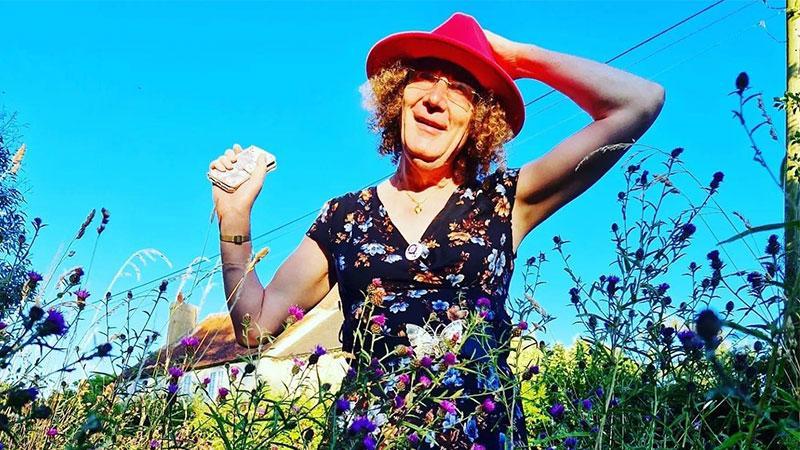
Professor Pippa Catterall is a distinguished academic at the University of Westminster , affiliated with the History Research Group , Centre for Law, Society and Popular Culture , and Westminster Development Policy Network . Her work bridges constitutional history, religious politics, and LGBTQ+ inclusion. Education: B.A. in History, University of Cambridge (1984) Ph.D. in History, Queen Mary University of London (1989) Research Focus: Religion's influence on British political development Queer urban space design Constitutional evolution post-Glorious Revolution Labour movement's religious foundations Prime ministerial policy strategy Recent Work Trends: 2024 monograph on Queer Perspectives on Public Space 2025 analysis of Free Church arms regulation 2026 exploration of thanatourism Honors: Literati Club Best Generalist Reference Book of the Year (1990) Fellow of the Royal Historical Society (1996–) EDI Audit Grant recipient (Quintin Hogg Trust) Leadership: Chair, University of Westminster Press Co-Chair, Staff Q+ Network Editor, National Identities journal (1998–)
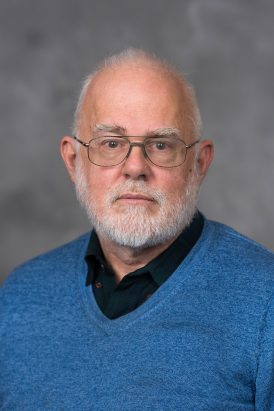
Andrew McKenzie is an Associate Professor in the Department of Linguistics at the University of Kansas, where he also serves as Director of Graduate Studies. He specializes in formal semantics and theory-driven language documentation with a focus on Native American languages, particularly Kiowa. His research interests include formal semantics, Native American languages (especially Kiowa), language documentation methodologies, switch-reference systems, noun incorporation phenomena, and grammatical complexity in polysynthetic languages. He maintains active research projects in Kiowa linguistics and extraterrestrial communication frameworks. Dr. McKenzie's publications demonstrate sustained focus on semantic theory, Native American language analysis, and innovative applications of linguistics. His recent work explores semantic structures across human and hypothetical alien languages, Kiowa grammatical systems, and pedagogical approaches in linguistics education. Articles frequently incorporate cross-linguistic comparison and formal theoretical frameworks. Honors include serving as invited plenary speaker at multiple international conferences (WSCLA, WECOL, WCCFL), recognition as Five-Minute Linguist runner-up, and receiving the DEL Grant from the National Science Foundation. He teaches courses including Semantics, Field Methods, Structures of Kiowa, and North American Indian Languages. Dr. McKenzie has developed educational tools like a LaTeX package for linguistics and pedagogical games including 'f(x): A Euro-style game for the λ-calculus'.
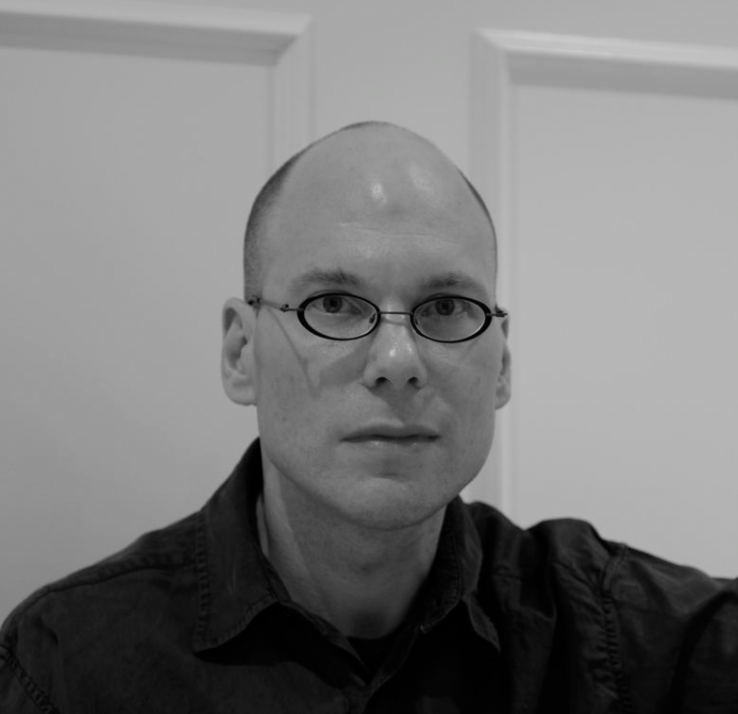
Neil Cummings is a part-time Professor at the Camberwell, Chelsea and Wimbledon Colleges of Arts, part of the University of the Arts London. His practice bridges art, activism, and research, focusing on institutional critique, sustainability, and collaborative projects with cultural institutions. Research interests include the political economy of art, museum futures, and material culture. Notable projects include Museum Futures: Distributed (2008), Enthusiasts Archive (2014), and #TransActing: A Market of Values (2016). He co-edits Documents of Contemporary Art and advises on practice-based PhDs. Recent works explore degrowth and DIY practices, such as furniture-making from recycled materials. He has collaborated with institutions like Moderna Museet, Tate Modern, and the Museum of Modern Art in Warsaw.
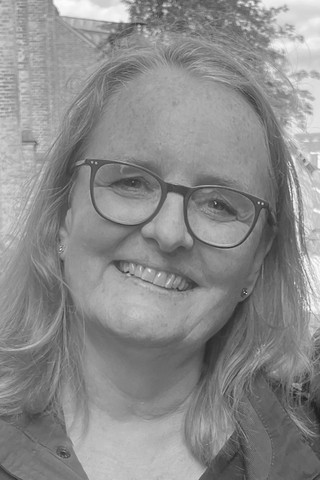
James Savelle is an Associate Professor in the Department of Anthropology at McGill University, specializing in Arctic archaeology. His research focuses on Prehistoric Thule Eskimo societies, Paleoeskimo demographic history, and Arctic Holocene paleoecology. He holds a Ph.D. from the University of Alberta (1986). Savelle collaborates with institutions like the Geological Survey of Canada and the National Museum of Ethnology, Osaka, producing seminal works on whaling cultures, zooarchaeology, and environmental reconstruction. His edited volumes include Anthropological Studies of Whaling (2013) and Indigenous Use and Management of Marine Resources (2005). His work integrates archaeological, environmental, and ethnohistorical data to explore subsistence strategies, social organization, and human-environment interactions in the Arctic. Key research themes include Thule whaling economies, Dorset and Pre-Dorset population dynamics, and Holocene sea-ice patterns derived from proxy data. Savelle’s interdisciplinary approach bridges archaeology with marine biology, climatology, and anthropology. He has published extensively in journals like American Antiquity , Arctic , and Quaternary Science Reviews , and contributed to global climate studies through collaborations analyzing driftwood and whale bone records. His academic contributions include foundational studies on Arctic settlement patterns, zooarchaeological methods, and the cultural significance of whaling. Savelle’s research underscores the resilience of Indigenous Arctic societies in the face of environmental change, offering insights into both historical and contemporary ecological challenges.
Jeffrey Heath is a Professor of Linguistics at the University of Michigan, with a dry-line appointment in Near Eastern Studies. His research focuses on language documentation, historical linguistics, morphology, and the study of African languages. He has conducted extensive fieldwork in Mali, Morocco, Australia, and other regions, particularly on Dogon, Songhay, and Berber languages. Heath holds a Ph.D. from the University of Chicago (1976) and a B.A. from Harvard University (1971). His work includes over 20 books and numerous articles on linguistic typology, language contact, and morphological evolution. He has received significant grants from the National Science Foundation, Guggenheim Foundation, and Fulbright Program. His research emphasizes functional morphosyntax and the role of prosody in linguistic systems. Education: Ph.D. (University of Chicago, 1976), M.A. (1973), A.B. (Harvard, 1971) Affiliations: Department of Linguistics, Near Eastern Studies (UMich) Key Projects: Dogon Language Documentation Project, Tamashek (Tuareg) studies, Songhay grammar series Heath’s research interests span morphology, tonosyntax, and the historical development of African languages. His fieldwork in Mali has produced detailed grammars of Dogon languages, while his work on Moroccan Arabic explores language contact and borrowing. He has also contributed to the documentation of Songhay and Gur languages in West Africa. Grants and awards highlight his commitment to endangered language preservation, including NEH and NSF funding for Dogon and Songhay projects. His contributions to linguistic typology and historical morphology have influenced debates on morpheme renewal and syntactic change.
Dr. Miguel Juarez is a Lecturer in Statistics at the University of Sheffield's School of Mathematical and Physical Sciences. He holds a PhD in Mathematical Sciences from Universidad de Valencia (2004), an MSc in Economics from CIDE (Mexico), and a BSc in Actuarial Sciences from ITAM (Mexico). His research focuses on Bayesian hierarchical modeling for panel/longitudinal data with applications in biology, medicine, and econometrics. Key projects include the STriTuVaD initiative for integrating computer simulations with clinical trials and developing models for super-resolution microscopy image analysis. He has contributed to advancing in silico trial methodologies through the UISS-TB simulator and works on objective Bayesian methods for non-Gaussian data. Professional activities include teaching MAS2010 Statistical Inference and Modelling. His recent work emphasizes accelerating tuberculosis vaccine development via augmented clinical trials and establishing credibility frameworks for in silico trials. He collaborates with interdisciplinary teams in systems biology and biomedical informatics. Research outputs span Bayesian statistical theory, computational epidemiology, and medical technology innovation. Notable collaborations include the Warwick Systems Biology Centre and EU-funded H2020 projects.
Prof. Tan Yap Peng is a Professor and Chair of the School of Electrical & Electronic Engineering at Nanyang Technological University (NTU), Singapore. He holds the President's Chair in Electrical and Electronic Engineering and serves as Associate Vice President (Lifelong Learning – Postgraduate Programmes by Coursework). His research focuses on multimedia analysis, computer vision, machine learning, and data analytics. He earned his B.S. from National Taiwan University and M.A./Ph.D. from Princeton University. He has led major initiatives including the INFINITUS Infocomm Research Centre and contributed to IEEE technical committees. His over 200 publications span image/video processing, neural network robustness, and cross-modal systems. Awards include IEEE Fellow status. Education: B.S. Electrical Engineering (NTU), M.A./Ph.D. (Princeton) Research interests emphasize interactive digital media, content-based analysis, and AI-driven solutions for visual and signal processing. His work addresses challenges in adversarial attacks, video generation, and low-light image enhancement. He has held editorial roles at IEEE Transactions and EURASIP journals. Conference leadership includes chairs for ICME and ICIP. His contributions bridge academia and industry through collaborative research networks.
Andrew B. Nobel is the Robert Paul Ziff Distinguished Professor of Statistics and Operations Research and Professor of Biostatistics at the University of North Carolina at Chapel Hill (UNC). He holds affiliations with the Lineberger Comprehensive Cancer Center and the Computational Genomics Program. His research focuses on statistical genomics, machine learning, network analysis, and inference from dynamical systems. Nobel has collaborated extensively with researchers in Biology, Computer Science, Genetics, and Mathematics. Dr. Nobel earned his PhD in Electrical Engineering from Stanford University (1992), an MS from Stanford (1988), a Certificate of Study in Mathematics from Cambridge University (1986), and a BS in Electrical Engineering from Cornell University (1985). He has taught courses ranging from undergraduate discrete mathematics to advanced graduate-level theoretical statistics and machine learning. His research interests include developing methodologies for analyzing complex biological and network data, with applications to cancer genomics, systems biology, and medical informatics. Recent work emphasizes optimal transport methods for network analysis and statistical approaches for genomic data integration. Awards: Elected Fellow of the Institute of Mathematical Statistics (2008) National Science Foundation CAREER Grant (1995) Beckman Institute Fellow (1992–1995) Churchill Scholar (1985–1986) Dr. Nobel serves on the editorial board of the Journal of the Royal Statistical Society, Series B and has previously contributed to the Annals of Statistics and IEEE Transactions on Information Theory . His work bridges theoretical statistical foundations with practical applications in public health and biomedical research.
PD Dr. Cora Bender serves as an Associate Professor at the Institute of Social Anthropology within the Center for Media and Modernity Research (MeMo) at the University of Cologne, where her office is located at Liliencronstr. 6, 2.04, 50931 Cologne. Her academic profile centers on critical examinations of media practices, indigenous sovereignty, and the historical foundations of anthropological thought, particularly concerning Native North American communities. Her research program investigates tribal sovereignty through food systems in Upper Midwest Indigenous communities, indigenous media history, and the colonial legacy in anthropological knowledge production. Key methodological contributions appear in her co-edited Handbuch der Medienethnographie (2015), establishing frameworks for analyzing boundary objects in cultural transmission and media ethnography. Analysis of her 15 most recent publications (2014-2025) reveals three dominant trajectories: (1) Historical anthropology critiques through figures like Hortense Powdermaker and Dorothy Lee; (2) Contemporary indigenous sovereignty studies focusing on food security and media practices; (3) Theoretical interventions in boundary object theory and post-frontier cultural production. Her 2025 chapter "Collageable Lives" exemplifies this synthesis by re-examining Julius and Eva Lips' work through decolonial lenses. Scientific Awards: No awards are documented in the provided institutional profile. Advising and Grants: The University of Cologne profile does not reference doctoral advisees, research grants, or supervisory activities. Dr. Bender maintains active collaboration within the Center for Media and Modernity Research (MeMo), contributing to interdisciplinary projects examining media's role in cultural transformation, particularly regarding indigenous knowledge systems and post-colonial identity formation in North American contexts.
Dr Edwin Beggs is a Reader in Mathematics within the School of Mathematics and Computer Science at Swansea University, located at the Computational Foundry on Bay Campus. His research spans Algebra, Differential Geometry, Noncommutative Geometry, Theoretical Physics, and the computability of physical systems. He co-authored the influential 2020 Springer book Quantum Riemannian Geometry , contributing to the Grundlehren series. His work bridges mathematical formalism with physical applications, focusing on quantum structures, geometric frameworks, and computational models interfacing with physical systems. Research interests include noncommutative differential operators, quantum geodesic flows, and the interplay between algebraic topology and physics. Notable contributions address quantum gravity models, soliton dynamics, and the theoretical limits of measurement and computation in physical systems. He is actively involved in postgraduate supervision and has explored computational paradigms using physical oracles, such as the Wheatstone bridge and kinematic systems, to redefine computational boundaries. His interdisciplinary approach is reflected in publications spanning quantum geometry, analogue-digital computation models, and the mathematical foundations of measurement theory. Collaborations with Shahn Majid highlight his role in advancing noncommutative geometry's applications to modern physics.
Adam D. Hoffman is an English Lecturer at Arizona State University's Writing Programs since 2014, specializing in Composition, Literature, and Honors courses. He holds a Ph.D. in English Literature (expected 2025, ASU), M.A. in English Literature (2011, Northern Arizona University), and B.A. in Religious Studies with Philosophy minor (2008, University of Arizona). His research focuses on Environmental Humanities, 20th-21st century American Literature, Animal Studies, and Critical Theory, with a dissertation exploring biopolitics and capitalism's impact on animal marketing. Key Research Areas: Environmental Criticism, Animal Ethics, Technocapitalism in Science Fiction, Medieval/Renaissance Literary Analysis Teaching Contributions: Over a decade instructing First-Year Composition courses, emphasizing rhetoric and interdisciplinary connections. Engagement: Volunteered as Faculty Sponsor for student organizations (Adventure Devils, Sunrise ASU) and literary reviews (H-Net, Oxford UP), balancing scholarly rigor with community outreach. His presentations at conferences like SCRAL (2019) and Southwest English Symposium (2016) highlight work on animal symbolism, dystopian narratives, and pedagogical challenges in digital classrooms. Hoffman advocates a 'head-heart-hand' approach, integrating knowledge with ethical action and practical application.
Donal Nolan is a Professor of Private Law at the University of Oxford and holds fellowships at Worcester College, Oxford, and the Melbourne Law School (University of Melbourne). He specializes in tort law, focusing on negligence, private nuisance, and the intersection of tort law with public law. His academic career includes teaching tort, contract, commercial law, international trade law, restitution, and related subjects. His research contributions include seminal works such as Questions of Liability: Essays on the Law of Tort (2023) and co-authored texts like Winfield & Jolowicz on Tort (2020). He is a founding member of the World Tort Law Society and an elected member of the American Law Institute. Nolan’s work bridges theoretical and practical aspects of legal systems, emphasizing doctrinal analysis and comparative perspectives. His publications reflect a deep engagement with contemporary issues in tort law, including liability apportionment and the evolving boundaries of legal responsibility.
Prof. Dr. Thomas Lengauer is a leading figure in computational biology and applied algorithmics at the Max Planck Institute for Informatics, part of the Max Planck Society in Saarbrücken, Germany. He heads the Department of Computational Biology and Applied Algorithmics, where he drives research at the intersection of computer science, genomics, and medicine. His work integrates algorithm development with biological applications, particularly in viral genomics, epigenetics, and personalized treatment prediction. Research Interests: His research focuses on computational methods for analyzing complex biological data. Key areas include HIV and hepatitis virus evolution, antiretroviral therapy outcome prediction, DNA methylation and epigenomic analysis, machine learning applications in medicine, and the integration of big data in biological research. He has made significant contributions to understanding viral drug resistance and host-pathogen interactions through computational modeling. The recent publications (2019–2025) reflect a strong trend toward integrating temporal genomic data, machine learning, and public health surveillance. His work spans from fundamental algorithm development (e.g., RnBeads, MeDeCom) to applied clinical research (e.g., dolutegravir resistance, SARS-CoV-2 interventions). Key domains include epigenomics , virology , machine learning in healthcare , and biological database systems , increasingly incorporating AI-driven approaches. Scientific Awards: No specific awards are mentioned in the provided text. Advising and Grants: While no formal list of students is provided, Prof. Lengauer leads a large collaborative research group, evidenced by frequent co-authorship with researchers such as Walter, Bock, Müller, Kaiser, and Pirkl. He participates in major consortia (e.g., DEEP Consortium, Respiratory Virus Network), suggesting leadership in funded collaborative projects. His work is likely supported by Max Planck Society core funding and competitive third-party grants, though specific grants are not listed. Labs and Teams: He leads the Computational Biology and Applied Algorithmics group at the Max Planck Institute for Informatics. The team develops computational tools for epigenomic data analysis (e.g., RnBeads, DecompPipeline), viral resistance prediction, and public health modeling. The group collaborates extensively with clinical and biological researchers across Europe, functioning as a hub for interdisciplinary bioinformatics research.
Professor Martin Hand is a faculty member at the University of Adelaide, affiliated with the School of Physics, Chemistry and Earth Sciences within the Faculty of Sciences, Engineering and Technology. His research focuses on metamorphic systems, tectonic evolution, and mineral exploration. He leads multidisciplinary teams integrating geology, geochemistry, and geophysics to address topics such as strain localization mechanisms, geothermal gradients, Proterozoic lithosphere evolution, and Fe-oxide Cu-Au mineralization. Key projects include garnet Lu-Hf geochronology, UHT metamorphism studies, and copper exploration in the Gawler Craton. Research Interests: Metamorphic Petrology and Tectonics Geochronology and Thermochronology Proterozoic Continental Evolution Iron-Oxide-Copper-Gold (IOCG) Systems High-Temperature Metamorphic Processes Geothermal Resource Exploration Publications highlight advanced methods in mineral dating (e.g., garnet speed dating, apatite triple dating) and address tectonic frameworks such as subduction dynamics, continental collisions, and supercontinent assembly. His work bridges field observations with lab-based geochemical techniques to decode Earth's crustal history. Eligible to supervise Masters/PhD students in metamorphic geology, tectonics, and mineral systems. Active in international collaborations and has pioneered new geochronological techniques for crustal studies.
Carlos Domingo Miralles is a Professor in the Department of Physics at the Universitat Autònoma de Barcelona. His research focuses on neutron dosimetry, radiation spectrometry, and detector development for complex radiation fields. He holds a Ph.D. in Physics from Universitat Autònoma de Barcelona (1988) and has held academic positions since 1982. Education: Ph.D. in Physics (1988), M.Sc. in Physics (1983), B.Sc. in Physics (1982) His research interests include neutron spectrometry in medical environments, environmental neutron monitoring, and advanced neutron detection technologies. He has led over 20 research projects, including EU-funded initiatives on neutron dosimetry and proton therapy verification. Recent work includes developing soil moisture monitoring systems using neutron moderation and evaluating detectors at CERN's high-energy reference fields. Collaborations span international institutions, and his contributions include pioneering work on Bonner sphere spectrometers and personal neutron dosimetry standards. He has supervised 25 research works but specific student names are not listed in the provided data.