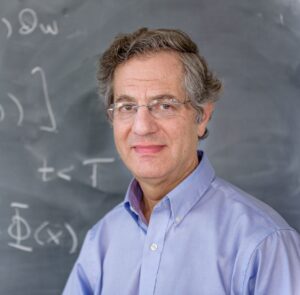
Eric Fortune is an Associate Professor in the Department of Biological Sciences at New Jersey Institute of Technology. His research spans neuroethology, electrosensory systems, and computational biology, with a focus on weakly electric fish and sensorimotor integration. Recent Publications highlight work on Neurophysiological adaptations in weakly electric fish Machine learning applications in flu forecasting Behavioral and neural mechanisms of exploration-exploitation trade-offs Grants include multiple NSF-funded projects on collaborative research in active sensing, neuromechanical systems, and social interaction effects on sensory function. Media Coverage features his role in a $5M Amazon rainforest biodiversity contest, where his team counted over 250,000 critters in a square kilometer.
Duminda Wijesekera serves as Professor in the Department of Cyber Security Engineering and Department of Computer Science at George Mason University, where he was inaugural chairman of the Cyber Security Engineering Department until December 2022. He concurrently held the position of visiting research scientist at the National Institute of Standards and Technology (NIST) from 2007-2022 and maintains status as a fellow at the Potomac Institute of Policy Studies. He leads the Mason Innovation Laboratory at Mason Square, driving translational research in cyber-physical security. His educational foundation includes: PhD in Computer Science, University of Minnesota (1997) PhD in Mathematical Logic, Cornell University (1990) BSc in Mathematics, University of Colombo Professor Wijesekera's research centers on cyber-physical system security , with pioneering work in Intelligent Transportation Systems spanning trains, aircraft, and connected vehicles. His digital forensics innovations establish frameworks for evidence-based scenario reconstruction and error management, while his formal methods research provides mathematical guarantees for safety-critical systems. Current projects address Next G-based edge services, digital twin vulnerability detection, and healthcare security architectures, consistently bridging theoretical rigor with real-world infrastructure protection. Analysis of his 2022-2025 publications reveals intense focus on autonomous vehicle security (38% of recent output), including traffic signal control optimization, ramming attack countermeasures, and CARLA-based scenario validation. Digital forensics using AI (20%) and secure manufacturing/edge computing (27%) constitute other major thrusts, demonstrating how formal verification and machine learning converge to solve complex cyber-physical security challenges across transportation, energy, and healthcare domains. His scientific recognition includes: CCI Impact Award (2022) for groundbreaking cyber-physical security contributions Fellowship at the Potomac Institute of Policy Studies for cybersecurity policy leadership Professor Wijesekera has secured substantial research funding through: NIST grants for health record security frameworks (2014-2015) US Department of Transportation projects on wireless frequency mapping for high-speed rail (2013-2014) Cyber Security Research Alliance funding for trust architectures in cyber-physical systems (2014) Commonwealth Cyber Initiative awards for autonomous vehicle security and energy-efficient manufacturing His industry partnerships with Honeywell and NIST ensure practical impact of theoretical research. The Mason Innovation Laboratory under his direction serves as an interdisciplinary hub for cyber-physical security, integrating researchers from computer science, electrical engineering, and policy studies to develop deployable solutions for transportation networks, power grids, and critical infrastructure protection.
Ke Xu is a Professor in the Department of Computer Science at Tsinghua University's School of Information Science and Technology. With extensive research contributions in network security, privacy-preserving technologies, and machine learning applications for networking, Professor Xu has established himself as a leading researcher in computer science. Professor Xu's research interests span network security, privacy-preserving technologies, machine learning for networking, federated learning, internet protocols, encrypted traffic analysis, blockchain applications, and AI in networking. His work bridges theoretical foundations with practical implementations, focusing on real-world security challenges and network optimization problems. He has developed novel frameworks for secure network operations, privacy-preserving data sharing, and efficient AI deployment in distributed environments. Professor Xu's publication record shows a clear trend toward integrating artificial intelligence with traditional networking challenges. His recent work explores federated learning security, encrypted traffic analysis using deep learning, and novel approaches to network security that leverage machine learning techniques. The interdisciplinary nature of his research spans computer networking, security, privacy, and artificial intelligence. Professor Xu has received recognition for his contributions to network security and privacy-preserving technologies through publications in top-tier venues including IEEE journals, ACM conferences, and security symposia. His work has appeared in IEEE Transactions on Dependable and Secure Computing, IEEE/ACM Transactions on Networking, and security conferences like CCS and NDSS. Professor Xu actively collaborates with researchers across institutions, supervising students and junior researchers in exploring cutting-edge problems in network security and AI. His research has been supported by significant grants focusing on network security, privacy, and intelligent networking infrastructure. He leads projects that address fundamental challenges in secure communication, privacy-preserving data analysis, and intelligent network management. Professor Xu is involved with research laboratories focusing on network security and intelligent systems at Tsinghua University. His team works on developing practical security solutions, privacy frameworks, and AI-enhanced networking protocols that address real-world challenges in today's increasingly connected world.
Petteri Nurmi is a Professor of Computer Science at the University of Helsinki, affiliated with the Department of Computer Science and the Helsinki Institute of Sustainability Science (HELSUS). His research focuses on IoT systems, environmental monitoring, AI-driven solutions, and sustainable computing. He leads projects such as the NordForsk-funded initiative (2024-2028) and the Team Finland Knowledge programme (2024-2026), emphasizing large-scale IoT deployments and quantum computing integration. Key research interests include drone-based air quality monitoring, low-cost sensor networks, and AI applications in environmental science. Nurmi has published extensively in top venues like IEEE IoT Journal and ACM workshops. His work bridges technical innovation with societal challenges, such as urban pollution reduction and sustainable resource management. He supervises doctoral students in the Computer Science program and collaborates internationally on projects like underwater plastic detection (SEAGULL) and smart city infrastructure. Nurmi’s contributions to edge computing and pervasive sensing have been recognized through grants totaling over €2M. His lab develops tools for data-intensive systems, including thermal imaging for energy efficiency analysis and AI-driven sensor fusion frameworks.
Ellen Zegura is the Stephen Fleming Chair and Professor in the School of Computer Science at Georgia Tech's College of Computing. She holds multiple degrees from Washington University in St. Louis: BS in Computer Science, BS in Electrical Engineering, MS in Computer Science, and DSc in Computer Science. Her research focuses on computer networking, social responsibility in STEM education, and computing for development. She co-founded the Computing for Good initiative, emphasizing project-based learning to address societal challenges. Zegura is an IEEE and ACM Fellow, and serves on the Computing Research Association (CRA) Executive Board. Her education spans interdisciplinary fields at Washington University, combining computer science and electrical engineering. She has held leadership roles at NSF and CRA, advocating for equitable technology policies. Notable contributions include advancing QoE metrics for video conferencing, analyzing mobile broadband infrastructure disparities, and developing ethics education frameworks for computing curricula. Research interests include network measurement, community-empowered data practices, and bridging technical innovation with social impact. Recent work examines tribal mobility during pandemics, sensor co-design with Indigenous communities, and ethical pedagogy for teaching assistants. Her labs and collaborations, such as CERCS, emphasize interdisciplinary problem-solving. Zegura’s awards reflect her dual impact in technical innovation and societal engagement.
Dr. Samuel Cheng is an Associate Professor at the Gallogly College of Engineering , University of Oklahoma , specializing in Electrical and Computer Engineering . He holds a Ph.D. in Electrical Engineering from Texas A&M University (2004), preceded by M.S. and M.Phil. degrees from the University of Hawaii and Hong Kong University of Science and Technology. Education: B.S. (University of Hong Kong, 1995), M.Phil. (HKUST, 1997), M.S. (University of Hawaii, 2000), Ph.D. (Texas A&M, 2004) Professional Experience: Senior Research Engineer at Advanced Digital Imaging Research (2004-2005), prior internships at Microsoft Asia and Panasonic Technologies His research focuses on Information Theory , Signal and Image Processing , and Pattern Recognition , with applications in remote sensing, urbanization analysis, and disaster monitoring. His publications span topics including urban impervious surface mapping , nighttime light analysis , and machine learning for environmental data . His work often integrates multi-source datasets (e.g., Landsat, LiDAR, social media) for spatiotemporal modeling. Technical Expertise: Spectral unmixing, machine learning, thermal remote sensing, GIS integration Key Applications: Power outage detection, vegetation-crime correlation, PM2.5 estimation, smart meter data fusion Dr. Cheng holds three US patents in digital watermarking and is affiliated with IEEE, Sigma Xi, and AAAS. His recent articles demonstrate a trend toward leveraging AI for remote sensing challenges and analyzing urbanization impacts on ecosystems.
Dr. Silvia Baiocco serves as Assistant Professor at University of Rome Tor Vergata, teaching entrepreneurship, tourism management, and marketing courses across Bachelor and Master programs including 'Creation of Enterprises and Entrepreneurship' (Master), 'Fundamentals of Service Management' (Bachelor), and 'Tourism and Cultural Management for Sustainability' (Bachelor). Her institutional affiliation centers on Business Economics (sector ECON-07/A) with research rooted in co-evolutionary theory. Her research critically examines sustainable business model innovation through three interconnected lenses: (1) tourism-destination co-evolution in historic villages and Alberghi Diffusi, (2) university-industry knowledge exchange for sustainable spin-offs via PNICube Observatory frameworks, and (3) technology integration in smart tourism through AI-driven destination management. She emphasizes context-specific adaptation in both high-income (Italy) and low/middle-income settings (Ghana), with strong focus on social impact and heritage preservation. Analysis of her 2023-2025 publications reveals accelerating focus on digital tourism transformation (AI applications, smart city integration) and resilience-building in accommodation firms. Her work consistently applies co-evolutionary frameworks to decode organizational adaptation, particularly in sustainable entrepreneurship contexts. The PNICube Observatory reports highlight her policy-relevant contributions to university research valorization. As educator, Dr. Baiocco actively shapes future business leaders through courses spanning startup creation to sustainable destination management. Her research trajectory indicates deepening engagement with technology-mediated sustainability solutions and cross-sectoral innovation ecosystems, particularly through ongoing PNICube Observatory initiatives.
Dr. Farhad Aslani is an Associate Professor in the Department of Civil, Environmental and Mining Engineering at the University of Western Australia (UWA), serving as Director of the Materials and Structures Innovation Group. He leads the $250M Australian Composites Manufacturing CRC and co-leads UWA's Engineering Materials Research Cluster. His research focuses on innovative construction materials, including self-sensing concrete, 3D-printed composites, and fire-resistant materials. He has secured over $20M in CRC funding and holds leadership roles in national/international conferences. Key awards include the 2024 Concrete Institute WA Rising Star Award and multiple citation milestones. His work aligns with sustainable development goals, emphasizing eco-friendly materials and infrastructure resilience. Education: PhD in Structural Engineering, University of Technology Sydney (2014) Certificates in Leadership, Research Commercialization, Public Policy, and Project Management from Curtin University, Queensland University of Technology, RMIT, and UTS. Research Interests: Smart materials, sustainable concrete technologies, additive manufacturing, blast/fire resistance, and composites for infrastructure. His lab develops self-sensing concretes, lightweight engineered composites, and electromagnetic shielding materials. Grants & Projects: $4.3M ACM CRC project on composite repairs ARC grants for nanocomposite coatings and fire facilities Main Roads WA funding for timber bridge strengthening Expertise: Structural design, composite materials, and industrial collaborations (e.g., Woodside, Holcim). He advises on major projects like the Morley Ellenbrook Rail Line and Forrestfield Airport Link. Awards: 2024 Concrete Institute WA Rising Star Highly Cited Scholar (ScholarGPS, 2024) Most Cited Paper Awards (2018–2020)
Prof. Dr. Fabian Gieseke is a Professor and Chair of Machine Learning and Data Engineering at the University of Münster. He holds a PhD in Computer Science from Carl von Ossietzky University of Oldenburg and a dual degree in Mathematics and Computer Science from the University of Münster. His research focuses on Machine Learning, High-Performance Computing, and their applications in Geosciences, Smart Cities, and Astrophysics. Education: PhD in Computer Science (2012), Carl von Ossietzky University of Oldenburg University studies in Mathematics and Computer Science (2006–2011), University of Münster Research Interests: Data Mining and Machine Learning High-Performance Computing & Distributed Systems Deep Learning Applications in Environmental Science and Astrophysics Geospatial Data Analysis using Satellite Imagery Publications Trends: His recent work emphasizes large-scale environmental monitoring via deep learning, including canopy height estimation, forest biomass prediction, and national-scale tree counting. He also explores interactive systems for geospatial data retrieval and optimization of machine learning models for resource-constrained environments. Advising & Grants: Supervised over 30 theses on topics like satellite image analysis, deep learning on microcontrollers, and data marketplaces for smart grids. Active in securing grants for interdisciplinary projects combining AI with Earth observation. Labs/Teams: Leads the Machine Learning and Data Engineering group at the University of Münster, focusing on scalable AI solutions for real-world challenges in science and industry.
Dr. Otto Koppius is an Assistant Professor at the Rotterdam School of Management , Department of Technology and Operations Management. His research focuses on sports analytics , predictive analytics , and complex networks , emphasizing data-driven decision-making in organizations. He explores applications ranging from talent identification in sports using sensor data to sustainability in supply chains. Key research interests include: Methodological advances in predictive analytics, including feature engineering and algorithmic bias detection. Integration of predictive analytics into organizational practices. Smart cargo sensor data for optimizing supply chain networks. Past work includes studies on social influence in networks, closed-loop supply chains, and knowledge transfer within firms. His articles analyze topics like network interventions, innovation dynamics, and digital ecosystem orchestration. No scientific awards were explicitly mentioned in the provided text. He has supervised 6 academic works, though specific student names are not listed. Research extends to themes like sustainability, business strategy, and organizational behavior, with a focus on translating technical methods to real-world business challenges.
Petter N. Kolm serves as a Clinical Professor of Mathematics and Program Director at New York University, with his office located in Warren Weaver Hall (520). He can be contacted at petter.kolm@nyu.edu or 212-998-4855, and holds an editorial board position at the Journal of Portfolio Management. His academic qualifications include: Doctorate in Mathematics from Yale University M.Phil. in Applied Mathematics from the Royal Institute of Technology in Stockholm M.S. in Mathematics from ETH Zurich Dr. Kolm's research centers on quantitative finance, with primary focus areas including quantitative trading strategies, delegated portfolio management, financial econometrics, risk management, and optimal portfolio strategies. His work integrates advanced mathematical modeling with practical investment applications, bridging theoretical frameworks and real-world market dynamics through rigorous empirical analysis. Analysis of his 15 most recent publications reveals consistent emphasis on portfolio optimization techniques—particularly Bayesian methods and the Black-Litterman model—alongside significant contributions to algorithmic trading systems, factor-based equity portfolio construction, and machine learning applications for financial sentiment analysis. His scholarly output demonstrates evolution from foundational portfolio theory toward contemporary computational finance challenges. As Program Director, Dr. Kolm oversees academic programming and likely mentors graduate students in quantitative finance, though specific advisee details are not documented. His prior industry role at Goldman Sachs Asset Management provided direct experience in developing hedge fund strategies, informing his applied research approach. Dr. Kolm's professional trajectory includes significant industry engagement through his tenure in Goldman Sachs' Quantitative Strategies Group, where he developed quantitative investment systems. His current academic leadership position leverages this practical experience to shape quantitative finance education and research at NYU.
Saras D. Sarasvathy is the Paul M. Hammaker Professor at the Darden Graduate School of Business, University of Virginia, where she is a member of the Strategy, Entrepreneurship and Ethics area. A leading researcher in entrepreneurship, she advises entrepreneurship programs globally across Europe, Asia, and Africa, while serving on boards of companies including Lending Tree (Nasdaq: TREE) and Upekkha, a SaaS accelerator in Bangalore, India. Her research focuses on the cognitive basis of high-performance entrepreneurship, particularly her groundbreaking work on effectuation theory. Sarasvathy's scholarship examines how expert entrepreneurs think and act under uncertainty, challenging traditional predictive approaches to business strategy. She has developed frameworks showing how entrepreneurs create markets and opportunities through action-oriented, non-predictive methods that leverage available means rather than predetermined goals. Sarasvathy's award-winning research has generated significant scholarly attention and practical applications worldwide. Her work has spawned over a hundred scholars involved in the effectuation research program, with publications available through www.effectuation.org. Her influential book Effectuation: Elements of Entrepreneurial Expertise and co-authored textbook Effectual Entrepreneurship (winner of the 2012 Axiom Business Book Awards Gold Medal) have shaped entrepreneurship education globally. Among her numerous accolades are the 2022 Global Award for Entrepreneurship Research (the highest recognition in the field), the Academy of Management's 2019 Foundational Work Award, and recognition as one of Fortune Small Business Magazine's top 18 entrepreneurship professors. She has received honorary doctorates from multiple universities in Europe and Asia and has been named a Visiting Professor at institutions worldwide. Before academia, Sarasvathy founded and ran five successful businesses across three countries. Her doctoral research at Carnegie Mellon University was supervised by Herbert Simon, the 1978 Nobel Laureate in Economics, with whom she collaborated to discover the essential elements of entrepreneurial know-how. She holds a B.Com. from the University of Bombay, India, and an MSIA and Ph.D. from Carnegie Mellon University.
Eduardo Pereyra is a Professor in the McDougall School of Petroleum Engineering at The University of Tulsa, where he serves as Associate Director for the Tulsa Fluid Flow Projects (TUFFP) and the Horizontal Wells Artificial Lift Project (TUHWALP) . His academic career spans theoretical and applied research in multiphase flow, flow assurance, artificial lift systems, and separation technologies. Education: Ph.D. and M.Sc. in Petroleum Engineering from The University of Tulsa; Dual B.S. in Mechanical Engineering and Systems Engineering from the University of Los Andes, Venezuela Pereyra’s research focuses on multiphase flow dynamics , particularly in gas-liquid and oil-water systems. His work addresses critical challenges such as slug flow mitigation , downhole separator efficiency , and ESP motor cooling , leveraging computational fluid dynamics (CFD) and experimental validation. Recent publications emphasize inclined pipe flows , severe slugging mitigation , and plunger lift optimization . Pereyra has received multiple accolades, including the 2023 SPE Production and Operations Award and the 2022 Kermit Brown Outstanding Teacher Award . His contributions to multiphase flow modeling have been recognized through the 2021 Zelimir Schmidt Outstanding Researcher Award . He actively collaborates with industry partners through TUFFP and TUHWALP, directing projects like the Horizontal Wells Artificial Lift Initiative .
Hamza Salih Erden is an Associate Professor (Docent) at the Informatics Institute of Istanbul Technical University in Turkey. His research focuses on energy optimization in data centers, thermal management systems, and computational fluid dynamics applications. With over 34 research outputs and an h-index of 12, he leads projects in energy-grid integration and carbon-aware load management. Research Focus Dr. Erden's work centers on improving energy efficiency in technological infrastructure through: Advanced cooling techniques for data centers Integration of thermal energy storage systems Computational fluid dynamics modeling Demand-response optimization for smart grids AI-driven monitoring of energy systems Publication Trends Recent works (2022-2025) demonstrate strong focus on sustainable energy technologies, particularly optimization of data center operations through thermal management innovations, integration of renewable energy solutions, and AI applications for system monitoring. Economic assessments of energy-saving techniques feature prominently. Awards and Recognition Technical Paper Award (2016) Multiple International Scientific Publication Incentive Awards (2017-2021) Poster Award (2012) Graduate Student Grant (2007) Projects and Funding Leads multiple energy research projects including: Carbon-aware load management in data centers (2025) Grid-integrated energy system modeling for data centers (2021-2023) CFD analysis of CRAH bypass methods (2018-2020) Economizer applications in Turkish data centers (2016-2017)
Alfredo Pasquarello is a Full Professor at the Chair of Atomic Scale Simulation within the Condensed Matter Theory Laboratory (CSEA) at the Ecole Polytechnique Fédérale de Lausanne (EPFL) . He teaches courses such as Computer Simulation of Physical Systems I and General Physics: Quanta . Education: Physics at Scuola Normale Superiore of Pisa (1986), University of Pisa (1986), PhD at EPFL (1991). Research: Focuses on atomic-scale simulations using density functional theory (DFT) and many-body perturbation to study defects in oxides , oxide-semiconductor interfaces , and energy materials like perovskites and photocatalysts. Recent Publications: 15 most recent articles (2022–2024) address band gaps, polarons, water splitting, and defect engineering in materials for photovoltaics and electrochemistry. Awards: Recipient of the EPFL Latsis Prize (1998) . Students: Supervised PhD/Master's students including Stefano Falletta, Thomas Bischoff, Patrick Gono, and Zhendong Guo. Labs: Leads the Chair of Atomic Scale Simulation at EPFL SB IPHYS CSEA.