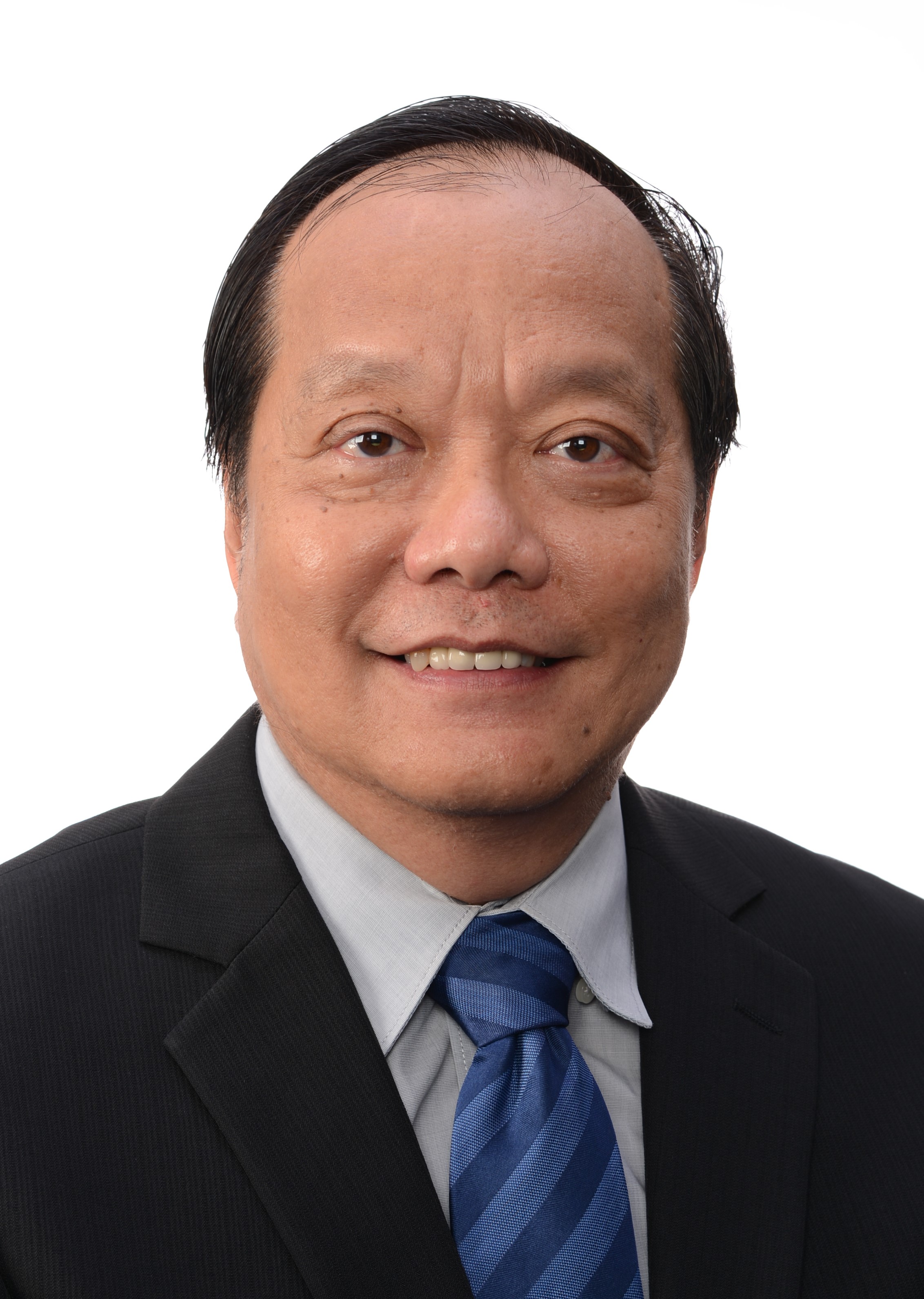
Hassan Foroosh is a Professor in the Department of Electrical Engineering and Computer Science at the University of Central Florida (UCF), directing the Computational Imaging Laboratory (CIL). He holds a Ph.D. in Computer Science from INRIA-UNSA, France (1996). Prior to UCF, he worked as a Senior Research Scientist at UC Berkeley (2000–2002) and an Assistant Research Professor at the University of Maryland, College Park (1997–2000). Research Interests: His work focuses on Computer Vision, Image Processing, Machine Learning, and Signal Processing. Notable contributions include LiDAR-based perception, adversarial attacks on detectors, medical imaging analysis, and dataset design for action recognition. His research is supported by NASA, NSF, ONR, and industry partners. Publications & Impact: Over 130 peer-reviewed papers, including influential work on super-resolution techniques, transformer networks for 3D object detection, and adversarial machine learning. His recent work explores analytical reasoning in LLMs and multimodal fusion in sports analytics. Awards: Pierro Zamperoni Award (2004), Best ICPR Paper (2004), Sun Microsystems Academic Excellence Award (2004). Labs/Teams: Director of the Computational Imaging Lab (CIL), UCF. Grants: Active funding from NASA, NSF, and industry collaborators.
Ulrich Tallarek serves as Professor of Analytical Chemistry in the Faculty of Chemistry at Philipps University of Marburg, where he has held a W3 professorship since 2011. He also serves on the Board of Directors for the Materials Science Center at the university, a position he has held since 2007. His research group focuses on the fundamental understanding of transport phenomena in porous media with applications spanning chromatography, battery technology, and microfluidic systems. The group maintains strong collaborations with institutions worldwide and secures substantial research funding for advanced computational and experimental work. Professor Tallarek's research interests center on functional porous solids, with specific focus on morphology-transport-performance relationships. His work bridges multiple scales from molecular dynamics simulations of solute behavior in nanopores to macroscopic transport in chromatographic columns and battery electrodes. Key research areas include diffusion in hierarchical porous media, electrokinetic phenomena in microfluidic systems, molecular simulation of chromatographic processes, and advanced characterization of porous materials using tomography and other techniques. His group has pioneered multiscale simulation approaches that connect molecular-level surface chemistry to macroscopic transport properties. The research output demonstrates consistent focus on understanding fundamental transport mechanisms in porous systems, with recent publications emphasizing multiscale simulation techniques, molecular dynamics studies of solvent effects in chromatography, advanced characterization of mesoporous structures, and applications to separation science and energy storage. The work shows strong integration of computational modeling with experimental validation across multiple length scales. 2003: Desty Memorial Prize for Innovation in Separation Science, The Royal Institution of Great Britain, London 2006: Young Scientist Award from DECHEMA e.V. 2011: Named Discussion Leader at the 2011 Gordon Research Conference on Physics & Chemistry of Microfluidics 2011–2012: Chairman of the German Chemical Society (GDCh), Marburg 2013: Finalist, World Technology Awards, for category Environment 2013: Named as one of the 100 most influential analytical scientists in the world (The Analytical Scientist Power List) 2017: Recipient of the Silver Jubilee Medal 2017, The Chromatographic Society, UK Professor Tallarek's research has been supported by numerous grants enabling high-performance computing resources, advanced instrumentation, and international collaborations. His group maintains strong ties with industry partners in separation science and analytical instrumentation. The Tallarek Research Group includes postdoctoral researchers, PhD students, and technical staff working across experimental and computational domains. Current projects focus on molecular simulation of chromatographic processes, advanced characterization of porous battery electrodes, and development of novel separation methodologies. The Tallarek Research Group operates state-of-the-art facilities for computational modeling, including access to high-performance computing resources at Forschungszentrum Jülich. The group also maintains experimental capabilities for chromatographic analysis, materials characterization, and microfluidic device development. Their work on physically reconstructed porous media has established new standards for connecting microstructure to transport properties in complex materials systems.
Dr. Mohamed Khalifa is a Visiting Fellow at the Centre for Health Informatics, Australian Institute of Health Innovation, Macquarie University, Sydney. He holds a PhD in Health Innovation from Macquarie University (2020) and an MSc in Health Informatics from the University of Edinburgh (2012). His expertise spans health informatics, AI-driven healthcare solutions, and strategic healthcare management. He has led multidisciplinary teams in developing evidence-based frameworks like GRASP for clinical predictive tools. Affiliations: Visiting Fellow, Macquarie University Director of Studies, College of Health Sciences (Education Centre of Australia) Former Digital Health Officer, Australian Digital Health Agency (2020–2021) His research focuses on AI applications in healthcare, clinical decision support systems, and health analytics. Over 20 years, he has published 60+ peer-reviewed papers and holds an innovation patent (2018). He has received awards including the IMIA Best Paper (2020) and ICIMTH Best Paper (2015). Dr. Khalifa’s work emphasizes improving healthcare efficiency through technology, including projects on predictive tools, emergency room performance, and diabetes management. He is a Fellow of the Australasian Institute of Digital Health and certified in healthcare information systems (CPHIMS).
Associate Professor Bruno Schivinski is affiliated with RMIT University's School of Media & Communication. He specializes in online consumer behavior, quantitative research methods, and multivariate data analysis. His work bridges digital media impact, consumer psychology, and health behavior, with a focus on gaming disorder, social media engagement, and brand equity. Education and professional background include roles at Gdansk University of Technology and consulting for institutions like the Polish Ministry of Science. He serves as Associate Editor for the Journal of Management and Business Administration–Central Europe . Research interests span digital phenotyping, behavioral addictions, and sustainable consumption. Notable contributions include studies on gaming disorder measurement, food waste reduction, and influencer marketing effectiveness. His work is published in top-tier journals like Journal of Business Research and Journal of Clinical Medicine . Recognition includes the Vice-Chancellor’s Award for Research Impact (2020), Emerald Literati Outstanding Reviewer (2022), and multiple best paper awards. He supervises research projects on digital behavior, food waste, and social media's role in health. Professional memberships include the Royal Statistical Society, Higher Education Academy, and American Marketing Association. His interdisciplinary approach addresses real-world challenges in digital health, consumer behavior, and sustainability.
Professor Karin Verspoor is the Dean of the School of Computing Technologies at RMIT University in Melbourne, Australia. She previously held roles as Director of Health Technologies and Deputy Head of the School of Computing and Information Systems at the University of Melbourne, and as Scientific Director of Health and Life Sciences at NICTA's Victoria Research Laboratory. Her research focuses on applying artificial intelligence methods to biomedical discovery and clinical decision support, particularly through natural language processing of clinical texts and biomedical literature. Affiliations: RMIT University (STEM College), Australian Alliance for Artificial Intelligence in Health (Victorian Node Lead) Industry Experience: Intelligenesis/Webmind Corp., Applied Semantics, Los Alamos National Laboratory, National ICT Australia Research Interests: Artificial Intelligence in Medicine Biomedical Natural Language Processing Health Informatics Computational Biology Cheminformatics Her work emphasizes cross-modal data integration, EHR analytics, and AI-driven clinical tools to address challenges in healthcare outcomes, musculoskeletal disorders, and infectious disease surveillance. Advising & Grants: Supervises research on AI-based decision-making frameworks, EHR data quality, and chemical knowledge extraction. Leads projects funded by initiatives like CANAIRI (Collaboration for Translational AI in Healthcare). Labs & Collaborations: Co-founder of the Australian Alliance for AI in Health, advancing national AI healthcare policy and translational research.
Professor John Zeleznikow is an Honorary Associate at La Trobe University's Law School, with a distinguished career spanning 49 years across multiple institutions including the University of Edinburgh and Victoria Business School. His research focuses on AI applications in legal decision-making, dispute resolution, and autonomous vehicle technology. He has secured over $8M in research grants and supervised 20 PhD graduates. Key projects include the Split-Up system (used in high-profile divorce cases like Prince Charles and Lady Di) and Family-Winner software, which won an ABC TV innovation award. His work bridges law, technology, and ethics, with publications in leading journals like the Harvard Negotiation Law Review and Artificial Intelligence and Law . Recent research explores AI-driven online dispute resolution (ODR), autonomous vehicle regulation, and the ethical implications of technology in legal systems. He advocates for transparent, user-centric legal tech solutions to enhance access to justice and improve decision-making processes.
Roxanne Wadia, MD, holds dual roles as a Clinical Fellow in Pathology and Clinical Assistant Professor of Medicine (Medical Oncology) at Yale School of Medicine. Her expertise spans anatomic and cytopathology, with a focus on cancer diagnosis and treatment guidance. She completed her medical degree at Vanderbilt University School of Medicine (2008) and is board-certified in Anatomic Pathology (2023) and Cytopathology (2024). Dr. Wadia’s research integrates oncology, HIV/AIDS, and medical informatics, leveraging large datasets such as the VA’s Million Veterans Program to improve cancer care outcomes. She actively contributes to clinical care at Yale New Haven Hospital, the VA Connecticut Healthcare System, and the Hospital of Saint Raphael’s, emphasizing holistic patient care and interdisciplinary collaboration. Her research explores prostate cancer prognosis, HIV-related malignancies, and healthcare analytics. Key projects include developing predictive tools for nonmetastatic prostate cancer mortality and studying lung cancer surgery outcomes in HIV-positive patients. Dr. Wadia also mentors trainees in oncology and hematology, emphasizing independent clinical decision-making. She participates in the VA’s clinical training programs for medical students, residents, and fellows, fostering a balance between clinical practice and research innovation.
Professor Chin Hoong Chor is a Professor in the Department of Civil Engineering at the National University of Singapore (NUS), affiliated with the Faculty of Engineering. He specializes in transportation systems modeling, safety assessment, and congestion management. As a registered professional engineer and road safety auditor, he has contributed to numerous projects with Singapore’s land authorities and private companies. He holds leadership roles including Vice Chairman of the Chartered Institute of Logistics and Transport and Editorial Board membership for the International Journal of Transport Management. Qualifications include a BEng and MEng from NUS and a PhD in Transportation Engineering from the University of Southampton. His research interests span vehicle detection using image processing, traffic conflict analysis, and public transport optimization. Notable awards include the NUS Faculty Innovative Teaching (Gold) Award (2001/2002) and the UK Institution of Civil Engineers Webb Prize (2003). Education: BEng in Civil Engineering, National University of Singapore MEng in Civil Engineering, National University of Singapore PhD in Transportation Engineering, University of Southampton His research focuses on quantitative safety analysis, traffic flow modeling, and smart city initiatives. Recent work explores maritime collision risk modeling and sentiment analysis for transportation planning. He actively contributes to government committees and has authored over 40 peer-reviewed papers on traffic management and safety. Awards: Faculty Innovative Teaching (Gold) Award, 2001/2002 UK Institution of Civil Engineers Webb Prize 2003 Prof Chin has undertaken traffic impact studies and road safety reviews in Singapore, collaborating with public and private sectors. His work bridges academic research and practical policy implementation, emphasizing sustainable urban mobility solutions.
Diana Tamir is a Professor at Princeton University, where she directs the Princeton Social Neuroscience Lab. She earned her Ph.D. from Harvard University and specializes in the intersection of internal mental processes and external social cognition. Her research investigates: How minds predict others' emotions and mental states The cognitive consequences of self-disclosure and social media use Neural mechanisms of social prediction using fMRI and machine learning Effects of fiction reading on theory of mind Dynamics of spontaneous thought and social bonding Her recent publications (2024-2025) demonstrate strong focus on emotion prediction mechanisms, social interaction dynamics, neural signatures of psychological states, and developmental aspects of social cognition. Methodologically, she employs neuroimaging hyperscanning, ecological momentary assessment, and computational modeling across diverse populations. She currently advises graduate students including Faustine Corbani and Yeaju Diana Kim. Her lab focuses on empirical approaches to understanding how individuals navigate between internal experiences and external social environments.
Pablo Durango-Cohen is an Associate Professor of Civil and Environmental Engineering at Northwestern University, located in Evanston, IL. He holds a Ph.D. in Industrial Engineering and Operations Research from UC Berkeley, following an M.S. from the same program and a B.S. in Industrial and Systems Engineering from the University of Southern California. His research focuses on developing and analyzing optimization and econometric models for transportation infrastructure systems, integrating environmental design, life-cycle assessment, and policy analysis to address decarbonization challenges in freight systems. He also explores dynamic segmentation models for nonprofit fundraising strategies. Education: Ph.D. Industrial Engineering and Operations Research, University of California, Berkeley (2006) M.S. Industrial Engineering and Operations Research, University of California, Berkeley B.S. Industrial and Systems Engineering, University of Southern California Research Interests: Prof. Durango-Cohen’s work bridges transportation engineering, environmental science, and operations research. He emphasizes infrastructure management through data-driven frameworks, including statistical process control for condition monitoring and predictive maintenance. His recent projects address decarbonization of freight rail systems, electric vehicle impacts on road infrastructure, and optimal auction designs for road concessions. He also applies mathematical models to analyze donor behavior and fundraising efficiency in universities, aiming to improve nonprofit resource allocation strategies. Awards: NSF Faculty Early CAREER Development Award (2006) Young Author Prize, 2007 World Congress on Transport Research Matthew G. Karlaftis Best Paper Awards (2020–2025) Advising & Grants: He advises current PhD candidates including Jing Yu, Adrian Hernandez, and Callahan Skiles, while mentoring former students across sustainability, infrastructure, and fundraising analytics. His research is supported by agencies like the National Science Foundation, Department of Energy (through ARPA-E), and Department of Transportation. He co-leads the LOCOMOTIVES project with ANL researchers, focusing on decarbonizing rail networks, and founded the Virtual Inter-university Symposium on Infrastructure Management (VISIM) to foster academic collaboration. Labs & Teams: As Principal Investigator (PI) on major initiatives like LOCOMOTIVES and VISIM, he collaborates with multidisciplinary teams at Northwestern and Argonne National Laboratory. His group develops tools such as the Locomotives interactive dashboard and a computational framework for input-output lifecycle assessments, accessible via repositories like CivEnv304 .
Dae-Jin Lee is an Assistant Professor at IE University’s School of Science and Technology, specializing in statistical modeling and data science. Previously, he served as a Research Line Leader at the Basque Centre for Applied Mathematics (BCAM) and coordinated the Knowledge Transfer Unit in Data Science/AI. His academic background includes a Ph.D. in Mathematical Engineering (2010) from Universidad Carlos III de Madrid and postdoctoral research at CSIRO (Australia). His research focuses on statistical methods for complex data, including penalized splines, tensor product smooths, and applications in biomedicine, epidemiology, environmental science, and sports analytics. He has led multidisciplinary projects funded by public and industry grants, collaborating globally with experts across fields like engineering, medicine, and biology. Key research themes include predictive modeling for health outcomes (e.g., SARS-CoV-2 pneumonia severity), sports injury prevention, and AI in healthcare. His work integrates machine learning with traditional statistical techniques, addressing real-world challenges like pedestrian dynamics simulations and automated medical diagnostics. He is actively involved in scientific organizations, including the Spanish Biostatistics Society and the Statistical Modelling Society. His recent publications highlight innovations in growth curve modeling, AI ethics, and spatiotemporal data analysis, reflecting his commitment to advancing both theoretical and applied statistics.
Barbara Linke is a Professor in the Department of Mechanical and Aerospace Engineering at the University of California Davis, affiliated with the College of Engineering. She leads the Laboratory for Manufacturing and Sustainable Technologies Research (MASTeR) and serves as Principal Investigator at the Advanced Highway Maintenance and Construction Technology (AHMCT) Research Center. Her research focuses on sustainable manufacturing processes, abrasive machining, and smart manufacturing technologies, with applications in aerospace, biomedical, and automotive sectors. Dr. Linke holds a Dr.-Ing. habil. and has been recognized with the UC Davis Chancellor’s Fellow (2021-2022) and the Outstanding Junior Faculty Award from the College of Engineering. She advises the UC Davis Student Chapter of the Society of Manufacturing Engineers (SME) and the Women Machinists’ Club. She collaborates with the Fire Research Group at UC Berkeley and the Wildfires Research Working Group at UC Davis, integrating sustainability into wildfire-related infrastructure projects. Her research interests include energy-efficient manufacturing systems, lifecycle assessments, and the integration of Industry 4.0 technologies. Notable contributions include developing frameworks for sustainable additive and subtractive manufacturing, analyzing residual stresses in aluminum alloys, and advancing mobile 3D printing for disaster response. Her work bridges engineering education with cutting-edge research, emphasizing hands-on projects like the Shigley Hauler design competition. Dr. Linke’s labs and affiliations include the Materials Decarbonization and Sustainability Center and the UC Davis AI Center in Engineering, reflecting her commitment to interdisciplinary innovation. She has authored over 50 peer-reviewed articles, with recent focus on smart manufacturing systems, renewable energy integration in machining, and sustainable biomedical implant production.
Professor Anne Verhoef is a leading academic at the University of Reading, specializing in environmental and hydrological sciences. Her research focuses on soil-plant systems, climate change impacts, groundwater dynamics, and remote sensing applications in ecological modeling. She collaborates internationally on projects like GEWEX and AMMA, advancing understanding of global hydrological cycles and land-atmosphere interactions. Key Research Areas: Hydrological modeling and prediction Climate change adaptation in semi-arid regions Soil health and pedotransfer functions Evapotranspiration dynamics in tropical ecosystems Remote sensing for biodiversity and water resource assessments Her work integrates field observations, satellite data, and numerical models to address challenges in water resource management, flood mitigation, and sustainable agriculture. She has published widely in top journals such as Reviews of Geophysics , Water Resources Research , and Nature Reviews Earth & Environment . Professor Verhoef contributes to interdisciplinary initiatives, including climate adaptation strategies in transboundary regions and improving land surface models for global Earth system simulations. Her research emphasizes bridging gaps between observational data and predictive frameworks to inform policy and environmental decision-making.
Dr. Edoardo Bertone is a Senior Lecturer at Griffith University's School of Engineering and Built Environment - Architecture and Design. He holds a PhD in Water Resources Engineering from Griffith University and Bachelor/Master degrees in Civil Engineering from the Polytechnic University of Turin. His research focuses on data-driven modeling, Bayesian Networks, and System Dynamics applied to water resources management, climate change adaptation, and the water-energy nexus. He is affiliated with Griffith's Cities Research Institute and Australian Rivers Institute, collaborating on projects with water utilities, governments, and private entities. Dr. Bertone has received awards such as the 2024 PVC Science Excellence in Teaching and the JSPS Fellowship (2022). He supervises doctoral and master's students in areas like water quality management and climate change impacts. Education: PhD in Engineering (Griffith University, 2015); MEng and BEng in Civil Engineering (Polytechnic University of Turin, 2009-2011). Research Interests: Water quality modeling, drinking water optimization, data-driven prediction, climate change adaptation, and sustainable development goals. He leads over 25 funded research projects, including initiatives on reservoir water quality management in Thailand, real-time nutrient monitoring, and cyanobacteria bloom modeling. Dr. Bertone’s work integrates advanced sensors, machine learning, and Bayesian networks to address environmental challenges. Awards: Listing includes PVC Excellence Awards (2024, 2017), JSPS Fellowship, and recognition as a Rising Star in Queensland Science (2015). Grants & Supervision: Principal supervisor for 10+ doctoral candidates and collaborator on projects funded by Seqwater, CSIRO, and the Ian Potter Foundation. Key grants include $745k for biofertilizer combatting eutrophication and $269k for coagulation optimization models. Dr. Bertone’s contributions extend to urban sustainability, co-editing the book *SeaCities: Urban Tactics for Sea-Level Rise* and developing frameworks for integrating SDGs into architectural education.
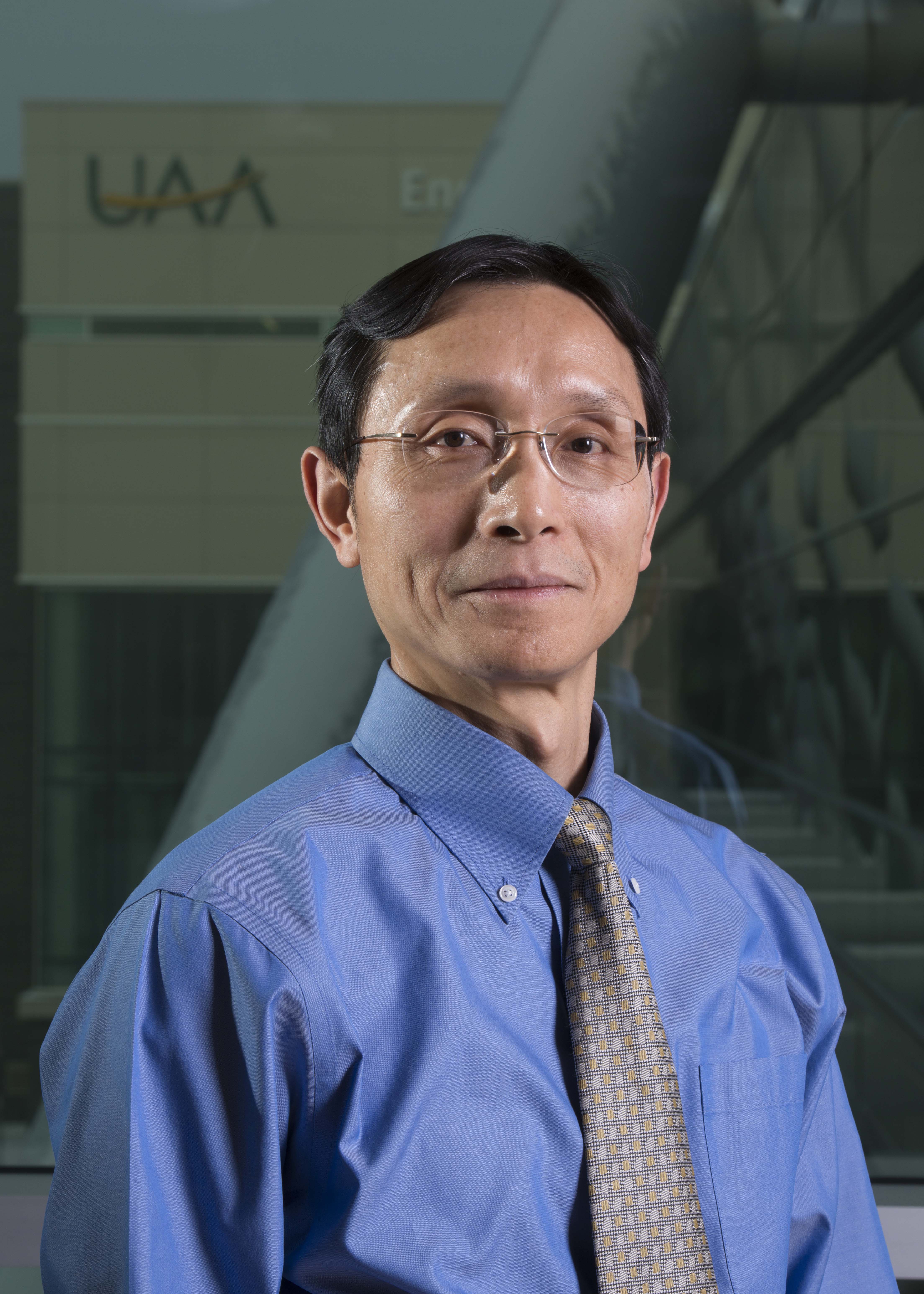
Joey Yang is a Professor of Civil Engineering at the University of Alaska Anchorage (UAA), serving as Associate Director of the Alaska University Transportation Center and Director of the Geotechnical and Frozen Ground Engineering Research Laboratory. His expertise spans geotechnical and earthquake engineering with a focus on cold regions, including permafrost dynamics, infrastructure resilience, and de-icing technologies. He holds a Ph.D. from the University of California, Davis, and a B.S. from Chengdu University of Science and Technology. Education: Ph.D., Civil and Environmental Engineering, University of California, Davis B.S., Hydraulic Engineering, Chengdu University of Science and Technology Research Interests: Dr. Yang's work addresses geotechnical challenges in cold regions, including permafrost thaw, seismic site response, frozen soil-pile interaction, and fungal mycelium-based biofoams for insulation. His research is funded by NSF EPSCoR, USGS, USDOT, and others. Professional Contributions: Chief Editor, ASCE Journal of Cold Regions Engineering Editorial Board Member, Cold Regions Science and Technology Keynote/Theme Session Speaker at International Permafrost and Earthquake Conferences Awards: Arctic Kicker Prize (2015) Outstanding Reviewer Awards (2010, 2014) ASTM Technical Editors Award (2014) Advising & Grants: Dr. Yang has advised over 20 visiting scholars and secured multi-million-dollar grants for cold regions infrastructure research. His lab focuses on advancing technologies for permafrost engineering, seismic resilience, and sustainable construction. Labs/Teams: Leads the Geotechnical and Frozen Ground Engineering Research Laboratory, collaborating with global partners on cold regions challenges.