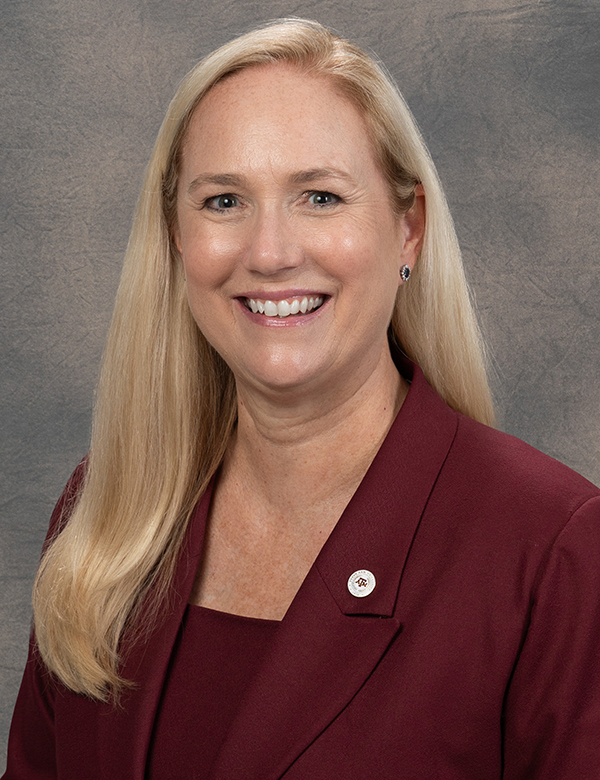
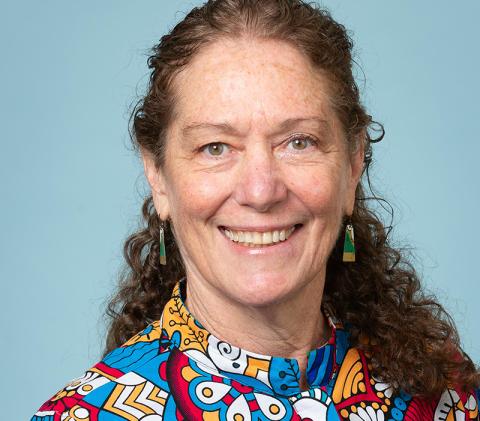
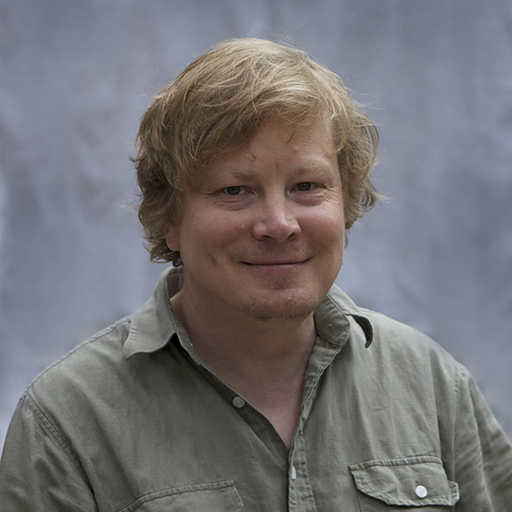
Nicole Brown is an Associate Professor in Education and Academic Head of Learning and Teaching at UCL's IOE - Culture, Communication & Media. Her work focuses on accessibility, creative research methods, and challenges faced by disabled academics. She holds a PhD and multiple certifications, including Senior Fellowship of the Higher Education Academy and RSA Fellowship. University: University College London (UCL) School: IOE - Faculty of Education and Society Department: Culture, Communication and Media Research Interests: Nicole explores embodied inquiry, creative data analysis, and ableism in academia. Her books include Photovoice Reimagined and Ableism in Academia . She advocates for inclusive pedagogies and participatory research methods, often using art-based approaches to highlight marginalized voices. Key Achievements: Nicole has developed frameworks like Systematic Visuo-Textual Analysis and led projects on doctoral education disclosure challenges. She is a sought-after mentor for HEA fellowships and contributes to academic ethics discussions.
Do-Hong Kim is a Professor in the Department of Educational Evaluation and Research at Wayne State University. His expertise spans research design, program evaluation, psychometric methods, and quantitative analysis in education. He focuses on assessment for culturally and linguistically diverse students, educational measurement validity, and bilingual research. Education: Ph.D. in Educational Psychology and Research from the College of Education, University of South Carolina. Research Interests: Kim specializes in educational and psychological assessment, validity issues in measurement, and program evaluation. His work often addresses equity in assessment, psychometric properties of scales (e.g., self-efficacy in language learning, mathematical problem-solving), and evaluation systems for early childhood education. Grant Leadership: He has led multiple funded projects, including a subaward from the U.S. Department of Education (2022-2027) for gifted education equity in Detroit. Other grants focus on data analytics, pre-K literacy, and formative assessment implementation. Scientific Recognition: Kim has received the NCARE Distinguished Paper Award (2013) and the College of Education Award for Excellence in Research at UNC Charlotte (2008).
Stephanie Jordan is an Assistant Professor in the Department of Information and Media at Michigan State University, holding a courtesy appointment. Their work bridges science and technology studies, environmental justice, and human-computer interaction, with a focus on ethical and equitable scientific infrastructures in ocean and climate sciences. Stephanie Jordan's research explores the intersection of technology, labor, and social justice, particularly in large-scale scientific data systems. They are deeply committed to intersectionality, anti-harassment, and inclusive design practices. Their methodological approach emphasizes co-design, community engagement, and participatory ethnography in collaboration with scientists and public stakeholders. Jordan’s academic background includes a BA from Rutgers University and a PhD from Cornell University. Their dissertation, The Instrumented Ocean: How Sensors, Satellites and Seafloor-Walking Robots Changed What It Means to Study the Sea , examines the sociotechnical transformations in ocean science. They have contributed to foundational projects such as U.S. ocean observatories, nuclear test ban treaty research, astrobiology initiatives, and polar remote sensing studies. Stephanie Jordan is a founding board member of the Labor Tech Research Network and has provided professional service to the National Science Foundation, NASA, the Society for the Social Studies of Science (4S), and top-tier HCI conferences (CHI, DIS, CSCW). At MSU, they co-founded the Queerpocene Ecofeminist Research Group and have led multiple Diversity, Equity, and Inclusion (DEI) initiatives. They have advised numerous graduate students across PhD and Master’s programs in Information and Media, Health & Risk Communication, and Marine Resource Management. Courses taught include Qualitative Methods, Digital Footprints, Usability, and special topics on Cyborgs and AI, reflecting their interdisciplinary pedagogical approach.
Abdoulaye Sounaye is a Research Professor at the Leibniz Center for Modern Oriental Studies (ZMO) in Berlin, Germany, and an Associate Professor at Abdou Moumouni University in Niamey, Niger. His career spans over two decades, with roles including research fellowships, editorial contributions, and academic leadership in Islamic studies, African societies, and religiosity. Habilitation in African Studies (2021, University of Vienna) PhD in Religious Studies/Anthropology (2012, Northwestern University) MA in Religious Studies (2005, Arizona State University) Research Interests Dr. Sounaye's work critically engages with Islamic reform in West Africa, focusing on Salafism, state-society relations, and the role of media in reshaping religious practices. His scholarship interrogates how Islamic authority is constructed through audiovisual tools like CDs/DVDs, and how youth movements on university campuses negotiate religious identities within political frameworks. He has extensively analyzed transnational Islamic networks between Niger and Nigeria, particularly the influence of Hausa-language preachers (wa’azi) and their role in spreading Salafi ideologies. Recent Publications His 2023 edited volume Religiosity on University Campuses in Africa synthesizes interdisciplinary perspectives on campus religious dynamics. Earlier works like Salafi Aesthetics (2017) and Islam et Modernité (2016) explore the interplay between Islamic ethics, modernity, and reislamization processes in Niger. His articles in Journal of Religion in Africa and edited collections address topics such as ritual spaces in Berlin's West African diaspora and gendered dimensions of Islamic authority. Scientific Awards Dr. Sounaye has received prestigious fellowships including the Thyssen Foundation (2023), Volkswagen Foundation's Knowledge for Tomorrow (2018-2019), and Fulbright (2003-2005). He was a Presidential Fellow at Northwestern University and a Gwendolen M. Carter fellow, underscoring his expertise in Islamic studies and African societies. Advising and Grants He has led the ZMO research unit 'Contested Religion' since 2020, examining religiosity, morality, and intellectual culture. His projects often bridge academic research with policy analysis, as seen in his work on state-led Islamic deradicalization in the Sahel. Collaborations include Lasdel, the Nordic African Institute, and the West African Research Association. Labs and Collaborations Dr. Sounaye collaborates with institutions like Abdou Moumouni University, Northwestern University, and Arizona State University. His fieldwork in Niamey and cross-border studies in West Africa reflect his commitment to ethnographic approaches in studying Islamic media, youth activism, and transnational religious networks.
Daria Motta is an Associate Professor of Italian Linguistics at the Department of Humanities, University of Catania, with a strong affiliation to the Special Teaching Structure of Foreign Languages and Literatures in Ragusa. She holds a formal academic position in the scientific disciplinary sector L-FIL-LET/12 and is actively engaged in research, teaching, and academic service. Her work bridges philology, sociolinguistics, and language pedagogy, with a particular emphasis on Italian literary and linguistic history. Her research interests span Italian linguistics, historical and sociolinguistic analysis of spoken and written language, pragmatics in literature and media, dubbing studies, Italian as a second language (L2), and corpus-based philological research. She has extensively studied 19th- and 20th-century authors like Giovanni Verga and Vitaliano Brancati, focusing on the representation of spoken language in literary texts. Her work also explores language teaching methodologies, multilingualism in migrant literature, and the role of media in shaping linguistic norms. The trends in her recent publications reveal a consistent focus on linguistic variation, historical pragmatics, and the intersection of language with literature and media. She frequently analyzes how language functions in narrative, theatrical, and audiovisual contexts, particularly through the lens of realism and sociocultural change. Her scholarly output combines philological rigor with sociolinguistic insight, contributing to both literary studies and applied linguistics. Member of the editorial board of «Annali della Fondazione Verga» (since 2012) Member of the editorial board of «Bollettino - Centro di Studi Filologici e Linguistici Siciliani» (since 2012) Member of ASLI (Associazione per la Storia della Lingua Italiana) and ASLI-Scuola Anonymous reviewer for journals such as «Italiano linguaDue» and «L’italiano a scuola» Referee for doctoral projects at the University of Rome “Tor Vergata” Daria Motta has supervised numerous master’s theses and mentored students through formal tutoring programs. She has played key institutional roles, including serving as a delegate for continuing education and school relations, coordinator for LIS interpreting services, and contact person for placement activities. She has also been involved in research projects funded by the University of Catania and national PRIN grants, focusing on language teaching, historical corpora, and textual analysis. Her leadership in academic events and research groups underscores her active engagement in the scholarly community. She has contributed to various research groups, including the PIACERI and Prometeo projects at the University of Catania, and has led her own research initiatives on literary dialogue and 17th-century language invention. She has also participated in major national projects like the Corpus of Reference for a New Vocabulary of Modern and Contemporary Italian under the Accademia della Crusca.
Dr.-Ing. Martin Sondermann is a leading academic researcher in spatial planning and urban development, currently serving as Head of the Scientific Department "Society and Culture" at the Academy for Spatial Development (ARL) within the Leibniz Association . Previously, he was Head of Department II "Economy, Technology, Infrastructure" (2016-2017) and a Research Associate at the Institute for Environmental Planning, Leibniz University Hannover (2010-2016). His research focuses on planning cultures , democratic spatial development , cooperative urban strategies , and spatial justice . He has contributed extensively to debates on urban community gardens, integrated spatial approaches, and small town research, with recent works analyzing railway reactivation and retrofuturistic planning paradigms. Key trends in his publications include interdisciplinary studies on urban gardening (2016-2019), small town dynamics (2021), and sustainable planning governance (2018). He co-edited volumes on social and spatial justice (2019) and has published in journals like Sustainability and Raumforschung und Raumordnung . Internationally, Sondermann collaborates through the UK-German Frontiers of Humanities Symposium (2023) and COST Actions on homelessness (2016-2020) and urban allotment gardens (2012-2016). He has held guest lectures at institutions in Poland, Slovenia, and the UK.
Dr. Timo Leiter is a Distinguished Policy Fellow at the London School of Economics (LSE), affiliated with the Grantham Research Institute. He is a globally recognized expert on climate change adaptation working at the intersection of research, policy, and implementation. Winner of the ESRC Celebrating Impact Prize 2024 in the early career category, his work has significantly influenced UN climate negotiations and national adaptation planning processes worldwide. Leiter's research focuses on climate change adaptation, global climate policy negotiations, monitoring and evaluation systems, global environmental governance, and international development. His expertise in adaptation monitoring systems has directly shaped international climate policy, including the development of the first set of global adaptation targets adopted at COP28 that all countries agreed to implement by 2030. His extensive publication record demonstrates consistent leadership in analyzing global adaptation progress. Leiter has been instrumental in developing UNEP's Adaptation Gap Report assessment framework and has led its chapter on global progress on implementation since 2020. His research has revealed critical gaps in adaptation implementation, notably finding that over 60% of countries with National Adaptation Plans do not track their implementation. ESRC Celebrating Impact Prize 2024 (early career category) Fellow of the Royal Society of Arts (FRSA) Leiter advises multiple governments on developing effective monitoring systems for national adaptation plans, including the UK's Department for Environment, Food and Rural Affairs (Defra). He co-leads the UNFCCC expert group developing indicators for global adaptation targets and has contributed to the IPCC Sixth Assessment Report. His methodological contributions include practical guides for national adaptation M&E systems and the Adaptation M&E Navigator tool.
Leann Horsley is Dean and Professor at the Texas A&M University College of Nursing , joining the institution in July 2023 as its third dean. She previously served as Dean at East Tennessee State University College of Nursing, leading its large nursing program and managing 200 employees, 1,200 students, and seven nurse-led clinics. Her expertise spans clinical simulation, interprofessional education, and nursing leadership. PhD in Nursing (University of Kansas, 2012) MBA (University of South Dakota, 2025) MSN in Nursing Education (University of Oklahoma, 2005) BSN (University of Oklahoma, 1990) Her research focuses on clinical simulation and interprofessional education , aiming to enhance nursing education and collaborative practice. She is a certified Healthcare Simulation Educator (CHSE) and Certified Nurse Educator (CNE), with leadership roles in organizations like the International Nursing Association for Clinical Simulation and Learning (INACSL) and Society for Simulation in Healthcare. Scientific Awards Sigma Theta Tau International Nurse Faculty Leadership Academy, Scholar INACSL Excellence Award: Service Goodale Nursing Faculty Scholar Fellow American Association of Nursing Elevating Leaders in Academic Nursing President's Award, International Nursing Association for Clinical Simulation and Learning Her work has been supported by multi-million-dollar grants, and she is actively involved in advancing nursing education through simulation-based methodologies and interprofessional collaboration frameworks.
Henning Piezunka is an Associate Professor of Management at The Wharton School, University of Pennsylvania. He holds a PhD from Stanford University, a Master of Science from the London School of Economics, and a Diploma Kaufmann from the University of Mannheim. Before academia, he co-founded and led a web design company for 18 years, growing it to 30+ employees serving 80+ countries before its sale in 2016. His research examines: Competition and collaboration dynamics in entrepreneurial firms, family businesses, and sports contexts Crowdsourcing innovation and platform strategies Organizational decision-making structures and learning processes CEO succession planning and its organizational impacts His recent publications (2019-2025) demonstrate methodological diversity, combining archival analysis of Formula One/soccer data, crowdsourcing platform experiments, and organizational case studies. Key thematic focuses include: how competition manifests in collaborative settings, AI's role in strategic learning, and how organizational structures shape individual behavior. Awards & Honors: Wharton Teaching Excellence Award (2023) Emerging Scholar Award, TIM Division, Academy of Management (2022) Poets & Quants Best 40 Under 40 Professor (2019) Multiple teaching commendations for MBA/EMBA courses (2014-2023) He teaches core entrepreneurship courses including MGMT2300 (Entrepreneurship) and MGMT2310 (Entrepreneurship Launchpad), focusing on venture creation, resource acquisition, and scaling strategies. He also leads doctoral seminars on research design and maintains an active advisory practice through the 'Between the Lines' webinar series featuring business school authors.
Professor Gesa Hartwigsen is a leading cognitive neuroscientist holding dual appointments as Professor for Cognitive and Biological Psychology at Leipzig University and Lise Meitner Research Group Leader at the Max Planck Institute for Human Cognitive and Brain Sciences (MPI CBS). She leads the Research Group Cognition and Plasticity, focusing on neural networks for higher cognitive functions, adaptive plasticity in cognition, and language network reorganization after stroke. Her educational background includes: Studies of Psychology (Dipl.-Psych., 2001-2006) at Kiel University PhD in Neurology (Dr. phil., 2007-2010) at Kiel University Habilitation in Psychology (2018) at University of Potsdam Hartwigsen's research spans cognitive neuroscience with particular emphasis on language processing, neural plasticity, and brain stimulation techniques. Her work investigates how brain networks support semantic cognition, how they adapt following neurological damage, and how they change across the lifespan. She employs advanced methodologies including transcranial magnetic stimulation (TMS), functional MRI, and concurrent TMS-fMRI to establish causal relationships in neural processing. Analysis of her recent publications reveals a strong focus on language networks, executive control mechanisms, and neural plasticity. Her work increasingly integrates advanced computational approaches with neurostimulation to understand semantic processing, speech comprehension in challenging environments, and recovery from language disorders. A significant trend is her development of methodological frameworks for concurrent TMS-fMRI, establishing new standards in the field. Her notable scientific recognition includes: ERC Consolidator Grant (2023-2027) for "The Flexible Brain: (Re-)shaping Adaptation in Semantic Cognition" NVIDIA GPU grant (Titan Xp Donation) Hartwigsen has secured substantial research funding, including multiple DFG projects as Principal Investigator. Her current DFG Research Unit (2023-2026) focuses on "Modulation of brain networks for memory and learning by transcranial electrical stimulation," where she serves as PI. She has successfully led multiple interdisciplinary projects examining language networks, neural plasticity, and brain stimulation effects. At the MPI CBS, she leads the Cognition and Plasticity research group, which investigates how brain networks support cognitive functions and adapt to challenges. Her team employs a multimodal approach combining neurostimulation, neuroimaging, and behavioral methods to understand the causal architecture of cognitive networks, particularly in language processing and semantic cognition.
Gertrud Olauzon serves as a Lecturer at Mid Sweden University within the Department of Communication, Quality Management and Information Systems, focusing on quality management applications in organizational and educational contexts. Her work bridges theoretical frameworks with practical implementations in public-sector institutions. Research interests include: Quality Management Organizational Learning Higher Education Employer Branding Quality Technology She investigates how quality principles enhance talent management systems and academic course development through systematic organizational learning approaches. Recent publications (2022-2024) reveal a distinct trend toward applying quality management methodologies to human resource challenges and educational innovation. Her work consistently connects quality assurance frameworks with competence retention strategies and curriculum design, demonstrating cross-disciplinary relevance in management science and educational development. Scientific awards: No awards documented in source materials. Advising and grants: Source text contains no information regarding student supervision, research funding, or grant acquisitions. Labs and teams: No details provided about research laboratories, collaborative teams, or project groups led by the academic.
Professor Akkelies van Nes is a leading Space Syntax expert at the Department of Civil Engineering and Environmental Sciences, Faculty of Engineering and Business, Western Norway University of Applied Sciences (HVL). She has chaired multiple International Space Syntax Symposia, including the 5th (2005) and 13th (2022) editions, and organized the first international online Space Syntax PhD Congress (2021). Key Affiliation: Western Norway University of Applied Sciences, Bergen, Norway Research Leadership: Chair of Space Syntax symposia Consultancy: Bergen Municipality's densification strategies Her research focuses on spatial analysis tools for understanding the relationship between urban form and socio-economic/energy dynamics. She applies Space Syntax across disciplines like Urban Geography Criminology Real Estate Development Strategic Planning and has led EU-funded projects including RUFUS (2008-2012), NODES (2012-2016), and SPACERGY (2016-2019). The article trends demonstrate her expertise in spatial analysis of urban environments, with recurring themes like Walkability and cycling infrastructure Urban crime patterns Historic urban morphology Transport energy efficiency Public space accessibility Densification strategies Her work spans theoretical development (e.g., modal logics in urban theory) to practical applications in cities like Bergen, Delft, Rome, and Istanbul. Current teaching activities include New textbook: Space Syntax in Urban Studies (Springer, 2020) Course leadership: Urban Transformation (BYG130), Theory and Methods of Science (MOA256), Urban Planning (MOA272), and MSc Thesis (MOA300) She has contributed to urban regeneration projects through spatial analysis tools and served as a reviewer for academic journals. Key research groups include Spatial Planning and Urban Studies Space Syntax in Norway Her consultancy work focuses on applying Space Syntax to Bergen's urban densification challenges, as documented in open-access publications.
Patricia Kissinger is a Professor and Associate Dean for Faculty Affairs and Development at the Tulane University School of Public Health and Tropical Medicine. With over three decades of expertise in infectious disease epidemiology, she focuses on HIV, sexually transmitted infections (STIs), women's reproductive health, and substance use across global contexts including Africa, Haiti, and the U.S. Deep South. BSN, Marquette University MPH, Tulane University PhD in Epidemiology, Tulane University Her research examines STI/HIV transmission dynamics, partner notification, expedited partner therapy, sexual networks, substance abuse, and the intersection of reproductive health with pandemic responses (e.g., COVID-19 ). She has led NIH-, CDC-, and externally funded grants, published extensively, and contributed to STI treatment guidelines. Recent articles highlight her work on HIV PrEP eligibility, STI diagnostics, sexual health education in Louisiana, and pandemic-related behavioral shifts. Her awards include the American STD Association Career Achievement Award and NIH College of Reviewers membership, reflecting her influence in epidemiology and public health policy. 2021 Student/Trainee Research Mentoring Award 2020 Excellence in Research - Tulane Synergy Event 2019 American STD Association Career Achievement Award 2018 CDC STD Prevention Conference Honorable Mention Dr. Kissinger serves as Associate Editor for Journal Sex Trans Dis , consults for CDC policy, and chairs the National Academies' Committee on STI prevention. Her work bridges clinical research, public health practice, and community engagement to address health disparities.
Mónica Moreno Figueroa is a Professor of Sociology at the University of Cambridge and a Fellow in Social Sciences at Downing College, Cambridge. She is a Black-mestiza, Mexican-British woman whose research focuses on the intersectional lived experience of 'race' and racism in Mexico and Latin America, antiracism and academic-based impact, feminist theory, intersectionality, and racism. She is an expert in qualitative research methods and visual methodologies and thrives in interdisciplinary collaborations. She is currently leading the development of a new research institute on Global Race, Racism and Anti-Racism in the Department of Sociology, secured with seed funding from the W.K.K. Foundation. Her research interests center on understanding the intersectional lived experience of 'race' and racism in Mexico and Latin America, antiracism and academic-based impact, feminist theory, intersectionality, and racism. She is particularly interested in the global flows of notions of race, the workings of racism, and exploring the current 'turn to antiracism' in Latin America and the Global South. Her work examines the emotional impact of oppression for social transformation, the everyday experience of racism, and issues of institutional and structural racism within mestizo contexts. Her most recent publications reveal a strong focus on anti-racism in Latin America, internalized racism, and the politics of mestizaje. The articles demonstrate an interdisciplinary approach spanning sociology, critical race studies, feminist theory, and Latin American studies. Key themes include racial visibility, naming racism, structural inequality, and the emotional dimensions of racial oppression. Her work consistently bridges theoretical frameworks with practical anti-racist organizing. British Academy Mid-Career fellowship 2022-23 for the project: 'Internalised Oppression, Defensiveness and Resentment' Commendation for 'Innovative Teaching' in the University of Cambridge Student Union's Student-Led Teaching Awards (May 2018) Pilkington Teaching Prize in recognition of excellence of teaching at the University of Cambridge (June 2017) Commendation for 'Supporting Students' in the University of Cambridge Student Union Student-Led Teaching Awards (May 2016) Cambridge University Student Union's Women's Campaign 'Academic of the Year' Award 2015-16 (June 2016) As an academic advisor, Professor Moreno Figueroa supervises doctoral students interested in the lived experience of 'race' and racism, racism and antiracism in Latin America, intersectionality, feminist theory, and the interconnections between beauty, emotions & race. She has secured significant funding for her research projects, including a £1m ESRC grant for the 'Latin American Antiracism in a Post-Racial Age' project. She co-leads the Decolonise Sociology Working Group and runs the End Everyday Racism project, a web-based platform to report and monitor racism in higher education. Professor Moreno Figueroa has been deeply involved in institutional anti-racism work, serving as the University of Cambridge Race Equality Co-Champion from 2017-2021 and as a member of the University of Cambridge Legacies of Enslavement Advisory Board from 2019-2022. Since 2010, she has co-led COPERA (Collective for the Elimination of Racism in Mexico), dedicated to making racism public.
Harri Laakso is an Associate Professor of Photography Research and Head of the Department of Art and Media at Aalto University. An artist-researcher and curator, his work explores photographic images and theory, artistic research, and the relations between images, words, and performative actions within contemporary visual culture. His educational background includes: BFA in Film, Photography and Visual Arts from Ithaca College, New York (1991) MA in Photography from University of Art and Design Helsinki (1996) Graduate Certificate in Art History, Theory and Criticism from the School of the Art Institute of Chicago (1999) Doctoral degree from the University of Art and Design Helsinki (2003) Laakso's research centers on the theoretical and practical dimensions of photography, examining how images interact with language and performance. He investigates artistic research methodologies and the role of photography in contemporary art, with a focus on meaning construction and performative aspects of image-making. His recent publications (2021-2025) focus on artistic research, photographic theory, and narrative structures, exploring themes such as parafiction, divination, and mythological metaphors. This body of work bridges academic discourse with artistic practice, emphasizing temporal and relational aspects of photography. His notable scientific awards include: Aalto University Annual Excellence Award in Teaching (2017) for contributions to the University-Wide Art Studies program, which fostered transdisciplinary education across Aalto's schools. Laakso has supervised 14 completed doctoral students in photography, contemporary art, and visual culture. He has led significant research projects including "Figures of Touch" (2009-2012) and "Floating Peripheries" (2017-2021), and curated major exhibitions such as the Backlight Photography Triennials and the Finnish Pavilion at the 2013 Venice Biennale. His leadership roles encompass: Chair of the Editorial Board of RUUKKU Journal of Artistic Research (since 2014) Member and Chair of the Academic Board of The Artistic Research Doctoral School (AREA) Co-chair of the Art of Research Conference 2023 Organizing chair for the Helsinki Photomedia Conference 2024 Through his roles in the Department of Art and Media and AREA, Laakso fosters interdisciplinary collaboration. His work with RUUKKU and conference organization creates dynamic platforms for artistic research, connecting artists, researchers, and curators in exploring the evolving landscape of visual culture.