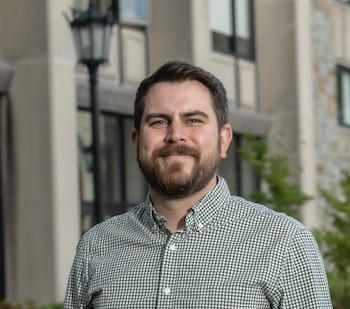
Josh Seim is an Assistant Professor of Sociology at Boston College, affiliated with the Morrissey College of Arts and Sciences. His work focuses on the sociologies of work, medicine, welfare, punishment, pedagogy, and ethnographic methods. He holds a Ph.D. from the University of California, Berkeley, and has published widely in top journals including *American Sociological Review* and *Social Problems*. Education: B.A., Gonzaga University M.S., Portland State University Ph.D., University of California, Berkeley Research Interests: His research explores how institutions like healthcare systems, welfare offices, and penal institutions interact with urban poverty. Recent projects include studies on ambulance crews’ labor processes, welfare bureaucracy, and post-prison labor. His writing also emphasizes pedagogical innovation in sociology teaching and ethnographic methodological rigor. Key themes include the governance of suffering, medical labor, and carceral systems. Publications & Books: Bandage, Sort, and Hustle: Ambulance Crews on the Front Lines of Urban Suffering (UC Press, 2020) The Welfare Assembly Line: Public Servants in the Suffering City (forthcoming UC Press, 2026) Teaching: Sociology 7715: Classical Sociological Theory (graduate) Sociology 7716: Contemporary Sociological Theory (graduate)
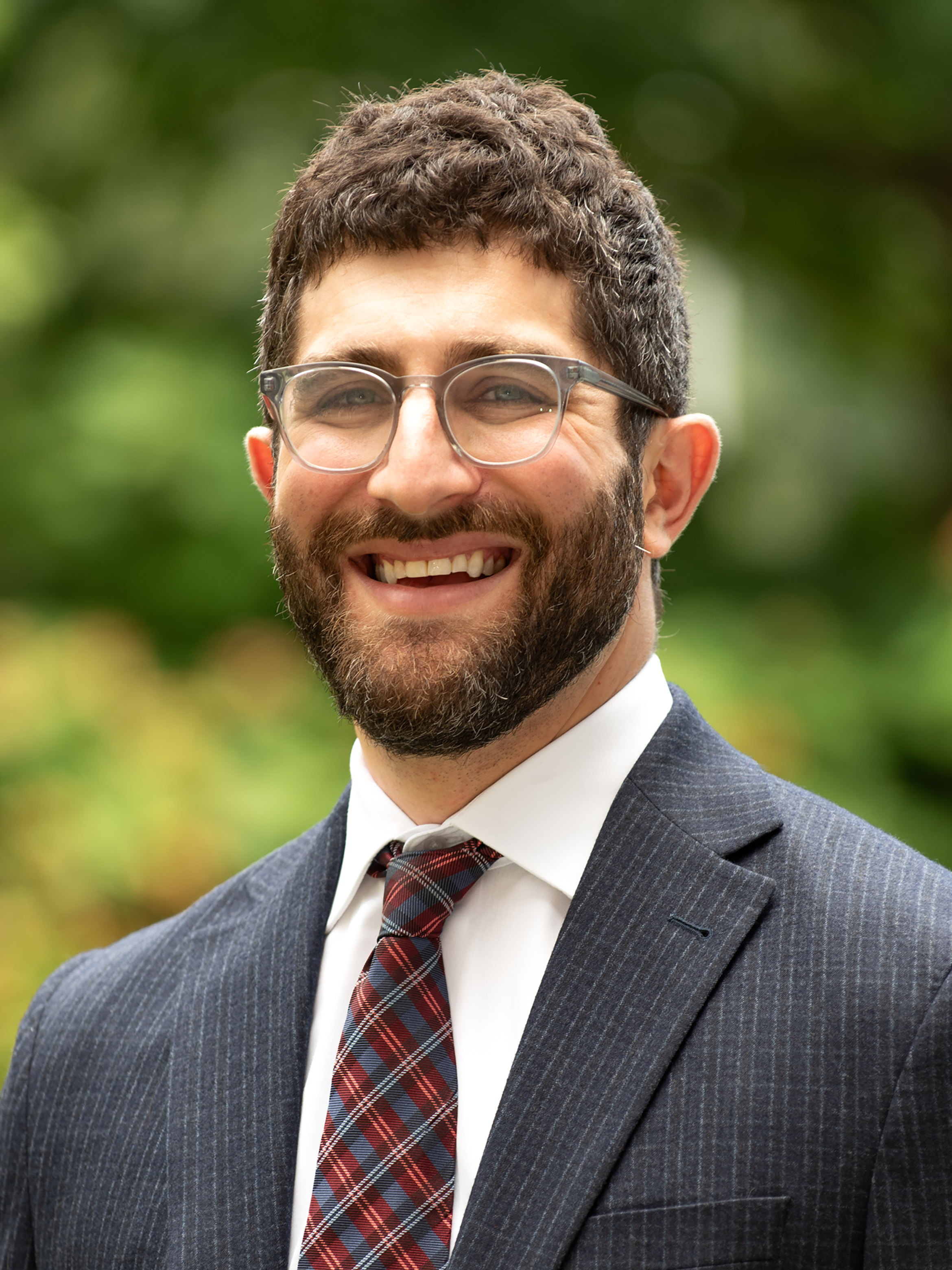
Renaud Morieux is Professor of European History at the University of Cambridge and Fellow of Pembroke College. His research explores borders between Britain, France, and the wider world since the 18th century, with focus on migration, oceans, incarceration, and the social history of war. He holds editorial responsibilities for journals including Past & Present and Revue d'Histoire Moderne et Contemporaine . Research Interests: Morieux investigates maritime borders through interdisciplinary lenses combining legal history, family studies, and global perspectives. His projects examine political deportation in the Indian Ocean and a reflexive history of European statelessness. His award-winning publications analyze cross-Channel relations, war captivity, and oceanic governance. Article Analysis: Morieux's scholarship demonstrates consistent focus on transnational networks, legal pluralism, and subaltern agency. Recent work explores colonial knowledge systems, penal transportation, and epistolary communities, reflecting innovative methodological approaches to reconstructing marginalized histories across imperial spaces. Awards and Honors: Philip Leverhulme Prize for History (2014) Leo Gershoy Award for The Channel: England, France and the Construction of a Maritime Border (2017) Mémoires de la Mer book prize (2009) Advising and Grants: Morieux has supervised 10+ PhD students on topics ranging from naval mutinies to famine philanthropy. Current doctoral candidates explore Sir Joseph Banks' networks, WWI prisoner repatriation, and oral culture in the French Atlantic. His research receives international funding including EU and UK research council support.
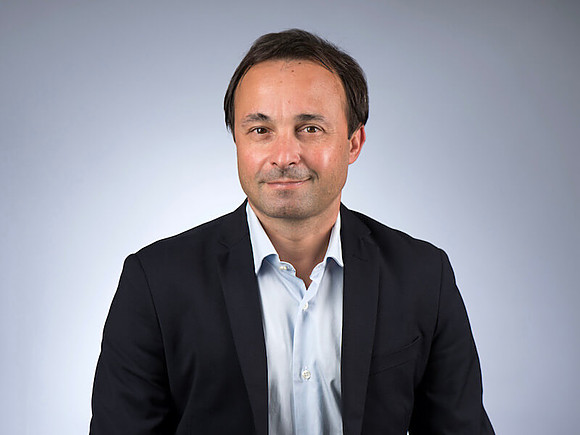
Sarah Turnbull is an Associate Professor at the University of Waterloo, affiliated with the Balsillie School for International Affairs. Her work intersects criminology, sociolegal studies, and critical border/migration studies, focusing on immigration detention, deportation, punishment, and social justice through postcolonial, antiracist, and feminist lenses. Education: PhD and MA in Criminology and Socio-Legal Studies from the University of Toronto; BA from Simon Fraser University. Her current research includes: (1) a SSHRC-funded study on the National Immigration Detention Framework in Canada using Foucauldian genealogical methods; (2) the Prison Transparency Project , a comparative analysis of carceral transparency in Canada, Spain, and Argentina; and (3) a transatlantic study on pandemic impacts in prisons. She employs ethnographic and qualitative methods in her research. Selected Grants: 2023–2030: Co-Investigator, Prison Transparency Project (SSHRC Partnership Grant). 2022–2025: Principal Investigator, Reforming Detention (SSHRC Insight Grant). 2022–2023: Co-Principal Investigator, COVID-19 Justice as Penal Justice (Strathclyde-Waterloo Transatlantic Award). Turnbull’s publications and collaborations emphasize systemic inequalities, carceral mobilities, and ethical research practices. She co-founded the Prison Transparency Project and has contributed to dialogues on art as resistance in detention settings.
Professor Philip Birch is a distinguished academic in Criminology at the University of Technology Sydney (UTS), Faculty of Design & Society, School of International Studies & Education. With over 15 years of academic experience across British, American, and Australian university systems, he has established himself as a leading expert in policing, community safety, and criminal justice. His extensive practical background in criminology, including roles as a Specialist Crime Team Manager, Community Safety Research Manager, and Through Care Worker in UK correctional facilities, informs his applied research approach. Professor Birch's educational background includes a BSocSci. (Hons) in Social Policy (Crime & Justice) from the University of Manchester, multiple postgraduate qualifications from the Open University (including an MSc. in Social & Criminological Research Methods), a Post Graduate Certificate in Higher Education Practice from the University of Huddersfield, and a PhD in Criminology from the University of New South Wales. He also holds a Fellowship with the Higher Education Academy. His research centers on six key areas: Police & Policing; Community Safety & Crime Prevention; Prisons, Probation & Parole Policy & Practice; Assessment, Treatment & Management of Offenders; Gender & sexuality inclusive Domestic and Family Violence; and Sex Work, Sex Workers and Procurement. His work emphasizes the practical application of criminological research to real-world justice issues, with strong industry engagement across law enforcement and correctional services. Recent publications reveal a clear trend toward police mental health, aging in policing, hate crime identification, trauma-informed policing approaches, and digital community safety initiatives. His research employs diverse methodologies including qualitative case studies, Delphi methods, rapid evidence assessments, and comparative analyses across multiple jurisdictions. Teaching award (2019) from Australian College of Educators for outstanding contribution to education Literati Award (2019) for published work Fellowship of the Higher Education Academy Professor Birch has supervised numerous Honours, Masters by Coursework, Masters by Research and PhD students in Criminology, Criminal Justice and Policing, with several completions to date. He has secured over $1.3 million in research funding, including an ARC Linkage grant, and has acted as an external assessor for domestic and international funding bodies. His research projects address critical issues in criminology and policing, often with direct policy implications. He established the Crime & Security Science (CaSS) Research Group at UTS in 2022, a cross-faculty initiative connecting academia with industry to advance evidence-based criminology, criminal justice, policing, and community safety research. This group serves as a hub for collaborative projects addressing contemporary security challenges through translational research.
Dr. J.Z. Bennett serves as an Assistant Professor in the School of Criminal Justice at the University of Cincinnati, specializing in juvenile justice reform and criminological theory. His academic foundation includes B.A., M.A., and Ph.D. degrees in Criminal Justice from Temple University, followed by a postdoctoral fellowship at the University of Pittsburgh's Center for Urban Education. Research focuses on juvenile life without parole policies, developmental pathways in criminal behavior, and educational interventions for at-risk youth. His work bridges academic theory with community action through prison education initiatives and youth leadership development programs. Dr. Bennett co-founded the Urban Youth Leadership Academy and actively participates in The Inside-Out Prison Exchange Program® and Graterford Think Tank. Major funded research includes: Arnold Ventures Grant ($861,692) : National outcomes study on decarceration for juvenile lifers (Co-PI, 2022-2025) Department of Education Grant ($987,871) : Transitioning gang-impacted youth to higher education (Collaborator, 2023-2026) Key recognition includes the Ronald E. McNair Scholar fellowship that launched his research career. His community-university partnerships emphasize practical applications of criminological research to reduce recidivism and support educational access for marginalized populations.
Isabel Grant is a Professor at the University of British Columbia’s Allard School of Law, specializing in criminal law, with a focus on violence against women, sexual assault, homicide, and mental health law. She holds degrees from the University of Toronto, Dalhousie University, and Yale Law School, and served as a law clerk to Supreme Court Justice Estey. Her research addresses gender-based violence, disability rights, and the impact of the Canadian Charter of Rights and Freedoms on legal frameworks. Grant has contributed to over 80 scholarly works and co-leads an SSHRC-funded project on sexual assault law reforms. She teaches courses on criminal law, sentencing, and mental health law. Grant’s work emphasizes feminist and disability justice perspectives, challenging systemic inequalities through litigation interventions in over 20 Supreme Court of Canada cases. Her recent scholarship critiques Bill C-7’s expansion of MAiD eligibility, arguing it entrenches ableism. Awards include the Royal Society of Canada Fellowship, UBC’s Killam Teaching Prize, and the 2025 University Killam Professor designation, UBC’s highest academic honor. Her research interests span criminal justice reform, gender and sexuality law, and the intersection of disability and legal rights. She collaborates with feminist and disability advocacy groups to shape policy and judicial outcomes. Key areas of focus include the ‘rough sex’ defense, consent frameworks, and sentencing disparities in intimate partner violence cases.
Gareth Hall is a Senior Lecturer in Psychology at Aberystwyth University's Department of Psychology, where he has been an established member since the department's founding in 2007. He holds a PhD from Glamorgan University and is a Chartered Member of the British Psychological Society (BPS) and a Fellow of the Higher Education Academy (FHEA). His academic career includes significant administrative roles such as Examinations Officer (2007-2014, 2016), Senior Tutor (2014), and Acting Director of Admissions and Recruitment (2009, 2011). Dr. Hall's research focuses on social psychology with particular expertise in social identity theory applied to real-world contexts. His work spans sport psychology, examining sport for development programs, intergroup behavior in fandom, and well-being in physical culture communities like CrossFit. He has pioneered research testing laboratory theories in real-world settings, challenging traditional experimental paradigms through creative methodologies that incorporate digital technologies and interdisciplinary approaches. His publication record shows consistent output since 2006, with significant contributions in 2019-2023 focusing on sport psychology applications in Brazil, forensic psychology, and educational technology. His work demonstrates a clear trajectory toward interdisciplinary collaboration, particularly in sport for development contexts and the application of social identity theory to complex social issues. Scientific Awards and Recognition: Teaching and Learning Improvement Award from Aberystwyth University (2011) Active editorial roles including for Frontiers in Sports and Active Living (2021) and Bulletin of Latin American Research (2019) Dr. Hall has secured research funding from prestigious organizations including the Economic and Social Research Council (2018) and British Council (2015). His external engagements include committee membership with the British Psychological Society's Undergraduate Education Committee (2015-present), AQU Catalunya (2022-2023), and visiting researcher positions at the University of Padua (2017-2018). His work contributes to multiple UN Sustainable Development Goals, particularly those related to social development and inclusion.
Shoshana R. Shelton is a Professor at the RAND School of Public Policy and a Policy Researcher at the RAND Corporation. Her work centers on program evaluation, public health systems, emergency preparedness, and national health security, with significant contributions to pandemic response, violence prevention, and crisis decision-making. She has led major projects for federal agencies including the CDC, DHS, FEMA, and the U.S. Secret Service. Education: M.P.H., The Ohio State University B.A. in English, Denison University Her research focuses on strengthening public health infrastructure through performance measurement, logic modeling, and stakeholder engagement. She has developed tools such as tabletop exercises for continuity of operations in public health laboratories and led after-action reviews of the public health response to COVID-19. Her work emphasizes building resilience against biological threats, natural disasters, and targeted violence. Shelton's recent publications highlight trends in emergency alert systems, disaster resilience, criminal justice reform during pandemics, and equitable health security research investment. She advocates for evidence-based policies that balance bioterrorism preparedness with responses to natural disasters and climate-related emergencies. Scientific Awards: No awards listed in the provided text. She has advised or collaborated with numerous federal and state agencies, contributing to national health security through rigorous evaluation and policy analysis. Her grants and projects reflect sustained funding from DHS, CDC, and other federal bodies focused on improving public safety and health system readiness. She has also led initiatives on behavioral threat assessment in schools and wearable technology for law enforcement wellness. Labs and Teams: Previously led a four-year project on mass attacks and targeted violence for the U.S. Secret Service. Collaborated with the Association of Public Health Laboratories (APHL) on continuity of operations planning. Contributed to the Priority Criminal Justice Needs Initiative, fostering innovation across law enforcement, courts, and corrections.
Sylwia J. Piatkowska is an Associate Professor at the College of Criminology and Criminal Justice , Florida State University. Her research focuses on crime and deviance, comparative and international criminology, and advanced quantitative methods. She holds a Ph.D. in Sociology from SUNY Albany (2016) and a B.A./M.A. from Opole University (2006). Her work has been recognized with top honors from the Academy of Criminal Justice Sciences for her impactful research on criminology. Key research interests include hate crimes, fiscal criminology, immigration policy impacts, and sentencing disparities. She has authored/co-authored influential studies such as “The New Fiscal Criminology” (2022) and “Suspended Licenses, Suspended Lives” (2020). Her recent work examines temporal trends in bias-motivated violence and the intersection of mental health, race, and gender in sentencing. Recent Awards: Top Honors from the Academy of Criminal Justice Sciences for her book. Professional Roles: Member of the National Policing Institute’s Board of Directors and editor of leading criminology journals. Her research bridges macro-level structural factors with micro-level criminal behavior, emphasizing cross-national comparisons and policy implications. She is affiliated with Florida State University’s criminology research programs and actively contributes to academic discourse through peer-reviewed publications and institutional leadership.
Juliane Mora is an Associate Professor of Communication Studies at Gonzaga University, with 15 years of teaching experience across diverse disciplines including humanities, sciences, engineering, and business at four institutions from California to Florida. She holds a Ph.D. in Communication from the University of Utah and advanced degrees in Communication Studies from California State University-Sacramento. Ph.D., Communication, University of Utah M.A., Communication Studies, California State University-Sacramento B.A., Communication Studies, California State University-Sacramento Her research focuses on communication pedagogy for social justice, emphasizing innovative teaching practices that challenge power structures through classroom instruction. She also explores critical/cultural studies, rhetoric, and organizational communication frameworks in educational and business contexts. Her publications address topics spanning pedagogical praxis, social justice communication, correctional system evaluations, and interdisciplinary narratives. Notable themes include critical pedagogy, institutional training programs, and equity-focused communication strategies.
Dr. Sharon Lambert is a Lecturer in the School of Applied Psychology at University College Cork (UCC), Ireland, specializing in psychological trauma, homelessness, and substance dependence. She joined UCC in 2015 after working in community-based services supporting marginalized groups. Her research focuses on trauma's impact on development, service design for vulnerable populations, and the social determinants of health. Education : PhD in Applied Psychology (UCC, 2008), PG Cert in Teaching and Learning in Higher Education (UCC, 2016). Research Interests : Trauma-informed service design, drug-related bereavement, homelessness, mental health literacy, and the psychological effects of extreme weather events. She collaborates with statutory and voluntary organizations (e.g., HSE, An Garda Siochana) to translate research into practice. Grants : Lead/co-investigator on projects funded by the Health Research Board (€280k), Irish Research Council (€90k), and other bodies. Recent grants include trauma-informed care in acute hospitals and youth justice reform. Awards : President's Award for Teaching Excellence (2020), UCC Staff Impact Award (2018), and multiple interdisciplinary recognitions for trauma research. Professional Roles : Member of the Psychological Society of Ireland, former Parole Board appointee (2020–2023), and advisor to national/international organizations on trauma-aware policies. Labs/Teams : Collaborates with Cork Simon Community on ACE studies and trauma-informed interventions. Active in the Trauma SIG of the Psychological Society of Ireland.
Jacob Schuman is an Associate Professor at Temple University’s Beasley School of Law, specializing in Constitutional Law, Criminal Law, and Evidence. He teaches courses on the Law of the Police and supervises community supervision (probation, parole, and supervised release). Previously, he served as an Assistant Professor at Penn State Law School, where he earned the Student Bar Association Faculty Equity Award. Before academia, he worked in the Federal Community Defender Office, representing criminal defendants in appellate proceedings. His scholarship has appeared in top-tier journals like the Stanford Law Review and New York University Law Review, focusing on legal frameworks governing supervised release and reentry. His work bridges historical jurisprudence and contemporary criminal justice reform, often cited by courts, scholars, and advocates across ideological spectrums. Education: Graduated magna cum laude from Harvard Law School, followed by clerkships for Judge Michael Boudin (U.S. Court of Appeals for the First Circuit) and Judge James Boasberg (U.S. District Court for the District of Columbia). He served as Notes Chair of the Harvard Law Review. Research emphasizes the law of community supervision, judicial roles in reentry processes, and sentencing philosophy. His recent articles explore topics like Indian Country supervision, revocation procedures at the Founding era, and probation’s intersection with constitutional principles. His amicus curiae briefs in federal circuit cases highlight practical applications of legal theory. Awards include recognition for equity-focused teaching and impactful scholarship. Professional engagement includes appellate advocacy training and contributions to legal policy debates. His work often critiques systemic inequities in criminal supervision and proposes evidence-based reforms to improve sentencing transparency and judicial accountability.
Stefania Agliano is a Clinical Assistant Professor and Field Liaison in the School of Social Work at Sacred Heart University. She holds a Master of Social Work from Fordham University (2001), a Bachelor of Social Work from Central Connecticut State University (1999), and is pursuing a Ph.D. in Education/Organizational Leadership at Northeastern University. Her expertise spans child welfare, anti-oppression practices, gender-based violence prevention, and anti-trafficking education. She is co-founder of I AM Training and Consultation Group, providing prevention curricula and training for child welfare organizations. Education: Ph.D. Education; Organizational Leadership (Northeastern University, 2018–present) Master of Social Work (Fordham University, 1999–2001) Bachelor of Social Work (Central Connecticut State University, 1995–1999) Research Interests: Gang prevention, racial justice, workforce wellness in child protection, impact of incarceration on fatherhood, and trafficking prevention. Her work emphasizes systemic dehumanization of marginalized youth and community-driven solutions. Projects: I AM: Empowerment Project Higher Education Implementation (2016–2018, funded by Aurora Foundation) Sex Trafficking Treatment and Training (2014–2016, funded by ACYF/Children’s Bureau) Her research outputs focus on bridging gaps between policy, practice, and community needs in high-risk populations. She actively collaborates with educational institutions and child welfare agencies to design impactful prevention tools.
Gianluigi Simonetti is an Associate Professor of Contemporary Italian Literature at the Italian Section of the University of Lausanne's Faculty of Arts. He assumed his role on February 1, 2021. His academic journey includes studies at the École Normale Supérieure and the University of Pisa, followed by research stays abroad, including a year as an affiliated fellow at the American Academy in Rome. He previously held positions at the University of L'Aquila, first as a researcher and later as an associate professor. Simonetti's research focuses on two primary areas: the stylistic genealogies of 20th-century Italian poetry and ultra-contemporary literature analyzed through formal and comparative methodologies. He is a member of the editorial board of the journal Contemporanea and co-founded the literary website Le parole e le cose with Guido Mazzoni and Massimo Gezzi. He regularly contributes to the cultural supplement of Il Sole-24 Ore , a leading Italian daily newspaper. Throughout his career, he has held visiting appointments and fellowships at prestigious institutions, including the University of Chicago as a Fulbright Distinguished Chair in Italian Studies and the Institut d'Études Avancées (EHESS-CNRS) in Paris as a resident researcher. His work bridges academic and public intellectual engagement in Italian literary studies.
Dr. Kevin E. Courtright is an Associate Professor of Criminal Justice at PennWest University at Edinboro. He holds a Ph.D. in Criminology from Indiana University of Pennsylvania (1995). Prior to academia, he worked as a probation officer in New York State. His research focuses on corrections, prison studies, and rural community impacts of incarceration. He has published in journals such as the Journal of Offender Therapy and Comparative Criminology , Prison Journal , and Criminal Justice Studies . Dr. Courtright led the “Prisons and Rural Communities” study funded by The Center for Rural Pennsylvania. He has received the 2007 “Researcher of the Year” and 2021 “Faculty of the Year” awards from Edinboro University. Before joining PennWest, he taught at Hilbert College and Niagara University in western New York. His professional expertise bridges criminological theory with practical corrections systems analysis, emphasizing rural-urban dynamics in criminal justice.