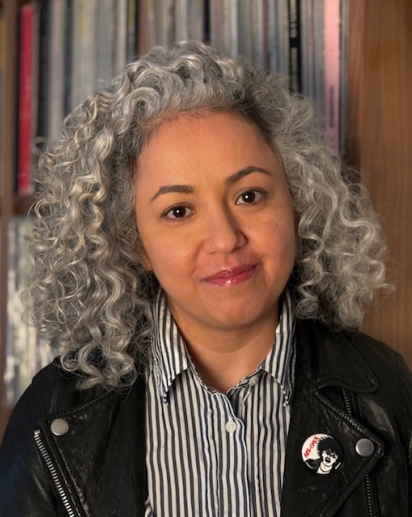
Golnar Nikpour is an Associate Professor of History at Dartmouth College, specializing in modern Iranian political and intellectual history with focuses on law, incarceration, revolution, and rights. She holds a Ph.D. from Columbia University's Department of Middle Eastern, South Asian, & African Studies. Her interdisciplinary research spans modern Middle Eastern/North African history, Islamic studies, critical prison studies, and colonialism/decolonization. Education: B.A., Barnard College M.A., Columbia University M.Phil., Columbia University Ph.D., Columbia University Her research explores themes such as prison systems in Iran, gendered carceral practices, and material cultures of revolution. Recent publications include The Incarcerated Modern (2024) and analyses of the Iran Hostage Crisis and gender dynamics in Pahlavi Iran. No grants or advising information is provided in the text. She maintains a personal website linked to her academic profile.
Hamed Badihi is an Assistant Professor in Automation Technology and Dependable Systems at Tampere University , part of the Faculty of Engineering and Natural Sciences. He leads the Dependability and Automation Research in Cyber-Physical Systems (DARES) Group within the Dependable Systems Cyber Laboratories . His research focuses on critical aspects of condition monitoring, fault-tolerant control, and attack-resilient control to advance sustainable, dependable cyber-physical systems. Research Interests include: Cybersecurity for industrial control systems Fault-tolerant control mechanisms Resilient control strategies for renewable energy systems Condition monitoring of wind turbines and microgrids Recent Contributions emphasize hybrid approaches combining machine learning and control theory for cyber-attack detection and system resilience in wind farms and microgrids. His work addresses challenges like real-time fault diagnosis and adaptive control under adversarial or environmental perturbations. Awards & Roles : Senior Member of IEEE, editor for International Transactions on Electrical Energy Systems , Advances in Fuzzy Systems , and Processes journals. Active in EU projects like StreamSTEP . Labs & Teams : Directs the DARES Group, collaborating on initiatives like the Dependable Systems Cyber Laboratories to pioneer innovations in cyber-physical system dependability.
Matthew Heins is an Associate Professor of Instruction in Electrical Engineering at The University of Texas at Dallas, affiliated with the Erik Jonsson School of Engineering and Computer Science. He holds an office in ECSN 4.608 and can be reached via email at Matthew.Heins@utdallas.edu or phone at +1 (972) 883-3846. His research interests focus on high-speed electronics, semiconductor device applications, and advanced amplifier design for optical and microwave systems. Key areas include transimpedance amplifiers, GaAs-based HEMT technologies, and millimeter-wave systems. Matthew has contributed to the development of high-performance integrated circuits for fiber-optic communications, coherent optical receivers, and low-noise amplifiers operating at Ka-band and beyond. His publications highlight advancements in SiGe BiCMOS technology for optical receivers (2017), quad-channel transimpedance amplifiers (2016), and X-band GaAs mHEMT LNAs (2004). Earlier work includes pioneering contributions to metamorphic HEMT applications (2003), 40-Gb/s optical driver amplifiers (2002), and W-band HBT frequency sources (1999). Matthew’s research emphasizes practical implementations of semiconductor devices in high-frequency systems, blending theoretical analysis with hands-on circuit design. No awards or grants are explicitly mentioned in the text, though his extensive publication record reflects sustained contributions to the field.
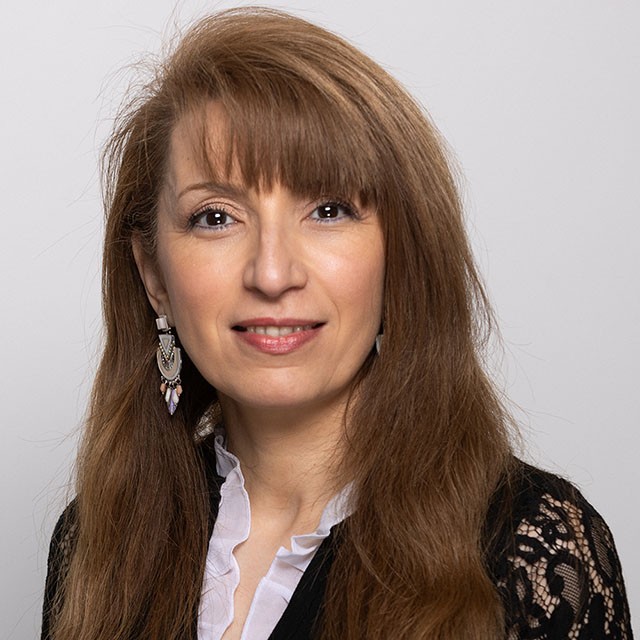
Dr. Ivett Orsolya Bacskay is an Assistant Professor at the Department of Analytical and Environmental Chemistry, Institute of Chemistry, Faculty of Science, University of Szeged. Her research focuses on fundamental and applied aspects of separation science, particularly in liquid chromatography, with expertise in retention mechanisms, mass transfer, and stationary phase characterization. Research Interests: Her work spans several key areas in analytical chemistry, including hydrophilic interaction liquid chromatography (HILIC), size-exclusion chromatography, chiral separations, pore size distribution analysis, and molecular imprinting for artificial antibody development. She investigates both theoretical models and practical applications in chromatographic systems. An analysis of her recent publications (2010–2025) reveals a strong emphasis on improving chromatographic efficiency and understanding molecular interactions in separation processes. Her studies frequently address challenges in hold-up volume determination, overloading effects, and mass transfer in various stationary phases, contributing significantly to the advancement of HPLC and LC-MS methodologies. Scientific Awards: No awards mentioned in the provided text. Advising and Grants: While specific details about students or funded projects are not listed, her active research output and faculty position suggest involvement in mentoring graduate students and securing research support. She has contributed to interdisciplinary studies involving neuropharmacology and plant biochemistry, indicating collaborative research efforts. Labs and Teams: Dr. Bacskay is part of the Institute of Chemistry at the University of Szeged, where she conducts research within the Department of Analytical and Environmental Chemistry. Her work likely involves collaboration with analytical chemistry research groups focusing on method development, column technology, and environmental or pharmaceutical analysis.
Reilly T. Enos, PhD, is an Assistant Professor in the Department of Pathology, Microbiology & Immunology at the University of South Carolina School of Medicine. His research focuses on the molecular mechanisms of sex differences in obesity, particularly metabolic and inflammatory processes influenced by sex steroids. The Enos Lab employs rodent models and advanced metabolic phenotyping to investigate menopause-related metabolic dysfunction and complementary therapies. PhD, Exercise Science (Applied Physiology), University of South Carolina, 2013 Post-Doctoral, Complementary and Alternative Medicine in Cancer and Obesity, University of South Carolina School of Medicine, 2017 MS, Exercise Physiology, Baylor University, 2009 BS, Dietetics, University of Northern Colorado, 2010 BA, Spanish & Physical Education, College of Wooster, 2007 Dr. Enos’s research spans immunometabolism, obesity, cancer cachexia, and gut microbiota. His work explores how dietary components (e.g., quercetin, emodin), hormonal status (especially estrogen), and immune modulation (e.g., miR-155, macrophages) influence metabolic and oncological outcomes. He investigates sex-specific responses to high-fat diets, inflammation, and therapeutic interventions using transgenic and diet-induced mouse models. His recent publications highlight trends in metabolic physiology, inflammation, and cancer, often examining the interplay between adipose tissue, immune cells, and hormonal regulation. Key themes include the impact of vivarium conditions on reproducibility, the role of microRNAs in tumorigenesis, and the safety and efficacy of natural compounds. Dr. Enos has not been awarded any listed scientific prizes or fellowships in the provided texts. He advises a research team focused on metabolic and inflammatory disease models, frequently collaborating with researchers such as Erin A. Murphy and Kandy T. Velázquez. His lab receives funding for studies on obesity, cancer, and complementary medicine, though specific grants are not detailed. The lab is equipped for metabolic phenotyping and rodent model studies. The Enos Lab is dedicated to understanding sex-specific metabolic regulation and developing targeted therapies for obesity and cancer-related metabolic disorders, with a focus on translational relevance and experimental rigor.
Tomasz Mikulski serves as a Researcher at the Department of Socio-Economic Geography within the Institute of Socio-Economic Geography and Spatial Management, Faculty of Social Sciences, University of Gdańsk. He concurrently holds an administrative position in the Office of the Dean of the Faculty of Social Sciences. His educational background includes a Master of Arts (M.A.) degree. Mr. Mikulski's research focuses on socio-spatial dynamics in urban environments, particularly examining gated communities and spatial disintegration processes. His work emphasizes socio-economic geography frameworks within metropolitan contexts, with specific attention to the Tricity region (Gdańsk, Gdynia, Sopot) as a case study for understanding urban segregation patterns and spatial management challenges. His publication record demonstrates consistent engagement with urban geography themes, revealing trends in analyzing how physical barriers like gated communities contribute to the fragmentation of urban space and socio-economic polarization in post-socialist European cities. Scientific Awards: No awards documented in available sources Information regarding graduate student supervision, research grants, or external funding sources remains unavailable in current institutional records. No details about laboratory affiliations or research team leadership were identified. Current institutional documentation does not reference active research laboratories or collaborative teams under his direct coordination.
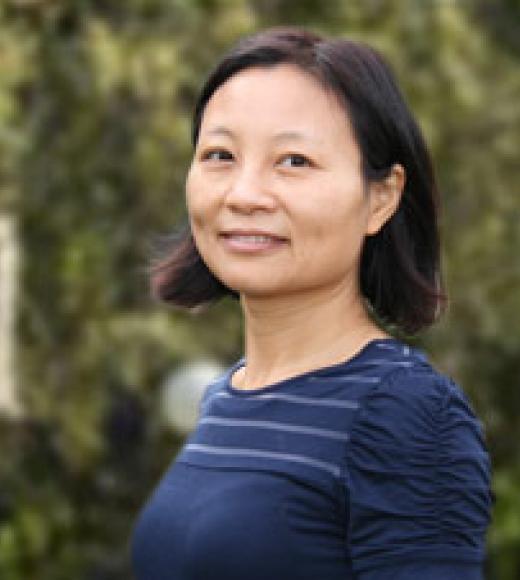
Yufang Jin is an Associate Professor in the Department of Land, Air and Water Resources at the University of California, Davis, with affiliations in the Geography Graduate Group. Her work bridges environmental science and geospatial technologies, focusing on critical Earth system processes. Her research centers on remote sensing of terrestrial ecosystems , with key emphases on fire disturbance , ecohydrology , biogeochemical cycles , and climate change . She applies advanced GIS and modeling techniques to study global environmental change, contributing to the Methods, Models, and GIS Science concentration within the Environmental Sciences area of depth. The available data does not include recent publications, but her research profile suggests a strong focus on satellite-based monitoring, land surface dynamics, and environmental modeling across spatial and temporal scales. Dr. Jin has not had any scientific awards listed in the source material. She advises graduate students through the Geography Graduate Group, though specific advisees are not named. There is no mention of external grants or funding sources in the provided text. Her research activities are likely supported through university and federal environmental science programs. She is associated with research infrastructure at UC Davis, potentially including geospatial labs or environmental monitoring systems, though specific labs or research teams are not detailed in the current bio.
Prof. Raphaële Clément is affiliated with the Materials Research Laboratory at the University of California, Santa Barbara. Her research focuses on using NMR spectroscopy to investigate ionic conduction mechanisms in battery materials, bridging atomic-level structural insights with macroscopic electrochemical performance. Her work integrates solid-state NMR , pulsed field gradient NMR , and first-principles calculations to understand ion diffusion processes in systems like Li/Na-ion conducting rocksalt halides and polymeric ionic liquids. This multiscale approach connects local structural features to material synthesis and processing conditions. Notably, her 2022 publication on disordered battery materials highlights the interplay between crystallinity, ion dynamics, and electrolyte functionality. While specific awards or student advisement details are not mentioned in the provided text, her methodologies emphasize the synergy between experimental and computational analysis in advancing energy storage technologies.
Jaskiran Kaur Chohan is a Senior Lecturer in the School of Geographical Sciences at the University of Bristol. Her research focuses on political ecology, with an emphasis on peasant agriculture, agroecology, food systems, decolonization, and sustainable development in Latin America. She explores topics such as corporate food regimes in conflict zones, socio-environmental tensions in rural Colombia, and the impacts of global crises like the Covid-19 pandemic on food systems. Education: Holds an MSc, BA, and PhD in relevant disciplines (specific details not provided in text). Research Interests: Jaskiran’s work bridges social sciences and environmental studies, addressing issues like agro-extractivism, campesino livelihoods, gender dynamics in rural areas, and the role of peasant reserves in resisting corporate influence. Her recent projects highlight Colombia’s Boyacá páramos and the Zona de Reserva Campesina, emphasizing the intersection of ecological conservation and social justice. Publications: Her recent articles analyze the corporate food regime in conflict zones, agroecology as a social movement, and food system resilience during crises. These works contribute to debates on decolonizing agriculture and achieving sustainable rural futures. Awards: No awards explicitly mentioned in the provided text. Grants and Advising: No explicit details on grants or student advising are provided, though her publications suggest ongoing research collaborations. She is affiliated with related researchers like Mark Eisler (Bristol Veterinary School). Labs/Teams: No specific lab affiliations mentioned, but her work aligns with interdisciplinary teams focusing on Latin American studies and sustainable development.
Sonia Vanier is a Professor in the Department of Computer Science at École Polytechnique, where she holds multiple leadership positions: Head of the 'Trusted and Responsible AI' Chair (X/Crédit Agricole), Head of the 'Optimization and AI for Mobility' Chair (X/SNCF), Head of 3A, and Scientific Manager of Industrial Relations for both the Department and the Computer Science Laboratory (LIX). She coordinates the GdT OR (Network Optimization) working group and leads the REST (Energy, Services and Transport Networks) research axis of the CNRS GDROD, while serving on its scientific council. Her research develops decision support tools for complex industrial problems through hybrid approaches combining Artificial Intelligence and Operations Research , with focus areas including Network Optimization, ethical AI systems, sustainable computing, and trustworthy AI frameworks. Her work bridges theoretical foundations with applications in telecommunications, transportation, and cybersecurity. Publications demonstrate strong emphasis on optimization techniques (branch-and-price, cutting planes) applied to wireless networks, AI safety, and security challenges. Recent works explore LLM memorization, signomial programming, and multi-commodity flow problems, showing consistent integration of OR with machine learning for industrial-scale problems. Awards: Research Award and Innovation Award, Telecom Valley Association ALOES Orange Innovation Project She leads major industrial-academic partnerships through the Crédit Agricole and SNCF chairs, managing research grants focused on responsible AI deployment and mobility optimization. As Scientific Manager of Industrial Relations, she oversees industry collaborations for LIX laboratory. Affiliated with the Computer Science Laboratory (LIX), she directs the 3A research group and contributes to national initiatives through CNRS GDROD, coordinating research in network optimization and sustainable systems.
Tessa Laing is a Visiting Fellow at the Firoz Lalji Institute for Africa and serves as Peace & Justice Coordinator for the Anglican Diocese of Northern Uganda, where she leads community-driven initiatives for social and environmental change in northern Uganda since 2013, including campaigns against land evictions and for alcohol legislation enforcement. Her educational background includes: Ph.D. in Development Studies, University of Cambridge MA in Anthropology, University of Canterbury BA with Honours in Political Science, University of Canterbury Her research examines land politics, tenure history, and peasant political action in Africa, analyzing how public authority, identity, territory, and property rights shape land struggles while exploring intersections between peace-building and resistance to land expropriation. Regional expertise focuses on Northern Uganda and East Africa, with fluency in Acholi and English. Recent publications analyze peasant resistance strategies in northern Uganda, emphasizing third-party leverage tactics and counter-hegemonic reconstruction of social structures amid state-driven land conflicts. No scientific awards are specified in available sources. Information regarding academic advising or research grants is not provided in the source material. She directs a team at the Anglican Diocese developing community-led peace processes to resolve large-scale land conflicts in northern Uganda.
Jiqin Ni serves as an Associate Professor in the Department of Agricultural and Biological Engineering at Purdue University's College of Engineering, West Lafayette campus. His office is located in Room 115 of the ABE building (Engineering Administration), and he can be contacted via phone at (765) 496-1733 or email at jiqin@purdue.edu. His professional homepage provides additional resources and departmental information. Dr. Ni's research spans critical areas in agricultural systems engineering with a strong emphasis on sustainability and environmental protection. His primary fields include Agricultural Engineering focusing on machinery and production systems, Biological Engineering addressing biomaterials and bio-processes, Sustainability Engineering for resource optimization, and Environmental Engineering targeting pollution control and ecosystem preservation. His work integrates engineering principles with biological sciences to develop innovative solutions for food security and ecological resilience. Scientific Awards: No specific scientific awards, fellowships, or medals are mentioned in the provided text. Regarding academic mentoring and research funding, the available information does not specify any graduate students under his supervision or grants he has secured. As an active faculty member in a research-intensive department, he likely contributes to student development and externally funded projects aligned with agricultural sustainability. Dr. Ni is affiliated with the Agricultural & Biological Sustainability Engineering and Environmental Engineering research groups within the department, which focus on interdisciplinary approaches to modern agricultural challenges through engineering innovation.
Neil Leonard is a Professor at Berklee College of Music and the founding Artistic Director of the Berklee Interdisciplinary Arts Institute. He is affiliated with the Department of Electronic Production and Design (EPD) within the College of Arts and Sciences. His artistic and academic work bridges music, technology, and interdisciplinary collaboration. Ph.D. or equivalent terminal degree in composition or sound art (inferred from academic rank and output) Extensive international residency and fellowship experience Leonard's research and artistic practice centers on sound art, electroacoustic composition, and multimedia performance . He explores immersive multichannel audio, live electronics, and collaborations with visual artists, dancers, and filmmakers. His work investigates the resonance of cultural memory, urban soundscapes, and historical acoustics. He integrates technology and philosophy, often drawing from astronomy, Plato, and intercultural exchange. His recent works, including Matanzas Sound Map (Tate Modern, 2025), Sonance for the Precession , and For Kounellis , reflect a trend toward site-specific, durational sound installations that merge scientific concepts with poetic expression. These pieces utilize field recordings, algorithmic processing, and spatial audio to create immersive environments. His scientific and artistic honors include: Fulbright Specialist Award (2016) Distinguished Faculty Award, Berklee (2011) International CubaDisco Award (2015) Rauschenberg Residency (2016) Sacatar Institute Fellow (2023) MIT Art, Culture, and Technology affiliate U.S. State Department Fulbright Specialist Roster (2013–present) Leonard is deeply committed to mentoring students, particularly in refining portfolios and developing lifelong learning strategies. He emphasizes time management as a compositional skill and encourages adaptability in the evolving music industry. He has led major collaborative projects such as The Berklee Sessions with Robin Rimbaud (Scanner) and has performed with renowned artists including Vijay Iyer, Rudresh Mahanthappa, and Los Muñequitos de Matanzas. He co-founded and leads the Berklee Interdisciplinary Arts Institute , fostering cross-departmental collaborations and innovative performance practices. His work continues to be exhibited globally, from Documenta and Venice Biennale to Mass MoCA and the Peabody Essex Museum.
William Lucey is an Associate Professor in the Music Production and Engineering (MP&E) and Songwriting departments at Berklee College of Music, a leading institution in contemporary music education. His academic role is deeply informed by his extensive professional career as a performer, songwriter, and producer. His research and creative interests center on music production, songwriting craft, audio engineering, and the integration of analog and digital technologies in music. He emphasizes practical, real-world applications in his teaching, drawing from decades of experience in the music industry. The body of his recent work—including songs like Home , Haunt Me Again , and All I Want for Christmas is a Christmas No. 1 —demonstrates a broad range across genres such as Americana, pop, rock, electronic, and folk. His production style is hands-on, spanning songwriting, arrangement, performance, engineering, and mixing. He frequently collaborates with emerging and established artists, often playing multiple instruments and overseeing full production. Meteor Award Ireland for Best Hope for the Future Boston Music Awards for Best New Act and Best Vocalist World Peace Award for Best International Act As an educator and mentor, Lucey has taught songwriting and production at Berklee for over 25 years, guiding countless students in developing their artistic voices. He also engages in professional projects that serve as living case studies for his pedagogy. His studio practice blends analog warmth with digital precision, reflecting his philosophy of marrying the best of both worlds. While no formal lab or research team is mentioned, his production house functions as a creative hub for collaboration with session musicians and artists worldwide.
Kyehan Lee is a faculty member in the Department of Chemical Technology at Brazosport College, affiliated with the College of Science and Technology. He specializes in Chemical Technology and Industrial Process Technology, contributing to technical education and workforce development programs. His research and teaching interests include: Chemical Technology Industrial Process Technology Process Engineering Technical Education There are no publications listed in the available information, so no trends in scholarly output can be identified. No scientific awards or honors are mentioned in the provided text. There is no information available regarding student advising, research grants, or leadership in labs and research teams.