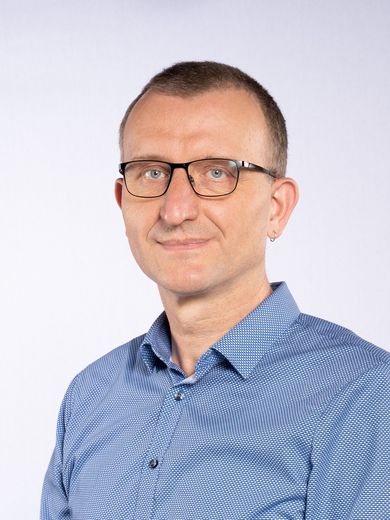
Prof. Jürgen Knies serves as Professor and Vice Dean of Faculty 2 (Faculty of Architecture, Civil Engineering and Geomatics) at Bremen City University of Applied Sciences. Based in the Department of Infrastructure Planning of Environmental and Energy Systems (building UB, room 107), his work integrates ecological principles, Geographic Information Systems (GIS), Building Information Modeling (BIM), and environmental law to address complex infrastructure challenges. His leadership extends to municipal heat planning initiatives and跨-institutional research networks across Northwest Germany. His research focuses on urban energy transitions , with particular emphasis on heat system transformation, spatial planning integration, and socio-technical implementation barriers. Key methodologies include GIS-based spatial analysis, BIM integration, and multi-stakeholder governance frameworks. Current investigations target cold district heating networks, wastewater heat recovery, solar cadastre validation, and equity considerations in energy transitions—always contextualized within Bremen's municipal challenges and North German regional cooperation frameworks. Analysis of his 15 most recent publications (2017-2025) reveals a consistent trajectory: evolving from foundational spatial energy modeling toward integrated socio-technical solutions for urban heat transitions. The body of work demonstrates increasing sophistication in Digital integration (E-Government/BIM fusion) Multi-scale spatial analysis (neighborhood to regional) Equity-focused implementation strategies Legal-regulatory-compliance frameworks with Bremen serving as both living laboratory and model for municipal energy planning. No scientific awards are documented in the provided materials. His advising activities center on thesis supervision in infrastructure planning, while grant leadership includes major projects: hyBit (Hydrogen for Bremen's industrial transformation; 2021-2022) Heat Transition Northwest (digitalization for heat implementation; 2021-2025) North German Research Associations coordination Bremen Heat Transition Network initiatives These involve partnerships with municipal authorities, industry, and regional research consortia. His operational ecosystem includes the GIS Laboratory for spatial analysis, active participation in Networking AG Wärme (Heat Working Group), and leadership in the Bremen Heat Transition Network . Current engagements extend through 2026, including coordination of the 3rd North German Conference on Thermal Research—demonstrating sustained commitment to advancing urban energy infrastructure through academic-practice integration.