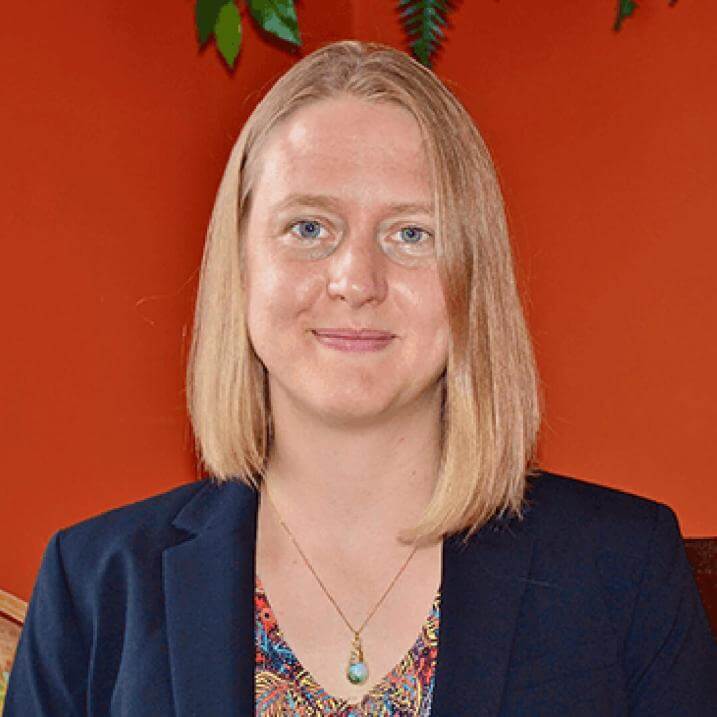
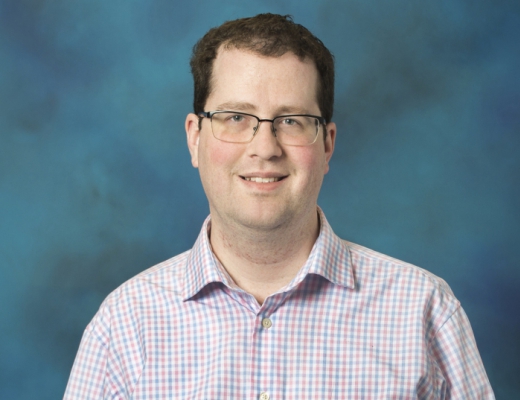
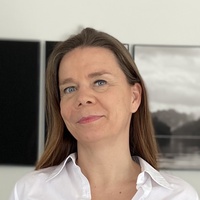
Ingrid L. Nelson is an Associate Professor at the University of Vermont in the Department of Geography and Geosciences . She specializes in feminist political ecology , digital geographies , and critical development studies , focusing on how digital technologies mediate environmental expertise and sustainability projects. Current research group: Feminist Digital Natures Past projects: Campus Green and Gold (Vermont campus sustainability, 2014-2020) Key fieldwork: Miombo woodlands (Mozambique) Her teaching explores environmental justice , gender-space relations , and critical digital analysis through courses like Gender, Space and Environment and Natures, Places and the Politics of Truth . She emphasizes collaborative learning, autoethnography, and digital methods. Research interests include more-than-human politics , embodied environmental subjectivity , and critical decolonial theory applied across diverse sites: Vietnamese hostess bars, Newfoundland science labs, and Vermont campuses.
Bryce McLeod, Ph.D., serves as Professor and Director of the Child/Adolescent Concentration within the Clinical Psychology Program at Virginia Commonwealth University's Department of Psychology. Tenured faculty member with active research leadership directing the CREATE Lab focused on community-based mental health implementation science. Education: Ph.D. in Psychology, University of California, Los Angeles (2004) Dr. McLeod's research centers on implementation science for evidence-based practices in youth mental health, specializing in treatment integrity measurement, implementation sustainment factors, and community-school intervention development. His CREATE Lab develops pragmatic tools for measuring treatment fidelity, optimizes training/consultation strategies, and creates flexible interventions for real-world settings serving youth with behavioral and emotional challenges. Current work emphasizes school-based prevention systems and community mental health implementation frameworks. His publication record (2011-2022) reveals consistent focus on measurement innovation for implementation science, particularly treatment integrity instruments and therapeutic alliance assessment in youth contexts. Key trends include developing locally-managed data systems for schools, cross-treatment fidelity measurement approaches, and mechanistic models for training effectiveness - all targeting practical implementation barriers in community settings. Scientific Awards: VCU Department of Psychology Outstanding Service Award (2016) VCU Department of Psychology Outstanding Research Award (2011) NIH Clinical Research Loan Repayment Award Renewal (2011-2013) NIH Clinical Research Loan Repayment Award (2006-2008) As dedicated mentor, Dr. McLeod trains graduate students in applied implementation research through CREATE Lab projects, emphasizing community-engaged scholarship. His NIH-funded research portfolio supports multiple active grants including CEDARS, PRISM, and Sustainment of Evidence-Based Programs in Schools initiatives. Current funding focuses on optimizing measurement-based care systems and identifying key fidelity indicators for community implementation. Dr. McLeod leads the CREATE Lab conducting community-based implementation research across multiple funded projects including CEDARS, PRISM, and CHILD initiatives. The lab develops practice elements for flexible interventions, creates pragmatic fidelity measures, and tests implementation strategies in school and community mental health settings through active collaborations with local agencies and school systems.
Professor Laura Empson is a leading academic in the field of professional service firms, holding dual professorial roles at Bayes Business School (University of London) and Copenhagen Business School. She also serves as a Research Fellow at Harvard Law School and the Judge Business School, University of Cambridge. Her research focuses on leadership, governance, organizational culture, and professional service firm dynamics, with over 30 years of contributions to the field. Education: PhD, London Business School (UK) MBA, London Business School (UK) BSc Econ, University College London (UK) Her work emphasizes bridging research and practice, with notable projects on mergers & acquisitions, knowledge management, and diversity in professional firms. Empson has secured over £1 million in external funding, split equally between research councils and corporate partners. She established and directed the Centre for Professional Service Firms at Bayes (2008-2024) and contributed to influential publications like the Oxford Handbook of Professional Service Firms . Awards & Recognition: Keynote Address at British Academy of Management Conference (2020) Founder Member of the Strategic Advisory Board for Journal of Management Studies (2020) Shortlisted for Thinkers 50 Leadership Award Member of ESRC's Peer Review College Leadership & Grants: Secured £1M+ in funding (50% research councils, 50% corporate) Advised UK's Financial Reporting Council and Competition & Markets Authority Contributed to BBC Radio Four's documentary on professional overachievers Labs & Teams: Founded and led the Centre for Professional Service Firms at Bayes Business School, fostering interdisciplinary research on professional service industries.
Dr Melanie Cooke is a Senior Lecturer in ESOL and Applied Linguistics at King's College London, working within the School of Education, Communication and Society and the Centre for Language, Discourse and Communication. She has been with King's since 2003, following prior teaching experience teaching EFL in Spain and ESOL to adult migrants in London. Cooke serves as convenor of the Hub for Education and Language Diversity (HELD), a collaboration between the Centre for LDC and English for Action, and co-organized the ESRC-funded 'Queering ESOL' seminar series. Her research focuses on teaching and learning in adult ESOL classrooms in the UK, particularly examining the social and political contexts of migrant language education. Cooke's work explores linguistic citizenship, participatory pedagogy in ESOL, and the relationship between language education and citizenship policies. She has made significant contributions to understanding how language is used as a political tool in immigration policy and integration debates. Her recent publications demonstrate a consistent focus on linguistic citizenship, with major works including 'Localising linguistic citizenship in England' (2024), 'Working papers for a more open academy' (2023), and 'Brokering Britain, Educating Citizens' (2019) with Rob Peutrell. These works explore the intersection of language education, migration policy, and citizenship frameworks. Elsevier Outstanding PhD Thesis Prize for Exceptional Doctoral Work (2016) Cooke teaches across multiple programs including BA English Language & Linguistics, MA Applied Linguistics and ELT, MA Language and Cultural Diversity, and MA TESOL. Her courses cover sociolinguistics, qualitative research methods, language and migration, and communicative language teaching. She also actively supervises PhD students in areas related to ESOL teaching and learning, language and citizenship, and language and migration. Notably, Cooke maintains active engagement with ESOL practice, regularly teaching in an ESOL class in East London that uses the participatory ESOL approach, creating a valuable connection between her research and practice.
Matthew Holden is an Associate Professor in the School of Computer Science at Carleton University. He holds a PhD (2018) and MSc (2014) from Queen's University and a BScH (2012) from Western University. His research focuses on Surgical Data Science, applying machine learning to surgical time-series data from operating rooms and simulations to improve patient outcomes and surgical training. Key areas include real-time decision support, performance assessment, and surgical efficiency through domain-knowledge integration. Research interests emphasize machine learning for surgical workflows, skill assessment via sensor data (e.g., motion tracking, EEG), and computer-assisted interventions. Notable work includes automated proficiency evaluation in cataract surgery, ultrasound-guided procedures, and neurosurgical training. His contributions span medical robotics, surgical education, and clinical decision support systems. Publications highlight advancements in surgical workflow anticipation, tool detection, and skill metrics across domains like ophthalmology, emergency medicine, and neurology. Holden advocates for interdisciplinary approaches combining computational methods with clinical expertise to enhance healthcare delivery.
Bryan Kian Hsiang Low serves as Associate Professor in the Department of Computer Science at the National University of Singapore's School of Computing, while simultaneously holding leadership positions as Director of AI Research at AI Singapore and Deputy Director of the NUS AI Institute. His academic journey includes a B.Sc. (2001) and M.Sc. (2002) in Computer Science from NUS, followed by a Ph.D. in Electrical & Computer Engineering from Carnegie Mellon University (2009). His research spans probabilistic machine learning, multi-agent systems, and trustworthy AI, with particular focus on Bayesian optimization , federated learning , and data-efficient methodologies . The Low Lab develops frameworks for collaborative AI, automated machine learning, and AI applications in scientific domains through the Group of Learning and Optimization Working in AI (GLOW.AI), which maintains a multi-disciplinary approach bridging computer science, mathematics, and engineering disciplines. Analysis of his recent publications reveals a consistent emphasis on data valuation , privacy-preserving collaborative learning , and robust optimization techniques , with increasing integration of large language models into his research framework. His work demonstrates strong theoretical foundations coupled with practical applications in computational sustainability and robotics. Andrew P. Sage Best Transactions Paper Award (2006) NUS Overseas Graduate Scholarship (2004-2009) Faculty Teaching Excellence Award (2017-2018) IEEE RAS Distinguished Lecturer (2019) World Economic Forum Global Future Councils Fellow (2016-2018) Dr. Low actively mentors PhD students including Rachael Sim, Quoc Phong Nguyen, and Zhongxiang Dai, while leading major initiatives like the AI Phenome Platform for plant breeding optimization. His research group GLOW.AI operates at the intersection of theory and practice, with strong industry engagement through AI Singapore. Current projects focus on scalable AI systems for scientific discovery and developing frameworks for equitable collaborative machine learning with robust privacy guarantees.
Kathrin Sele is a Senior Lecturer at the Department of Management Studies, Aalto University. Her research focuses on organizational routines, routine dynamics, and innovation management. She explores how organizations adapt to complex challenges through sociomaterial practices and embodied work. Key contributions include frameworks for analyzing routine ecologies, M&A synergy realization, and digital transformation in HR. Her work bridges practice theory, actor-network theory, and strategic management. Sele’s research spans extreme contexts (e.g., crisis management), gender equality, and ethical dilemmas in emerging markets. She collaborates on interdisciplinary projects like the ‘Routine Dynamics’ framework, emphasizing organizational adaptation in flux. Her publications appear in top journals such as Journal of Management Studies and Organization Studies . Her advising and grant activities are not explicitly detailed in the provided texts, though her prolific publication record suggests active research leadership. She contributes to academic communities through conference proceedings and edited volumes, particularly on grand challenges and innovation networks.
Pardis Pishdad is an Associate Professor and Graduate Program Director in the School of Building Construction at Georgia Institute of Technology’s College of Design. She directs the Smart Built Environment Eco-System (Smart Bees) Laboratory, focusing on integrating cyber-physical systems, digital twins, and innovative project delivery methods (e.g., IPD, Flash Tracking) for sustainable built environments. Her research bridges technology adoption, trust-building in construction contracts, and supply chain optimization. Education: PhD, Environmental Design and Planning (Virginia Tech) Master’s Degrees: Civil Engineering (Virginia Tech), Design Studies in Project Management (Harvard), Architecture (University of Tehran) Bachelor’s in Architectural Engineering (Azad University of Shiraz) Research Interests: Her work emphasizes sustainable construction practices using IoT, BIM, and blockchain. Key areas include lifecycle cost analysis, lean construction, and smart building technologies. She explores trust dynamics and collaboration in construction projects through game theory and process optimization. Recognition: 2018 ENR Top 20 Under 40 Professionals 2016 CII National Outstanding Researcher Award 2020-2022 Georgia Tech Provost Teaching Learning Fellow Advisory Roles: Academic Advisor for CII’s Supply Chain Management Community, Vice Chair of BuildingSMART’s BIM Forum 5D Taskforce. Formerly advised the Construction Management Association of America’s Board (2016–2018). Industry Collaboration: Partnerships with Turner Construction, GDOT, and VDOT. Research on Flash Tracking and blockchain has been integrated into industry practices. Labs & Teams: The Smart Bees Lab pioneers cyber-physical systems for smart buildings, exploring AI-driven solutions and sustainable construction frameworks.
Will Fleisher is Assistant Professor in Georgetown University's Department of Philosophy and Research Assistant Professor at the Center for Digital Ethics. His research examines ethical, political, and epistemic implications of AI systems, with specialization in algorithmic fairness, explainable AI, and epistemology of inquiry. His work bridges technical AI development and philosophical frameworks, addressing fairness metrics in machine learning, epistemic norms in AI systems, and ethics of human-AI interaction. Recent publications explore disagreement in AI alignment, fragmentation of evidence, and intellectual virtues in inquiry. Professor Fleisher's research has appeared in Noûs, Philosophical Studies, Philosophy of Science, and AAAI/ACM conference proceedings. He previously held postdoctoral positions at Northeastern University and Washington University in St. Louis.
Professor Tineke Brunfaut is a leading academic in Applied Linguistics at Lancaster University 's School of Social Sciences. Her work focuses on language testing , second language reading , listening , and integrated/multimodal skills . She coordinates the Language Testing Research Group and has received prestigious awards including the ILTA Best Article Award , e-Assessment Award , and TOEFL Outstanding Young Scholar Award . Key research areas: Cognitive and affective factors in testing, methodological innovations (eye-tracking, discourse analysis), and language test development. Recipient of multiple grants from the British Council, Trinity College London, and British Academy. PhD supervision interests: Language testing, integrated skills, assessment literacy, and validation. Recent publications explore technology-enhanced assessment , multimodal viewing-to-write tasks , and the impact of delivery modes on test performance . She has consulted for global institutions on test design and evaluation. Scientific Awards : ILTA Best Article Award e-Assessment Award for Best Research TOEFL Outstanding Young Scholar Award Her teaching includes MA programs in Language Testing, TESOL, and Applied Linguistics, covering Test Construction , Research Methods , and Statistical Analyses .
Eva Vetter is a full Professor at the University of Vienna , affiliated with both the Department for Teacher Education and the Department of Linguistics . She specializes in multilingualism, language teaching methodologies, and minority language education, with a focus on integrating climate justice themes into linguistic pedagogy. Email: eva.vetter@univie.ac.at Office: Porzellangasse 4, 1st floor, 1090 Vienna Her research interests include: Applied linguistics in educational contexts Minoritized language preservation Language policy and equity Interdisciplinary approaches to multilingualism Recent teaching activities focus on: Developing communication spaces for multilingual learners Empirical research methods in language education Climate justice integration in linguistic curricula Doctoral supervision in applied linguistics She actively mentors educators through professional development programs and leads research initiatives at the intersection of linguistics and teacher education.
Scott Fraundorf is an Associate Professor in the Department of Psychology at the University of Pittsburgh , where he leads the MAPLE (Memory And Psycholinguistics in Learning & Education) Lab . He combines cognitive science and data science to study human behavior prediction, educational program evaluation, and psycholinguistics . His research focuses on student learning and metacognition language processing and educational technology interventions statistical modeling using regression , machine learning , and mixed-effects models as well as open-source tool development for cognitive science. Key technical skills include Python , R , and SQL programming, with 3 patents for intelligent tutoring systems in English grammar. He has mentored over 70 graduate students and faculty in quantitative methods.
Véronique Hoste is Senior Full Professor of Computational Linguistics at Ghent University's Faculty of Arts and Philosophy, where she serves as Department Head of Translation, Interpreting and Communication and Director of the LT3 language technology research team. She also holds the position of Research Director for the Faculty of Arts and Philosophy. Her educational background includes a PhD in Computational Linguistics from the University of Antwerp (2005) focused on optimization in machine learning for coreference resolution. Key research areas encompass machine learning for natural language processing, semantic and discourse modeling, including specialized work in event detection, entity/event coreference resolution, irony detection, and emotion analysis. Hoste's publication trends reveal strong interdisciplinary focus, with recent work bridging NLP with crisis communication, digital humanities, and ethical AI. Her team develops high-quality datasets (e.g., EmoTwiCS for emotion trajectories) and collaborates extensively with commercial partners on projects like SentEMO for aspect-based sentiment analysis. Current research emphasizes multimodal emotion analysis, fuzzy rough set methods for sentiment detection, and cross-document event coreference. Elected member of the Royal Flemish Academy of Belgium for Science and the Arts (KVAB) Francqui Chair appointment by Université Libre de Bruxelles (2023-2024) Co-founded LT3 spin-off AlfaSent (2024) for customer feedback analysis Authored first Dutch-language book on NLP: "Taaltechnologie ontrafeld" She actively supervises multiple PhD students on projects including Common-sense knowledge in irony detection (Common-sense), cross-document event coreference (Encore), and empathy modeling in conversational agents (FlandersAI). Her team secures funding through interdisciplinary collaborations like NewsDNA for news recommendation and METRICS for emotion trajectory analysis. Hoste also engages in public outreach through the "AI at school" initiative and advises on language technology integration in high school curricula. The LT3 laboratory under her leadership maintains strong industry partnerships and develops practical NLP tools including EmotioNL and Automatic Term Extraction systems, while advancing core research through projects like CLARIAH-VL for data curation.
Brian Ingalls is a Professor in the Department of Applied Mathematics and cross-appointed to Biology at the University of Waterloo. His research applies mathematical and control-theoretic approaches to biological systems, including genetic regulatory networks, microbial communities, and cellular metabolism. Institutional Affiliation: Faculty of Mathematics, University of Waterloo Contact: bingalls@uwaterloo.ca His work focuses on systems biology and synthetic biology , particularly sensitivity analysis of biochemical networks, optimal experimental design, and mathematical modeling of cellular processes. Research funding comes from NSERC and CIHR . Notable contributions include the textbook Mathematical Modeling in Systems Biology (MIT Press, 2013) and the Ingalls Quantitative Cell Biology Lab , which investigates intracellular and intercellular network dynamics through computational and experimental methods. Key Collaborations: iGEM Waterloo, Chemical Engineering, and international synthetic biology networks Advising: Mentored 15+ graduate students and postdocs across applied math, biology, and engineering fields
Univ.-Prof. Dr. Michaela Sambanis is a Professor of English Didactics at the Institute of English Philology within the Department of Philosophy and Humanities at Freie Universität Berlin. She has held this position since 2011 and previously served as the managing director of the Institute from Winter semester 2017/2018 to October 2019. Her academic journey includes research work at the Transfer Center for Neuroscience and Learning at the University of Ulm (2008-2011), completion of her habilitation in 2006, and her promotion in 2001. Professor Sambanis's research centers on the innovative intersection of educational neuroscience and language teaching methodology. Her work pioneers the field of Positive Foreign Language Didactics, connecting positive psychology with language education. She investigates embodied cognition approaches, particularly movement-based learning, and explores theater methods and arts integration in language instruction. Her research also addresses teacher well-being and health, multilingualism in educational settings, and the application of neuroscience findings to practical classroom situations. The k2teach project represents her current focus on teaching-learning labs in English teacher education. Her scholarly output demonstrates a consistent trajectory toward integrating neuroscience with language pedagogy, with recent publications increasingly addressing mental health, digital transformation in education, and positive psychology applications. The evolution of her work shows a progression from practical teaching methods to increasingly sophisticated neurodidactic frameworks that bridge scientific evidence with classroom practice. Professor Sambanis serves on multiple scientific advisory boards including the Goethe Institut in Munich, the Transfer Center for Neuroscience and Learning at the University of Ulm, and the Schlözer Program for Teacher Education. She is also the founding chair of the cross-state E&M Berlin-Brandenburg section and a member of the German Society for Foreign Language Research (DGFF). Her editorial work includes the SELT book series on English Language Teaching. Her teaching responsibilities include supervising master's theses in English teaching, and she has developed numerous teaching-learning laboratories that connect theoretical knowledge with practical application in teacher education. Her work demonstrates a strong commitment to evidence-based foreign language didactics that incorporates insights from neuroscience, psychology, and educational research.