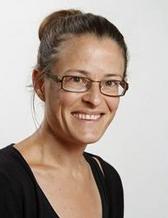
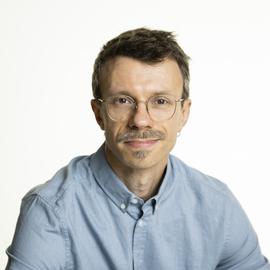
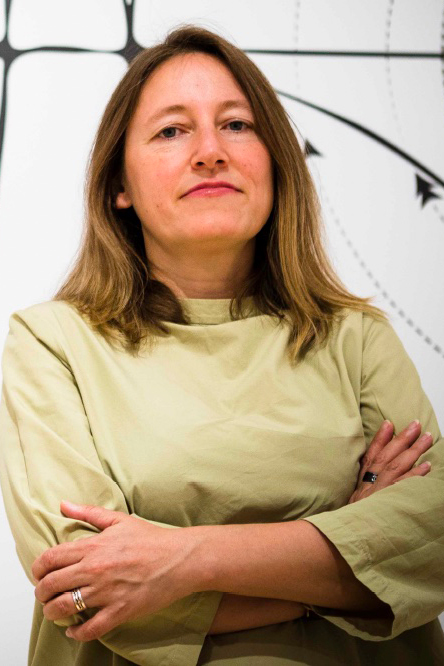
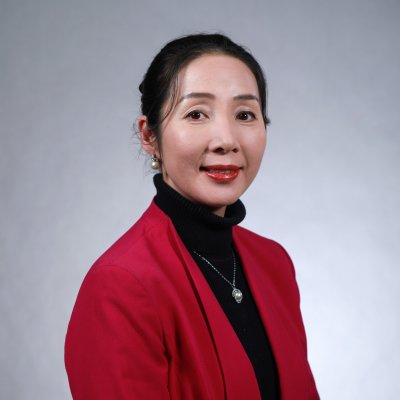
Jonas Jin is an Assistant Professor of Instruction in the Department of Economics at Northwestern University, affiliated with the Weinberg College of Arts & Sciences. He holds a PhD from Princeton University (2023). His research focuses on development and labor economics, with an emphasis on inequality and intergenerational mobility in developing countries. Specific interests include childhood opportunities, education access, and parental migration impacts. Education: PhD, Economics, Princeton University (2023). Research Interests: Development economics, labor economics, education systems, socioeconomic inequality, intergenerational mobility, and migration studies. His work explores how structural factors influence opportunity disparities, particularly in low-income regions. Contact: jyjin@northwestern.edu | Office: KGH 3389 | Address: 2211 Campus Drive, Evanston, IL 60208.
Jonas Hjort is a Professor of Economics at University College London and holds a concurrent position as Professor of Economics at the University of Oslo. He serves as a Co-editor of the Journal of the European Economic Association . His research focuses on production dynamics in developing countries, with emphasis on firm behavior, technology adoption, and policy impacts. Hjort has received prestigious awards, including the Oliver Williamson Award (2018) and the CESifo Prize (2013). His work examines topics such as the economic effects of internet connectivity in Africa, regulatory frameworks in interlinked firms, and the role of ethnic divisions in firm productivity. Notable contributions include studies on wage compression in multinational corporations and the impact of research on policy in Brazilian municipalities. He leads the ACCESS project funded by the ERC Consolidator Grant (101043465). Grants: ERC Consolidator Grant (ACCESS, 101043465) Labs/Teams: Leads research teams at UCL and Oslo, collaborating with institutions like NBER and CEPR. His articles span American Economic Review , Quarterly Journal of Economics , and Journal of the European Economic Association , reflecting interdisciplinary engagement across development economics, industrial organization, and political economy.
Annika Lindskog is a Lecturer at the Department of Economics with Statistics at the University of Gothenburg. Her research focuses on development economics with emphasis on health, gender, and educational disparities. She investigates topics such as the long-term impacts of cultural interventions on gender norms, son preference in education systems, and HIV/AIDS epidemiology linked to socioeconomic factors. Current projects include analyzing cash transfer programs in India and the persistence of female genital cutting in Africa, funded by the Ragnar Söderberg Foundation. Lindskog has co-authored over 30 peer-reviewed articles in journals like the Journal of Development Economics and Health Economics . Her work combines microeconomic theory with econometric analysis to address questions of human capital accumulation, risk behavior, and policy effectiveness. Teaching areas include development economics and health economics. Notable publications explore gender-based educational inequalities in India, condom negotiation among sex workers in South Africa, and the relationship between education reforms and HIV transmission in Botswana. Lindskog collaborates frequently with researchers like Heather Congdon Fors and Dick Durevall. Her research spans multiple continents, with fieldwork in Ethiopia, Malawi, and sub-Saharan Africa more broadly. Lindskog’s methodological approaches integrate qualitative case studies with large-scale demographic datasets. Her recent work on historical disease exposure’s influence on government pandemic responses highlights interdisciplinary connections between development economics and public policy. Despite no listed awards, her extensive publication record and grant-funded research demonstrate academic impact.
Kevin Milligan is a Professor of Economics and Director of the Vancouver School of Economics at the University of British Columbia. He holds affiliations with the National Bureau of Economic Research as a Research Associate and the C.D. Howe Institute as a Research Fellow. Since 2011, he has served as co-editor of the Canadian Tax Journal, contributing significantly to tax policy discourse in Canada. Milligan received his PhD in 2001 from the University of Toronto, following studies at Queen's University. His doctoral thesis was awarded the 2002 National Tax Association dissertation award, establishing his early impact in the field of tax economics. His research spans public and labor economics with particular focus on child and elderly economics, tax policy, and labor market dynamics. Milligan's work often examines the intersection of social policy and economic behavior, particularly how government programs affect family decisions, retirement patterns, and intergenerational mobility. He has made significant contributions to understanding universal childcare programs, disability insurance systems, and income inequality trends in Canada. Milligan's publications reveal a consistent focus on empirical analysis of Canadian policy with increasing attention to international comparisons, particularly regarding longevity, retirement incentives, and cross-country differences in social programs. His recent work leverages administrative data to examine cohort life expectancy and income-longevity relationships. 2002 National Tax Association dissertation award Harry Johnson Prize (awarded twice) Kendrick Prize Doug Purvis Memorial Prize As co-editor of the Canadian Tax Journal since 2011, Milligan has shaped tax policy discussion in Canada through numerous editorials and commentaries. His research has informed policy debates on child benefits, pension systems, disability insurance, and income tax structure. Milligan's work with the Social Security Programs and Retirement Around the World project has established him as a leading expert on comparative retirement systems.
Jeanne Brooks-Gunn is the Virginia and Leonard Marx Professor of Child and Parent Development and Education at Teachers College, Columbia University, and Co-director of the National Center for Children & Families. She holds affiliations with the departments of Human Development and Developmental Psychology. Brooks-Gunn earned a B.A. from Connecticut College, M.Ed. from Harvard University, and Ph.D. from the University of Pennsylvania. Her research focuses on child and family policy, early childhood interventions, adolescent development, neighborhood poverty effects, and gender studies. She leads large-scale longitudinal studies like the Fragile Families and Child Well-Being Study, Project on Human Development in Chicago Neighborhoods, and Early Head Start evaluation. Her work emphasizes translating research into policy, particularly in early education and two-generation programs. Publications include over 700 peer-reviewed articles and books such as Adolescent Mothers in Later Life and First-Year Maternal Employment and Child Development . She collaborates on initiatives like the Head Start program evaluation and the Early Advantage global ECEC study. Education: B.A., Connecticut College M.Ed., Harvard University Ph.D., University of Pennsylvania Key Projects: Fragile Families and Child Well-Being Study Early Head Start Evaluation National Center for Children & Families initiatives Grants & Advising: Lead researcher on NIH-funded longitudinal studies Advisor to policy bodies on early childhood education and poverty Labs/Teams: National Center for Children & Families (NCCF), a multidisciplinary team advancing child policy and development research.
Dr. Maaike Matelski is an Assistant Professor in Social and Cultural Anthropology at the Vrije Universiteit Amsterdam’s Faculty of Social Sciences and Humanities. She is affiliated with the Mobilities, Beliefs and Belonging (MOBB) research group. Her work focuses on civil society activism, rights-based advocacy, and transnational solidarity, particularly in Myanmar, Kenya, and Ghana. She holds a PhD recognized by the Praemium Erasmianum Prize (2018) and has produced influential publications like her 2024 book on Myanmar’s civil society. Her research explores advocacy legitimacy, intergenerational activism in Myanmar, and long-distance activism by diaspora communities. She coordinates the Anthropology department’s education program, teaching courses on conflict, peacebuilding, and professional anthropology. Her current projects include the Ethnographic Impact for Social Justice initiative (2023–2026), collaborating with societal partners to amplify local resistance narratives. She co-produced the documentary Letter to a Friend (2025) with Shan State youth. Research Interests: Civil society dynamics, transnational advocacy, community representation, human rights, Myanmar studies, Kenya studies, gendered activism, and diaspora networks. Key Projects: Community-based legitimacy toolkit (2021–2023), follow-up studies in Ghana and Kenya, and the Starter Grant project on social justice ethnography. Matelski has advised Indonesian PhD candidates researching hydrosocial dynamics and waste recycling in Indonesia. Her work has been shortlisted for the Routledge Area Studies Impact Award (2023) and recognized through media contributions addressing Myanmar’s socio-political crises.
Courtney Angela Brkic is a Lecturer at George Mason University, specializing in Creative Writing. She teaches courses such as Advanced Fiction Writing Workshop , Experimental Fiction , and Resistance Literature , with a focus on warzones and bicultural experiences. Education : M.F.A. in Creative Writing from New York University (2001) Research & Creative Work spans fiction, non-fiction, and translation, exploring themes of war, displacement, and historical memory. Her notable publications include The Stone Fields , documenting forensic work in Bosnia, and Stillness , a short fiction collection on Balkan conflicts. Scientific Awards include a Fulbright scholarship, National Endowment for the Arts fellowship, and Whiting Writer’s Award. Stillness received critical acclaim as a Barnes & Noble Discover pick and New York Times Notable Book. Brkic’s media presence includes interviews with NPR and contributions to Guernica , National Geographic , and The New York Times . She has lectured on ethical storytelling and post-war justice through literature and journalism.
Samuli Reijula is a University Lecturer in Theoretical Philosophy at the University of Helsinki, holding a permanent faculty position equivalent to US associate professor. He is also a docent (habilitation / adjunct professor) in Practical Philosophy and an Academy Research Fellow. Reijula is affiliated with the TINT Centre for Philosophy of Social Science and specializes in the philosophy of science, cognitive science, and institutional epistemology. His research focuses on how science works as a distributed cognitive system, examining scientific problem-solving at multiple levels from individual scientists to research groups and scientific communities. Reijula investigates cognitive diversity, coping with uncertainty, epistemology of simulation modeling, foundations of scientific classification, and issues related to the science of science, scientific discovery, and science policy. He is particularly interested in viewing science as a collective cognitive system and understanding the social, cognitive, and institutional preconditions for well-functioning scientific research. Reijula's recent publications explore topics including objectivity in academic recruitment, AI and epistemic humility, the Fediverse as a solution to epistemic challenges in the AI era, diversity in scientific communities, and the concept of Bildung university. His work often bridges philosophy with practical policy implications, addressing issues like inheritance tax policy, public authorities' use of social media platforms, and the philosophical foundations of open science. He has received research funding from the Academy of Finland for his project 'Modeling the republic of science: Collaborative problem solving and collective rationality in scientific inquiry' (2020-2025). Reijula is scheduled to visit Carnegie Mellon University's Center for Formal Epistemology and Institute for Complex Social Dynamics in October-November 2024. His approach integrates philosophical analysis with computational methods, particularly agent-based modeling, to understand scientific communities as complex adaptive systems.
Linda O'Keeffe is a Professor and Head of the School of Art at the University of Edinburgh's Edinburgh College of Art. Her work bridges sound art, science, and community engagement, focusing on acoustic ecology, gender inclusion, and climate change. She founded Women in Sound Women on Sound (WISWOS) to advocate for women in sonic arts and served as Editor-in-Chief of Interference Journal . O'Keeffe holds a PhD in Sociology & Media from NUI Maynooth and has taught at institutions including Lancaster University and National University of Ireland. Her research explores soundscapes' social and environmental impacts, with notable projects like Hybrid Soundscapes and collaborations with Non Random on bioethical art. She has received multiple awards, including the Arts Council of England Travel Award (2018), and her work spans installations, performances, and soundwalks. Education: PhD in Sociology & Media (NUI Maynooth), MA in Virtual Realities (NCAD), BFA in Art & Design (IADT) Key Roles: Founder of WISWOS, ISSTA President (2015-2017), Curator of Sounds Like Her exhibition Recent Projects: Continents Drifting (2023), Encountering Survival (2022), Evolving Ourselves (2022) Her research interests emphasize interdisciplinary methodologies, such as soundwalks and participatory practices, to address ecological and social issues. O'Keeffe’s art explores the interplay between technology, gender, and environmental justice, often collaborating with scientists and communities globally. Awards: Arts Council International Travel Award, New Foundations Award, and numerous residencies including Ceramic House (2022) and Huddersfield Holocaust Center commissions. Advising & Grants: Supervises graduate students in sound art, gender studies, and interdisciplinary practice. Secured funding through ISSTC conferences and Creative Scotland. Labs/Teams: Leads Non Random collective (art-science collaborations) and directs WISWOS, fostering international networks for women in sound.
Magdalena Olszanowski is a Polish-born writer, artist, and educator based in Montreal. She holds a PhD in Communication Studies from Concordia University, where she currently serves as faculty, and also teaches at Dawson College. Her academic career bridges creative practice and scholarly inquiry, focusing on the intersections of feminist theory, digital culture, and embodied experience. Her research interests center on feminist art practices, digital self-representation, and the early web. She investigates how women and marginalized communities use digital platforms for self-expression and community building, with particular attention to Instagram's role in feminist exchange. Her work also explores the connections between motherhood, embodiment, and creative practice, examining how caregiving shapes artistic production and theoretical frameworks. Additional areas of interest include censorship in digital spaces, women in electronic dance music culture, and the politics of self-imaging online. Through her publications spanning from 2013-2024, Olszanowski has established herself as a significant voice in feminist digital studies. Her research reveals consistent themes of resistance, community building, and the reclamation of digital spaces for marginalized voices. She examines how platforms that appear neutral often reinforce existing power structures, while simultaneously documenting how users develop creative tactics to circumvent these limitations. Her more recent work increasingly engages with ecological concerns and the relationship between land, embodiment, and digital practice. Magdalena maintains an active creative practice alongside her academic work through her Substack publication "Near to The Wild Heart," where she writes at the intersection of philosophy, motherhood, art, and desire. This platform allows her to explore personal experiences of embodiment and care while connecting them to broader theoretical frameworks.
Professor Victoria Carrington serves as Head of the School of Education at the University of Tasmania, leading teacher education programs with focus on young people, digital literacy, and intergenerational well-being. Her research examines digital technologies' impact on literacy practices and identity formation. She has challenged misconceptions about technology's influence on youth literacy, demonstrating sophisticated literacy practices in gaming communities. Current research investigates mobile technology's role in identity construction and data privacy concerns for young users. Professor Carrington contributes to educational policy through submissions to the Tasmanian Teachers Registration Act review and literacy framework development. She leads initiatives addressing educational achievement in regional and disadvantaged communities.
Gaëlle Simard-Duplain is an Assistant Professor in the Department of Economics at Carleton University, affiliated with the Faculty of Public and Global Affairs. Her research focuses on health and labour market outcomes, emphasizing how policy and family dynamics influence economic vulnerability and inequality. She holds a PhD from the Vancouver School of Economics (University of British Columbia), along with prior degrees from Concordia University. Her expertise includes intergenerational transmission of outcomes, economic vulnerability, and the use of administrative and survey data linkages. Key research themes involve mitigating inequalities through family and policy interactions, with a focus on Canada's socio-economic landscape. Recent publications explore topics like childhood disadvantage's long-term economic costs, gender earnings gaps influenced by marital status, and the impact of informal care on employment. Her work integrates empirical analysis with policy relevance, addressing modern challenges in health, labor markets, and family structures. Languages spoken: English, French, Spanish.
Fazley Siddiq is a Professor in the Faculty of Business at the University of New Brunswick Saint John, where he has been a tenured faculty member since 2013. Previously, he served as Dean of Business at UNB Saint John from 2013 to 2018 and as Director of the School of Public Administration at Dalhousie University from 2005 to 2011. His academic career includes teaching positions at Queen's University and professional experience with the World Bank and United Nations Development Program. Professor Siddiq holds a PhD from Dalhousie University as a Commonwealth Scholar. He has held prestigious fellowships including at the Harvard Kennedy School and as Canada's Fulbright Visiting Research Chair at the Woodrow Wilson International Center for Scholars (2012-2013). His research focuses on economics, public policy, and population studies with expertise in wealth distribution, migration patterns, demographic trends, and environmental economics. He has published extensively in top journals including the Review of Income and Wealth and International Advances in Economic Research, and is currently writing a book on North American population dynamics. Analysis of his publication record reveals consistent methodological rigor in demographic economics, utilizing Lorenz curves, Gini coefficients, and spatial analysis to examine population volatility, regional inequality, and historical wealth distribution across Canada, the United States, and colonial contexts. Notable recognitions include: Ambassador’s Medal (2023) for distinguished service to Canada-US Relations Dedicated Service Award from the International Atlantic Economic Society (2022) Fulbright Visiting Research Chair (2012-2013) Professor Siddiq has secured significant research funding including grants from CAMET ($70,182), Department of National Defence ($73,901), and Canada Revenue Agency ($66,000) for studies on international student economic impact and underground economies. As Dean, he spearheaded UNB Business Faculty's AACSB accreditation process and established Canada's most distinguished business advisory board. He recently organized the Fulbright-funded "Financial Management for New Immigrants" program serving 23 countries. He remains active in academic leadership as a life member of the International Atlantic Economic Society and through board service with the Canadian Federation of Business School Deans and Institute of Public Administration of Canada.
Youqin Huang is a Professor in the Department of Geography, Planning, and Sustainability at the University at Albany, SUNY , where she also serves as the Associate Vice Provost for Faculty Success . Her academic career spans over two decades, with leadership roles including Executive Director of the Confucius Institute for China’s Culture and Economy and Chair of the Department of Geography, Planning, and Sustainability . Education: PhD, 2001, University of California, Los Angeles MA, 1997, University of California, Los Angeles BS, 1992, Peking University Dr. Huang’s research focuses on housing inequality , migrant integration , urban development , and social wellbeing in transitional China. Her work examines homeownership paradoxes, residential mobility patterns, and the health impacts of housing policies. She is a co-director of the Urban China Research Network and has secured significant grants, including NIH funding for studies on migration and children's wellbeing. Her recent publications analyze topics like energy burden disparities , redlining legacies in pandemic park use , and spatial health inequalities . These studies reflect her expertise in integrating spatial analysis with social policy evaluation . Awards: Outstanding Service Award (American Association of Geographers) Outstanding Service Award (Chinese Community Center of the Capital District) President’s Excellence Award for Public Engagement President’s Excellence Award for Research Dr. Huang mentors students and collaborates on interdisciplinary projects through roles like Research Associate at the Center for Social and Demographic Analysis . Her career bridges academic leadership with applied research on China’s urban transformations.
Dr. Alina Schmitz is a Researcher at the Chair for Social Structure and Sociology of Ageing Societies within the Faculty of Social Sciences at Technische Universität Dortmund . She serves as Scientific Coordinator of the HBS doctoral program New Challenges in Aging Societies (funded by Hans Böckler Foundation) and has held visiting researcher positions at King’s College London and Boston University. Education: PhD in Sociology (2020, TU Dortmund), MA in Rehabilitation Sciences (2015, University of Cologne) Key Research Areas: Health sociology, life course analysis, social inequality, gender disparity, quantitative aging research Recent Projects: DFG-Project AGE-WELL on material conditions and older wellbeing in Germany/Poland; German-Israeli Minerva School collaboration on social networks Her research demonstrates significant focus on health inequalities across Europe, particularly examining gender differences and regional disparities through multilevel analyses. Recent publications investigate pandemic impacts, caregiving strain, and fundamental cause theory through quasi-experimental approaches. Scientific Leadership: Speaker of Medical & Health Sociology Section (DGS 2024), PhD Committee Member (TU Dortmund 2022) Major Awards: Daimler & Benz Fellowship (2024), Young Scientist Award (ASI 2021), Minerva School funding (2021) She actively contributes to doctoral education through course instruction in health and life-course sociology, while maintaining memberships in six major academic societies including the German Sociological Association and European Population Studies.