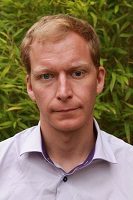
Laurens Hartveld is a Lecturer at the Department of Political Science and Public Administration within the Faculty of Social Sciences and Humanities at Vrije Universiteit Amsterdam. His roles include teaching and academic coordination in public administration and organizational science. He currently teaches six courses, including 'HP Research Project in Public Administration and Organization Science' and 'Kwalitatieve onderzoeksmethoden 1'. While no formal research awards are listed, his teaching focuses on qualitative methodologies, policy analysis, and organizational governance. Courses emphasize academic skills development, market and government dynamics, and mentorship in public administration. Laurens' professional activities are primarily centered on academia without reported ancillary roles. No specific grants or lab affiliations are mentioned in the provided data. His academic advising activities and future research directions remain unreported.
Dr. David Case is a Computational Scientist at the Department of Meteorology, University of Reading. His role is affiliated with the National Centre for Atmospheric Science (NCAS). He is based in the Harry Pitt building (Office HP 105) and can be reached at d.h.case@reading.ac.uk. His work likely focuses on computational methods applied to meteorological and atmospheric science challenges. Education background details are not explicitly provided in the text, though his role suggests advanced training in meteorology or computational sciences. Research interests are inferred from his departmental affiliation to include meteorological modeling, climate dynamics, and atmospheric data analysis. No specific awards or grants are listed in the provided text. His current position emphasizes computational expertise within a leading meteorology department.
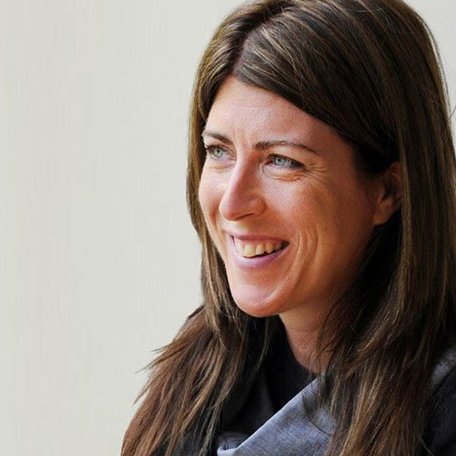
Sharon Baurley is Professor of Design & Materials and Director of the Materials Science Research Centre at the Royal College of Art. She provides intellectual and strategic leadership for the Centre, manages research funding, staff, and laboratories, while also contributing to cross-College business through various committees. Previously, she served as Head of Design Products at the RCA and Head of Design at Brunel University London, where she oversaw 700 students and led the Research Excellence Framework 2014 submission. Sharon's research focuses on the circular economy and advanced inter-disciplinary human-centred design methods to explore new 'Product Cultures' and the social and materials systems they inhabit as a strategy for post-industrial Design in the age of the Anthropocene. Her work aims to de-couple the use of materials resources from economic development within the context of the 'Fab City' concept, where cities are locally productive while globally connected. She employs synthetic thinking to integrate methodology from diverse disciplines including HCI, drama, sensory science, psychophysics, engineering, and materials science with design methods to enhance understanding of human culture and the human condition. Her recent publications demonstrate a strong emphasis on sustainable materials systems, textile circularity, and consumer experiences in the circular economy. The research shows an evolution from early work on smart textiles toward increasingly interdisciplinary approaches addressing environmental sustainability challenges, particularly in the textile and clothing industries. Current projects focus on digital tools for dematerialization, bio-manufacturing textiles from waste, and sensory materials libraries. Josef Otten Award for Technical Innovation Ideacomo Award for Printing and Dyeing Osborne and Little Award at New Designers British Finalist, International Textile Design Contest Sharon has supervised PhD students including Hannah Auerbach George and Chiara Tommencioni Pisapia. She has secured significant research funding, including as Principal Investigator for the £5.4M Textiles Circularity Centre under UKRI's NICER Programme and the £845,000 Consumer Experience Digital Tools project. Her research partnerships include collaborations with Vodafone, HP Labs, University of York, University of Leeds, and international institutions in Brazil. As Director of the Materials Science Research Centre, Sharon leads a team focused on developing innovative materials solutions for sustainability challenges. Her center is integral to the RCA's strategic research direction and contributes significantly to national efforts toward a circular economy, particularly in the textiles sector.
Janice Klein is a Senior Lecturer in Organizational Change at the MIT Sloan School of Management, specializing in leadership development and organizational transformation. She teaches in the Leaders for Global Operations (LGO) and System Design and Management (SDM) programs, emphasizing global team dynamics and virtual collaboration. Her research focuses on knowledge transfer, high-performance teams, and aligning operational strategies with human resource practices. Education: BS in Industrial Engineering (Iowa State University), MBA (Boston University), PhD in Industrial Relations (MIT Sloan School of Management). Her research explores organizational change mechanisms, virtual teamwork efficacy, and the implementation of new manufacturing systems. Notable works include True Change (2004) and Revitalizing Manufacturing (1990), which examine organizational adaptation and manufacturing innovation. Her articles in Harvard Business Review address employee involvement challenges and manufacturing reform implications. Consulting experience includes advising United Technologies, Xerox, HP, and Goodyear on team dynamics and organizational restructuring. She leads a multidisciplinary team investigating globally dispersed teams' performance and sustainability.
Richard Serjeantson is a Lecturer in History at Trinity College, University of Cambridge. He holds a B.A. from the University of York, M.Phil. and Ph.D. from Cambridge, and was Procter Fellow at Princeton University. His research spans British and European history from Renaissance to Enlightenment, specializing in philosophy-science interactions, political thought, manuscript/book history, and religious debates. Serjeantson supervises doctoral research across History, History and Philosophy of Science, and English faculties. He teaches for the M.Phil. programs in Political Thought, Early Modern History, and HPS. His recent scholarly work includes co-editing an early Descartes manuscript (Oxford, 2023) and ongoing research on Francis Bacon's political and philosophical contributions. His publications examine testimony and proof in early science, Hume's philosophy, Bacon's natural philosophy, and educational history. Editorial responsibilities include the Oxford Francis Bacon project and Journal of the History of Ideas. Fellowships: Procter Fellow, Princeton University Crausaz-Wordsworth Fellow, CRASSH
Harold (Hal) Abelson is the Class of 1922 Professor of Electrical Engineering and Computer Science at MIT and a Fellow of the IEEE. He has profoundly influenced computer science education through his co-development of MIT’s foundational course Structure and Interpretation of Computer Programs and its textbook with Gerald and Julie Sussman. His work on Logo programming and Turtle Geometry (with Andrea diSessa) pioneered computational thinking in education. Abelson is a founding director of Creative Commons, Public Knowledge, and the Free Software Foundation, advocating for open digital commons. Awards include the MacVicar Faculty Fellow (1992), Bose Award (1992), and Taylor L. Booth Education Award (1995). Education: A.B. in Mathematics from Princeton University (1964) Ph.D. in Mathematics from MIT (1973) Research Interests: Information technology and policy Ethics and law on the electronic frontier Educational technology and computational pedagogy Amorphous computing and programmable matter Symbolic-numerical integration in scientific computing Publication Trends: His work focuses on special-purpose computing, symbolic algebra in dynamical systems, and Lisp/Scheme programming for stratified design. Articles highlight interdisciplinary applications in physics, engineering, and education, with emphasis on autonomous simulation, hardware-software co-design, and computational abstraction. Scientific Awards: MacVicar Faculty Fellow (1992) Bose Award (MIT School of Engineering teaching award, 1992) Taylor L. Booth Education Award (1995) Academic Leadership: Abelson co-directs the MIT-Microsoft iCampus Research Alliance in Educational Technology and the MIT Council on Educational Technology, driving initiatives like MIT OpenCourseWare and DSpace. He consults for HP Laboratories in digital information systems. Labs and Teams: He co-directs MIT’s Project on Mathematics and Computation (nicknamed 'Switzerland'), which explores amorphous computing and computational tools for scientific and engineering challenges.
Michael Warner is a Lecturer of Physics at Colorado Mesa University, teaching freshman physics laboratory courses focused on engineering disciplines. His research expertise lies in astronautics and trajectory optimization, with a focus on computational methods and finite element analysis. He holds a PhD in Aerospace Engineering from Georgia Tech, an MS in Astronautics from George Washington University, and a BAE in Aerospace Engineering from Georgia Tech. His scholarly work includes publications on launch vehicle trajectory optimization, finite element methods, and computational error estimation. Notable contributions address capstone engineering design processes and launch site wind simulations. Warner emphasizes hands-on learning in his courses, fostering student collaboration through experimental setup, data analysis, and report writing. Outside academia, Warner is an avid explorer with extensive travel experience, including visits to all 50 U.S. states, 40 countries, and over 400 national park sites. His recreational interests include hiking, cycling, running, and various ball sports.
Benjamin Ogwo is a Professor and Chair of the Department of Career & Technical Educator Preparation at SUNY Oswego. With over 33 years of experience, he specializes in workforce development, technical training, and international educational policy. His roles include leading SUNY Oswego’s programs, advising global development agencies, and designing training initiatives for defense/aerospace industries. He previously held professorships at the University of Nigeria, Nsukka and served as an Adjunct Visiting Scholar at Penn State University. Education Background: Holds academic positions at SUNY Oswego, University of Nigeria, and Penn State (Adjunct role). No specific degree details are provided in the text. Research Interests: Focuses on aligning technical education with global workforce needs, particularly in Sub-Saharan Africa. His work emphasizes policy development for TVET systems, e-learning innovations, and bridging formal/informal training gaps. He has pioneered programs like the World Bank-sponsored Nigerian technical teacher training and UNDP’s South Sudan vocational policy framework. Advising & Grants: Managed international projects with World Bank, UNESCO, UNDP, and African Development Bank. Projects include USAID proposals for Congo’s training programs and HP collaborations. His consultancy spans 20+ countries, designing sustainable workforce solutions for defense/aerospace sectors and agricultural education. Labs/Teams: Collaborates with global institutions like Tertiary Education Trust Fund and African Technology Policy Studies Network. Leads SUNY Oswego’s initiatives in cloud-based professional development for educators.
Jorge González-Rodríguez is a Substitute Professor in the Department of Chemical Engineering at Universidade de Santiago de Compostela. He holds a Chemical Engineering degree and Master’s in Chemical Engineering and Bioprocesses from the same institution, where he also completed his PhD under the BioGroup. His research focuses on advanced photocatalytic methods for wastewater treatment, particularly using magnetite-functionalized nanoparticles and photo-Fenton processes to degrade micropollutants. He has conducted research stays at RWTH Aachen University and the University of Porto through FPU and Galician government fellowships. Education: Bachelor’s in Chemical Engineering (Universidade de Santiago de Compostela, End of Degree Prize recipient) Master’s in Chemical Engineering and Bioprocesses (Universidade de Santiago de Compostela) PhD in Chemical Engineering (Universidade de Santiago de Compostela, supervised by María Teresa Moreira and Gumersindo Feijoo) Research Interests: Sustainable wastewater treatment technologies, photocatalytic degradation of persistent contaminants, design of nanomaterial-based catalysts, and scale-up of lab-scale processes to pilot plants. His work emphasizes high reaction rates and low selectivity in removing micropollutants like pharmaceuticals and dyes. Awards: End of Degree Prize (Universidade de Santiago de Compostela) Grants & Collaborations: Linked to projects HP-NANOBIO and SPOTLIGHT. Conducted research stays at RWTH Aachen University and University of Porto. Collaborates with internationally recognized groups in environmental engineering and nanotechnology. Labs/Teams: Part of the BioGroup research team at Universidade de Santiago de Compostela, focused on bioprocesses and environmental technologies.
Laurent LE BRUSQUET is an Associate Professor at CentraleSupélec's Laboratoire des Signaux et Systèmes (L2S), specializing in multivariate data analysis, tensor decomposition, and statistical learning. His research focuses on applications in health informatics, energy systems, and Industry 4.0, with notable contributions to the RGCCA package and exposome research. He collaborates on the AP-HP/INRIA/CentraleSupélec chair addressing frailty in aging. Active in teaching, he leads courses on machine learning, optimization, and multivariate data analysis for engineering students. His team includes PhD students Abdelhak Boudehane, Fabien Girka, and Lucas Sort. Research Interests: Multiway data analysis, tensor factorization, joint analysis of heterogeneous data, health biomarkers, and stochastic modeling. Key Projects: ATHLETE (exposome research), 3D stochastic dosimetry for electromagnetic fields, and UAV path optimization. Publications span journals like Biometrics and IEEE Journal of Electromagnetics , emphasizing methodological advancements and interdisciplinary applications. Teaching: Courses on statistics, machine learning, optimization, and probability across CentraleSupélec's engineering programs. Labs/Teams: Modelling and Estimation team, SYCOMORE, Inverse Problems Group.
Dr John Stevens is a faculty member at the Royal College of Art (RCA), School of Design, where he contributes to the Global Innovation Design MA/MSc programme. He holds a BSc in Molecular Biology from King's College London, an MDes from the RCA/Imperial College, and a PhD in Design and Strategy from Cambridge University. His work bridges design, strategy, and social innovation. Education: PhD in Design and Strategy, Cambridge University MDes in Industrial Design Engineering, RCA / Imperial College London BSc in Molecular Biology, King's College London Research Interests: John's research focuses on the application of design to humanitarian, social, and cross-cultural innovation. He explores how design can address complex societal challenges, particularly through NGO partnerships and transnational collaborations. His work spans sustainable design, electronic health usability, and design education. His recent publications reflect a strong emphasis on design for health, usability of electronic medical records, and inclusive design practices. He investigates how design can facilitate better clinical workflows, support marginalized users, and promote sustainable behaviors. Scientific Contributions & Collaborations: Design advisor for Real Relief and Oxfam under the Humanitarian Innovation Fund Member of the AHRC Peer Review College since 2016 External examiner for PhD and MSc programmes at Cambridge and Aston Universities Leader of FuturoDesign Lab at Moscow University of Industry and Finance Advising & Teaching: John currently supervises three PhD researchers at the RCA and has previously held the position of Senior Lecturer at Northumbria University. He is actively involved in design education innovation and curriculum development for humanitarian and social design. Industry Experience: Before academia, he spent 12 years in industry, including as Head of Design/UX in dot-com tech and as an independent consultant for clients such as Orange, British Gas, HP, Diageo, Sky, and Which?
Rob Hyndman is a Professor of Statistics at Monash University , Australia, in the Department of Econometrics and Business Statistics. He is an accredited statistician with the Statistical Society of Australia and a Fellow of both the Australian Academy of Science and the Academy of the Social Sciences in Australia . As former Editor-in-Chief of the International Journal of Forecasting (2005-2018), he has shaped academic discourse in his field. Research Interests : Forecasting, time series analysis, computational statistics, anomaly detection, and exploratory data analysis with applications in energy analytics, data visualization, and hierarchical forecasting Education : Bachelor of Science (Honours) and PhD from the University of Melbourne Leadership : Director of the International Institute of Forecasters (2005-2018) His scientific contributions span business analytics, machine learning, demography, and computational statistics, with recent publications focusing on responsible forecasting, hierarchical time series modeling in emergency medical services, and advanced decomposition algorithms like MSTL. His work addresses multiple UN Sustainable Development Goals through applications in public health (forecasting pandemic cases), energy (demand forecasting), and social equity (indigenous population life expectancy estimation). He has received prestigious awards including the Moran Medal (2007, Australian Academy of Science) Pitman Medal (2021, Statistical Society of Australia) Australian Awards for University Teaching (2022) Vice-Chancellor's Award for Innovation in Learning (2020) HP Innovation Research Award (2010) Vice Chancellor's Award for Postgraduate Supervision (2008) and multiple Dean's awards. Rob has supervised over 30 PhD and Masters students while developing open-source forecasting tools and organizing annual WOMBAT workshops on business analytics.
Maria Eugenia de la Morena Barrio is a Ramón y Cajal Researcher at the University of Murcia's Faculty of Medicine, Department of Medicine. She holds a Ph.D. from the Universidad de Murcia (2013), with a thesis titled 'Identification of new elements involved in antithrombin regulation.' Her research focuses on hematology, genetic disorders of coagulation, and molecular mechanisms underlying thrombosis. She leads the 'Hematology and Experimental Clinical Oncology' research group, emphasizing long-read sequencing technologies and structural variant identification in inherited blood disorders. Her studies span antithrombin deficiency, factor XI dysfunction, and genetic variants in thrombophilic conditions. She has pioneered work on N-glycosylation defects and their impact on coagulation proteins, as well as clinical guidelines for managing congenital disorders of glycosylation (CDG). Her work integrates genomic analysis with clinical outcomes, particularly in thrombotic risk stratification and anticoagulant therapy optimization. Key contributions include molecular characterization of structural variants in SERPINC1 (antithrombin gene), discovery of novel pathogenic variants in ITGB3 and HPS genes, and translational research on hepatic organoids for coagulation factor deficiencies. She collaborates internationally on projects linking genetic diversity to thrombotic phenotypes and has contributed to understanding the role of selenoproteins in antithrombin regulation. Her research narrative emphasizes interdisciplinary approaches, combining clinical hematology with advanced genomics and bioinformatics. She has advised on antithrombin deficiency management during pregnancy and explored the role of Factor XI in antiphospholipid syndrome. Grants and funding are implied through her prolific publication record, though specific grants are not detailed here. Labs/Teams: Part of the Hematology and Experimental Clinical Oncology group at the University of Murcia, collaborating with institutions on projects involving long-read sequencing and coagulation disorder genetics.
Prof. Dr. Stefan Funken serves as Professor of Numerical Analysis, Dean of the Faculty of Mathematics and Economics, and Deputy Director of the Institute for Numerical Mathematics at the University of Ulm. His distinguished academic career spans over two decades with significant contributions to numerical mathematics and computational methods. His educational journey includes: 1982-1986: Vocational training as energy plant electronics technician at RWE 1986-1988: Abitur (secondary education) at Friedrich-Spee-Kolleg in Neuss 1988-1993: Mathematics studies at University of Hannover and Brunel University, earning MSc in Numerical Analysis (1992) and Diplom (1993) 1996: PhD with dissertation 'Fast solution methods for FEM-BEM coupling equations' at University of Hannover 2002: Habilitation on 'Contributions to a posteriori error estimation in the numerical treatment of elliptic partial differential equations' at University of Kiel Prof. Funken's research focuses on developing and analyzing discretization methods for partial differential and integral equations. His work emphasizes efficient algorithm implementation in MATLAB, C++, and Python, with applications spanning engineering simulations, corrosion analysis, and fluid dynamics. He has made seminal contributions to adaptive mesh refinement techniques, a posteriori error estimation frameworks, and the coupling of finite element and boundary element methods. His recent publications reveal a consistent research trajectory focused on practical implementations of numerical methods, particularly through MATLAB-based tools. The work demonstrates evolution from theoretical foundations to robust software implementations that serve both academic research and industrial applications, with particular emphasis on computational efficiency and error control. Prof. Funken actively mentors doctoral researchers, with current students working on adaptive mesh refinement algorithms, polygonal mesh analysis for corrosion simulation, and lubrication oil validation. He has developed extensive educational resources including the 'Mathe? Logisch!' YouTube channel (launched 2018) and specialized tutorials for LaTeX and MATLAB learning. He maintains active professional engagement through memberships in the German Mathematical Society (DMV) and the Society for Applied Mathematics and Mechanics (GAMM), contributing significantly to the mathematical community through these organizations. Leading specialized research groups in numerical mathematics, Prof. Funken has developed critical software tools including epsBEM (Efficient P-Stable Boundary Element Methods) and AMESHREF (Matlab-Toolbox for Adaptive Mesh Refinement in 2D). His team bridges theoretical numerical analysis with practical computational implementations, creating accessible educational resources and open-source tools that democratize advanced numerical methods for students and researchers worldwide.
Full Professor and Director of the Valencian Research Institute of Artificial Intelligence (VRAIN) and the Research Center on Software Production Methods (PROS) at Polytechnic University of Valencia. Holds leadership positions including Director of Internationalization and Transference at VRAIN since 2022, Director of PROS since 2008, and former Director of the Department of Informatics Systems and Computation (2001-2002). PhD in 1992 after research at HP Labs, Bristol. Research spans conceptual modeling, model-driven engineering, and bioinformatics applications. Created the OASIS specification language and OO-METHOD production framework. Led development of IntegraNova, an MDA-based Conceptual Model Compiler commercialized through CARE Technologies (founded 1996). Current work focuses on Conceptual Modeling-based interpretation of Human Genome data. Recent publications demonstrate strong interdisciplinary convergence between software engineering and genomics, with significant output in model-driven development validation, ontology-based modeling, and genomic data management systems. Key themes include empirical validation of modeling techniques, precision medicine infrastructure, and evolutionary algorithms for requirement traceability. International Peter Chen Award on Conceptual Modeling (2016) ER Fellow Award (2010) Supervised 33 PhD and 51 Master's theses. Secured extensive funding including 7 international, 8 national, and 5 regional competitive projects plus 10 technology transfer projects. Edited 33 conference proceedings and organized 12 international conferences. Serves on steering committees for ER, CAiSE, ESEM, and other major conferences. Leads the PROS Research Center and multidisciplinary teams bridging information systems and bioinformatics. Current projects develop tools for genomic data interpretation using conceptual modeling frameworks, with applications in precision medicine and life engineering.