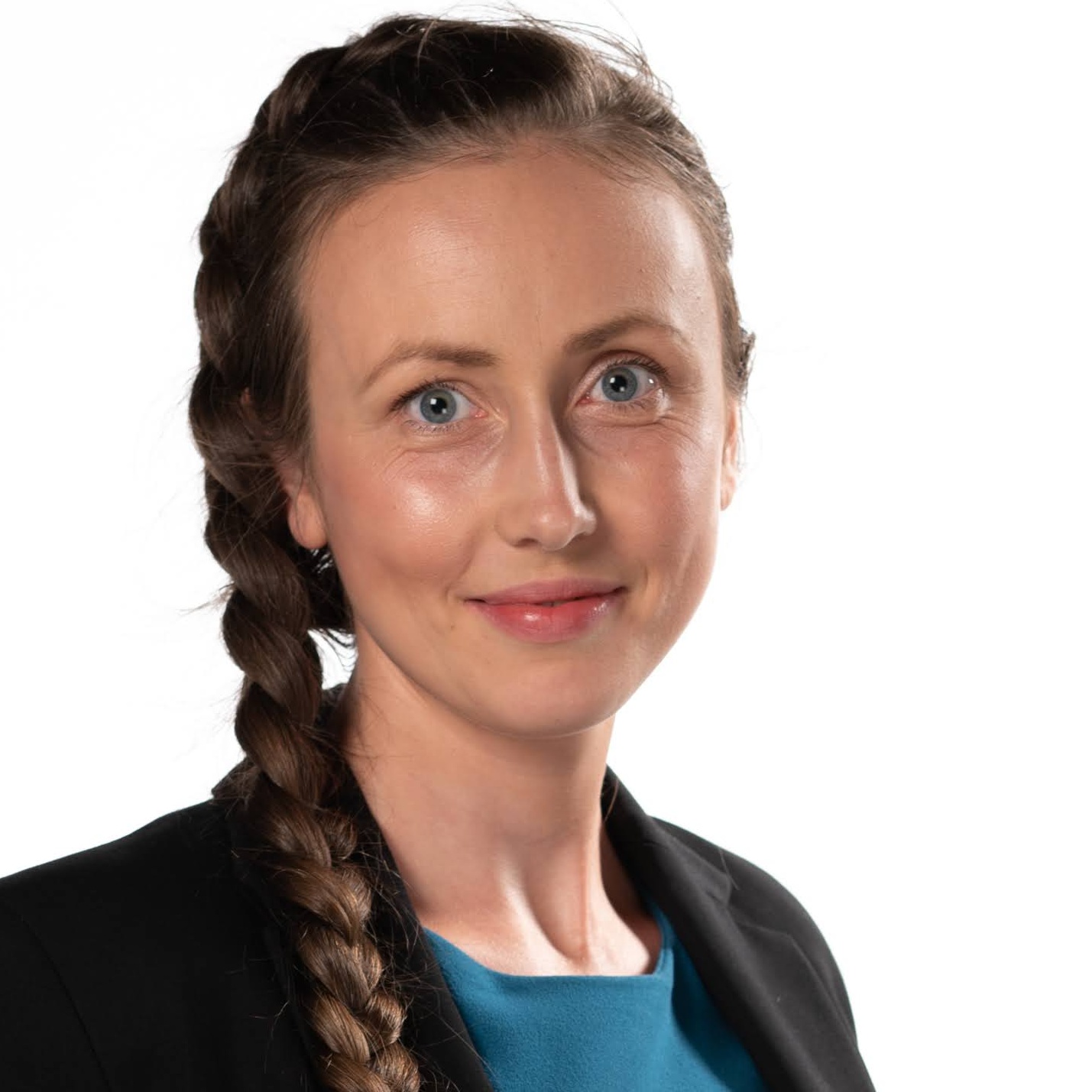
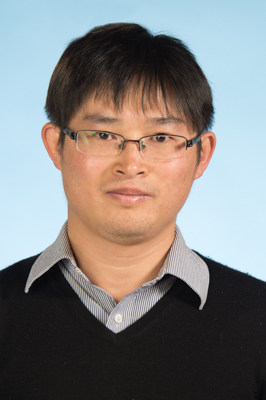
Prof Raphaël Phan is a Professor and Deputy Head of the School of IT at Monash University Malaysia. His expertise spans security, cryptography, malicious AI, emotion recognition, motion analysis, and generative AI. He has published over 220 papers and led significant projects including privacy-preserving data mining funded by UK MoD and Malaysian government grants exceeding RM4 million. He co-designed the BLAKE hash function (SHA-3 finalist) and has an h-index of 50. Education: PhD in Cryptography (Multimedia University, 2005), MEngSci (2001), BEng (Hons) Computer Engineering (1999). Research focuses on adversarial AI, brain networks, and secure systems. Current projects include Æmbience: emotion-aware virtual assistants using motion magnification. Supervised 15 PhD graduates and 19 current students. Professional affiliations: Chartered Engineer (IET, UK), HEA Fellow, Board of Engineers Malaysia. Recent work emphasizes causal bias detection in micro-expressions, brain tumor detection via advanced YOLOv8, and generative adversarial networks for medical imaging. His work bridges cybersecurity with neuroscience applications.
Associate Professor Judy Hart is a materials scientist at the School of Materials Science & Engineering, UNSW Sydney , specializing in the development of semiconducting materials for renewable energy applications. Her work integrates computational (DFT) and experimental approaches to understand composition-property relationships in systems like solid solutions , heterostructures , and doped materials for photocatalysis and solar cells . She leads projects funded by ARC Discovery and Linkage grants , including work on photo-electro-catalysis systems and stabilizing ceramic materials . Education: PhD in Materials Engineering (Monash University, 2007), BEng (Materials) (Monash, 2002) Professional Experience: Senior Lecturer (UNSW, 2017–), Lecturer (UNSW, 2013–2017), University of Bristol (2007–2012) Research Interests Her research focuses on designing materials for renewable energy , particularly photoelectrochemical water splitting and organic oxidation reactions . Key areas include Density Functional Theory (DFT) , defect engineering , band gap tuning , and nanostructured materials . She investigates ferroelectric polarization effects , metal oxide heterostructures , and stability of battery components , with applications in hydrogen production , CO2 conversion , and advanced battery materials . Scientific Awards Ramsay Memorial Fellowship (University of Bristol, 2007–2009) Teaching Contributions She is co-author of the 1st Australian & New Zealand edition of "Materials Science and Engineering: An Introduction" , and teaches courses on computational materials science , corrosion-resistant surfaces , mechanical behavior of metals , and materials design .
Dongming Xu is an Associate Professor in Business Information Systems at the University of Queensland Business School. She holds a PhD from the City University of Hong Kong in Information Systems and has established herself as a prominent researcher in the field of information systems with over 100 publications in top-tier journals and conference proceedings. Her educational background includes a PhD from City University of Hong Kong in Information Systems, though specific details about earlier degrees are not provided in the available text. Dr. Xu's research focuses on the confluence of information technology use and innovation, with particular emphasis on IT entrepreneurship, social media applications in business contexts, and business intelligence systems. Her work explores how information systems influence society and business performance, with applications spanning disaster management, eFinance, eHealth, and knowledge management. She combines theoretical model building with laboratory and field experiments, often developing prototype systems to validate her research. Her publication record demonstrates consistent high-quality output across multiple domains of information systems research, with recent work emphasizing digital disruption, platform ecosystems, social media in disasters, healthcare technology, and micro-learning applications. Her research shows a clear trajectory from foundational work on intelligent agents and decision support systems toward contemporary topics in digital transformation and platform-based innovation. Associate Editor, Information & Management Associate Editor, Journal of Electronic Commerce Research Associate Editor, Australasian Journal of Information Systems Dr. Xu has supervised numerous PhD students to completion, with research topics spanning digital disruption, IT startup development, social media in disasters, conceptual modeling, and environmental management. She has received multiple research grants, including current funding for 'Empowering Australia's Visual Arts via Creative Blockchain Opportunities' (2023-2026) and past projects on 'Smart micro learning with open education resources' (2018-2022). Her research has been supported by various agencies including the Hong Kong Government Research Grant Council, The National Natural Science Foundation of China, The University of Queensland, and City University of Hong Kong. She leads research in several key areas including IT entrepreneurship, business intelligence systems, and social media applications across multiple domains. Her work often involves developing innovative systems such as web-service-agent-based family wealth management systems, decision support systems for securities exception management, and knowledge management systems for disaster management.
Professor Valentyn Panchenko is a leading academic in Economics at the UNSW Business School, specializing in advanced econometric methodologies and financial modeling. Holding a PhD from the University of Amsterdam and an MPhil from the Tinbergen Institute, his research bridges theoretical econometrics with real-world financial applications, emphasizing big data analysis, network structures, and dependence modeling in economic systems. His expertise spans financial econometrics, time series analysis, non-parametric statistics, and agent-based economic simulations. He focuses on Granger causality, model evaluation, structural economic modeling, and bounded rationality with heterogeneous agents. His work has secured significant grants including ARC Discovery Projects and DECRA fellowships, enabling cutting-edge research on market dynamics and economic interactions. Professor Panchenko's publications appear in top-tier journals like the Journal of Econometric Theory, AEJ: Micro, Journal of Economic Dynamics & Control, and Journal of Banking & Finance. His methodological contributions include novel approaches to copula-based forecasting, nonlinear causality testing, and evolutionary learning models in strategic economic environments. While specific student advising details aren't provided, his research leadership demonstrates sustained impact across econometric theory, financial markets, and experimental economics.
Professor Mia Woodruff is a leading academic at Queensland University of Technology (QUT), holding the position of Professor in the School of Mechanical, Medical and Process Engineering within the Faculty of Engineering. She is the Group Leader of the Biofabrication and Tissue Morphology Group and Acting Director of the Herston Biofabrication Institute. Her research focuses on biofabrication, tissue engineering, and 3D printing applications in medicine, particularly in bone regeneration, vascular surgery, and personalized prosthetics. Woodruff holds a PhD in Materials Engineering from the University of Nottingham, UK. She has led over $40 million in external grants, including ARC and Advance Queensland funding. Her work emphasizes translating biofabrication technologies into clinical practice, such as developing patient-specific implants and surgical tools. She has published over 120 peer-reviewed articles and co-founded initiatives like the Herston Biofabrication Institute to bridge clinical, research, and industry collaboration. Key research areas include composite biomaterials, 3D scanning/modelling, electrospinning, and large-animal models for bone regeneration. She has been awarded the QUT Vice Chancellor’s Research Fellowship and ARC Fellowship. Her outreach efforts include promoting STEM through media appearances and school programs, such as the 3D Printing in All High Schools initiative. Grants & Awards $40M Innovation Manufacturing CRC (Co-Investigator) $3.72M ARC Industrial Transformation Training Center (Additive Biomanufacturing) Advance Queensland Fellowships ($1.2M Cluster Grant for Biofabrication) Media & Engagement Featured in SCOPE TV, SBS The Feed , and ABC News Keynote speaker at global conferences (e.g., TERMIS, ORS) Research Infrastructure Herston Biofabrication Institute: Integrates 3D printing, clinical trials, and patient collaboration World-first Biofabrication Master’s program launched in 2014
Professor Daniel Catchpoole serves as Deputy Head of School (Research) at the School of Computer Science, University of Technology Sydney (UTS), holding dual appointments at UTS and The Children's Hospital at Westmead. With over 20 years of research experience, he bridges computational sciences and pediatric cancer research through the Biomedical Data Science Lab in the Australian Artificial Intelligence Institute. His work integrates data analytics, artificial intelligence, and software development with molecular cancer biology to transform pediatric cancer treatment pathways. PhD in Cancer Cell Biology, University of New South Wales (1991-1995) Founding Fellow, Royal College of Pathologists Australasia (2010-present) Head, Children's Hospital at Westmead Tumour Bank (2001-present) Professor Catchpoole's research focuses on translational applications of genomics in childhood cancers, particularly acute lymphoblastic leukemia and neuroblastoma. His work combines high-throughput genomic technologies with advanced computational analysis to develop systems biology approaches for cancer patient assessment. Recent projects explore virtual reality applications for complex genomic data visualization and copper chelation therapies to enhance neuroblastoma immunotherapy. His research has received significant funding from Cancer Institute NSW, Sony Foundation, ARC, and NHMRC. His publication record spans biomedical data science, cancer genomics, and virtual reality applications in oncology. Recent work demonstrates leadership in 3D latent diffusion models for tumor segmentation, biobank economics, and innovative immunotherapies. His research consistently addresses the critical need for actionable knowledge from complex multidimensional biomedical data. Editorial Board Member, Cancers (2023) Associate Editor, Innovations in Digital Health, Diagnostics and Biomarkers (2019) Founding member and first President, Australasian Biospecimens Network Association Professor Catchpoole has supervised 17 Honours students (including 6 First Class Honours), 3 MSc students, and 12 PhD candidates across multiple institutions, with 6 current PhD students. His collaborative research bridges UTS's Faculty of Engineering and IT with The Children's Cancer Research Unit at The Children's Hospital at Westmead. Significant research funding includes Cancer Institute NSW grants, Sony Foundation VR projects, and ARC Discovery Projects focused on genomic data analysis and clinical decision support systems. His leadership extends to building frameworks for translational research, managing biobanks and clinical data linkages, and navigating governance requirements for cancer research. The Tumour Bank at Kids Research, CCRU, represents his long-standing commitment to pediatric cancer infrastructure development.
Dr. Sam Ferguson is a Senior Lecturer at the School of Computer Science, University of Technology Sydney (UTS), with a multidisciplinary background in music performance, cognitive science, and psycho-acoustics. His research explores the intersection of sound, music, and human experience through creative coding, machine learning, and interactive systems. Key Research Areas: Sound and Music Computing, Human-Computer Interaction, Creative Coding, Cognitive Science, Installation Art, and Acoustics. Current Projects: ARC Linkage project on creative coding and multiplicitous media; industry collaborations on IoT-based audiovisual systems. Recent Publications: Focus on spatial audio complexity, gestural interaction with networked sound, music emotion recognition frameworks, and robotic performance through genre-based cultural platforms. Leadership Roles: Director of Teaching & Learning Engagement; former Deputy Head of School (Teaching and Learning); active in ACM Creativity and Cognition Steering Committee. Teaching: Courses like Digital Media Studio , Prototyping Physical Interaction , and Data Processing using R within UTS's interdisciplinary Software Development Studio.
Andreas Wicenec is a Professor and Senior Principal Research Fellow at the University of Western Australia (UWA), leading the Data Intensive Astronomy Program (DIA) at the International Centre for Radio Astronomy Research (ICRAR). He specializes in data-intensive astronomy, high-performance computing, and large-scale data management systems. His work supports the Square Kilometre Array (SKA) and other major observatories. Education: PhD in Astronomy from the University of Tübingen (1994), Physics Diploma (1989). Professional roles include Archive Scientist at the European Southern Observatory (ESO) and leadership in the International Virtual Observatory Alliance (IVOA). Research focuses on petascale data flows, reproducible science workflows, and next-generation archive systems like NGAS. Current projects include the DALiuGE engine, SKA data handling, and gravitational wave detection pipelines using deep learning. Key Projects: SKA Science Data Processing (7M AUD contract), Data Activated Flow Graph Engine (DALiuGE), and NGAS archive system Awards: ACM Gordon Bell Prize 2020 finalist Grants: Includes SKA Bridging Design (2019–2021), ICRAR IV (2025–2030) Labs/Teams: Active in ICRAR's Data Intensive Astronomy group, collaborating internationally on large-scale astronomy initiatives.
Dr. Michael Stevens is a Senior Lecturer at University of New South Wales (UNSW) Canberra , where he focuses on advanced manufacturing and biomedical device control systems . His work bridges digital manufacturing for SMEs with smart artificial heart technologies , emphasizing industry collaboration and translational research. Specializes in physiological control systems for rotary blood pumps Develops unobtrusive fall detection systems for dementia patients Leads international projects on total artificial heart development Education : B.Eng (Medical - First Class Honours), Queensland University of Technology (2010) PhD in Physiological Control for Biventricular Assist Devices, University of Queensland (2014) Research Trends show consistent focus on: Machine learning for biomedical diagnostics (2018–2025) mmWave radar and thermal sensors in patient monitoring (2021–2024) Computational fluid dynamics in artificial heart modeling (2016–2024) Physiological control algorithms for rotary blood pumps (2011–2025) Scientific Awards : UNSW Scientia Education Award (2021) for contextual teaching Heart Foundation Runner-up for "Smart Artificial Hearts" pitch (2021) ARC PGC Supervisor Award (2017) for mentoring Grants & Supervision : Holds over $6 million in competitive funding including MRFF and ARC grants. Currently supervises 4 PhD students while maintaining industry partnerships with VitalCare and BiVACOR. Labs & Facilities : Works across UNSW Engineering labs and Graduate School of Biomedical Engineering platforms, including mock circulation loops and high-performance computing clusters for CFD simulations.
Dr. Ali Kashani is a Senior Lecturer at the University of New South Wales (UNSW) within the School of Civil and Environmental Engineering. His research focuses on sustainable and low-carbon concrete materials, robot-aided construction (particularly 3D printing), and Circular Economy-aligned applications. Leadership in cementitious materials innovation Expertise in 3D printing for construction Advocate for waste valorisation and carbon capture Dr. Kashani has secured approximately $7 million in research funding and holds a patent in lightweight concrete foam. His work spans 70+ publications with 9,000+ citations, including media coverage in the Sydney Morning Herald and The Fifth Estate. He actively contributes to professional organizations such as MECLA, RILEM, and ASTM. Recent research trends include AI and optimization algorithms for sustainable concrete mix design, chloride diffusion modeling, and 3D printing performance analysis. His publications often address waste material integration, durability assessment, and eco-friendly construction practices. Scientific Awards: National and NSW Awards for 'Excellence in Concrete' (Technology and Innovation) from the Concrete Institute of Australia Churchill Fellowship for Digital Construction and 3D Printing sponsored by AVJennings Dr. Kashani serves as Co-Chair of the cement and concrete working group at MECLA and contributes to RILEM and ASTM committees. His email is ali.kashani@unsw.edu.au , and his office is located in the Civil Engineering Building (H20), Level 2, Room CE204, UNSW.
Professor Yue Rong is a Full Professor at Curtin University's Department of Electrical and Computer Engineering, within the School of Electrical Engineering, Computing and Mathematical Sciences. He holds editorial roles at IEEE Transactions on Signal Processing and IEEE Wireless Communications Letters. His research focuses on signal processing for communications, underwater acoustic systems, wireless networks, and healthcare IoT. Rong has authored over 140 journal and conference papers and received multiple awards, including the 2010 Young Researcher of the Year Award. Education: B.E. (Electrical Engineering), Shanghai Jiao Tong University (1999) M.Sc. (Electrical Engineering), University of Duisburg-Essen (2002) Ph.D. (Electrical Engineering), Darmstadt University of Technology (2005) Research Interests: Rong's work spans cooperative MIMO communications, underwater acoustic systems, OFDM modulation, radar-based healthcare monitoring, and secure wireless protocols. His innovations include adaptive modulation schemes for underwater environments and radar-based vital signs detection. Recent trends in his publications emphasize AI-driven signal processing for healthcare IoT and underwater optical communication systems. Awards: Best Paper Awards (WCSP 2011, APCOMM 2010) Chinese Government Award (2004) DAAD/ABB Fellowship (2001-2002) Grants & Labs: His research is supported by grants focusing on UAV-enabled data collection and underwater network optimization. He leads projects in the Distributed Data Fusion and Emerging Technologies (DDFE) lab, advancing radar-cardiography and wearable health monitoring systems.
Dr. Carla Riverola is a Senior Lecturer in the Department of Management at Griffith University's Griffith Business School. Her research focuses on disruptive innovation for sustainable development, particularly in plant-based foods and AI-driven educational strategies. She holds a Ph.D. in Information Technologies and Management from Ramon Llull University, Barcelona. Professional roles include Deputy Director of the Griffith Business School (2023-2024) and International Lead (2022-2023). She is affiliated with the Centre for Work, Organisation and Wellbeing and Social Marketing@Griffith. Education: Ph.D., Information Technologies and Management, Ramon Llull University M.Sc., IT Management, Ramon Llull University B.Eng., Computer Science, Ramon Llull University Affiliations: Centre for Work, Organisation and Wellbeing Social Marketing@Griffith Climate Action Network International Educators Her research bridges entrepreneurship, sustainable innovation, and AI applications. Recent work examines plant-based food adoption and AI's role in organizational decision-making. She has received the Group Award for Excellence in Teaching (2024) and the Knut Holt Best Paper Award (2017). Her articles span innovation diffusion, food sustainability, and technology networks. Dr. Riverola advises on policy and industry partnerships, contributing to initiatives like the Catapult Program Roadmap (Logan City Council). She actively collaborates with international stakeholders to advance sustainable development goals, particularly Climate Action (SDG 13) and Responsible Consumption (SDG 12).
Dr. Olga Zinovieva is a Lecturer in Mechanical Engineering and Program Coordinator at UNSW Canberra's School of Engineering and Technology. Her research focuses on computational modeling in metal additive manufacturing, particularly on processing-microstructure-property relationships. She has held research positions at the University of Bremen, Russian Academy of Sciences, and Tomsk Polytechnic University, and visiting roles in Australia, Germany, Brazil, and France. Research Interests: Modeling for additive manufacturing Multiscale methods Computational materials science Computational mechanics Microstructure evolution in 3D printing Mechanical behavior under dynamic loading Recent research trends from her publications emphasize predictive modeling of mechanical properties in additively manufactured metals, microstructure simulation, and digital solutions for advanced manufacturing. Her work integrates ICME approaches and high-performance computing to optimize alloy performance and process parameters. Scientific Awards and Grants: ARC Discovery Early Career Researcher Award (2025–2028) NSW DIN Pilot Project (2024–2025) CSIRO ON Prime Performance Bonus (2024) UNSW Start-up Grant (2022–2024) DFG-RFBR Project (2017–2022) Multiple travel and research grants from RFBR, University of Bremen, and Tomsk State University Supervision and Grants: Dr. Zinovieva actively supervises PhD and undergraduate research students in projects related to additive manufacturing modeling. She has secured over 20 grants as a Chief Investigator, including leadership in international collaborations between Germany and Russia. She mentors students through UNSW’s HDR programs and industry-linked research initiatives. Labs and Teams: She leads computational research in metal additive manufacturing at UNSW Canberra, utilizing high-performance computing resources. She collaborates with international teams at the University of Bremen and participates in editorial and advisory roles for journals such as Metals and Journal of Materials Informatics .
Associate Professor Fangbao Tian is a distinguished researcher and academic at UNSW Canberra's School of Engineering and Technology, where he also serves as Deputy Head of School for Research since July 2023. Previously, he held positions as Senior Lecturer (2017-2021) and Lecturer (2014-2017) at the same institution after completing postdoctoral research at Vanderbilt University. His academic journey began with a BSc (2006) and PhD (2011) in Theoretical and Applied Mechanics and Engineering Mechanics from the University of Science and Technology of China. Dr. Tian's research focuses on Computational Fluid Dynamics (CFD) tools for complex flows and fluid-structure interaction, with particular emphasis on bio-inspired applications. His work spans modeling laryngeal aerodynamics and vocal-fold vibration, fluid-structure interaction of plates in viscous fluid, fish swimming and insect flight, blood flow dynamics, and non-Newtonian flow phenomena. Recent work has expanded into Martian atmosphere aerodynamics, showing his research's growing interdisciplinary nature. His extensive publication record demonstrates consistent contributions across fluid dynamics, with recent trends showing increasing focus on compressible flows, bio-inspired flight systems, heat transfer applications, and computational methods like Lattice Boltzmann approaches. The research shows strong connections between fundamental fluid mechanics and practical applications in aerospace, biomedical engineering, and environmental systems. UNSW Canberra Goldstar Award 2022 IEEE Outstanding SMCS Chapter Award 2021 Outstanding Volunteer Award 2021 UNSW Canberra Silverstar Award 2018 UNSW Canberra Silverstar Award 2017 Journal of Fluids and Structures Highly Cited Research 2017 ARC DECRA 2016 Dr. Tian actively supervises PhD students across diverse topics including bushfire-enhanced wind loads, bio-inspired flight on Mars, flow control optimization, and fluid-structure interactions in compressible flows. He has secured over $5 million in external funding as Chief Investigator, including significant Australian Research Council projects examining Martian atmosphere aerodynamics, bio-inspired flapping wings, and cardiovascular flow modeling. His editorial roles include Associate Editor for Journal of Fluids and Structures and Scientific Reports, reflecting his standing in the fluid dynamics research community.
Professor Dian Tjondronegoro is a leading academic at Griffith University's Department of Management within the Griffith Business School. He holds roles such as Acting Head of Department and Deputy Head (Research), and is affiliated with the Centre for Work, Organisation and Wellbeing, Griffith Asia Institute, and the Griffith Inclusive Future Beacon. His research focuses on AI ethics, eHealth systems, and digital governance, with over $9M in grants from bodies like the ARC and NHMRC. He has published 145+ peer-reviewed papers and leads initiatives like the 'Governing in the Digital Age' program. A Fellow of the Australian Computer Society and Senior Member of IEEE/ACM, he has won the Gold Disrupters Award (2019) and multiple teaching accolades. Education: PhD in Information Systems (Deakin University, 2005), BIS (QUT, 2001). Research Interests: AI, machine learning, healthcare innovation, responsible AI, workplace design, and digital economy strategies. His articles emphasize AI applications in healthcare monitoring, workplace productivity, and ethical surveillance. Recent work explores post-COVID workplace trends and AI-driven public health solutions. He advises on government policy and innovation through roles like Gold Coast Health's Digital Innovation Advisory Committee. His teaching includes courses on digital strategy and innovation management.