Frédéric Lesage is a Full Professor in the Department of Electrical Engineering at Polytechnique Montréal and holds a Tier 1 Canada Research Chair in Vascular Optical Imaging. His multidisciplinary research bridges biomedical engineering, neuroscience, and AI, with affiliations spanning the Functional Imaging Laboratory (INSERM), Montreal Heart Institute, and Centre for Mathematical Research. Research interests center on neuroimaging innovations for studying cerebral physiology. Key areas include: Neurovascular Coupling: Investigating blood flow dynamics in aging and Alzheimer's using optical coherence tomography and NIRS. Epilepsy Diagnostics: Developing AI models for seizure prediction via EEG/fNIRS fusion. Microvascular Pathologies: Mapping microstroke impacts using two-photon microscopy and adversarial learning. His 15 most recent publications (2020-2025) emphasize AI-driven neurology applications, showing trends in: Machine learning for epileptic EEG analysis Cerebral pulsatility in neurodegenerative diseases Translational vascular imaging (OCT/TPM) Awards include the Canada Research Chair (Tier 1) , renewed in 2022 for pioneering vascular imaging techniques. He has advised 57+ graduate students (27 PhD, 30 Master's) and secured grants from NSERC, CIHR, and CRC. Current projects focus on hypoxia effects, statin therapy in Alzheimer's, and catheter-based surgical simulators.
Timothy Rogers is a Professor in the Department of Psychology at the University of Wisconsin. His research focuses on the intersection of semantic cognition , cognitive neuroscience , and artificial intelligence . Based in Madison, Wisconsin, he operates the Rogers Lab at the Discovery Building (330 N. Orchard Street), utilizing advanced neuroimaging techniques like 7T-fMRI to decode semantic representations in the brain. Education: BA in Psychology and English Literature (University of Waterloo), PhD in Psychology (Carnegie Mellon University) His work explores semantic control mechanisms , neural coding of concepts, and human-machine collaboration in creative tasks. Recent projects investigate LLM alignment with human judgment, context inference , and representational motifs in perception. Research trends show integration of multivariate decoding , sparse modeling , and collective intelligence to analyze semantic organization in cognition and neural systems. His lab applies these methods to problems in health AI , educational technology , and neurodegenerative disorders . Contact: 1.608.316.4339 , Discovery Building, Madison, WI 53715.
Dr. Norman Forschack is a Researcher in the Department of General Psychology and Methodology at the University of Leipzig, focusing on neural mechanisms of attention and sensory processing. His work centers on alpha-band oscillations and their role in modulating perceptual awareness across visual and somatosensory domains using multimodal neuroimaging techniques. His research interests include cognitive neuroscience, attentional control mechanisms, and sensory perception dynamics. Forschack investigates how feature-based and spatial attention selectively enhance target processing while suppressing distractors, with particular emphasis on the neural correlates of conscious and unconscious perception. His experimental paradigms integrate EEG, fMRI, and behavioral measures to dissect attentional templates in visual search and somatosensory contexts. Analysis of his 2020-2025 publications reveals consistent exploration of alpha oscillations as modulators of attentional selection, with increasing sophistication in multimodal approaches. Recent work examines depth perception in attentional shifts, color chromaticity effects, and learning-induced plasticity in distractor processing, demonstrating how oscillatory dynamics shape both perceptible and imperceptible stimulus processing. Forschack contributes to a DFG-funded project (2018-2023) led by Matthias Müller investigating alpha oscillations in selective attention. His collaborative work with Till Nierhaus, Arno Villringer, and others spans neuroimaging methodology development and theoretical advances in attention models. As part of Leipzig University's cognitive neuroscience infrastructure, he operates within the General Psychology and Methodology department, contributing to experimental design frameworks and data analysis pipelines for attention research.
John Clithero is an Associate Professor of Marketing at the Lundquist College of Business, University of Oregon . His research bridges neuroeconomics, consumer neuroscience , and behavioral economics , focusing on how consumers integrate technology into decision-making. He employs behavioral experiments, computational modeling , and machine learning to decode neural and cognitive processes underlying consumer behavior. PhD, Economics , Duke University, 2011 MA, Economics , Duke University, 2007 BA, Economics , Pomona College, 2005 Clithero's research centers on neural mechanisms of decision-making , with a particular emphasis on reward processing, value computation , and predictive modeling of consumer behavior . His work has been published in top-tier journals such as Journal of Consumer Psychology , Journal of Neuroscience , and PNAS , often leveraging fMRI, neuroimaging , and sequential sampling models . His recent publications (2024–2017) span themes including social reward processing , maladaptive consumer behavior , and machine learning applications in economics . Collaborations with institutions like the Center for Translational Neuroscience and Warsaw Sports Business Center highlight his interdisciplinary approach. Previous Positions : Visiting Assistant Professor, Wharton School (2018); Assistant Professor, Pomona College (2014–2018); Postdoctoral Scholar, Caltech (2011–2014)
Christopher Blais is an Assistant Professor in the Department of Psychology at Arizona State University, specializing in cognitive control and neuroscience. He directs the EEG lab, focusing on implicit mechanisms of self-regulation and attention. PhD in Cognitive Psychology, University of Waterloo (2006) MA in Cognitive Psychology, University of Waterloo (2002) BA in Psychology with minor in Mathematics, University of Waterloo (2001) His research explores cognitive control, selective attention, and neural correlates of behavior regulation. Key areas include understanding how implicit processes influence attentional control and memory, utilizing EEG and computational models. Recent publications highlight trends in cognitive neuroscience, including applications of machine learning to EEG data, social learning mechanisms, and educational technology innovations. Blais has contributed to studies on bilingualism, prospective memory, and emotion regulation. Blais teaches undergraduate courses like BIO 495 (Undergraduate Research) and PSY 499 (Individualized Instruction), emphasizing hands-on learning in psychology and neuroscience.
Dr. Ilona Kotlewska is an Assistant Professor at Jagiellonian University in Krakow and maintains a teaching position at SWPS University where she instructs courses on biological bases of behavior. As a neurobiologist and neuropsychologist with a PhD in biological sciences from the Nencki Institute of Experimental Biology of the Polish Academy of Sciences, she bridges experimental biology with psychological research. Her academic journey includes interdisciplinary studies at the University of Warsaw's College of Inter-Faculty Individual Studies in Mathematics and Natural Sciences, followed by research fellowships at the University of Barcelona, Leibniz Institute for Neurobiology in Germany, and Dartmouth College in the United States. Dr. Kotlewska's research focuses on brain processes, particularly the development of self-awareness and attention mechanisms. She specializes in advanced neuroimaging techniques including electroencephalography, magnetic resonance imaging, and functional near-infrared spectroscopy. Her current research at Jagiellonian University investigates attention processes and leads a grant on the neurobiological foundations of ownership. Her work spans cognitive neuroscience, neuropsychology, and social neuroscience, with particular interest in how the brain processes self-referential information, ownership perception, and social stimuli. Her recent publications demonstrate consistent output in brain imaging methodologies and cognitive processes, with a focus on self-awareness development, attention mechanisms, and ownership perception. The research employs multimodal neuroimaging approaches to address fundamental questions about how the brain constructs self-referential processing and responds to external stimuli. Fulbright Junior Research Award (2017-2018) ETIUDA-4 scholarship from the National Science Centre START scholarship from the Foundation for Polish Science Dr. Kotlewska actively supervises research projects and leads her own grant on neurobiological foundations of ownership. Her research program maintains international collaborations stemming from her fellowships at prestigious institutions worldwide. She balances her research with teaching responsibilities at SWPS University and significant science popularization efforts through lectures, radio appearances, and online publications. As a member of the Spokesmen of Science association, Dr. Kotlewska actively participates in science communication initiatives. Her research group likely provides opportunities for students to engage with advanced neuroimaging techniques while exploring fundamental questions about brain function and self-awareness development.
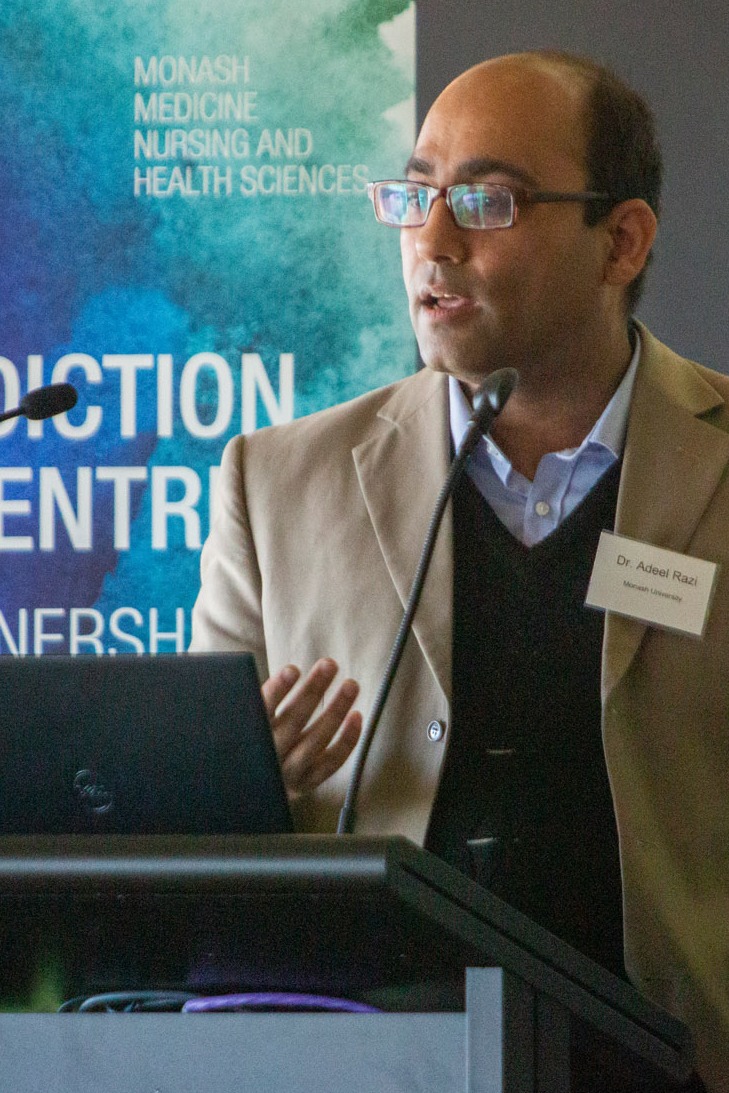
Professor Adeel Razi serves as Principal Investigator of the Computational Neuroscience Laboratory at Monash University's Turner Institute for Brain and Mental Health within the School of Psychological Sciences. He holds prestigious fellowships including ARC Future Fellow, NHMRC Investigator (Emerging Leadership), and CIFAR Azrieli Global Scholar in the Brain, Mind & Consciousness program. His research focuses on developing next-generation generative models of brain function through three integrated themes: 1) Creating multi-modal Bayesian methods (Dynamic Causal Modeling) to characterize brain network dynamics in pathologies; 2) Using biological neural network principles to inform artificial neural network design via active inference; 3) Employing classical psychedelics with computational modeling to understand consciousness mechanisms and therapeutic applications for psychiatric conditions. Razi's recent work includes the largest neuroimaging study of psilocybin to date, revealing how context structures psychedelic brain states, and novel Bayesian approaches for training binary and spiking neural networks. His research bridges engineering, physics, machine learning, and neurobiology to advance understanding of brain computation. ARC Future Fellow NHMRC Investigator (Emerging Leadership) CIFAR Azrieli Global Scholar, Brain, Mind & Consciousness program Professor Razi leads multiple clinical trials exploring psychedelic therapeutics and maintains active collaborations with Wellcome Leap on addiction research. His laboratory develops computational frameworks that integrate multimodal neuroimaging data to model brain network dynamics across various states of consciousness and pathological conditions. Current projects include psilocybin clinical trials for mental health conditions and developing neuroAI approaches based on active inference principles.
Matthias Kaschube is a Professor in the Faculty of Computer Science and Mathematics at Goethe University Frankfurt and a Senior Fellow at the Frankfurt Institute for Advanced Studies (FIAS). His research group focuses on understanding how the brain forms efficient representations of sensory environments and internal states through dynamic neural processes. He maintains active collaborations with leading neuroscience institutions including the University of Minnesota, Max Planck Florida Institute for Neuroscience, and Technion. Dr. Kaschube completed his physics studies at Goethe University Frankfurt and Georg-August-University Göttingen, graduating in 2000 and earning his doctoral degree in physics in 2005. His doctoral work was conducted at the Max Planck Institute for Dynamics and Self-Organization under Fred Wolf and Theo Geisel. He then held a Bernstein Fellowship before becoming a Theory Fellow at Princeton University's Lewis Sigler Institute from 2006-2011. In 2011, he joined Goethe University as Professor for Computational Neuroscience. His research spans four primary areas: the developmental emergence of cortical representations, flexible representations underlying learning and creativity, cognitive maps and representational spaces, and analysis methods for neural data. His group combines dynamic models of neural circuit function with neural data modeling techniques in close collaboration with experimental groups, creating an interdisciplinary interface between computer science, physics, biology, and AI. Notably, his work has revealed highly structured cortical networks prior to sensory experience that share similar architectural principles across sensory and association cortices. Analysis of his recent publications shows a consistent focus on understanding how endogenous neural activity patterns develop into reliable cortical representations through experience. His work spans multiple scales from molecular and cellular mechanisms to whole-brain functional organization, with particular emphasis on developmental processes in visual and auditory cortices. His methodological contributions include advanced techniques for analyzing chronic imaging data, tracking chromatophores in cuttlefish, and characterizing latent spaces in deep neural networks. Lewis Sigler Theory Fellowship (2006-2011) Bernstein Fellowship (2005) Professor Kaschube actively mentors a large group of PhD students including Lorenzo Butti, Jonas Elpelt, Santiago Galella, Deyue Kong, Maurycy Miekus, Ana Pamela Osuna Vargas, and Sigrid Trägenap. His research has been supported by multiple grants including NIH grants EY011488 and EY026273, Bernstein Focus Neurotechnology grant 01GQ0840, and BMBF project D-USA-Verbund: SpontVision. His group currently pursues three major research directions: the origin of distributed modular activity in neocortex, quantitative growth models for cuttlefish based on physical models, and the role of self-organization in linking endogenous cortical networks to sensory input.
Nuttida Rungratsameetaweemana is an Assistant Professor in the Department of Biomedical Engineering at Columbia University's Fu Foundation School of Engineering and Applied Science. She also serves as a Provost Research Fellow at Columbia University, demonstrating her significant research contributions early in her academic career. NuttidaLab, her research group, focuses on integrating computational and experimental approaches to investigate the neural computations underlying complex cognitive functions in both health and disease. The lab's research spans several key areas including learning mechanisms, decision-making processes, and social behavior, with particular emphasis on understanding how these cognitive functions become disrupted in neurological and neuropsychiatric disorders. The lab has developed several important computational neuroscience tools including NeuralDecoder for representational similarity analysis, state_space_analysis for modeling neural dynamics, MARLAX for multi-agent reinforcement learning, and dynamax for state space modeling. These tools reflect the lab's commitment to developing robust analytical frameworks that can be widely adopted by the neuroscience community. NuttidaLab maintains an active GitHub presence with multiple repositories that demonstrate the lab's focus on open science and reproducible research. The lab's work combines cutting-edge computational approaches with experimental neuroscience to develop a deeper understanding of brain function. The lab actively seeks talented students and researchers interested in interdisciplinary work at the intersection of engineering, neuroscience, and computational science. Professor Rungratsameetaweemana's research represents an important bridge between theoretical computational models and experimental neuroscience, with significant potential for advancing our understanding of both healthy brain function and neurological disorders.
Prof Dr Agnes Flöel is a Professor at the University of Greifswald Medical School, where she leads research at the intersection of cognitive neuroscience, sleep physiology, and brain stimulation. Her work focuses on understanding neural mechanisms underlying memory formation and cognitive decline in aging, with particular emphasis on sleep-related processes and non-invasive brain stimulation techniques. Her research interests center on sleep physiology , cognitive neuroscience , and neurostimulation . Dr. Flöel investigates how slow oscillations, spindles, and delta waves interact during sleep to support memory consolidation, particularly in older adults and those with cognitive impairment. Her work extends to developing interventions combining cognitive training with transcranial direct current stimulation (tDCS) to enhance cognitive function in aging and early Alzheimer's disease. She also contributes to methodological advancements in sleep staging through deep learning approaches and addresses technical challenges in neuroimaging. Dr. Flöel's publication record demonstrates consistent productivity with multiple high-impact papers annually, primarily focused on sleep neuroscience, brain stimulation, and cognitive aging. Her work shows strong collaborative patterns with researchers across Germany, particularly within the SFB 1315 research consortium. Recent publications (2022-2024) increasingly incorporate computational approaches, deep learning, and multimodal neuroimaging to address fundamental questions about neural plasticity and memory. Her research has been supported through the Collaborative Research Center 1315 (SFB 1315) funded by the German Research Foundation, focusing on neuronal circuits in aging. Dr. Flöel serves as principal investigator for multiple clinical trials examining brain stimulation approaches for cognitive enhancement in older adults and those with mild cognitive impairment. Dr. Flöel leads a research group investigating sleep-brain interactions in aging, collaborating closely with computational neuroscientists, neurologists, and psychologists. Her team utilizes multimodal approaches including EEG, MRI, and behavioral assessments to understand neural mechanisms of cognitive decline and potential interventions.
Professor Sven Apel holds the Chair of Software Engineering at Saarland University's Saarland Informatics Campus in Germany. He is also the Director of the Saarbrücken Graduate School of Computer Science. His work focuses on software engineering with an emphasis on automation, human factors, and interdisciplinary approaches. Prof. Apel received his Ph.D. in Computer Science in 2007 from the University of Magdeburg. His academic journey includes: Ph.D. in Computer Science, University of Magdeburg (2007) Emmy-Noether Fellowship of the German Research Foundation Heisenberg Professorship of the German Research Foundation Prof. Apel's research centers on empowering software engineering practice to enter an era of intensive automation. His key research areas include software variability and configuration, AI-based program generation and optimization, socio-technical software analysis, and empirical and neurophysiological methods. He pays special attention to the human factor and interdisciplinary research questions, applying his findings to real-world software systems from both open-source projects and industry collaborations with partners like Siemens AG, Bosch Engineering, and Airbus Helicopters. Analysis of Prof. Apel's recent publications reveals a strong focus on configurable software systems, neurophysiological approaches to understanding programming, and the application of AI techniques to software engineering problems. His work often bridges the gap between theoretical foundations and practical applications, with many studies involving industrial collaborations. There's a noticeable trend toward interdisciplinary research combining software engineering with neuroscience, organizational studies, and machine learning. Prof. Apel has received numerous prestigious awards and honors: ERC Advanced Grant "Brains On Code" (2022) ACM Distinguished Member for "Outstanding Scientific Contributions to Computing" (2018) Multiple Most Influential Paper Awards (SPLC'18, ICPC'22, GPCE'23) Multiple Best Paper Awards (SPLC'11, Modularity'15, AOM'18) Heisenberg Professorship and Emmy-Noether Fellowship from the German Research Foundation Prof. Apel has advised numerous Ph.D., Master's, and Bachelor's students throughout his career. His research has been generously funded by multiple grants including an ERC Advanced Grant (2,500,000 Euro, 2022-2027), several DFG projects (CPEC, Congruence, Pervolution), and previous grants like SafeSPL, FeatureFoundation, and Pythia. His work has practical impact through collaborations with industry partners including Siemens AG, Bosch Engineering, and Airbus Helicopters. Prof. Apel leads research in the Chair of Software Engineering at Saarland University, where his team explores the intersection of software engineering, neuroscience, and artificial intelligence. His "Brains On Code" ERC project specifically investigates how programmers' brains process code using neuroimaging techniques. The research group maintains strong connections with both academic and industry partners, facilitating the transfer of research findings into practical applications.
Giovanni Petri is a Professor in the Network Science Institute at Northeastern University London, with additional affiliations as Principal Researcher at CENTAI and Guest Scholar at Networks Units IMT Lucca. His research spans topological analysis of complex systems, neuroimaging data, and AI architectures, with applications to cognitive neuroscience and socio-technical systems. His educational background includes a PhD in Complex Networks from Imperial College London (2012), an MSc in Theoretical Physics from the University of Pisa (2008), and a BSc in Physics from the University of Pisa (2005). Professor Petri's research focuses on the theoretical and empirical analysis of complex systems, with emphasis on structural and temporal properties of networks with higher-order interactions. His work bridges statistical physics, algebraic topology, and data analysis to investigate whole-brain activation patterns, cognitive representations in neural architectures, social contagion dynamics, and team interactions. His lab employs topological data analysis to uncover multi-scale patterns in neuroscience data that traditional methods might overlook. His recent publications reveal a strong emphasis on higher-order network structures, with significant contributions to understanding how topological features influence brain function, information processing in neural networks, and collective behavior in social systems. His work demonstrates how higher-order interactions fundamentally change our understanding of complex systems dynamics. European Research Council Consolidator Grant (RUNES: Reconstruction and unification of neural and ecological systems) Professor Petri advises numerous PhD students and postdoctoral researchers across multiple institutions. His lab (NPLab) investigates the role of topology and geometry in collective dynamics of complex systems, with funding from prestigious sources including the ERC. His research spans fundamental network theory, network science of AI, and applications to neuroscience and social systems. The NPLab, which Professor Petri leads, focuses on topological neuroscience, cognitive neuroscience, higher-order networks, and Project CETI (Cetacean Translation Initiative). The lab's work on sperm whale communication through Project CETI has gained significant attention, analyzing over 9,000 recordings to identify 156 distinct codas and develop a sperm whale phonetic language using AI techniques.