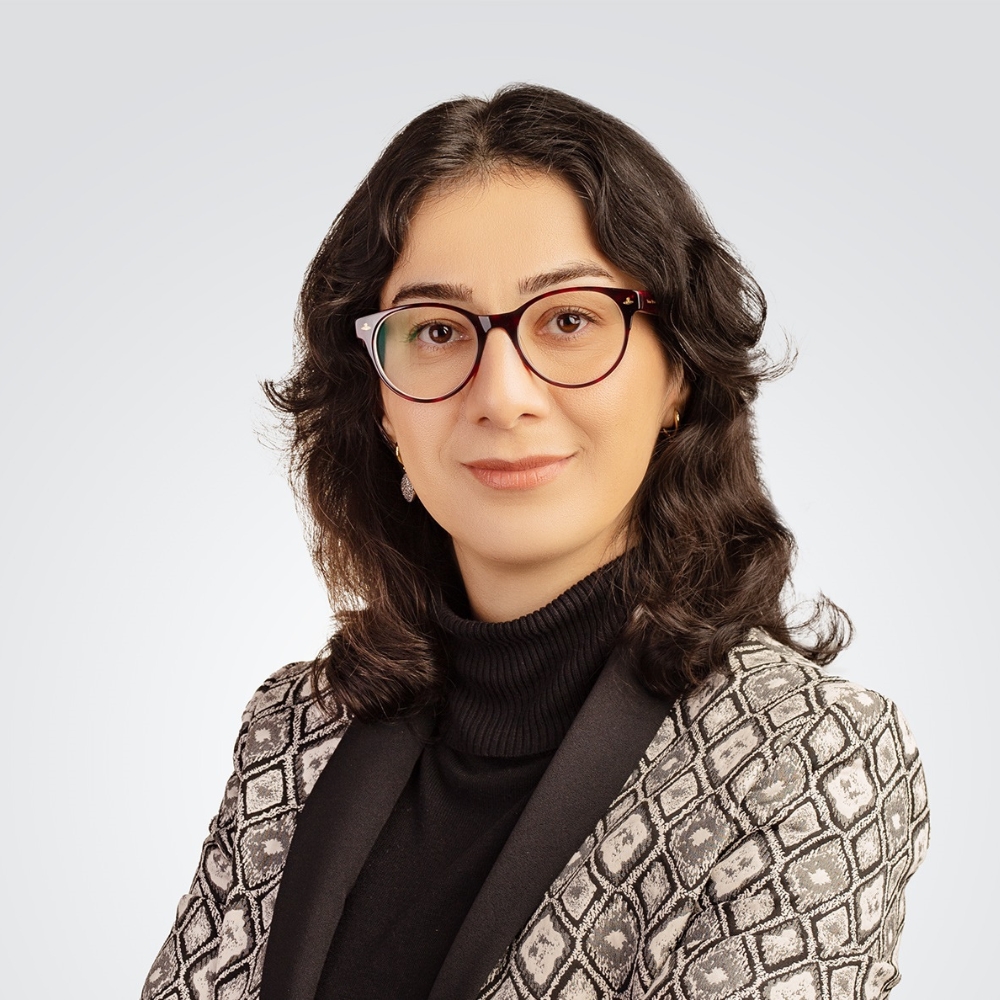
Nicola Vanello is Assistant Professor at University of Pisa's Department of Information Engineering and Research Center 'E. Piaggio', specializing in biomedical signal/image processing for neuroscience applications. Research combines multimodal approaches: fMRI/EEG integration for cognitive studies MRI-compatible mechatronic devices Speech-based emotion recognition Wearable sensor development
Dr. Fahad Saeed is a tenured Associate Professor and Graduate Program Director in the Knight Foundation School of Computing and Information Sciences at Florida International University (FIU). His research focuses on the intersection of machine learning, high-performance computing, and computational biology with applications in healthcare and proteomics. He directs the Saeed Lab, which develops scalable algorithms for big biomedical data analysis. Education : - Ph.D. in Electrical and Computer Engineering, University of Illinois at Chicago (2010) - B.Sc. in Electrical Engineering, University of Engineering and Technology, Lahore (2006) Research Interests : Machine learning for neurodegenerative diseases (e.g., Alzheimer’s), computational proteomics, big data analytics, and high-performance computing frameworks for omics data. His work emphasizes scalable algorithms for healthcare IoT and edge computing. Key Contributions : Over 90 peer-reviewed publications, 4 conference proceedings, and $3.9M in external grants (NSF, NIH). Notable awards include the NSF CAREER Award (2017) and NIH Postdoctoral Fellowship (2010). His lab pioneered tools like SpeCollate for mass spectrometry data and HiCOPS for proteomics database searches. Awards : NSF CRII, WMU Distinguished Research Award, FIU Top Scholar (2022) Grants : NSF CAREER Award ($600K), NIH grants for Alzheimer’s research Labs & Teams : Director of the Saeed Lab at FIU, collaborating on NIH-funded projects in computational biology and neuroimaging analysis.
Yu-Ping Wang is a Professor of Biomedical Engineering at Tulane University's School of Science & Engineering, leading the Multiscale Bioimaging and Bioinformatics Laboratory. His research focuses on integrating multiscale genomic data, neuroimaging techniques, and computational methods to study complex diseases and brain development. He holds a Ph.D. in Communications and Electronic Systems from Xi'an Jiaotong University (1996), and has conducted postdoctoral work at Washington University School of Medicine (1999–2000). Dr. Wang's work emphasizes three core themes: Multiscale signal/image analysis Bioimaging from molecular to organ levels Genomic and cytogenetic bioinformatics His grants include NIH-funded projects on integrating brain imaging with genomics (R01GM109068, R01MH107354), multi-omics data for mental disorders (R56MH124925), and biostatistics core leadership (U19AG055373). Collaborations span computational science, statistics, and clinical medicine. Research highlights include interpretable multimodal fusion networks, deep learning for cancer survival analysis, and tools like ImageNomer for detecting bias in neuroimaging data. His lab actively translates biomedical innovations toward clinical and commercial applications.
Christine Norman is a Senior Lecturer in the School of Social Sciences at Nottingham Trent University, specializing in Psychology. Her research focuses on biological and cognitive psychology applied to psychiatric disorders, forensic psychology, and behavioral addictions. She teaches modules on psychiatric disorders, forensic psychology, and statistical analysis (SPSS) at both undergraduate and postgraduate levels. Her research interests include associative learning mechanisms in eating disorders, obesity, gambling behaviors, and sexual deviance. She explores treatments like anti-libidinal medications for sex offenders and the role of traumatic brain injury (TBI) in criminal behavior. Collaborations include studies with Dr. Rachel Horsley (Aberystwyth University) on eating/gambling behaviors, Dr. Jade Ngoc Thai (Bristol University) on fMRI-based prediction tasks, and correctional facilities (HMP Whatton/Nottingham) on offender rehabilitation. Her work spans pre-clinical research on dopamine and neurotensin’s roles in associative learning, supported by funders like the Wellcome Trust and Jansen Pharmaceuticals. She holds administrative roles such as Employability Co-ordinator for Psychology and committee memberships in academic governance and ethics.
Malek Adjouadi serves as Ware Professor and Director of the Center for Advanced Technology and Education (CATE) in the Department of Electrical and Computer Engineering at Florida International University, where he has been a Full Professor since 2007 and previously served as Acting Department Chair from 1997-2001. His academic foundation includes: Ph.D. in Electrical Engineering, University of Florida (1985) M.S. in Electrical Engineering, University of Florida (1981) B.S. in Electrical Engineering, Oklahoma State University (1978) Adjouadi's research bridges Pattern Recognition with critical medical and security applications. His primary focus involves Medical Imaging analysis for pediatric epilepsy using fMRI and EEG data, where he develops advanced classification algorithms for language network mapping and seizure detection. This work extends into Biometrics through thermal imaging authentication systems and iris recognition, while also encompassing Signal Processing techniques for neurological data and contributions to Cryptography through biometric security frameworks. His interdisciplinary approach consistently applies computational methods to solve complex problems in neuroscience and security domains. Analysis of his 14 publications from 2006-2013 reveals a dominant medical neuroscience trajectory focused on pediatric epilepsy diagnostics, with significant contributions to biometric security emerging around 2011-2012. The medical works predominantly employ machine learning for brain imaging analysis, while his security publications introduce novel approaches to facial authentication and geospatial data management. As Director of CATE, Adjouadi leads technology education initiatives while teaching advanced courses including Digital Image Processing, Computer Vision, and Neural Systems. His professional service includes representation at State University System of Florida meetings and Board of Regents presentations, demonstrating ongoing institutional leadership.
Mohsen Rakhshan serves as an Assistant Professor in the Department of Electrical and Computer Engineering within the College of Engineering at the University of Central Florida. He leads the Laboratory for Interaction of Machine and Brain (LIMB) in the Disability, Aging, and Technology Research Cluster, focusing on ethical technological innovations to improve functional independence for older adults and individuals with nervous system injuries. His research spans Brain-Machine Interfaces , Neural Prostheses , and Computational Neuroscience , with specific projects including non-invasive sensory restoration for upper limb amputees, neuromorphic encoding for sensory compression, and intuitive robotic hand control. Current initiatives integrate Control Theory and Robotics to develop scalable tactile sensing systems. Analysis of his 15 most recent publications reveals a trajectory from theoretical control systems (2016-2019) toward increasingly neuroscience-focused work (2020-2024), particularly investigating sensory integration mechanisms in neuroprosthetics and neural correlates of decision-making under uncertainty. His computational approaches bridge engineering precision with biological plausibility. Honors include: BME Distinguished Fellowship from John Hopkins University E. E. Just Fellowship from Dartmouth College As a Technical Reviewer for IEEE journals and PLOS Computational Biology, he contributes to fields spanning neural networks, cybernetics, and cognitive systems. His laboratory emphasizes interdisciplinary collaboration between neuroscience and engineering.
Dr. Feng Liu is an Assistant Professor at the Department of Systems and Enterprises within the Charles V. Schaefer, Jr. School of Engineering and Science at Stevens Institute of Technology. He holds a PhD in Industrial Engineering from the University of Texas at Arlington (2018), and postdoctoral training at MGH/Harvard Medical School and MIT's Picower Institute. His research focuses on AI-driven healthcare solutions, brain imaging, optimization, and dynamical systems. Notable contributions include developing the first fine-tuned LLM for epilepsy analysis and pioneering work in EEG/MEG source localization using graph-based deep learning. Education: PhD, Industrial Engineering, University of Texas at Arlington (2018) MS, Electrical Engineering/Control Science, Huazhong University (2013) BS, Electrical Engineering/Control Systems, Qingdao University (2010) Research interests span AI for healthcare, brain networks, epilepsy, optimization, and chaos theory. He has led NIH-funded projects on deep learning for sleep apnea and epileptic network modeling. Awards include Best Paper Awards at Brain Informatics (2018) and INFORMS (2019), and 3rd place in the Defense Data Grand Prix (2023). His lab develops cutting-edge tools for medical imaging and predictive analytics, with applications in oncology, chronic disease, and renewable energy systems. Active roles include editorial positions in journals like Machine Learning with Applications and NIH panel reviewing.
Soumyabrata Dey is an Adjunct Assistant Professor in the Department of Computer Science at Clarkson University's Coulter School of Engineering & Applied Sciences. He holds a Ph.D. (2014) and M.S. (2011) in Computer Science from the University of Central Florida, along with a B.Tech. in Computer Science and Engineering from the West Bengal University of Technology (2005). His research focuses on gesture-based human-computer interaction, 3D reconstruction optimization, biometric authentication, and healthcare data analytics. He has industry experience as a Chief Engineer at Samsung Research Institute and Research Lead at Carl Zeiss. Education: Ph.D. in Computer Science, University of Central Florida, 2014 M.S. in Computer Science, University of Central Florida, 2011 B.Tech. in Computer Science and Engineering, West Bengal University of Technology, 2005 Research interests span context-aware systems, sensor data analytics using ML/DL/RL, and biomedical data analysis. His work includes real-time 3D scene reconstruction, predictive healthcare models, and UV exposure tracking via wearables. He has led NSF-funded projects on biometric authentication technologies and iris data collection. Grants include NSF CITeR awards totaling $150,000 for research on iris matching, fingerprint systems, and smartphone hardware optimization. He holds patents in UV dose tracking and fMRI image analysis. His publications span conferences like ICCV, ECCV, and journals such as Frontiers in Neuroscience. Advising and grants: No formal advisees listed, but his grants highlight collaborative research. Labs/teams: Not explicitly mentioned, though industry collaborations with Samsung and Carl Zeiss suggest active partnerships.
Hooman Oroojeni is a Senior Lecturer in Data Science at the University of Greenwich's School of Computing and Mathematical Sciences. He holds a PhD in Computer Science (AI) from Goldsmiths, University of London, complemented by an MSc in Computer Networking and BSc in Software Engineering. His research integrates deep learning with evolutionary methods, including neuroevolution and dispersive flies optimisation. Applications span healthcare (Parkinson's detection, ICU monitoring) and high-dimensional data analysis using tensor decomposition techniques. Recent publications (2018-2022) demonstrate cross-disciplinary approaches combining neural networks, swarm intelligence, and medical informatics.
Chris Joslin is a Professor at the School of Computer Science, Carleton University. His office is located in 4302 Canal Building, and he can be reached at Chris.Joslin@carleton.ca. He specializes in interdisciplinary research areas including computer graphics, medical imaging, virtual reality, computer vision, and human-computer interaction. His work bridges theoretical advancements with practical applications in animation, 3D modeling, and medical visualization. Research interests include developing novel techniques for 3D editing, medical image processing, and immersive virtual environments. Notable contributions include advancements in 3D Gaussian splatting, AI-driven MRI analysis, and robust sensor fusion for autonomous systems. His publications span from foundational studies on motion retargeting to applied work in procedural audio generation for soft-body simulations. Recent trends in his articles emphasize integration of deep learning with traditional computer vision tasks, optimization of medical imaging workflows, and enhancing accessibility in virtual reality systems. Despite prolific output, no scientific awards are explicitly mentioned in the provided texts. Advising and grant details remain unspecified, though his involvement in collaborative projects like VPARK and ISIS suggests engagement with interdisciplinary teams. His work is anchored at Carleton’s Herzberg Laboratories, a hub for advanced computational research.
Sara Hanrahan serves as a Senior Lecturer in the Mechanical, Aerospace and Biomedical Engineering (MABE) department at the University of Tennessee, Knoxville since August 2023, following her role as BME Lecturer from January 2018 to July 2023. Her academic career builds upon prior research positions at the Colorado Neurological Institute Neuromodulation Lab and the University of Utah Neural Engineering Lab. She holds a PhD in Biomedical Engineering with a Neural Interfaces specialization from the University of Utah (2013) and a BS in Biomedical Engineering with a Chemistry minor from the University of Pittsburgh (2008). Dr. Hanrahan's research focuses on neural signal analysis in movement disorders, particularly deep brain stimulation applications for Parkinson's disease. Her work integrates clinical neurophysiology with engineering solutions for neurological conditions, emphasizing subthalamic nucleus dynamics and neural interface development. Current investigations include therapeutic optimization for movement disorders and neural decoding of motor functions. Her publication history demonstrates consistent contributions to neural engineering, with recent work examining long-term neural dynamics in Parkinson's disease, STN-based behavior classification, and multisensory neural processing. Key thematic areas include surgical targeting algorithms, neural decoding for brain-computer interfaces, and anesthetic effects on neural signaling. Dr. Hanrahan has received significant recognition for her teaching excellence: 2019 MABE Outstanding Faculty Initiative and Leadership Award 2021 Pi Tau Sigma Excellence in Teaching Award 2022 Leon & Nancy Cole Teaching Fellow Award 2023 Toby Boulet Outstanding Faculty Service Award She provides extensive academic service as an ABET Program Evaluator, ASEE Reviewer, and faculty advisor for the Engineers in Medicine Society. Her committee work includes chairing the MABE Teaching Discussion Lunch and serving on the Curriculum and Assessment Committee while supporting the Interdisciplinary Graduate Minor in Neuroscience. Her research trajectory spans clinical neurophysiology at the Colorado Neurological Institute, neural engineering at the University of Utah, and rehabilitation engineering at the University of Pittsburgh, establishing a foundation for translational neuroscience applications in academic medicine.
Natale Sciolino is an Assistant Professor in the Department of Physiology & Neurobiology at the University of Connecticut since January 2021. She leads the Neural Circuits in Motivated Behavior research lab, focusing on norepinephrine (NE) signaling's role in behaviors like feeding and threat responses. Her work integrates internal states (e.g., hunger, stress) and external stimuli (e.g., taste) to uncover neuromodulatory mechanisms underlying neuropsychiatric and metabolic disorders. Education: BS from SUNY Buffalo State, MS and PhD from the University of Georgia, with a postdoctoral fellowship at NIH/NIEHS. Research employs mouse models, in vivo calcium imaging, optogenetics, chemogenetics, and behavioral approaches. The lab's mission includes identifying NE circuits, receptors, and their influence on brain integration processes. Her research tools include intersectional genetic methods, fluorescent activity sensors, optogenetic/chemogenetic modulation, and advanced behavioral tracking. The lab's long-term goals target translational applications for disorders like anxiety and feeding dysregulation, supported by interdisciplinary neuroscience techniques.
Cory Inman is an Assistant Professor in the Department of Psychology at University of Utah's College of Social and Behavioral Science. He directs the Immersive NeuroModulation and Neuroimaging Lab and holds a PhD in Psychology from Emory University (2014). His research investigates neural mechanisms of episodic memory using intracranial EEG, functional neuroimaging, and direct brain stimulation. Key focus areas include emotion-memory interactions, neuromodulation therapies, and real-world cognitive neuroscience. Education includes: PhD Psychology, Emory University (2014) MA Psychology, Emory University (2011) BA Psychology, Georgia State University (2006) Current graduate students advised: Justin Campbell (MD/PhD) Martina Hollearn (PhD) Lensky Augustin (PhD) Research grants include NIH R01MH120194 ($750K) and NSF 2124252 ($500K) for developing real-world brain recording/stimulation systems. Lab utilizes epilepsy patient implants to study spatial navigation and memory enhancement through amygdala and hippocampal modulation. Awards and honors: Friends of Semel Research Scholar Award (2019) NIH Travel Award (2018) Emory FERN Pilot Grant (2014) Most Outstanding Psychology Student (2007)
David Strayer is a Professor in the Department of Psychology at the University of Utah's College of Social and Behavioral Science. His research focuses on attention, skilled performance, cognitive distraction, and the interplay between nature exposure and neural recovery mechanisms. Education: Ph.D. in Psychology (1989) from the University of Illinois-Urbana Champaign. Strayer's work bridges cognitive psychophysiology and applied contexts, using EEG, fMRI, and behavioral measures to explore attentional limits in multitasking (e.g., distracted driving) and cognitive restoration through nature immersion. His lab pioneered studies on neural oscillations during environmental exposure and error-processing dynamics in automated systems. Key research themes include attention restoration theory , driver cognitive workload , and ecosystem conservation . Articles show increasing focus on automation-human interaction and neurophysiological impacts of natural environments. Students in his lab contribute to projects on driver distraction, neural indices of reward processing, and freshwater biodiversity. The Applied Cognition Lab offers research assistant positions to undergraduates and accepts graduate students biennially.
Dr. Saideh Ferdowsi is a Lecturer in Statistics and Data Science at the University of Essex's School of Mathematics, Statistics and Actuarial Science. She holds a PhD in biomedical signal and image processing from the University of Surrey (2013). Previously, she served as an Assistant Professor of Biomedical Engineering at the University of Shahrood (2013–2019) and as a Senior Research Officer in the Brain Computer Interface Lab at Essex (2019–2023). Her research focuses on neural data analysis techniques for EEG, fMRI, MRS, and fNIRS, emphasizing artifact removal, feature extraction, and brain connectivity modeling. Dr. Ferdowsi is a Senior Member of IEEE and has served as a Guest Editor for International Journal of Biomedical Imaging and Sensors Journal . She reviews for top journals/conferences including NeuroImage, IEEE Transactions on Biomedical Engineering, and IET Signal Processing. She advises prospective PhD students in related fields and maintains academic support hours via campus/Zoom. Her professional activities include contributions to research institutes and teaching advanced data science methodologies. She is based at the Colchester Campus and actively engages in interdisciplinary neuroscience research.