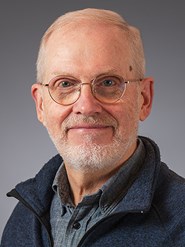
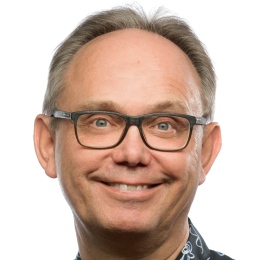
Marianna Ivashina is a Professor and Head of the Antenna Systems Research Group at Chalmers University of Technology's Department of Electrical Engineering . Her work focuses on array antennas , antenna integration with electronics , optimal beamforming , and over-the-air measurement methods . The group has achieved international recognition for innovations in ultra-wideband (UWB) feeds , Gap waveguide antennas , and Doherty-power-amplifier-integrated antennas for 5G/6G and radio telescope applications. Key projects include the SSF Sweden-Taiwan collaboration , EU Horizon 2020 MyWave , and VINNOVA ENERGETIC initiatives. Her recent publications emphasize millimeter-wave (mmWave) communication and reconfigurable intelligent surfaces (RIS) , with applications in 5G/6G networks , satellite communication (SatCom) , and advanced antenna testing chambers . She explores beamforming optimization , self-interference mitigation , and hybrid OTA environments to enhance wireless system performance. The group's work bridges theoretical advancements with practical implementations, including RFSoC testbeds and high-efficiency antenna arrays . Marianna leads major research programs funded by Ericsson , VINNOVA , and EUREKA EURIPIDES2 , addressing challenges in beamforming , antenna-IC integration , and automated design for 5G/6G . These projects highlight her role in advancing millimeter-wave communication and sensor integration technologies.
Martin Berggren is a Professor at the Department of Computing Science , Umeå University , Sweden. His work focuses on Computational Design Optimization , combining computer simulations and numerical optimization to enhance engineering designs for devices like antennas, microwave components, and loudspeakers. Berggren is also active in mathematical modeling of physical phenomena, particularly wave propagation and fluid mechanics, with a strong emphasis on finite-element methods . His research addresses large-scale conceptual design problems using thousands to millions of design variables, relying on gradient-based algorithms and adjoint-based computations of design sensitivities—similar to back-propagation in deep learning. Key application areas include acoustic and electromagnetic devices, where he investigates damping mechanisms, boundary conditions, and material distribution. Other interests, though less active, involve flow control and unsteady fluid–structure interaction . Berggren collaborates extensively on projects such as Structured Regularization , Topology Optimization of Acoustic Black Holes , and Design of Microstrip-to-Waveguide Transitions . His publications span journals like Journal of Computational Physics , Pattern Analysis and Applications , and IEEE Transactions on Antennas and Propagation , often co-authored with researchers like Linus Hägg , Eddie Wadbro , and Disi Lin .
Jonas Strandberg is an Associate Professor at KTH Royal Institute of Technology's Department of Physics, part of the School of Engineering Sciences. His research focuses on particle physics, particularly within the ATLAS Collaboration at the Large Hadron Collider (LHC). He contributed to the Higgs boson discovery and currently studies its properties. Strandberg has been involved in detector development, including the HGTD timing detector for the LHC upgrade. He holds a PhD from Stockholm University (2006) and worked as a postdoc at the University of Michigan (2006-2011) before joining KTH. His teaching responsibilities include courses on experimental particle physics, statistical methods, and engineering skills. Research interests span high-energy physics, collider technology, and detector systems. Research Highlights: Member of the ATLAS Collaboration since 2011 Key contributor to Higgs boson measurements Developed timing detector systems for LHC upgrades Published extensively on particle physics and accelerator technology Teaching & Supervision: Course responsible for Experimental Particle Physics (SH2203) Teaching roles in Applied Modern Physics (SH1015), Embedded Systems Design (IL2232), and more Professional Activities: ATLAS Data Preparation Coordinator (2015-2017) Member of the Particle and Astroparticle Physics Group at AlbaNova University Centre
Martin Norgren is a Professor at KTH Royal Institute of Technology, leading the Department of Electromagnetic Fusion Physics. His research focuses on electromagnetic inverse problems, including material characterization, biomedical imaging (e.g., brain current sources), environmental monitoring (e.g., snow and avalanche prediction), and smart grid technologies. He specializes in reconstructing object properties using electromagnetic measurements and has contributed to applications in healthcare, energy systems, and environmental science. His work involves advanced analytical and numerical methods such as mode-matching techniques, perturbation theory, and convex optimization. Notable projects include noncontact current measurement in power grids and transformer diagnostics using microwave radiation. Norgren teaches courses in electromagnetic field theory and electrical engineering design, emphasizing practical applications and interdisciplinary collaboration. Recent research trends highlight advancements in glide/twist symmetry-based metamaterial design, waveguide analysis, and inverse scattering techniques. His studies bridge fundamental physics with applied engineering, addressing challenges in energy infrastructure and medical diagnostics. As a department head, he oversees educational and research programs at KTH, fostering innovation in electromagnetism and fusion physics. His contributions to curriculum development include project-based courses integrating theory and hands-on design.
Mariana Dalarsson is an Associate Professor in Electromagnetic Theory at the Division of Electromagnetic Engineering and Fusion Science (EMF) within the School of Electrical and Computer Engineering (EECS) at KTH Royal Institute of Technology. She holds an MSc (2010), PhD (2016), and Docent (2019) from KTH, where she is recognized as the (shared) second youngest woman ever to receive a PhD degree from the institution. Her research spans electromagnetic scattering and absorption, inverse problems, electromagnetics of stratified media, double-negative metamaterials, electromagnetics in medicine, antenna theory, and mathematical physics. She has authored approximately 102 peer-reviewed publications, including 51 journal papers, with recent work focusing on gold nanoparticles for biomedical applications, waveguide theory for artificial materials, and plasmonics. Analysis of her recent publications reveals a strong focus on graded metamaterials, electromagnetic wave propagation in complex media, and biomedical applications of electromagnetic theory. Her work bridges fundamental electromagnetic theory with practical applications in medical technology, particularly in the areas of nanoparticle-based treatments and diagnostic systems. Honorary Grant ("Honnörsstipendiet") for best graduate of her program (2011) L'Oréal-Unesco For Women in Science Sweden Prize (2020) Göran Gustafsson Prize for Young Researchers at UU/KTH (2024) Teaching Assistant of the Year from Engineering Physics students (2015) Mariana is highly active in teaching, serving as course responsible and examiner for EI1222 Electromagnetic Theory, EI2405 Classical Electrodynamics, and FEI3304 Integral Equation Methods in Electromagnetics. She also co-teaches several other courses and regularly supervises multiple BSc/MSc theses annually. Her research is primarily funded through her own project grants from the Swedish Research Council, including "Waveguide theory for artificial materials and plasmonics" (2019) and "Gold nanoparticles for high-frequency deep brain stimulation" (2023).
Artem Vilenskiy is a researcher in the Antenna Systems group at Chalmers University of Technology since 2019. His work focuses on developing active integrated array antenna concepts, 100+ GHz beam-steerable antennas and circuits, MMIC design, computational electromagnetics methods for radiation and scattering problems, and collaboration with Chalmers industrial partners. His educational background includes: MSc Degree (Specialist) in Electrical Engineering from Bauman Moscow State Technical University (BMSTU) in 2011 PhD Degree (Eng.) in "Antennas, Microwave Devices and Its Technology" from BMSTU in 2014 Dr. Vilenskiy's research spans multiple cutting-edge areas in microwave and antenna engineering, with particular emphasis on millimeter-wave and sub-THz frequency ranges. He specializes in reconfigurable intelligent surfaces (RIS), beam-steering technologies, and integrated antenna solutions for next-generation wireless communication systems. His work bridges theoretical electromagnetics with practical implementation challenges, often involving close collaboration with industry to address real-world telecommunications and radar applications. His expertise encompasses both novel antenna architecture design and associated microwave integrated circuits, with significant contributions to mmWave phased arrays and wireless power transfer systems. Analysis of his recent publications reveals a strong and consistent focus on millimeter-wave antenna systems, particularly in developing reconfigurable intelligent surfaces for 5G/6G applications, advanced beamforming techniques, and innovative antenna array architectures. His research spans frequencies from W-band (75-110 GHz) into the sub-THz range, addressing critical challenges in high-frequency wireless communication systems. The publications demonstrate a consistent emphasis on practical implementation, with many papers detailing circuit models, measurement techniques, and experimental validation of theoretical concepts across multiple application domains including satellite communications, wireless backhaul, and quantum computing interfaces. Dr. Vilenskiy has been actively involved in multiple significant research projects: Low-Thermal-Conductance and High-Density Microwave Interconnects for Cryogenic Quantum Computers (2024-2025) Energy Efficient, Beamforming Antenna-IC Integration Solutions for Future 100+GHz Telecommunication Systems (2021-2023) Antenna technologies for beyond 5G Wireless Communication (2020-2025) MyWave - Efficient Millimetre-Wave Communications for mobile users (2019-2023) Integrated Antenna Arrays (2016-2023) Prior to joining Chalmers, Dr. Vilenskiy worked at Samsung Research Institute Russia from 2011-2019 in various engineering roles including research engineer, expert engineer, and project leader. During 2015-2019, he also held a part-time Associate Professor position at BMSTU where he coordinated the MSc course "Applied Electrodynamics of Composite Media". His industry experience in mobile communication, automotive radar, robotics, and wireless power transfer provides valuable practical insights that complement his academic research in antenna systems.
Liqin Ding is a Research Fellow at the Department of Electrical Engineering at Chalmers University of Technology . She holds a Marie Skłodowska-Curie Fellowship and is actively involved in EU-funded projects like VoiiComm and Hi-Drive , focusing on vehicular communication systems and cellular positioning integrity. Previously, she was a postdoctoral researcher at Harbin Institute of Technology (Shenzhen) and a visiting researcher at Chalmers before transitioning to her current MSCA-IF position. Research Interests : Her work spans large antenna array-based communication , wireless propagation , vehicular networks , and cellular positioning . Key themes include 5G/6G protocols , channel modeling , and information theory for automated transportation systems. She specializes in Massive MIMO , DFT spreading , and integrity monitoring to enhance network reliability. Scientific Contributions : Recent publications address challenges in PAPR reduction for IoT, 3D antenna array bandwidth , UAV swarm communication , and Bayesian positioning algorithms . Her work bridges theoretical models (e.g., Shannon capacity) with practical applications in automotive connectivity and spaceborne antennas . Awards and Grants : European Union's H2020-MSCA-IF-2019 fellowship for VoiiComm project Funding from the European Commission (EC) for mobility research
John Conway is a Professor of Radio Astronomy at Chalmers University of Technology , serving as Director of Onsala Space Observatory . His work spans multiple domains in observational astrophysics, focusing on: High-resolution VLBI imaging of black holes and AGN Instrumentation development for submillimeter telescopes Multiwavelength studies of M87 and Sgr A* black holes Large-scale radio surveys with LOFAR and SKA technologies As a key member of the Event Horizon Telescope collaboration, he contributes to polarization analysis and magnetic field studies around supermassive black holes. His instrumentation projects include work on the Onsala Twin Telescopes and SKA data stacking techniques. Current research involves black hole shadow characterization , jet dynamics , and machine learning applications for radio source detection. He collaborates extensively with international teams across projects like ALMA, LOFAR, and APEX.
Pererik Andreasson is a Lecturer at the Academy of Information Technology , Halmstad University. His research focuses on 3D printing, materials science, electromagnetic compatibility testing, and wireless communication. Key contributions include optimizing 3D-printed radar lenses, advancing phase-change material characterization via femtosecond x-ray diffraction, pioneering augmented reality methods for electromagnetic field visualization, and developing substrate integrated waveguide antennas for IoT devices. 3D printing of optical components Dynamic processes in phase-change materials Augmented reality for electromagnetic testing IoT antenna design His recent work on frequency-adjustable SIW antennas (2024) and AR-based EMC visualization (2021) demonstrates cross-disciplinary innovation. While no scientific awards are documented, his 15+ publications since 2007 highlight sustained expertise in material science and wireless technologies.
Lennart Bergström is a Professor of Materials Chemistry at Stockholm University since 2004. He leads the Lennart Bergström group, focusing on sustainable materials, thermal insulation foams, and nanoparticle self-assembly. His research integrates materials science, colloid chemistry, and X-ray/neutron scattering techniques. He serves on the Swedish Research Council’s Scientific Council for Natural and Engineering Sciences, and as deputy director of MISTRA SafeChem. His work emphasizes developing eco-friendly materials from waste and biomass, including thermally insulating foams and upcycled textiles. He has published over 250 papers, achieving an H-index of 73. Awards include the Humboldt Research Prize (2012) and Staudinger-Dürrer Medal (2025). He has mentored 14 professors and 60+ PhD/postdoc alumni globally. Key research areas include moisture-dependent thermal conductivity, colloidal processing of nanomaterials, and magnetic nanoparticle assembly. Recent articles highlight advancements in nanocellulose-based foams, neutron tomography of biomaterials, and fire-retardant composites. Awards and honors include Fellowships from the European and American Ceramic Societies, and the Royal Society of Chemistry. His lab collaborates on projects like Cellutech/StoraEnso and SwedNESS. He chairs the Sustainable Chemistry MSc program at Stockholm University.
Eugene Smolkin is a Lecturer at the University of Gävle , specializing in Electromagnetism and Mathematical Physics . His research focuses on waveguide theory, nonlinear optics, and numerical methods for electromagnetic wave propagation in complex materials. Primary affiliation: University of Gävle Academic rank: Lecturer Research areas: Electromagnetism, Waveguide Theory, Nonlinear Optics Smolkin’s work investigates TE-polarized waves , leaky wave spectra , and graphene-coated structures . He develops numerical methods to analyze electromagnetic modes in inhomogeneous and anisotropic media, with applications in metamaterials and chiral waveguides. His publications (2015–2025) emphasize nonlinear wave propagation , dielectric layers , and inverse problems in open and shielded waveguides. Collaborative efforts with Yury Shestopalov and Yury Smirnov highlight interdisciplinary approaches.
Wan-Chun Liao is a researcher at Chalmers University of Technology, affiliated with the Department of Electrical Engineering (E2) and specializing in Microwave Electronics. Their work focuses on millimeter-wave (mmWave) antenna design, phased array systems, and power amplifier integration, with applications in 5G/6G communication, automotive radar, and high-frequency RF technology. Research interests include: Millimeter-wave antenna arrays Contactless RF interconnects Power amplifier-MMIC co-design Wideband and ultra-wideband (UWB) feeds Electromagnetic coupling and interference Key projects involve deep integration of antenna arrays with semiconductor components (funded by VINNOVA, Saab, Ericsson, and Gapwaves AB) and collaborations with institutions like United Monolithic Semiconductors (UMS) and Kongsberg. Their publications highlight advancements in efficiency, linearity, and compact design for integrated RF systems.
Ross Friel is a Professor at Halmstad University's School of Information Technology, where he serves as Programme Manager for the Master's Programme in Electronics Design (TAELD) and is responsible examiner for courses DT4030, DT2019, and ET8012. His academic career includes previous positions as an Engineer at Lund University's MAX IV Laboratory (2016-2018) and as a Lecturer at Loughborough University (2012-2015). His educational background includes: PhD in Mechanical Engineering from Loughborough University (2006-2011) MSc in Engineering Design from Loughborough University (2005-2006) BEng (Hons) in Manufacturing Engineering and Management from Loughborough University (2001-2005) Ross Friel's research focuses on cutting-edge digital manufacturing processes, specifically in Additive and Hybrid Manufacturing techniques, material and surface optimizations, and applications in Space, electromagnetic components, and X-ray synchrotron uses. His practical interests include Industry 4.0 and 5.0 development, embedding electronics within components, developing mechatronic and fluidic systems, and creating scientific instrumentation based on in-situ monitoring and adaptation. His work explores advanced digital manufacturing to enhance engineering capabilities in electronics, composites, sensors, and devices through direct cyber-to-physical manufacturing processes for high-demand environments. Analysis of his recent publications reveals a strong focus on applying additive manufacturing to specialized fields including automotive radar technology, microfluidic devices for synchrotron applications, space resource utilization, and electromagnetic component design. His work demonstrates a consistent integration of manufacturing innovation with practical applications across multiple high-tech sectors. His notable scientific achievement includes being awarded Docent status in 2020, recognizing his significant contributions to research and academic development. Ross Friel has secured research funding for projects such as "AdaptoCell for MAX IV Laboratory Users," "Quantifying Sensor Surface Contamination for Safe Vehicle Automation (QonSense)," and "Millimeter-wave Graphene Enabled Wireless Communication." His teaching encompasses Mechatronic Construction with CAD, Introduction to Engineering Studies, Perspectives on Mechatronic Systems, Design of Mechatronic Systems, and Innovative Electronics Design, Construction and Production. He maintains active research collaborations with MAX IV Laboratory, a synchrotron radiation facility providing high-quality X-ray sources that support advanced scientific research across multiple disciplines.
Else Lytken is a Professor and Head of the Department of Physics at Lund University, part of the Faculty of Science. She is also a Senior Lecturer and Project Manager for the Particle and Nuclear Physics group. Her research focuses on testing the Standard Model and searching for new physics beyond it using leptons, particularly through collaborations with the ATLAS experiment at CERN and the upcoming νESS experiment at ESS (European Spallation Source). Her work includes high-energy physics studies at the LHC (e.g., Higgs boson properties, top quark physics, dark matter searches) and high-intensity experiments exploring neutrino properties and coherent elastic neutrino-nucleus scattering. She has contributed to over 1,175 publications, with recent work emphasizing precision measurements in pp collisions and advanced analysis techniques for ATLAS data. Notable projects include: ATLAS Run-2 results on Higgs boson decays, top quark production, and dark matter mediator searches Planning for νESS to study neutrino-nucleus interactions Development of jet substructure algorithms and detector calibration methods Her research combines experimental particle physics with cutting-edge computational tools, contributing to both LHC physics and future neutrino experiments.
Rob Maaskant is a Professor at Chalmers University of Technology in the Department of Communication, Antennas and Optical Networks . His research focuses on advanced antenna systems, particularly in mm-Wave and massive MIMO technologies, with significant contributions to full-duplex communication, reconfigurable intelligent surfaces (RIS), and hybrid over-the-air (OTA) testing environments. Key Research Themes : Antenna array optimization, self-interference mitigation, contactless IC integration, and beamforming for satellite and terrestrial communication systems. Recent Publications (2025-2023) highlight innovations in neural network-driven antenna synthesis, back-scattering RIS characterization, and wideband quadraxial feed designs, emphasizing practical implementations in mm-Wave and 5G/6G systems. Collaborative Projects include hybrid test chamber development with colleagues like Oleg Iupikov and Pavlo Krasov, and co-design of power amplifier-integrated arrays with Marianna Ivashina.