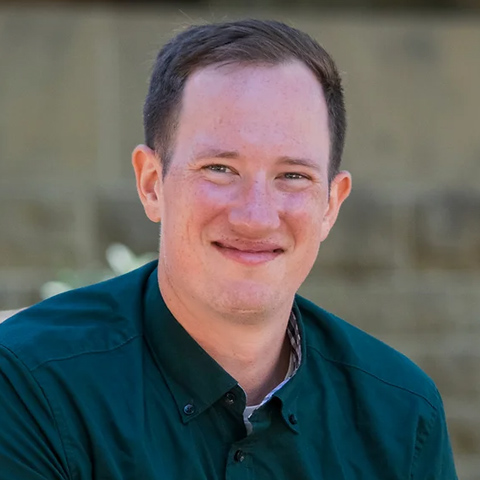
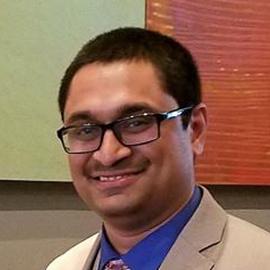
Jan G. Voelkel is an Assistant Professor at the Jeb E. Brooks School of Public Policy and the Department of Sociology at Cornell University. His research explores how micro-level preferences for equality and unity translate into macro-level political decisions, focusing on democratic attitudes, partisan dynamics, and moral framing. Ph.D. and M.A. in Sociology, Stanford University M.S. in Social and Behavioral Sciences, Tilburg University B.S. in Social Sciences, University of Cologne Voelkel’s work spans political psychology, metascience, and social policy, with a focus on interventions to reduce anti-democratic attitudes, partisan animosity, and gender bias in political leadership. His recent articles emphasize large-scale collaborations, reproducibility, and cross-partisan empathy. Scientific awards include: New Investigator Award (Behavioral Science & Policy Association) Public Sociology Award (American Sociological Association) Open Science Innovator Award (Stanford) Centennial Teaching Assistant Award (Stanford)
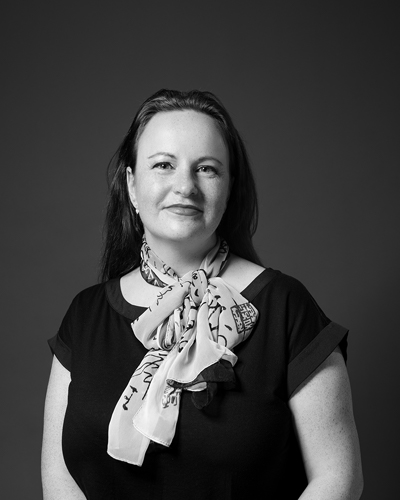
Dr. Jillianne Code is an Associate Professor at the University of British Columbia's Faculty of Education, Department of Curriculum & Pedagogy, directing the ALIVE Research Lab. Her work focuses on learner agency, educational technologies, and social media's impact on student success. Specializes in immersive virtual environments for assessment Researches self-regulated learning and formative feedback Investigates health education through digital interventions Her recent publications examine pandemic-era educational transitions, digital literacy in teacher training, and cognitive tools in virtual reality. She has received Outstanding Paper Awards for her work on immersive assessment. Dr. Code leads research projects on learning analytics, student engagement in digital spaces, and technology education sustainability. Her work bridges educational theory with practical interventions through digital badges, mobile health applications, and 3D learning environments.
Dr. Sarah Benson is an Associate Professor in the Department of Disability, Inclusion and Special Needs at the University of Birmingham, based at the Dubai Campus. She serves as Programme Lead for the Inclusion and Special Education Needs PGCert and Masters in both the UK and Dubai, and is affiliated with the School of Education. Educational Background: PhD in Special Education, University of Virginia, 2020 MA in International Education, The George Washington University, 2010 BA in English and Special Education, James Madison University, 2002 Her research focuses on inclusive education policy and practice, particularly in the Middle East and North Africa (MENA) region. She explores teacher development, inclusive science curriculum for primary students, and autism support in Gulf countries. Her work is deeply informed by cross-cultural experiences, including Peace Corps service in Jordan and a Fulbright year in Norway. Dr. Benson's recent publications reveal a strong trend in inclusive teaching strategies, policy analysis in Jordan and the UAE, and the integration of science education with special needs pedagogy. Her research emphasizes practical implementation, teacher preparedness, and equity in educational access. Scientific Awards and Honors: Fulbright Scholar (2013) President, Curry School of Education and Human Development (University of Virginia) Dr. Benson is actively involved in research leadership, serving as Principal Investigator for the ESRC-GCRF Bhutan Inclusive Employment and Social Participation Project and Co-Investigator on the Disability Under Siege Network and a study on teachers' perceptions of autism in Ras Al-Khaimah. She currently supervises PhD candidates and contributes to international scholarly communities such as the Council for Exceptional Children and the Comparative International Education Society. She is also engaged in commissioned research, including a report on autism teaching preparedness in Ras Al-Khaimah, and teaches modules on cross-cultural special education, inclusion, and policy analysis.
Dr. Yunjie Yang is an Associate Professor at the University of Edinburgh's School of Engineering, with affiliations at the Edinburgh Futures Institute (EFI), the Edinburgh Generative AI Laboratory (GAIL), and the Edinburgh Centre for Robotics. He previously held the Chancellor's Fellow in Data Driven Innovation (2018-2023) and Bayes Innovation Fellow (2023-2024) positions. His research focuses on AI-powered sensing and imaging, machine learning, and soft sensors & electronics for robotics. Yang received his PhD in Engineering Electronics from the University of Edinburgh, MSc in Control Science & Engineering from Tsinghua University, and BEng in Measurement & Control Engineering from Anhui University. After his PhD, he worked as a Postdoctoral Research Associate in Chemical Species Tomography before securing his lectureship. His research interests center on developing intelligent sensing systems that replicate human perception capabilities for robotics and intelligent systems. He pioneers flexible sensing and imaging technologies across various scales through innovative multi-modal sensors, soft electronics, and their modeling using machine learning approaches. His work aims to enable autonomous physical artificial intelligence by bridging the gap between robotic systems and human-like perception. Analysis of his recent publications reveals a strong focus on soft robotics perception, particularly through electrical impedance tomography (EIT) and transformer-based architectures. His research spans medical imaging applications, digital twin modeling for industrial processes, and machine learning approaches for sensor data interpretation. The trend shows increasing integration of physics-informed deep learning with traditional tomographic techniques to achieve higher accuracy and efficiency. European Research Council (ERC) Starting Grant (2024) IEEE J. Barry Oakes Advancement Award (2024) IEEE I&M Society Graduate Fellowship Award (2015) Multiple Best Paper Awards Senior Member of IEEE Fellow of the International Society for Industrial Process Tomography Fellow of the Higher Education Academy ESI highly cited papers Dr. Yang serves as Associate Editor for IEEE Transactions on Instrumentation and Measurement and holds editorial positions with Scientific Reports and IEEE Sensors Journal. His research has been licensed to overseas research institutes and industry partners and received wide media coverage including BBC, EFE, USA Today, and STV. He has secured significant grant funding including the prestigious ERC Starting Grant. He leads the Edinburgh SMART Lab (Sensing/imaging + Machine Learning + Robotics), which aims to replicate human perception capabilities for robotics and advance flexible sensing technologies through innovative multi-modal sensors and machine learning approaches. The lab focuses on enabling autonomous physical artificial intelligence with applications spanning medical diagnostics, industrial monitoring, and advanced robotics systems.
Prof. Dr. Stefanie Hellweg serves as a Full Professor for Ecological Systems Design at the ETH Zürich , Department of Civil, Environmental and Geomatic Engineering. She is Deputy Head of the Institute of Environmental Engineering and leads groundbreaking research at the intersection of industrial ecology, life cycle assessment, and circular economy systems. PhD in Environmental Engineering (ETH Zürich, 2000) Industrial Engineering Degree (Karlsruhe University, 1996) Her research develops advanced methodologies for environmental impact assessment of products and technologies, focusing on: Life Cycle Assessment (LCA) with correlated uncertainty modeling Circular economy implementation in chemical and energy sectors Industrial symbiosis optimization for heat and nutrient flows Urban wastewater systems redesign for resource recovery Chemical pollution analysis in plastic materials Key publication trends reveal expertise in: Hybrid wastewater treatment systems Energy-efficient greenhouse cultivation Exergy analysis for sustainability metrics Machine learning applications in environmental modeling Policy-relevant industrial ecology studies She actively participates in global sustainability initiatives as: President of the International Society of Industrial Ecology (ISIE) Member of UN Environment's International Resource Panel Editorial board member for leading environmental journals
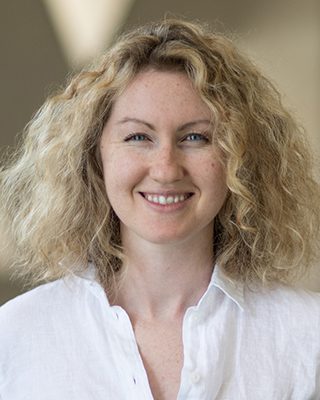
Gail E. Joseph is a Professor in the College of Education at the University of Washington, with affiliations in Early Childhood & Family Studies and Learning Sciences & Human Development. She teaches courses, advises students, and conducts research on early care and education, focusing on child care quality, social-emotional learning, teacher education, and technology integration. Ph.D., University of Washington Her research projects include statewide surveys on early childhood workforce conditions, studies on digital professional learning tools like Circle Time Magazine, and evaluations of coaching interventions (e.g., FIND in Childcare) to improve teacher-child interactions. She co-created resources such as Teacher Time and the EarlyEdU Alliance, which aims to enhance early childhood education through accessible bachelor’s degrees. Her publications span topics like social-emotional curricula, behavioral interventions, and inclusive education frameworks. She has held leadership roles as Principal Investigator (PI) of the Head Start Center for Inclusion and Co-PI of the National Center for Quality Teaching and Learning (NCQTL). 2018 David R. Thorud Leadership Award (University of Washington) She currently serves as Executive Director of Cultivate Learning at the University of Washington, advancing professional development and quality improvement initiatives nationwide.
Dr. Farha Sattar is a Lecturer in Education (Mathematics) at the Faculty of Arts and Society, Charles Darwin University. With over thirty years of teaching experience in Mathematics, Science education, GIS, Remote Sensing, and e-Learning technologies at undergraduate and postgraduate levels, Dr. Sattar brings extensive expertise to her academic role. She holds a PhD in Geospatial Science from Charles Darwin University, focusing on Spatial Mathematical Modelling for 3D Gully Mapping and Erosion Quantification. Her educational background includes: PhD in Geospatial Science (Three Dimensional Gully Mapping and Erosion Quantification within a Geoinformatics Framework), Charles Darwin University (2012) Prior academic experience at several Asian and European universities Dr. Sattar's research spans multiple interdisciplinary fields with a strong focus on the intersection of education and technology. Her primary research interests include Mathematics Education, STEM Education, Geoscience Education, Spatial Mathematical Modelling, Drone Technology, Remote Sensing, Geographic Information Systems, and Innovative Pedagogies such as experiential learning and inquiry-based approaches. She has developed expertise in cognitive development, particularly in fostering critical and creative thinking skills through iSTEM approaches. An analysis of Dr. Sattar's recent publications reveals a consistent trajectory toward integrating emerging technologies like drones, augmented reality, and geospatial artificial intelligence into educational contexts. Her work demonstrates a progression from foundational geospatial research on erosion mapping to innovative applications in STEM education. Recent publications increasingly focus on drone technology for educational purposes, spatial data infrastructure for policy development, and computational thinking development through technology-enhanced learning. Dr. Sattar has received numerous accolades for her contributions to education and research: NT Science Week Awards – Inspired NT STEM Hero of the Year award (2021) Long Service Recognition Award (2023) Finalist, CDU Alumni Award (2023) Multiple Best Presentation Awards (2008, 2010, 2017) Australian College of Educators - 2021 College Medal Nominee As a supervisor, Dr. Sattar mentors postgraduate research students including Ayesha Farhan, who is working on "A Framework for Cognitive Development: Fostering Critical and Creative Thinking Skills, Using iSTEM Approach." She actively secures research funding through various projects such as "DBELaSTEM: Drone-Based Experiential Learning and STEM Education," "STEM_D & VR: Youth STEM Learning and Empowerment with Drones and VR," and "CodProg Drone Lab." Her research is supported by grants from NT Government projects and other external funding sources. Dr. Sattar leads the CodProg Drone Lab, an innovative research space exploring drone technology applications in education. She is a certified drone pilot and aeronautical radio operator, which enables her to bridge theoretical knowledge with practical applications. Her work with the "Flying Forward: Drones, STEM Equity, and Indigenous Empowerment" initiative demonstrates her commitment to community engagement and addressing educational disparities through technology.
Professor Francis Butler is a Full Professor at University College Dublin's School of Biosystems and Food Engineering, where he has been since 1990. His academic roles include research leadership in food safety, food chain integrity, and microbial risk assessment. He leads the UCD Institute for Food and Health and the UCD Centre for Food Safety as a Principal Investigator. Education: BE, Grad Dip University Teaching & Learning, MBA, and PhD from University College Dublin. Research Focus: His work centers on food safety hazards, quantitative risk assessment, and next-generation sequencing for pathogen identification. Recent projects include Listeria monocytogenes growth modeling, norovirus in oysters, and hepatitis E in pork products. He has secured over €6 million in research grants, including EU-funded projects like FOODINTEGRITY and SIGMACHAIN. Awards & Recognition: European Food Safety Authority Fellowship, Marie Sklodowska-Curie Fellowship, and UCD Teaching Grant. He coordinates international educational programs, including the UCD MSC Food Safety and Risk Analysis. Professional Activities: Member of EFSA advisory committees, editorial boards (e.g., Microbial Risk Analysis ), and international conference chairs. His work bridges academia, industry, and policy to enhance food safety standards globally.
Frede Blaabjerg is a Professor at Aalborg University (AAU Energy) , affiliated with the Faculty of Engineering and Science . Since 1998, he has pioneered power electronics research in applications such as wind turbines , photovoltaic (PV) systems , reliability engineering , and Power-2-X technologies. Education : PhD in Electrical Engineering (1995, Aalborg University) Honorary Degrees : Honoris Causa at University Politehnica Timisoara (2017) and Tallinn Technical University (2018) His research focuses on power electronics control , system optimization , and reliability for renewable energy and electric mobility . Recent work includes grid-forming converters , virtual synchronous generators , and smart EV charging systems. Key publication trends span 15+ years , with over 3,733 peer-reviewed articles and 900+ journal papers in power electronics , renewables , and energy storage . Notable book series: Control of Power Electronic Converters and Systems (4 volumes, Elsevier). Scientific Awards : 46 IEEE Prize Paper Awards 2020 IEEE Edison Medal 2019 Global Energy Prize 2014 IEEE William E. Newell Power Electronics Award Leadership Roles : Editor-in-Chief, IEEE Transactions on Power Electronics (2006–2012) Chairman, Danish Council for Research and Innovation Policy (2020–) President, IEEE Power Electronics Society (2019–2020)
Zaklina Spalevic is a distinguished Professor at Singidunum University, specializing in the intersection of law, technology, and business. With a strong academic background in criminal law and extensive research in cyber law, artificial intelligence applications in legal systems, and tourism law, she has established herself as a leading scholar in digital legal frameworks. Her work spans multiple disciplines, connecting traditional legal principles with emerging technological challenges. Dr. Spalevic earned her doctoral degree in Criminal Law from the University of the Academy of Economics in Novi Sad (2008-2012), following basic studies in General Law at the University of Pristina (1996-2001). Her educational foundation in Science and Mathematics from First Pristina High School (1992-1996) provided the analytical basis for her interdisciplinary approach to legal scholarship. Her research interests focus on the evolving landscape of cyber law, particularly the legal implications of artificial intelligence in judicial systems, electronic governance, and tourism industry regulation. Dr. Spalevic has pioneered work on digital evidence processing, algorithmic justice, and the integration of green law principles into sustainable business practices. Her publications reveal a consistent pattern of addressing emerging legal challenges in the digital age, with increasing emphasis on AI applications across various legal domains. Analysis of her recent publications shows a clear trend toward interdisciplinary research that bridges law, technology, and business. Her work increasingly focuses on practical applications of legal frameworks for emerging technologies, particularly in tourism, agriculture, and judicial systems. The integration of technical solutions with legal regulation represents a distinctive feature of her scholarly contributions. Dr. Spalevic has authored numerous publications including three books: 'Fundamentals of Law with Special Reference to Business and Tourism Law' (2021, 2024 editions) and 'Legal Aspects of Cyberspace' (2018). Her extensive publication record includes over 100 journal articles and conference papers spanning cyber security, electronic governance, intellectual property in digital environments, and legal frameworks for emerging technologies. She actively contributes to academic discourse through conference presentations and collaborative research projects, particularly focusing on the legal implications of artificial intelligence across various sectors. Her work demonstrates a commitment to developing practical legal frameworks that address real-world technological challenges while maintaining foundational legal principles.
Debjit Pal is a Post-Doctoral Associate at the School of Electrical and Computer Engineering, Cornell University, and a member of the Computer Systems Laboratory. His research focuses on machine learning techniques for hardware verification, SoC validation, and FPGA optimization. Education: Ph.D. in Computer Engineering (University of Illinois at Urbana-Champaign, 2019) M.S. in Computer Science (IIT Kharagpur, 2012) B.E. in Electronics Engineering (Jadavpur University, 2008) Research Interests: Machine Learning for Electronic Design Automation (EDA) System-on-Chip (SoC) Verification Edge Intelligence as a Service Compiler Optimizations for Reconfigurable and High-Performance Computing Scientific Awards: IEEE CEDA Student Research Award (2016) Best Paper Nomination (ICCAD 2015, DAC 2018, ASP-DAC 2019) E. J. McCluskey Best Doctoral Thesis Competition Semi-Finalist (2020) Travel Grants for ICCAD/DAC/ASPDAC (2018-2019) Professional Roles: Technical Program Committee Member (DAC, VLSID), Reviewer (IEEE TVLSI, DATE, ICCAD). Collaborates with researchers like Zhiru Zhang and Shobha Vasudevan.
Shu Yang is an Associate Professor of Statistics at North Carolina State University (NC State), specializing in causal inference, missing data analysis, and biostatistics. She holds a Ph.D. in Applied Mathematics and Statistics from Iowa State University and has held roles including Postdoctoral Fellow at Harvard University and Assistant Professor at NC State. Her research focuses on developing statistical methods for observational and clinical studies, particularly in healthcare and environmental applications. Education: Ph.D. in Applied Mathematics and Statistics from Iowa State University (2014) B.Sc. in Mathematics and Applied Mathematics from Beijing Normal University (2009) Research Interests: Dr. Yang’s work addresses challenges in causal inference, including longitudinal data analysis, missing data imputation, and high-dimensional statistics. She applies these methods to environmental health, cardiovascular diseases, HIV infection, and cancer research. Her team also explores spatial statistics and data integration techniques. Awards: 2025: Think, Collaborate & Do Ideation Award 2024: COPSS Emerging Leader Award, Cavell Brownie Mentoring Award 2022: University Faculty Scholar 2018: Ralph E. Powe Junior Faculty Enhancement Award Grants & Advising: She leads funded projects on causal inference methods in environmental health, sepsis detection, and marine protected areas. She advises over 20 Ph.D. students and postdocs, focusing on causal methods, data integration, and healthcare analytics.
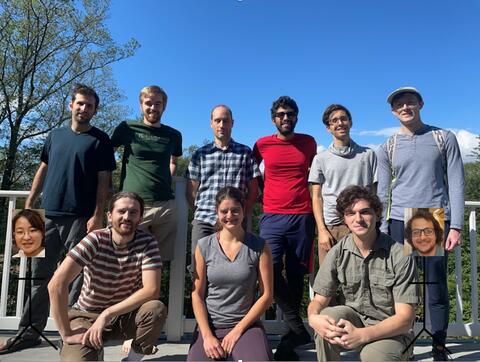
Benjamin Machta is an Assistant Professor of Physics at Yale University, affiliated with the Department of Physics and the QBio Institute. He holds a BS from Brown University and a PhD from Cornell University, followed by a postdoctoral fellowship at Princeton University. His research focuses on applying theoretical physics to understand biological systems, particularly leveraging statistical physics and information theory to study biological membranes near critical points and the energetic constraints of biological signaling. Education: BS in Physics (Brown University), PhD in Physics (Cornell University), Postdoc at Princeton University (Lewis-Sigler Theory Fellow). Research Interests include: membrane criticality, phase transitions in biological systems, information-theoretic limits in organism function, and energy dissipation in biological processes. His work often bridges theoretical models with experimental data, such as collaborations with Sarah Veatch’s lab on membrane phase behavior. Publications highlight themes like membrane criticality, protein phase separation, and energy constraints in signaling. His group’s current projects explore cochlear mechanics, thermodynamic control in biological systems, and the role of criticality in sensory systems. Awards: 2019 Simons Investigator Award. Lab Affiliations: QBio Institute and Department of Physics at Yale, located in YSB-C164. Group members include postdocs Isabella Graf and Michael Abbott, and graduate students Asheesh Momi, Mason Rouches, and others.
Santiago Grijalva serves as Georgia Power Distinguished Professor and Director of the Advanced Computational Electricity Systems (ACES) Laboratory at Georgia Institute of Technology's School of Electrical and Computer Engineering. He also holds the position of Associate Director for Electricity Systems at the Strategic Energy Institute (SEI). His educational background includes an Electrical Engineer degree from EPN-Ecuador (1994), M.S. in Information Systems from ESPE-Ecuador (1997), and M.S./Ph.D. in Electrical and Computer Engineering from University of Illinois at Urbana-Champaign (1999/2002). Grijalva pioneers research in decentralized power system architectures, renewable energy integration, and grid cybersecurity. His work spans smart grid technologies, electricity markets design, AI applications for power systems, and ultra-reliable grid architectures. The ACES Laboratory under his direction focuses on real-time power system control, informatics, and economics. His recent publications demonstrate strong trends in photovoltaic integration, multi-agent control systems, voltage stability analysis, and prosumer-based grid architectures, reflecting the industry's shift toward distributed energy resources and decentralized control paradigms. Georgia Tech ECE Outstanding Faculty Award Great Minds in STEM National Achievement Award ARPA-E More Than Smart Grid Disruptor Award IBM Faculty Award As principal investigator for major research projects funded by U.S. Department of Energy, ARPA-E, EPRI, PSERC, NSF, and industry sponsors, Grijalva leads initiatives modernizing electrical infrastructure. His past roles include Senior Software Developer at PowerWorld Corporation and Department Head at Ecuador's National Center for Energy Control (CENACE). He serves as Associate Editor for IEEE Transactions on Industrial Informatics and has published over 250 peer-reviewed papers. The Advanced Computational Electricity Systems (ACES) Laboratory operates at the intersection of power systems engineering and computational science, developing next-generation grid technologies for renewable integration and cyber-physical security.
Ira Kemelmacher-Shlizerman is a Full Professor of Computer Science at the Paul G. Allen School of Computer Science & Engineering at the University of Washington and Director of the UW Reality Lab. She also serves as a Principal Scientist at Google, where she leads the Shopping Gen AI visuals teams focusing on Virtual Try-On, 3D, and product videos. Her research spans computer vision, computer graphics, and Generative AI, with particular contributions to virtual try-on technology, 3D modeling, and augmented reality applications. Professor Kemelmacher-Shlizerman's research interests focus on Generative AI applications in visual computing. Her work bridges the gap between theoretical computer vision and practical applications, particularly in e-commerce and virtual reality. She has made significant contributions to virtual try-on technology, 3D editing with generative models, and AI applications for shopping experiences. Her research combines deep learning with traditional computer vision techniques to solve challenging problems in image and video synthesis. Her recent publications demonstrate a strong trend toward Generative AI applications for visual shopping experiences, virtual try-on technology, and 3D content creation. The work spans multiple top conferences including CVPR, SIGGRAPH, and ICCV, with a focus on practical applications of computer vision and graphics. Her research has evolved from foundational work in face reconstruction and aging to current applications in virtual shopping and 3D content generation. Google faculty award Madrona prize GeekWire Innovation of the Year Award Covers of CACM and SIGGRAPH Best student paper honorable mention at CVPR'21 Best demo runner up MobiSys'22 Senior member of IEEE Distinguished Member of ACM Professor Kemelmacher-Shlizerman has successfully tech-transferred multiple research projects to industry. She founded Dreambit, a startup acquired by Meta, and previously built and launched the Face Movies feature at Google. She currently leads Google's Shopping Gen AI visuals teams, focusing on 10x improvements to shopping journeys. Her UW Reality Lab serves as a hub for AR/VR research with industry partnerships. She has mentored numerous PhD students who have become researchers in both academia and industry, with several publications featuring student co-authors receiving recognition at top conferences. Professor Kemelmacher-Shlizerman leads the Graphics and Imaging Laboratory (GRAIL) and the UW Reality Lab, which focuses on augmented and virtual reality research with industry partnerships including Google. The labs work on cutting-edge projects in virtual try-on, 3D modeling, and immersive experiences, bridging academic research with real-world applications.