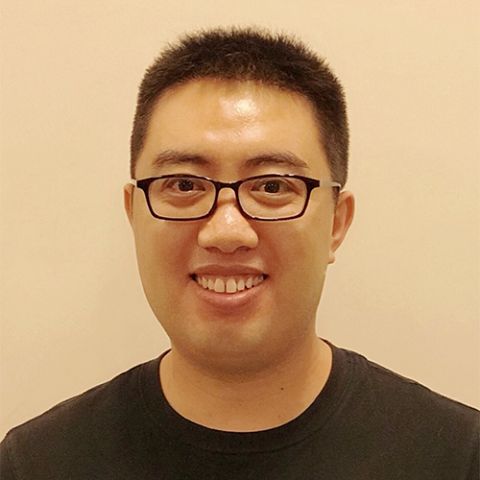
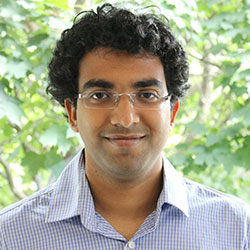
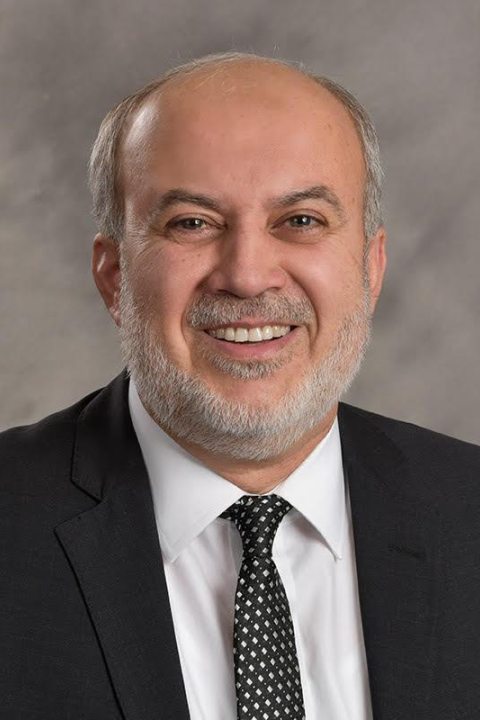
Fenglong Ma is an Associate Professor at Pennsylvania State University, affiliated with the Institute for Computational and Data Sciences and the Center for Socially Responsible Artificial Intelligence. His research focuses on data mining, healthcare informatics, machine learning, natural language processing, and multimodal learning. He holds a Ph.D. from the University at Buffalo (2019) and degrees from Dalian University of Technology. His work addresses challenges in federated learning, medical AI, adversarial robustness, and multimodal systems. Key contributions include innovations in quantization for large language models, federated knowledge injection, and medical vision-language benchmarking. Recent publications explore topics like collaborative fairness in federated learning, robust medical vision-language models, and adversarial attack mitigation. His research bridges theory and practical applications in healthcare, cybersecurity, and personalized recommendation systems. He leads the PSU Data Science Lab and collaborates on projects involving AI ethics, multimodal data integration, and scalable medical foundation models.
Kevin Gary is an Associate Professor in the School of Computing and Augmented Intelligence (SCAI) within the Ira A. Fulton Schools of Engineering at Arizona State University (ASU). He joined ASU in 2004 after prior industry experience and faculty work at the Catholic University of America. His research focuses on software agility, open source software, and applications in healthcare and e-learning. He has contributed to mHealth platforms addressing pediatric chronic conditions and adaptive e-learning systems. Education: Ph.D. in Computer Science from Arizona State University (1999). Research Interests: Software Architecture, Agile Methods, Open Source Software, Healthcare Informatics, and Educational Technology. His recent work explores agile impact on regression testing and lean metrics in open source software. He has developed mobile health apps for asthma, epilepsy, and anxiety, leveraging agile principles and AI. Teaching & Innovation: Created the Software Enterprise program, an industry-aligned pedagogy integrated into ASU’s software engineering curriculum. This initiative earned the President’s Award for Innovation in 2011. He has taught courses in software engineering, web applications, and secure software systems. Grants & Projects: Led projects funded by NSF, industry partners (e.g., UNICON, GEORGETOWN UNIV MED CTR), and foundations (Children’s National Medical). Notable projects include the Image-Guided Surgical Toolkit and the ATIC-funded Software Enterprise pedagogy model. Service: Reviewed for journals/conferences, served as Associate Chair of computing programs, and contributed to professional organizations (IEEE, ACM, ASEE).
Robert Rooderkerk is Associate Professor of Operations Management at the Rotterdam School of Management, Erasmus University Rotterdam, where he is affiliated with the Department of Technology and Operations Management. His research sits at the intersection of marketing and operations, focusing on omnichannel retail, assortment optimization, and fulfillment strategies. He teaches courses on retail operations, empirical research methods, and consumer decision making across undergraduate, MBA, and PhD programs. Research Interests: His research combines empirical and conceptual approaches to understand how data analytics, consumer behavior, and new technologies are transforming retail. He investigates topics such as product line design, dynamic assortment personalization, and the impact of fulfillment failures on customer loyalty. His work integrates methods from econometrics, operations research, and psychology. Publication Trends: His recent publications span journals in marketing, operations, and management, reflecting the interdisciplinary nature of his work. Key themes include the adoption of retail analytics, omnichannel integration, and behavioral aspects of retail operations. There is a strong emphasis on practical relevance and industry applicability. Dutch Marketing Science Award Paul Green Award Finalist, Journal of Marketing Research Advising and Grants: While no direct list of students is provided, he supervises bachelor theses and contributes to PhD training through the ERIM Master of Philosophy program. He has served as coordinator of the Research Training and Bachelor Thesis course. His research has been supported through academic collaborations and has had significant media coverage, indicating public and industry impact. Labs and Teams: He is actively involved in the Marketing-Operations Interface research group at RSM and collaborates with scholars globally. His work contributes to the UN Sustainable Development Goals, particularly through innovations in sustainable retail practices and responsible consumption.
Prof. Dr. Dr. hc Jörg Becker is a Senior Professor at the University of Münster, leading the Chair of Business Informatics and Information Management. He holds prominent roles such as Director of the European Research Center for Information Systems (ERCIS) and former Pro-Rector for Strategic Planning. His expertise spans e-government, process management, and digital transformation. Becker earned his habilitation and doctorate from Saarland University, specializing in information systems and material flow control. Research focuses include hybrid value creation, trade information systems, and smart energy business models. He has advised numerous institutions and served on national committees like the Plattform 'Digitale Verwaltung' and the National E-Government Competence Center (NEGZ). His editorial roles include Business & Information Systems Engineering and Information Systems and e-Business Management. Becker has authored over 200 publications, with recent work on digital government competencies, citizen involvement in smart cities, and trust in information systems. Awards include Fellow of the German Informatics Society (GI) and honorary doctorates. His grants include projects on digital middle-tier towns and IT requirements for social security digitization.
Dr Doğa Istanbulluoglu is a Lecturer in the Department of Marketing at the Birmingham Business School, University of Birmingham . She holds a PhD in Marketing from the same institution and teaches undergraduate courses such as 'Research Methods'. She also serves as the EDI Representative for the Marketing Department and PGTA Coordinator for both Marketing and Strategy & International Business Departments. Education: Postgraduate Certificate in Academic Practice (Distinction), Centre for Learning and Academic Development, University of Birmingham (2017) PhD in Marketing, University of Birmingham (2014) MSc in Marketing (Merit), University of Birmingham (2008) BSc in Business Management (High Honour), Bilkent University, Turkey (2007) Her research focuses on online consumer behavior , particularly on social media platforms. She investigates negative consumer behaviors such as complaining, negative word-of-mouth, boycotts, and anti-consumption, as well as problematic technology use including smartphone addiction. Her work emphasizes post-purchase behaviors and the psychological and social dynamics behind consumer dissatisfaction and resistance. The recent articles show a strong trend in digital consumer behavior , with recurring themes in anti-consumption , fake online reviews , complaint handling , and technology overuse . Her research combines marketing theory with psychological and sociological insights, often using empirical methods to analyze consumer responses in digital environments. Dr Istanbulluoglu has published in leading journals such as European Journal of Marketing , Computers in Human Behavior , and Information Technology & People . Her work contributes to understanding ethical issues in digital marketing and strategies for effective online customer engagement and service recovery. She supervises postgraduate research and is involved in academic leadership through her PGTA and EDI roles. While no formal grants or doctoral students are listed, her collaborative publications suggest active research partnerships. She does not appear to lead a dedicated lab but contributes to interdisciplinary discussions on consumer ethics and digital behavior.
Dr. Haynes Collins is an Associate Professor of Intercultural Studies at the School of Languages, Cultures and Societies, University of Leeds, within the Faculty of Arts, Humanities and Cultures. His work bridges sociolinguistics, ethnography, and intercultural communication, with a distinctive focus on public spaces such as swimming pools as sites of cultural negotiation and identity formation. Education: PhD in Applied Linguistics – Christ Church Canterbury University MA in Social Anthropology – School for Oriental and African Studies (SOAS) MA in TESOL – School for International Training, Brattleboro, Vermont His research investigates how institutional and media discourses shape cultural identity and interculturality, often through ethnographic engagement with marginalized communities and everyday practices. A central theme in his recent work is the exploration of inclusivity, resistance, and belonging in British public swimming pools, as seen in his project An Anthropology of Swimming . He examines how small culture contexts reveal broader ideological struggles around difference, marginality, and epistemic violence. The analysis of his recent publications reveals a consistent focus on intercultural dialogue, critical cosmopolitanism, and the politics of representation. His work spans academic and community-led settings, combining discourse analysis with lived experience to challenge essentialist views of culture. Themes of bodily autonomy, failed mediation, and performative identity recur across his research, particularly in institutional contexts shaped by neoliberal agendas. Scientific Awards and Professional Memberships: Member, International Association of Languages and Intercultural Communication Dr. Collins actively supervises PhD students and teaches undergraduate and postgraduate modules in intercultural studies and sociolinguistics. He contributes to research groups on multilingualism and encourages global PhD applications. His work is supported by ongoing research outputs and engagement with interdisciplinary scholarship, though specific grants are not mentioned in the text. He is affiliated with research initiatives exploring intercultural communication and EAP pedagogy, and his ethnographic projects often involve collaborative teams, particularly in studies of public pools and community belonging. His future work appears poised to deepen the anthropological lens on everyday intercultural encounters in shared public infrastructures.
Dr. Vijayaraghavan Aravindan is an Associate Professor in the Department of Computer Science at Northwestern University, with a courtesy appointment in Industrial Engineering & Management Sciences. He is a core member of the Theory CS Group and serves as the Site Director for the NSF-funded Institute for Data, Economics, Algorithms, and Learning (IDEAL). His research focuses on theoretical computer science, particularly algorithmic foundations of machine learning, quantum information, and beyond worst-case analysis. Education: Ph.D. and M.A. in Computer Science, Princeton University B.Tech. in Computer Science and Engineering, Indian Institute of Technology Madras Research Interests: His work bridges theoretical computer science and machine learning, emphasizing efficient algorithms for high-dimensional data, quantum entanglement certification, and adversarial robustness. He explores paradigms such as smoothed analysis and stability-based approaches to provide practical algorithmic guarantees. Awards & Grants: NSF CAREER Award Google Research Scholar NSF AITF Grants (CCF-1637585, CCF-2154100) Advising & Teaching: He advises PhD students on topics like quantum computing, robust machine learning, and optimization. Courses taught include graduate algorithms, theoretical foundations of data science, and quantum computation. His lab collaborates on projects at IDEAL and with institutions like Carnegie Mellon University and TTI Chicago. Professional Leadership: Served as FOCS 2024 General Chair and organizes the McCormick Theory Workshops. Active on program committees for ICML, COLT, and NeurIPS.
Jun Shen is a Professor at the School of Computing and Information Technology, University of Wollongong. He specializes in computational intelligence, cloud computing, and big data applications, with a focus on AI-driven solutions for real-world challenges in transport systems, healthcare, education, and environmental management. He has secured over 40 research grants totaling AU$4.5 million and supervised 26 completed PhD projects. His work spans interdisciplinary areas including bioinformatics, smart manufacturing, and digital health. Research interests include bio-inspired algorithmic optimization, AI in arts/media, and edge computing for IoT systems. He has pioneered research centers in applied computing since 2014 and holds editorial roles in top journals like IEEE Transactions. As an IEEE Distinguished Lecturer, he actively promotes AI ethics and interdisciplinary collaboration. Recent publications emphasize adversarial machine learning defenses, UAV systems, and multimodal data fusion. His supervision includes projects in intelligent transport systems, cloud computing, and e-learning. Grants include projects on resilient energy systems and UAV geolocation verification. Leadership roles include leading over 20 researchers and chairing conferences. He advocates for digital transformation in public services and has conducted fieldwork at MIT, UCI, and Georgia Tech.
Michelle LaFrance is an Associate Professor in the English Department at George Mason University, specializing in Writing and Rhetoric. Her research focuses on feminist methodologies, institutional ethnography, community writing, and writing program administration. She holds a Ph.D. from the University of Washington (2009) and has published extensively on topics like academic labor, e-portfolios, and writing center pedagogy. Her recent work examines discourses of volunteerism and belonging in urban communities. Dr. LaFrance teaches courses on critical pedagogy, feminist research, and public writing. Her major awards include the 2021 College Composition and Communication Research Impact Award for her book Institutional Ethnography: A Theory of Practice for Writing Studies Researchers , which also received an Honorable Mention from the International Writing Across the Curriculum Association. She has supervised numerous graduate students in areas such as queer worldmaking, linguistic justice, and composition pedagogy. Education: Ph.D., University of Washington, 2009 Key Affiliations: Director of Graduate Studies, Writing Program Administrator LaFrance's research emphasizes materialist frameworks and participatory methods. She explores the intersections of writing studies with issues of labor, space, and community engagement. Recent projects include analyzing writing instructors' negotiations of language standards and reimagining equity practices in two-year colleges.
Dr. Rafid Al-Khannak is an Associate Professor in Computing at Buckinghamshire New University. He holds a PhD in Engineering and IT from the University of Bolton, completed in collaboration with Siemens AG. His research focuses on engineering and IT operational development, particularly in cloud computing, distributed systems, cybersecurity, and infrastructure automation. Al-Khannak maintains industry collaborations with Amazon and Siemens on cloud implementation and security projects. Key research areas include: Secure cloud migration frameworks using AWS hybrid models Infrastructure automation through CI/CD pipelines Penetration testing methodologies for cloud applications AI-enhanced education system transformation Healthcare application development for specialized needs
Overview Nallan C. Suresh is the UB Distinguished Professor in the Department of Operations Management and Strategy at the School of Management, University at Buffalo. He is affiliated with the Stephen Still Institute for Sustainable Transportation and Logistics. His work focuses on supply chain management, sustainability, manufacturing systems, and operational resilience. Research Interests Dr. Suresh's research explores supply chain agility, reverse supply chains, recycling efficiency, disaster response logistics, and sustainable operations. He investigates how technologies and policies impact supply chain resilience, particularly in hazardous-materials transportation and fast fashion industries. His work also addresses global policy effects, such as China's National Sword Policy on plastics recycling. Key Contributions Recent studies include: Development of DEA models for recycling efficiency evaluation Analysis of supplier relationship management frameworks Optimization of hub networks for hazardous materials Pre-positioning strategies using mobile phone data for disaster response Affiliations and Contact Contact: ncsuresh@buffalo.edu | 351 Jacobs Management Center, Buffalo, NY 14260
Kaitlyn Crawford is an Associate Professor of Materials Science and Engineering at the University of Central Florida, with a secondary appointment in Chemistry. She directs the Functional Materials and Sensors Lab, focusing on sustainable soft materials for flexible electronics and biomedical applications. Her research integrates polymer science and engineering to develop wearable sensors for health monitoring, biodegradable materials to reduce e-waste, and natural polymer composites. Current projects include a $1.5M DHS-funded wearable for firefighter heat-stress monitoring and NASA-funded space applications. Her recent publications emphasize sustainable polymers, bionic devices, and AI-driven diagnostics. Awards include the 2024 ACS PMSE Early Investigator Award and a Jewish National Fund fellowship. She leads multiple graduate students in biomedical and materials research. Awards: 2024 ACS PMSE Early Investigator Award Faculty Fellowship Program in Israel, Jewish National Fund Faculty Excellence Honoree, Women’s History Month (UCF)
Gideon Christian is an Associate Professor and University Excellence Research Chair in AI and Law at the University of Calgary’s Faculty of Law. He holds a Ph.D. from the University of Ottawa, an LLM specializing in Law and Technology, and an LLB from the University of Lagos. Prior to his current role, he worked as Legal Counsel at the federal Department of Justice and as an adjunct professor at the University of Ottawa. He currently serves on the boards of CanLII and Lexum. Education: Ph.D., University of Ottawa (2014) LLM (Law & Tech), University of Ottawa (2008) LLB, University of Lagos (2002) Research Interests: Dr. Christian focuses on AI’s legal implications, particularly addressing racial bias in technologies. His work includes analyzing algorithmic racism in facial recognition systems, ethical use of Generative AI in law, and AI’s environmental impacts. He has advised parliamentary committees on AI in immigration decisions and its societal effects. Awards: 2024: Calgary Herald’s Top 20 Compelling Calgarians 2023: Alberta Newcomer Recognition Award 2023: NCC Grant ($916,000) and OBA Fellowship 2022: Howard Tidswell Teaching Excellence Award Teaching and Grants: Teaches courses like eLitigation, Civil Procedure, and Ethical Lawyering. Has secured grants totaling over $1.2M for research on AI ethics, cybersecurity, and legal frameworks. His work bridges law, technology, and social justice. Labs/Teams: Collaborates with CanLII and Lexum on open legal information. Engages in interdisciplinary projects addressing AI’s societal impact through partnerships with NGOs and government bodies.
Professor Gregoris Mentzas is a faculty member at the National Technical University of Athens, School of Electrical and Computer Engineering, where he directs the Division of Industrial Electric Devices and Decision Systems. His research focuses on AI-enabled decision systems, knowledge management, and semantic technologies applied to digital enterprises and e-government. With over 350 publications, he ranks among the top 2% most cited scientists globally. Research Interests: Artificial intelligence for decision augmentation, big data analytics in personalized health and smart mobility, semantic web technologies, and industrial internet of things. Current projects investigate trustworthy AI frameworks and hybrid intelligence systems for Industry 5.0. Teaching: Leads courses in Digital Enterprise Management, Strategic Information Systems, and Project Management at undergraduate and postgraduate levels, incorporating industry case studies and experiential learning approaches. Awards & Leadership: Top 2% Highly Cited Scientist (PLOS Biology 2021) 5 Best Paper Awards in international conferences Director of Information Management Unit (1997-present) Board Member of Institute of Communication and Computer Systems (2006-2009) Projects & Funding: Secured over €18 million in research grants through 60+ European projects with industry partners including SAP, IBM, and Siemens. Research outcomes led to three technology spin-offs.
Ashraf Attia is a Professor of Marketing and Chair of the Marketing and Management Department at the School of Business, State University of New York at Oswego. He holds a B.A. from Cairo University, an MBA from The American University in Cairo, and a Ph.D. and MA from Old Dominion University. His research focuses on sales training evaluation, cross-cultural marketing ethics, and electronic marketing, with notable contributions to understanding social media's impact on behavioral change in political and economic contexts. Dr. Attia teaches courses such as Consumer Behavior and E-Marketing. His work has been recognized with awards including the 2016 President's Award for Scholarly Activity and the Best Paper Award (2005) from the Journal of Personal Selling & Sales Management. His research spans diverse fields, including the effects of dietary supplements on poultry productivity, structural analysis of materials, and the role of social media in global uprisings like Algeria and Sudan. Education: B.A., Cairo University MBA, The American University in Cairo MA and Ph.D., Old Dominion University His publications explore interdisciplinary themes, from marketing ethics to agricultural science, reflecting his broad academic interests. He actively engages in advising students and contributes to grants focusing on sales training and marketing strategies.