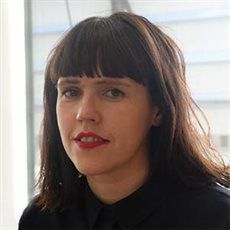
Raffael N. Fasel is a SNSF Ambizione Senior Researcher at the University of Zurich , with affiliations as an Affiliated Lecturer at the University of Cambridge and Visiting Scholar at NYU Law School . His work bridges animal rights law , constitutional theory , and comparative jurisprudence . Education: Dr. iur. from University of Cambridge, LL.M. from Yale, MA from University College London. Current research focuses on nonhuman legal personhood , direct democracy , and constitutional constraints in global contexts. His publications analyze intersections between legal philosophy and practical governance , including forthcoming work on Animal Rights Law and peer-reviewed articles on topics like Sieyès' constitutional theory and Swiss primate rights cases . He has collaborated with artists on public legal education projects, such as an installation on the monkey selfie case (Naruto v. Slater) in Aarhus Courthouse (2020). Scientific awards: SNSF Ambizione Fellowship Key thematic areas: animal rights law , constitutional self-determination , judicial reasoning , and democratic legitimacy .
Dr. Sherrill Stroschein is a Reader in Politics at the Department of Political Science, University College London (UCL) , where she has been since 2005. Her academic career includes prior roles as an Academy Scholar at Harvard University and Assistant Professor at Ohio University . She earned her PhD from Columbia University in 2000 under the supervision of the late Dr. Charles Tilly, and a BA magna cum laude from Amherst College .
Stephen Colman is an Associate Professor of Law and Course Leader for the LLM Law at the University of Suffolk within the School of Business, Arts, Social Sciences and Technology. A non-practising solicitor with over 12 years as a Senior Crown Prosecutor at the Crown Prosecution Service, he also serves as a link tutor for Rushmore Business School in Mauritius and represents the university on the Suffolk and North Essex Law Society Executive Committee. His research centers on prosecutorial discretion, victims' rights to challenge prosecution decisions, and intersections with administrative law and victimology. He is currently authoring 'Challenging Prosecutorial Decision-Making' for Bristol University Press, examining systemic issues in criminal justice decision-making processes and victims' legal pathways. His publications reveal consistent focus on criminal procedure reforms, victims' rights mechanisms, and evidentiary standards across UK jurisdictions. Key recurring themes include the Single Justice Procedure's implications, comparative analysis of victims' review schemes, and vulnerabilities within prosecution systems affecting both defendants and victims. Professional recognitions include: Fellowship of Advance HE Colman leads undergraduate modules in Criminal Law, Criminal Procedure, Criminal Evidence and Administrative Law, plus postgraduate modules in Contemporary Criminal Law and Criminal Evidence & Psychology. He has developed legal placements with local firms, delivered external training on criminal evidence, and was nominated for the University of Suffolk Staff Award 2022 for Outstanding Contribution to Learning.
Dr Angus Armstrong is a Professorial Research Fellow at the UCL Institute for Global Prosperity, University College London, directing the ESRC-funded Rebuilding Macroeconomics network that has produced 80+ papers and 100+ public events. His work reinterprets macroeconomics as a knowledge-creation system under fundamental uncertainty. Research focuses on decision-making under uncertainty, collective intelligence, agent-based modelling, and macroeconomic policy within ecological economics, comparative systems, and experimental frameworks. He emphasizes institutions and social interactions as foundations of prosperity in complex adaptive systems. Analysis of 2015-2019 publications reveals concentrated expertise in Brexit fiscal impacts, devolution economics, monetary policy at zero bounds, and Scottish independence. Works integrate macroeconomic modeling with political economy, addressing UK/European policy challenges through institutional and uncertainty-focused lenses. Armstrong serves as Chief Economic Advisor to Lloyds Banking Group (2017) and leads the Rebuilding Macroeconomics network. His 'New Economics of Prosperity' teaching reimagines prosperity as emergent from socio-economic interactions rather than an end state, reflecting his view of economies as open systems defined by fundamental uncertainty.
Mark Elliott is Professor of Public Law at the Faculty of Law, University of Cambridge, and a Fellow of St Catharine's College, Cambridge. He served as Deputy Chair of the Faculty (2018-2019) and Chair (2019-2024), and is Legal Adviser to the House of Lords Constitution Committee. He co-founded the biennial Public Law Conference series and maintains the influential blog Public Law for Everyone . His research focuses on UK constitutional dynamics, including the impact of Brexit, judicial review mechanisms, human rights frameworks, and devolution. Elliott explores intersections between legal doctrine, political practice, and constitutional change, with emphasis on parliamentary sovereignty, executive accountability, and common law rights. His publications demonstrate consistent engagement with constitutional crises, Supreme Court jurisprudence, and the evolution of administrative law. Recent works analyze post-Brexit governance challenges, judicial scrutiny of executive power, and the resilience of constitutional principles amid political pressures. Awards and Honors: Pilkington Prize for Excellence in Teaching University of Cambridge Yorke Prize for doctoral thesis As a trusted policy adviser, Elliott has shaped legislative scrutiny processes at the House of Lords. He engages public audiences through accessible legal commentary and academic outreach, though no specific grants, labs, or supervised students are detailed in available materials.
Catherine Durose is an Honorary Professor of Public Policy at the University of Birmingham's Department of Public Administration and Policy, part of the College of Social Sciences. Her research focuses on urban governance, co-production, decentralization, and institutional design, with a particular emphasis on how government interacts with citizens and communities to drive policy change. She has secured over £3 million in research funding and serves as Chair of the Editorial Board for Local Government Studies. Educations: PhD, University of Manchester (2007) MA (Research) in Governance and Public Policy, University of Manchester (2004) BA (Hons) in Politics, University of Sheffield (2001) Her research interests span interdisciplinary areas including co-production theory, governance of the commons (housing, energy, data), feminist institutionalism, and participatory policymaking. She has held visiting fellowships at institutions such as the Great Cities Institute (UIC, Chicago) and Tilburg University, and consults for UK government bodies like the Equality and Human Rights Commission. Publications and Awards: Recipient of the Joni Lovenduski Prize (2020) Author of Designing Public Policy for Co-production (2016) Published in Political Studies , Urban Studies , and Nature Teaching and Mentorship: Catherine teaches on INLOGOV's MSc Public Management and Executive Apprenticeship programs. She mentors doctoral students in areas like social accountability in Colombia, blame avoidance in UK governance, and decentralization in Cameroon. Current research projects include studies on urban governance assemblages (with Tilburg and Edinburgh Universities) and feminist institutionalism in hate crime policy (collaboration with University of Birmingham's Vivien Lowndes). She actively contributes to civic initiatives like Citizens UK and co-founded Win: Win, a network for women in higher education, earning her recognition as a 'Woman of Action' in 2017.
Professor Vlad Mykhnenko is Professor of Geography and Political Economy in the University of Oxford Department for Continuing Education, and a Research Fellow in Sustainable Urban Development at St. Peter's College, Oxford. He serves as Academic Director for Social Sciences at Oxford Lifelong Learning and has been with the Department since January 2017, initially taking up an Associate Professorship in Sustainable Urban Development. His academic career spans multiple institutions including the University of Birmingham, Al-Farabi Kazakh National University, the University of Nottingham, the University of Glasgow, and the Central European University. Professor Mykhnenko's educational background includes: PhD in Political Economy from Darwin College, the University of Cambridge (2005) MA in International Relations and European Studies from the Central European University (1999) MA (1998) and BA (1996) in International Relations from Taras Shevchenko National University of Kyiv As an economic geographer specializing in geographical political economy, Professor Mykhnenko challenges conventional wisdom about urban and regional development. His research initially focused on transition economies of Eastern Europe (particularly Polish Upper Silesia and the Ukrainian Donbas) before expanding to cities and regions worldwide. He has produced over 140 research outputs and secured £16 million in external research funding, with £2 million as Principal Investigator. His current research initiatives focus on green steel - rebuilding Ukraine's iron and steel sector post-war without fossil fuels - and sustainable urban development in Kazakhstan. His publication record demonstrates significant scholarly impact across diverse areas including urban shrinkage, post-war reconstruction, geopolitical analysis, and future trends in technology and governance. The breadth of his research interests spans from analyzing spatial economic patterns in African cities to examining the implications of the metaverse for future business practices. Professor Mykhnenko has substantial policy impact, with research quoted in at least 79 policy documents by 49 organizations across 21 countries. His work contributes to UN Sustainable Development Goals, with 30% directly attributed to SDG11: Sustainable Cities and Communities. He has advised governments, intergovernmental organizations, and multinational enterprises, including serving on a UN expert group to shape the New Urban Agenda and providing expert evidence to the UK House of Commons on Ukraine's recovery. In early 2025, he was appointed a commissioner for the Lancet Commission on Ukraine. Professor Mykhnenko has taught over 3,100 students across various institutions and currently contributes to Oxford's MSc in Sustainable Urban Development program. He has supervised numerous doctoral students and received recognition for his teaching excellence, including Fellow of the Higher Education Academy status and a Postgraduate Certificate in Academic Practice. His commitment to research-led teaching has resulted in innovative pedagogical approaches documented in peer-reviewed academic publications.
Professor Anne-Maree Farrell holds the Chair of Medical Jurisprudence at the University of Edinburgh's Edinburgh Law School, a position first established over 210 years ago. She is the first woman to occupy this role. Her academic expertise spans health law, bioethics, and medical jurisprudence, with a focus on the intersection of politics, regulation, and healthcare. She serves as Director of the Mason Institute, leading interdisciplinary research on health law, ethics, and governance at global scales. Current research projects include studies on post-Brexit public health law, organ donation policy across the UK, and legal responses to technological transformations in sexual health. Professor Farrell has secured over £1.76 million in research funding from bodies like the Wellcome Trust and the British Academy. She is a Fellow of the Academy of Social Sciences and actively advises governmental bodies such as the UK Home Office’s Biometrics and Forensic Ethics Group and the Scottish Government’s Abortion Law Review Expert Group. Education: BA, LLB, BLitt, MA, PhD. Research Interests: Public health law, devolution in healthcare systems, human tissue regulation, clinical negligence, and no-fault compensation schemes. Her work examines legal frameworks for emerging technologies, including online harms and digital sexual connections. Key Projects: 'When Borders Change: Public Health, Trade and Law' (Royal Society of Edinburgh-funded), 'Legal Transplants and Policy Transfers in Organ Donation' (British Academy/Leverhulme Trust), and 'Tech-Sex: The Technological Transformation of Sex' (Australian Research Council). Labs/Teams: Mason Institute for Health, Ethics, and Law at Edinburgh Law School.
Monica Germana is a Reader in Gothic and Contemporary Studies at the University of Westminster since 2020, with a focus on Gothic literature, contemporary fiction, Scottish culture, and fashion studies. She has previously taught at the University of Derby and Roehampton University, and was a tutor at the University of Glasgow during her PhD studies. Executive Secretary, International Gothic Association (2011–present) Member, International Association for the Study of Scottish Literatures Member, Scottish Society for Northern Studies Her research spans interdisciplinary intersections of gender, Gothic traditions, and cultural identity , including Scottish literature, Arctic narratives, and James Bond studies. She has explored hauntings in postcolonial spaces, 21st-century monsters, and the Gothic's role in environmental humanities. Recent publications analyze the James Bond franchise's gendered fashion, Gothic landscapes in Scottish and Italian cinema, and Arctic-Scottish cultural links. Her work has been recognized with the Emily Toth Award honourable mention (2020) and a shortlisting for the Allan Lloyd Smith Prize (2019). Supervision: Currently advising Valeria Ryrak (autofiction/memory) and Kevin MacNeil (Buddhism in writing) Former Students: Aisling McKeown (migrancy in Irish narrative), Kate Turner (queer Scottish fiction)
Rhys Jones is a Professor of Human Geography and former Head of Department in the Department of Geography and Earth Sciences at Aberystwyth University. He is a leading scholar in political geography, with a focus on Welsh nationalism, state territoriality, devolution, and behavioral insights in public policy. He is a Fellow of the Learned Society of Wales (FLSW) and the Academy of Social Sciences (FAcSS), and serves on the Board of Natural Resources Wales, demonstrating significant academic and public impact. His research interests center on the interplay between identity, place, and governance. Key themes include the spatial dimensions of Welsh nationalism, the peopled character of the state, devolution in the UK, and the ethical and practical applications of behavioral science in policymaking. His work often engages with issues of spatial justice, territorial cohesion, and regional movements within the European Union. The recent publications and projects reflect a strong trend toward interdisciplinary, policy-relevant research. His work spans books, peer-reviewed articles, commissioned reports, and digital media outputs, with a focus on heritage tourism, linguistic vitality, and cross-border dynamics between Wales and Ireland. He frequently collaborates with researchers across institutions and nations, particularly through EU-funded programs like Horizon 2020 and INTERREG. His scientific recognitions include: Fellow of the Learned Society of Wales (FLSW) Fellow of the Academy of Social Sciences (FAcSS) Gwobr Adnodd Cyfrwng Cymraeg (Welsh Language Resource Award, 2020) Rhys Jones has secured substantial research funding from the ESRC, AHRC, Leverhulme Trust, Horizon 2020, INTERREG, and the Welsh Government. He leads or contributes to multiple active projects, including those on territorial cohesion in the EU, regional movements, and heritage tourism. He also plays a key role in knowledge exchange, public engagement, and media outreach, particularly on issues related to Welsh identity, language, and governance. He is actively involved in organizing exhibitions, film launches, and public talks, often in collaboration with cultural and academic partners in Wales and Ireland. He is involved in several research networks and teams, including the WISERD Civil Society project and the Centre for Welsh Politics and Society. His work contributes to UN Sustainable Development Goals, particularly those related to reduced inequalities, sustainable cities, and strong institutions.
Dr Stephen McGlinchey is a faculty member and Programme Leader for Politics and International Relations at the School of Social Sciences , University of the West of England, Bristol. He holds a PhD in International Relations from Cardiff University, alongside an MSc and BSc from Cardiff and Wales respectively. His research focuses on: US foreign policy, particularly historical US-Iran relations Arms policies during the Cold War Innovative pedagogical approaches in International Relations Post-truth political dynamics Dr McGlinchey has authored and edited numerous publications, including: Polarity (2025) - analyzing global power structures Global Politics in a Post-Truth Age (2022) - exploring modern political discourse Foundations of International Relations (2022) - a textbook for beginners The Reluctant Realist: Jimmy Carter and Iran (2018) - applying realism to US-Iran arms deals He is also the Editor-in-Chief and Publisher of E-International Relations , the leading open-access IR platform. His work spans from 1950s US-Iran arms agreements to contemporary geopolitical theory, with articles in journals like Diplomacy and Statecraft . No scientific awards or student advising details are mentioned in the provided texts.
Professor Fiona Mackay is a Professor of Politics at the School of Social and Political Science, University of Edinburgh. Her research focuses on gender and political representation, feminist institutionalism, and gender equality legislation. She leads projects such as the AHRC-funded Gender Equalities at Work (2021–2023), examining UK anti-discrimination laws, and directs initiatives like Integrating Gender Equality into GCRF Funding . She has held leadership roles in global collaborations, including the Teaching Feminisms project (2017–2020) with India and the Political Settlements program (2015–2018). Awards include the 2019 European Conference of Politics and Gender Career Achievement Award. Her work emphasizes institutional change, feminist pedagogy, and gender mainstreaming in policy and academia. Education: PhD in Politics (University of Edinburgh, 1996), specializing in gendered discourses of political access and action. Research Themes: Gender and public policy, UK devolution, feminist institutionalism. She co-leads the Gender Politics Research Group and contributes to the Global Justice Academy. Grants & Projects: AHRC, ERC, and SFC-funded initiatives. Current projects include a longitudinal study of UK gender equality laws and a tool for gender-sensitive global research. Media & Outreach: Regular media contributions on gender in politics, including BBC, Herald, and Sunday Herald. Co-curates the annual 16 Days Blogathon on gender-based violence.
Dr. Leah McCabe is a Lecturer in British Politics at the School of Social and Political Science , University of Edinburgh. She specializes in British politics, public policy, gender politics, and social movements, with a focus on contentious politics in the UK. Her research examines policy framing, institutional governance, and constitutional change, particularly in cases of gender-based violence and abortion politics. Education : PhD in Social Policy, University of Edinburgh (2016–2021) MSc Gender Studies (Applied), University of Stirling (2015–2016) MA (Honours) Sociology and Politics, University of Edinburgh (2011–2015) Research Interests : Leah's work bridges feminist institutionalism, intersectionality, and multi-level governance. She investigates how devolution and constitutional shifts influence policy contestations and social movement strategies. Her current project, funded by the Leverhulme Trust, analyzes abortion politics across the UK, exploring legislative debates and pro-choice/pro-life advocacy strategies. Past research includes a groundbreaking thesis on domestic abuse policy in post-devolution Scotland, which won major academic awards. Awards : Elizabeth Wiskemann Prize (Political Studies Association) University of Edinburgh Outstanding Thesis Prize Leverhulme Early Career Fellowship Grants & Projects : Principal Investigator for the Leverhulme-funded project Framing Abortion Politics in the UK (2023–2026). Previously held ESRC and SGSSS fellowships. Labs/Teams : Active in the Gender Politics Research Group and Territorial Politics Research Group within her school.
James Mitchell is a Professor of Public Policy at the University of Edinburgh’s School of Social and Political Science . He holds a MA (Political Studies) from the University of Aberdeen and a D.Phil. (Oxford). His research focuses on British politics, devolution, public policy, territorial politics, and Scottish nationalism. He has supervised over 30 years of PhDs and Masters in public policy, devolution, and constitutional politics. Key research themes include fiscal accountability in Scotland, party membership surges post-referendum, and multi-level governance. Research Projects: ESRC-funded study on SNP and Scottish Greens’ post-referendum membership growth Investigation of fiscal devolution’s accountability gaps Analysis of Scotland’s constitutional questions and local governance Research Interests: Mitchell explores territorial politics, public service reform, and political behavior in sub-state governments. He has contributed to debates on Scottish independence, EU referendum impacts, and intergovernmental relations. Recent work includes studies on the SNP leadership contest (2023) and Holyrood’s fiscal structures. Grants & Awards: He has secured grants from the Economic and Social Research Council (ESRC) for projects on party membership and constitutional dynamics. No specific scientific awards are listed, but his work is widely cited in political science and public policy. Labs & Teams: He is part of the Territorial Politics Research Group and has collaborated on regional economic forecasting and governance studies. His work often bridges academia and policy, influencing debates on devolution and public finance.
Dr. Sarah Nason is a Reader in Law at Bangor University , located within the School of History, Law and Social Sciences . She holds a BA (Law, 1st Class) from the University of Cambridge and a PhD (Laws) from University College London. Her interdisciplinary research focuses on public law, human rights, administrative justice, social welfare law, devolution, and legal technology with AI applications. She leads major research projects funded by the ESRC, UK/Welsh Governments, British Academy, Nuffield Foundation, and Society of Legal Scholars. Professional Roles: Editorial Board member of Public Law ; Co-Chair of the Great Britain and Ireland Chapter of the International Society of Public Law (ICON-S); Wales Advisory Committee member for the England and Wales Law Commission. Teaching: Leads courses in Law and Technology, Public Law, and Legal Research Methods at undergraduate/graduate levels. Her research emphasizes access to justice, devolution impacts on legal systems, and the evolving role of technology in jurisprudence. Recent work includes studies on rural policy, judicial review in devolved nations, and SME impacts from emergency public contracts during the pandemic. Key projects include the Rural Assets: Policy and Practice Insights (2022–2024) and Emergency Public Contracts for SME Sustainability (2022). These investigate legal frameworks, economic resilience, and community engagement in Wales and beyond.


/prod01/channel_2/media/uniofsuffolk/website/content-assets/images/staff-profile-photos/ssh/Stephen-Coleman-1.jpg)