Vadim Karatayev is the William J. Higgins Assistant Professor of Biology at the University of Maryland. His research integrates ecological theory with large-scale field data to study resilience in complex ecosystems, focusing on community ecology, landscape ecology, and network dynamics. He explores critical questions at the intersection of ecological stability and climate change impacts. His work emphasizes spatial synchrony mechanisms, invasive species management, and the role of behavioral dynamics in regulating ecosystem states. Recent projects include analyzing how climate change amplifies synchrony in marine systems and evaluating the cascading effects of resource subsidies across ecosystems. Research interests: Ecosystem resilience, alternative stable states, spatial synchrony, climate change mitigation strategies Key contributions: Quantitative frameworks for understanding biodiversity loss from invasions and habitat degradation Lab affiliation: Resilience Lab (https://resiliencelab.github.io/) Publications span high-impact journals like Ecology Letters and Proceedings of the National Academy of Sciences. His interdisciplinary approach bridges ecological theory with practical conservation challenges, including pandemic response modeling and climate policy analysis.
Indrabati Bhattacharya is an Assistant Professor in the Department of Statistics at Florida State University. Their research focuses on advanced statistical methodologies including dynamic treatment regimes, machine learning applications in healthcare, and Bayesian asymptotics. Bhattacharya’s work emphasizes nonparametric Bayesian approaches for addressing partial compliance in sequential decision-making frameworks and developing robust quantile regression techniques. Key research areas include: Quantile Regression and Shape-Restricted Inference Bayesian Nonparametric Methods for Multivariate Analysis Optimization of Dynamic Treatment Regimes in Clinical Trials Development of Marginal Structural Models for Sequential Treatment Decisions Recent contributions highlight Bayesian Q-learning algorithms for policy optimization under partial compliance scenarios, as well as innovative Gibbs posterior frameworks for multivariate quantile inference. Bhattacharya has also applied Bayesian techniques to sports analytics, notably exploring the Duckworth-Lewis method in cricket. Current research trends emphasize integrating machine learning with Bayesian statistical theory to address complex real-world problems in healthcare and decision science. No academic awards or grants are explicitly listed in available materials.
Dr. Alisa Stephens Shields serves as an Associate Professor in the Biostatistics Division of the Department of Biostatistics, Epidemiology and Informatics at the University of Pennsylvania Perelman School of Medicine. She also holds an adjunct faculty position at Harvard University where she earned her PhD in Biostatistics. Her leadership extends to directing the Biostatistics and Data Science Core at the Penn Center for AIDS Research (CFAR) and chairing the Student Recruitment Committee for Penn Biostatistics. Her educational background includes: BS in Mathematics from University of Maryland (2006) AM in Biostatistics from Harvard University (2009) PhD in Biostatistics from Harvard University (2012) Dr. Stephens Shields' research focuses on enhancing clinical trial design and analysis through innovative applications of causal inference methods. She has made significant contributions to patient-reported outcome development for population-appropriate trial endpoints, particularly in areas of pediatrics, chronic pain, urology, and infectious disease. Her work bridges statistical methodology with real-world health challenges, addressing issues of diversity in clinical trials and improving trial generalizability for complex, heterogeneous conditions. Analysis of Dr. Stephens Shields' publication record reveals a consistent trajectory of methodological innovation applied to pressing clinical problems. Her work spans from foundational statistical methods (particularly in causal inference) to direct applications in clinical research domains such as chronic pelvic pain, infectious disease, and cardiovascular health. A notable trend is her increasing focus on behavioral economic approaches to address diversity gaps in clinical trial participation, reflecting her commitment to health equity. Her scientific recognitions include: 2024 Myrto Lefkopoulou Distinguished Lectureship 2021 Committee of Presidents of Statistical Societies Leadership Award 2018 Distinguished Faculty Award, University of Pennsylvania Fellow of the American Statistical Association Dr. Stephens Shields demonstrates exceptional leadership in mentoring and educational initiatives. She co-developed a causal inference course for Penn's Master of Science in Clinical Epidemiology program and directs the Design of Interventional Studies course for doctoral students. As chair of the Student Recruitment Committee, she actively fosters diversity in quantitative health careers and regularly participates in diversity-focused workshops including the ENAR Fostering Diversity Workshop and STATFest. Her mentorship extends beyond Penn through her adjunct role at Harvard University. Dr. Stephens Shields leads or contributes to several significant research teams and initiatives including the Multidisciplinary Approach to the Study of Chronic Pelvic Pain (MAPP) Research Network, the Randomized Evaluation of Trial Acceptability by Incentive (RETAIN) trial, the Behavioral Economics to Transform Trial Enrollment Representativeness (BETTER) Center, and the Handoffs and Transitions in Critical Care research program. Her role as director of the Biostatistics and Data Science Core at CFAR demonstrates her leadership in HIV research methodology and statistical mentorship.
Marlene Briciet Lauritsen is a Clinical Professor at Aalborg University, affiliated with the Faculty of Medicine and the Department of Clinical Medicine. Her research focuses on child and adolescent psychiatry, with particular emphasis on Autism Spectrum Disorder , ADHD , sensory processing anomalies , medical comorbidity , and parent-child communication dynamics . Developed online psychiatric screening tools for youth with complex circulatory conditions (Fontan circulation) Investigated adult attachment representations in parents of autistic children Contributed to systematic reviews on parent-mediated autism interventions Designed clinical frameworks for Guided Self-Determination in ADHD comorbidity In 2020, she received the Educational Prize from the Association of Young Psychiatrists . Her work has been featured in 12 media contributions , including debates on psychiatric policy and child mental health services. Current projects include: "Exercise as a medium to support adolescents with mental health challenges" (2025-2030) "Sensory processing anomalies" (2025-2025) "Systematic review of autism interventions" (2025) She actively collaborates with researchers across Denmark and internationally, with publications appearing in PLOS ONE , Frontiers in Psychology , and Cardiology in the Young .
Dr Sophia Amenyah is an Assistant Professor in Nutrition and a Vice Chancellor’s Fellow at Northumbria University. She holds a dual expertise in biomedical and social sciences, focusing on co-production methodologies, healthy ageing, and community-based food models. Her work addresses inequalities in ageing, nutritional determinants, and policy development. She has secured £756,927 in research funding as Principal Investigator for projects funded by the Dunhill Medical Trust, UKRI, and Alzheimer’s Research UK. Education: PhD in Epigenetic effects of riboflavin supplementation (Ulster University), MSc in Nutrition (Ghent University), BSc in Nutrition (University of Ghana). Research interests include nutrigenomics, global nutrition policies, and community nutrition. She leads projects like the Lemonade initiative and Healthy Brain Healthy Life, emphasizing participatory research methods such as Photovoice and asset mapping. Her UN SDG contributions focus on Reduced Inequalities and Quality Education. Awards: Dunhill Medical Trust Research Fellow, Vice Chancellor’s Fellow. Professional roles include the American Society for Nutrition’s Global Leadership Council and Diversity committees. Her work evaluates interventions targeting obesity, unemployment, and social deprivation, with a commitment to inclusive, equity-driven research.
Matthew Dimick is a Professor of Law at the University at Buffalo School of Law and Director of the Baldy Center for Law and Social Policy. His research focuses on labor and employment law, contracts, tax policy, legal theory, law and economics, and the political economy of income inequality. He holds a JD from Cornell Law School and a PhD in Sociology from the University of Wisconsin-Madison, with prior experience at Georgetown University Law Center and the Service Employees International Union. Dimick's research examines the intersection of law and political economy, with current projects on capitalism's relationship with antidiscrimination law and co-editing a volume on Jürgen Habermas's legal theory. His work critically addresses topics including wage regulations, racial reification under capitalism, and tensions between labor rights and antitrust frameworks. His publications demonstrate sustained focus on income inequality mechanisms, with recent analyses of minimum wage impacts, neoliberal data distortions, and redistributive legal frameworks. Articles frequently engage with labor law's philosophical foundations, critiques of market power, and policy alternatives for economic justice. Dimick teaches courses in contracts, labor law, employment discrimination, tax policy, and law & society. He has contributed to public discourse through media outlets like The Atlantic and Jacobin, translating complex legal-economic concepts for broader audiences.
Ty Partridge is an Associate Professor in the Department of Psychology at Wayne State University and serves as the Director of the Research Design and Analysis Unit . He is based at 5057 Woodward Ave, Room 8406, Detroit, MI 48202, and can be reached at tpartrid@wayne.edu. Education Ph.D. in Psychology (1999), Wichita State University Post-Doctoral Fellowship (1999-2001), University of Illinois at Chicago Research Interests focus on the intersection of urban poverty and early childhood development, adolescent risk behaviors, developmental psychobiology, emotion regulation, early childhood literacy, longitudinal methods, complex adaptive systems, and relational developmental systems theory. His work emphasizes community-based research, public health interventions, and evaluation in urban, low-income settings. Teaching Responsibilities include courses such as Introduction to Life-Span Developmental Psychology , Developmental Psychology , and advanced statistical methods like Structural Equation Modeling and Statistical Analysis of Longitudinal and Nested Data . Current Projects include evaluations of community-based school readiness interventions, family check-up models, and health outcomes linked to school-based health centers. These are supported by partnerships with United Way of Southeast Michigan, JFM Consulting, and the Michigan Department of Health and Human Services. Lab Affiliation : ADSLabWSU , with social media presence at @RdaWsu and @wsu_adslab on X.
Martin Hagger is a Professor at the University of Jyväskylä's Faculty of Sport and Health Sciences, specializing in sport and exercise psychology. His research focuses on psychological determinants of health behaviors, self-regulation processes, and theoretical integration of motivation frameworks (e.g., Self-Determination Theory). He leads the 'YEAH! Youth hEAlth from a Holistic perspective' project (EU-funded) and co-leads studies on physical activity interventions for families and schools. Core affiliations: Sport and Exercise Psychology research group (LPS), Department of Sport Sciences Recent grants: € funding from the European Commission and Finnish Ministry of Education Research interests include behavioral change mechanisms, intervention design, and meta-analytic evaluation of health behavior theories. Notable contributions include a 2025 Annual Review of Psychology paper synthesizing psychological health behavior determinants and their application in intervention development. Publications emphasize contextual factors (e.g., environmental aesthetics, parental behavior) and cognitive processes (e.g., inhibitory control, implicit attitudes) shaping health-related actions. His work bridges theoretical psychology with applied public health challenges.
Kristin Konnyu is a Lecturer in Implementation Science at the Aberdeen Centre for Evaluation, School of Medicine, Medical Sciences and Nutrition, University of Aberdeen. She was previously an Assistant Professor at Brown University’s Center for Evidence Synthesis in Health. Her work bridges evidence synthesis and implementation science across health, public health, and climate change interventions. Education: PhD in Epidemiology, University of Ottawa (2018) BEd in Education, University of Ottawa (2013) MSc in Rehabilitation Sciences, University of British Columbia (2008) BSc in Anatomy and Cell Biology, McGill University (2005) Her research focuses on methods for synthesizing complex interventions and translating evidence into practice, particularly in complex systems involving multiple actors and behaviors. She is interested in de-implementation of low-value care, healthcare innovation adoption, and climate change mitigation in healthcare. She employs interdisciplinary approaches, drawing from epidemiology, education, and rehabilitation sciences. Her recent publications demonstrate strong trends in systematic reviews, meta-analyses, and methodological innovation in implementation science. She frequently contributes to Cochrane reviews and protocols, with a focus on audit and feedback, behavior change techniques, antenatal care, and environmental impacts of health interventions. Her work often involves large collaborative teams and high-impact journals. Scientific Awards: Robert L. Kane Memorial Award (2022) Joseph De Koninick Prize for Outstanding Doctoral Thesis (2019) Worton Researcher in Training Award (2018) Award of Excellence, Faculty of Medicine, University of Ottawa (2017) Kristin Konnyu supervises Masters and PhD students in Applied Health Sciences, with interests in implementation science and evidence synthesis for complex problems. She is co-course coordinator for PU5031: Evidence-based Health and evaluator for two other postgraduate courses. She also teaches short courses and webinars on implementation and evidence synthesis methods. She is affiliated with the Cochrane Collaboration and serves as a methods editor for the Climate Solutions Working Group at the Campbell Collaboration. She leads and contributes to major commissioned reports for agencies like AHRQ and the Department of Veterans Affairs, and her work supports health policy and clinical decision-making. Her lab and team collaborations are extensive, involving international researchers in systematic review methodology and implementation science.
Christian Kühn is a Professor of Multiscale and Stochastic Dynamics at the Technical University of Munich (TUM), affiliated with the TUM School of Computation, Information and Technology. He has been an External Faculty member at the Complexity Science Hub Vienna since 2017, reflecting his interdisciplinary engagement in complex systems research. His academic background includes a BSc in Mathematics from Jacobs University Bremen (2005), an M.A.St. from the University of Cambridge (2006), and a PhD in Applied Mathematics from Cornell University (2010). He held postdoctoral positions at the Max Planck Institute for the Physics of Complex Systems in Dresden and the Vienna University of Technology, where he also served as an APART-Fellow and Leibniz Fellow. Christian Kühn's research lies at the intersection of differential equations, dynamical systems, and mathematical modeling. He focuses on multiscale problems, the impact of noise and uncertainty in deterministic and stochastic systems, and adaptive networks. Central phenomena of interest include bifurcations, pattern formation, and scaling laws. His work bridges theoretical developments with applications in epidemiology, neuroscience, and complex network dynamics. His recent publications (2021–2024) reflect a strong trend in analyzing nonlinear and stochastic dynamics on networks, with applications ranging from epidemic modeling to synchronization and critical transitions. Key themes include explosive phenomena, adaptive network behavior, moment closure methods, and non-Markovian systems, demonstrating a consistent focus on foundational aspects of dynamical systems with practical relevance. Notable scientific awards include: Richard-von-Mises Prize, GAMM (2017) Lichtenberg Professorship, VolkswagenStiftung (2016) Best Paper Award, TU Vienna (2014) Leibniz Fellow, Oberwolfach (2013) APART-Fellow, Austrian Academy of Sciences (2012) While specific details about advised students are not provided, his role as a full professor and active researcher suggests involvement in mentoring graduate students and postdoctoral researchers. His work has been supported by prestigious grants such as the Lichtenberg Professorship. He leads research in multiscale and stochastic dynamics, contributing to both theoretical advances and interdisciplinary applications. Kühn is part of vibrant research environments at TUM and the Complexity Science Hub Vienna, collaborating with leading scientists in network science, applied mathematics, and complex systems. His work continues to advance the understanding of critical transitions and nonlinear behavior in high-dimensional and stochastic systems.
Manfred Laubichler is President’s Professor of Theoretical Biology and History of Biology at Arizona State University (ASU), where he serves as Director of the School of Complex Adaptive Systems and the Global Biosocial Complexity Initiative. He is also an External Professor at the Santa Fe Institute (SFI) and co-director of the ASU-SFI Center for Biosocial Complex Systems. His academic affiliations include the Center for Social Dynamics and Complexity, the Center for Biology and Society, the Center for Evolution and Medicine, and the Water Institute at ASU. His educational background spans zoology, philosophy, and mathematics from the University of Vienna; biology from Yale University; and history/history of science from Princeton University. Laubichler's research centers on evolutionary novelties across scales—from genomes to knowledge systems—alongside the structure of evolutionary theory and the evolution of scientific knowledge. His work bridges theoretical biology, philosophy of science, and complex systems, with a strong emphasis on biosocial complexity and sustainability. He has contributed extensively to understanding the conceptual foundations of evolutionary developmental biology (Evo-Devo) and the historical and philosophical dimensions of biological theory. His recent publications reflect an interdisciplinary trend, integrating epidemiology, public health, and social behavior during crises such as the COVID-19 pandemic, while maintaining a core focus on theoretical biology, history of science, and complex systems. Themes include trust, scientific responsibility, epistemology of science, and modeling biosocial dynamics. Elected Fellow of the American Association for the Advancement of Science Fellow at the Wissenschaftskolleg zu Berlin Vice Chair of the Global Climate Forum Laubichler has led multiple NSF-funded research initiatives in digital humanities, history and philosophy of science, and complex adaptive systems. He has advised numerous doctoral projects and co-led training programs such as the Embryo Project. He is actively involved in interdisciplinary labs and centers, including the Information and Competition Lab, Complexity Economics Lab, and the Social Insect Research Group. His leadership extends to editorial roles in journals like Biological Theory , Journal of Experimental Zoology Part B , and the Archimedes series.
Thomas Niederkrotenthaler is an Associate Professor and Head of the Unit for Suicide Research & Mental Health Promotion at the Medical University of Vienna, Austria. He is also an Associate Faculty member at the Complexity Science Hub (CSH) since September 2019. His research centers on suicide prevention, mental health promotion, and the epidemiological impact of media on suicidal behavior. He is best known for coining the Papageno effect , which describes how responsible media reporting can have protective effects against suicide. His work integrates public health, data science, and complex systems approaches. The recent publications reflect a strong trend in using data science and machine learning to analyze media content, evaluate public health campaigns, and understand mental health trajectories during crises such as the COVID-19 pandemic. His research spans refugee mental health, antidepressant use, and the societal impact of celebrity suicides. He is a board member of the International Association for Suicide Prevention and chairman of the Wiener Werkstaette for Suicide Research. He has received multiple research grants, including funding for COVID-19-related projects from WWTF. Board Member, International Association for Suicide Prevention Chairman, Wiener Werkstaette for Suicide Research Associate Faculty, Complexity Science Hub (CSH) Thomas Niederkrotenthaler has advised numerous research projects and secured competitive grants. His team leverages large datasets, including administrative and social media data, to inform suicide prevention strategies. He leads a multidisciplinary research unit focused on translating epidemiological findings into public health action. His lab collaborates closely with the Complexity Science Hub and engages in international research networks focused on mental health, media effects, and pandemic response. The team emphasizes open science and data sharing, as demonstrated by contributions to large-scale datasets like the CSH COVID-19 Control Strategies List.
James K. Hammitt is a Professor of Economics and Decision Sciences at the Harvard T.H. Chan School of Public Health , affiliated with the Center for Risk Analysis , Center for Health Decision Science , and Health Policy and Management Department . He is also a Senior Common Room member at Winthrop House (Faculty of Arts & Sciences, Harvard University). Education: AB in Applied Mathematics (magna cum laude, Harvard College, 1978), ScM in Applied Mathematics (Harvard University, 1978), MPP in Public Policy (Kennedy School of Government, 1981), PhD in Public Policy (Harvard University, 1988) His research focuses on quantitative methods in health and environmental policy , including benefit-cost analysis , decision analysis , and risk analysis . Key areas include managing long-term environmental uncertainties (climate change, ozone depletion), ancillary benefits/risk trade-offs , and social preference characterization using revealed/stated-preference and health-utility methods. He has contributed to 15+ recent publications spanning mortality risk valuation , health impact modeling , and policy evaluation in contexts ranging from COVID-19 to electric vehicles . Awards: Distinguished Achievement Award, Society for Risk Analysis (2015) Outstanding Achievement Award, Society for Benefit-Cost Analysis (2021) His work addresses complex policy challenges through interdisciplinary approaches, integrating economics , public health , and environmental science . While student advising isn't explicitly mentioned, his leadership in National Academies of Sciences panels and advisory committees to EPA/government agencies underscores his policy influence. No email addresses are publicly available.
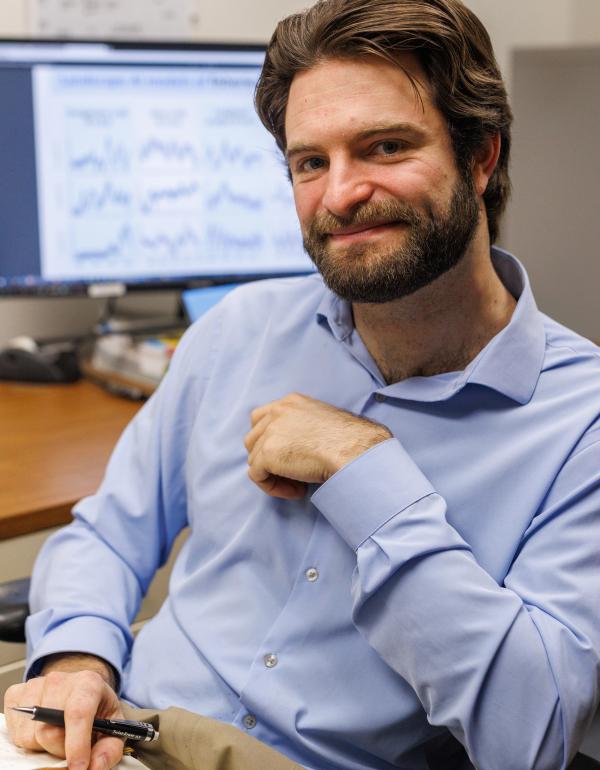
Dr Garcia Ashdown-Franks is a University Research Fellow at York St John University's Institute for Health and Care Improvement (IHCI) within the School of Science, Technology and Health. Their research focuses on the complex relationships between physical activity, mental health, body image, and weight stigma, with a commitment to fostering inclusive physical activity spaces for individuals of all body shapes, sizes, and weights. Dr Ashdown-Franks earned a BSc in Kinesiology in 2015 and an MSc in Exercise Sciences in 2018 from the University of Toronto, followed by a PhD in Exercise Sciences in 2022 from the same institution. They also spent time as a Visiting Researcher at King's College London, where their research focused on parkrun, mental health, and social inclusion. Prior to joining York St John University in 2024, they held an externally funded postdoctoral research position at Brunel University London. Dr Ashdown-Franks employs both qualitative (interviews, ethnography) and quantitative research methods, drawing from critical health studies, fat studies, exercise science, psychology, and sociology. Their work takes a critical stance toward health and weight studies, challenging traditional paradigms and advocating for more inclusive approaches to physical activity and mental health. Their research often explores how community-based physical activities like parkrun can serve as therapeutic landscapes for mental health recovery while acknowledging that these spaces may not be equally accessible or beneficial for all individuals. Analysis of Dr Ashdown-Franks' recent publications reveals a strong focus on community-based physical activity interventions, particularly parkrun, as mechanisms for improving mental health and fostering social inclusion. Their work spans multiple disciplines including sports sociology, mental health research, critical weight studies, and health geography. A notable trend is their examination of how physical activity spaces can be both therapeutic and exclusionary, with particular attention to marginalized populations including individuals with mental health conditions, fat individuals, and Black women. Dr Ashdown-Franks contributes to teaching in the areas of Sport and Exercise Psychology, Psychology of Body Image, and Research Methods. They also provide research-specific training and CPD sessions for staff and postgraduate students, helping to develop research capacity within the university community.
Dr. Thomas (Tom) Brock is a Research Professor and Director of the Community College Research Center (CCRC) at Teachers College, Columbia University, within the Graduate School of Education, Health & Psychology and affiliated with the Department of Education Policy & Social Analysis (EPSA). With over 30 years of experience in education and social welfare research, he leads a broad portfolio of studies aimed at improving community college outcomes, advancing educational equity, and shaping national policy. PhD in Social Welfare, UCLA MPA, Columbia University BA in Anthropology, Pitzer College Dr. Brock's research is centered on transformative reforms in postsecondary education. He has pioneered work in developmental education reform , advocating for corequisite remediation and multiple measures assessment to replace outdated prerequisite models. His leadership in developing the guided pathways framework has influenced hundreds of colleges nationwide. Current projects span dual enrollment , transfer pathways , and sector-based training for green jobs , reflecting a deep commitment to economic mobility and equity. The recent publications led or influenced by Dr. Brock reveal a consistent focus on evidence-based policy, institutional reform, and student success. Themes include remedial education innovation, college completion strategies, workforce alignment, and equity-centered interventions. His work bridges academic research with real-world application, emphasizing scalable models that improve outcomes for underserved populations. Dr. Brock has received significant recognition through leadership roles, including: Commissioner, National Center for Education Research (NCER), IES Acting Director, Institute of Education Sciences (IES) U.S. Representative, OECD’s Centre for Educational Research and Innovation (CERI) Board of Trustees, Pitzer College He actively mentors doctoral students through research apprenticeships at CCRC, collaborating with EPSA to train the next generation of education policy scholars. His grants and projects often involve large-scale evaluations, such as the Opening Doors Demonstration and Achieving the Dream initiative, supported by federal agencies like IES, NSF, and the U.S. Department of Education. Dr. Brock champions interdisciplinary collaboration, leveraging connections across Columbia University and New York City to address complex educational challenges. He is deeply embedded in research teams and centers, most notably leading CCRC—a national hub for postsecondary education research. The center functions as a lab for policy innovation, conducting rigorous evaluations and disseminating findings to practitioners, policymakers, and researchers. Ongoing work includes refining guided pathways implementation and exploring the role of community colleges in the emerging green economy.








/prod01/yorksjacuk/media/content-assets/staff-profile-images/Garcia-Ashdown-Franks.jpg)