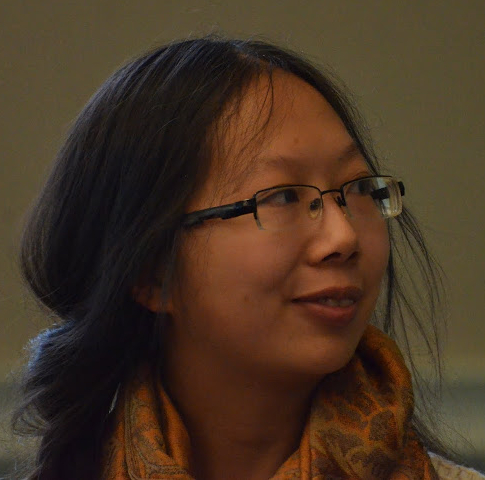
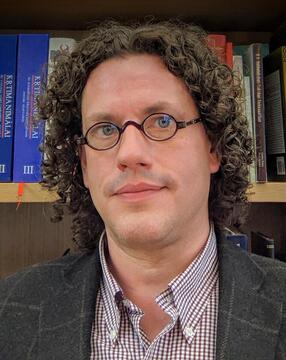
Viktor Golinets is a Professor of Hebrew Linguistics at the Heidelberg University of Jewish Studies , where he has held the Chair of Hebrew Linguistics since 2018. Previously, he served as a Junior Professor at the same institution from 2012 to 2018. His academic journey includes a PhD in Ancient Near Eastern Studies from the University of Munich (2010) and a Magister degree in Semitics from Ludwig-Maximilians-Universität München (2004). Education: PhD (Altorientalistik, LMU Munich, 2010), Magister (Semitics, LMU Munich, 1997-2004) Professional Roles: Professor (Heidelberg University of Jewish Studies, since 2018), Junior Professor (Heidelberg University of Jewish Studies, 2012-2018), Scientific Assistant (University of Basel, 2007-2012) Golinets’ research focuses on the linguistic and textual history of the Hebrew Bible , ancient Bible translations , and historical grammar of Hebrew . He specializes in Masoretic studies, Semitic epigraphy, and comparative analysis of Northwest Semitic languages like Amorite, Aramaic, and Ugaritic. His work addresses textual criticism, biblical hermeneutics, and the evolution of Hebrew from Masoretic to modern usage. His publications and articles reveal a strong emphasis on Hebrew onomastics , epigraphic analysis , and the role of language in Jewish cultural identity . He has contributed to international colloquia on textual criticism and Semitic philology. Memberships: German Oriental Society, European Association of Biblical Studies, International Association for Comparative Semitics, Association of Judaists in Germany, and others Golinets serves as Deputy Rector at Heidelberg University of Jewish Studies and has collaborated on projects like the Hebrew-Greek Text-Critical Synopsis of the Book of Jeremiah and the Biblia Hebraica Transkripta. His expertise in Hebrew manuscripts and Semitic languages informs both his teaching and research.
Lisa Lai-Shen Cheng is a Professor of General Linguistics at the Leiden University Centre for Linguistics, with a focus on comparative syntax and its interactions with semantics, prosody, and processing. She co-founded the Leiden Institute for Brain and Cognition (LIBC) and is a member of KNAW, Academia Europaea, and LSA Fellow. PhD in Linguistics from MIT (1991) Assistant/Associate Professor at UC Irvine (1991-2000) Her research explores language variation through comparative syntax , wh-questions , and interdisciplinary approaches involving the brain. Key projects include Ellipsis Licensing Beyond Syntax (NWO), Understanding Questions (NWO), and Advancing the European Multilingual Experience (FP7 EU). Her work spans Chinese , Bantu , and other languages, addressing phenomena like intervention effects and scope fixation . Her publications include studies on wh-in-situ in Chinese, French, and Bantu languages, emphasizing the role of interfaces and cognitive processes. Awards include membership in KNAW (2017), Academia Europaea, and LSA Fellow status. She has supervised over 20 PhD students and teaches syntax and syntax-semantics interface courses at Leiden University. Her affiliations include the Theoretical Linguistics and Experimental Linguistics groups.
Eliese-Sophia Lincke is a Junior Professor at the Department of History and Cultural Studies, Freie Universität Berlin, since May 2022. Her work bridges computational methods with Egyptology, focusing on digital tools for studying ancient texts. Bachelor's and Master's in Egyptology, Humboldt-Universität zu Berlin (2007) PhD in "The Conception of Spaces in Language" (TOPOI Cluster, 2012) Research interests include: Digital Humanities : Developing machine learning models for Hieroglyphic, Demotic, and Coptic text processing Linguistic Typology : Analyzing classifier systems in Ancient Egyptian and Sign Languages Spatial Linguistics : Investigating prepositions and spatial adverbs in Egyptian-Coptic Recent publications focus on Neural Lemmatization , OCR for Coptic , and Classifier Semantics , demonstrating her commitment to computational Egyptology. Scientific awards include the Humboldt-Preis 2008 for best Master's thesis and the Prize for Good Teaching 2014 . She has co-organized workshops like "Wege zum Ägyptischen" and served as Co-Editor for Lingua Aegyptia . Her teaching contributes to the Digital Studies of Ancient Texts Master's program.
Dr. Salwa El-Awa is a Senior Lecturer in Arabic and Islamic Studies at Swansea University's School of Culture and Communication. She previously held positions at the University of Birmingham (2001-2010) and Ain Shams University in Cairo (2010-2015). Her academic roles include teaching Arabic linguistics, Qur’anic studies, and Hadith analysis, alongside supervising PhD students in translation and religious studies. Her research focuses on Qur’anic textuality, discourse markers, and Islamic movements. Key areas include textual coherence in the Qur’an, Arabic linguistic analysis, and the intersection of religion and counter-terrorism policy. Recent projects explore governance strategies engaging moderate Islamic groups to combat jihadism. El-Awa has published extensively on Qur’anic linguistics, including monographs like Textual Relations in the Qur'an (2005) and Al-Wujuh Wa al-Naza’ir (1998). Her work bridges religious studies, linguistics, and security studies, with notable contributions to Yale’s Dictionary of the Qur'an (2024) and interdisciplinary journals like International Journal of Law, Crime and Justice . She has secured £20,000 for the International Qur’anic Text Linguistics Conference (2020-2021) and served as an External Examiner for Westminster University’s Translation program (2019–2022). Her teaching includes advanced translation, healthcare interpreting, and world cinema studies.
Steven L. McKenzie is Professor of Religious Studies and Spence L. Wilson Senior Research Fellow at Rhodes College, specializing in Hebrew Bible (Old Testament) studies, biblical archaeology, and the Dead Sea Scrolls. His academic career spans decades of influential scholarship and editorial leadership. His educational background includes: Th.D. from Harvard University B.A. and M.Div. from Abilene Christian University McKenzie's research focuses on the history of ancient Israel, Hebrew Bible literature, Hebrew language and grammar, biblical interpretation methods, and the intersection of archaeology with biblical studies. He pioneered work on the Deuteronomistic History and Chronicler's literature, establishing foundational frameworks still referenced today. His interdisciplinary approach bridges textual analysis with historical context, making complex scholarship accessible to broader audiences. His publication trajectory reveals consistent engagement with biblical historiography and interpretation, evolving from technical studies like The Chronicler's Use of the Deuteronomistic History (1985) to accessible works such as How to Read the Bible (2005), and culminating in major reference works including the Oxford Encyclopedia of Biblical Interpretation (2013). Recent projects focus on editorial leadership for the Oxford Bible Commentary series. Key honors include: Spence L. Wilson Senior Research Fellowship McKenzie's academic service demonstrates exceptional commitment: founding the Deuteronomistic History Section at the Society of Biblical Literature, serving as associate editor of Vetus Testamentum (2010-2019), and contributing to editorial boards of Journal of Biblical Literature and Catholic Biblical Quarterly . His decade-long leadership of academic tours through the Middle East and Greece with the Middle East Travel Seminar extended his scholarship into experiential education, while media appearances on Discovery and History channels brought biblical scholarship to public audiences.
Oliver Bond is a Reader in Linguistics (Associate Professor) at the University of Surrey, affiliated with the Surrey Morphology Group (SMG) within the School of Literature & Languages. He holds a PhD from the University of Manchester and specializes in linguistic typology, morphology, syntax, and language documentation. His research focuses on the systemic properties of language, particularly in African and Himalayan languages, exploring features like agreement systems, case marking, and morphological complexity. Key roles include Deputy Director of SMG and PhD Coordinator. His research projects include studies on Nuer (South Sudan/Ethiopia), Tibeto-Burman languages of Nepal, and prominent internal possessors. He has received a prestigious British Academy Award for his work on language evolution and analogy in morphological change. Bond supervises PhD students in areas such as morphology, syntax, and language documentation. Notable former students include Dávid Győrfi and Tatiana Reid. His publications span typological studies, language documentation, and theoretical morphology, with recent work on contact effects in Tibeto-Burman languages and negation systems in African languages. Bond’s contributions include collaborative projects like the Nuer Literacy Initiative and the Manang Languages Project. He actively publishes in journals like Journal of Linguistics and Linguistic Typology , and maintains a comprehensive resource, the Nuer Lexicon .
Dr. Burkhard Maess is a Research Professor and Group Leader at the Max Planck Institute for Human Cognitive and Brain Sciences, leading the Methods and Development Group Brain Networks. His research focuses on auditory and language processing, signal analysis, and dynamic modeling of neuronal networks. He holds a Diploma in Physics (University of Leipzig, 1987) and a PhD in Physics (University of Leipzig, 1990). His career includes postdoctoral positions at the Academy of Sciences of the GDR and the Free University of Berlin before joining the MPI in 1995. Since 2000, he has led research groups on MEG/EEG signal analysis and cortical network dynamics. His work integrates advanced neuroimaging techniques like MEG and EEG to study sensory processing, neural network dynamics, and the effects of aging on auditory attention. Key contributions include developing high-resolution BEM-FMM methods for source localization and analyzing cross-frequency coupling in neuroscience data. His group also explores spinal cord electrophysiology and the neural underpinnings of perceptual decision-making. Dr. Maess’ research spans cognitive neuroscience, biomedical engineering, and computational modeling, with a focus on bridging empirical findings with theoretical frameworks in neuroscience.
Prof. Gaurav Raheja is a Professor at the Department of Architecture & Planning, IIT Roorkee, and Co-coordinator of the Design Innovation Centre. He holds joint faculty positions at the Centre for Transportation Systems and is Professor-in-charge of Inclusion and Accessibility Services. His academic journey includes a PhD (2008) and M.Arch (2002) from IIT Roorkee, and a B.Arch from PTU Jalandhar (2000). His research focuses on universal design, inclusive mobility, urban sustainability, and accessibility for marginalized groups such as persons with disabilities, children, and the elderly. He leads the Laboratory of Inclusive Design (LID) and advises India’s government on accessibility policies. Notable awards include the Mphasis Universal Design Award (2010) and DAAD Research Ambassadorship (2018–2022). He has authored over 50 publications, including books on universal design and accessibility. His recent work explores children’s independent mobility in urban areas, inclusive urban futures, and accessibility in pilgrimage towns. He collaborates with global institutions like TU Berlin and TU Dresden through DAAD-funded programs. His teaching spans courses on universal design, architectural theory, and sustainable urban planning.
Yaşar Fatih AKBAŞ is an Associate Professor at Kafkas University, Faculty of Theology, Department of Basic Islamic Sciences. He specializes in Arabic Language and Rhetoric, focusing on grammatical structures, semantic analysis, and classical Arabic texts. Education: PhD in Fundamental Islamic Sciences, Atatürk University (2016-2020) Master's in Arabic Language and Rhetoric, Atatürk University (2014-2016) BA in Theology, Atatürk University (1997-2002) Research Interests: Arabic Grammar Rhetoric and Stylistics Semantics and Syntax Quranic Exegesis Historical Linguistics Scientific Contributions: He has published 11 articles, focusing on topics like particle analysis, syntactic flexibility, and stylistic features in classical Arabic texts. His work spans journals such as Şırnak University Theology Faculty Journal and Sakarya University Theology Faculty Journal. Awards: Aylıkla Ödüllendirme (2010) Academic Collaborations: He has co-authored works with Yakup Kızılkaya (2024) and advised Master's theses for Adem Ağbaba (2025) and Fırat Çeledir (2023).
Prof. Dr. Jakob Leimgruber is Professor of English Linguistics at the University of Regensburg since 2022, where he is affiliated with the Department of English and American Studies within the Faculty of Languages, Literature, and Cultures. Previously, he served as Substitute Professor at the University of Freiburg (2020-2022) and Lecturer at the University of Basel (2018-2022). His academic journey includes a Habilitation in English Philology from the University of Freiburg (2018), a DPhil in English Language from the University of Oxford (2009), and a Licence ès lettres in English Linguistics from the University of Fribourg (2005). Leimgruber's research centers on World Englishes with particular focus on East and Southeast Asia, sociolinguistics, language planning and policy, linguistic landscapes, language contact phenomena, language variation and change, indexicality, and authenticity. His work employs empirical approaches including corpus linguistics, fieldwork, and eye-tracking methodologies to investigate multilingual contexts across Singapore, Montreal, Taiwan, and the UAE. He has made significant contributions to understanding Singapore English, linguistic landscapes in multilingual cities, and language variation in postcolonial contexts. His publication record demonstrates consistent research output across multiple high-impact journals in linguistics, with a strong focus on empirical studies of language variation in specific contexts. Recent work shows increased attention to East Asian Englishes beyond Singapore, including Taiwan, and expanding investigations into the linguistic landscapes of global cities like Dubai. His research often employs collaborative approaches with international scholars across multiple institutions. Leimgruber has been active in academic service through numerous conference presentations including invited talks at institutions worldwide, participation in research workshops, and contributions to edited volumes on World Englishes and multilingual cities. His work bridges theoretical linguistics with practical applications in language policy and education. As an academic leader, Leimgruber has directed research projects examining multilingualism in global contexts, with particular attention to the role of English in shaping linguistic landscapes and identity construction. His recent work has increasingly focused on comparative approaches across different multilingual settings, examining common patterns and context-specific variations in how English functions in diverse sociolinguistic environments.
Prof. Dr. Gisela Zifonun is a retired University Professor of German Linguistics at the University of Mannheim and former Head of the Grammar Department at the Institut für Deutsche Sprache (IDS) until July 2011. She holds a doctorate (1971) and habilitation (1994) in German Linguistics. Her career includes roles as a scientific employee at the IDS (1973–1995), Head of the Grammar Department (1986–1995), and professorships at the Free University of Berlin (1995–1998) and the University of Mannheim (1998–2011). Her research focuses on grammar theory, German syntax/semantics/morphology, language typology, and comparative linguistics. Key projects include the Grammar of German in European Comparison (GDE-N) and the EuroGr@mm initiative. She has authored/co-authored over 130 works, including monographs and edited volumes on German linguistics. Notable publications include Das Deutsche als europäische Sprache (2021) and Grammatik des Deutschen im europäischen Vergleich (2017). Her work emphasizes cross-linguistic analysis and corpus-driven research. Research interests span syntax, morphology, and typological comparisons across German, Romance, and Slavic languages. Recent contributions address gender-inclusive language reform and corpus-based studies. She has supervised numerous academic projects and serves as a key figure in German linguistic infrastructure, including IDS initiatives. No explicit awards are listed, but her extensive bibliography reflects significant scholarly impact. Professional roles include managing the IDS’s Grammar Department and coordinating international collaborations. Her work bridges theoretical linguistics with applied research, contributing to both academic discourse and language policy discussions.
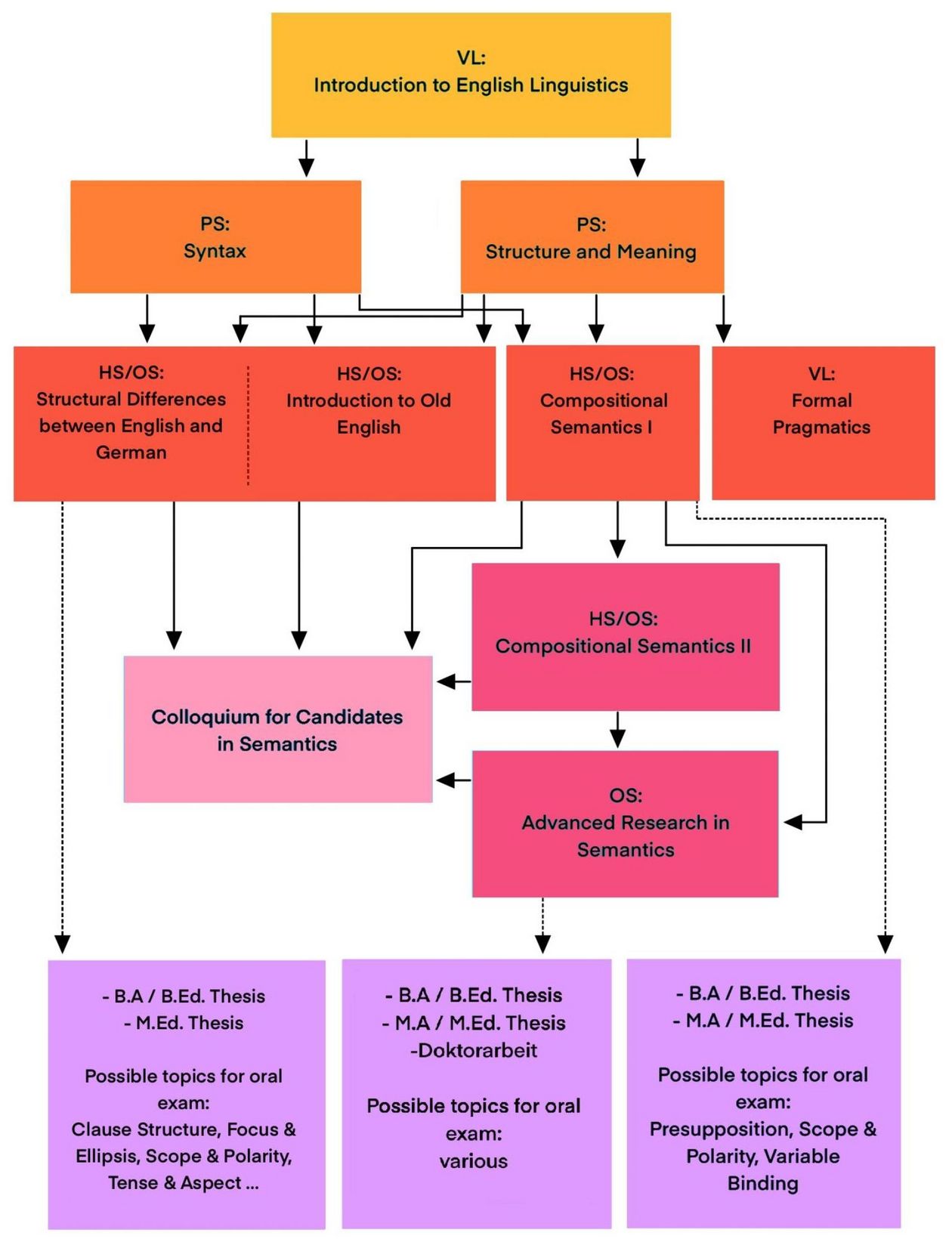
Prof. Dr. Sigrid Beck holds the Chair of Descriptive and Theoretical Linguistics at the Department of English, University of Tübingen. She is affiliated with the Faculty of Humanities and specializes in semantics, focusing on questions, focus structures, plurals, comparison constructions, and decomposition adverbs. Her research integrates crosslinguistic, diachronic, and acquisition data to inform semantic theory. Education: PhD (1996) and Habilitation (2003), University of Tübingen and Goethe University Frankfurt Key positions: Held roles at MIT, University of Massachusetts Amherst, University of Connecticut, and University of Potsdam Publications include Structure and Meaning: Contrasting English and German Grammar (2014) and foundational lecture notes on tense and modality (2011). She teaches semantics and syntax within the Department's structured program. Office hours are Tuesdays 4-5pm via secretary appointment.
Mai Ha Vu is an Assistant Professor at the University of Toronto Mississauga , split between the Department of Language Studies and the Department of Mathematics, Computer Science, and Statistics . Her work bridges theoretical linguistics, computational methods, and biological data modeling. Ph.D. in Linguistics, University of Delaware (2020) M.A. in Linguistics, University of Delaware (2014) B.A. in Psychology and Linguistics, Grinnell College (2013) Research focuses on applying formal language theory to understand human language patterns and train biologically reliable language models . Recent work includes antibody language modeling (Nature Computational Sciences 2022) and syntax-prosody mapping via logical transductions (SIGMORPHON 2022). Key research trends in publications: interdisciplinary applications of computational linguistics to immunology, psycholinguistic modeling of neural language models, and formal syntactic analysis of negation and wh-questions across languages.
Ian Quinn is the Allen Forte Professor of Music Theory and Director of Graduate Studies (DGS) at Yale University, within the Department of Music in the College of Arts and Science. He holds a B.A. from Columbia University (1993), M.A. and Ph.D. from the Eastman School of Music (1998, 2004). Prior to Yale, he taught at the University of Chicago and University of Oregon, and was a CASBS Residential Fellow at Stanford (2008-09). His research focuses on tonal harmony, corpus studies, music cognition, and the intersections of mathematics and computation in music theory. He edited the Journal of Music Theory (2004–2011) and co-organized the 2009 Society for Mathematics and Computation in Music conference. He leads the Yale-New Haven Regular Singing (YNHRS) shape-note singing group and serves on editorial boards for Journal of Mathematics and Music and the Northeast Music Cognition Group (NEMCOG). Quinn’s work has earned awards from the Society for Music Theory, including the Emerging Scholar Award (2004) and Outstanding Publication Award (2006/2007). His research spans analytical frameworks for harmonic function, corpus-based studies of tonal systems, and empirical investigations of music perception. He has advised over 15 doctoral students, many now in academic and industry roles. Key collaborations include co-authoring the Oxford Handbook of Corpus Studies in Music (2023) and developing the Yale-Classical Archives Corpus. His work bridges theoretical, computational, and historical approaches to music analysis, with contributions to Science , Music Theory Spectrum , and Perspectives of New Music .
Yoshiko Matsumoto is the Yamato Ichihashi Professor in Japanese History and Civilization and Professor of East Asian Languages and Cultures at Stanford University, with a courtesy appointment in Linguistics. She has been a faculty member at Stanford since 1992, progressing from Assistant Professor to her current distinguished position. Matsumoto also serves as coordinator of the Japanese Language Program and has held significant administrative roles including Chair of the Department of Asian Languages (2003-2005) and Interim Chair of the Department of East Asian Languages and Cultures (2016). Matsumoto earned her Ph.D. in Linguistics from the University of California, Berkeley (1989), following M.A. degrees in Linguistics from UC Berkeley and General and Applied Linguistics from the University of Tsukuba, an M.I.A. in American Studies from the University of Tsukuba, and a B.A. in English Language & Literature from Japan Women's University. Professor Matsumoto's research focuses on linguistic pragmatics from cross-linguistic perspectives, with particular expertise in Japanese language. Her work spans structural and sociocultural aspects of language in use, including noun-modifying clause constructions, honorifics, discourse markers, and the intersection of language with gender and aging. She has pioneered research on conversational narratives of older adults, examining how ordinary framing strategies help individuals navigate difficult experiences. Her current projects explore intergenerational communication through haiku, communicative abilities of people with dementia, and noun-modifying constructions across Eurasian languages. Matsumoto's scholarship consistently bridges theoretical linguistics with practical applications for understanding human communication in diverse social contexts. Matsumoto's recent publications reveal a growing focus on practical applications of linguistic research for social benefit, particularly in intergenerational communication and dementia care. Her work increasingly integrates arts-based approaches, especially haiku poetry, to bridge generational divides and enhance communication with elderly populations. The research shows a consistent trajectory from theoretical linguistic frameworks toward applied, human-centered language studies that address real-world challenges in aging societies, with particular attention to how ordinary language practices help individuals navigate life transitions and difficult experiences. Dean's Award for Distinguished Teaching, School of Humanities and Sciences, Stanford University (2000) Richard E. Guggenhime Faculty Scholar, Stanford University (2000-2003) Violet Andrews Whittier Fellow, Stanford Humanities Center (2019-2020) Faculty Research Fellow, Michelle R. Clayman Institute for Gender Research (2014-2015) Research Fellow, Japan Foundation (2002) Internal Fellow, Stanford Humanities Center (2005-2006) Presidential Fund for Innovation in the Humanities, Stanford University (2009-2011) Professor Matsumoto has mentored numerous students through her teaching in Japanese language and linguistics courses, including specialized offerings on language and aging, points in Japanese grammar, and haiku-based communication. Her research has been supported by prestigious grants from the National Endowment for the Humanities, the Japan Foundation, and Stanford's Presidential Fund for Innovation in the Humanities. She has served on multiple editorial boards including the Journal of Pragmatics since 1992, demonstrating long-standing leadership in her field. Matsumoto has also advised students through individual studies and thesis projects in East Asian Languages and Cultures. Matsumoto leads several collaborative research initiatives including the 'Sharing Conversations' project which examines intergenerational communication through haiku, and research on communicative abilities of people with dementia. Her work often involves interdisciplinary teams spanning linguistics, gerontology, and creative arts, with fieldwork conducted in both Japan and the United States. The 'Noun-Modifying Constructions in Languages of Eurasia' project represents a major international collaboration examining linguistic structures across cultural boundaries. She also directs the 'Language, Old Age and Gender in Japan' project supported by the Stanford University/Japan Foundation, and the 'Difficult Conversations Continue: Memories of the 3.11 Disaster and Bereavement Narratives' project focused on post-disaster communication.