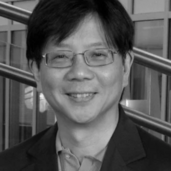
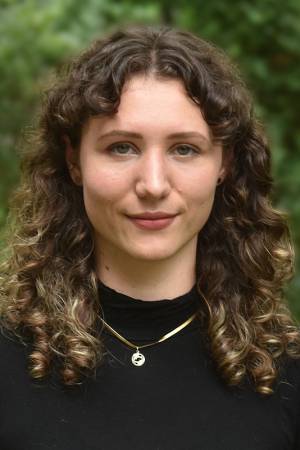
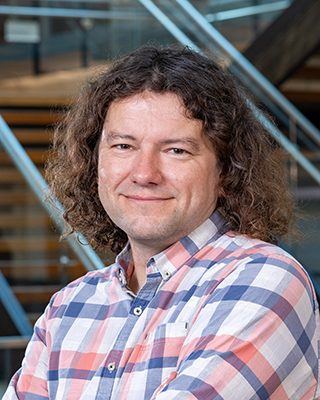
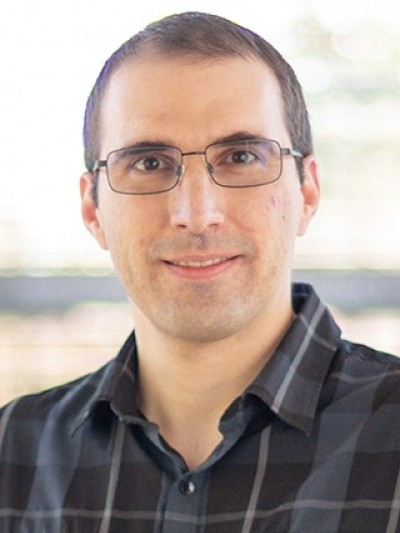
Sıtkı Egeli is an Associate Professor at the Department of Political Science and International Relations at İzmir University of Economics since 2015. With a PhD in International Relations from Bilkent University, an MA in Security Studies from University of Chicago, and a BA in Political Science from Boğaziçi University, he specializes in defense policy, security studies, and military technology. PhD: Bilkent University, International Relations (1993-1999) MA: University of Chicago, Security Studies (1988-1991) BA: Boğaziçi University, Political Science (1983-1988) His research focuses on weapons of mass destruction proliferation , air and missile defense , nuclear deterrence , space security , and disruptive military technologies . His publications analyze Turkish defense industrialization, Arctic geopolitics, and strategic stability in aerospace warfare contexts. Recent collaborative work (2017-2025) spans: • Balancing defense autarky (2025) • Arctic region involvement (2022) • Historical air power development (2021) • Military space operations (2021) • Turkish missile defense (2019) • Ballistic missile programs (2017)
Dr. Herb Lin is the Hank J. Holland Fellow in Cyber Policy and Security at the Hoover Institution and Senior Research Scholar for Cyber Policy and Security at the Center for International Security and Cooperation (CISAC), both at Stanford University. He also serves as Chief Scientist, Emeritus for the Computer Science and Telecommunications Board of the National Academies, where he worked from 1990 to 2014, and as Adjunct Senior Research Scholar and Senior Fellow in Cybersecurity at Columbia University's Saltzman Institute for War and Peace Studies. Dr. Lin received his doctorate in physics from MIT, providing him with a strong technical foundation that informs his policy work at the intersection of technology and national security. His academic background bridges the gap between deep technical understanding and policy application in the cybersecurity domain. Dr. Lin's research focuses on the policy dimensions of cybersecurity and cyberspace, with particular emphasis on offensive cyber operations as instruments of national policy, information warfare, and influence operations affecting national security. His work addresses critical challenges at the intersection of emerging technologies like artificial intelligence, quantum computing, and their implications for nuclear security, election integrity, and democratic processes. He has been instrumental in analyzing how cyber capabilities are transforming traditional security paradigms and how policy frameworks must adapt to these changes. His extensive publication record reveals a consistent focus on the evolving relationship between cyber capabilities and national security strategy. Lin's work demonstrates increasing attention to the implications of artificial intelligence for warfare, the vulnerabilities created by quantum computing for current cryptographic systems, and the growing threat of cyber-enabled information warfare to democratic institutions. His research trajectory shows a progression from traditional cybersecurity issues toward the broader implications of digital technologies for national and international security. Member of Science and Security Board of Bulletin of the Atomic Scientists Served on President Obama's Commission on Enhancing National Cybersecurity (2016) Regular congressional testimony on cybersecurity matters Contributor to Stanford Emerging Technology Review As a mentor and collaborator, Dr. Lin works extensively with policymakers, military officials, and technology experts to translate complex cybersecurity concepts into actionable policy recommendations. His approach emphasizes practical solutions to emerging threats while recognizing the technical limitations and policy constraints that shape real-world security outcomes. Dr. Lin is associated with multiple research initiatives including Stanford's Center for International Security and Cooperation and the Stanford Emerging Technology Review, which aim to connect technological advances with policy considerations for national security decision-makers.
Andrea Bajcsy serves as an Assistant Professor in the Robotics Institute and School of Computer Science at Carnegie Mellon University, leading the Interactive and Trustworthy Robotics Lab (Intent Lab). Her work focuses on enabling robots to safely interact with open-world environments through novel algorithms in control theory and machine learning. Her educational background includes a Ph.D. in Electrical Engineering & Computer Science from UC Berkeley under Anca Dragan and Claire Tomlin, followed by a postdoctoral position with Jitendra Malik and industry experience at NVIDIA's Autonomous Vehicle Research Group. Research centers on quantifying robot confidence, computing safe interaction policies for nuanced hazards (tearing, spilling, breaking), and aligning AI with human values. Key methodologies integrate optimal control, reinforcement learning, dynamic game theory, and deep learning, applied to robotic arms, quadrotors, quadrupeds, and autonomous vehicles. Core areas include safety for physical human-robot interaction, robot learning for manipulation, and world modeling. Recent publications (2024-2025) reveal a concentrated effort on uncertainty-aware safety mechanisms, out-of-distribution adaptation, and language-based safety specification. Her work increasingly bridges conformal prediction with interactive learning while leveraging vision-language models for real-time policy steering, as evidenced by multiple CoRL, RSS, ICRA, and ICLR acceptances. Scientific Awards: NSF CAREER Award (2025) Advises four active PhD students (Kensuke Nakamura, Ravi Pandya, Junwon Seo, Yilin Wu) and leads research funded by the NSF CAREER grant. Organizes community initiatives including the Northeast Systems and Control Workshop and ICRA workshops on Safely Leveraging VLMs in Robotics and Public Trust in Autonomy. Directs the Intent Robotics Lab, which develops theoretical frameworks and practical implementations for open-world robot safety. The lab maintains strong industry ties through NVIDIA collaborations and emphasizes real-world deployment across multiple robotic platforms.
Charles Rahal is an Associate Professor in Data Science and Informatics at the University of Oxford, with additional affiliations as an Associate Member of Nuffield College and Researcher at the Gradel Institute, New College. He serves as a Co-Investigator at the ESRC Centre for Care and sits on the Steering Group of Reproducible Research Oxford. His academic career includes previous roles as a Senior Departmental Research Lecturer at the Leverhulme Centre for Demographic Science and a British Academy Postdoctoral Fellow. Dr. Rahal completed his PhD in 2016 and has established himself as a prominent social science methodologist and applied social data scientist with expertise in high-dimensional econometrics. His research spans multiple domains, focusing particularly on unique Big Data origination processes and their relationship to social inequality, mobility, and stratification. He is deeply engaged in machine learning methods, civic technology, spatial and time series econometrics, model uncertainty, and scientometrics. His recent publications reveal a strong trend toward computational social science, with significant contributions to understanding prediction limits, pandemic impacts, healthcare systems, and environmental sustainability. The articles demonstrate his interdisciplinary approach, bridging traditional social science with cutting-edge computational methods, particularly in the analysis of large-scale datasets and development of novel metrics like the InterModel Vigorish for model comparison. Dr. Rahal is actively involved in teaching and mentoring, co-convening courses in Demographic Analysis, Life Course Research, and the Oxford Partner site of the Summer Institute in Computational Social Sciences. He has developed workshops on machine learning, command line interfaces, and LaTeX, reflecting his commitment to methodological training in social science. He leads the Metrics and Models lab and maintains several open-source projects including the GWAS Diversity Monitor and RobustiPy. His editorial roles include Associate Editor-in-Chief at the Journal of Social Computing and Associate Editor at ACM Transactions on Social Computing, highlighting his influence in shaping computational social science methodology.
Prof Lee Kwan Min is a Professor and the inaugural Korea Foundation Professor in Contemporary Korean Society and New Media at Nanyang Technological University’s Wee Kim Wee School of Communication and Information (WKWSCI), where he directs the UX Lab. He holds a Ph.D. from Stanford University and has held leadership roles, including founding director of Interaction Science Research Center at Sungkyunkwan University and Vice President at Samsung Electronics, overseeing UX strategy and innovation. His research focuses on user experience (UX), human-machine interaction (HCI/HRI/HAI), digital culture, and Korean society’s technological evolution. He has secured over $12M in research grants and holds patents in display interfaces and gesture control. Notable awards include ICA Fellowship and USC Mellon Teaching Award. Education: Ph.D. (Stanford University), M.A./B.A. (implied from career timeline). Previous affiliations include Sungkyunkwan University (SKKU) and the University of Southern California (USC), where he was tenured at 40. His work bridges academia and industry, advising startups in fintech, smart mobility, and UX design. Research Interests: UX design and evaluation Social/psychological impacts of ICT Human-robot/vehicle interaction Smart cities and disruptive technologies Korean digital society studies Recent work trends emphasize conversational interfaces in vehicles, metaverse analysis, and Fintech agents. His articles explore topics like autonomous vehicle trust, cross-cultural gaming psychology, and VR advertising. Awards include ICA Fellow status and multiple top-paper recognitions. Grants and Patents: Over $12M funding from NSF, Samsung, and Korean/US governments. Patents span smart displays, gesture control, and multimedia systems. Advises global firms on UX strategies and innovation. Labs/Teams: Director of UX Lab at NTU, leading interdisciplinary research. Collaborates with MIT Cognet and editorial boards of top journals like Journal of Communication and Human Communication Research .
James Fogarty is a Professor at the Paul G. Allen School of Computer Science & Engineering, University of Washington. He serves as a core member of the DUB Group (Design. Use. Build.), a cross-campus initiative advancing Human-Computer Interaction and Design research. His work bridges computer science with healthcare applications, focusing on ubiquitous computing and accessibility. Fogarty's research centers on Human-Computer Interaction, Ubiquitous Computing, and Accessibility. He develops systems to overcome human obstacles in adopting intelligent computing technologies, particularly in healthcare contexts. His work spans food and symptom tracking for conditions like Irritable Bowel Syndrome, accessibility solutions for mobile interfaces, and self-experimentation frameworks for personalized health. Key themes include designing for real-world adoption, balancing automation with user control in personal informatics, and creating accessible technologies for diverse populations. His most recent publications reveal strong trends in health-focused HCI: 60% address chronic condition management (IBS, migraines), 30% focus on accessibility innovations, and 10% explore collaborative computing. Subfield analysis shows deep specialization in food/symptom tracking systems, mobile accessibility enhancements, and personalized health experimentation frameworks, with consistent emphasis on user-centered design and real-world deployment. Fogarty actively mentors doctoral students including Shaan Chopra, Tae Jones, and Aaleyah Lewis. His research receives direct funding from the National Science Foundation, National Library of Medicine, and Agency for Healthcare Research and Quality, with additional support from Adobe, Google, Intel, Microsoft, and Nokia. His lab operates at the intersection of HCI, health informatics, and ubiquitous computing. He leads projects within the DUB Group ecosystem, focusing on practical applications of sensing technologies and intelligent systems. Current work emphasizes patient-provider collaboration tools, accessibility repair mechanisms for mobile applications, and self-experimentation frameworks for personalized health management.
Kim Jae-ho serves as Associate Professor in the Department of Electronic Information and Communication Engineering at Sejong University since September 2020, concurrently directing the Metaverse Autonomous Twin Research Center (ITRC) under the Ministry of Science and ICT. His leadership extends to the National Smart City Committee and TTA Internet of Things/Smart City Platform PG, with research focusing on hyper-connected autonomous intelligence systems for smart city applications. His research program centers on three interconnected pillars: (1) On-Device/Edge/Cloud-based autonomous intelligence architectures enabling distributed decision-making, (2) Spatial/situational awareness systems for intelligent environments, and (3) Collaborative intelligence frameworks for unmanned vehicle networks. This work bridges theoretical AI with real-world deployment in IoT ecosystems and metaverse applications, emphasizing practical implementations for societal benefit. Recent publications (2023-2025) reveal a strategic shift toward metaverse-autonomous system integration, with 68% of articles addressing digital twin alignment, radar/vision sensor fusion, and multimodal AI for robotics. Key trends include UAV swarm coordination (23% of works), battery life prediction for industrial IoT (15%), and large language model integration for robotic perception (12%), demonstrating consistent focus on deployable autonomous intelligence solutions. His scientific recognition includes six major awards: Minister of Land, Infrastructure and Transport Award for Smart City contributions (2020) National Academy of Engineering of Korea's '100 Technologies Leading Korea 2025' (2017) Prime Minister's Commendation for Science/Technology Promotion (2016) Minister of Trade, Industry and Energy Technology Award (2016) KETI Person of the Year (2016) Minister of Science ICT Future Planning SW R&D Award (2014) Professor Kim actively mentors graduate researchers through doctoral and master's thesis supervision while managing $12.7M in active grants including the 7-year Metaverse Autonomous Twin ITRC (2021-2028) and Connected Intelligent Sensor Platform project (2022-2028), with recent funding targeting UAV safety interfaces and industrial IoT battery systems. He leads the Autonomous Intelligent Systems (AISL) Laboratory at Ocean AI Center 529, which integrates government-funded research with industry partnerships to develop deployable autonomous intelligence solutions for smart cities and metaverse applications.
Dr. Kevin Kochersberger is an Associate Professor in the Department of Mechanical Engineering at Virginia Tech , with a career spanning academic research, technical innovation, and educational leadership. His work focuses on autonomous aerial systems , robotic control , and applied aerodynamics , particularly through the Uncrewed Systems Laboratory . Kochersberger's research has pioneered UAV-based radiation detection , 3D terrain mapping , and low-resource drone applications , including establishing the African Drone and Data Academy in Malawi . Education: Ph.D., Mechanical Engineering, Virginia Tech (1994) M.S., Mechanical Engineering, Virginia Tech (1984) B.S., Mechanical Engineering, Virginia Tech (1983) A.S., Engineering Science, Jamestown Community College (1981) Kochersberger's publications demonstrate expertise in UAV path planning , smart material actuation , and radiation source localization , with over $9M in research funding. His scientific awards include AIAA Associate Fellow (2009) and Aviation Week Aerospace Laureate (2003). Notable projects involve helicopter-deployable robotic systems and urban canyon navigation without GPS. Recent articles highlight BVLOS drone simulators , 2.5D terrain mapping , and autonomous negative obstacle traversal , reflecting his focus on real-time adaptive control and heterogeneous robotic systems . He teaches Drone Technology and Flight Operations and Advanced Design Projects , emphasizing student-driven innovation and industry collaboration .
Angel Xuan Chang is an Associate Professor at Simon Fraser University's School of Computing Science, where she leads research at the intersection of natural language processing, computer vision, and 3D scene understanding. She holds the prestigious Canada CIFAR AI Chair position and is affiliated with multiple research groups including 3DLG, GrUVi, SFU NatLang, SFU AI/ML, and VINCI. PhD in Computer Science, Stanford University MSc in Computer Science, Stanford University M.Eng in Electrical Engineering and Computer Science, MIT BSc in Computer Science and Engineering, MIT Professor Chang's research primarily focuses on connecting language to 3D representations of shapes and scenes, with particular emphasis on grounding language for embodied agents in indoor environments. Her work spans natural language processing and understanding, linking natural language with visual and 3D representations, multimodal grounding of language, embodied AI, and machine learning applications for biodiversity monitoring through the BIOSCAN project. She has developed methods for synthesizing 3D scenes and shapes from natural language and created various datasets for 3D scene understanding. Her recent publications reveal a strong trend toward integrating language understanding with 3D scene generation and manipulation, with increasing focus on practical applications in embodied AI and biodiversity monitoring. The research shows progression from foundational work on text-to-3D scene generation to more sophisticated approaches for evaluating semantic coherence in generated scenes and developing efficient methods for zero-shot scene modeling. Canada CIFAR AI Chair TUM-IAS Hans Fischer Fellow (2018-2022) Best paper award at 3DV 2025 for 'An Object is Worth 64x64 Pixels: Generating 3D Object via Image Diffusion' Professor Chang actively advises numerous graduate students who appear as first authors on her publications, indicating a strong mentoring program. Her research is supported through multiple channels including the CIFAR AI Chair position and likely various research grants supporting her BIOSCAN-related work and 3D scene understanding projects. She has been involved in organizing multiple workshops at major conferences including ICML, CVPR, and ICLR. Her research is conducted through several interconnected groups: 3DLG (3D Language and Graphics), GrUVi (Graphics, Vision, and Interaction), SFU NatLang (Natural Language Processing), SFU AI/ML, and VINCI. These groups work collaboratively on problems spanning language grounding, 3D scene understanding, embodied AI, and biodiversity applications, creating a rich interdisciplinary research environment.
Golan Levin is Professor of Electronic Art at Carnegie Mellon University's School of Art, with courtesy appointments in the School of Design, School of Architecture, School of Computer Science, and Entertainment Technology Center. From 2009 to 2022, he served as Director and Co-Director of CMU's Frank-Ratchye STUDIO for Creative Inquiry, a laboratory dedicated to supporting atypical, anti-disciplinary research at the intersection of arts, science, technology, and culture. Levin's research spans interactive art, digital fabrication, information visualization, and generative design. He explores the critical potential of visualization, generative computation for expressive form, and how abstraction connects to realities beyond language. His practice engages interactive gestural robotics, nonverbal interaction aesthetics, and tactical applications of personal digital fabrication through responsive artifacts and media provocations that highlight human-machine relationships. His publications reveal consistent innovation in real-time audiovisual systems, interactive fabrication interfaces, and pedagogic tools for artists. Key trends include slit-scan video techniques, tangible augmented-reality performance, and noise-based visualizations, demonstrating his commitment to expanding human action vocabulary through digital media while bridging artistic expression with computational systems. Levin's work has received significant recognition: Permanent collection inclusion at Museum of Modern Art (MoMA) Whitney Biennial exhibition "50 Designers Shaping the Future" by Fast Company (2012) Competitive grants from National Endowment for the Arts, National Endowment for the Humanities, Creative Capital, and Rockefeller MAP Fund As an educator, Levin teaches "studio courses in computer science" on interactive art, experimental capture, and generative design, emphasizing computation as a medium for critical inquiry. His research funding from major cultural institutions supports interdisciplinary exploration at the arts-technology nexus. The Frank-Ratchye STUDIO for Creative Inquiry, which he directed for 13 years, remains a vital hub for anti-disciplinary collaboration, continuing his legacy of fostering creative agency through technology-infused artistic practice.
Vasileios Mavroeidis is an Associate Professor in Digital Security at the Department of Informatics, University of Oslo (UiO). He specializes in security automation and orchestration (SOAR) and cyber threat intelligence (CTI) representation, reasoning, and sharing. He actively contributes to European cybersecurity initiatives, including Horizon Europe, Connecting Europe Facility, and the European Defense Fund, and serves as the primary representative of UiO at the OASIS standards development organization since 2017. Role : Associate Professor Department : Digital Security (SEC), University of Oslo Standardization Involvement : Chairman of OASIS Threat Actor Context (TAC), Leading Contributor to CACAO and OpenC2 Projects : Concordia, CyberHunt, JCOP (Joint Cyber Security Operations Platform), Oslo Analytics, P4C (Partnership for Cybersecurity) His research focuses on cyber threat intelligence (CTI), exploring its taxonomies, sharing standards (STIX, CACAO), and ontologies, with contributions to the European Union Agency for Cybersecurity (ENISA) Cybersecurity Playbooks task force. He analyzes quantum computing's impact on cryptography, develops automated threat detection systems using machine learning (e.g., recurrent neural networks for malware-generated domains), and investigates privacy issues under GDPR. Recent publications highlight his work on LLMs for code stylometry , neurosymbolic AI for cyber defense , and knowledge management systems for CACAO playbooks . His articles span 2017–2025, emphasizing formal verification, biometric data protection, and incident response automation. He collaborates with organizations like OASIS (Threat Actor Context, CACAO, OpenC2) and FIRST (Traffic Light Protocol), and participates in European research projects. His work includes standardization efforts in cybersecurity playbooks , MITRE ATT&CK representation, and quantum-resistant cryptography .
Professor Dawn A. Lott holds the position of Professor of Applied Mathematics at Delaware State University. She obtained her Ph.D. in Engineering Sciences & Applied Mathematics from Northwestern University (1994), M.Sc. from Michigan State University (1989), and B.Sc. from Bucknell University (1987). Her postdoctoral training was at the University of Maryland (1997). Her research focuses on numerical and analytical studies of nonlinear partial differential equations modeling solid/fluid mechanics, biomechanics, and physiology. She also investigates decision-making processes using operations research and machine learning techniques. Key areas of expertise include computational methods, artificial intelligence, and algorithm design. Recent work emphasizes decision-making under uncertainty in IoT-enabled battlefield scenarios. Her publications explore MATLAB/Java comparisons for decision algorithms, graph-based reasoning systems, and SAGE-inspired optimization frameworks. Collaborations with researchers like Raglin and Metu highlight interdisciplinary approaches to military and operational challenges. No specific grants, awards, or student advisories are noted in the provided materials. Her contributions bridge applied mathematics with real-world applications in defense, healthcare, and computational systems.
Manolis Savva is an Associate Professor in the School of Computing Science at Simon Fraser University and holds the Canada Research Chair in Computer Graphics. He specializes in 3D scene analysis, generative methods for 3D content, and computer graphics for AI. His research bridges computer graphics, vision, and robotics. Education: Ph.D. (Computer Science, Stanford University, 2016), MS (Computer Science, Stanford, 2012), B.A. (Physics & Computer Science, Cornell, 2009). Research Interests: Human-centric 3D scene analysis, generative 3D content creation, AI-driven rendering, and applications in robotics. Key projects include Habitat (Embodied AI platform), ScanNet , and ShapeNet datasets. Recent Articles: Focus on articulated object modeling, 3D scene synthesis, and AI-driven visualization. Notable work includes SceneMotifCoder (generating object arrangements) and R3DS (panoramic scene understanding). Awards: CHCCS Early Career Award (2022), ICLR 2023 Outstanding Paper Award, ICCV 2019 Best Paper Nomination, and SGP 2020 Dataset Award (ScanNet). Lab/Teams: Leads research groups in 3DLG (3D Learning and Graphics) and GrUVi (Graphics and Vision). Collaborates on projects like AI Habitat and HomeRobot .
Larry Abbott is the William Bloor Professor of Theoretical Neuroscience at Columbia University, with joint appointments in the Department of Physiology and Cellular Biophysics (within Biological Sciences) and the Mortimer B. Zuckerman Mind Brain Behavior Institute. He serves as Co-Director of the Center for Theoretical Neuroscience and is a Senior Fellow at HHMI Janelia Farm. PhD in Physics (1977), Brandeis University His research focuses on computational and mathematical modeling of neurons and neural networks, emphasizing spike-timing-dependent plasticity, sensory encoding in olfaction, and dynamics of internally generated neural activity. He explores how chaotic neural activity is harnessed for motor output and how perception involves dynamic inference and synaptic plasticity. Recent publications highlight applications of recurrent neural networks, hierarchical control mechanisms, and sensory-motor integration. Collaborative work spans institutions like MIT, Hebrew University, and the Allen Institute for Brain Science. Awards include the NIH Director’s Pioneer Award and the Swartz Prize in Theoretical Neuroscience. NIH Director’s Pioneer Award (2004) Swartz Prize (2010) First Annual Prize in Mathematical Neuroscience (2013) Irving Institute Mentor of the Year (2013)
Dr. Mark G. Reith is an Assistant Professor of Computer Science at the Air Force Institute of Technology (AFIT), part of the U.S. Air Force’s Air University. He is based at Wright-Patterson Air Force Base, Ohio, within the Graduate School of Engineering and Management. Dr. Reith holds a Ph.D. in Computer Science from the University of Texas at San Antonio (2009), an M.S. in Computer Science from AFIT (2003), and a B.S. in Computer Science from the University of Portland (1999). Ph.D., Computer Science, University of Texas at San Antonio, 2009 M.S., Computer Science, Air Force Institute of Technology, 2003 B.S., Computer Science, University of Portland, 1999 Dr. Reith's research focuses on cybersecurity, cyber education, game-based learning, and multi-domain operations. He investigates operational cybersecurity in space systems, software factories, and military training through serious games. His work emphasizes trust management, cyber risk assessment, and defense acquisition innovation. He actively promotes STEM outreach and cyber workforce development within the Department of Defense. His recent publications reflect a strong trend in defense-oriented cybersecurity research, particularly in the domains of space system security, military software acquisition, and gamified cyber training. Articles span journals such as Air & Space Operations Research , Defense Acquisition Research Journal , and International Journal of Serious Games , highlighting interdisciplinary work bridging computer science, military strategy, and education. Dr. Reith has received notable recognition, including: AFA Colonel Charles A. Stone Award (2023) DAF Outstanding STEM Outreach Champion Award (2023) AFIT Team of the Quarter (2017) Bernard A. Schriever Essay Contest Winner (2017) He has advised numerous graduate students, many of whom are co-authors on his publications, particularly in the areas of cyber risk, space cybersecurity, and educational games. Dr. Reith has also contributed to research grants and initiatives focused on improving cyber hygiene, military IoT security, and multi-domain command and control. He is a frequent invited speaker on topics such as game-based learning and industry-academia collaboration in cybersecurity. Dr. Reith is actively involved in research labs and teams at AFIT, particularly those focused on cyber education, serious games (e.g., Battlespace Next), and operational cybersecurity. His work often involves collaboration with students and faculty across engineering, systems, and defense domains.