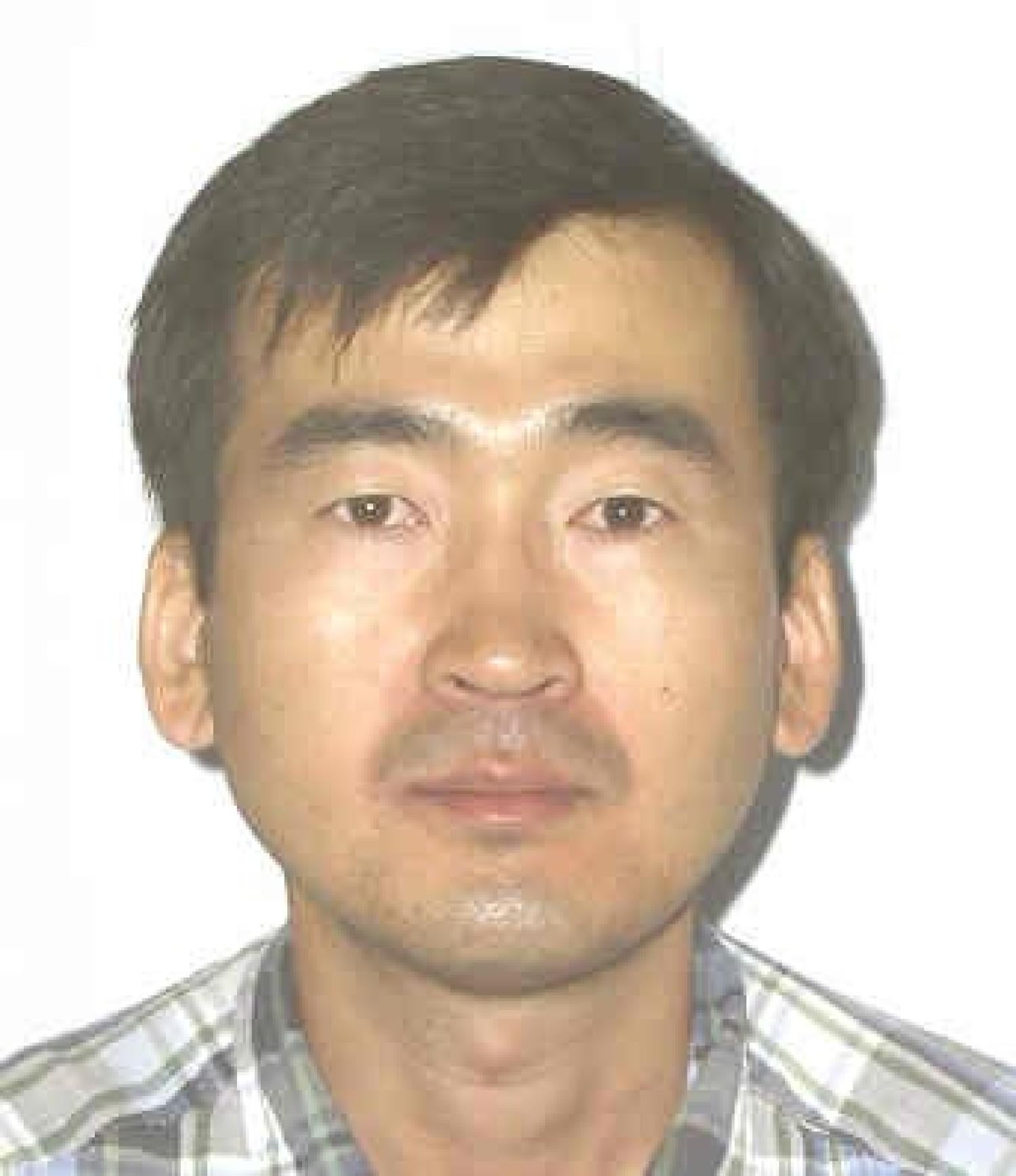
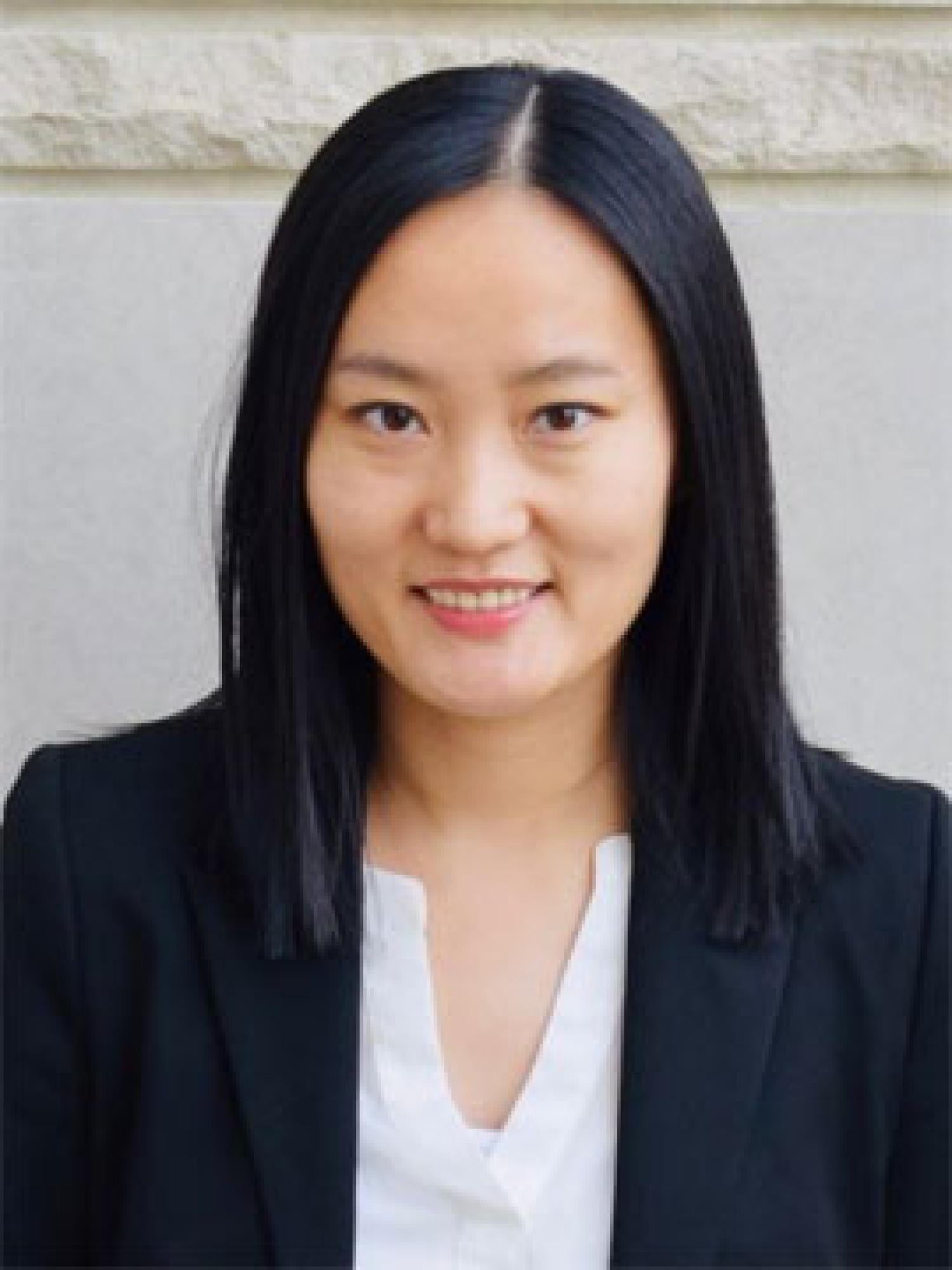
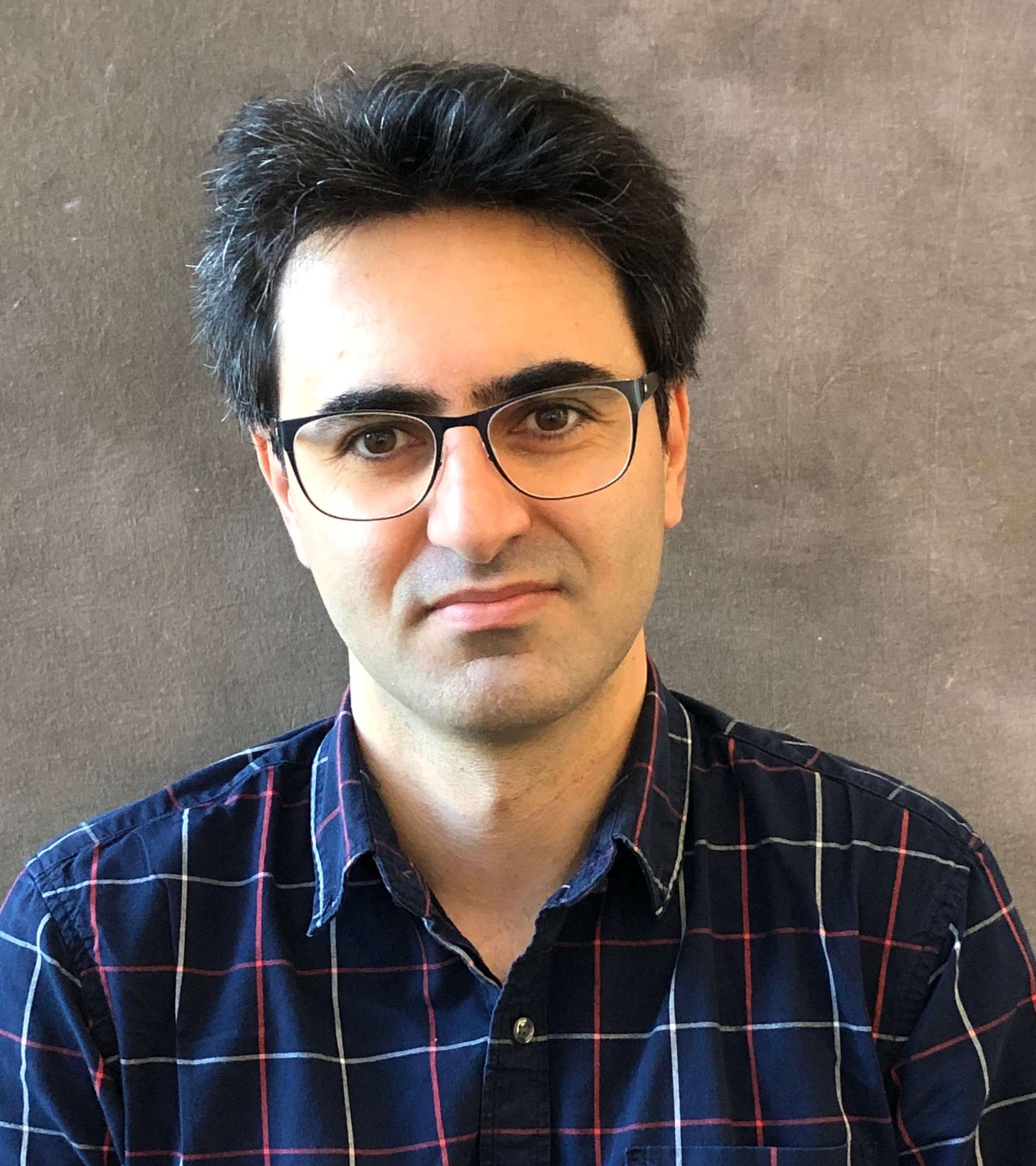
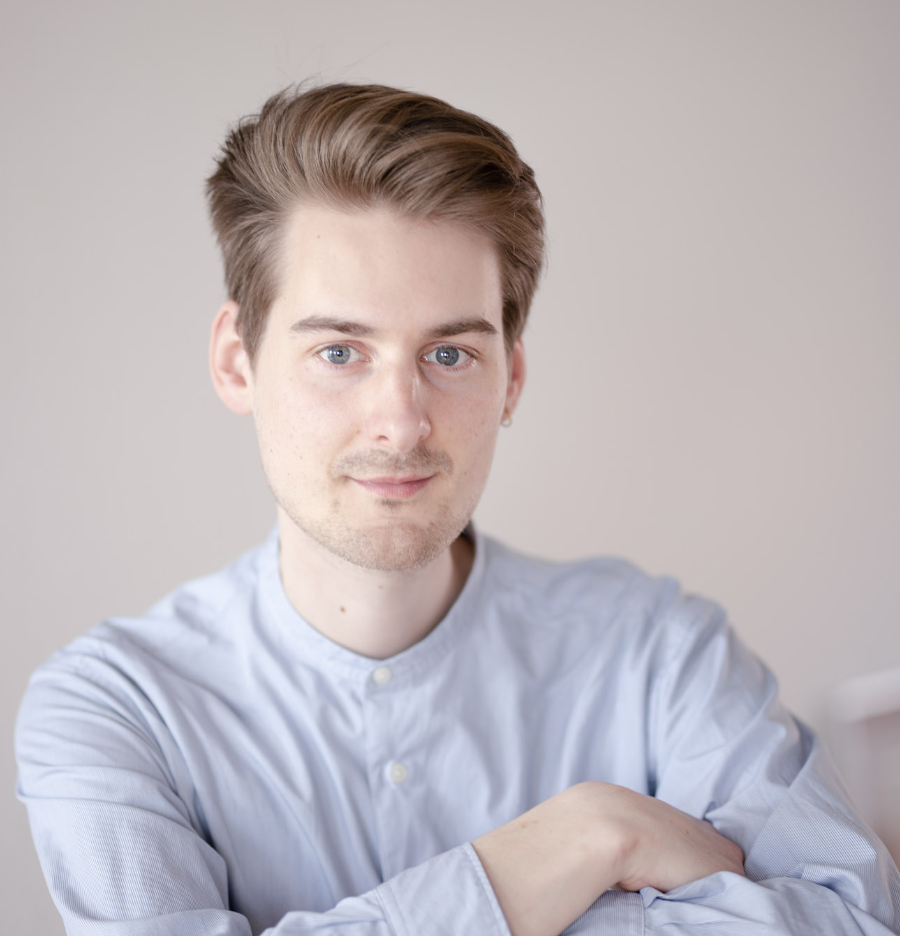
Professor Daniel Pritikin is an academic in the Department of Mathematics at Miami University. He holds a Ph.D. in Mathematics from the University of Wisconsin. His research focuses on Graph Theory, Combinatorics, and Recreational Mathematics, with notable contributions to Hamiltonian cycles in multipartite graphs, Steiner tree problems in hypercubes, and combinatorial game theory. His work bridges theoretical graph structures with algorithmic applications and playful mathematical explorations. Key research themes include graph embeddings, combinatorial optimization, and algebraic graph theory, often intersecting with geometric and number-theoretic concepts. Recent studies explore hypercube networks, Cayley graph representations, and the interplay between graph parameters like separation numbers and domination. His articles frequently address structural properties of graphs and their applications in network design and puzzle-solving. While no specific scientific awards are listed, his prolific publication record since 1985 underscores sustained academic engagement. His advising record is not detailed here, but his research spans over three decades, including foundational work on unitary Cayley graphs and Steiner tree optimizations.
Su-ion Ih is Associate Professor of Mathematics at University of Colorado Boulder, specializing in number theory and arithmetic geometry. He obtained his PhD from Brown University in 2000. Research interests include: Distribution of algebraic points on varieties Arithmetic dynamics and p-adic systems Equidistribution theorems Algebraic torus structures Publications focus on arithmetic properties of dynamical systems, with recent work on p-adic moduli spaces and integral division points.
Lei Yuan is an Assistant Professor in the Department of Cognitive Psychology and Neuroscience at the University of Colorado Boulder. Her research focuses on understanding how children learn from their environments and the mechanisms underlying early cognitive development. She holds a PhD from Northwestern University (2016) and leads the Yuan Lab, which employs interdisciplinary methods including computational modeling, eye-tracking, and school-based studies. Key research interests include the development of numerical and spatial cognition, symbolic learning systems, and translational educational strategies. Her work integrates large-scale longitudinal studies with experimental approaches to uncover how early learning impacts later academic success. The lab emphasizes bridging developmental science with practical educational applications. Professional activities include advising on early childhood education policies and collaborating with schools to implement research findings. The lab’s current projects explore multidigit number understanding, visual perception in learning, and the role of language in cognitive development.
Joël Ouaknine is Scientific Director at the Max Planck Institute for Software Systems (MPI-SWS) located at the Saarland Informatics Campus in Saarbrücken, Germany. He leads the Foundations of Algorithmic Verification research group and serves as an Associate Editor for the Journal of the ACM (JACM) since 2023 and previously for the Journal of Computer and System Sciences (JCSS) from 2014-2023. His research focuses on the Foundations of Algorithmic Verification and Theoretical Computer Science, particularly on decision, control, and synthesis problems for discrete and continuous linear dynamical systems using tools from number theory, Diophantine geometry, and algebraic geometry. His work also encompasses automated verification of real-time, probabilistic, and infinite-state systems, logic applications to verification, automated software analysis, and concurrency. His research integrates deep mathematical techniques with computer science theory to solve fundamental verification problems. Analysis of his recent publications reveals a strong trend toward solving decision problems in linear dynamical systems, with increasing emphasis on connections to number theory and algebraic geometry. His work bridges theoretical computer science with pure mathematics, particularly in addressing the Skolem Problem and related questions about linear recurrence sequences. Recent publications show growing interest in monadic second-order logic extensions and their applications to dynamical systems. Distinguished Paper Award at LICS 2024 for work on monadic second-order logic with arithmetic predicates ACM SIGBED Best Paper Award in 2024 for research on linear dynamical systems with continuous weight functions LICS Test-of-Time Award Winner in 2025 for a seminal 2007 paper on Metric Temporal Logic Dr. Ouaknine currently supervises PhD students Piotr Bacik, Joris Nieuwveld, and Mihir Vahanwala, and mentors postdocs Quentin Guilmant, Toghrul Karimov, and Isa Vialard. His research is supported by significant funding including an ERC Synergy Grant (2025-2031) as Coordinating Principal Investigator for the DynAMiCs project, and DFG Collaborative Research Centre 248 (2022-2026) as Principal Investigator for the Foundations of Perspicuous Software Systems. His previous ERC Consolidator Grant (2015-2021) supported work on Analysis, Verification, and Synthesis of Infinite-State Systems. He actively contributes to the academic community through service on numerous program committees including ICALP, LICS, CONCUR, and serves as organizer for workshops like Dynaverse and Bellairs. His research group at MPI-SWS collaborates extensively with mathematicians and computer scientists worldwide, creating a vibrant interdisciplinary environment focused on solving fundamental problems at the intersection of computer science and mathematics.
Toghrul Karimov is a postdoctoral researcher at the Max Planck Institute for Software Systems (MPI-SWS) in Saarbrücken, Germany, working on the ERC Synergy Grant “DynAMiCs” since April 1, 2025. He collaborates with Valérie Berthé on decision problems at the intersection of dynamical systems theory, logic, and number theory. His educational background includes: Bachelor’s and Master’s degrees from the University of Oxford (2019) Doctoral degree from Saarland University and MPI-SWS (2024) Dr. Karimov’s research focuses on the algorithmic analysis of linear dynamical systems, with emphasis on decidability, verification, and computational complexity. His work bridges theoretical computer science with mathematical logic and number theory, particularly investigating reachability problems, linear recurrence sequences, and the application of o-minimal structures to verification. He employs techniques from automata theory and model theory to solve long-standing problems in the field. His publication record demonstrates consistent contributions to top-tier venues including LICS, ICALP, and SODA, with a clear trajectory toward resolving fundamental questions in dynamical systems verification. Recent work shows increasing sophistication in handling parametric systems and probabilistic extensions, while maintaining strong connections to number-theoretic foundations. His scientific recognition includes: Distinguished Paper Award at LICS 2024 ACM SIGBED Best Paper Award at HSCC 2024 Currently supported by the ERC Synergy Grant “DynAMiCs”, Dr. Karimov maintains an active collaborative research program without current student supervision. His work involves frequent co-authorship with leading researchers across MPI-SWS and IRIF, reflecting the highly interdisciplinary nature of his investigations. He contributes to MPI-SWS’s theoretical computer science research cluster, focusing on the mathematical foundations of software systems verification through the lens of dynamical systems and logic.
José R. Herrero is an Associate Professor in the Computer Architecture Department (DAC) at the Universitat Politècnica de Catalunya (UPC), affiliated with the Barcelona School of Informatics (FIB). His primary research area is High Performance Computing (HPC), focusing on parallel algorithms, dense linear algebra, and multicore processor optimization. He has held administrative roles including Vice-Dean for Academic Studies (2010–2013) and Vice-Dean for Institutional and International Relations (2013–2015) at FIB. Education: PhD in Computer Science from UPC (2006), Postgraduate in Training of University Professors (1997), and a Computer Science degree (1993). Teaching experience includes over 15 courses in Computer Architecture, Operating Systems, and Parallel Programming at both undergraduate and graduate levels. Research interests span HPC, parallel computing, and algorithm design. His work emphasizes optimizing matrix computations and linear algebra libraries for modern architectures. Notable contributions include advancements in sparse Cholesky factorization, task-parallel algorithms, and energy-efficient computing. Recognition includes UPC's Teaching Mention for Outstanding Quality (2009, 2014, 2019) and a Certificate of Merit for contributions to scientific computing workshops. He advises numerous PhD students and collaborates internationally, including visiting roles at GeorgiaTech and École Polytechnique de Montréal.
Vahab Youssof Zadeh, PhD is an Assistant Professor in the Department of Neurology at the Medical College of Wisconsin and Technical Director of the Magnetoencephalography (MEG) Lab at Froedtert Hospital, Milwaukee. His research focuses on mapping language networks using MEG and fMRI, particularly in healthy and epileptic populations, alongside developing advanced computational tools for functional connectivity analysis. As Technical Director, he oversees clinical MEG experiments, ensuring data integrity and multimodal integration with other neuroimaging modalities to guide neurosurgical planning. His work emphasizes quantitative analysis of critical brain regions involved in cognitive functions and clinical applications in epilepsy and neurorehabilitation. Key research areas include neural oscillations in epilepsy, sensory restoration via intracortical stimulation, and computational modeling of neurological disorders. He collaborates extensively with clinicians and engineers to translate neuroimaging findings into clinical practice. His publications span over 15 peer-reviewed articles, demonstrating expertise in MEG/fMRI fusion, network neuroscience, and translational neurotechnology. He maintains active research in brain connectivity dynamics, stroke rehabilitation, and neurodegenerative disease modeling.
Joris Roos is an Assistant Professor at the University of Massachusetts Lowell within the Department of Mathematics and Statistics, part of the Kennedy College of Sciences. He holds a Ph.D. in Mathematics from the University of Bonn (2017). His research focuses on Fourier analysis, real analysis, and computer-assisted proofs, with particular emphasis on harmonic analysis applications in combinatorics, number theory, PDEs, and fractal geometry. He has been supported by grants including the NSF DMS-2154835 (2022-2025) and a Simons Foundation Grant (2021-2022). Roos has also participated in fellowships at the Hausdorff Research Institute for Mathematics and Oberwolfach. His work bridges pure analysis with computational methods, addressing problems in multilinear inequalities, maximal functions, and sparse domination techniques. Education: Ph.D. in Mathematics, University of Bonn, 2017 Research Interests: Fourier and harmonic analysis on Euclidean spaces Oscillatory integrals, maximal functions, singular integrals Discrete analogues in harmonic analysis Applications to combinatorics, number theory, dispersive PDEs Formalization of mathematics using interval arithmetic Grants & Fellowships: National Science Foundation Grant DMS-2154835 (2022-2025) Simons Foundation Grant ID 855692 (2021-2022) American Institute of Mathematics SQuaRE projects (2021-2025) Hausdorff Research Institute for Mathematics Fellowships (2021, 2022, 2024) Oberwolfach Research Fellowship (2023) Current Activity: Leading the 2024 HIM Trimester Program on Boolean Analysis in Computer Science and co-organizing the MLHA 2024 Spring School on multilinear singular integrals.
Shiwen Zhang is an Assistant Professor in the Department of Mathematics & Statistics at the University of Massachusetts Lowell (2022–present). He holds a Ph.D. in Mathematics from the University of California, Irvine (2016) and a B.S. from Nanjing University, China (2009). His research focuses on Mathematical Physics, Spectral Theory, Dynamical Systems, Harmonic Analysis, and Partial Differential Equations. He has been a Postdoctoral Associate at the University of Minnesota (2019–2022) and a Visiting Assistant Professor at Michigan State University (2016–2019). **Education:** Ph.D., Mathematics, UC Irvine (2013–2016) B.S., Mathematics, Nanjing University (2005–2009) **Research Interests:** Explores spectral properties of Schrödinger operators, quantum systems, and localization phenomena. Recent work includes studies on landscape theory, tight-binding Hamiltonians, and quasiperiodic systems. His contributions bridge functional analysis, dynamical systems, and mathematical physics. **Awards:** Kovalevsky Outstanding PhD Thesis Award (2016) Euler Award (2014) Samsung Scholarship (2007) **Grants:** Recipient of the NSF LEAPS-MPS Grant (DMS-2418611, 2024–2026). **Teaching & Mentorship:** Advises undergraduate research projects at UMass Lowell and has taught courses in calculus, differential equations, and partial differential equations. Previously taught at the University of Minnesota and Michigan State University.
Aanjaneya Mridul is an Associate Professor in the Department of Computer Science at Rutgers University, where he joined in 2017. He is also a member of the Computational Biomedicine Imaging and Modeling Center (CBIM). His research spans computer graphics, scientific computing, programming languages, and robotics, with a focus on developing numerical methods in computational physics that leverage modern computing power. Dr. Aanjaneya completed his doctoral studies in Computer Science from Stanford University in 2013 under Ronald Fedkiw, followed by postdoctoral studies at the University of Wisconsin-Madison with Eftychios Sifakis. He received his undergraduate degree in Computer Science and Engineering from the Indian Institute of Technology Kharagpur in 2008. His research interests include: Computer graphics and visual simulation Scientific computing and numerical methods Programming languages for computational physics Robotics and differentiable physics engines Computational physics for interdisciplinary applications Dr. Aanjaneya's recent work has focused on applying numerical methods to robotics for learning unknown physical parameters, and designing correctly-rounded implementations of elementary functions for new floating-point variants. His long-term goal is to enable next-generation algorithms that facilitate interdisciplinary collaboration with researchers in engineering and medicine. He has received several prestigious awards including the Ralph E. Powe Junior Faculty Enhancement Award (2019) and the NSF CAREER Award (2023). Ralph E. Powe Junior Faculty Enhancement Award (2019), sponsored by Oak Ridge Associated Universities (ORAU) NSF CAREER Award (2023) At Rutgers, Dr. Aanjaneya directs the Laboratory for Interactive Virtual Environments (LIVE), where he mentors PhD students and postdoctoral researchers. He has secured multiple NSF grants including the CAREER award, an NSF NRI grant with Professors Boularias and Yu, and grants with Professor Santosh Nagarakatte for projects on formally certified low-dimensional linear programs and correctly rounded math libraries. Outside of his academic work, Dr. Aanjaneya enjoys running, rock climbing, hiking, watching movies, and playing piano.
Daniel S. Sage is a Professor in the Department of Mathematics at Louisiana State University, Baton Rouge. He earned his A.B. summa cum laude in Mathematics from Harvard University (1989), followed by S.M. (1990) and Ph.D. (1995) in Mathematics from the University of Chicago. His professional experience includes positions at the University of Utah, Institute for Advanced Study (Princeton), Max Planck Institute for Mathematics, University of Paris VII, University of Zurich, Courant Institute, and Mathematical Sciences Research Institute. His research focuses on: The geometric Langlands program Geometric and combinatorial methods in representation theory Hopf algebras and quantum groups Composite materials and the G-closure problem His recent publications (2011-2020) show strong emphasis on geometric representation theory, moduli spaces, quantum algebras, and differential systems, with consistent applications of algebraic geometry to problems in mathematical physics and Lie theory. Awards and Honors: Ethel Raybould Visiting Fellow, University of Queensland (2017)
Dorin Andrica is a Professor at the Faculty of Mathematics and Computer Science at Babeș-Bolyai University in Cluj-Napoca, Romania. With a career spanning over three decades at the same institution, his work bridges multiple disciplines including Critical Point Theory , Nonlinear Analysis , Approximation Theory , and Number Theory , particularly focusing on Elementary Mathematics and Olympiad/Contest problems . PhD in Mathematics (Babeș-Bolyai University, 1992) Two decades of research grants, including the European Network 'Geometric Analysis' (2001–2004) and DAAD Fellowship (1993). His publications often explore Diophantine equations , prime gaps , and geometric inequalities , with notable contributions like Andrica's Conjecture — a famous unsolved problem in number theory. Recent works highlight dynamic geometry, cyclotomic polynomials, and advanced combinatorial identities, reflecting his interdisciplinary approach. Andrica has co-organized the European Summer School 'Spaces with singularities and monopols' (Cluj-Napoca, 1999) and serves on editorial boards of multiple journals, including Studia Univ. 'Babeș-Bolyai'-Mathematica and Gazeta Matematica . His Erdős number is 2.
Dr. Nan Liu is a Researcher at the Institute of Neuroscience and Medicine (INM) , specifically within the Cognitive Neuroscience (INM-3) department at the Research Center Jülich GmbH . Their work focuses on neural dynamics, perception, and cognitive processes using advanced neuroimaging techniques. Key research areas include face perception, motor region connectivity, spatial cognition, and reference frame processing. Dr. Liu's recent studies explore theta and alpha oscillations in ambiguous stimuli perception, information flow in motor regions, and overlapping neural responses in visuospatial and arithmetic tasks. Contact: +49 2461/61-4208 | Email Office: Building 05.7, Room 3014, Wilhelm-Johnen-Straße, 52428 Jülich Research emphasizes interdisciplinary approaches, combining EEG, fMRI, and computational modeling to map brain functions. Recent articles highlight contributions to understanding neural synchronization in perception, motor cortex connectivity, and spatial cognition mechanisms.
Prof. Ayelet Landau is an Associate Professor in the Departments of Cognitive Sciences and Psychology at the Hebrew University of Jerusalem, leading the Landau Lab. Her academic journey includes a B.A. and M.A. in Psychology and Philosophy/Neuropsychology from Hebrew University, a Ph.D. in Cognition Brain and Behavior from UC Berkeley, and postdoctoral research at the Ernst Strüngmann Institute (ESI) in Frankfurt. Her research focuses on the Cognitive Neuroscience of Attention and Time Perception, investigating neural oscillations' role in temporal processing and attentional mechanisms. She explores how the brain encodes time perception, visual attention distribution over time, and neural oscillations' cognitive functions. Key funding sources include the European Research Council, James S. McDonnell Foundation, and Israeli Science Foundation. Her lab integrates psychophysical methods with EEG/MEG to study temporal perception, attention sampling, and neural rhythms. Notable work includes modeling temporal generalization, uncovering neural correlates of decision-making, and exploring crossmodal effects in sensory processing. Education: B.A. Psychology and Philosophy, Hebrew University of Jerusalem M.A. Neuropsychology, Hebrew University of Jerusalem Ph.D. Cognition Brain and Behavior, UC Berkeley Research Themes: Temporal Perception: How the brain encodes time perception and integrates sensory information over time Attentional Rhythms: Rhythmic sampling mechanisms in visual and auditory attention Neural Oscillations: Role of alpha, theta, and gamma rhythms in temporal and attentional processing Lab & Funding: Landau Lab at Mount Scopus campus. Supported by grants from ERC, McDonnell Foundation, and ISF.
Kemal Rose is a Postdoctoral researcher at KTH Royal Institute of Technology in Sweden, mentored by professor Sandra di Rocco. He holds a PhD from the Max Planck Institute for Mathematics in the Sciences (Leipzig), advised by Simon Telen and Bernd Sturmfels. His research focuses on algebraic geometry and optimization, with contributions to polynomial systems, tropical geometry, and computational methods in algebraic geometry. Key research themes include certification of polynomial system zeros, p-adic and real cubic surfaces, polyhedral homotopy algorithms, and the algebraic degree of sparse optimization problems. His work bridges theoretical mathematics with practical computational tools, emphasizing interdisciplinary applications in symbolic computation and geometric modeling. Publications span topics such as tropical implicitization, polyhedral-type analysis, and toric geometry. Current research trends reflect a focus on leveraging algebraic methods to solve high-dimensional optimization problems with sparse structures. No scientific awards or grants are explicitly listed in the provided materials. His academic advising history is not detailed here.