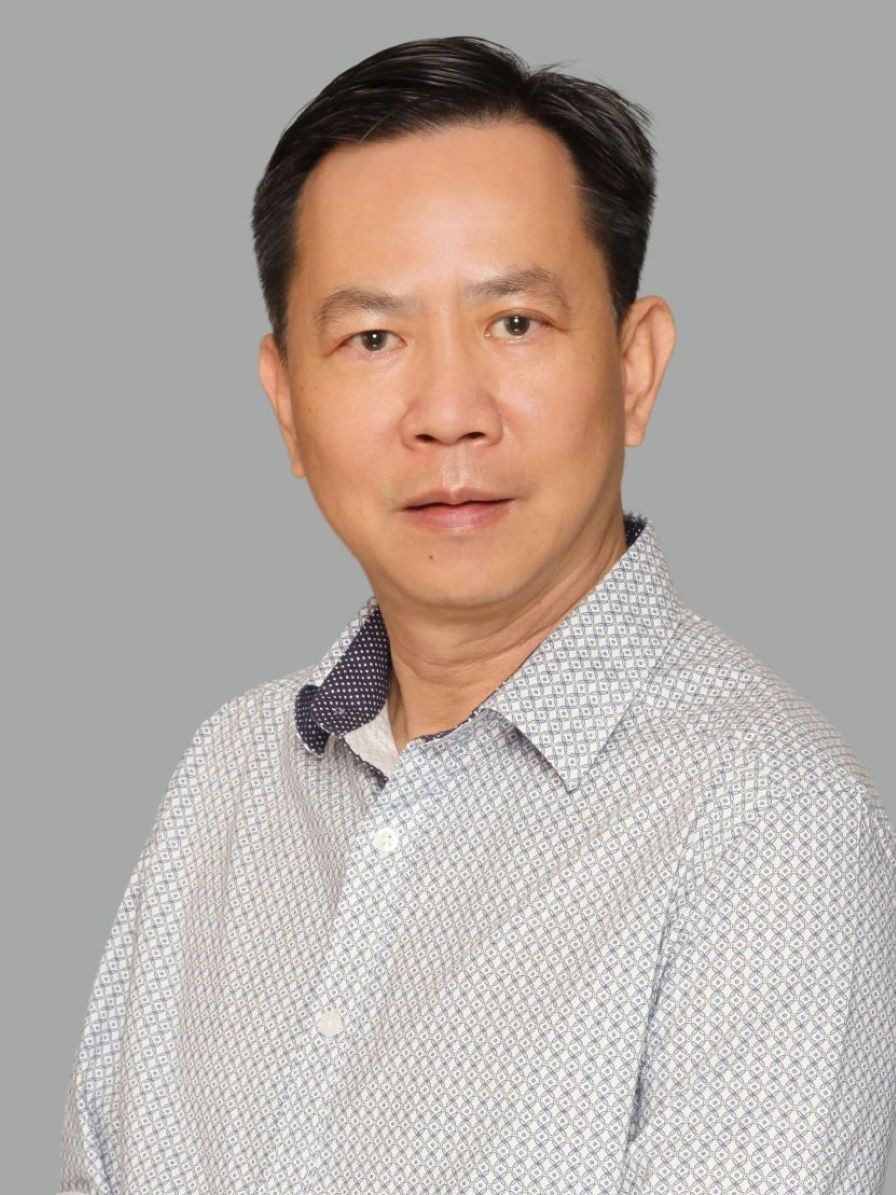
Dr. Zebang Shen serves as a Lecturer in the Department of Computer Science at ETH Zurich, affiliated with the Institute for Machine Learning (Institut für Maschinelles Lernen). His research activities are centered at Andreasstrasse 5, 8092 Zürich, Switzerland, with teaching responsibilities confirmed for the Autumn Semester 2025. His primary research domains include Optimization, Machine Learning, and Data Science, with specialized focus on Federated Learning, Stochastic Optimization, and Reinforcement Learning. Shen develops algorithmic solutions for projection-free optimization, minimax problems, and diffusion model applications, emphasizing theoretical guarantees alongside practical implementations in distributed learning environments. Analysis of his 2021-2025 publications reveals consistent innovation in optimization frameworks for machine learning, particularly in federated settings where privacy-utility tradeoffs and straggler resilience are addressed. His work bridges mathematical rigor (e.g., Poincaré inequalities, McKean-Vlasov equations) with scalable algorithms for real-world data science challenges. No scientific awards were documented in the available sources. While the sources confirm his faculty role and publication record, specific details regarding student advising, grant funding, or laboratory leadership were not provided. His current teaching activities indicate ongoing academic engagement at ETH Zurich. Shen operates within ETH Zurich's Institute for Machine Learning, contributing to the Department of Computer Science's research ecosystem focused on advancing machine learning theory and applications.
Emanuel de Bellis is an Associate Professor at the University of St. Gallen , specializing in empirical research methods related to Marketing , Behavioral Science , and New Technologies . His work primarily explores the intersection of artificial intelligence and consumer behavior, with a focus on how autonomous systems influence decision-making and adoption patterns. Marketing Behavioral Science New Technologies Research Methods His research spans domains like AI assessment tools , zero-sum beliefs in autonomy , and mass customization . He has published extensively on topics including algorithmic evaluation effects, consumer adoption of autonomous products, and the psychological implications of smart technologies. Recent publications on AI's impact on job candidates and autonomous systems reveal emerging trends in human-AI interaction , technological substitution , and behavioral adaptation . His empirical studies bridge consumer psychology with technological innovation , emphasizing practical implications for businesses and policymakers.
Umang Bhaskar is a Professor at the School of Technology and Computer Science , Tata Institute of Fundamental Research (TIFR), Mumbai, India. His research focuses on Algorithmic Game Theory , Combinatorial Optimization , and Approximation Algorithms . He has taught graduate courses including Algorithms and Data Structures and Computational Social Choice . Education : PhD from Dartmouth College, MTech from IIT Bombay, BSc from NIT Allahabad. Experience : Postdoctoral scholar at University of Waterloo and Caltech; software engineer at Tata Consultancy Services. His research explores computational challenges in multi-agent systems, particularly equilibrium computation in games, mechanism design , and network routing . He co-organizes academic workshops like the 2024 Workshop on Algorithmic Mechanism Design in IIT Gandhinagar. Recent publications span topics such as approximation algorithms , congestion games , and inverse optimization . His work has appeared at conferences including ESA , IJCAI , AAAI , and EC . Students include Phani Raj Lolakapuri , a PhD candidate who tragically passed away in 2019. Umang collaborates with researchers like Siddharth Barman and Katrina Ligett .
Mareike Dressler is a Senior Lecturer (A/Professor, tenured) and ARC Discovery Early Career Research Fellow at the School of Mathematics and Statistics, University of New South Wales (UNSW Sydney). She joined UNSW in February 2022 as a Lecturer (Assistant Professor, tenure-track) and was promoted to Senior Lecturer with tenure in July 2024. Her educational background includes: PhD in Mathematics from Goethe-Universität Frankfurt/Main (2018), supervised by Thorsten Theobald M.Sc. in Mathematics from Goethe-Universität Frankfurt/Main (2013) B.Sc. in Mathematics from Goethe-Universität Frankfurt/Main (2010) Mareike's research focuses on real and computational algebraic geometry and polynomial and convex optimization. She also works on problems intersecting with convex geometry, matrix and tensor computation, applied algebraic geometry, algebraic and geometric combinatorics, and real analysis. Her work particularly involves nonnegativity of polynomials, optimization methods, and ranks of matrices and tensors, with a special interest in sums of nonnegative circuits (SONCs) for sparse polynomials. Her research has strong applications in data science and machine learning. Mareike has received several prestigious awards including the ARC Discovery Project 2025 grant for "Quantifying Uncertainty of Risk-Aware Optimization for Safe Decision-Making," the J G Russell Award from the Australian Academy of Science, and the Early Career Impact Award from UNSW Science. She actively supervises research students, including PhD student Hongzhi Liao, Master's student Qi Wang, and recently supervised Moritz Schick to completion of his PhD in 2025. Mareike has secured significant research funding, including an ARC Discovery Early Career Researcher Award (DECRA) for 2024-2026. Mareike is an active member of the academic community, regularly organizing workshops and conferences such as "Optimization Days" at UNSW and minisymposia at major conferences like SIAM Conference on Applied Algebraic Geometry.
Sander Gribling is an Assistant Professor in the Department of Econometrics and Operations Research at Tilburg School of Economics and Management, Tilburg University. His research bridges convex optimization, quantum computing, and quantum information theory, with a focus on quantum algorithms for classical optimization problems, semidefinite and polynomial optimization, and quantum graph parameters. PhD in Optimization and Quantum Information, Tilburg University (2019) MSc and BSc in Applied Mathematics, TU Delft His research interests include: Quantum algorithms for linear programming, semidefinite programming, and matrix scaling Polynomial and sum-of-squares optimization Quantum query complexity and the polynomial method Applications of optimization to quantum information and noncommutative graphs His recent publications reveal a strong focus on quantum algorithms, theoretical foundations of optimization, and sampling methods. Key trends include the development of optimal quantum linear solvers, complexity analysis of the Lasserre hierarchy, and the interplay between Grothendieck inequalities and quantum query models. Notable scientific roles: Associate Editor, INFORMS Journal on Computing Sander Gribling has advised or collaborated with numerous researchers including Simon Apers, Joran van Apeldoorn, Monique Laurent, and Ronald de Wolf. He has received no explicitly listed awards in the provided text, but his publications in high-impact journals such as Nature Reviews Physics and Quantum indicate strong recognition. He is involved in the Operations Research research group and contributes to advancing theoretical and applied quantum optimization.
Ben Davies serves as Lecturer in Political Philosophy at the University of Sheffield's School of History, Philosophy and Digital Humanities since September 2023, following a Research Fellowship at Oxford's Uehiro Centre for Practical Ethics and teaching positions at Leeds and US institutions. His academic foundation includes studies at King's College London and the University of Edinburgh. His research centers on healthcare ethics with primary focus on intergenerational justice, patient/practitioner responsibility, and health sufficiency frameworks. Current work examines democratic health priority-setting processes, while additional interests span ageing ethics, animal welfare, disability theory, discrimination, professional ethics, and well-being concepts. He actively seeks collaboration with healthcare priority-setters across operational levels. Davies' publication trajectory from 2020-2025 reveals concentrated expertise in bioethics and political philosophy, particularly regarding health justice frameworks and responsibility ethics. His work appears in leading journals including Bioethics , Journal of Medical Ethics , and Cambridge Quarterly of Healthcare Ethics , addressing critical issues like resource allocation during pandemics, genetic information rights, and fiduciary models in clinical decision-making. Scientific awards: No awards documented in source materials. As an educator, Davies teaches 'Global Justice' (Autumn) and 'Topics in Political Philosophy' (Spring), while welcoming MA/PhD supervision inquiries in bioethics, political philosophy, and health-related applied ethics. He explicitly encourages engagement from healthcare practitioners involved in priority-setting. No laboratory or research team affiliations are indicated in available documentation.
Qi Cheng is the Williams Company Foundation Presidential Professor of Computer Science at the University of Oklahoma, where he has been since 2001. His academic roles include leadership in theoretical computer science research and teaching. Education: Ph.D., Computer Science, University of Southern California (2001) M.S., Computer Science, Fudan University (1995) B.S., Computer Science, Nankai University (1992) Research Interests: Focuses on theoretical computer science, cryptography, computational number theory, DNA/molecular computing, and coding theory. His work explores algorithmic self-assembly, lattice-based cryptography, and polynomial system solving over finite fields. Key Contributions: Includes advancements in self-assembly theory, decoding algorithms for Reed-Solomon codes, and complexity analyses of algebraic problems. His NSF CAREER project integrated self-assembly research with educational initiatives. Grants & Awards: Recipient of the NSF Career Award (2003–2008) for self-assembly research, and multiple NSF grants (e.g., CCF-1900820, CCF-1409294) supporting work on sparse polynomials and algebraic codes. Labs/Teams: Leads research groups focused on theoretical computer science and cryptography, collaborating on projects involving post-quantum cryptography and algorithmic number theory.
Dr. Hung Bui is a Lecturer in Pure Mathematics at the University of Manchester since November 2015. Prior to this, he held positions including Research Associate at the University of Bristol (2013–2015), Postdoctoral Researcher at Universität Zürich (2011–2013), EPSRC Postdoctoral Fellow at the University of Oxford (2008–2011), and Visiting Researcher at the University of Rochester (2008). He completed his PhD at the University of Bristol in 2008 under Prof. Jon Keating FRS, focusing on Mean values of L-functions, following a Master's in Twin primes in Hawkins random sieve (2004). His research interests span analytic number theory, particularly L-functions, the Riemann zeta-function, and their applications to problems in algebraic geometry and random matrix theory. Key areas include the distribution of zeros of zeta functions, moments of L-functions, and connections to elliptic curves. His work often explores probabilistic and statistical methods in number theory, such as central limit theorems and gap distributions of zeros. Dr. Bui has contributed to over 37 peer-reviewed articles, including recent studies on weighted central limit theorems for L-functions, analytic ranks of automorphic L-functions, and integral points on hyperelliptic curves. His research frequently intersects with algebraic geometry, random matrix theory, and probabilistic number theory. He has been actively involved in academic activities, including invited talks at the Number Theory Seminar (2019–2021), AMC-2020 Satellite Workshop, and Algebra & Number Theory Seminar. His contributions focus on advancing understanding of fundamental problems in number theory through rigorous analytic and algebraic methods.
Stephen Choi is a Professor in the Department of Mathematics at Simon Fraser University (SFU), part of the Faculty of Science. He holds a Ph.D. in Mathematics from the University of Texas at Austin (1996), an M.Phil. and B.Sc. from the University of Hong Kong (1991 and 1988, respectively). His research focuses on Number Theory , particularly Diophantine equations , Goldbach-Waring problems , and polynomials with restricted coefficients . He explores topics like Littlewood polynomials, L4 norms, and merit factors of binary sequences, often applying analytic methods such as the Hardy-Littlewood circle method. Affiliations: SFU Department of Mathematics, SFU Number Theory Group, UBC Number Theory Group. Teaching: Courses include MATH 260 (Differential Equations) and MATH 342 (Elementary Number Theory). Research Interests Choi’s work bridges classical number theory and modern analytical techniques. He investigates prime solutions to Diophantine equations (e.g., Goldbach-Waring problems) and properties of polynomials with restricted coefficients (e.g., Littlewood polynomials’ L4 norms). His recent studies include autocorrelation coefficients of Rudin-Shapiro polynomials and divisibility principles in integer sequences. Grants & Awards No specific awards are listed, but his extensive publication record reflects sustained recognition in number theory. Academic Lineage Choi’s doctoral advisor was Jeffrey D. Vaaler. He has mentored students like Michael Coons and Peter Cho-Ho Lam. His mathematical 'siblings' include prominent figures like Edward B. Burger and Lenny Fukshansky. Labs/Groups Active contributor to SFU’s Number Theory Group and collaborator in the SFU-UBC Number Theory seminar network.
Monique Laurent is a senior researcher at CWI Amsterdam in the Networks and Optimization Group and holds a part-time appointment as a full professor at the Department of Econometrics and Operations Research of Tilburg University. Her academic career spans institutions in France (CNRS, CNET), Germany (Humboldt Fellow at the University of Bonn), and the USA (visiting scientist at Yale). She is a SIAM Fellow (2017) and recipient of the Khachiyan Prize (2023) . PhD in Mathematics, University of Paris Diderot (1986) Research interests: discrete optimization, semidefinite programming, polynomial optimization, quantum information, and algebraic methods. Her work focuses on bridging continuous and discrete optimization, with applications to quantum information. She has organized major workshops such as the Learning Enhanced Optimization research semester at CWI and contributed to the TENORS EU project (2024-2027). Recent publications highlight her contributions to semidefinite programming hierarchies, polynomial optimization, and their applications to graph theory and quantum computing. Key article trends include: Analysis of sum-of-squares and moment matrix hierarchies for polynomial optimization Applications to quantum information, graph stability, and matrix factorization Convergence rates and error bounds for semidefinite relaxations Scientific awards: Khachiyan Prize (2023) SIAM Fellow (2017) Humboldt Fellowship (1991-1992) She has supervised numerous academic initiatives and students, including a master project on polynomial equation solutions at CWI. Her editorial roles include associate editorships for journals like SIAM Journal on Optimization and Numerical Algebra, Control and Optimization .
Yuta Suzuki is an Assistant Professor at the Department of Mathematics, Rikkyo University, specializing in Analytic Number Theory, Elementary Number Theory, and Combinatorics. He earned his Doctor of Science (D.Sc) from Nagoya University in 2019 under the supervision of Professor Kohji Matsumoto. His research focuses on additive problems involving primes, zeta functions, and combinatorial structures. Doctoral Degree: Nagoya University (2019) Advisor: Kohji Matsumoto His work spans topics like Goldbach-type problems , zeta function zeros , amicable tuples , and combinatorial number theory . He has published extensively in journals such as Mathematische Zeitschrift, Journal of Number Theory, and Acta Mathematica Hungarica, with recent research on short intervals in prime sums and Hurwitz zeta function behavior. His publications highlight trends in analytic approaches to additive number theory , including sieve methods, L-function zeros, and combinatorial aspects like Ramsey numbers. He has presented at international conferences in Lithuania, Japan, India, France, and Belgium, focusing on error term estimates and prime distribution. Teaching : Suzuki has taught courses at Tsuda University, Rikkyo University, Nagoya University, and Nagoya City University, including Linear Algebra , Exponential Sums , and Sieve Methods . He is also involved in organizing seminars such as the Hachioji Number Theory Seminar and the Young Mathematicians Conference on Zeta Functions .
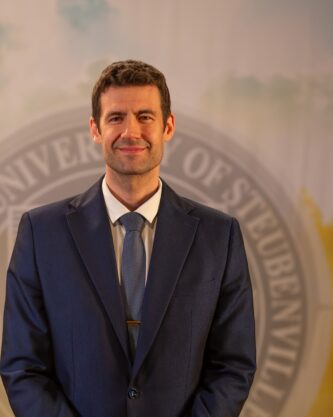
Dr. Bartosz Langowski is an Assistant Professor of Mathematics at Franciscan University of Steubenville. He earned his PhD in Mathematics from Wrocław University of Technology in 2016, with a dissertation on Riesz transforms and Sobolev spaces related to Jacobi expansions under Professor Adam Nowak. From 2016 to 2018, he held an assistant professor position at Wrocław University, followed by a five-year postdoctoral role at Indiana University Bloomington under Professor Ciprian Demeter. His research focuses on real harmonic analysis, discrete harmonic analysis, and ergodic theory, particularly on non-trigonometric orthogonal expansions and pointwise convergence problems. His publications span topics such as harmonic analysis operators for symmetrized Jacobi expansions, sharp $l^p$-improving estimates for discrete paraboloids, and lattice point equidistribution theorems. He has collaborated with notable mathematicians like Ciprian Demeter, Alex Iosevich, and Mariusz Mirek. Key keywords in his work: Mathematics, Harmonic Analysis, Discrete Analysis, Ergodic Theory, Non-Trigonometric Orthogonal Expansions. Dr. Langowski was honored with the Award of the Prime Minister of the Republic of Poland for his doctoral dissertation. His email is BLangowski@franciscan.edu .
Philip Matchett Wood is a Professor in the Department of Mathematics at Harvard University. His research focuses on probability theory, combinatorics, and their applications, with particular emphasis on random matrices, Markov chains, structural behavior in sumsets, and computational methods. He has contributed to foundational work in random matrix theory, including spectral analysis of non-backtracking matrices and universality principles for sparse matrices. His work often bridges theoretical insights with computational exploration, as seen in his development of Maple packages for combinatorial bijections and probabilistic algorithms. Research Interests: Probability Theory, Combinatorics, Random Matrices, Markov Chains, Computational Mathematics, Geometry Grants: Supported by NSA grants (H98230-16-1-0301 and H98230-14-1-0149) from 2014–2018, focusing on random matrix theory and spectral analysis. Publications: Over 20 peer-reviewed articles, including work on outlier detection in random matrix products, computational number theory, and universality in spectral distributions. Contributions: Developed Maple tools for combinatorial bijections (e.g., Fibonacci, ZeckFibBijections), advancing algorithmic approaches to enumerative combinatorics. He is actively involved in teaching, such as Math 22A: Vector Calculus and Linear Algebra I in Fall 2024. His interdisciplinary interests include applying probability to clinical studies (e.g., heart rate variability under anesthesia) and recreational mathematics, exploring topics like the mathematics of Rubik's Cube and origami constructions for angle trisection.
Olivier Buffet is a Researcher at INRIA, working at the INRIA Center at Université de Lorraine / LORIA since November 2007. He is affiliated with the LORIA laboratory (Lorraine Laboratory of Computer Science and its Applications), which focuses on computer science research. His work spans multiple institutions, having previously held positions at NICTA's Statistical Machine Learning program (2004-2006), RSISE at ANU (2004-2006), and LAAS at CNRS (2006-2007). Dr. Buffet received his engineering degree from Supélec and a DEA (Diplôme d'Etudes Approfondies) from Henri Poincaré University. He completed his PhD in computer science under the supervision of François Charpillet and Alain Dutech at LORIA / INRIA Nancy Grand-Est, defended on September 10, 2003. He later defended his habilitation to supervise research (HDR) on December 18, 2017. Dr. Buffet's research focuses on artificial intelligence, particularly in the areas of automated planning and scheduling, reinforcement learning, and decision-making under uncertainty. His work extensively explores Markov Decision Processes (MDPs), Partially Observable MDPs (POMDPs), and Decentralized POMDPs (Dec-POMDPs), with applications ranging from multi-agent systems to traffic management and adaptive conservation strategies. His research often bridges theoretical foundations with practical applications, developing algorithms that can handle complex decision problems in uncertain environments. His publication record demonstrates a consistent focus on advancing methods for planning and decision-making under uncertainty. Over the past decade, his work has increasingly addressed decentralized and multi-agent settings, developing novel approaches for coordination among multiple decision-makers with partial information. More recently, his research has explored interpretable solutions for adaptive management problems, particularly in environmental contexts, and advanced theoretical understanding of properties like Lipschitz continuity in POMDP value functions. Dr. Buffet has received recognition for his contributions to the field, including: Winner of the probabilistic track in the Fifth International Planning Competition (IPC-06) Best Paper award at AAMAS-14 for "Exploiting separability in multi-agent planning with continuous-state MDPs" Best Paper award at JFSMA-13 for "Synchronisation de véhicules autonomes aux croisements d'un réseau de routes" Best Paper award at CAp'11 for "Une extension des POMDP avec des récompenses dépendant de l'état de croyance" As an educator and mentor, Dr. Buffet has supervised numerous PhD students including Arnaud Glad, Mauricio Araya-Lòpez, Mohamed Tlig, Arsène Fansi, and Manel Tagorti. He has also guided many interns and research projects. His teaching experience includes tutored sessions on discrete and deterministic optimization, decision making under uncertainty, and computer science for industrial engineering at École des Mines de Nancy, as well as courses on Unix shell and C programming at Université Henri Poincaré. Dr. Buffet has been actively involved in the academic community, serving as Co-Conference Chair of the 30th International Conference on Automated Planning and Scheduling (ICAPS 2020) in Nancy. He has organized multiple meetings of the French workgroup JFPDA (formerly PDMIA) and chaired several workshops on planning and scheduling under uncertainty. He previously served on the editorial boards of Revue d'Intelligence Artificielle (RIA) and Journal of Artificial Intelligence Research (JAIR), and has been a reviewer for numerous prestigious journals and conferences in artificial intelligence.
Detta Dickinson is an Associate Professor in the Department of Mathematics and Statistics at Maynooth University's Faculty of Science & Engineering. Her research focuses on metric Diophantine approximation, particularly the distribution of conjugate algebraic points in spatial regions and simultaneous Diophantine approximation on manifolds. She has published extensively on topics including polynomial discriminants, p-adic metrics, and algebraic number theory. Email: detta.dickinson@mu.ie Recent Publications Trends: Her work spans 2000-2012 with emphasis on: Metric theory of limsup sets Simultaneous approximation in mixed real/p-adic spaces Applications to polynomial curves and surfaces Hausdorff dimension analysis Integer polynomial distribution patterns