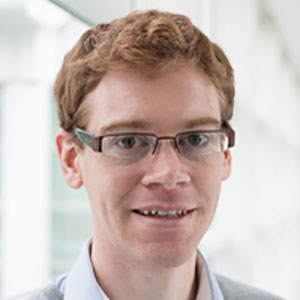
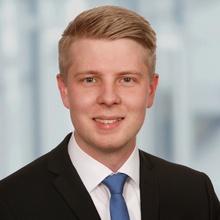
Wenjia Du is a Faraday Research Fellow at the University of Oxford's Department of Engineering Science, located at Begbroke Science Park. He holds a BEng, MSc, and PhD, with prior training at the University of Hull and University College London (UCL). His research focuses on energy storage materials (batteries/fuel cells), advanced X-ray imaging techniques , and sustainable materials engineering . He develops diagnostic tools for battery recycling (via Faraday ReLiB programme) and investigates solid-state batteries, magnesium hydrides, and circular economy strategies. Collaborations span academia and industry, funded by UKRI, EPSRC, Royal Society, and Innovate UK. Key technical strengths include synchrotron-based tomography , computational modeling , and electrochemical characterization . Awards include the RAEng Exceptional Promise endorsement, STFC Experimental Design Grant, and Alan Turing Enrichment Award. His publications emphasize operando observations of battery degradation mechanisms, multi-scale material analysis , and novel alloy design . He is a member of the Royal Society of Chemistry (RSC) and UKRI Peer Review College.
Dr. Pablo Martinez Rodriguez is an Assistant Professor at Northumbria University's Architecture and Built Environment Department. He specializes in multi-disciplinary engineering, focusing on Industry 4.0 integration in low-digitalized sectors like construction and agriculture. His research emphasizes industrialized construction, robotics automation, lean manufacturing, and precision farming. Education: BEng in Electromechanical Engineering (Comillas Pontifical University), MSc in Mechanical Engineering (University of Alberta), and PhD in Civil and Environmental Engineering (University of Alberta). Previously held roles include NSERC post-doctoral fellow and International Visiting Professor at Tecnologico de Monterrey. Research Interests: Industrialized Construction (Modern Methods of Construction), Robotics & Automation, Computer-aided Process Planning, Lean Manufacturing, Waste Management, and Precision Farming Automation. His work addresses challenges in smart safety systems, digital twins, and sustainable construction practices. Key Projects: Developed an IALF-certified learning factory, created ontology-based safety management tools, and advanced aquaponics 4.0 systems. Recent articles highlight digital twin applications, gamified safety training, and AI-driven generative design. Grants & Collaboration: Active in organizing international conferences like the Modular and Offsite Construction Summit. Supervises PhD students and collaborates on projects aligning with UN Sustainable Development Goals, particularly education and sustainable cities. Labs/Teams: Leads the AllFactory transdisciplinary educational facility focusing on aquaponics 4.0 and smart manufacturing systems. Engages in cyber-physical systems research for zero-defect production.
Ruixing Zhang is an Assistant Professor in the Department of Materials Science and Engineering at the University of Tennessee, Knoxville, with a joint appointment in the Department of Physics & Astronomy. He is affiliated with the Institute of Advanced Materials and Manufacturing (IAMM) and the Condensed Matter Theory Center. His research focuses on theoretical topological quantum matter, exploring topological superconductivity, Majorana modes, and novel quantum phases in materials like iron-based superconductors and moiré systems. Education: PhD in Physics from Penn State University (2018), BSc from University of Science and Technology of China (2012). Postdoctoral training at the Joint Quantum Institute, University of Maryland (2018-2021). Research Interests: Topological insulators/semimetals Majorana materialization and topological quantum computing Floquet topological systems Twistronics and moiré physics Symmetry-protected topological phases Selected Honors: 8th Peter Eklund Lecturing Award (2017) David C. Duncan Graduate Fellowship (2014-2016) Multiple teaching awards, including Chancellor’s Award for Excellence in Teaching (2015) Advising & Labs: Leads a research group at South College and IAMM, advising graduate students and postdocs. Notable alumni include Lunhui Hu (now Assistant Professor at Zhejiang University). Active in theoretical and computational approaches to materials discovery.
Sebastian Wood is a Principal Scientist at the National Physical Laboratory (NPL), specializing in nanoscale measurement techniques for emerging semiconductor materials. He holds a PhD in Physics from Imperial College London and leads projects in semiconductor metrology, standardization, and advanced materials research. His work focuses on developing scanning probe microscopy (SPM), optical spectroscopy, and wafer-scale metrology for semiconductor quality assurance. He chairs the BSI EPL/47 committee for semiconductor standards and contributes to international committees like IEC and ISO. Education: PhD in Physics, Imperial College London Undergraduate studies in Physics, Imperial College London Research Interests: Nanoscale metrology of 2D materials, hybrid perovskites, and compound semiconductors Advanced SPM and optical spectroscopy techniques Wafer-scale measurement systems for semiconductor manufacturing Pre-standards research for AI, quantum, and telecoms convergence Key Projects: Coordinator of the EMPIR 'PowerElec' project on wide bandgap power electronics metrology International interlaboratory comparisons for graphene and semiconductor characterization Labs & Facilities: Leads NPL's unique facility for nanometrology of emerging electronics, integrating structural, functional, chemical, and optical measurement modes.
Franck Lacan is a Research Associate in the Mechanics, Materials and Advanced Manufacturing research group at Cardiff University's School of Engineering. With over 20 years of experience in Additive Manufacturing (AM), his work spans materials development, process optimization, and integration of AM into sustainable manufacturing systems. His research interests include: Development of application-specific metal and polymer materials for SLM and FDM Design for Additive Manufacturing (lightweighting, vibration absorption) Simulation and topology optimization for improved manufacturability Process characterization and stability in AM Integration of AM into conventional manufacturing chains Supply chain logistics and circular economy in AM Recent publications highlight a strong trend toward sustainability and digitalization in manufacturing. His work explores the circular production of metal powders from scrap, digital twins for data management in metal AM, and energy optimization using AI. He also investigates biomedical applications such as multi-material fabrication of imaging phantoms and MRI safety of respiratory masks. His research combines experimental and simulation approaches across materials like Ti-6Al-4V, AlSi10Mg, and Hastelloy X. Franck has contributed to major European projects (COTECH, IMPRESS) and led KTP collaborations with industry. He is an active reviewer for key manufacturing conferences and journals. Scientific Contributions: PI on KTP project with Panalpina on AM supply chains Partner in EU-funded IMPRESS project on micro injection moulding Reviewer for 4M, SDM conferences, and Rapid Prototyping Journal He advises on product development and process integrity in AM and supports micro-enterprises in adopting digital manufacturing through initiatives like MEET Lab. His lab work focuses on advancing the Additive Layer Manufacturing Lab’s capabilities at Cardiff University.
Bram Steenwinckel is a postdoctoral researcher at Ghent University's Faculty of Engineering and Architecture, Department of Information Technology. He holds an FWO Junior Postdoctoral Fellowship and contributes to IMEC research projects. His work combines knowledge graphs with machine learning for explainable hybrid AI applications. FWO-funded projects on anomaly detection and knowledge graph embeddings Co-author on 15+ publications in semantic web, AI, and healthcare informatics Research focuses on integrating domain knowledge into machine learning pipelines Involvement in both academic research and applied engineering solutions His research explores knowledge graph creation for smart monitoring systems across healthcare and industrial domains. The INK methodology enables semantic rule mining while TALK provides context-aware activity recognition . Current work extends these approaches to zero-shot classification and automotive quality control . Scientific contributions include: Explainable knowledge graph embeddings Context-aware IoT data stream analysis Hybrid AI for ambulatory health monitoring Dynamic dashboarding architectures
Jonathan E Cooper holds the RAEng Airbus Sir George White Professorship in Aerospace Engineering at the University of Bristol's School of Civil, Aerospace and Design Engineering, with an international reputation spanning 30 years in aeroelasticity, structural dynamics, and sustainable aircraft design. His work directly addresses Net Zero Aviation through industry collaborations focused on fuel-burn reduction and next-generation wing technologies. His research centers on novel loads control systems, structural/control system nonlinearities, high-aspect-ratio wings with folding wingtips, uncertainty quantification, and multidisciplinary design optimization. Key initiatives include developing efficient prediction methods for aeroservoelastic behavior and structural performance certification, emphasizing practical industry applications. Analysis of his 2021-2025 publications reveals dominant themes in folding wingtip dynamics, gust load alleviation, landing gear design optimization, and nonlinear aeroelastic modeling. His work increasingly integrates data-driven methods with traditional aerospace engineering to address complex fluid-structure interactions in flexible aircraft configurations. Honors include: Fellow of the American Institute of Aeronautics and Astronautics (2018) Fellow of the Royal Academy of Engineering (2019) Journal of Sound and Vibration Doak Award (2019) Fellow of the Royal Aeronautical Society Professor Cooper supervises 16 research students and leads major projects including 'Development of Advanced Wing Solutions 2' (2024-2026) and 'ONEHeart' (2023-2025), funded by Airbus and EU programs. His work is conducted within the Fluid and Aerodynamics Dynamics and Control research group, focusing on experimental validation and computational modeling. He actively contributes to national aerospace strategy through the Aerospace Technology Institute (2015-2019) and Royal Aeronautical Society (Chair 2015-2018), bridging academic research with industrial implementation in sustainable aviation.
Colin Reiff serves as a Research Assistant at the Institute for Control Engineering of Machine Tools and Manufacturing Units at the University of Stuttgart, focusing on advanced manufacturing systems and process optimization. His work bridges theoretical research with industrial applications in automotive, aerospace, and general production contexts. His research interests center on process control and optimization in multi-stage production systems and Additive Manufacturing (Powder Bed Fusion Processes) . Reiff has developed innovative approaches for zero-defect manufacturing, particularly through smart centering methods for rotation-symmetric parts and automated vision data systems using collaborative robots. His work demonstrates how dimensional deviations can be compensated during production rather than detected at final inspection. Analysis of his publication record from 2018-2024 reveals consistent focus on manufacturing innovation, with increasing emphasis on data-driven approaches, software-defined manufacturing, and sustainable production. His research spans both theoretical frameworks and practical implementations, with several solutions transitioning to industrial applications. Reiff actively supervises student theses and practical experiments, including the "Simulation of a feed axis closed loop control with MATLAB/Simulink" laboratory course. His work has been supported through EU-funded projects like ForZDM under Horizon2020 and the High-Performance Center "Mass Personalization" in Stuttgart. His research group operates within the University of Stuttgart's manufacturing ecosystem, contributing to initiatives like the "Stuttgarter Maschinenfabrik" - a fully digitalized production environment for customer-individualized products. This environment leverages digital twins and new technological infrastructure to enable application development freedom and machine park flexibility.
John Lindström is a Professor at Luleå University of Technology's Department of Computer Science, Electrical and Space Engineering. His research centers on cyber security with specialized focus areas in IT/OT security management, IoT lifecycle solutions, and Zero Defect Manufacturing frameworks. He currently contributes to projects including Cybersäkerhetsnod Norr and industrial manufacturing optimization initiatives. Dr. Lindström's research bridges industrial engineering and cybersecurity, addressing critical challenges in operational technology security and sustainable manufacturing. His work emphasizes practical frameworks for Zero Defect Manufacturing maturity, OT security standardization, and IoT system lifecycle management, with applications in Industry 4.0 environments. Publication analysis reveals consistent focus on industrial cybersecurity and manufacturing optimization from 2019-2025. Recent works demonstrate strong emphasis on capability maturity models for quality management, OT security standardization, and interoperability requirements for smart manufacturing systems, frequently employing case study methodologies.
Yan Chen serves as a Neutron Scattering Scientist at the VULCAN beamline (BL-7) within the Spallation Neutron Source facility at Oak Ridge National Laboratory's Neutron Sciences Directorate. He holds a Ph.D. in Materials Science and Engineering from the University of Central Florida, with prior graduate studies at Tsinghua University in China where he earned both B.S. and M.S. degrees. Dr. Chen's research focuses on in-situ neutron diffraction techniques to investigate fundamental material behaviors under operational conditions. His work spans structural transitions , deformation mechanisms , and synthesis processes in advanced materials including oxides, alloys, and heterogeneous composites for energy and engineering applications. Key research thrusts include additive manufacturing of high-performance alloys, thermal expansion control in functional materials, and characterization of battery electrolytes. Analysis of his recent publication record reveals strong emphasis on additively manufactured materials , particularly aluminum and high-entropy alloys reinforced with ceramic phases. His experimental approach consistently integrates in-situ neutron diffraction with advanced modeling techniques to quantify mechanical behavior across multiple scales. The research portfolio demonstrates growing focus on energy materials including solid electrolytes for next-generation batteries. As Instrument Scientist for the VULCAN beamline since 2017, Dr. Chen leads a specialized facility for engineering diffraction that supports both internal research and external users from academia and industry. His technical expertise spans cryogenic sample environments, high-temperature deformation studies, and residual stress characterization in complex material systems.
Professor Karl Andersson serves as Dean for the Faculty of Science and Technology and Head of Subject for Cyber Security at Luleå University of Technology in Skellefteå, Sweden. He holds positions in both the Department of Computer Science and the Department of Systems and Space Engineering, with research focus primarily in cybersecurity and next-generation network technologies. Dr. Andersson earned his Master's degree in Computer Science and Technology from the Royal Institute of Technology in Stockholm before working in industry with Capgemini Group as a consultant, project manager, business developer, and branch manager. He returned to academia to complete his PhD with a dissertation titled "On Access Network Selection Models and Mobility Support in Heterogeneous Wireless Networks." His postdoctoral work included research appointments at Columbia University in New York and as a JSPS Fellow at the National Institute of Information and Communications Technology in Tokyo. His research interests span cybersecurity, 5G/6G networks, Internet of Things, wireless network mobility, and explainable artificial intelligence. From 2017-2023, he led the Center for Distance-spanning Technology at LTU, focusing on fifth and sixth generation mobile networks, IoT, and data centers. His recent publications demonstrate a growing interest in applying machine learning to cybersecurity challenges and medical diagnostics. Professor Andersson's publication record shows a strategic evolution from wireless networking fundamentals to applied cybersecurity and machine learning solutions. His recent 2025 publications indicate active research in explainable AI frameworks, malicious URL detection, and medical applications of machine learning, suggesting an interdisciplinary approach that bridges cybersecurity with healthcare applications. Senior Member of IEEE Senior Member of ACM General Chair for IEEE Conference on Local Computer Networks (LCN) 2020-2021 Reviewer for numerous prestigious journals including IEEE Transactions on Mobile Computing and IEEE Transactions on Computers Member of editorial boards for Journal of Internet Services and Information Security and Journal of Wireless Mobile Networks, Ubiquitous Computing, and Dependable Applications As Dean for the Faculty of Science and Technology since January 2022, Professor Andersson oversees significant research funding and academic programs. His service as a reviewer for major conferences (ICC, Globecom, VTC, WCNC) and journals demonstrates his standing in the academic community. The Center for Distance-spanning Technology that he led from 2017-2023 likely secured substantial research grants in 5G/6G and IoT domains. Based in Campus Skellefteå at Forskargatan 1, Professor Andersson's work through the Department of Computer Science and Department of Systems and Space Engineering connects theoretical research with practical applications in next-generation networking and security. His leadership of the Center for Distance-spanning Technology positioned LTU as a significant player in 5G/6G research, while his recent publications suggest expanding collaborations with medical researchers applying AI to healthcare challenges.