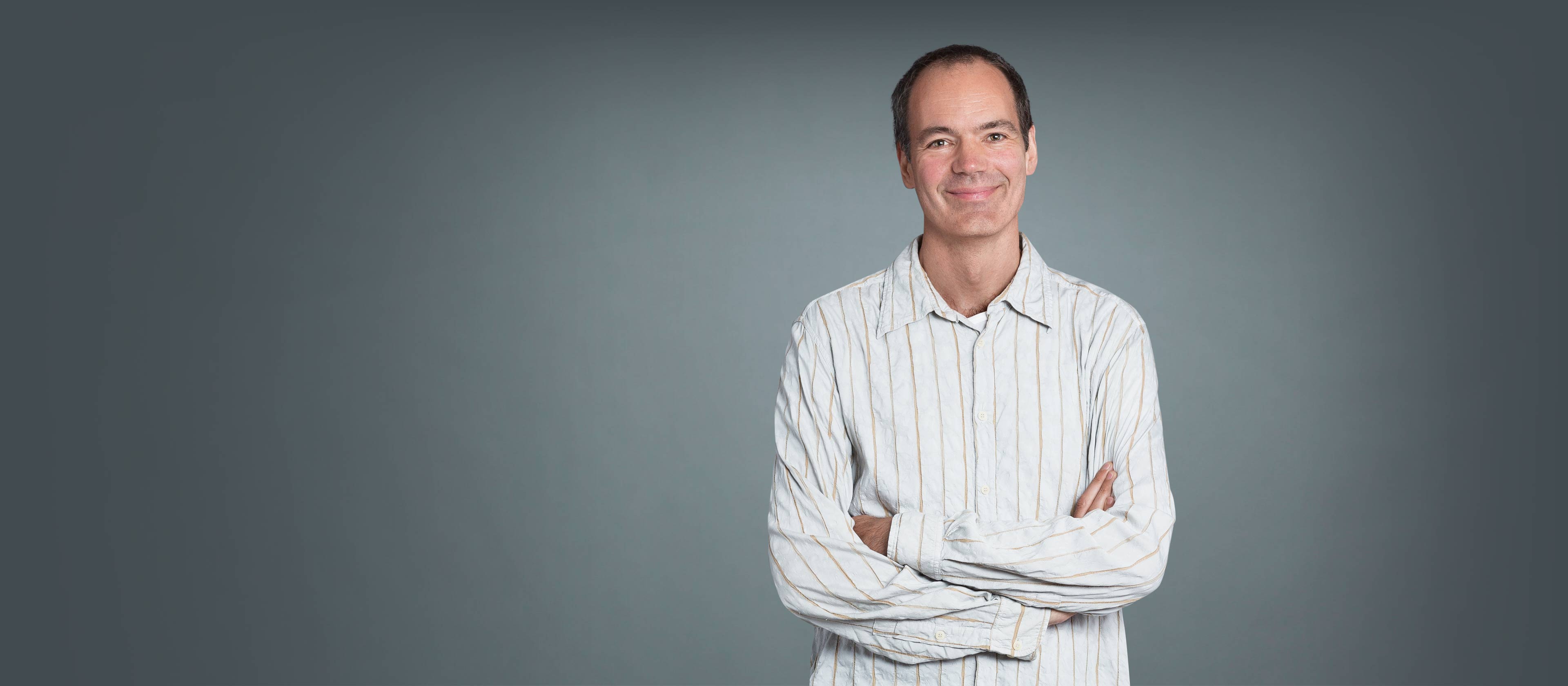
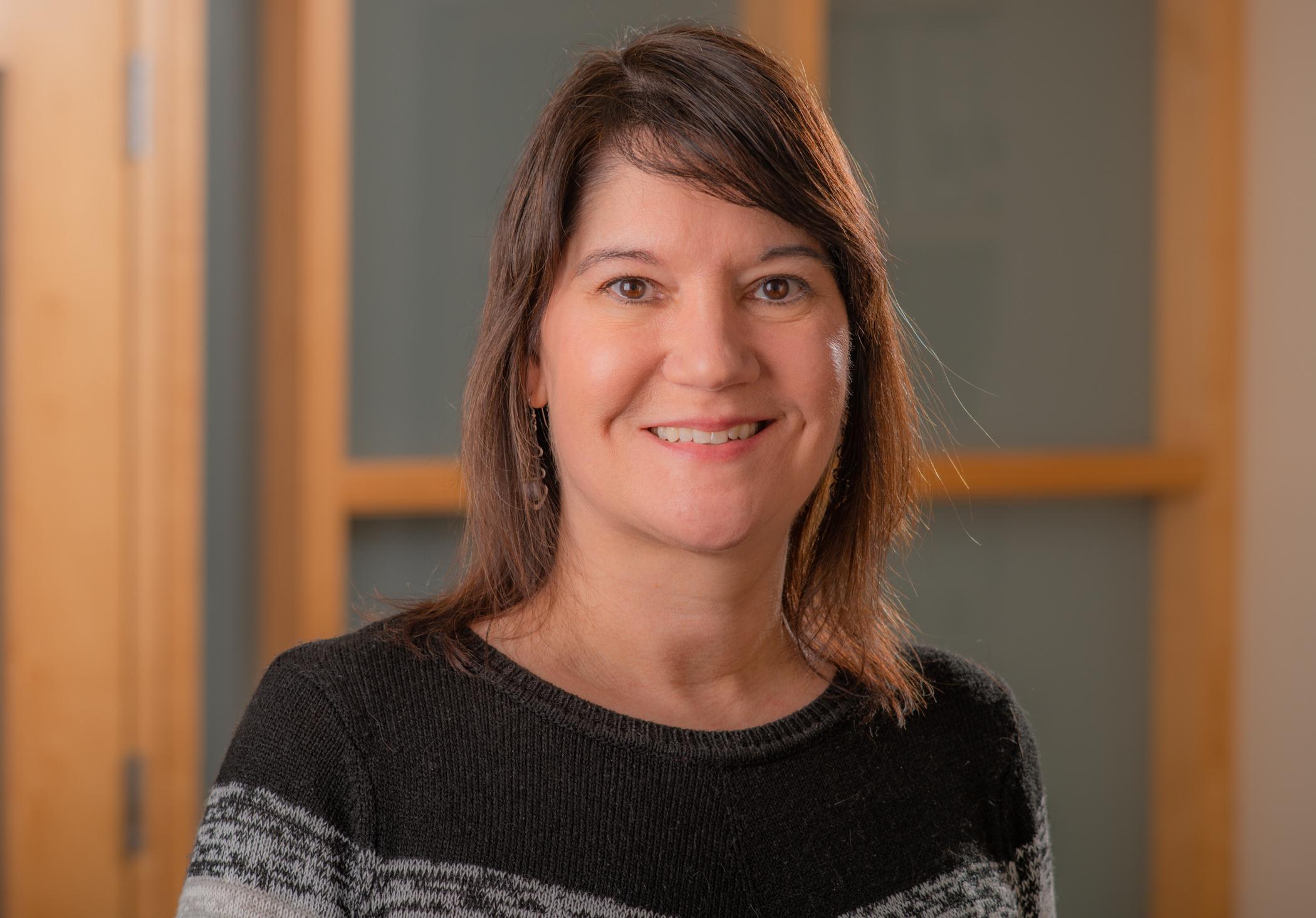
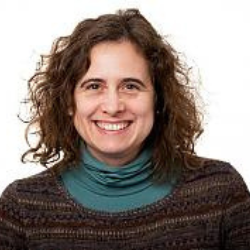
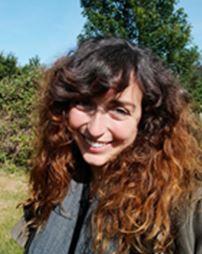
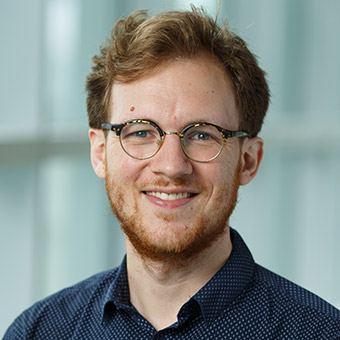
Holger Knaut is an Associate Professor in the Department of Cell Biology at NYU Grossman School of Medicine . His research focuses on understanding the molecular and mechanical mechanisms underlying collective cell migration, tissue morphogenesis, and cytoskeletal dynamics using zebrafish models and quantitative imaging techniques. Key research areas: Collective cell migration, RhoA signaling, focal adhesions, actin polymerization Methodologies: Genetics, live-cell imaging, biomechanical analysis Notable findings: Discovery of rear traction forces in tissue migration, integration of adhesion codes in pattern formation His publications in top journals like Nature Cell Biology and Science demonstrate his expertise in developmental biophysics and cell signaling regulation. Contact: Holger.Knaut@nyulangone.org
Dr. Pablo Oteiza serves as Research Group Leader at the Max Planck Institute for Biological Intelligence in Martinsried, Germany, where he leads the Flow Sensing research group. Previously, he was Group Leader at the Max Planck Institute for Ornithology (2019-2024) and Research Associate there (2016-2019). His academic journey includes a postdoctoral fellowship at Harvard University's Department of Molecular and Cellular Biology and Center for Brain Science (2010-2016), and graduate studies at Universidad de Chile and the Max Planck Institute for Molecular and Cellular Biology (2004-2010). Dr. Oteiza's research program investigates how aquatic animals sense and respond to their hydrodynamic environment. His quantitative behavioral approach seeks to understand the fundamental principles governing flow navigation in fish and amphibians. His work spans sensory biology, neuroscience, biomechanics, and evolutionary biology, with zebrafish serving as a primary model organism. His research bridges physical hydrodynamics with biological sensory mechanisms, exploring how organisms extract meaningful information from fluid movements. Analysis of Dr. Oteiza's publications reveals a research trajectory evolving from developmental biology toward specialized sensory mechanisms. His work in high-impact journals demonstrates consistent focus on sensory systems across multiple scales - from cellular and molecular mechanisms to whole-organism behavior. His research shows particular strength in connecting physical stimuli with neural processing and behavioral outputs, especially in aquatic environments. As Research Group Leader, Dr. Oteiza oversees a laboratory investigating fundamental questions about hydrodynamic sensing. His team employs advanced techniques to study neural circuits, sensory processing, and behavioral responses to water flow, contributing significantly to our understanding of how organisms interact with their fluid environments. His collaborative work extends across international institutions, reflecting the interdisciplinary nature of his research.
Jill A Kreiling is an Associate Professor (Research) in the Department of Molecular Biology, Cell Biology, and Biochemistry at Brown University School of Medicine. She also serves as the Associate Director of the Brown Center on the Biology of Aging since July 2018. Her research focuses on the molecular mechanisms of aging, particularly examining the role of transposable elements, epigenetic changes, and cellular senescence in the aging process. Dr. Kreiling's research interests span several key areas in aging biology and molecular mechanisms of age-related changes. Her work has significantly contributed to understanding how retrotransposable elements become active during aging, how heterochromatin formation changes with age, and how these molecular changes impact tissue function and age-related diseases. She has developed innovative approaches to study aging processes using various model systems including mouse models, zebrafish, and cell culture systems. Her research program has been consistently supported by NIH funding, including her current role as Principal Investigator on an R01 grant focused on identifying biomarkers in salivary vesicles for preclinical Alzheimer's disease. She has published extensively in high-impact journals including Nature, Cell, and Aging Cell, with her work being cited widely in the aging research community. Dr. Kreiling has received several prestigious awards including the Mentored Research Scientist Development Award (K01) from the National Institute on Aging (2011-2017). Her collaborative network includes prominent researchers in the aging field such as John Sedivy and Nicola Neretti at Brown University. As an educator, Dr. Kreiling has taught Introductory Microbiology and has mentored numerous students and postdoctoral fellows in her laboratory. Her research program provides valuable training opportunities for students interested in aging research, molecular biology, and translational approaches to age-related diseases.
Mario Dipoppa is an Assistant Professor in the Department of Neurobiology at the University of California, Los Angeles. His research focuses on computational neuroscience, cortical adaptation, and neural circuit dynamics. Position: Assistant Professor, Neurobiology Email: mdipoppa@g.ucla.edu Research Interests: Mario's work explores how neural populations in the visual cortex adapt to sensory input, with a particular emphasis on the interplay between neural oscillations, synchrony, and cognitive functions like working memory. His recent studies investigate optimal coding strategies in visual adaptation, contextual modulation mechanisms, and the role of transcriptomic diversity in cortical interneuron function. Publications Trends: His research spans computational modeling of cortical networks, visual neuroscience, and neurogenetic analyses of brain circuits. Early work (2013-2016) focused on working memory mechanisms and neural oscillations, while recent studies (2022-2025) emphasize visual cortex adaptation, population coding, and cross-species circuit comparisons.
Geoffrey Goodhill is Professor of Neuroscience and Professor of Developmental Biology at Washington University School of Medicine, where he directs the Center for Theoretical & Computational Neuroscience. His laboratory bridges experimental and theoretical approaches to study brain development. Goodhill earned his BSc in Mathematics and Physics from the University of Bristol (1986), MSc in Artificial Intelligence from the University of Edinburgh (1988), and PhD in Cognitive Science from the University of Sussex (1992). His postdoctoral training included a Medical Research Council Fellowship and a Sloan Theoretical Neuroscience Fellowship at the Salk Institute. His research focuses on computational principles of brain development, particularly using larval zebrafish to investigate neural coding development, behavioral emergence, and alterations in Autism Spectrum Disorders. Key projects examine neural coding and spontaneous activity patterns zebrafish behavioral development autism-related circuit dysfunction calcium imaging analysis methods historical work on axon guidance mechanisms His recent publications show a clear trajectory from molecular gradient studies toward complex systems neuroscience using zebrafish models. Scientific recognition includes: Paxinos-Watson Prize (2012) Elspeth McLachlan Plenary Lecture (2019) Keynote at Computational Neuroscience Meeting (2020) Sloan Theoretical Neuroscience Fellowship (1995) The Goodhill Lab maintains an interdisciplinary team with backgrounds in biology, mathematics, physics and engineering. Current research analyzes human video data for early autism detection while continuing zebrafish neural circuit investigations. The lab has received consistent funding for its innovative approaches to developmental neuroscience questions.
Michael Nothnagel is a Professor at the University of Cologne, where he leads the Department of Statistical Genetics and Bioinformatics within the Cologne Center for Genomics (CCG). His work spans statistical genetics, genetic epidemiology, and forensic genetics, focusing on methodological development and large-scale genomic data analysis. His research interests encompass theoretical and applied statistical genetics, with emphasis on human genetic diversity, disease etiology, and forensic applications. Key areas include Y-chromosomal phylogeography, genome-wide association studies for complex diseases, development of statistical methods for variant interpretation, and forensic marker optimization. His group leverages next-generation sequencing data and specialized forensic markers to address questions in population history, disease mechanisms, and identification systems. Recent publications reveal a strong focus on computational approaches to genetic analysis, including spatial frequency interpolation for haplogroup mapping, polygenic risk score applications for behavioral traits, and advanced methods for variant classification. His work demonstrates consistent integration of statistical theory with practical applications in medical and forensic genetics, often through international collaborations like the VISAGE Consortium. Nothnagel maintains active involvement in the Cologne Center for Genomics, contributing to seminars and collaborative projects including the upcoming 34th International Genetic Epidemiology Society meeting. His research group operates at the intersection of computational biology and medicine, with particular strengths in handling complex genomic datasets and developing novel analytical frameworks for genetic epidemiology.
Professor Ashley Ward is a Professor of Animal Behaviour at the University of Sydney's School of Life and Environmental Sciences. His research focuses on social behaviour, collective animal behaviour, and the ecology of fish, particularly in group-living species. He leads the Animal Behaviour Lab and has authored influential books like Sociality: The Behaviour of Group-Living Animals (2016) and Questions and Answers on Aquarium Fishes (2007–2008). His work integrates experimental and theoretical approaches to understand how animals make decisions in groups, navigate risks, and adapt to environmental challenges. Research interests include predator-prey dynamics, immune system effects on social behavior, and the role of social context in camouflage. Notable grants include 'Understanding animals through movement' (2018) and 'Advancing fauna conservation in post-fire landscapes' (2021). His recent studies explore collective decision-making, immune-challenge responses in fish, and the impact of environmental cues on shoaling behavior. Awards and recognitions are not explicitly listed, but his contributions to fish behavior research are widely cited. He advises on grants and collaborates internationally, with over 100 peer-reviewed articles and books. His lab emphasizes field and laboratory experiments, combining behavioral observations with computational modeling to uncover principles of collective behavior and social organization.
Keith Tierney is a Professor in the Department of Biological Sciences at the University of Alberta's Faculty of Science. He holds degrees including BSc, MSc, MBA, and PhD. His research focuses on chemical-vertebrate interactions, emphasizing sensory physiology, exercise physiology, and toxicology. Key areas include olfactory mechanisms in fish, climate-driven physiological adaptations, and contaminant impacts on animal behavior. His work integrates ecological and molecular approaches, often involving zebrafish and Arctic fish species. Education: BSc MSc MBA PhD Research Interests: Neuroendocrine regulation of behavior and toxic responses Climate change effects on fish migration and exercise capacity Contaminant impacts on sensory systems and ecosystem dynamics Zebrafish models for studying aging and neurodegenerative diseases Teaching: Zoology 241 (Animal Physiology) Biology 341 (Ecotoxicology) School of Public Health 522 (Principles of Toxicology) Funding & Collaborations: Supported by Fisheries and Oceans Canada, Environment Canada, petrochemical companies, and food manufacturers Research emphasizes translational science linking basic physiology to environmental policy Labs & Teams: Led a multidisciplinary lab investigating chemical-vertebrate interactions Collaborates internationally on projects addressing global climate and pollution challenges
Patrick Desrosiers serves as an Adjunct Professor in the Department of Physics, Physical Engineering and Optics within Université Laval's Faculty of Science and Engineering, while conducting neuroscience research at the CERVO Brain Research Center. He co-directs Dynamica, a multidisciplinary complex systems research group, and participates in UNIQUE (neuroscience-AI integration) and CIMMUL (mathematical modeling applications). His academic training spans physics and mathematics at Université Laval, the University of Melbourne, and CEA-Saclay. Dr. Desrosiers' research centers on mathematical and computational neuroscience , with signature contributions in dimensionality reduction and network resilience analysis . His work bridges biological and artificial neural networks , zebrafish brain mapping , and neurovascular coupling using advanced techniques from spectral graph theory , random matrix theory , and dynamical systems . Current investigations focus on neural decoding under chronic stress and structural-functional relationships in brain networks. Analysis of his 2023-2025 publications reveals three dominant trajectories: (1) Low-dimensional representations for predicting cognitive decline and neural dynamics, (2) Network reconstruction methodologies applied to neuroscience and biodiversity, and (3) Development of computational tools like NeuroTorch for neural data analysis. His work consistently integrates mathematical rigor with biological relevance across species and scales. His recognition includes: Professeur étoile prize for exceptional teaching (Faculty of Science and Engineering, Université Laval, 2018) As Dynamica co-director, he mentors a research team comprising Antoine Légaré, Arthur Légaré, Benjamin Claveau, Jordan Charest, Marziyeh Pourmousavi, Pierre-Luc Larouche, Vincent Savard, Vincent Thibeault, and Zahra Yazdani. His collaborative framework connects physics, mathematics, and neuroscience to address fundamental questions in neural network organization, with funding evident through sustained publication output and lab operations. Dynamica Lab ( https://dynamicalab.github.io/ ) serves as the operational hub for his interdisciplinary research, maintaining active collaboration with CERVO Brain Research Center and international institutions.
Professor Anne Ferguson-Smith is a leading mammalian developmental geneticist and epigeneticist at the University of Cambridge, holding the Arthur Balfour Professorship of Genetics. As Pro-Vice-Chancellor for Research, she oversees the university's research strategy while maintaining her laboratory's focus on genomic imprinting and epigenetic inheritance . Her work bridges experimental and computational approaches through affiliations with the Cambridge Stem Cell Institute, Cambridge Neuroscience, and the Centre for Trophoblast Research. Research in her lab investigates epigenetic mechanisms in developmental processes , particularly through the lens of Dlk1-Dio3 imprinted domain studies. Current themes include: Stem cell epigenetic programming Environmental modulation of epigenetic states Role of repetitive elements in genomic regulation Her group integrates mouse and zebrafish models with high-throughput genomics and mathematical modeling . Key collaborations include: Wellcome Trust UKRI Medical Research Council BBSRC NIH Scientific honors include: Elected EMBO Member (2006) Academy of Medical Sciences (2012) Fellow of the Royal Society (2017) Commander of the Order of the British Empire (CBE) The lab maintains family-friendly research practices and actively participates in interdisciplinary collaborations across Cambridge and internationally.
Emily Bayer is appointed as Assistant Professor of Neural Science and Biology at New York University, commencing January 2026. Her research program investigates neural mechanisms of visceral sensation and behavioral outputs, with emphasis on fertility status and sex differences using C. elegans and D. cerebrum (zebrafish) models. Her educational background includes: Ph.D. in Biological Sciences, Columbia University (2019) B.S. in Biology/German, Muhlenberg College (2014) Dr. Bayer's research explores how internal bodily sensations (visceral sensation) modulate behavior and environmental interaction, focusing on molecular and anatomical sex differences in neural circuits. Her lab examines how fertility status influences behavior through genetic and neural mechanisms, revealing conserved principles of neural circuit organization. Key approaches include C. elegans genetics, zebrafish neuroimaging, and behavioral analysis to dissect how reproductive state and sex converge in brain function. Analysis of her recent publications (2025-2016) demonstrates a cohesive focus on sexual dimorphism in neural development and behavior, with increasing integration of genomic and connectomic methodologies. Her work spans molecular genetics, neural circuit mapping, and behavioral phenotyping, consistently highlighting sex-specific differences in neural wiring and function across model organisms. Her scientific recognition includes: Research Fund for Excellent Junior Researchers (University of Basel, 2025) Jane Coffin Childs Memorial Fund for Medical Research Fellowship (2021-2023) Dr. Bayer has secured competitive fellowships supporting her independent research program. Her lab establishes innovative frameworks for studying visceral sensation-behavior relationships, with current work emphasizing monoaminergic signaling in experience-dependent neural plasticity and the role of conserved transcription factors in sexually dimorphic development. Future directions include expanding to vertebrate models to investigate evolutionary conservation of these mechanisms. She leads a research team utilizing C. elegans and zebrafish to dissect neural circuits underlying internal sensation, with particular focus on how fertility signals modulate social and mating behaviors through sex-specific neural pathways.
Minoru Koyama is an Assistant Professor in the Department of Cell & Systems Biology at the University of Toronto Scarborough (UTSC). His research focuses on understanding the neural circuit mechanisms underlying behavioral development, particularly in zebrafish models. He employs advanced techniques such as optogenetics, voltage imaging, and CRISPR-based methods to study circuit maturation in the hindbrain and spinal cord. Education: Koyama holds a Ph.D. (2006), M.Sc. (2002), and B.Sc. (2000) in Biological Sciences from the University of Tokyo. Research Interests: His work investigates how neural circuits mature post-birth and contribute to complex behaviors, with applications to developmental brain disorders. His lab uses zebrafish as a model system, combining optics, genetics, and machine learning for behavioral analysis. Key projects include studying motor coordination development and refining imaging techniques like multi-plane microscopy and voltage indicators. Publications Highlight: Koyama’s recent work includes innovations in microscopy (e.g., HiLo speckle illumination) and genetic tools (e.g., TEMPO lineage tracing). These advancements enable precise observation of neural circuits and cellular dynamics. Lab & Recruitment: The Koyama Lab actively recruits graduate students and postdoctoral researchers. No specific grants are detailed, but his work reflects broad interdisciplinary collaborations in neuroscience and biotechnology. Labs/Teams: His lab focuses on developmental neurobiology, leveraging cutting-edge imaging and genetic engineering to explore neural circuit function across vertebrate development.
Dr. Benjamin Evans is an Assistant Professor in Computer Science & AI (Informatics) at the University of Sussex , affiliated with the School of Engineering and Informatics . His research integrates computational neuroscience and artificial intelligence, focusing on biologically inspired neural networks. Current Position: Assistant Professor, Department of Informatics, University of Sussex Previous Roles: Research Associate at University of Bristol, University of Exeter, Imperial College London, and University of Oxford Education: DPhil in Computational Neuroscience (University of Oxford), MSc in Intelligent Systems (UCL), BA in Experimental Psychology (Oxford) His research centers on how neural systems self-organize to produce intelligent behavior, studied through both biological and computational modeling. He investigates spiking neural networks , convolutional neural networks , and the role of biological constraints in enhancing AI robustness and human-like perception. He is particularly interested in how spike-based information processing contributes to adaptive cognition in noisy environments. His recent publications reveal a strong trend in evaluating deep neural networks as models of human vision, questioning their biological plausibility while proposing bio-inspired improvements. He also works on optogenetics simulation (e.g., PyRhO platform), developmental biology modeling , and reproducible data science through containerization tools like Docker. His scientific contributions have been recognized through publications in high-impact journals such as Nature Communications , PLoS Computational Biology , and Behavioral and Brain Sciences . EPSRC Grant: "Exploring the multiple loci of learning and computation in simple artificial neural networks" (2023–2024) EPSRC Grant: "Using ant biology and natural environments to enhance models of vision and robot navigation" (2022–2026) Dr. Evans actively contributes to open science through GitHub repositories (e.g., PyRhO, DPE, BioNet) and promotes reproducible research. He has no listed advisees in the provided data, but leads funded research projects involving junior researchers. He is a core member of the Informatics research group at Sussex, contributing to both AI and neuroscience domains.
Berta Verd is the Peter Brunet Fellow in Biological Sciences at Jesus College, University of Oxford. She holds a BSc in Mathematics from the Polytechnic University of Catalonia, followed by an MSc in Medicine, Science and Society from King’s College London, an MRes in Systems and Synthetic Biology from Imperial College London, and a PhD in Biomedicine from Pompeu Fabra University. Her research focuses on evolutionary developmental biology, applying dynamical systems theory to biological problems such as embryonic axial elongation, segmentation, and cichlid fish evolution. She teaches Biology courses at Jesus College and actively contributes to interdisciplinary research in developmental dynamics. Her work explores the modularity of segmentation clocks, the role of cell movements in pattern formation, and evolutionary processes in African cichlids. Recent studies include analyses of skeletal diversity in Lake Malawi cichlids using micro-CT imaging and computational modeling of gene regulatory networks. She also investigates critical transitions in developmental systems and the interplay between morphogen gradients and positional information. Advising and grants: No student advisees or grant details are explicitly listed in the provided texts. Her research is supported through her fellowship and institutional affiliations. She is associated with labs focused on systems biology and evolutionary developmental biology at the University of Oxford and collaborating institutions. Labs/Teams: While specific lab names are not mentioned, her research aligns with interdisciplinary teams studying developmental dynamics, evolutionary biology, and systems approaches in the Biological Sciences department at Oxford.
Dr. Guillaume Duclos is an Assistant Professor in the Martin A. Fisher School of Physics at Brandeis University, where he leads the Duclos Lab. His research focuses on the physics of active matter, biomimetic systems, and the interplay between molecular motors and soft materials. He holds a PhD from Institut Curie and Pierre et Marie Curie University (Paris, France). His lab investigates pattern formation in active materials, topological defects in nematics, and collective cell migration. Key funding includes NSF CAREER (2021–2026) and DOE Early Career (2023–2028) awards. Current students include Annemarie Winters (co-advised with Hannah Yevick), Benjamin Strain, Bennett Sessa, and Adrielle Cusi. Alumni include Dr. Bibi Najma (now at Caltech) and Dr. Salman Alam (at Lam Research). The lab emphasizes interdisciplinary training in biophysics, soft matter, and quantitative biology. Recent work includes studies on 3D pattern formation in protein-membrane systems, microtubule-motor interactions, and active nematic droplets. Research facilities support cutting-edge microscopy and computational modeling.