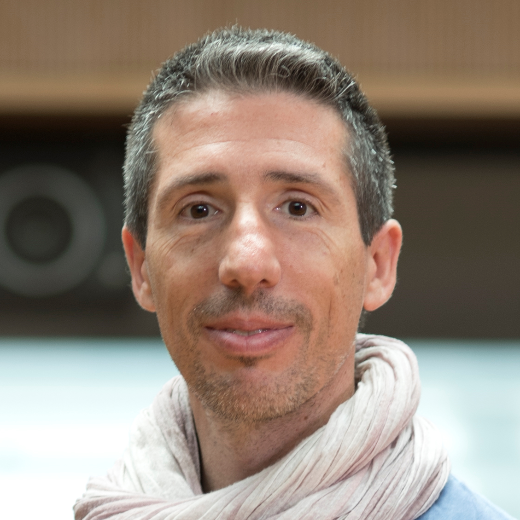
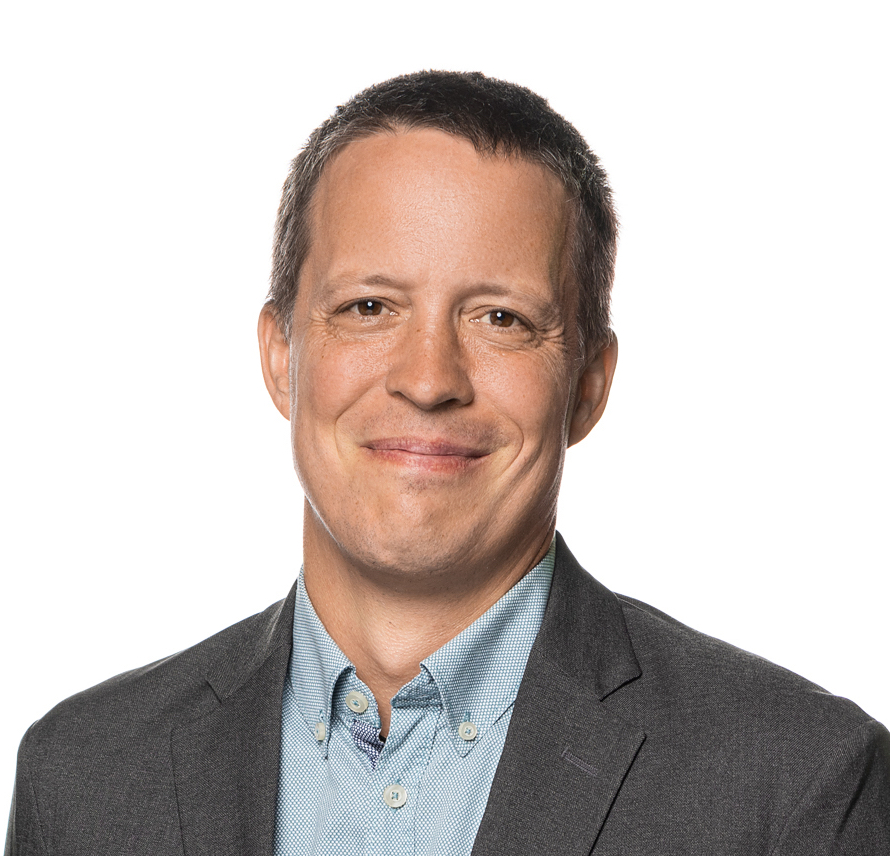
Dr. Akhtar Ali is an Assistant Professor at the Department of Computer and Information Sciences, Northumbria University. With over 20 years of experience in academia, he has specialized in database systems, data mining, and health informatics. He holds a PhD from the University of Manchester (2003) and has developed innovative programs like the MSc Data Science. Education: PhD in Computer Science (2003), University of Manchester MSc in Computer Science (1995), University of Peshawar Research Interests: Focuses on data science, big data management, healthcare optimization, and database migration. His recent projects include using data mining for population health prediction and redesigning healthcare service delivery models. Key Contributions: Led KTP projects on GIS for Gibraltar and healthcare process redesign. Developed MSc programs in Data Science and Information Science with Data Analytics. Supervised numerous students across BSc, MSc, and PhD levels. Awards: No specific awards listed, but recognized for contributions to database and health informatics research. Teaching & Administration: Over 20 years of teaching experience in database systems, data warehousing, and software design. Authored modules like 'Principles of Data Science' and 'Research Methods.'
Martin Klotz is a Researcher at the Institute for German Language and Linguistics, Humboldt University of Berlin, affiliated with the Collaborative Research Center (SFB1412) and the Research Unit for Emerging Grammars (RUEG). His work focuses on corpus linguistics, computational linguistics, and digital humanities infrastructure. He holds an MSc in Cognitive Systems (2019, University of Potsdam) and a BA in German Linguistics & Computer Science (2015, Humboldt University). Key research interests include corpus architectures, historical and parallel corpora, language modeling for non-standard varieties, and research software engineering. He contributes to projects like the RUEG corpus and FALKO learner corpus, emphasizing multilingual and multimodal corpus development. His publications span corpus design, software tools (e.g., Annatto), and analyses of heritage languages. He actively organizes academic events, such as the 2021 DGfS short working group on contrastive corpus methodology. He participates in lab collaborations like Deutsch Diachron Digital and contributes to open-source corpus tools. His work bridges computational methods with linguistic theory, focusing on dynamic language systems.
Sergio Tessaris is an Assistant Professor at the KRDB Research Center for Knowledge and Data, affiliated with the Faculty of Computer Science at the Free University of Bozen-Bolzano. His research focuses on semantic technologies, Description Logics, and data-aware workflows. University: Free University of Bozen-Bolzano School: Faculty of Computer Science Emails: Sergio.Tessaris@unibz.it, tessaris@inf.unibz.it Research Interests: His work centers on semantic technologies for data access and process management, including Description Logics reasoning algorithms, declarative business processes, and ontology-driven systems. He has contributed to temporal event data analysis, chatbot design for legal reporting, and SQL null value handling. Recent publications emphasize business process verification, constraint mining, and deep learning applications. Teaching Activities: Local coordinator of the European Masters Program in Computational Logic (EMCL) Lecturer for courses: Integrated Logic Systems, Computational Logic, Introduction to Artificial Intelligence, Non-monotonic Logics Teaching assistant for Semantic Web Technologies and XML/Semi-structured Databases Organisational Contributions: Co-organiser of DL 2007 and DL 2002 workshops Former member of Description Logic steering committee Program committee member for conferences including AAAI-06, ESWC, ISWC, and ODBASE
Vinayak R. Borkar is a researcher and software engineer affiliated with the University of California, Irvine, where he completed his PhD in 2016. His work focuses on big data platforms, database systems, and scalable query processing frameworks. PhD in Big Data Processing (UC Irvine, 2016) Contributions to Apache AsterixDB, Hyracks, and Pregelix Industry experience at BEA Systems (2000s) Research interests include database systems , big data management , XQuery optimization , and dataflow engines . His publications analyze scalable similarity queries, memory management, and declarative approaches to machine learning. Recent articles explore Apache AsterixDB , dataflow compilation , and graph analytics . Collaborators include Michael J. Carey and Alexander Behm.
Leonidas Fegaras is an Associate Professor in the Computer Science and Engineering Department at the University of Texas at Arlington's College of Engineering, where he has been employed since 1996, initially as Assistant Professor until 2002 when he was promoted to Associate Professor. His academic journey began with a BEE in Engineering from the National Technical University (1902), followed by an MS in Electrical & Computer Engineering from the University of Massachusetts Amherst (1903), and culminated with a PhD in Computer Science from the same institution in 1992. His educational background includes: PhD in Computer Science, University of Massachusetts Amherst, 1992 MS in Electrical & Computer Engineering, University of Massachusetts Amherst, 1903 BEE in Engineering, National Technical University, 1902 Fegaras's research spans multiple domains within computer science, with a strong emphasis on database systems and big data analytics. His work focuses on developing innovative frameworks for processing large-scale data, particularly in XML, array-based computations, and graph analytics. He has pioneered approaches for query optimization in distributed environments, stream processing, and translation of high-level programming constructs to efficient distributed execution. More recently, his research has expanded into healthcare applications, applying data analytics techniques to clinical data for improved patient outcomes and healthcare decision-making. His interdisciplinary work bridges computer science with healthcare, criminal justice, and environmental science domains. Analysis of his recent publications reveals a clear evolution in his research focus from traditional database systems and XML processing toward modern big data analytics frameworks. His work now heavily emphasizes distributed computing models, particularly leveraging Spark and SQL-based distributed processing. A significant portion of his recent work applies these techniques to healthcare analytics, demonstrating his ability to translate theoretical database concepts into practical applications that address real-world problems in medicine and social sciences. His research shows consistent innovation in query processing techniques across evolving data paradigms. Fegaras has been actively involved in mentoring the next generation of computer scientists, serving as dissertation committee chair for numerous PhD students and supervising many master's theses. His research has been supported by substantial funding from federal agencies including the National Science Foundation and the U.S. Department of Education, with projects totaling over $2 million. Notable grants include the GAANN Doctoral Fellowships in Computer Science and Engineering and several NSF-funded projects focused on big data analytics and database systems. As an educator, Fegaras teaches advanced courses in compilers, web data management, and cloud computing & big data. He has held significant administrative roles including Chairperson of the CSE Graduate Studies Committee since 2009 and membership on the University Graduate Curriculum Committee. His service extends to professional program committees and conference organization, demonstrating his active engagement with the broader computer science research community.
Georgia Koloniari is an Associate Professor at the Department of Applied Informatics, School of Information Sciences, University of Macedonia. She holds a PhD in Computer Science from the University of Ioannina (2009), along with an MSc (2003) and BSc (2001) in Computer Science from the same institution. Her research focuses on distributed systems, graph databases, and peer-to-peer (P2P) systems, with notable contributions to social network analysis, XML data management, and privacy-preserving techniques. She has led or participated in multiple funded research projects, including the Cloud9 project (2011–2014) and the Self-Peer initiative (2005–2008). Her teaching roles include instructing courses such as Distributed Systems , Data Structures , and Advanced Information Systems at the undergraduate level, and IT Infrastructure and Databases at the graduate level. She has also contributed to online educational initiatives, including the development of the Data Structures course in the Open Digital Courses project. Dr. Koloniari’s research interests span social network evolution, graph database management, and distributed data processing. She has published extensively on topics like clustered overlay networks, privacy-preserving record linkage, and temporal query processing. Her work integrates game-theoretic approaches and algorithmic solutions to address challenges in P2P systems and cloud computing. Her recent publications highlight advancements in privacy-preserving techniques (e.g., PRIVATEER toolkit) and time-aware social search systems. She remains active in academic service, serving on program committees for conferences like WWW and EDBT, and reviewing for journals such as IEEE Transactions on Parallel and Distributed Systems. Labs/Teams: Her involvement with the DMOD Lab (Digital Media, Data Management, and Distributed Systems Lab) reflects her focus on interdisciplinary research in data management and distributed computing.
Mathias Géry is a Lecturer in Computer Science at Jean Monnet University, affiliated with the Computer Science Department within the Faculty of Science and Technology. He conducts research as a member of the Data Intelligence Group at the H. Curien Laboratory (UMR CNRS 5516) in Saint-Étienne, France. Research Focus: His work centers on advanced Information Retrieval systems, with four core pillars: Structured IR (specializing in textual IR, XML, hypertexts, and structured documents), Social IR (analyzing social networks and relationships), Multimedia IR (developing text-image fusion models and representation frameworks), and Web Mining (including usage analysis, corpus collection, and web analytics). His methodologies consistently integrate user profiles and social context to enhance personalized information access. Publication Trends: Recent publications (2015-2024) reveal a strong trajectory in personalized and social IR, with significant contributions to query expansion, language modeling, and social bookmarking systems. His interdisciplinary reach extends to health informatics (2024 RCT on sedentary adults), sports science (2023 gender-based endurance analysis), quantum physics (2021 turbulence study), and literary analysis (2019 Russian literature), demonstrating exceptional versatility across computational and humanities domains. Collaborative Environment: As an active researcher within the CNRS-affiliated H. Curien Laboratory, he contributes to the Data Intelligence Group's mission of advancing data-driven methodologies through structured, social, and multimodal approaches.
Daniel Weidner is a researcher at the Chair of Computer Science VI (Artificial Intelligence and Knowledge Systems) within the Faculty of Mathematics and Computer Science at the University of Würzburg. His work spans declarative programming, database systems, and artificial intelligence applications. Primary affiliation: Chair of Computer Science VI, University of Würzburg Research focus: AI-driven database systems and logic programming His research interests include declarative technologies, logic programming, and their applications in data mining, tennis analytics, and NoSQL databases. He has extensively contributed to the development of tools that bridge Prolog and Python environments. Weidner has supervised multiple theses and seminar papers, including works on tennis trajectory recognition, heating system data analysis, and declarative program evaluation. His projects often involve Python-based implementations of deductive database systems. Supervised: 4 bachelor's, 2 master's theses Teaching roles: Logic programming, database exercises, and advanced database seminars Scientific awards: No explicit honors mentioned in available records.
Gioldasis Nektarios is a Lecturer in the School of Electronic and Computer Engineering at the Technical University of Crete , affiliated with the Distributed Information Systems and Applications Laboratory (TUC/MUSIC) . He has been a permanent member of the laboratory since 2006 and has contributed to numerous Research & Development projects. MSc in Informatics, School of Electronic and Computer Engineering, Technical University of Crete (2002) BSc in Applied Informatics, University of Macedonia (1999) His research interests span critical domains including: Semantic Web technologies and Open Linked Data Software engineering for Service Oriented and Multi-Tier Architectures Data modeling, metadata management, and semantic interoperability Digital libraries and multimedia management systems The article portfolio demonstrates expertise in XML-Semantic Web integration, query mediation, and cultural data systems, with a 2023 publication on location-based game platforms. Key trends include: Interoperability frameworks (2015-2012) Ontology-driven data access (2010-2009) Geospatial and cultural heritage applications (2011-2007)
Olivier Gauwin serves as an Assistant Professor at the University of Bordeaux, holding dual roles in academic instruction and research. He teaches within the Computer Science Department at the University Institute of Technology (IUT), while conducting research as a core member of LaBRI's Numeric and Sustainability team. His institutional presence spans both the IUT campus in Gradignan (office 111) and LaBRI's research facilities in Talence (office 311), reflecting his integrated contributions to theoretical computer science and applied sustainability initiatives. His educational trajectory demonstrates deep theoretical foundations: Habilitation à diriger des recherches (HDR) from University of Bordeaux (2020) titled Transductions: resources and characterization PhD in Computer Science from Université Lille 1 (2009) titled Streaming Tree Automata and XPath , conducted at LIFL/INRIA Master's degree (DEA) from Centre de Recherche en Informatique de Lens (2004) titled Fusion itérée de croyances Gauwin's research program bridges abstract theory and practical applications, with early work establishing fundamental results in automata theory for XML stream processing. His investigations into visibly pushdown automata, nested words, and transducers created novel frameworks for efficient query answering in data streams. Recent years show strategic expansion into sustainability, where he adapts formal methods to environmental modeling challenges. This evolution maintains rigorous theoretical grounding while addressing contemporary computational sustainability needs through the Numeric and Sustainability team. Analysis of his 15 most recent publications reveals consistent methodological excellence across theoretical computer science. Core themes include automata minimization (notably proving NP-completeness for visibly pushdown automata), logical characterizations of transductions, and streamability analysis for nested structures. His work demonstrates exceptional coherence—advancing from foundational XML processing (2008-2013) to resource-optimized transducers (2015-2018) and current sustainability applications, always maintaining focus on computational efficiency and formal verifiability. Dr. Gauwin actively mentors the next generation of computer scientists: Supervised PhD completion of Nathan Lhote (2015-2018) on logical characterizations of transductions Guided PhD research of Félix Baschenis (2014-2017) on transducer minimization and resource optimization His research is institutionally supported through LaBRI (UMR 5800), a joint CNRS-University of Bordeaux laboratory, though specific external grants aren't detailed in available materials. Current work continues through the Numeric and Sustainability team, where he integrates automata theory with environmental computation challenges in collaborative projects spanning theoretical innovation and real-world sustainability applications.
Belgin Ergenç Bostanoğlu is an Associate Professor in the Computer Engineering Department at Izmir Institute of Technology (Turkey). Her research focuses on query optimization in distributed databases, association rule mining, privacy-preserving data mining, and graph-based algorithms. She leads the Dworld research laboratory and has held academic and industry roles since the 1980s. Education: B.Sc. in Computer Engineering, Middle East Technical University (1983) M.Sc. in Computer Engineering, Izmir Institute of Technology (2002) Ph.D. in Computer Engineering, Paul Sabatier University, France (2008) Research Interests: Dynamic frequent itemset mining and hiding under multiple support thresholds Subgraph mining in evolving graphs Federated query processing over linked data Privacy-preserving techniques in distributed databases Medical NLP applications (e.g., TurkMedNLI dataset) Her recent work emphasizes large-scale graph analysis, medical NLP dataset development, and adaptive join operators for federated SPARQL queries. She has contributed to over 30 peer-reviewed publications and led projects like the TÜBİTAK ARDEB 3501 platform for dynamic frequent itemset mining. Teaching: Courses include Advanced Database Management Systems, Knowledge Discovery, and Privacy-Preserving Data Mining. Labs & Projects: Manages Dworld lab and coordinates projects such as 'Turkish Medical NLP Model Development' (BAP-funded) and the Behavioral Next Generation Wireless Networks COST Action.
Yi Chen is a Professor at the MT School of Management and Director of the Center for Big Data at New Jersey Institute of Technology (NJIT). His research focuses on database systems, information retrieval, XML processing, privacy/security, and healthcare informatics. He has led numerous NSF-funded projects, including studies on privacy interventions in online publishing ecosystems and meta-information analysis in semi-structured data. Key contributions include work on counter-ad-blocking strategies, GDPR compliance frameworks, and machine learning models for healthcare prediction. He has published over 100 articles in top venues and holds an h-index of 24 with 1,947 citations. Notable awards include recognition in the Japanese Economic Review. Research interests combine computational methods with real-world applications, particularly in privacy-preserving systems, medical data analytics, and workflow optimization. Recent projects explore the impact of transparency frameworks in digital advertising and biomarker extraction using sentiment analysis techniques. His work bridges theoretical advancements with practical solutions for industry challenges. Grants: 11 federal grants including NSF projects on workflow mining, ad-blocking dynamics, and student research initiatives. Lab: Center for Big Data at NJIT, focusing on large-scale data challenges. Publications span key areas like ad viewability prediction, XML search engines (XSeek), and healthcare forum analysis. Collaborations include work on privacy frameworks and optimizing ad auction mechanisms.
Irini Fundulaki is a prominent researcher in the Semantic Web and Linked Data domains. Her work focuses on data provenance, access control, and benchmarking for RDF systems. She has collaborated extensively with institutions across Europe and contributed to annual Ontology Alignment Evaluation Initiatives. Research Interests: Dr. Fundulaki's research spans Provenance management in RDF/S datasets Usage control policies via reification Ontology alignment and semantic interoperability Benchmarking tools for linked data systems XML access control frameworks Publication Trends show sustained contributions to semantic data management, with recent works on SPARQL provenance (2024), Geo-Spatial link discovery (2023), and precision medicine ecosystems (2020).
David Toman is an Assistant (later Associate) Professor in the Department of Computer Science at the University of Waterloo, part of the Faculty of Mathematics. His research focuses on temporal databases, query languages, embedded control systems, semi-structured data (XML), finite model theory, and programming language implementation. He holds a PhD from Kansas State University (1996) and an MS (MGr.) from Masaryk University (1992). Toman has held roles including Visiting Professor at BRICS, Aarhus University, and postdoctoral fellowships at the University of Toronto. His work includes over 40 refereed publications and contributions to projects funded by CITO, CFI, and NSERC. Awards include the NSERC/NATO Postdoctoral Fellowship and multiple summer school fellowships. Education: PhD in Computer Science, Kansas State University (1996) MS (MGr.) in Computer Science, Masaryk University (1992) Research Interests: Temporal databases and query languages Query processing in embedded control systems XML and semi-structured data management Finite model theory and formal methods Programming language implementation Grants & Awards: CITO Project: Text Indexing for Data Warehouses (CDN$143,000) CFI/OIT: Software Technology for Embedded Control Programs (CDN$705,000) NSERC Individual Research Grant (CDN$84,000) Key Contributions: Developed temporal extensions of SQL and query optimization techniques Contributed to description logics and duplicate elimination in databases Published widely in venues like ACM TODS, IEEE TKDE, and EDBT
Axel Polleres is a full professor at the Vienna University of Economics and Business (WU Wien), leading the Department of Information Systems and Operations Management and heading the Data Management group within the Institute for Data, Process and Knowledge Management. He specializes in Semantic Web technologies, knowledge representation, and open data. His work includes contributions to SPARQL, RDF, and W3C standards. Education: PhD and Habilitation in Computer Science (TU Wien) MSc in Computer Science (TU Wien) Research Interests: Semantic Web, Ontology Languages, Linked Data Nonmonotonic Reasoning, Answer Set Programming Query Languages (SPARQL), Data Integration Open Data ecosystems and Quality Assessment Recent Articles Trends: Focusing on knowledge graph evolution, constraint validation (SHACL), and open data pipelines, with applications in city data and semantic web services. His work bridges theoretical foundations with practical implementations. Awards: IEEE 2015 Best Paper Award RR2010 Best Paper Award ISWC2009 In-use Track Best Paper Advising & Labs: Advisor to over 30 PhD/MSc students. Leads the Data Management group at WU, focusing on open data systems and semantic technologies. Involved in projects like FRESH, OMEGA, and W3C standardization efforts.