- Geochemistry
- Petrology
- Volcanology
- +۵ مورد دیگر
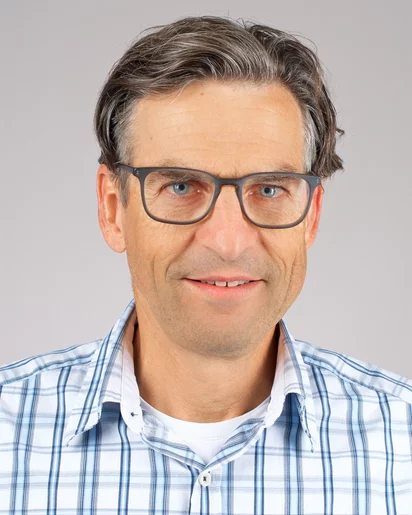
Dale Burns serves as a staff research scientist and lecturer at the Stanford Doerr School of Sustainability, where he manages the Stanford Microchemical Analysis Facility (MAF). He also holds a courtesy faculty position as Professor at Oregon State University and serves as Technical Director for the National Nanotechnology Coordinated Infrastructure program (NSF) and Treasurer of the Microanalysis Society. Dr. Burns earned his Ph.D. in Geochemistry from Oregon State University, an M.S. in Geological Sciences from San Diego State University, and a B.A. in Geological Sciences from Humboldt State University. His research spans multiple disciplines including geochemistry, volcanology, petrology, and biophotonics. Burns investigates volcanic processes in the Andes, impact cratering phenomena like the Chicxulub event, lunar magnetism, and unique biophotonic adaptations in marine organisms such as heart cockles. His work combines field studies, laboratory analysis, and advanced microanalytical techniques to understand Earth's geological processes and their implications for planetary evolution. Analysis of Burns' recent publications reveals a multidisciplinary research program spanning Earth sciences, planetary science, and biophotonics. His work on volcanic processes in the Andes demonstrates expertise in continental arc magmatism, while his Chicxulub impact crater research shows proficiency in impact geology. The heart cockle shell study represents an innovative crossover into marine biophotonics, demonstrating how natural systems solve complex optical problems. Technical Director, National Nanotechnology Coordinated Infrastructure program (NSF) (2018 - Present) Professor (courtesy), Oregon State University (2022 - Present) Treasurer, Microanalysis Society (2025 - Present) Burns teaches multiple courses at Stanford including Introduction to Igneous and Metamorphic Petrology (EPS 104) and An Introduction to Quantitative X-ray Microanalysis (EPS 216, GEOPHYS 236, MATSCI 236). His leadership of the Microchemical Analysis Facility positions him at the center of advanced materials and geological analysis at Stanford, providing technical direction for researchers across multiple disciplines. His involvement with the National Nanotechnology Coordinated Infrastructure program extends his technical expertise to the national level, supporting nanoscale research infrastructure across the United States.