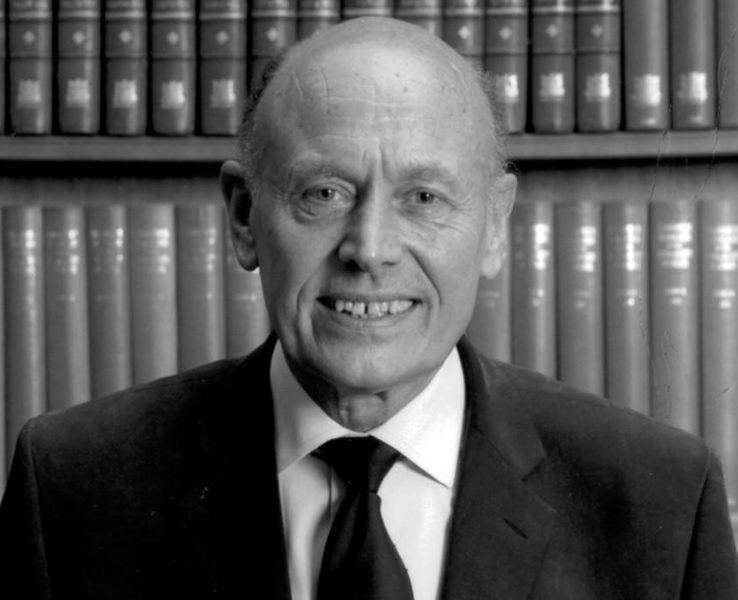
James Barber was the Ernst Chain Professor of Biochemistry at Imperial College London, serving as Head of the Department of Biochemistry (1989–1999) and Director of the Centre for Photomolecular Sciences. His research focused on photosynthesis, particularly the structural and functional mechanisms of Photosystem II (PSII), culminating in the first atomic structure determination of the oxygen-evolving complex. He held visiting professorships at institutions like Nanyang Technological University (Singapore) and Politecnico di Torino (Italy), advancing artificial photosynthesis research for solar fuel production. Education: B.Sc. (Wales), M.Sc. & Ph.D. (University of East Anglia), postdoctoral fellowships at Leiden University. Awards include Royal Society Fellowship, Flintoff Medal, and Italgas Prize. Key contributions include elucidating water-splitting mechanisms in PSII and pioneering biomimetic solar energy solutions. Publications (600+ papers, H-index 72) and lectures span international venues, emphasizing solar fuels and interdisciplinary approaches. Notable collaborations include development of Cu-Mo sulfide catalysts and hematite-based photoanodes for hydrogen production.
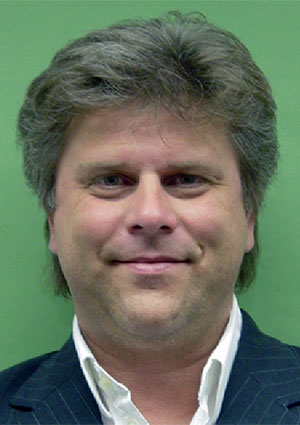
Marius Schmidt is a Professor of Physics at the University of Wisconsin-Milwaukee (UWM), affiliated with the Biophysics Faculty. He holds a Dipl. in Biology from Johannes-Gutenberg-University, Mainz (1990), a Dr. rer. Nat. in Experimental Physics from Technische Universität München (1996), and habilitations in Experimental Physics (2004) and Theoretical, Physical, and Analytical Chemistry (2008). His research focuses on applying physical methods to study biological molecules, particularly using static and time-resolved macromolecular crystallography to investigate protein structure, dynamics, and kinetics. He also develops software for analyzing time-resolved X-ray data and employs spectroscopic methods to corroborate findings. From 1996–2007, Schmidt held positions at Technische Universität München and the University of Chicago before joining UWM in 2007. His work has led to groundbreaking studies on protein dynamics, including femtosecond observation of conical intersections and structural analysis of phytochrome photocycles. His research leverages cutting-edge technologies like X-ray free electron lasers (XFEL) to capture molecular processes at unprecedented speeds and resolutions. Key contributions include structural enzymology studies, membrane protein analysis at XFEL facilities, and the development of mix-and-inject serial crystallography techniques. Despite no explicitly listed awards, his publications reflect significant contributions to biophysics and structural biology. His advising and grants are not detailed in the text, though collaborations with institutions like the University of Chicago and international XFEL facilities suggest extensive network engagement. His affiliation with UWM’s Biophysics Faculty emphasizes interdisciplinary research bridging physics and biology.
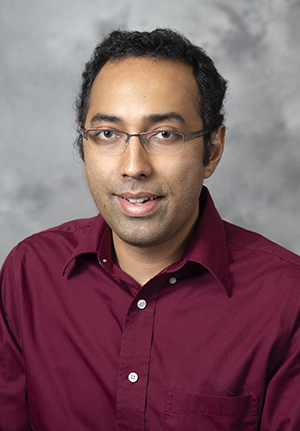
Dr. Jorge Martinez Garcia is a Lecturer in X-Ray Imaging & Diffraction at the Lucerne School of Engineering and Architecture, where he conducts research at the Thermal Energy Storage Competence Center and Lucerne Ct Imaging laboratory. His interdisciplinary background spans physics, materials science, and mechanical engineering. Research expertise includes: Advanced X-ray computed tomography techniques Phase change material characterization Thermal energy storage optimization 3D imaging analysis algorithms His current work focuses on applying high-resolution imaging to study crystallization processes in thermal storage materials, developing novel analysis methods for energy systems, and improving manufacturing processes through non-destructive testing. He maintains active collaborations with industry partners in energy technology and materials science sectors.
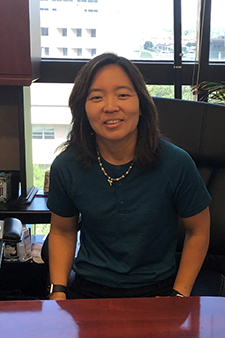
Professor Jane Jiang is a distinguished academic at the University of Huddersfield , affiliated with the School of Computing and Engineering and the Department of Engineering . She specializes in surface metrology, precision engineering, and advanced manufacturing technologies. Her work focuses on optimizing measurement techniques for additive manufacturing, X-ray computed tomography, and optical systems. Research Interests Her research spans surface texture analysis , 3D vision systems , and metrology for smart manufacturing . She develops novel methods for characterizing complex surfaces using techniques like phase measuring deflectometry and chromatic confocal sensors. Her contributions bridge engineering and materials science, emphasizing practical applications in aerospace, biomedical, and industrial sectors. Recent Contributions Her 2025 work includes advancements in freeform optics design, vibration-resistant microscopy, and neural network-based surface characterization. Her studies on XCT measurement for additive manufacturing parts address critical challenges in precision and data analysis. Affiliations & Projects She leads the Centre for Precision Technologies and actively collaborates on EU-funded projects. She organized the 1st International Conference on Metrology and Standard (2024) and contributes to interdisciplinary initiatives in bio-engineering and advanced materials. Grants & Teams Her team includes researchers like Shan Lou and Paul Scott , focusing on metrology for medical implants and aerospace components. She supervises PhD students exploring AI-driven surface specification and manufacturing process optimization.
Prof. Dr. Ahmet ÇETİN is a Professor of Chemistry at Bingöl University's Faculty of Science and Letters, Department of Chemistry. He holds a PhD from Fırat University (2005) and has been affiliated with Bingöl University since 2009, advancing to full professorship in 2015. His academic journey includes roles as a research assistant at Fırat University (1999–2005) and associate professor at Bingöl University (2009–2015). He has led over 12 research projects, focusing on organic synthesis, heterocyclic compounds, and bioactive materials. His work includes collaborations on antioxidant agents, anticancer molecules, and sensor materials. Research Interests: - Synthesis of heterocyclic compounds (triazoles, thiadiazoles) - Bioactive molecules and drug design - Antioxidant and anticancer activity studies - Material characterization and sensor development - Microwave-assisted organic synthesis Notable Publications: - Over 40 peer-reviewed articles in journals like Journal of Molecular Structure , ChemistrySelect , and Bioorganic & Medicinal Chemistry Letters . - Focus areas include cinnamic acid conjugates, phosphinic acid derivatives, and phthalocyanine sensors. Professional Contributions: - Supervised 11 PhD and 8 MSc students. - Served as a reviewer for journals like Phosphorus, Sulfur, and Silicon and Applied Organometallic Chemistry . - Conducted research on Bingöl's endemic plants and their pharmacological potential.
George Wolf is an Associate Professor at the School of Molecular Sciences, Arizona State University (ASU), specializing in high-pressure chemistry, materials synthesis, and carbon sequestration. His work focuses on understanding chemical behavior under extreme conditions, leveraging high-pressure diamond anvil cells for experimental studies. He holds a B.S. in Chemistry from UC San Diego, an M.S. from UC Berkeley, and a Ph.D. in Geophysics from UC Berkeley. Wolf is a recipient of the NSF Presidential Investigator Award and ASU Centennial Teacher of the Year Award. Research Interests: Wolf’s lab explores high-pressure synthesis of novel materials, including graphitic derivatives and carbon sequestration mechanisms. His group uses advanced techniques like NMR, Raman spectroscopy, and X-ray diffraction to study phase transitions and material dynamics. Current projects include developing bionic robotic prosthetics and investigating CO2 mineralization processes. Grants & Collaborations: Wolf has led multiple grants from NSF, DOE, and industry partners, focusing on carbon sequestration, ceramic materials, and high-pressure research. Notable collaborations include work with Argonne National Laboratory and Qynergy Corp. He teaches courses in physical chemistry and research methods, mentoring students in experimental physics and environmental chemistry. Service & Recognition: Wolf actively serves on ASU Senate committees, chairs curriculum development initiatives, and advises undergraduate research programs. His contributions to education and research have been recognized through teaching awards and national conference presentations.
Sergey V. Ushakov is a Research Associate Professor at the School of Molecular Sciences, Arizona State University (ASU), affiliated with the Center for Materials of the Universe. He holds a PhD in Mineralogy from St. Petersburg State University (1998) and has extensive postdoctoral experience in Prof. Alexandra Navrotsky's group at UC Davis (1999–2020). His expertise spans Inorganic and Materials Chemistry, Materials Science, and X-ray Crystallography, with a focus on high-temperature thermodynamics, calorimetry, and refractory materials. Education: PhD in Mineralogy, St. Petersburg State University (1998) MS in Mineralogy, St. Petersburg State University (1994) Research Interests: Dr. Ushakov investigates the thermodynamic and structural properties of materials under extreme conditions. Key areas include high-temperature phase transitions, material stability in extreme environments, and computational modeling of rare earth oxides and ceramics. His work emphasizes experimental techniques like drop-and-catch calorimetry and synchrotron diffraction to study material behavior under high pressure and temperature. Publications: Recent work focuses on high-temperature calorimetry, computational crystal structure prediction, and thermodynamic analysis of oxides, carbides, and nitrides. Notable studies address rare earth oxyphosphates, phase transitions in Y₂O₃ and Er₂O₃, and the development of novel high-temperature ceramics. Grants & Awards: No specific awards or grants are listed in the provided text. Labs/Teams: Associated with the Center for Materials of the Universe at ASU, focusing on interdisciplinary materials research.
Niranjan Shivaram is an Assistant Professor of Physics and Astronomy at Purdue University. He holds a PhD in Physics from the University of Arizona (2013), an MS in Physics from Jawaharlal Nehru University (2007), and a BS in Physics, Chemistry, and Mathematics from St. Joseph's College, Bangalore University (2005). His research focuses on ultrafast electron dynamics using coherent extreme-ultraviolet/soft-x-ray light from high harmonic generation (HHG), with applications in studying molecular systems at femtosecond-to-attosecond timescales. Key areas include conical intersection dynamics, X-ray free-electron lasers (XFEL), and nonlinear optical spectroscopy techniques like optical Kerr-effect spectroscopy. His experimental work combines HHG sources with optical parametric amplifiers to achieve time-resolved measurements. Notable projects involve probing ultrafast dynamics in molecules such as nitrobenzene, CO₂ dimers, and hexagonal boron nitride. He has utilized facilities like the Linac Coherent Light Source (LCLS) for XFEL-based studies and developed novel setups for electric field-resolved spectroscopy. His group also explores attosecond entangled photon generation from metastable helium and advanced signal analysis methods like lock-in amplification and polarization projected density matrices. Research themes span molecular frame analysis, intermolecular Coulombic decay, and nonadiabatic dynamics. Shivaram's contributions include advancing ultrafast transient polarization spectroscopy, velocity-map imaging, and focal overlap gating techniques to enhance signal-to-noise ratios in photoelectron experiments. His work bridges theoretical modeling with cutting-edge experimental setups to uncover fundamental mechanisms in atomic, molecular, and condensed matter systems.
Mustafa Taha Koçyiğit serves as an Assistant Professor at Boğaziçi University, specializing in artificial intelligence and computer vision research. His academic role focuses on advancing deep learning methodologies within the university's engineering or computer science framework. His research interests encompass deep learning, self-supervised learning, efficient training of deep learning and large language models, computer vision, and language-grounded vision systems. He develops computationally and data-efficient techniques to enhance AI model training and deployment across diverse applications. Analysis of his 2020-2025 publications reveals consistent emphasis on training efficiency: accelerating self-supervised learning, optimizing computer vision methods, and applying deep learning to industrial defect detection. His work bridges theoretical advancements with practical aerospace and manufacturing solutions. No scientific awards are documented in the source material. Information regarding student advising, grant funding, laboratory facilities, or research teams remains unavailable.
Coran Watanabe is a Professor in the Department of Chemistry at Texas A&M University, leading the Watanabe Research Group. His research focuses on natural products biosynthesis, particularly the anti-tumor agent azinomycin and AMD-related lipofuscin cycloretinal. He holds a B.S. from the University of Hawaii (1992), a Ph.D. from Johns Hopkins University (1998), and completed postdoctoral training at the Scripps Research Institute (2002). Research interests include: 1) Biosynthesis and mechanism of azinomycin’s DNA cross-linking activity; 2) Role of β-lactoglobulin in cycloretinal synthesis linked to AMD pathogenesis; 3) Development of biochemical methods to activate silent biosynthetic pathways. Key techniques used include genetic engineering, isotopic labeling, fluorescence microscopy, and PET imaging. Recent work highlights cycloretinal’s role in retinal damage, with studies showing BLG’s survival through digestion and blood transport. Grants include Welch and NSF awards. Notable publications (2011-2022) address azinomycin oxygen incorporation, thioesterase mechanisms, and β-lactoglobulin enzymology. Awards: ACS Rising Star (2007), Dreyfus Lectureship (2008), Research Corporation Innovation Award (2003) Lab Members: Includes 5 graduate students, 2 undergraduates, and a postdoc Future Directions: Targeting AMD therapies via BLG inhibition and optimizing azinomycin derivatives
Dr. V. Ashley Villar is an Assistant Professor of Astronomy at Harvard University, specializing in using machine learning and data-driven methods to study stellar explosions, mergers, and transient phenomena. She holds a PhD in Astronomy & Astrophysics from Harvard (2020) and a BS in Physics from MIT (2014). Her research focuses on supernova light curves, circumstellar interactions, and binary progenitor systems. She previously held positions at Columbia University as a Simons Junior Fellow and at Penn State as the inaugural Mercedes Richards Career Development Professor. Her work leverages large-scale surveys like LSST and JWST to analyze transients, develop classification tools (e.g., SPLASH, Superphot+), and model explosion mechanisms. Awards include NSF and Ford Foundation fellowships. She collaborates on projects such as the Young Supernova Experiment (YSE) and contributes to multimessenger astronomy efforts linking gravitational waves to electromagnetic counterparts. Key Projects: YSE Data Release 1 (1,975 supernova classifications), extrabol bolometric light curve estimator, SBI++ inference framework Grants: NSF, Simons Foundation, LIGO collaborations Labs/Teams: Harvard CfA Transient Research Group, LIGO HET Response Collaboration Her recent work includes analyzing GRB 221009A's supernova emission, kilonova light-curve interpolation, and binary merger signatures in double-peaked supernovae. She actively develops machine learning tools for transient classification and anomaly detection in big astronomical datasets.
Stephney Whillier is a Senior Lecturer in the Department of Chiropractic at Macquarie University, specializing in chiropractic education and clinical neuroscience. She holds a PhD in Physiology (2009) and has extensive experience in curriculum development, having led projects on chiropractic education reform and clinical neurology teaching during the pandemic. She serves on the Journal of Chiropractic Education's editorial board and chairs the Chiropractic Research Seminar Series. Her research focuses on student clinical competency, curriculum innovation, and spinal pain management. Notable roles include membership in the Spinal Pain Research Group and the Chiropractic Educators Research Forum (CERF). She received the 2023 Education Excellence Award for her contributions to teaching and curriculum design. Education: PhD in Physiology, Macquarie University (2009) Biology Honours Specialist, University of Toronto (2002) Bachelor of Education, York University (2001) BSc (Honours) in Physiology, University of the Witwatersrand (1994) Key Roles: Post-Graduate Advisor, Department of Chiropractic Convenor of Chiropractic Research Seminar Series Member, Macquarie University Human Research Ethics Committee Research Interests: Her work emphasizes practice-relevant education, curriculum design, and clinical skills in chiropractic practice. She explores how teaching methods (e.g., flipped classrooms, team-based learning) impact student outcomes, particularly in neuroanatomy and clinical decision-making. Her recent studies address pandemic-driven educational adaptations and student preparedness for managing conditions like headache disorders and multiple sclerosis. Publications Trends: Over 35 peer-reviewed articles highlight her focus on chiropractic education research, pandemic teaching innovations, and interdisciplinary approaches to clinical practice. Notable contributions include a 2025 scoping review on global chiropractic education trends and studies on student competency in neurology and headache management. Awards: Education Excellence Award 2023 (shared with colleagues). Grants/Projects: MtCaRF: X-ray outcomes in spinal manipulative therapy (2020–2021) Evaluating chiropractic curriculum development (2018) Neuroanatomy unit design (2013) Labs/Teams: Spinal Pain Research Group and CERF, focusing on clinical education and pain management.
Assoc. Prof. Ali Yavari is an Associate Professor of Computer Science at Swinburne University of Technology's School of Science, Computing and Emerging Technologies. He also serves as Director of the 6G Research and Innovation Lab and Radiofrequency Lab. His academic journey includes a PhD in Computer Science from RMIT University (Australia) and a Master's in Communication Systems from KTH Royal Institute of Technology (Sweden). His research focuses on IoT, Cyber-Physical Systems (CPS), 5G/6G communication technologies, renewable energy systems, and health informatics. He leads collaborative projects funded by entities like Future Energy Exports CRC, Australian Radiation Protection & Nuclear Safety Agency (ARPANSA), and the Victoria State Government. Notable contributions include developing AI-driven IoT platforms for environmental monitoring (e.g., ArtEMon) and cybersecurity frameworks for Industry 4.0. Key achievements include the Victoria Fellowship in Physical Sciences (2020), Vice-Chancellor’s Research Excellence Awards (2021, 2023), and a Best Paper Award at the Hawaii International Conference on System Sciences. His work spans over 65 publications in top journals/conferences such as IEEE Sensors , Sustainable Energy Technologies and Assessments , and Environmental Research . Professional activities include program committee roles at IEEE conferences and memberships in ACM and IEEE (Senior Member). He actively supervises PhD candidates and teaches courses in IoT programming and advanced computing topics.
Associate Professor David Anthony Jacques leads the Structural Virology Group at the EMBL Australia Node for Single Molecule Science, UNSW Sydney. He holds a PhD from the University of Sydney and completed postdoctoral research at the MRC Laboratory of Molecular Biology, Cambridge. His work focuses on structural biology of HIV and other viruses, employing techniques like X-ray crystallography, cryo-EM, and single-molecule fluorescence. Key research areas include HIV capsid structure-function relationships, host-pathogen interactions, and viral immune evasion mechanisms. Education: PhD in Biochemistry, University of Sydney (supervised by Professors Jill Trewhella and Mitchell Guss) BSc (Advanced) (Hons) in Biochemistry and Chemistry Research Interests: Structural basis of viral infection, HIV capsid dynamics, nuclear transport mechanisms, and development of antiviral strategies. His studies reveal how HIV exploits host machinery for replication and how viral proteins interact with cellular cofactors like nucleoporins and innate immune sensors. Grants & Awards: NHMRC Early Career Fellowship (2012-2017) Wellcome Trust Collaborator Award (2019-2024) ARC Discovery Project (DP180101384) Advising & Labs: Supervises Honours, Masters, and PhD students in virology and structural biology. Leads the Structural Virology Group with expertise in advanced microscopy and biophysical techniques. Collaborates on the X-ray Facility for Protein Crystallography funded under ARC LE190100165.
Alda Simões is an Associate Professor in the Department of Chemical Engineering at Instituto Superior Técnico (University of Lisbon). Her research focuses on corrosion protection of metallic materials, electrochemical methods for corrosion study, and development of organic coatings. She teaches courses including Electrochemistry and Energy, Transfer Phenomena I, and Transport Phenomena. Affiliations: Department of Chemical Engineering, Higher Technical Institute Research Interests: Electrochemical corrosion analysis, advanced protective coatings, redox cells for energy storage, surface modification techniques Current research projects involve studying advanced organic redox cells for electricity storage, naphthenic acid effects on steel corrosion using spectroscopic methods, and development of superhydrophobic coatings for aluminum alloys. Her work integrates electrochemical characterization with material performance evaluation under corrosive environments.