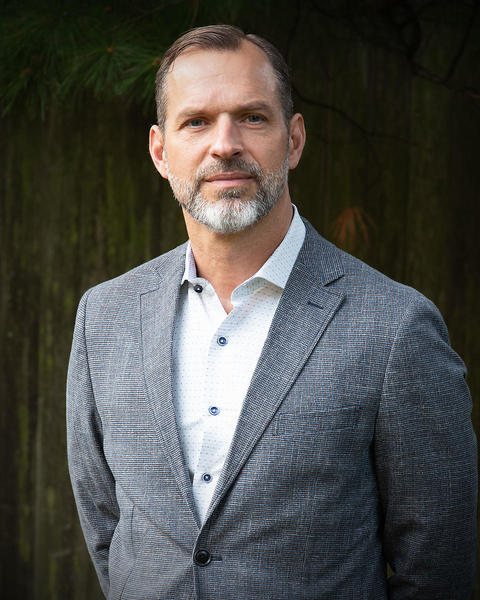
Crystal S. Rudds is an Assistant Professor in the Department of English at the University of Utah, specializing in African American literature and culture. Her research focuses on twentieth-century American and African American fiction, qualitative narratives about urban life and housing, Black Feminisms, and black geography/ecology. PhD in English from the University of Illinois at Urbana-Champaign (2016) MFA in Creative Writing from Indiana University-Bloomington (2004) BA in Communications with minors in French and Theatre from Wake Forest University (1999) Her scholarly work examines the intersection of literature and urban environments, particularly through public housing fiction. She uses interdisciplinary approaches combining qualitative research with literary analysis, emphasizing community engagement and the phenomenological experiences of residents in urban spaces. Her publications address topics like the historical context of public housing narratives and the concept of 'the black interior' as a framework for understanding spatial identity. Rudds has received prestigious honors, including the David D. Anderson Award for Midwestern Literary Studies and the Mary Blinn Poetry Prize. She is also a Faculty Research Fellow and Intersectionality Pedagogy Fellow at the University of Utah. Her teaching philosophy integrates experiential learning and community-focused methods, with courses such as African Amer Lit 2, Seminar in Lit. Study, and Studies Af Amer Lit. She emphasizes archival research, site visits, and performance-based learning to empower students as co-creators of knowledge.
Emily C. Bartels is a Professor of English at Rutgers University specializing in early modern literature and culture, with particular expertise in Shakespearean and non-Shakespearean drama. She has served as director, and is now dean, of the Middlebury Bread Loaf School of English since 2010, a summer Master's program designed for K-12 English teachers. Professor Bartels received her BA from Yale University and both her MA and PhD from Harvard University. Her academic background positioned her to become a leading scholar in Renaissance literature studies. Her research examines questions of race, cross-cultural relations, gender, genre, and performance in early modern English drama. Professor Bartels is renowned for her groundbreaking work on Shakespeare's Othello and Christopher Marlowe's plays, analyzing how these texts represent cultural and racial difference. She has significantly contributed to postcolonial approaches to early modern literature, revealing how English drama engaged with global encounters and representations of the 'other' during the Renaissance period. Her scholarship demonstrates how early modern writers both reflected and shaped contemporary attitudes toward difference, particularly regarding race, religion, and national identity. Professor Bartels' publications reveal a consistent scholarly trajectory examining racial and cultural representation in early modern England. Her work spans from detailed analyses of specific plays like Hamlet and Julius Caesar to broader studies of how England conceptualized Africa and non-Christian cultures during the Renaissance. A recurring theme throughout her career is the analysis of how early English drama both reflected and shaped contemporary attitudes toward difference, particularly regarding race, religion, and national identity. Roma Gill Prize for Best Work on Christopher Marlowe (1993-94) for Spectacles of Strangeness: Imperialism, Alienation, and Marlowe Board of Trustees Fellowship for Scholarly Excellence (1993) School of Arts and Sciences Award for Distinguished Contributors to Undergraduate Education (2008 & 1993) Warren I. Susman Award for Excellence in Teaching (2008) Solmsen Fellowship at the Institute of Research in the Humanities, University of Wisconsin (1995) Black Atlantic Project fellowship from the Rutgers Center for Historical Analysis Professor Bartels has demonstrated exceptional commitment to both research and teaching excellence. She has developed innovative courses exploring the intersections of literature, history, and cultural studies, including undergraduate seminars on Othello and Hamlet, and graduate courses on Shakespeare Page and Stage. Her administrative role as dean of the Middlebury Bread Loaf School of English demonstrates her commitment to education beyond traditional university settings. Her fellowships from prestigious institutions indicate successful grant acquisition throughout her distinguished career. Professor Bartels has been actively involved with the Shakespeare Association of America and has collaborated with international scholars like Emma Smith of the University of Oxford. Her work has positioned her at the forefront of conversations about early modern literature, race studies, and postcolonial approaches to Renaissance drama, influencing how scholars understand the intersections of literature, race, and cultural identity in the early modern period.
Professor Brian Dillon is the Professor of Creative Writing and Director of Creative Writing at Queen Mary University of London's School of English and Drama. Previously, he served as Head of the Writing Programme at the Royal College of Art. He holds a PhD from the University of Kent (1999) and has authored numerous books blending creative nonfiction, literary criticism, and art analysis. His research focuses on the essay form, autobiography, literature-visual arts intersections, and writing about illness. Key publications include *Suppose a Sentence* (2020), an experimental essay collection analyzing literary sentences, and *Affinities* (2023), exploring photographic imagery. Current projects include a study of Kate Bush's *Hounds of Love* and an essay on education. Dillon frequently contributes to *The Guardian*, *London Review of Books*, and *Artforum*, and has curated exhibitions for Tate and Hayward Galleries. His awards and fellowships are not explicitly listed here, but his work has been widely exhibited and published internationally. He supervises doctoral students in creative writing and related fields, emphasizing interdisciplinary approaches to literature and art. Public engagement includes talks at institutions like the British Museum and Pompidou Centre, and appearances on BBC Radio 3 and RTE Radio. His work bridges academic critique with accessible creative writing, making complex themes engaging for broader audiences.
David Harvey is a Distinguished Professor of Anthropology and Geography at the City University of New York (CUNY) Graduate Center and Director of Research at the Center for Place, Culture and Politics. He has been teaching and writing about Karl Marx’s Capital for over 50 years, earning recognition as a leading Marxist scholar and urban theorist. Research Interests Cultural anthropology Political economy Urbanization and capitalist development Environmental justice Geographical theory Advanced capitalist countries Publications & Trends Harvey’s work spans Marxist theory, neoliberalism, and urban studies, with recent focus on Grundrisse and capitalist contradictions. His scholarship connects historical materialism to contemporary crises, emphasizing spatial fixes, environmental limits, and anti-capitalist resistance. Awards & Honors Outstanding Contributor Award (Association of American Geographers) Centenary Medal (Royal Scottish Geographical Society, 2002) Isaac and Tamara Deutscher Book Prize (2010) for The Enigma of Capital Honorary degrees from University of Bristol, Goldsmith College, Kent, Buenos Aires, Roskilde, Uppsala, and Ohio State University
John Gallagher is Associate Professor in English and Information Sciences at UIUC. His research examines how writers adapt to participatory audiences in digital environments, including social media interactions and AI writing tools. Using case studies and computational methods, he explores algorithmic audiences, ethical implications of AI, and technical communication in institutional contexts. He teaches courses in professional writing, digital rhetoric, and research methodologies. Recent projects analyze content creators' narratives about platform algorithms, inclusive emoji design, and academic integrity challenges posed by generative AI.
Costanza Beltrami is a Senior Lecturer at Stockholm University in the Department of Culture and Aesthetics. She is a dedicated art historian with a focus on Gothic art and architecture of the late fifteenth and early sixteenth centuries, particularly in the Spanish region of Castile and its international connections. Her research interests include architectural drawings, collaboration, transculturation, and temporality in architecture. Dr. Beltrami teaches courses on Medieval and Renaissance art and architecture from Cordoba to Florence. Her academic background includes studying Art History at the Courtauld Institute of Art in London and working at the University of Oxford/St Catherine's College before joining Stockholm University. Her research has focused on late-Gothic architecture, including a monumental drawing of a tower from Rouen cathedral and ornament prints as artists' models. She is Reviews Editor for the Journal of the British Archaeological Association and has completed her PhD thesis on Juan Guas (active 1453–1496), the leading architect of late fifteenth-century Spain. She is currently working on a book project about collaboration, artistic identity, and the geographies of exchange in late-Gothic Castile. Her co-edited volume "Art, Travel and Exchange between Iberia and Global Geographies, 11400–1550" challenges traditional narratives about Iberian art history and emphasizes multi-directional cultural exchange. Dr. Beltrami's recent research includes editing a special issue on portable drawings and paper in Medieval and Gothic architecture. Her work explores how architectural practices in Castile demonstrate fascinating questions regarding migrant networks, cultural contact, the meanings of architecture, and the role of art in debates on national identity from the 15th century to the present.
John H. Arnold is Professor of Medieval History at the University of Cambridge and Fellow of King's College. Educated at the University of York (BA History, D.Phil Medieval Studies), his academic career includes positions at University of East Anglia and Birkbeck, University of London before joining Cambridge in 2016. He holds editorial roles at Cultural and Social History, Past & Present, and directs publication series at both York Medieval Press and Cambridge University Press. Arnold's research centers on medieval religious culture, particularly lay belief, heresy, inquisition, and the history of gender. His monograph 'The Making of Lay Religion in Southern France' (2024) exemplifies this focus. Current projects investigate the social history of confession and the repression of usury. Analysis of Arnold's 15 most recent publications reveals consistent engagement with medieval religious dissent and belief systems. Key themes include: reinterpretations of heresy trials (2019), sensory dimensions of faith (2018), historiographic debates about Catharism (2016), and methodological examinations of archival sources (2022). His work frequently employs theoretical frameworks from sociology and philosophy to reinterpret medieval religious conflict. Arnold maintains active research networks through editorial leadership and supervision. His Cambridge Studies in Medieval Life and Thought series promotes innovative scholarship in medieval history.
Daniel Medin serves as Professor at The American University of Paris within the Department of Comparative Literature and English History and Politics, joining the faculty in January 2010 after teaching positions at Stanford University, Washington University in St. Louis, and Free University Berlin. His academic credentials include: PhD, Washington University in St. Louis MA, Washington University in St. Louis BA, University of Connecticut Professor Medin's research centers on contemporary international fiction and the global reception of Franz Kafka , with significant contributions to Central European literary studies. His scholarly focus extends to autobiographical writing , editorial practices for translated fiction , and small prose forms , consistently examining cross-cultural literary exchange through interdisciplinary lenses that bridge literature, history, and translation theory. Analysis of his recent publications reveals a pronounced trajectory toward edited volumes spotlighting global literary voices across European, Asian, and Latin American traditions. His work demonstrates sustained engagement with translation as cultural mediation and Kafka's enduring legacy in contemporary writing, frequently connecting literary analysis with musical composition through collaborations with composers and musicians. His distinguished recognition includes: Alexander von Humboldt Foundation Fellowship As director of the Center for Writers and Translators and editor of the Cahiers Series, Professor Medin cultivates transnational literary networks through institutional leadership rather than traditional grant-funded research. His extensive involvement with literary prizes—including the International Booker Prize and European Union Prize for Literature—complements his editorial work at publications like Music & Literature and Schreibheft. He actively shapes contemporary discourse through the Center for Writers and Translators, organizing events that connect authors, translators, and scholars across linguistic boundaries. His recent festival appearances at Cheltenham, Bergen, and Dublin highlight ongoing commitment to examining Kafka's relevance and fostering dialogue about global literary trends.
Dr. Simon A. Morrison is a Senior Lecturer in the Division of Communication, Screen & Performance within the Faculty of Arts, Humanities and Social Sciences at the University of Chester. He serves as Programme Leader for the Music Journalism degree, which he helped design, build and deliver from its first cohort in 2014. With 25 years of experience as a writer, broadcaster, and academic, Morrison brings extensive industry knowledge to his teaching and research, having worked as a music journalist reporting from locations worldwide including Beijing, Brazil, Moscow, and Marrakech. Dr. Morrison holds a PhD from the University of Leeds (completed 2018), an MA from the University of Manchester (1995-1997), and a BA Hons from the University of Manchester (1989-1992). Prior to his position at Chester, he worked as an Associate Lecturer at Manchester Metropolitan University (2012-2014) and as a Visiting Lecturer at Leeds University (2011-2013). His academic journey follows a substantial career in media where he presented TV for Rapture TV, hosted radio shows in Ibiza, produced and presented for Kiss Radio, and appeared on BBC Breakfast and BBC 5 Live. Dr. Morrison's research centers on the intersection of words and music , with particular focus on Popular Music , Musico-Literary Intermediality , and Electronic Dance Music Culture . His work explores how music subcultures, particularly rave and dance music scenes, are represented in literature and journalism. He examines the connections between different countercultural movements, notably drawing parallels between the Beat Generation writers and contemporary 'Chemical Generation' authors who write about club culture. His research also investigates the relationship between music journalism and subcultural movements across different historical periods. His recent publications reveal a clear trajectory connecting historical dance music developments across continents and eras. Morrison's work traces the evolution of electronic dance music from its American roots in Chicago and Detroit through its transatlantic journey to Europe and back again, examining how cultural exchange shaped musical innovation. His analyses of Pink Floyd demonstrate how rock bands interact with media landscapes, while his investigations of music journalism document the changing nature of music criticism in digital eras. The recurring theme across his scholarship is the examination of how subcultural experiences are translated into written form, whether through journalism, fiction, or academic analysis. Dr. Morrison actively supervises undergraduate dissertation projects and Negotiated Study production projects across all three years of undergraduate study. He has successfully supervised an MRes project to completion and examined PhDs (including one internal and two external, one being an Australian PhD by Artefact & Exegesis). He has served as an External Examiner for Music Journalism programs at Southampton Solent University (2016-2019) and BIMM London, Birmingham and Manchester (2016-2020). His teaching spans modules including Introduction to Journalism, Live Journalism, Dancing About Architecture: Popular Music Media, Histories and Technologies, The Cultural Politics of Music Journalism, The Politics of Social Media, Magazine Publishing and Music PR and Promotional Writing.
Jacqueline Vayntrub is an Associate Professor of Hebrew Bible at Yale University's Yale Divinity School (YDS). Her expertise spans the Hebrew Bible, wisdom literature, biblical poetry, philology, and the reception history of biblical scholarship. She holds a PhD in Near Eastern Languages and Civilizations from the University of Chicago (2015), along with earlier degrees from UCLA and Hebrew University. Dr. Vayntrub’s research examines biblical genres within ancient Near Eastern literary contexts, focusing on how textual values evolve through transmission and reception. Her first monograph, Beyond Orality: Biblical Poetry on its Own Terms (Routledge, 2019), critiques scholarly assumptions about biblical poetry’s oral origins. Her current projects include Reframing Biblical Poetry (Yale U.P.) and Seeking Eternity , exploring transmission and mortality in biblical texts. She directs the international Renewed Philology working group and chairs SBL units in Hebrew Bible and philology. Vayntrub has published widely in journals like Harvard Theological Review and Catholic Bible Quarterly , and her work has been reviewed at prestigious institutions including Yale and NYU. She received a 2019-20 Katz Center fellowship for her Seeking Eternity project. Her academic service includes organizing conferences at Yale, Harvard, and Princeton, and editorial roles for Studies in Cultural Contexts of the Bible . Her teaching and scholarship emphasize critical engagement with ancient texts and their enduring cultural impact.
Alexander Tulin is an Associate Professor in the Department of English at Howard University, within the College of Arts & Sciences. He has been a faculty member at Howard since 1990, originally in the Department of Classics, which he chaired from 2017 to 2021 before its closure led to his transition to the English Department. Institution: Howard University School: College of Arts & Sciences Department: Department of English Academic Rank: Associate Professor Email: atulin@Howard.edu Education: PhD in Classics, Columbia University, 1990 Dr. Tulin's research and teaching span classical antiquity and modern literature. His primary scholarly interests include Ancient Greek Philosophy, Plato, Ancient Law, and Rhetoric, with a current focus on the interstices between Antiquity and Modernity. In the English Department, his teaching centers on Modernism, modern art from 1870–1950, and the 20th-century novel in Europe and America. His publications reflect a deep engagement with classical philosophy and textual analysis. The most recent works show a sustained interest in Platonic dialogues, Socratic method, philosophical rhetoric, and the interpretation of ancient legal and literary texts. He has also contributed numerous scholarly reviews, demonstrating active participation in the academic discourse of classical studies. Scientific Awards: No specific awards or honors are mentioned in the provided text. Advising and Grants: There is no information available regarding students advised, research grants, or funding received. Labs and Research Teams: No information is provided about laboratories, research groups, or collaborative teams associated with Dr. Tulin.
Jesse Schotter is an Associate Professor of English at Ohio State University and a faculty member in the Film Studies Program. His academic work bridges literary scholarship and creative writing, with a focus on twentieth-century literature and media studies. He holds a PhD from Yale University (2011) and a BA from Yale (2003). PhD, Yale University, 2011 BA, Yale University, 2003 Schotter specializes in modernist literature and culture, film theory, and media histories of the twentieth century. His research explores the intersections between traditional literary forms and emerging media technologies, particularly examining how debates about ancient media like Egyptian hieroglyphics influenced twentieth-century understandings of new media such as film and phonography. He investigates how literary modernism engages with questions of media transitions, narrative form, and cultural memory across different historical contexts. His scholarly output reveals consistent engagement with media theory, adaptation studies, and modernist experimentation. Schotter's work demonstrates how literary texts negotiate technological change, with particular attention to narrative structure across different media forms. His publications span traditional academic journals like Genre and James Joyce Quarterly to more accessible venues like Full Stop and Electric Lit , showing his commitment to reaching both academic and public audiences. Finalist, Modernist Studies Association First Book Prize Schotter teaches a diverse range of courses including modernism and media, silent film, ghosts and trauma, contemporary British fiction, introductory film studies, children's fantasy literature and video games. He co-organized the Modernist Studies Association Conference in Columbus in 2018, demonstrating active engagement with the broader academic community. His teaching philosophy appears to integrate his research interests, connecting historical literary forms with contemporary media experiences for students. Schotter maintains an active presence both in academic scholarship and creative writing, with fiction published in literary journals. His work demonstrates the productive tension between scholarly analysis and creative practice, with his research on media history informing his creative writing and vice versa.
Mark Coeckelbergh is a Professor of Philosophy at the University of Vienna, specializing in the philosophy of technology, AI ethics, and robot ethics. He is affiliated with the Department of Philosophy and the Research Network Data Science at the University of Vienna. In addition to his academic position, Coeckelbergh has held significant roles including Former President of the Society for Philosophy and Technology (SPT) and Member of the European Commission's High-Level Expert Group on Artificial Intelligence (AI HLEG). His research focuses on the ethical, political, and philosophical implications of emerging technologies, particularly artificial intelligence and robotics. Coeckelbergh has published extensively in these areas, authoring influential books such as Robot Ethics (2022), The Political Philosophy of AI (2022), and Why AI Undermines Democracy and What To Do About It . His work explores how AI systems affect democratic processes, human agency, and social relationships. Recent publications demonstrate a strong focus on the relationship between AI, democracy, and ethical governance, examining how AI systems can both threaten and potentially enhance democratic processes through algorithmic transparency and participatory design approaches. Finalist of the World Technology Award 2017 Coeckelbergh teaches various courses including 'Introduction to Philosophy of LLMs,' 'LLMs and the Future of Writing,' 'Ethics and Robotics,' and 'Global Governance of AI.' He has supervised numerous students working on topics related to technology ethics and philosophy. He has been involved in several major research projects including H2020 PERSEO, WWTF Democracy Responsible Entrepreneurship, and FP7 DREAM (Development of Robot-Enhanced therapy for children with Autism spectrum disorders). Coeckelbergh has also announced upcoming guest professorships at the Institute of Philosophy of the Czech Academy of Sciences and Uppsala University, where he will work on environmental and technology ethics projects.
Charles M. Stang is Professor of Early Christian Thought at Harvard Divinity School and Director of the Center for the Study of World Religions, positions he has held since joining the faculty in 2008 and becoming director in 2017 respectively. His academic home is firmly within Harvard University's religious studies ecosystem, where he has established himself as a leading scholar in ancient Christian thought and Mediterranean religious history. His educational background includes an AB from Harvard College, an MDiv from the University of Chicago, and a ThD from Harvard Divinity School. This rigorous training across prestigious institutions has equipped him with interdisciplinary perspectives that inform his boundary-crossing scholarship. Stang's research interrogates the intersections of early Christian thought with broader Mediterranean philosophical traditions, with particular emphasis on apophatic theology, Gnosticism, and Syriac Christianity. His work consistently challenges reductionist approaches to religious studies, advocating instead for what he terms an 'expansive anthropology, ontology and epistemology' that recognizes religion's capacity to transcend mundane frameworks. He has developed a distinctive theoretical framework around 'transcendence and transformation'—concepts he argues should form the core of religious studies in the contemporary academy. His publications reveal a trajectory from focused historical studies of early Christian texts toward more expansive theoretical interventions in religious studies methodology. While his early work centered on figures like Dionysius the Areopagite and Evagrius Ponticus, his recent scholarship increasingly engages with contemporary questions about religion's role in the humanities and the urgent need for what he calls 'superhumanities' that acknowledge dimensions of reality beyond conventional academic frameworks. Manfred Lautenschläger Award for Theological Promise (2013) for Apophasis and Pseudonymity in Dionysius the Areopagite As Director of the Center for the Study of World Religions, Stang has launched the 'Transcendence and Transformation' initiative, positioning the center as both a scholarly hub and a conceptual beacon for reimagining religious studies. His vision frames religious studies not as a marginal discipline but as essential to revitalizing the humanities through its unique capacity to engage with dimensions of reality that conventional academic frameworks often overlook. The Center functions as what Stang describes as 'a beacon, a harbour, and a record' for this reconceptualization of religious inquiry.
Sophie Salvo serves as an Assistant Professor in the Department of Germanic Studies at the University of Chicago, where she has taught since 2018. Holding a Ph.D. from Columbia University (2017), her scholarship bridges German literary studies, gender theory, and the history of linguistic thought, with primary focus on the nineteenth century and extending to contemporary political literature. Her acclaimed monograph Articulating Difference: Sex and Language in the German Nineteenth Century (University of Chicago Press, 2024) examines how gendered conceptions of language shaped intellectual discourse and literary production. Education Ph.D. in Germanic Studies, Columbia University, 2017 Salvo's research investigates the historical interplay between sex, gender, and language in German intellectual history, tracing how gendered tropes influenced linguistic analysis from Grimm's grammatical gender theories to modernist literary experiments. Her work reveals how patriarchal frameworks became embedded in linguistic science while highlighting women's contributions to language studies despite systemic exclusion. Current projects include an edited volume on the 'Reinvention of Patriarchy' around 1800 and a book analyzing twenty-first century political novels across the ideological spectrum. Her 2019-2024 publications demonstrate consistent interdisciplinary rigor, connecting historical linguistics with feminist theory and political analysis. Articles like 'Father is Always Uncertain' (2024) on Bachofen's patriarchal epistemology and 'The Sex of Language' (2021) on Jacob Grimm collectively chart how gendered assumptions permeated linguistic discourse, influencing both nineteenth-century scholarship and contemporary debates about inclusive language. Salvo actively mentors graduate research on topics including sexuality in Realism, women's writing, Holocaust representations in East German textbooks, and the rise of right-wing politics in post-reunification Germany. As co-organizer of the German Studies Scholarly Seminar at the Newberry Library, she facilitates interdisciplinary dialogue through regular events featuring scholars from institutions nationwide. Her teaching encompasses courses on Robert Musil, gender and sexuality studies, and contemporary political literature, reflecting her commitment to connecting historical analysis with urgent contemporary issues.