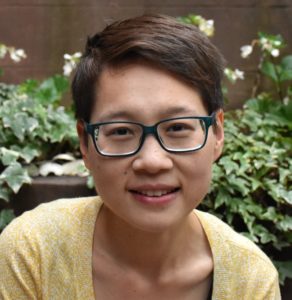
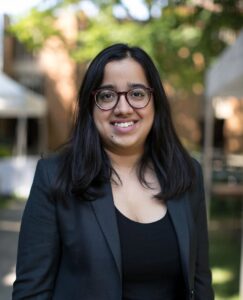
Crystal S. Rudds is an Assistant Professor in the Department of English at the University of Utah, specializing in African American literature and culture. Her research focuses on twentieth-century American and African American fiction, qualitative narratives about urban life and housing, Black Feminisms, and black geography/ecology. PhD in English from the University of Illinois at Urbana-Champaign (2016) MFA in Creative Writing from Indiana University-Bloomington (2004) BA in Communications with minors in French and Theatre from Wake Forest University (1999) Her scholarly work examines the intersection of literature and urban environments, particularly through public housing fiction. She uses interdisciplinary approaches combining qualitative research with literary analysis, emphasizing community engagement and the phenomenological experiences of residents in urban spaces. Her publications address topics like the historical context of public housing narratives and the concept of 'the black interior' as a framework for understanding spatial identity. Rudds has received prestigious honors, including the David D. Anderson Award for Midwestern Literary Studies and the Mary Blinn Poetry Prize. She is also a Faculty Research Fellow and Intersectionality Pedagogy Fellow at the University of Utah. Her teaching philosophy integrates experiential learning and community-focused methods, with courses such as African Amer Lit 2, Seminar in Lit. Study, and Studies Af Amer Lit. She emphasizes archival research, site visits, and performance-based learning to empower students as co-creators of knowledge.
Crystal S. Rudds is an Assistant Professor of African American literature and culture in the Department of English at the University of Utah, specializing in twentieth-century American and African American fiction, urban life narratives, Black Feminisms, and black geography/ecology. She earned her PhD in English from the University of Illinois at Urbana-Champaign (2016) and MFA in Creative Writing from Indiana University-Bloomington (2004). Her research explores intersections between literary analysis and community engagement, focusing on urban spatiality, public housing representation, and black interiority. She has published works analyzing Frank London Brown and Jasmon Drain's housing narratives, digital archiving practices, and pedagogical identity evolution. Key grant activities include: Gathering, Sewing, Giving: Chronopolitics and Black Women's Quilting (TRIC/Mellon Foundation, 2023) Utah Presidential Leadership Fellowship (2023) Recognitions: David D. Anderson Award for Midwestern Literary Studies (2023) Mary Blinn Poetry Prize (2022) University of Utah Fellowships (2022) Teaching activities feature: Experiential learning with archival documents Historic site visits Performance-based literary analysis Community-focused pedagogy
Sunny Xiang is an Associate Professor of English at Yale University, where she teaches and conducts research at the intersection of literature, race, war, and empire. Her work critically examines U.S. military empire in Asia and the Pacific, particularly through aesthetic, cultural, and documentary forms from the mid-twentieth century. She is affiliated with the Department of English in the Faculty of Arts and Sciences at Yale. Ph.D., University of California, Berkeley B.A., Northwestern University Her research focuses on the cultural genealogies of American empire, with an emphasis on how war and militarism shape perception, knowledge, and everyday life. Key areas include Cold War aesthetics, Asian American studies, Pacific studies, critical militarization studies, and feminist science studies. She is particularly interested in how literary and cultural forms reveal the intimate, quotidian, and often invisible operations of empire. Her publications span journals such as ASAP/Journal , Radical History Review , PMLA , and Public Books . Her first book, Tonal Intelligence: The Aesthetics of Asian Inscrutability During the Long Cold War (Columbia University Press, 2020), explores the visual and narrative trope of Oriental inscrutability in relation to U.S. intelligence operations. Her current project, Chemical Apophenia: Air Conspiracies and Skin Connections in the Toxic Tropics , investigates how WWII military science in the Pacific generated new paradigms for detecting toxicity. The articles reflect a consistent engagement with themes of militarized domesticity, aesthetic excess, diasporic memory, and the entanglement of fashion, food, and war in imperial contexts. Mundane Militarisms: War, Archives, and Everyday Life (2024) Militarized Comfort: How to Feel Naked While Wearing Clothes (2023) Bikinis and Other Atomic Incidents: The Synthetic Life of the Nuclear Pacific (2022) Wars of Contemporary Life (2020) Global China as Genre (2019) Sunny Xiang has not been mentioned in relation to any scientific awards or fellowships in the provided text. She teaches courses such as War and Everyday Life, Readings in Comparative World English Literatures, and The Teaching of English. While her advisees or research teams are not listed, her scholarship demonstrates deep engagement with interdisciplinary methodologies and collaborative work, such as with the Mundane Militarisms Collective. She has not indicated any lab affiliations, but her research involves critical archival work and analysis of visual, literary, and cultural materials.
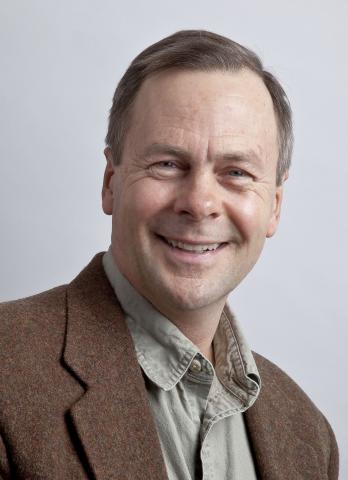
Stephen Cushman is the Robert C. Taylor Professor at the University of Virginia, specializing in American literature and poetry. His interdisciplinary work bridges Civil War studies, 19th-century poetry, and environmental literature. He earned his Ph.D. (1982), M.Phil. (1981), and M.A. (1980) from Yale University, and a B.A. from Cornell University (1978). His research explores how literary forms shape historical understanding, particularly through works like *The Generals' Civil War* (2021) and *Belligerent Muse* (2014). He has edited major volumes such as *The Princeton Handbook of Poetic Terms* (2016) and *Civil War Writing* (2019). His poetry collections include *Keep the Feast* (2022) and *Hothead* (2018), blending personal reflection with historical inquiry. Cushman has received prestigious awards including the Cavaliers' Distinguished Teaching Professorship (2014–2016) and the All-University Teaching Award (1992). His writing often intersects with Virginia’s literary landscape, as seen in *After Great Pain, Dickinson in Charlottesville* (2018). He actively engages with environmental themes in works like *Pope Francis, Laudato Si’, and U.S. Environmentalism* (2017). His articles critically analyze figures like Lincoln, Sherman, and Thoreau, while exploring modernist engagements with biblical texts and Civil War memory. He serves as a leading voice in American literary history, emphasizing the interplay between form, content, and cultural context.
Jesse Schotter is an Associate Professor of English at Ohio State University and a faculty member in the Film Studies Program. His academic work bridges literary scholarship and creative writing, with a focus on twentieth-century literature and media studies. He holds a PhD from Yale University (2011) and a BA from Yale (2003). PhD, Yale University, 2011 BA, Yale University, 2003 Schotter specializes in modernist literature and culture, film theory, and media histories of the twentieth century. His research explores the intersections between traditional literary forms and emerging media technologies, particularly examining how debates about ancient media like Egyptian hieroglyphics influenced twentieth-century understandings of new media such as film and phonography. He investigates how literary modernism engages with questions of media transitions, narrative form, and cultural memory across different historical contexts. His scholarly output reveals consistent engagement with media theory, adaptation studies, and modernist experimentation. Schotter's work demonstrates how literary texts negotiate technological change, with particular attention to narrative structure across different media forms. His publications span traditional academic journals like Genre and James Joyce Quarterly to more accessible venues like Full Stop and Electric Lit , showing his commitment to reaching both academic and public audiences. Finalist, Modernist Studies Association First Book Prize Schotter teaches a diverse range of courses including modernism and media, silent film, ghosts and trauma, contemporary British fiction, introductory film studies, children's fantasy literature and video games. He co-organized the Modernist Studies Association Conference in Columbus in 2018, demonstrating active engagement with the broader academic community. His teaching philosophy appears to integrate his research interests, connecting historical literary forms with contemporary media experiences for students. Schotter maintains an active presence both in academic scholarship and creative writing, with fiction published in literary journals. His work demonstrates the productive tension between scholarly analysis and creative practice, with his research on media history informing his creative writing and vice versa.
Professor Ben Bollig holds the position of Professor of Latin American Literature and Film at the University of Oxford's Faculty of Medieval and Modern Languages. He is also a Fellow and Tutor in Spanish at St Catherine's College, and an Associate Lecturer at St John's College. His research focuses on contemporary Latin American literature and film, with a specialization in Argentine poetry and its cinematic adaptations. He has authored or edited numerous books, including Moving Verses and The Poetry-Film Nexus in Latin America , and serves as editor of the Journal of Latin American Cultural Studies . Teaching responsibilities include the entire Spanish course for first-year students and Latin American literature and film options for upper years. He supervises MPhil/DPhil students in Latin American cultural studies, particularly Southern Cone literature and film. His work explores intersections of poetry, film, translation, and postcolonial theory, with a focus on Argentina's cultural production. He has published widely on topics such as poetic adaptation, political literature, and cultural activism. Key contributions include co-editing Latin American Cultural Studies: A Reader and producing translated volumes of Cristian Aliaga's work. His research themes span comparative literature, postcolonial studies, environmental humanities, and global cultural dynamics. He is actively engaged in academic leadership roles within his field, maintaining a strong international profile in cultural studies and literary criticism.
Dr. Apala Das is a Research Fellow at Bilkent University, specializing in 20th-century global anglophone literatures, modernist poetry and poetics, and postsecularism studies. Her academic work bridges postcolonial theory, South Asian literatures, and political theology within transnational frameworks. Her educational background includes a PhD from the University of Toronto, completed in 2024. Dr. Das's research centers on modernist asceticism as a critical lens for examining literary experiments by figures like Rabindranath Tagore, Hilda Doolittle, Aurobindo Ghose, and May Sinclair. She investigates how these writers negotiated ascetical ideals within colonial and postcolonial contexts, connecting literary form to biopolitics, secular citizenship, and ethno-nationalist ideologies. Her approach synthesizes postcolonial ethics, comparative literature, and political theology to analyze transnational modernist aesthetics. Her publications from 2018-2024 reveal consistent engagement with mobility, hybridity, and spiritual dimensions across literary traditions. Early work analyzed mobility in ethnography and Romantic-era travel, evolving toward contemporary meta-minimalist fiction and systematic studies of asceticism in global modernism. Dr. Das has received significant recognition for her scholarship: Ontario Graduate Scholarship (awarded twice) Chancellor Jackman Junior Fellowship from the Jackman Humanities Institute, University of Toronto Khashu Award for Tagore Studies from the Institute for South Asia Studies, UC Berkeley As a recent PhD graduate, she has not yet taken on formal graduate advising roles. Her research has been supported by competitive doctoral grants including the Ontario Graduate Scholarships and Chancellor Jackman Junior Fellowship, with current work funded through the Bilkent University/British Institute at Ankara Joint Fellowship. Dr. Das is actively developing her book manuscript "Modernist Asceticisms: Discipline, Form, and the Postsecular in the Transnational Twentieth Century" while participating in academic initiatives like the 2024 book launch for "Mind and Embodiment in Late Victorian Literature".
University of North Carolina at Chapel HillUnited States
Matthew Taylor is an Associate Professor in the Department of English at the University of North Carolina at Chapel Hill. He holds a PhD and MA in English from Johns Hopkins University, alongside a BA in Honors English and Biology from Trinity University. His research bridges environmental humanities, critical theory, and American literature across the nineteenth and twentieth centuries. PhD, English, Johns Hopkins University MA, English, Johns Hopkins University BA, Honors English and Biology, Trinity University Taylor’s work interrogates posthumanism, biopolitics, science and technology studies, and critical race theory through literary analysis. He explores intersections between literature and science, medicine, philosophy, and transatlantic cultural dynamics, with a focus on aesthetics and speculative genres like science fiction. His publications include the book Universes without Us: Posthuman Cosmologies in American Literature and articles analyzing planetary limits, contagious emotions, and materialist specters. The articles reflect his engagement with posthuman cosmologies, science-literature entanglements, and critical race perspectives on historical narratives. Teaching & Awards Deans Teaching Fellowship, Johns Hopkins University (2007) Faculty Fellowship, UNC Institute for the Arts & Humanities (2017) Schwab Academic Excellence Award (2016) IBM Junior Faculty Development Award (2009) James Gargano Award for Best Scholarly Essay (2007) Taylor teaches courses such as "Introduction to Literary Criticism," "The American Novel: Popular Genres," "Future Perfect," and "Medicine, Literature, Culture," reflecting his interdisciplinary expertise.
Aida Levy-Hussen is an Associate Professor in the Department of English Language and Literature at the University of Michigan's LSA (Literature, Science, and the Arts) College. Her research focuses on African American literature, trauma studies, gender and sexuality studies, and 20th-century American literature. She holds an A.B. from Harvard University (2003) and a Ph.D. from Emory University (2009). Levy-Hussen's work interrogates the intersections of race, memory, and cultural expression. She examines how African American writers engage with historical trauma, particularly slavery's legacies, and explores themes like boredom, affect, and narrative form in contemporary works. Her recent scholarship includes analyses of Ishmael Reed’s postmodern historiography and Spike Lee’s satirical film Bamboozled . She currently teaches courses on African American literature, Toni Morrison, and narrative theory. Her office is located in 3232 Angell Hall, with regular appointment-based office hours. No scientific awards are explicitly mentioned, but her prolific publication record reflects sustained academic impact in literary studies. Levy-Hussen’s writing emphasizes interdisciplinary approaches, blending literary criticism with cultural theory, psychoanalysis, and historical analysis. Her book How to Read African American Literature (2016) provides a transformative framework for interpreting post-civil rights fiction.
David Der-Wei Wang serves as Edward C. Henderson Professor of Chinese Literature and Comparative Literature at Harvard University, holding dual appointments in the Department of East Asian Languages and Civilizations. He directs the CCK Foundation Inter-University Center for Sinological Studies and holds prestigious Academician positions at both Academia Sinica and the American Academy of Arts and Sciences. His distinguished career includes prior faculty roles at National Taiwan University (1982-1986) and Columbia University (1990-2004), with continuous Harvard affiliation since 1986. His academic credentials include: B.A. in Foreign Languages and Literature, National Taiwan University M.A. in Comparative Literature, University of Wisconsin-Madison (1978) Ph.D. in Comparative Literature, University of Wisconsin-Madison (1982) Wang's research pioneers interdisciplinary approaches to Modern and Contemporary Chinese/Sinophone Literature, Late Qing fiction, and colonial Taiwanese studies. His work critically examines historical trauma , cultural identity formation , and transnational literary networks , particularly through the lens of political upheaval and diasporic experiences. Special attention is given to mid-20th century Chinese intellectuals navigating ideological crises, with methodologies blending comparative literary theory and historical analysis. His eight major publications (1997-2020) reveal consistent thematic evolution toward global frameworks for Chinese literary studies. Early works like Fin-de-Siècle Splendor established foundations in Late Qing modernities, while later volumes including A New Literary History of Modern China and Why Fiction Matters expand into transnational Sinophone networks and contemporary sociopolitical relevance. The corpus demonstrates increasing emphasis on diasporic perspectives and decolonizing methodologies across Chinese literary historiography. Wang's scholarly recognition includes: Academician, Academia Sinica Academician, American Academy of Arts and Sciences Changjiang Scholar Award (2008) Humanitas Visiting Professorship at CRASSH, Cambridge (2013-14) As Director of the CCK Foundation Inter-University Center for Sinological Studies, Wang coordinates international research initiatives connecting North American and Taiwanese institutions. This leadership role facilitates collaborative projects in digital humanities and comparative Sinology, supporting emerging scholars through cross-institutional fellowships and academic exchanges focused on reimagining Chinese studies through global perspectives.
Jennifer Rhee is an Associate Professor and Director of the MA in English program at Virginia Commonwealth University. She holds a PhD in Literature from Duke University and a BA in English from Princeton University, focusing on intersections between literature, science, and technology. Education PhD, Program in Literature, Duke University BA, English, Princeton University Her research examines artificial intelligence and robotics through lenses of race, gender, and labor, particularly how visions of "humanness" shape these technologies. She connects AI discourses to speculative fiction and art, with expertise in feminist science and technology studies, critical AI studies, and ecocritical media studies. Key publications include The Robotic Imaginary (2018) and contributions to The Palgrave Handbook of Twentieth- and Twenty-First Century Literature and Science (2020). Her recent work explores automated care labor ethics and facial recognition technology's historical implications. Scientific Awards Residential Fellowship, Humanities Research Center (2022–23) ACLS Fellowship (2019–20) First Book Institute Fellowship (2015) Postdoctoral Fellowships at Emory (2013–14) and Penn State (2011–12) Rhee teaches speculative fiction, contemporary American literature, and ENGL 301. She mentors graduate students exploring literary-science intersections and AI analysis through humanities frameworks. Her work bridges speculative fiction studies with critical AI discourses, emphasizing ethical and sociocultural implications.
Benjamin Morgan is the Department Chair and Associate Professor at the University of Chicago, Department of English. He received his Ph.D. from the University of California at Berkeley in 2010 and has been teaching at UChicago since 2010. Ph.D., University of California at Berkeley, 2010 His research focuses on literature, science, and aesthetics in the Victorian period and early twentieth century, with specific interests in nineteenth-century sciences of mind and emotion; aestheticism and decadence; speculative and science fiction; and environmental humanities topics like extinction, energy cultures, and the literary history of climate change. Methodologically, his work engages aesthetic theory, affect theory, and science studies. His publications explore scalar disjunctures, the interplay of geological time with human narratives, and materialist approaches to art and literature. Key themes include the Victorian origins of cognitive science, the politics of aesthetic autonomy, and formal strategies for representing ecological devastation. Benjamin Morgan advises students on projects spanning nineteenth and early-twentieth century British literature, literature and the environment, embodiment and affect, science fiction, and aesthetic theory. He is affiliated with the University of Chicago's English Research Labs and contributes to intellectual life through collaborative projects like the V21 Collective.
Ana Paulina Lee is an Assistant Professor of Writing and Digital Humanities in the Comparative Literature, English, and Creative Writing Department at the American University of Paris. She joined AUP in 2025 after teaching Latin American literature and culture at Columbia University for eight years and serving as a Mellon Postdoctoral Fellow at Tulane University. Her interdisciplinary scholarship bridges literature, history, law, and urban studies with particular focus on marginalized narratives in the Americas. Ph.D. from University of Southern California M.A. from New York University B.A. from Binghamton University Professor Lee's research examines how stories—archival, fictional, oral—shape legal imagination, social life, and urban experience in the Americas. She specializes in the intersections of magic, law, and literature in Latin America, with particular focus on Asian and African diasporas in Brazil. Her work traces how narrative functions as both historical record and catalyst for social transformation, exploring themes of slavery, emancipation, colonial legacies, and urban memory. She approaches these topics through interdisciplinary lenses combining literary analysis with histories of labor, migration, and performance. Lee's recent publications reveal a consistent focus on marginalized narratives and their impact on social structures. Her scholarship connects legal history with cultural production, showing how magical thinking and narrative practices shape urban spaces and social relations. Works like 'Urban Sorcery, Segregation, and Spectacle in Twentieth-Century Rio de Janeiro' and 'Black Magic City' demonstrate her innovative approach to understanding the relationship between occult logics and legal frameworks in Brazilian contexts. Her research on diasporic communities, particularly Chinese and Japanese experiences in Latin America, contributes significantly to transnational and comparative race studies. David B. Larson Fellowship in Health and Spirituality, Kluge Center, United States Library of Congress (2025-2026) National Endowment for the Humanities Fellowship (2025) Social Sciences Research Council, Inaugural Recipient of Interdisciplinary Projects in the Social Sciences (2020-2023) Institute for Ideas and Imagination Fellowship, Columbia University in Paris, France (2021-2022) Provost's Tsunoda Senior Fellowship, Visiting Scholar, Waseda University, Tokyo, Japan (2019) Heyman Center Fellow, The Heyman Center for the Humanities, Columbia University (2017-2018) Fulbright, Lisbon, Portugal (2013-2014) Professor Lee's scholarly activities have been generously supported by major research grants from the National Endowment for the Humanities, the Social Sciences Research Council, and the Library of Congress. Her work demonstrates a commitment to interdisciplinary approaches that bridge humanities and social sciences, particularly through projects examining intersections of race, migration, and cultural production in the Americas. Her publication 'Socially Engaged Oral History Pedagogy Amid the COVID-19 Pandemic' indicates a strong commitment to innovative teaching methods and community-based research. While specific details about current advisees aren't provided, her research program suggests engagement with graduate students interested in diaspora studies, urban history, and literary-cultural analysis. Though not explicitly mentioned in the available information, Professor Lee's research on urban spaces, magic, and law in Brazil likely involves collaborative work with scholars across disciplines. Her participation in centers like the Institute for Ideas and Imagination at Columbia University suggests engagement with interdisciplinary research communities focused on global cultural production and social transformation. Her work contributes to ongoing conversations about how narrative practices shape legal frameworks and social structures in the Americas, particularly regarding racial formation and diasporic experiences.
Harry Warwick is a Teaching Professor in Twentieth-Century and Contemporary Literature at the Department of English and Comparative Literary Studies, University of Warwick. His research focuses on British and American speculative literature and cinema, environmental and energy humanities, and critical theory. Education: BA, University of Southampton MA, University of Southampton PhD, University of Southampton His scholarship examines speculative fiction and film through lenses of energy infrastructure, capitalist enclosure, and utopian/dystopian social worlds. Recent publications analyze Battersea Power Station's symbolism, Marxian interpretations of "cognitive estrangement," and critiques of neoliberalism in media. Scientific Awards: Leverhulme Early Career Fellowship in English Warwick's 2023 monograph Dystopia and Dispossession in the Hollywood Science-Fiction Film, 1979-2017 investigates enclosure theory in sci-fi aesthetics, while his ongoing project A Second Modernity explores energy futures in speculative culture.
Professor Daniel Katz is a faculty member at the University of Warwick's Faculty of Arts, affiliated with the English and Comparative Literary Studies program. His research focuses on modernism and its aftermath, with a special interest in poetry and poetics. BA (Reed College) PhD (Stanford University) His work spans psychoanalysis, critical theory, transatlantic literary studies, and multilingualism. He has published extensively on Jack Spicer, Samuel Beckett, and Ezra Pound, including the edited volume Be Brave to Things: The Uncollected Poetry and Plays of Jack Spicer (2021). Current projects include a monograph The Big Lie of the Personal: Poetry, Politics, and the Lyric Subject (Oxford UP, forthcoming). Recent publications analyze subjects such as sublimation in psychoanalysis, materialist poetics, and the politics of avant-garde movements. He is a founding editor of the Bloomsbury Studies in Critical Poetics series and co-directed Warwick's Centre for Research in Philosophy, Literature and the Arts. He supervises doctoral research in modernism (especially Beckett and Pound), American poetry, and critical theory, including psychoanalysis and post-Derridean thought. Teaching includes undergraduate modules like US Writing and Culture, Modern American Poetry, and Twentieth-Century Avant-Gardes, as well as MA options in American Poetry and Modernist Psychoanalysis. Office hours: Monday 14.30-15.30, Tuesday 13.00-14.00, and by appointment.